Introduction
White marble cools the air at Sheikh Zayed Grand Mosque while, 20 minutes away, salt hangs over mangrove boardwalks and fish scales flash in the market light at Mina Zayed. Abu Dhabi, in the United Arab Emirates, surprises people who expect a glass-and-highway capital and get a city that keeps changing register. One hour you're under Jean Nouvel's 180-metre dome at Louvre Abu Dhabi, watching the "rain of light" drift across the floor. By sunset, you're on the Corniche with families, cyclists, and the Gulf turning silver.
Power is part of Abu Dhabi's story, but it isn't the whole story. Qasr Al Watan stages statecraft in carved white stone, Qasr Al Hosn strips the city back to its pre-oil core, and Wahat Al Karama gives the skyline a note of grief and restraint that many capital cities never manage. That contrast matters.
Saadiyat has changed the city's rhythm. Since teamLab Phenomena opened on April 18, 2025, and Zayed National Museum and the Natural History Museum Abu Dhabi opened in late 2025, Abu Dhabi stopped being a place where you dipped into one headline museum and left; now the district can hold a full day without trying very hard, especially once you add the Abrahamic Family House and a late coffee at Mamsha.
What makes the city stick, though, is the gap between the polished version and the lived one. Eat machboos at Al Mrzab or Erth, drink gahwa properly at Bait Al Gahwa, then go watch the evening crowd claim the waterfront as if the capital belonged less to ministries than to walkers, fishermen, and teenagers with karak. Abu Dhabi looks formal from a distance. Up close, it feels more human than that.
Eating local food in Abu Dhabi for a full day #foodie #abudhabi #uae #food AD
Eating With TodPlaces to Visit
The Most Interesting Places in Abu Dhabi

Sheikh Zayed Mosque
A working mosque, national symbol, and diplomatic stage, this white-marble giant rises above a mall-like arrival route that feels unmistakably Abu Dhabi.
Etihad Towers
Etihad Towers Abu Dhabi stands as a beacon of modern architectural excellence and cultural vibrancy, symbolizing the city’s rapid transformation into a global…
Qasr Al-Hosn
Qasr Al Hosn, located in the heart of Abu Dhabi, stands as a monumental testament to the emirate's rich history and cultural evolution.
Sky Tower
Sky Tower Abu Dhabi stands as an iconic landmark on Al Reem Island, symbolizing the emirate’s rapid urban development and architectural innovation.
Tameer Commercial Tower
Abu Dhabi, the capital of the United Arab Emirates, has experienced a remarkable transformation from a modest settlement to a thriving modern metropolis,…
Zayed National Museum
The Zayed National Museum stands as a monumental tribute to the United Arab Emirates' rich heritage and visionary founding father, Sheikh Zayed bin Sultan Al…

Wahat Al Karama
Thirty-one leaning tablets frame one of Abu Dhabi’s quietest mosque views, where a national memorial turns silence, light, and reflection into architecture.
Hili Archaeological Park
Nestled in the heart of Al Ain within Abu Dhabi, the United Arab Emirates, Hili Archaeological Park stands as a testament to the rich prehistoric heritage of…
Sowwah Square Tower 2
Sowwah Square Tower 2, an iconic skyscraper situated on Al Maryah Island in Abu Dhabi, United Arab Emirates, stands as a testament to the emirate's ambitious…

Sheikh Zayed Bridge
Zaha Hadid turned Abu Dhabi’s gateway crossing into an 842-meter steel wave, best seen from the Maqta waterfront because the bridge itself is a highway.

Zayed International Airport
Terminal A turned Abu Dhabi’s airport into a design statement: calmer than Dubai, shaped by dunes, and now open to non-travellers with a pass for shopping.

The Founder'S Memorial
A portrait made from suspended geometry comes into focus only as you move. This quiet Corniche memorial turns Sheikh Zayed into a lesson in perspective.
What Makes This City Special
Faith And Scale
Sheikh Zayed Grand Mosque sets the tone fast: four 106-metre minarets, a prayer hall anchored by a giant hand-knotted carpet, and white marble that turns blue-grey at dusk. Cross the pedestrian link to Wahat Al Karama after sunset and Abu Dhabi suddenly feels less like a glass skyline, more like a city thinking out loud.
Saadiyat’s New Cultural Core
Saadiyat Cultural District stopped being a promise in late 2025. Louvre Abu Dhabi, teamLab Phenomena Abu Dhabi, Zayed National Museum and the Natural History Museum now sit close enough to turn one museum stop into a full day of dome light, digital immersion and nation-building history.
Power With Good Lighting
Qasr Al Watan and Qasr Al Hosn show the city at two very different ages: one a working presidential palace staged in chandeliers and symmetry, the other a fort whose inner core dates to 1795. Abu Dhabi likes polished surfaces, but it hasn't erased the watchtower that came first.
Mangroves Beside The Motorways
Jubail Mangrove Park is the correction many itineraries need. A 2 km boardwalk threads through salt-tolerant mangroves where the air smells faintly briny and the city noise falls away, which is a strange and useful thing to feel 20 minutes after a palace visit.
Historical Timeline
From Pearl Shore to Museum Capital
Abu Dhabi begins with fresh water, survives a brutal pearling collapse, then remakes itself in glass, stone, and statecraft.
Stone Houses on Ghagha
More than 8,500 years ago, people on Ghagha Island built stone structures on a coast many outsiders later dismissed as empty. That matters. Abu Dhabi's story does not begin with oil rigs or even with forts, but with settlers who knew where to find shelter, food, and sea routes in a hard country.
The First Known Pearl
A natural pearl from Marawah Island, dated to between 5800 and 5600 BCE, pushed Abu Dhabi's maritime history far deeper into time. That tiny object changes the scale of the place. Pearling here was not a late flourish but an ancient habit, shaped by warm shallow waters and generations who read the sea by color and current.
Umm an-Nar Trade Society
The Bronze Age culture now called Umm an-Nar took its name from an island near modern Abu Dhabi, and the archaeology is anything but modest: circular tombs, imported goods, evidence of copper exchange, fishing, and pearl use. Salt air, stone chambers, and boat traffic made this coast part of a trading world that reached well beyond the Gulf. Abu Dhabi was connected early.
Monks on Sir Bani Yas
A Christian monastery and church stood on Sir Bani Yas Island in the early Islamic centuries, and a plaster cross found in recent excavations confirmed monastic life at the site. The image is arresting: prayer in desert light, plaster walls against heat and salt, a small religious community on an island now better known for wildlife lodges. Abu Dhabi's past has more layers than the skyline suggests.
Fresh Water Changes Everything
Members of the Al Bu Falah branch of the Bani Yas found fresh water on Abu Dhabi Island in 1761. That discovery gave a reason to stay, guard, and build. In a coast where water decided power, this was the city's true beginning.
The Capital Moves Shoreward
Sheikh Shakhbut bin Dhiyab Al Nahyan shifted the seat of power from Liwa Oasis to Abu Dhabi Island in 1795. The move turned a guarded water source into a capital. Qasr Al Hosn, first a watchtower, began its long life as the city's political heart, where authority was measured in walls, wells, and who controlled the approach by sea.
Treaty Coast Begins
Abu Dhabi signed the General Treaty of Peace with Britain in 1820 after the British campaign against Qasimi maritime power. Paper changed the city as surely as masonry. From then on, Abu Dhabi stood inside a treaty system that tied Gulf politics to imperial patrols, truce seasons, and the long shadow of British naval power.
Zayed the Great Rises
Zayed bin Khalifa Al Nahyan took power in 1855 and ruled for more than half a century, long enough to stamp his name onto the city's memory. Abu Dhabi under him grew tougher, richer, and more politically confident. He ruled a pearl town, not a capital of towers, but much of the emirate's later weight in Gulf politics starts here.
Britain Locks the Door
The Exclusive Agreement of 1892 placed Abu Dhabi's foreign affairs under British control in exchange for protection. That bargain narrowed the city's room to act abroad while giving the ruling house a more stable shield at sea. Independence did not vanish overnight, but it now came with conditions written elsewhere.
Sheikh Zayed Is Born
Sheikh Zayed bin Sultan Al Nahyan was born in 1918 at Qasr Al Hosn, inside the fort that had watched Abu Dhabi grow from guarded spring to coastal seat of power. The detail matters because his life loops back through the same building. A future nation-builder began in rooms that still carried the grit of a pearling town.
The Pearling Economy Breaks
Japanese cultured pearls, the 1929 crash, and the wider depression wrecked the old economy in the 1920s and 1930s. Abu Dhabi was hit hard. Boats still moved across the water, but the wealth had drained away, leaving debt, hunger, and a city whose future no longer matched its past.
Ahmed Al Suwaidi's Generation
Ahmed bin Khalifa Al Suwaidi was born in Abu Dhabi in 1937 and would become one of the city's key statesmen during federation. He belonged to the generation that remembered hardship and then wrote the documents of statehood. When he read the union declaration in 1971, Abu Dhabi was speaking in its own voice.
Oil Rights Are Signed
The first major oil concession in Abu Dhabi was signed in 1939, while the city itself was still poor enough to make later wealth seem almost implausible. Contracts came before transformation. The money, roads, and ministries would take time, but the hinge had turned.
Qasr Al Hosn Expands
During the late 1930s and early 1940s, Qasr Al Hosn grew from older fortifications into a larger palace complex. White walls rose where a defensive tower had once done the main work. You can read the building like a family archive in plaster: water source, fort, court, then palace.
Oil Is Finally Found
Abu Dhabi's first oil discovery came in 1958, ending decades of hope, speculation, and expensive failure. The find did not instantly create the modern capital. But the smell of bitumen and hot machinery now carried a promise the pearling fleets never could: a new revenue stream large enough to rebuild the city from the ground up.
Zayed Takes Power
On 6 August 1966, Sheikh Zayed replaced Sheikh Shakhbut in a bloodless palace change and became Ruler of Abu Dhabi. Few dates matter more. Within months, planning councils, public works, and state-building began to turn oil income into roads, housing, schools, electricity, and political momentum.
The First Bridge Opens
Al Maqta Bridge opened in 1968, giving Abu Dhabi its first permanent road link to the mainland. Before that, the city still felt physically separate, half-fortress and half-island town. Concrete changed the rhythm of daily life: more traffic, more building materials, more certainty that the city could spread beyond its old edges.
Federation Talks Begin
After Britain announced its withdrawal from the Gulf, Sheikh Zayed met Sheikh Rashid bin Saeed Al Maktoum at Al Samha on 18 February 1968. The meeting was brief in form and enormous in consequence. From that desert conversation came the political shape that would soon make Abu Dhabi not just a ruling town, but the anchor of a new federation.
Frauke Heard-Bey Arrives
Frauke Heard-Bey began work in Abu Dhabi's Centre for Documentation and Research in 1969, just as the old town was giving way to a new capital. Her timing was perfect and a little melancholy. She helped record tribal memory, political change, and the textures of a place that bulldozers and ministries were already rewriting.
A Capital for a New State
On 2 December 1971, Abu Dhabi joined the new United Arab Emirates and became its provisional federal capital, with Sheikh Zayed as the first president. The city that had begun around a water source was now the center of a country. That is a startling arc in just 210 years.
Book Fair, New Ambition
The Abu Dhabi International Book Fair began in 1981 as the Islamic Book Fair, giving the city a cultural institution that did not depend on oil, concrete, or protocol. Books say something different about power. They suggest a capital that wants to be read as well as obeyed.
Grand Mosque Opens
Sheikh Zayed Grand Mosque was completed and inaugurated in December 2007, with four 106-meter minarets, a prayer hall carpet large enough to feel almost geological, and chandeliers bright as staged moonlight. The building does what capitals often try and rarely manage: it feels ceremonial without feeling cold. White marble changes color by the hour.
Zaha Hadid Spans the Water
Sheikh Zayed Bridge opened in November 2010, its curves by Zaha Hadid rising over the channel like a drawn line held in tension. Bridges usually disappear into utility. This one performs, especially at dusk, when the ribs catch the light and the city's entrance starts to feel theatrical on purpose.
Louvre Under a Silver Dome
Louvre Abu Dhabi opened on 8 November 2017 under Jean Nouvel's great perforated dome, a canopy that filters sunlight into a shifting 'rain of light.' The effect is less museum lobby, more controlled weather. Abu Dhabi was announcing that culture here would be built at monumental scale and with serious international ambition.
Human Fraternity Goes Public
Abu Dhabi hosted Pope Francis and Grand Imam Ahmed el-Tayeb in February 2019, culminating in the signing of the Document on Human Fraternity. A city built on dynastic rule and oil revenue suddenly became a stage for global religious diplomacy. That contrast is part of Abu Dhabi's character now: formal, controlled, and eager to speak beyond the Gulf.
Missiles Over the Capital
On 17 January 2022, a Houthi attack struck fuel trucks in Mussafah and airport infrastructure, killing three civilians. The attack punctured the city's cultivated calm. For a moment, Abu Dhabi was not a museum capital or airline hub but a target, and the vulnerability felt raw.
Three Faiths, One Courtyard
The Abrahamic Family House opened to visitors in 2023 on Saadiyat Island, bringing a mosque, church, and synagogue into one carefully composed complex by David Adjaye. The architecture is disciplined, almost severe, which helps. Abu Dhabi did not build a sentimental interfaith monument; it built one that trusts geometry and proximity to do the talking.
Saadiyat Becomes a District
In 2025, teamLab Phenomena opened in April, the Natural History Museum Abu Dhabi opened in November, and Zayed National Museum followed in December. Three major institutions in one year changed the city's cultural map. Saadiyat stopped feeling like a promise and started behaving like a full museum district, one where digital immersion, natural history, and national narrative stand within the same orbit.
Notable Figures
Zayed bin Sultan Al Nahyan
1918–2004 · Founding President of the UAEAbu Dhabi's modern form is hard to separate from Sheikh Zayed's appetite for building fast and thinking long. He pushed oil wealth into roads, housing, schools, parks, and public institutions, and the city still carries his name in its airport, its grand mosque, and its political imagination.
Shakhbut bin Sultan Al Nahyan
1905–1989 · Ruler of Abu DhabiShakhbut ruled when Abu Dhabi was still a small coastal settlement living on pearling memories and harsh arithmetic. He was cautious with the first oil money; the city you see now grew partly from the impatience that followed him.
Jean Nouvel
born 1945 · ArchitectJean Nouvel gave Abu Dhabi one of its few buildings that changes your pulse before you enter. His 180-metre dome filters the sun into a shifting rain of light, and it suits this city perfectly: half shelter, half spectacle, all atmosphere.
Norman Foster
born 1935 · ArchitectFoster's Abu Dhabi work is less about skyline swagger than climate intelligence. At the World Trade Center Souk, filtered light, courtyards, and shaded passages turn a shopping complex into a useful lesson in how Gulf cities used to cool themselves before glass towers took over.
Idris Khan
born 1978 · ArtistIdris Khan turned remembrance into geometry at Wahat Al Karama, where 31 leaning tablets seem to hold each other up. Visit near sunset and the memorial stops feeling like public art and starts feeling like a conversation about sacrifice conducted in stone, shadow, and reflected water.
Plan your visit
Practical guides for Abu Dhabi — pick the format that matches your trip.
Abu Dhabi Passes & Cards: Which One Actually Saves You Money
Independent breakdown of every Abu Dhabi tourist pass in 2026 — Saadiyat Museum Pass, Yas multi-park, Big Bus, official Abu Dhabi Pass — with break-even math.
Abu Dhabi First-Time Visitor Tips From a Savvy Local
Practical Abu Dhabi tips for first-timers: when to visit the mosque and Louvre, how to avoid taxi and mall scams, and which landmarks are worth your time.
Photo Gallery
Explore Abu Dhabi in Pictures
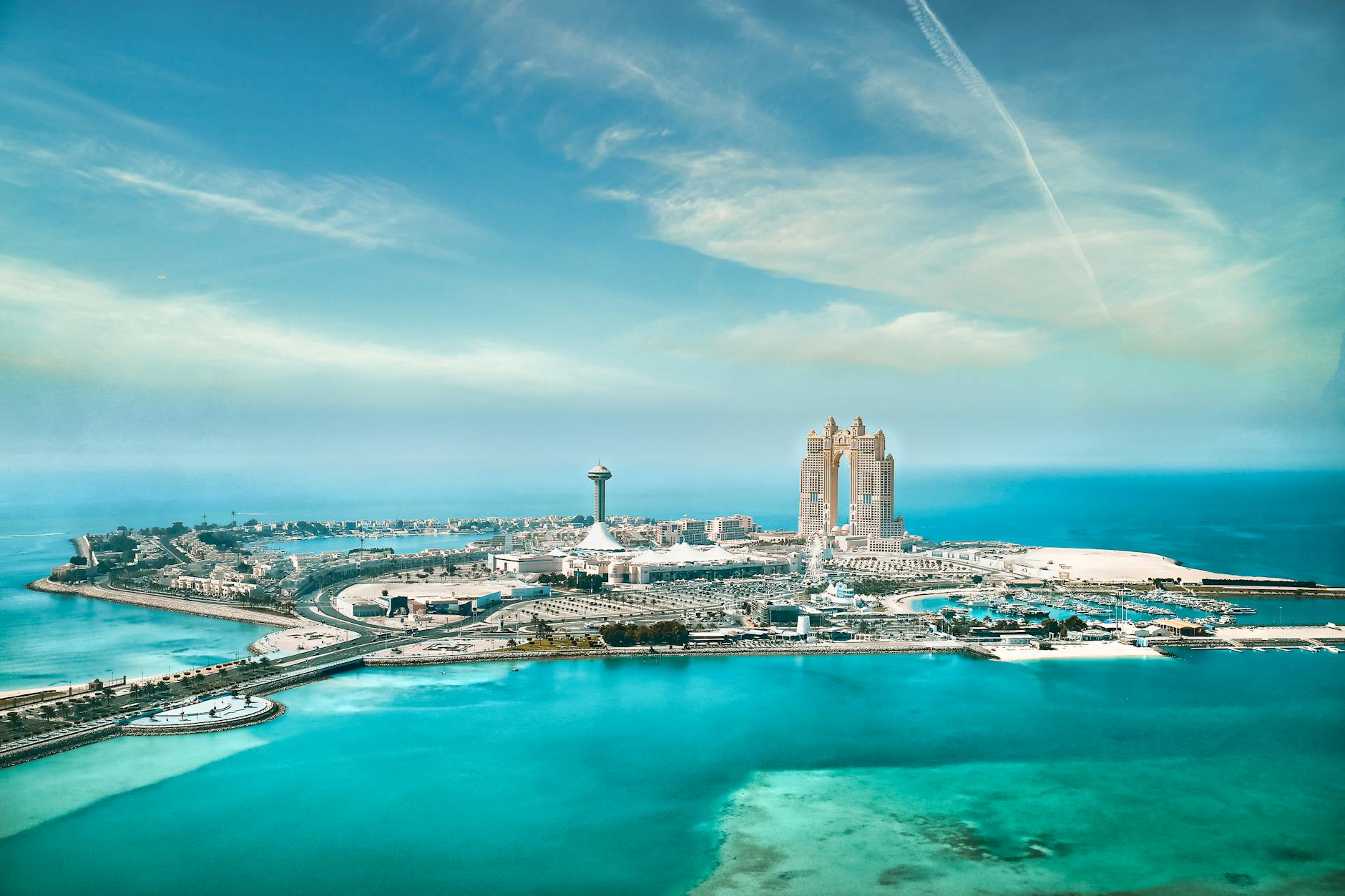
An elevated view captures Abu Dhabi's waterfront architecture framed by turquoise water and a sweeping marina. Bright daylight and high clouds give the cityscape a crisp, expansive look.
Kevin Villaruz on Pexels · Pexels License
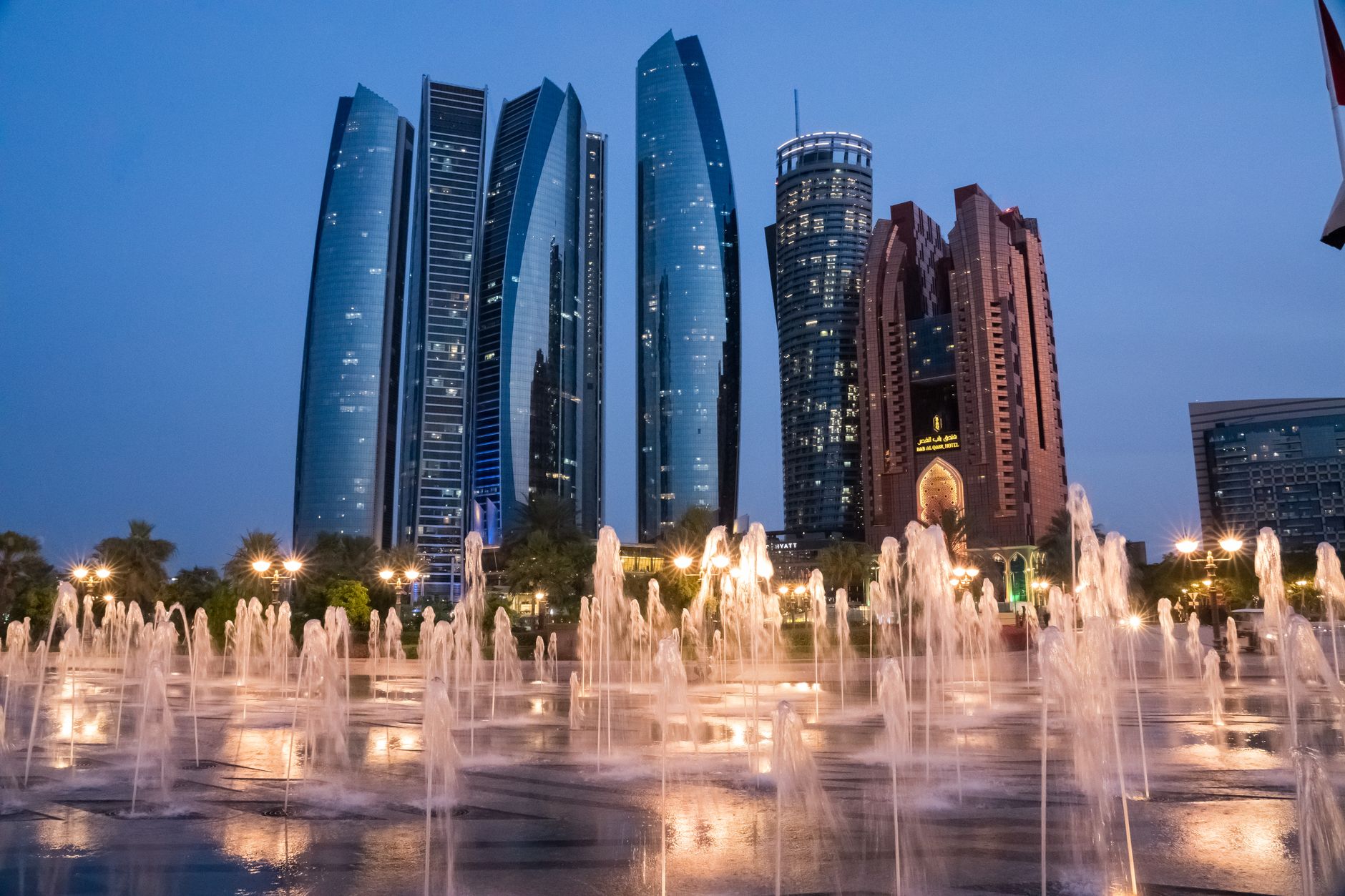
Glass towers rise behind glowing fountains in central Abu Dhabi as evening light settles over the city. The scene captures the polished, modern face of the United Arab Emirates capital.
YFS Visuals on Pexels · Pexels License

A brightly lit gateway with domes and horseshoe arches stands against the night sky in Abu Dhabi. The scene highlights the city's elegant Islamic-inspired architecture after dark.
Akbar Tarakai on Pexels · Pexels License
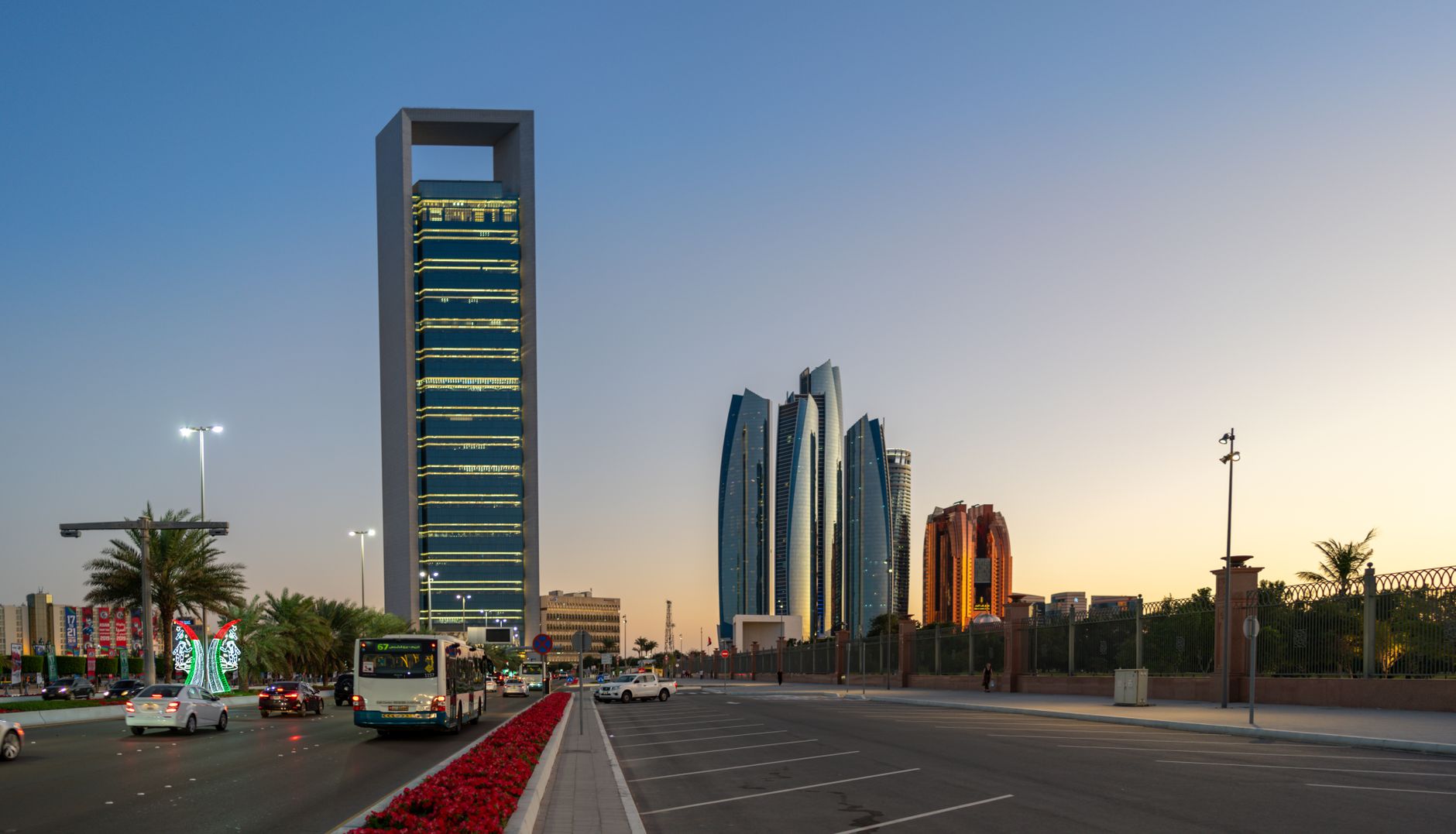
Modern high-rises rise above a broad boulevard in Abu Dhabi, United Arab Emirates, as dusk light softens the skyline. Cars, a city bus, and palm-lined streets add a lived-in urban feel.
Mohamad Kaddoura on Pexels · Pexels License
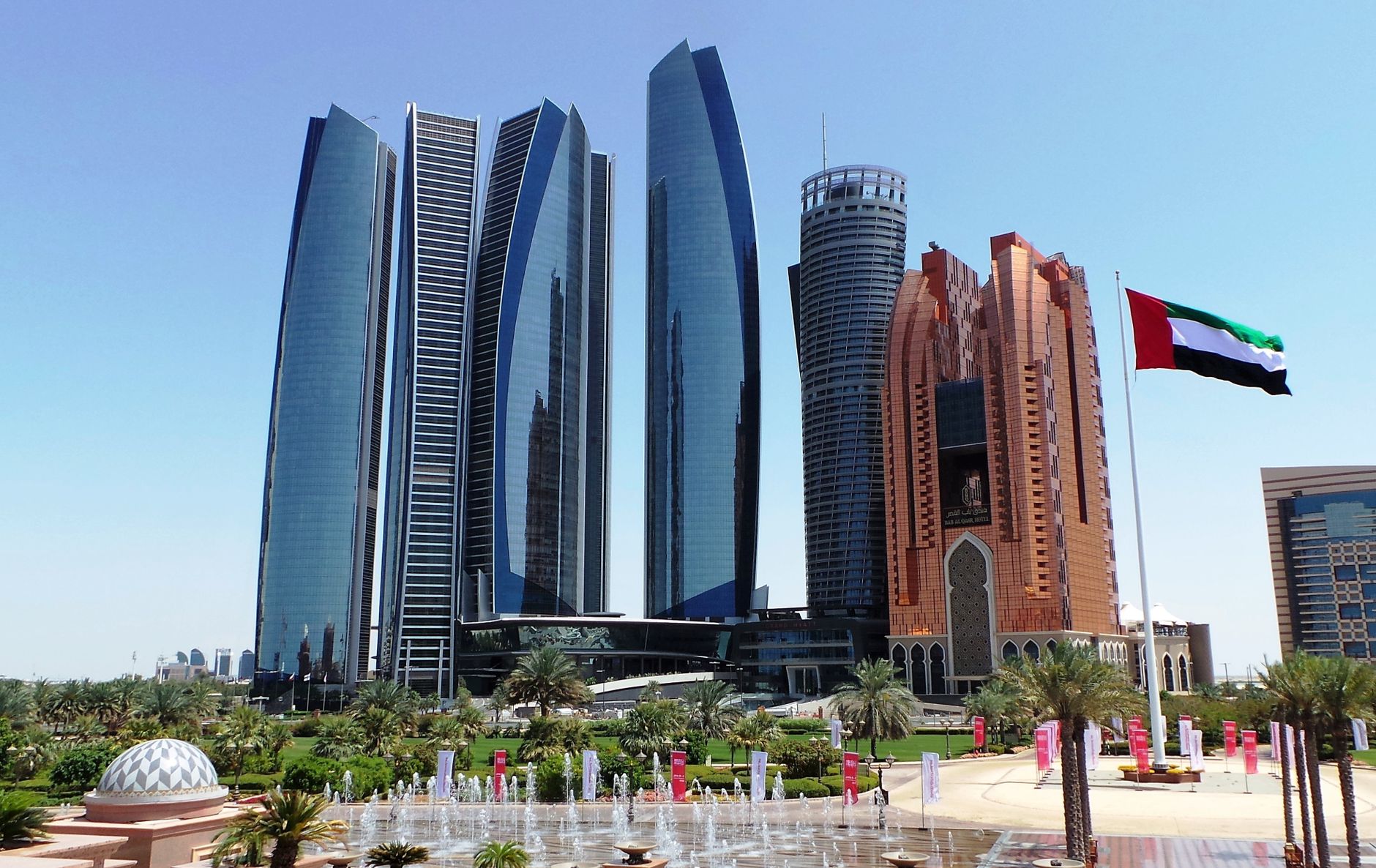
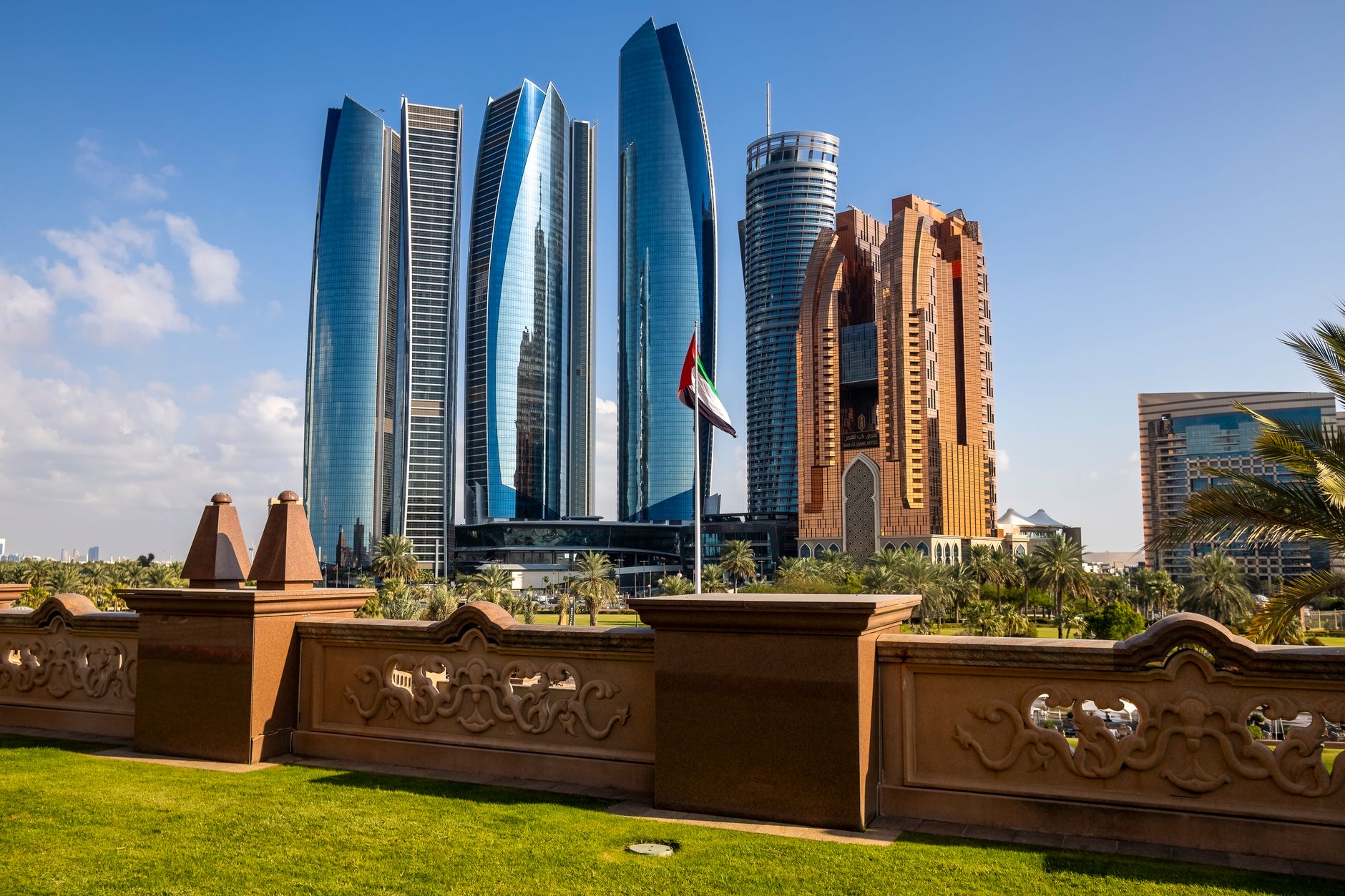
Modern towers rise above palm-lined gardens and fountains in central Abu Dhabi. Bright midday light and the UAE flag give the cityscape a crisp, iconic look.
NGSOFT IT on Pexels · Pexels License

Modern towers rise along Abu Dhabi's waterfront under soft daylight, reflected in calm turquoise water. The wide coastal view captures the city's sleek skyline and open shoreline.
Sergey Guk on Pexels · Pexels License
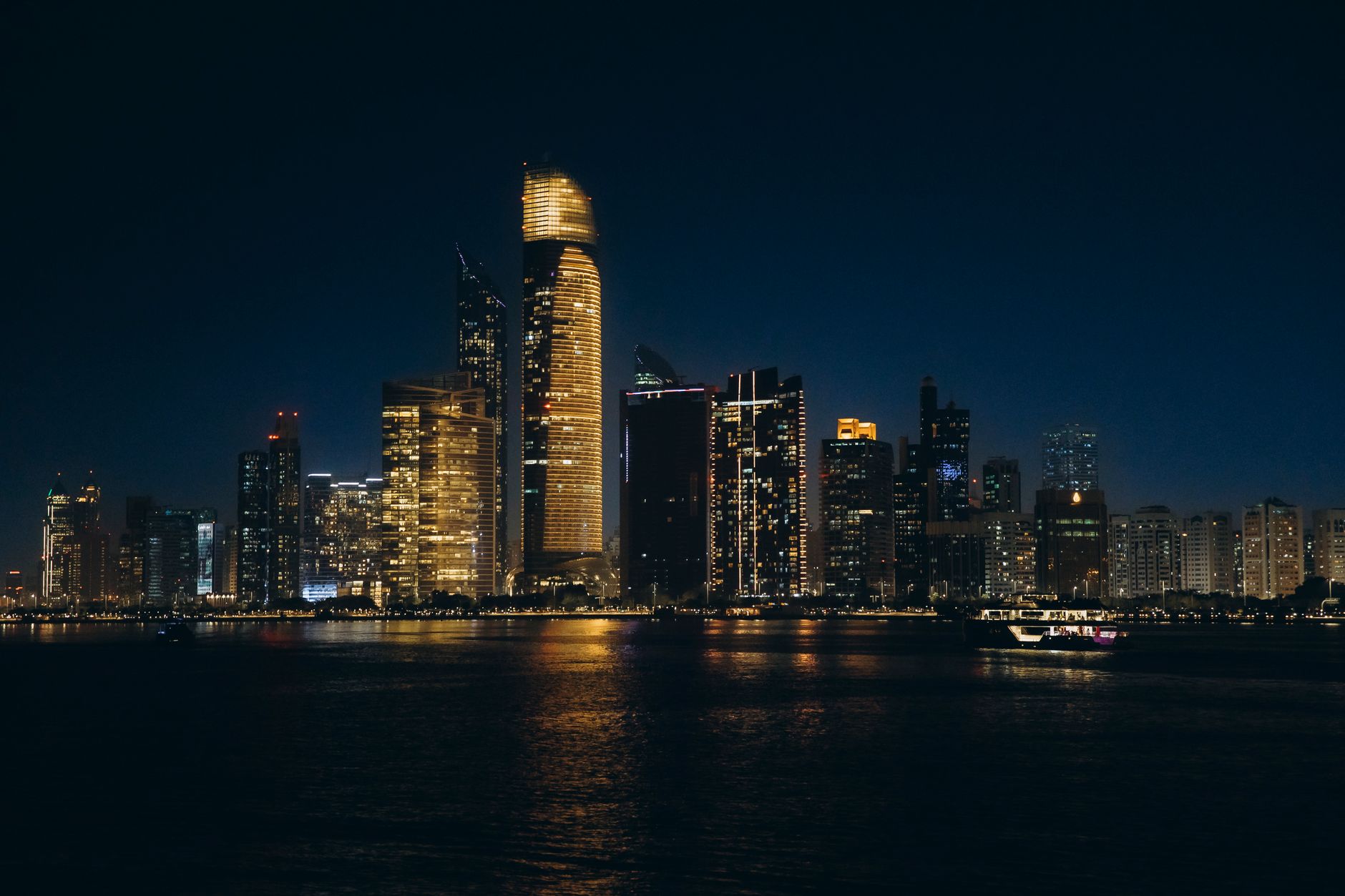
Illuminated towers line the Abu Dhabi waterfront after dark, their lights reflecting across the water. The skyline captures the polished, modern face of the United Arab Emirates capital.
Eslam Mohammed Abdelmaksoud on Pexels · Pexels License
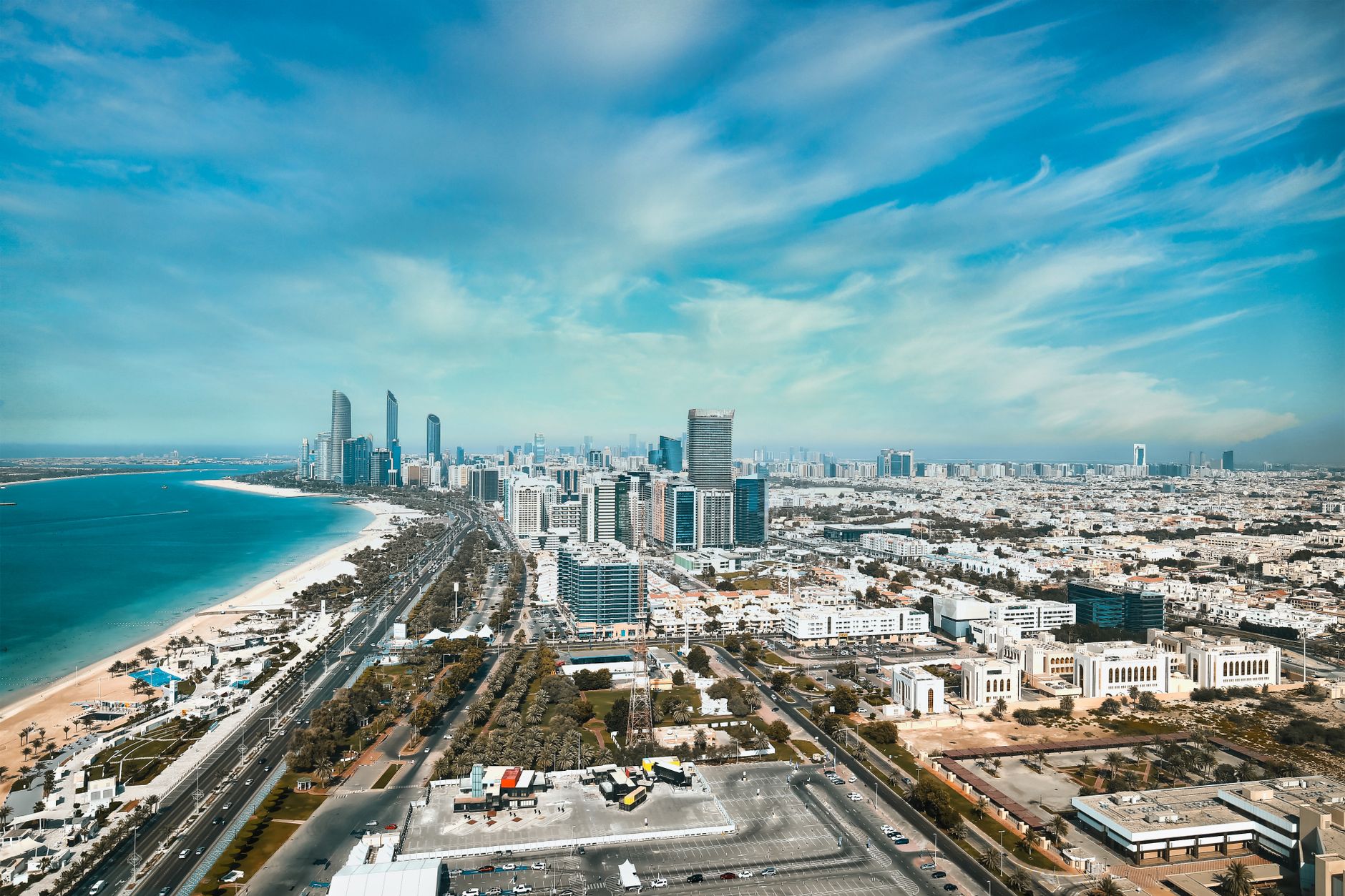
An elevated panorama of Abu Dhabi shows its glass high-rises, low-rise neighborhoods, and sweeping waterfront under clear daytime skies. The contrast between the turquoise Gulf and the dense urban grid gives the city its distinct coastal profile.
Kevin Villaruz on Pexels · Pexels License

A line of illuminated skyscrapers rises over the Abu Dhabi waterfront after dark. Reflections ripple across the water beneath the modern skyline of the United Arab Emirates.
Eslam Mohammed Abdelmaksoud on Pexels · Pexels License

A white domed landmark rises beside palm trees and modern towers in Abu Dhabi. Clear daylight and open blue skies give the scene a crisp, polished look.
Andy Fotheringham on Pexels · Pexels License
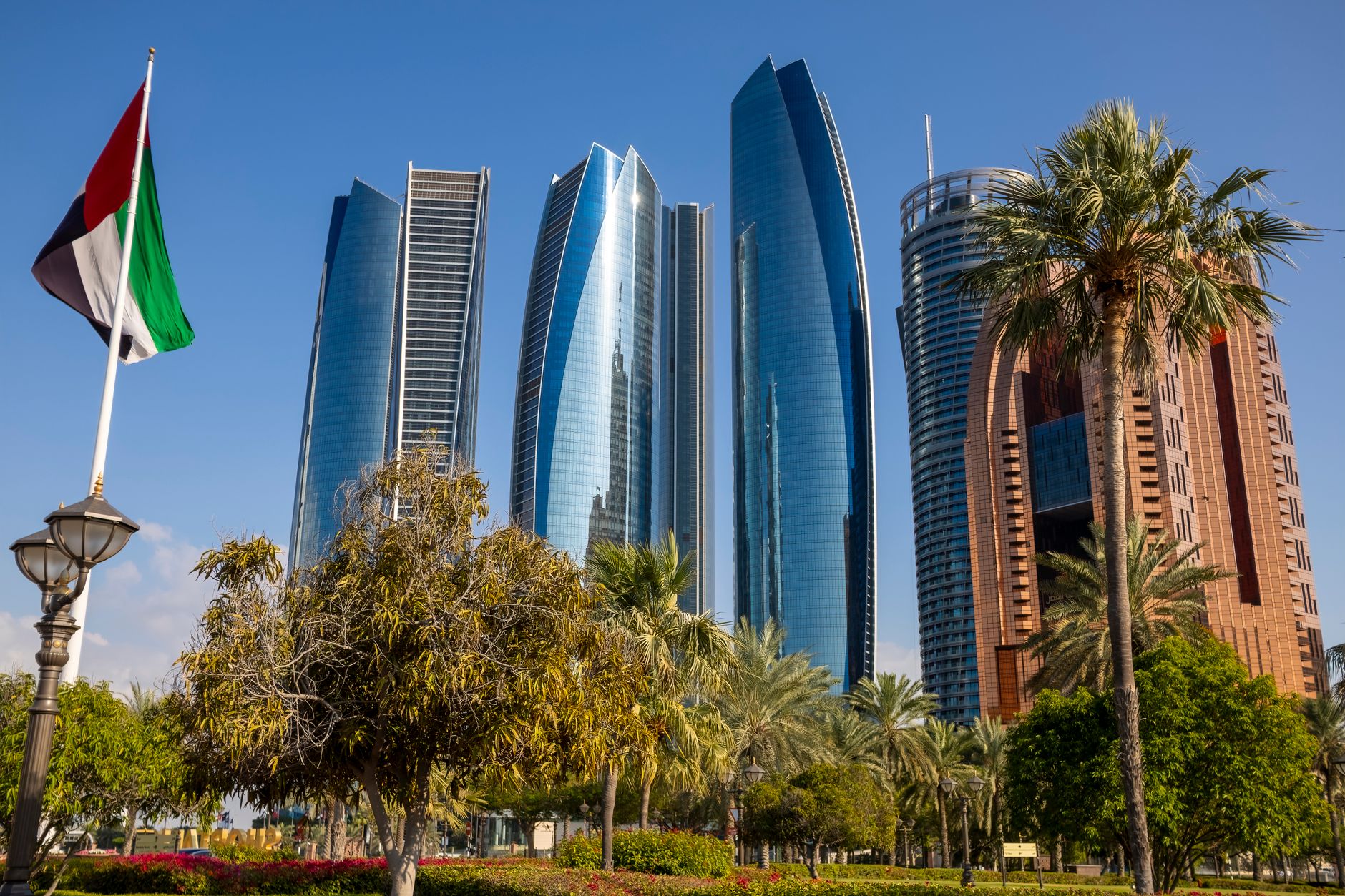
Glass skyscrapers rise above palm-filled gardens in central Abu Dhabi, with the UAE flag in the foreground under clear blue skies. The scene captures the city's polished modern architecture and desert-edge greenery.
Andy Fotheringham on Pexels · Pexels License
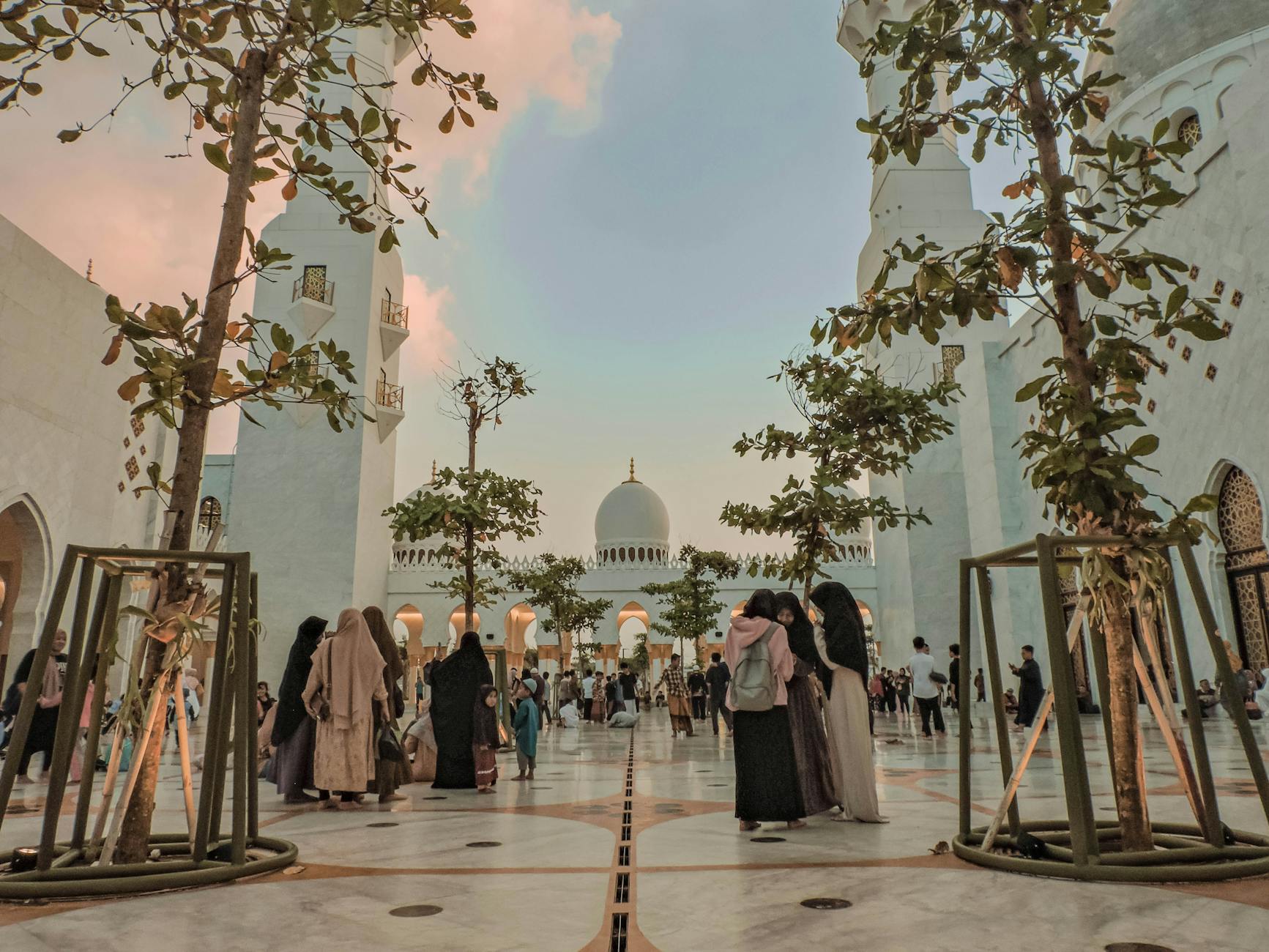
Visitors gather in a grand white mosque courtyard in Abu Dhabi as soft evening light washes the domes, arches, and marble floor. The scene captures the city's architectural elegance and calm communal atmosphere.
Madtur _ on Pexels · Pexels License
Videos
Watch & Explore Abu Dhabi
15 BEST Things to do in Abu Dhabi UAE in 2026 🇦🇪
Best Things To Do in Abu Dhabi UAE 2026 4K
Walking Tour of United Arab Emirates - ABU DHABI - Travel UAE 2024
Practical Information
Getting There
Most visitors arrive through Zayed International Airport (AUH), the emirate's main passenger airport, about 30 km east of central Abu Dhabi. Abu Dhabi has no intercity passenger rail hub in 2026, so long-distance arrivals overland come by road, mainly via E11 from Dubai, E22 from Al Ain and E12 toward the eastern coast.
Getting Around
Abu Dhabi still runs on buses, taxis and selected shuttles rather than a metro: as of 2026, official Abu Dhabi Mobility pages list public buses, taxis, Abu Dhabi Link on-demand buses, micromobility and ART, but no operating subway or tram network. Bus fares start at AED 2 plus 5 fils per km, capped at AED 5, paid with a Hafilat card; the card costs AED 10 for a standard version, weekly passes are AED 30, monthly passes AED 80, and you need to tap in and tap out. The easiest visitor mix is taxi plus selective bus use, with free Experience Abu Dhabi shuttle routes linking Yas, Jubail, Saadiyat, the city centre and the Grand Canal area.
Climate & Best Time
Abu Dhabi is subtropical and arid, with annual rainfall around 12 cm, mostly between November and March. Winter, from December to mid-March, averages around 25°C by day; late May through September can hit 45°C or more, which turns noon sightseeing into a bad idea. The sweet spot is November to April, with December the strongest all-round month; May to September is cheaper and quieter, but only if you plan outdoors for early morning or after dark.
Language & Currency
Arabic is the official language, but English is used almost everywhere a visitor needs it, from hotel desks to road signs. The currency is the UAE dirham (AED), pegged at US$1 = AED 3.6725; cards are widely accepted, though smaller market traders still appreciate cash. If you plan to use public buses from AUH, buy a Hafilat card first because cash is not accepted onboard.
Safety
On the ground, Abu Dhabi remains orderly and low on street crime, but 2026 travel planning needs a dated caveat: the U.S. Department of State updated its UAE advisory to Level 3 on March 3, 2026, citing threats tied to armed conflict, terrorism and possible flight disruptions after February 28, 2026. Check your own government's advisory and your flight status before departure. Day to day, the bigger risks for visitors are heat, road traffic, public-drinking laws, and careless photography around government sites, airports or military areas.
Where to Eat
Don't Leave Without Trying
Al Khayma Heritage Restaurant Abu Dhabi
local favoriteOrder: Order the lamb machboos, the cold appetiser platter, warm naan, and save room for the date pudding, which multiple diners single out as the finish worth coming back for.
This is the place to start if you want a clear read on Abu Dhabi's traditional table rather than a generic hotel version of it. Portions are generous, the menu covers the Emirati comfort-food canon well, and the service gets praised almost as often as the food.
Al Fanar Restaurant & Cafe - Yas Mall
local favoriteOrder: Go for the mutton biryani and Arabic coffee; diners call out both specifically, and the coffee is described as layered and complex rather than just ceremonial.
Al Fanar works best when you want Emirati and Gulf dishes in a comfortable, easy-access setting without sacrificing local flavor. It is popular with visitors, yes, but the draw is practical: familiar regional dishes, solid execution, and a menu broad enough for a first serious introduction.
Mosaic Restaurant
local favoriteOrder: Order a mixed spread of grilled meats and mezze; reviews keep coming back to the meats being juicy, tender, and served hot, with staff steering diners toward the right combinations.
This is one of those dependable Abu Dhabi dining rooms people use for family meals, team dinners, and repeat visits because the kitchen rarely drifts. The menu has range, the service is sharp, and it feels built for long, generous meals rather than a quick table turn.
Mazaj Bab Al Bahr
fine diningOrder: Lean into a full meal of appetisers and mains rather than a single dish; reviews praise the progression from starters through main courses, with the sea view doing part of the work.
Mazaj is the pick when you want a polished dinner with a real sense of place instead of a sealed-off hotel restaurant that could be anywhere. The water-facing setting matters here, but regulars keep returning because the food holds up under repetition.
Flavors Grill Abu Dhabi
fine diningOrder: Try the wagyu beef, then finish with tea and baklava; diners also point to the house-made breads, sweets, and fermented items as part of the appeal.
Flavors Grill sounds ambitious because it is. The draw is not only the meat but the fact that so much is made on site, from breads to sweets, which gives the place more character than the average big-room grill restaurant.
Steak Chef Restaurant
local favoriteOrder: Order one of the large steak platters or go for the rib eye; regulars also praise the steak sandwich, dynamite shrimps, and molten chocolate cake if you're building a full meal.
Not every Abu Dhabi dinner needs to be heritage cooking. Steak Chef earns its place because diners keep describing the meat as fresh, filling, and fairly priced, which is a rarer combination than restaurant menus would have you believe.
Little Baker Cafe
cafeOrder: Come for coffee and the house delicacies; reviews point to both the pastries and drinks, with the room best used for a slow catch-up rather than a grab-and-go stop.
Small cafes live or die on atmosphere, and this one seems to get that part right. People mention the friendly staff, elegant but easy room, and the flowers often enough that you can picture the place before you walk in.
Belle Gateau Cafe
cafeOrder: Order the pansit, lumpia, and a slice of cake if available; reviews also note that the celebration cakes are light, spongy, and well made.
Belle Gateau feels more like a neighborhood gathering place than a polished concept cafe, which is exactly why it belongs in a useful guide. It is especially strong for birthdays and family meals, with a private-event feel that bigger rooms rarely manage.
Dining Tips
- check Do not assume a standard weekly closing day. Friday and Saturday are active dining days in Abu Dhabi, and some venues operate all day or even 24 hours.
- check Dinner runs later than in many Western cities. Evening dining often picks up after sunset, and many people eat between 7pm and 10pm, especially in hotter months.
- check Brunch is a major social ritual on weekends, with many brunches running around 12:30pm-4:30pm depending on the venue.
- check If you want the food Abu Dhabi is actually known for, start with Emirati rice dishes, slow-cooked wheat dishes, dates, Arabic coffee, and Gulf seafood.
- check Breakfast is a real meal here, not an afterthought. Traditional options commonly mentioned include balaleet, khameer, and tea or coffee.
- check Tipping is not expected but is commonly practised. Many fine-dining and high-end restaurants may add a service charge of around 10%, and a 6% tourism levy may also appear.
- check Check the menu before adding extra tip. Official guidance says service charges and levies are often listed there.
- check For Mina Fish Souk, the market is liveliest in the morning when fishermen unload the catch.
Restaurant data powered by Google
Tips for Visitors
Use A1 or A2
From Zayed International Airport, the cheapest city transfer is usually the 24/7 A1 or A2 bus. Buy and load a Hafilat card first because cash is not accepted on board, and the airport says the fare is typically around AED 4.
Beat the Heat
From late May to September, plan outdoor sights for early morning or after sunset. Winter through spring is far easier on your body, with official tourism guidance pointing to November through April as the most comfortable stretch.
Dress With Care
Pack modest clothes for mosques, malls, and government-adjacent sites. Abu Dhabi is relaxed by Gulf standards, but public drunkenness, rude gestures, and casual PDA can still cause real trouble.
Ask Before Photos
Don't photograph people without permission, and skip shots of airports, ports, military areas, and government buildings. That rule matters more here than in many city-break destinations.
Stack Free Rides
Use the free Experience Abu Dhabi Shuttle for the big visitor zones, then switch to taxis for awkward cross-city hops. On Yas Island, the free Yas Express saves money if you're park-hopping between Ferrari World, SeaWorld, and Warner Bros. World.
Bundle Saadiyat
Saadiyat now works as a full culture day, not a single museum stop: Louvre Abu Dhabi, Zayed National Museum, Natural History Museum Abu Dhabi, teamLab Phenomena, and the Abrahamic Family House all sit in the same broader orbit. Build one full day here, maybe two, instead of bouncing back and forth across the city.
Check Advisories
Flight status and government travel advisories deserve a last-minute check before you leave. The U.S. advisory for the UAE was updated on March 3, 2026 after regional security disruptions, so this is not background noise.
Explore the city with a personal guide in your pocket
Your Personal Curator, in Your Pocket.
Audio guides for 1,100+ cities across 96 countries. History, stories, and local insight — offline ready.
Audiala App
Available on iOS & Android
Join 50k+ Curators
Frequently Asked
Is Abu Dhabi worth visiting? add
Yes, especially if you want Gulf cities with more substance and less sensory overload than Dubai. Abu Dhabi gives you a rare mix of white-marble grandeur at Sheikh Zayed Grand Mosque, serious museum time on Saadiyat, mangroves within reach of downtown, and older pre-oil history at Qasr Al Hosn.
How many days in Abu Dhabi? add
Three to four days is the sweet spot for most travelers. That gives you one day for the mosque, memorials, and Corniche, one for Saadiyat Cultural District, one for Qasr Al Hosn and central-city culture, and room for a mangrove stop, Yas Island, or an Al Ain day trip.
How do I get from Abu Dhabi airport to the city center? add
The cheapest option is the airport bus, usually A1 or A2, and the fastest easy option is an official taxi. The bus runs 24/7 and costs about AED 4 with a Hafilat card, while a taxi into central Abu Dhabi usually lands around AED 70 to AED 80 depending on traffic and your exact stop.
Is there a metro in Abu Dhabi? add
No, not as a visitor-ready citywide system as of April 22, 2026. Abu Dhabi works on buses, taxis, the Abu Dhabi Link on-demand service in selected districts, free tourist shuttles, and a limited Automated Rapid Transit route.
Is Abu Dhabi safe for tourists right now? add
On the ground, Abu Dhabi remains a low-crime city by international standards, but regional security is the part to watch. Check your government's travel advisory and your flight status just before departure, and once you're in the city take the usual local cautions seriously: heat, photography rules, alcohol laws, and modest public behavior.
Is Abu Dhabi expensive for tourists? add
It can be, but it doesn't have to be. Museums and high-end hotels push costs up fast, yet buses are cheap, the Corniche costs nothing, the Grand Mosque is free, and free shuttle networks on Yas Island and key visitor routes can cut transport bills.
What is the best time to visit Abu Dhabi? add
November to April is the safest answer, with December through February the easiest for long days outside. Summer can push past 45C, which turns a pleasant waterfront walk into a tactical operation involving shade, air-conditioning, and stubbornness.
Can you get around Abu Dhabi without a car? add
Yes, if you mix transport instead of relying on one mode. Taxis handle the long gaps between districts, buses keep costs down, and the free Experience Abu Dhabi Shuttle and Yas Express make the main tourist corridors far easier than the city's scale suggests.
Sources
- verified Experience Abu Dhabi - Sheikh Zayed Grand Mosque — Used for core landmark facts, visitor access, and mosque details including minarets, carpet, and chandeliers.
- verified Experience Abu Dhabi - Saadiyat Cultural District — Used to frame Saadiyat as a multi-stop district with major museums and cultural venues.
- verified Zayed International Airport - City Bus Routes and Timetables — Used for airport bus routes, 24/7 service, Hafilat requirement, and approximate airport bus fare.
- verified Abu Dhabi Mobility - Hafilat and Public Bus Fees — Used for Hafilat card prices and pass details.
- verified Abu Dhabi Mobility - Taxi Fares — Used for airport taxi tariff details and payment methods.
- verified Experience Abu Dhabi - Getting Around by Bus — Used for round-the-clock bus service and visitor-facing public transport guidance.
- verified Experience Abu Dhabi - Weather in Abu Dhabi — Used for seasonal planning and heat guidance.
- verified U.S. Department of State - United Arab Emirates Travel Advisory — Used for the March 3, 2026 travel advisory update and current regional-security context.
Last reviewed:


