location_city
Skylines and old souqs
dubai and Abu Dhabi deliver the headline architecture, but the older story survives in creekside trading quarters, mosque courtyards, and markets where gold, spices, and textiles still shape the street.
The United Arab Emirates makes sense when you stop treating it as a skyline and start reading it as seven different landscapes tied together by trade, hospitality, and speed.
Entry90-day visa on arrival for many EU, US, UK, Canadian, and Australian passports
UA United Arab Emirates travel guide begins with a surprise: this is not one glossy skyline, but desert oases, mountain roads, mangrove creeks, and old ports in one compact country.
Most travelers arrive expecting dubai, then realize the United Arab Emirates works best as a sequence of sharp contrasts. In Abu Dhabi, white mosques, mangroves, and broad Corniche light give the capital a calmer tempo than its reputation suggests. Sharjah keeps a firmer grip on museums, souqs, and Islamic architecture, while Al Ain still lives by oasis logic, with falaj channels and date palms that long predate the oil era. This is a country built fast, but not from scratch. Bronze Age tombs, pearl-diving ports, Bedouin routes, and majlis etiquette still shape what you notice once the first shock of glass towers wears off.
Geography does half the work for you. You can wake by the Gulf in dubai, drive into the red dunes of Al Liwa, then trade heat shimmer for rock faces in Hatta or Ras Al Khaimah, where the Hajar Mountains cut the horizon into hard gray folds. On the east coast, Fujairah and Khor Fakkan face the Gulf of Oman, with clearer water, reef-friendly coves, and a different weather mood from the Persian Gulf side. Mleiha adds another layer: archaeology, fossil landscapes, and a silence that makes the country's speed feel like a recent decision.
Before the Emirates, c. 125000 BCE-300 CE
Picture the edge of today’s desert near Mleiha after rain, not as a silence of sand but as a watered plain where hunters watched heavy animals come down to drink. At Faya, archaeologists found stone tools roughly 125,000 years old, along with traces of a greener Arabia that would seem absurd if the evidence were not lying in the ground. Ce que l'on ignore souvent, c'est que the first shock in Emirati history is ecological: the emptiness came later.
Then came the age of tomb-builders. Around 2600 BCE, the people now called the Umm Al-Nar culture raised circular communal tombs near what is now Abu Dhabi, with carved stone, copper objects, and beads that had crossed the sea from the Indus Valley. They were not living at the edge of the world. They were in the middle of trade.
In Al Ain, water changed everything. The oasis and its falaj irrigation channels made settlement durable, agricultural, and astonishingly old; UNESCO’s protected sites at Hili, Hafit, and Bidaa Bint Saud still show how carefully people here learned to husband every drop. A channel of water in Al Ain could matter more than a palace elsewhere.
By the late pre-Islamic centuries, Mleiha in Sharjah had become a fortified center that minted coins echoing Alexander’s silver. Imagine the gesture: a local ruler in southeastern Arabia borrowing the face of distant prestige, then adapting it for his own use. That habit, taking a foreign form and making it serve local ambition, would return again and again, from ports to free zones to the towers of Dubai.
The emblem of this first age is not a king with a name but an unnamed woman buried with imported carnelian, proof that status, trade, and family memory were already being staged with great care.
At Faya, the ancient toolmakers lived in a region that once held lakes and large grazing animals; the desert many visitors think eternal is, in historical terms, the younger face of the country.
Ports, Tribes and the Coming of Islam, 300-1500
The next act opens on the coast, with stitched sails, date-fiber rope, and the smell of drying fish. Long before skylines, the settlements of this shore lived by what could be loaded onto a dhow and trusted to the monsoon. Ports near today’s Ras Al Khaimah and Fujairah looked outward as naturally as oasis towns looked inward.
Islam arrived in the 7th century, and regional tradition holds that local rulers accepted it through negotiation and allegiance rather than through one grand conquering spectacle. Peace did not mean passivity. After the Prophet’s death, some tribes joined the ridda upheavals, and the Battle of Dibba became one of the violent moments through which the new political order was enforced.
What followed was not retreat but incorporation into a wider world. The coast fed into Indian Ocean trade, and Julfar, near modern Ras Al Khaimah, grew into a port known for pearls and seamanship; Ibn Battuta described it in the 14th century as a fine city by the sea. Ce que l'on ignore souvent, c'est que the Gulf was not a backwater waiting for oil. It was already literate in wind, credit, and risk.
From this maritime world emerged Ahmad ibn Majid, the celebrated navigator linked to Julfar, whose manuals turned stars, currents, and coastlines into practical poetry. His age matters because it taught the future Emirates a durable lesson: commerce rewards those who can read several worlds at once. The pearl diver, the pilot, and the merchant prepared the ground for everything that came after, including the bold self-invention of Abu Dhabi and Dubai.
Ahmad ibn Majid stands at the center of this era, not as a romantic sailor but as a working intellectual who converted the sea into a body of exact knowledge.
Some navigational texts attributed to Ibn Majid were written in verse, because rhyme helped pilots remember technical information at sea when a mistake could ruin an entire voyage.
Cannons, Pearls and Treaties, 1500-1892
Then the Europeans arrived with cannon through the same sea lanes that had made the region rich. The Portuguese entered the Gulf in the early 16th century and attacked ports, taxed trade, and tried to dominate routes they had not built. Local powers did not fold politely. They adapted, shifted alliances, and waited.
By the 18th century, the coast was a hard, competitive world of tribal confederations, pearling fleets, and maritime rivalry. The Al Qasimi, based in Sharjah and Ras Al Khaimah, became major naval actors, powerful enough to alarm both Oman and the British East India Company. British records called parts of this shore the Pirate Coast, a name that reveals as much about imperial irritation as it does about local action.
Pearls paid for much of life. In the summer season, thousands of men went out on boats for months at a time, diving repeatedly with nose clips and stone weights, gambling lungs and eyesight for a harvest that might enrich a merchant far more than a diver. Ce que l'on ignore souvent, c'est que the glamour of Gulf pearls rested on debt, brutal labor, and a credit system that kept many families one bad season away from disaster.
British intervention produced the General Maritime Treaty of 1820 and, later, the truces that gave the coast its English label: the Trucial States. Order came, but it came on imperial terms. Yet those treaties also fixed the political map in ways that made federation imaginable a century later; the men who signed to save their ports were, without knowing it, sketching the frame of a future country.
Sultan bin Saqr Al Qasimi, shrewd and resilient, spent decades balancing force, diplomacy, and survival in a Gulf suddenly crowded with empires.
A perfect natural pearl from Gulf waters could finance a season, a marriage, or a debt settlement; an unlucky boat crew might risk the same summer for almost nothing.
From Protectorate to Union, 1892-1971
At the start of the 20th century, the coast still moved to the rhythm of pearling. Then the market cracked. Japanese cultured pearls, the global depression, and changing trade patterns gutted an economy that had supported ports from Dubai to Abu Dhabi, leaving families to improvise, migrate, borrow, and endure. A whole social order could collapse without a single battlefield.
Oil changed the arithmetic but not all at once. Abu Dhabi began exporting crude in 1962, Dubai in 1969, and the old sheikhdoms suddenly had revenues that dwarfed anything pearl merchants had handled. Ce que l'on ignore souvent, c'est que the decisive drama was political, not geological: money alone does not build a state, especially in a region of rival rulers, British treaties, and uncertain borders.
The central partnership was between Sheikh Zayed bin Sultan Al Nahyan of Abu Dhabi and Sheikh Rashid bin Saeed Al Maktoum of Dubai. One brought oil wealth and a gift for patient coalition-building; the other brought commercial nerve and the instincts of a port ruler who understood that trade had to stay free, open, and fast. Their meetings in the late 1960s have the air of high theater, though the real work was harder: persuasion, compromise, and the steady refusal to let the project die.
On 2 December 1971, six emirates formed the United Arab Emirates; Ras Al Khaimah joined in February 1972. The federation was not inevitable. It was assembled. And because it had to be negotiated among unequal partners, it retained a family resemblance to the old coast: proud local houses learning, once again, that survival favored alliance over splendid isolation.
Sheikh Zayed became the founding father of the federation because he could think like a tribal mediator and a modern statesman at the same time.
Before oil wealth transformed the federation, Sheikh Rashid backed the dredging of Dubai Creek despite ridicule; he understood that one deeper channel could be worth more than a hundred speeches.
Federation and Reinvention, 1971-present
The modern chapter begins with roads, ministries, schools, desalination plants, and airports built at a speed that still startles visitors. Abu Dhabi became the federal capital and the treasury of national ambition, while Dubai turned itself into a trading, aviation, and financial machine with an almost theatrical appetite for reinvention. Sharjah chose culture and scholarship with equal determination, while Al Ain remained the nation’s memory of water, shade, and older continuities.
The temptation is to tell this story as pure miracle. That would be too easy. A country built this fast also built hierarchies of labor just as fast, relying on expatriate workers who became the overwhelming majority of the population and made the dream physically possible, from roads to towers to hotel kitchens.
Ce que l'on ignore souvent, c'est que the Emirates are most interesting where ceremony and acceleration meet. In one day you can move from a majlis where Arabic coffee is poured according to old etiquette to the Louvre Abu Dhabi, where Jean Nouvel’s dome filters light like a metallic palm grove, and then on to Dubai, where the future is sold floor by floor. The effect is not seamless. That is precisely why it is worth attention.
This recent history is still being written. Hatta is being recast as a mountain retreat, Mleiha as an archaeological revelation, Fujairah as the country’s Indian Ocean face, and Ras Al Khaimah as a highland frontier with Jebel Jais above it. The next era will turn on a question older than oil: how long can a trading society stay open, self-confident, and recognizably itself while the whole world keeps arriving at its door?
The emblematic modern figure may be Sheikh Zayed, but the broader cast includes planners, migrant workers, museum-makers, and rulers who each gave a different emirate its own voice.
The rain of light beneath the Louvre Abu Dhabi dome was engineered to echo shade through palm fronds, a modern museum borrowing one of the oldest comforts in Arabian life.
The UAE speaks in layers. English runs the airport, the hotel desk, the invoice. Arabic changes the pressure in the room. A single "as-salamu alaykum" can do what three polished sentences cannot: it removes the metallic taste of transaction.
In Dubai, one table may hold Emirati Arabic, Malayalam, Hindi, Tagalog, and the precise international English of people who negotiate leases before lunch. In Sharjah, the cadence slows; in Abu Dhabi, official Arabic has the grave courtesy of pressed linen; in Al Ain, words seem to arrive with more dust on their shoes. Language here is not identity alone. It is temperature.
The pleasure lies in the formulas. "Inshallah" may promise, postpone, or protect dignity. "Mashallah" praises while shielding the praised from envy, which is a far more intelligent custom than our habit of admiration without caution. Even "yalla" contains a whole philosophy of movement: affection, impatience, command, rhythm.
A country is a table set for strangers. The UAE knows this and begins, wisely, with the greeting.
Politeness in the UAE is not ornament. It is load-bearing architecture. You do not rush to the point if the point wishes to survive; you greet, you ask after health, you accept the tiny cup of gahwa, and only then does the real conversation step into the light.
The cup itself teaches the lesson. It is small, handleless, filled only partway, as if abundance had learned restraint. Cardamom arrives first. Sometimes saffron. Sometimes the faint sweetness of dates waiting nearby like patient accomplices. Refusing without grace feels coarse. Accepting too greedily feels worse.
Watch the choreography in a majlis in Abu Dhabi or a family reception in Ras Al Khaimah. Shoes, posture, the right hand, the order of service, the almost invisible art of not taking up too much space while still being fully present. This is etiquette as poetry. The verse form is hospitality.
Western haste looks childish here. Efficiency is not the highest virtue in every civilization. Imagine that.
Emirati food has the intelligence of scarcity and the memory of trade. Dates, wheat, fish, rice, dried lime, cardamom, ghee: the pantry reads like a map of survival interrupted by ships. Persia left perfume. India left argument. The desert kept the final word.
Take machboos. Rice stained with stock and spice, black lime lending its medicinal darkness, chicken or lamb yielding without drama. It tastes of a port that never stopped receiving visitors and never forgot who lived there first. Then harees arrives, a patient union of wheat and meat beaten into silk. Humility can be extravagant.
Breakfast is where the country becomes mischievous. Balaleet places sweet vermicelli under an omelet and dares you to object. Chebab pancakes carry cardamom and saffron as if morning required ceremony. Khameer asks for cheese, date syrup, tea, and another ten minutes of life.
In Al Ain, dates are not snacks but lineage. In Fujairah, fish speaks more loudly. In Al Liwa, sweetness tastes older, as if the oasis had stored sugar in the shade for a thousand years.
The first mistake is to think the UAE chose between the tent and the tower. It did not. It taught the tower to remember the tent. That is why so much architecture here obsesses over shade, screens, courtyards, wind, ceremony, threshold: the old desert questions survived the arrival of reinforced concrete.
In Dubai, vertical ambition glitters so hard it can feel fictional, yet the older logic persists in the abras crossing Dubai Creek, in the textile and spice quarters, in the way commerce still likes a narrow shaded passage more than a manifesto. In Abu Dhabi, the Sheikh Zayed Grand Mosque takes white marble and light and turns them into an argument for serenity at monumental scale. Big enough to humble a crowd. Precise enough to quiet it.
Then the country changes register. Al Ain offers falaj channels and oasis geometry, where water is distributed with the seriousness of law. Hatta folds stone villages and wadis into the Hajar Mountains, proving that altitude alters architecture as surely as theology does. Fujairah and Khor Fakkan, facing the Gulf of Oman, keep one eye on sea weather and the other on rock.
The UAE builds fast, but its deepest architectural obsession is older than speed: how to live with heat without surrendering elegance.
Islam in the UAE is audible before it is discussed. The call to prayer moves through the day like a discreet sovereign, neither asking permission nor demanding applause. In a mall car park, beside a highway, through an old quarter in Sharjah, the sound alters space. Asphalt acquires a soul for a minute.
Visitors often expect spectacle. The truth is more refined. Religion here appears in timing, in greetings, in Friday’s altered pulse, in the offer of dates before coffee, in Ramadan’s evening release when a city that seemed composed of glass and contracts suddenly smells of soup, bread, and frying dough. Sunset becomes appetite with metaphysics.
The Sheikh Zayed Grand Mosque in Abu Dhabi is the obvious encounter, and obvious things are sometimes obvious because they deserve to be. Yet smaller moments stay longer: a prayer room sign in a service station, Qur'anic recitation flowing softly from a shop, the etiquette of dress observed without theatrical severity. Faith is public, but not always loud.
The country’s particular talent is this: devotion and cosmopolitan life sit at the same table without knocking over the cups.
Design in the UAE understands appetite. It knows the seduction of polished stone, mirrored surfaces, calligraphic curves, brass, perfume bottles heavy as small empires, and the exact beige of sand when luxury decides to imitate geology. This could have become vulgar very easily. Sometimes it does. Often it stops one millimeter before the abyss, which is more interesting.
The old design intelligence comes from function. Mashrabiya screens, woven palm frond textures, the dallah coffee pot with its severe beak, the majlis cushion line that tells the body how to sit and the social order how to flow. Form here has always been social. Beauty that does not help hospitality is missing the point.
Modern UAE design likes to scale that instinct upward. Hotel lobbies in Dubai stage scent the way opera houses stage overtures. Museums in Abu Dhabi choreograph shadow with almost religious confidence. Souks in Sharjah preserve the intimacy of repetition: lamp, bowl, textile, incense burner, each item insisting that ornament is a branch of memory.
One learns something embarrassing in the Emirates. Minimalism is not the only route to seriousness. A gold coffee pot can possess more discipline than a blank white room.
dubai and Abu Dhabi deliver the headline architecture, but the older story survives in creekside trading quarters, mosque courtyards, and markets where gold, spices, and textiles still shape the street.
Al Liwa's dunes rise in long red walls at the edge of the Empty Quarter, and Mleiha turns deep time into something visible, with fossil beds, archaeology, and open desert that feels almost geologic in its silence.
Hatta and Ras Al Khaimah swap tower blocks for switchbacks, dams, and jagged Hajar ridgelines. This is where the country cools down, stretches out, and starts to feel built for walking, climbing, and long drives.
Al Ain is the clearest proof that the Emirates did not begin with oil. Falaj irrigation channels, Bronze Age tombs, and shaded date groves show a settlement history measured in millennia, not decades.
Emirati cooking pulls wheat, rice, fish, dates, saffron, cardamom, and dried lime into dishes that make sense of desert life and Indian Ocean trade. Try machboos, harees, chebab, and luqaimat before another tasting menu steals the evening.
The Persian Gulf side is warmer, flatter, and more urban; the Gulf of Oman side around Fujairah and Khor Fakkan is rockier, greener after rain, and better known for clear water and diving.
12 cities — start with the ones we'd send you to first.
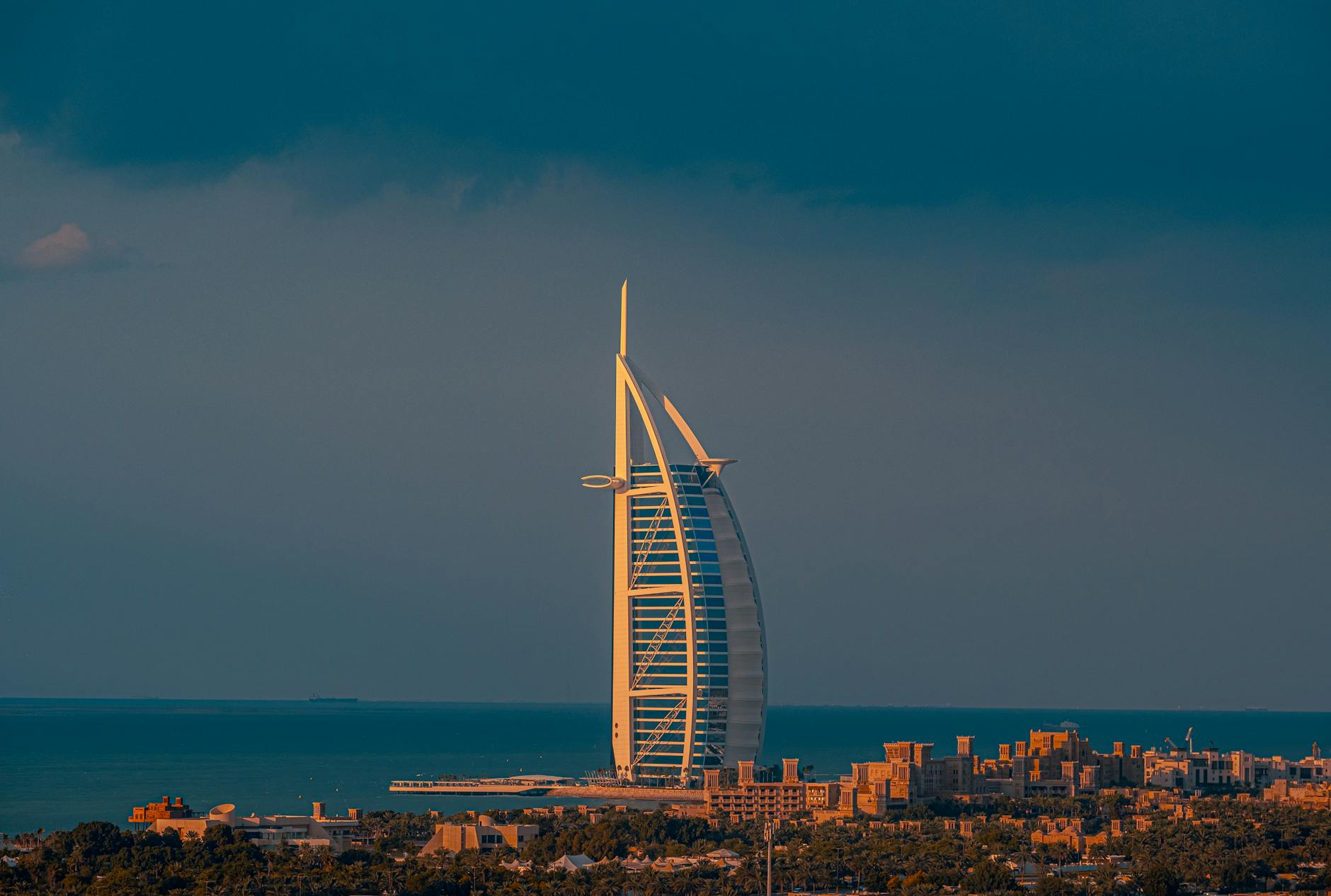
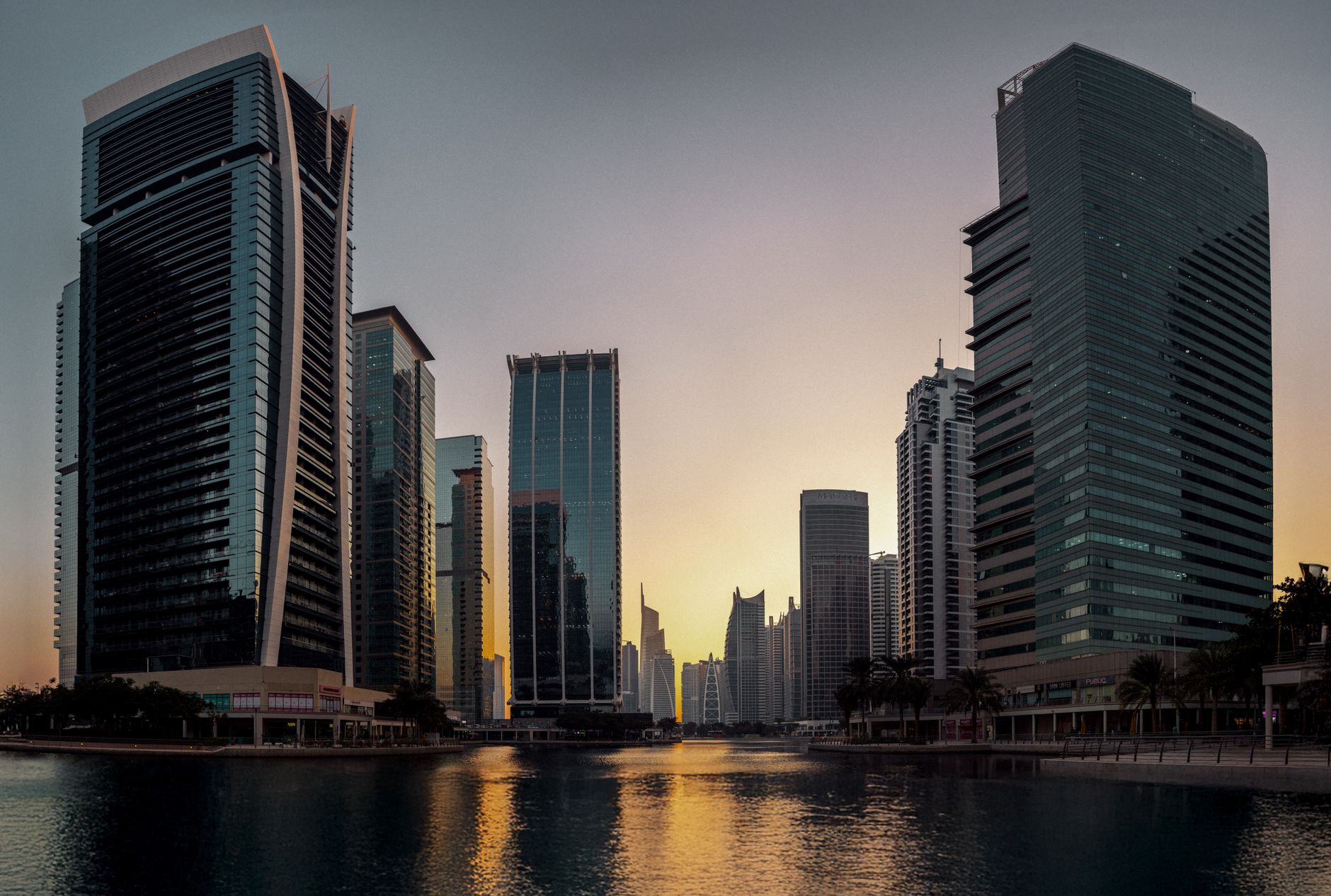
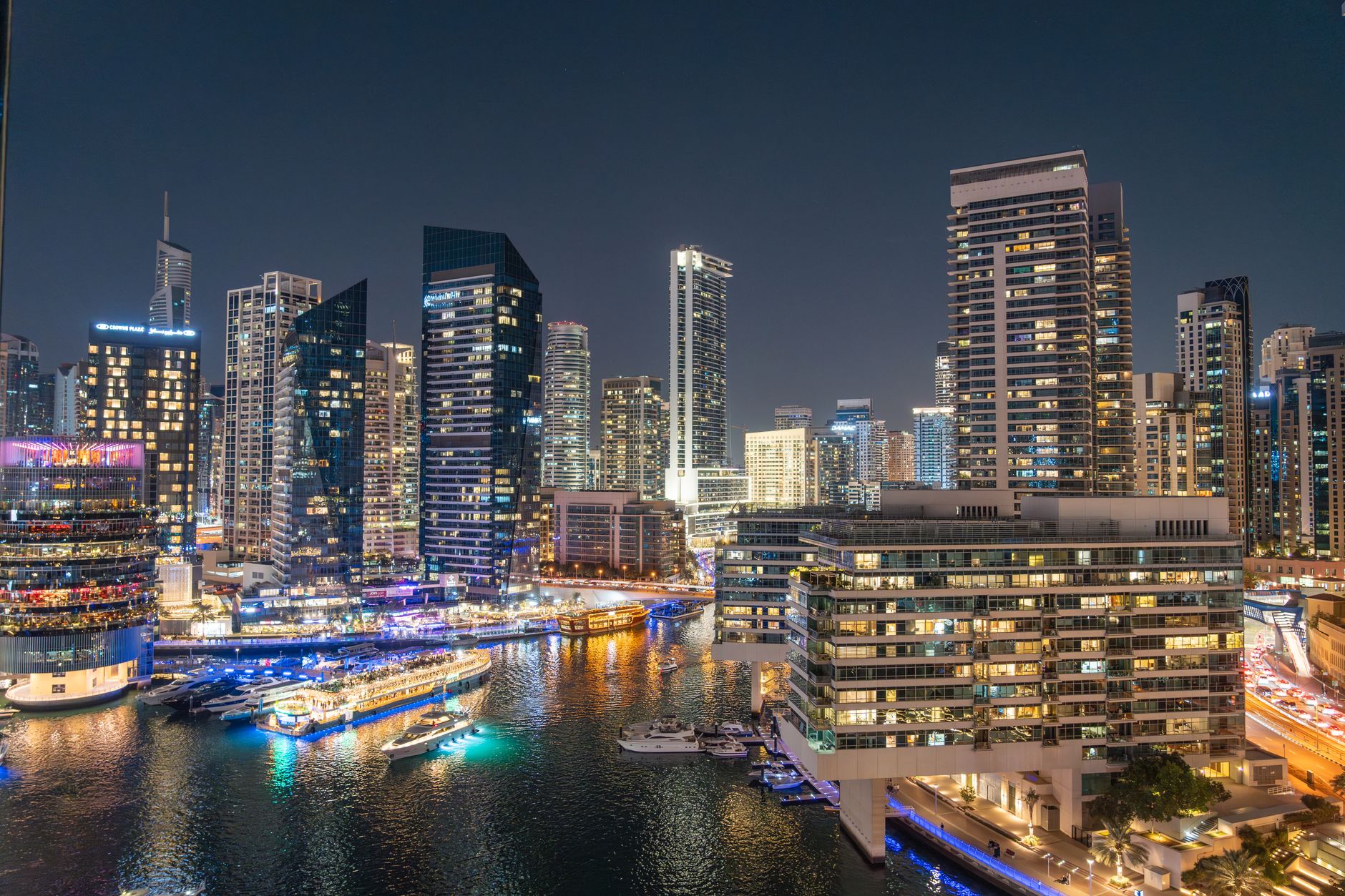
Dubai feels like two cities sharing one pulse: the scrape of wooden abras on the Creek and, minutes later, glass towers catching copper light at dusk. It’s less a skyline than a time machine you can ride.
The capital holds the world's largest hand-knotted carpet inside the Sheikh Zayed Grand Mosque — 5,627 square metres, 1,200 weavers, two years of work — and the Louvre's universal-humanity galleries sit 40 minutes away o
A UNESCO World Heritage oasis where falaj irrigation channels older than the Parthenon still water date palms, and Bronze Age tombs at Hili sit unhurried beside a public park.
The emirate that banned alcohol entirely and invested the savings, metaphorically speaking, into a museum district that houses everything from Islamic calligraphy to a full natural history collection within walking dista
The northernmost emirate pushes into the Al Hajar Mountains, where Jebel Jais — the UAE's highest peak at 1,934 metres — carries the world's longest zipline and temperatures cold enough for frost in January.
The only emirate facing the Gulf of Oman rather than the Persian Gulf, its rocky coastline drops into clear water with reef visibility that the calmer, warmer west coast cannot match.
A Dubai enclave marooned in the Hajar highlands, where a 1970s-era heritage village of mud-brick towers sits above a reservoir that turned an old wadi into a kayaking and paddleboarding destination.
A Sharjah desert site where a pre-Islamic kingdom minted coins copying Alexander the Great's tetradrachms — then stamped local imagery over Heracles — and where you can still walk among the tombs and watch archaeologists
The gateway to the Rub' al Khali's largest dunes, some cresting 300 metres, where the silence at dawn is the specific silence of a landscape that has swallowed entire caravans.
This is the UAE most visitors meet first, but the useful version starts before the skyline. In dubai, the creek, Deira souks, dhow traffic, and old trading quarters explain more than another view deck ever will, and the city works unusually well without a car.
Abu Dhabi moves at a different pace from dubai: broader roads, more space, less noise, and a stronger sense of state ceremony. South and east of the capital, Al Ain and Al Liwa connect the federation's polished present to oasis agriculture, falaj engineering, and the desert that still sets the limits.
Sharjah, Ajman, Umm Al Quwain, and Mleiha make sense together if you care about the country's quieter layers. One gives you museums and old houses, one gives you a compact seafront, one gives you a slower creek-side coast, and Mleiha sends you far deeper in time than the skyscraper narrative suggests.
Ras Al Khaimah is where the country starts to buckle into stone. The draw here is relief: mountain roads, cooler air at altitude, old pearling and port history near Julfar, and a landscape that feels earned rather than engineered.
Fujairah, Khor Fakkan, and Hatta belong to the UAE's eastern and inland mountain world, where the sea is the Gulf of Oman and the roads fold through rock. This is the best region for travelers who want forts, snorkeling, wadis, and a break from the polished Gulf-city script.
Born as Burj Dubai and renamed in a financial crisis, this 828-meter tower is less a building than Dubai's loudest statement of ambition and image-making.
Peacocks, not palace tours, are the real draw at Zabeel Palace: Dubai's working royal residence offers a quick glimpse of power, protocol, and bird traffic.
A UAE timeline shaped by ancient trade, pearling fortunes, treaty politics, and a remarkably recent union
Archaeological finds at Jebel Faya point to human presence in a far greener Arabia than the one visitors see today. The discovery rewrites the oldest chapter of the country, showing movement, adaptation, and survival on deep prehistoric timescales.
Circular tombs and imported goods reveal a Bronze Age society tied to Mesopotamia, Iran, and the Indus world. Collective burial here was architecture with a social purpose: memory made visible in stone.
Settlements around Hili and the wider Al Ain oasis show how irrigation and agriculture anchored life in the interior. Water control, not spectacle, made this one of the most durable inhabited zones in the region.
At Mleiha in present-day Sharjah, a fortified center develops with elite burials and long-distance trade links. The site shows southeastern Arabia thinking politically and commercially on a wider stage.
Local coinage inspired by Alexander’s silver begins to circulate. It was a bold act of imitation with purpose: borrowing recognized symbols to project authority in a connected trading world.
Regional rulers and tribes enter the orbit of the new Muslim community during the Prophet’s lifetime or soon after. The shift binds the coast more firmly to Arabian and Indian Ocean networks without erasing its local identities.
During the ridda wars after the Prophet’s death, Dibba becomes one of the violent sites where political allegiance is contested and restored. The episode shows that early Islam in this region was negotiated, resisted, and then firmly reimposed.
The Moroccan traveler records Julfar as a large and fine coastal town. His account confirms what archaeology and trade logic already suggest: the future UAE coast was plugged into the wider world long before the oil age.
The famed navigator associated with Julfar is born into a world where maritime knowledge is inherited like an estate. His later writings turn practical seamanship into one of the great intellectual achievements of the western Indian Ocean.
Portuguese expansion upends the balance of ports and sea routes across the region. The coast that would become the UAE is drawn into a more militarized age of forts, tribute, and naval contest.
The Bani Yas establish themselves on Abu Dhabi Island after the discovery of fresh water. A settlement born from water security will, two centuries later, become the capital of a federation built on oil wealth and political patience.
A British expedition attacks Al Qasimi strongholds after years of maritime conflict. Imperial force enters the Gulf with unusual bluntness, and the political consequences will outlast the gunfire.
The treaty begins the diplomatic framework that produces the label 'Trucial Coast.' It imposes a British-backed order, but it also helps stabilize the map from which the later federation will emerge.
A branch of the Bani Yas led by Maktoum bin Butti establishes control over Dubai. The creek settlement starts its rise under rulers who understand that merchants stay where trade is allowed to move.
The Trucial rulers accept tighter treaty obligations that limit foreign relations and deepen British influence. Local autonomy survives, but within a framework that turns the coast into a protectorate in all but name.
Cultured pearls from Japan and the global depression devastate the Gulf’s traditional economy. Ports, divers, and merchant households across Dubai, Sharjah, and Abu Dhabi feel the shock in ruined seasons and unpaid debts.
The discovery at Umm Shaif changes the future, though the full transformation takes time. Oil wealth will soon alter the balance between emirates and make federation materially possible.
The first exports mark the moment when geology becomes statecraft. Revenue now gives rulers tools previous generations never had: roads, schools, hospitals, armed forces, and leverage.
Sheikh Zayed bin Sultan Al Nahyan replaces Sheikh Shakhbut and quickly pushes development and federal talks. His rise gives the coming union its most persuasive advocate.
After Britain announces its withdrawal from east of Suez, Gulf rulers begin serious negotiations on a new political arrangement. The federation starts not with a ceremony but with anxious calculation.
Abu Dhabi, Dubai, Sharjah, Ajman, Umm Al Quwain, and Fujairah form the UAE. It is a rare modern state born through ruler-to-ruler negotiation rather than revolution or conquest.
The seventh emirate enters the union, completing the federal map known today. A country assembled in stages becomes territorially whole.
Dubai opens what will become one of the world’s largest man-made harbors. The old commercial instinct of the creek scales up into a global logistics strategy.
The passing of the founding president closes the first great federal chapter. By then, the union he helped build has moved from fragile arrangement to durable state.
A universal museum rises on Saadiyat Island under a dome that filters light like palm shade. The message is clear: the UAE intends to be read not only through oil and finance, but through culture too.
Before the Emirates
The emblem of this first age is not a king with a name but an unnamed woman buried with imported carnelian, proof that status, trade, and family memory were already being staged with great care.
Picture the edge of today’s desert near Mleiha after rain, not as a silence of sand but as a watered plain where hunters watched heavy animals come down to drink. At Faya, archaeologists found stone tools roughly 125,000 years old, along with traces of a greener Arabia that would seem absurd if the evidence were not lying in the ground. Ce que l'on ignore souvent, c'est que the first shock in Emirati history is ecological: the emptiness came later.
Then came the age of tomb-builders. Around 2600 BCE, the people now called the Umm Al-Nar culture raised circular communal tombs near what is now Abu Dhabi, with carved stone, copper objects, and beads that had crossed the sea from the Indus Valley. They were not living at the edge of the world. They were in the middle of trade.
In Al Ain, water changed everything. The oasis and its falaj irrigation channels made settlement durable, agricultural, and astonishingly old; UNESCO’s protected sites at Hili, Hafit, and Bidaa Bint Saud still show how carefully people here learned to husband every drop. A channel of water in Al Ain could matter more than a palace elsewhere.
By the late pre-Islamic centuries, Mleiha in Sharjah had become a fortified center that minted coins echoing Alexander’s silver. Imagine the gesture: a local ruler in southeastern Arabia borrowing the face of distant prestige, then adapting it for his own use. That habit, taking a foreign form and making it serve local ambition, would return again and again, from ports to free zones to the towers of Dubai.
At Faya, the ancient toolmakers lived in a region that once held lakes and large grazing animals; the desert many visitors think eternal is, in historical terms, the younger face of the country.
Ports, Tribes and the Coming of Islam
Ahmad ibn Majid stands at the center of this era, not as a romantic sailor but as a working intellectual who converted the sea into a body of exact knowledge.
The next act opens on the coast, with stitched sails, date-fiber rope, and the smell of drying fish. Long before skylines, the settlements of this shore lived by what could be loaded onto a dhow and trusted to the monsoon. Ports near today’s Ras Al Khaimah and Fujairah looked outward as naturally as oasis towns looked inward.
Islam arrived in the 7th century, and regional tradition holds that local rulers accepted it through negotiation and allegiance rather than through one grand conquering spectacle. Peace did not mean passivity. After the Prophet’s death, some tribes joined the ridda upheavals, and the Battle of Dibba became one of the violent moments through which the new political order was enforced.
What followed was not retreat but incorporation into a wider world. The coast fed into Indian Ocean trade, and Julfar, near modern Ras Al Khaimah, grew into a port known for pearls and seamanship; Ibn Battuta described it in the 14th century as a fine city by the sea. Ce que l'on ignore souvent, c'est que the Gulf was not a backwater waiting for oil. It was already literate in wind, credit, and risk.
From this maritime world emerged Ahmad ibn Majid, the celebrated navigator linked to Julfar, whose manuals turned stars, currents, and coastlines into practical poetry. His age matters because it taught the future Emirates a durable lesson: commerce rewards those who can read several worlds at once. The pearl diver, the pilot, and the merchant prepared the ground for everything that came after, including the bold self-invention of Abu Dhabi and Dubai.
Some navigational texts attributed to Ibn Majid were written in verse, because rhyme helped pilots remember technical information at sea when a mistake could ruin an entire voyage.
Cannons, Pearls and Treaties
Sultan bin Saqr Al Qasimi, shrewd and resilient, spent decades balancing force, diplomacy, and survival in a Gulf suddenly crowded with empires.
Then the Europeans arrived with cannon through the same sea lanes that had made the region rich. The Portuguese entered the Gulf in the early 16th century and attacked ports, taxed trade, and tried to dominate routes they had not built. Local powers did not fold politely. They adapted, shifted alliances, and waited.
By the 18th century, the coast was a hard, competitive world of tribal confederations, pearling fleets, and maritime rivalry. The Al Qasimi, based in Sharjah and Ras Al Khaimah, became major naval actors, powerful enough to alarm both Oman and the British East India Company. British records called parts of this shore the Pirate Coast, a name that reveals as much about imperial irritation as it does about local action.
Pearls paid for much of life. In the summer season, thousands of men went out on boats for months at a time, diving repeatedly with nose clips and stone weights, gambling lungs and eyesight for a harvest that might enrich a merchant far more than a diver. Ce que l'on ignore souvent, c'est que the glamour of Gulf pearls rested on debt, brutal labor, and a credit system that kept many families one bad season away from disaster.
British intervention produced the General Maritime Treaty of 1820 and, later, the truces that gave the coast its English label: the Trucial States. Order came, but it came on imperial terms. Yet those treaties also fixed the political map in ways that made federation imaginable a century later; the men who signed to save their ports were, without knowing it, sketching the frame of a future country.
A perfect natural pearl from Gulf waters could finance a season, a marriage, or a debt settlement; an unlucky boat crew might risk the same summer for almost nothing.
From Protectorate to Union
Sheikh Zayed became the founding father of the federation because he could think like a tribal mediator and a modern statesman at the same time.
At the start of the 20th century, the coast still moved to the rhythm of pearling. Then the market cracked. Japanese cultured pearls, the global depression, and changing trade patterns gutted an economy that had supported ports from Dubai to Abu Dhabi, leaving families to improvise, migrate, borrow, and endure. A whole social order could collapse without a single battlefield.
Oil changed the arithmetic but not all at once. Abu Dhabi began exporting crude in 1962, Dubai in 1969, and the old sheikhdoms suddenly had revenues that dwarfed anything pearl merchants had handled. Ce que l'on ignore souvent, c'est que the decisive drama was political, not geological: money alone does not build a state, especially in a region of rival rulers, British treaties, and uncertain borders.
The central partnership was between Sheikh Zayed bin Sultan Al Nahyan of Abu Dhabi and Sheikh Rashid bin Saeed Al Maktoum of Dubai. One brought oil wealth and a gift for patient coalition-building; the other brought commercial nerve and the instincts of a port ruler who understood that trade had to stay free, open, and fast. Their meetings in the late 1960s have the air of high theater, though the real work was harder: persuasion, compromise, and the steady refusal to let the project die.
On 2 December 1971, six emirates formed the United Arab Emirates; Ras Al Khaimah joined in February 1972. The federation was not inevitable. It was assembled. And because it had to be negotiated among unequal partners, it retained a family resemblance to the old coast: proud local houses learning, once again, that survival favored alliance over splendid isolation.
Before oil wealth transformed the federation, Sheikh Rashid backed the dredging of Dubai Creek despite ridicule; he understood that one deeper channel could be worth more than a hundred speeches.
Federation and Reinvention
The emblematic modern figure may be Sheikh Zayed, but the broader cast includes planners, migrant workers, museum-makers, and rulers who each gave a different emirate its own voice.
The modern chapter begins with roads, ministries, schools, desalination plants, and airports built at a speed that still startles visitors. Abu Dhabi became the federal capital and the treasury of national ambition, while Dubai turned itself into a trading, aviation, and financial machine with an almost theatrical appetite for reinvention. Sharjah chose culture and scholarship with equal determination, while Al Ain remained the nation’s memory of water, shade, and older continuities.
The temptation is to tell this story as pure miracle. That would be too easy. A country built this fast also built hierarchies of labor just as fast, relying on expatriate workers who became the overwhelming majority of the population and made the dream physically possible, from roads to towers to hotel kitchens.
Ce que l'on ignore souvent, c'est que the Emirates are most interesting where ceremony and acceleration meet. In one day you can move from a majlis where Arabic coffee is poured according to old etiquette to the Louvre Abu Dhabi, where Jean Nouvel’s dome filters light like a metallic palm grove, and then on to Dubai, where the future is sold floor by floor. The effect is not seamless. That is precisely why it is worth attention.
This recent history is still being written. Hatta is being recast as a mountain retreat, Mleiha as an archaeological revelation, Fujairah as the country’s Indian Ocean face, and Ras Al Khaimah as a highland frontier with Jebel Jais above it. The next era will turn on a question older than oil: how long can a trading society stay open, self-confident, and recognizably itself while the whole world keeps arriving at its door?
The rain of light beneath the Louvre Abu Dhabi dome was engineered to echo shade through palm fronds, a modern museum borrowing one of the oldest comforts in Arabian life.
The UAE speaks in layers. English runs the airport, the hotel desk, the invoice. Arabic changes the pressure in the room. A single "as-salamu alaykum" can do what three polished sentences cannot: it removes the metallic taste of transaction.
In Dubai, one table may hold Emirati Arabic, Malayalam, Hindi, Tagalog, and the precise international English of people who negotiate leases before lunch. In Sharjah, the cadence slows; in Abu Dhabi, official Arabic has the grave courtesy of pressed linen; in Al Ain, words seem to arrive with more dust on their shoes. Language here is not identity alone. It is temperature.
The pleasure lies in the formulas. "Inshallah" may promise, postpone, or protect dignity. "Mashallah" praises while shielding the praised from envy, which is a far more intelligent custom than our habit of admiration without caution. Even "yalla" contains a whole philosophy of movement: affection, impatience, command, rhythm.
A country is a table set for strangers. The UAE knows this and begins, wisely, with the greeting.
Politeness in the UAE is not ornament. It is load-bearing architecture. You do not rush to the point if the point wishes to survive; you greet, you ask after health, you accept the tiny cup of gahwa, and only then does the real conversation step into the light.
The cup itself teaches the lesson. It is small, handleless, filled only partway, as if abundance had learned restraint. Cardamom arrives first. Sometimes saffron. Sometimes the faint sweetness of dates waiting nearby like patient accomplices. Refusing without grace feels coarse. Accepting too greedily feels worse.
Watch the choreography in a majlis in Abu Dhabi or a family reception in Ras Al Khaimah. Shoes, posture, the right hand, the order of service, the almost invisible art of not taking up too much space while still being fully present. This is etiquette as poetry. The verse form is hospitality.
Western haste looks childish here. Efficiency is not the highest virtue in every civilization. Imagine that.
Emirati food has the intelligence of scarcity and the memory of trade. Dates, wheat, fish, rice, dried lime, cardamom, ghee: the pantry reads like a map of survival interrupted by ships. Persia left perfume. India left argument. The desert kept the final word.
Take machboos. Rice stained with stock and spice, black lime lending its medicinal darkness, chicken or lamb yielding without drama. It tastes of a port that never stopped receiving visitors and never forgot who lived there first. Then harees arrives, a patient union of wheat and meat beaten into silk. Humility can be extravagant.
Breakfast is where the country becomes mischievous. Balaleet places sweet vermicelli under an omelet and dares you to object. Chebab pancakes carry cardamom and saffron as if morning required ceremony. Khameer asks for cheese, date syrup, tea, and another ten minutes of life.
In Al Ain, dates are not snacks but lineage. In Fujairah, fish speaks more loudly. In Al Liwa, sweetness tastes older, as if the oasis had stored sugar in the shade for a thousand years.
The first mistake is to think the UAE chose between the tent and the tower. It did not. It taught the tower to remember the tent. That is why so much architecture here obsesses over shade, screens, courtyards, wind, ceremony, threshold: the old desert questions survived the arrival of reinforced concrete.
In Dubai, vertical ambition glitters so hard it can feel fictional, yet the older logic persists in the abras crossing Dubai Creek, in the textile and spice quarters, in the way commerce still likes a narrow shaded passage more than a manifesto. In Abu Dhabi, the Sheikh Zayed Grand Mosque takes white marble and light and turns them into an argument for serenity at monumental scale. Big enough to humble a crowd. Precise enough to quiet it.
Then the country changes register. Al Ain offers falaj channels and oasis geometry, where water is distributed with the seriousness of law. Hatta folds stone villages and wadis into the Hajar Mountains, proving that altitude alters architecture as surely as theology does. Fujairah and Khor Fakkan, facing the Gulf of Oman, keep one eye on sea weather and the other on rock.
The UAE builds fast, but its deepest architectural obsession is older than speed: how to live with heat without surrendering elegance.
Islam in the UAE is audible before it is discussed. The call to prayer moves through the day like a discreet sovereign, neither asking permission nor demanding applause. In a mall car park, beside a highway, through an old quarter in Sharjah, the sound alters space. Asphalt acquires a soul for a minute.
Visitors often expect spectacle. The truth is more refined. Religion here appears in timing, in greetings, in Friday’s altered pulse, in the offer of dates before coffee, in Ramadan’s evening release when a city that seemed composed of glass and contracts suddenly smells of soup, bread, and frying dough. Sunset becomes appetite with metaphysics.
The Sheikh Zayed Grand Mosque in Abu Dhabi is the obvious encounter, and obvious things are sometimes obvious because they deserve to be. Yet smaller moments stay longer: a prayer room sign in a service station, Qur'anic recitation flowing softly from a shop, the etiquette of dress observed without theatrical severity. Faith is public, but not always loud.
The country’s particular talent is this: devotion and cosmopolitan life sit at the same table without knocking over the cups.
Design in the UAE understands appetite. It knows the seduction of polished stone, mirrored surfaces, calligraphic curves, brass, perfume bottles heavy as small empires, and the exact beige of sand when luxury decides to imitate geology. This could have become vulgar very easily. Sometimes it does. Often it stops one millimeter before the abyss, which is more interesting.
The old design intelligence comes from function. Mashrabiya screens, woven palm frond textures, the dallah coffee pot with its severe beak, the majlis cushion line that tells the body how to sit and the social order how to flow. Form here has always been social. Beauty that does not help hospitality is missing the point.
Modern UAE design likes to scale that instinct upward. Hotel lobbies in Dubai stage scent the way opera houses stage overtures. Museums in Abu Dhabi choreograph shadow with almost religious confidence. Souks in Sharjah preserve the intimacy of repetition: lamp, bowl, textile, incense burner, each item insisting that ornament is a branch of memory.
One learns something embarrassing in the Emirates. Minimalism is not the only route to seriousness. A gold coffee pot can possess more discipline than a blank white room.
He belongs to the old maritime world of the coast before anyone dreamed of airports and free zones. His fame rests on manuals that turned stars, reefs, and monsoon winds into usable knowledge, the kind of learning on which a port lives or dies.
He spent decades managing war, British pressure, and family politics on a coast where every anchorage mattered. Under him, the Al Qasimi were strong enough to force empire into negotiation rather than simple command.
He helped turn Dubai from a creek settlement into a workable commercial harbor by backing the habits that merchants trust: relative openness, predictable rule, and room to trade. The city’s later audacity begins with this quieter foundation.
He governed through the lean years when pearling had collapsed and oil had not yet fully remade the emirate. Cautious to the point of frustration for some, he preserved power long enough for the oil age to become real.
He saw what a creek, a port, and an airport could do before the figures looked safe on paper. The dredging of Dubai Creek became his wager on trade, and he won it on a scale that changed the Gulf.
He is the indispensable political figure in the country’s modern story, not because he ruled alone but because he could persuade proud rulers to share a future. His authority came with a Bedouin gift for mediation and a very modern sense of state-building.
Called 'the Girl of the Arabs,' she gave poetic dignity to a country often reduced to glass towers and oil statistics. Her verse carries the older cadence of desert memory, love, lineage, and pride.
Her influence sits in institutions rather than monuments. In a federation eager to present itself as modern, she helped shape what that modernity would mean for women’s education, social policy, and public presence.
He is unusual in Gulf public life because scholarship is part of his political persona. Under his rule, Sharjah leaned hard into museums, archives, restoration, and books, insisting that culture could be statecraft too.
This short route works for travelers who want the UAE's urban contrast without burning time on long transfers. Start in dubai for the creek, old souks, and modern transit ease, then move north through Sharjah, Ajman, and Umm Al Quwain where the coastline feels slower and less choreographed.
This is the strongest week-long route if you care more about scale and history than shopping. Abu Dhabi gives you museums and the Corniche, Al Ain brings falaj water channels and date-palm shade, and Al Liwa introduces the long dune horizon that explains the country's older desert logic.
This loop suits travelers who want rock, sea, and roads worth driving. Ras Al Khaimah gives you Jebel Jais country, Hatta shifts the mood into wadis and reservoirs, Fujairah opens the Gulf of Oman coast, and Khor Fakkan finishes with beaches backed by mountains rather than towers.
Small cup. Right hand. First greeting, then sip. Morning, visit, majlis, waiting room, condolence hall, deal.
Shared platter. Spoon, fork, sometimes fingers. Lunch or dinner, family, office, Friday table.
Slow spoonfuls. Ghee on top. Ramadan, Eid, wedding, grandmother, uncle, silence.
Sweet vermicelli, thin omelet, fork. Breakfast, weekend, family table, late riser.
Hot bowl, date syrup, sesame, sticky fingers. Iftar, evening visit, children, cousins, tea.
Bread under stew, broth through everything, spoon down to the bottom. Ramadan, home, large table, hunger.
Thin bread, fold, tear, eat standing or sitting. Breakfast, roadside stop, market morning, one friend or six.







EU, UK, US, Canadian, and Australian passport holders usually get a free 90-day visa on arrival, valid within a 180-day window. Your passport should have at least 6 months' validity from arrival, and airline staff will often check this before boarding.
The currency is the UAE dirham, AED, pegged at about AED 3.67 to USD 1. Cards work almost everywhere in dubai and Abu Dhabi, but keeping AED 100-300 in cash helps for small cafes, older shops, tips, and the odd taxi.
Most travelers arrive through Dubai International, Abu Dhabi Zayed International, or Sharjah Airport. DXB is the easiest for public transport because Terminals 1 and 3 sit on the Dubai Metro Red Line; Abu Dhabi airport still needs a road transfer into town.
dubai is the country's easiest base without a car, thanks to the Metro, tram, buses, ferries, and cheap taxis. Abu Dhabi works well by taxi and bus, while Hatta, Al Liwa, Ras Al Khaimah, Fujairah, and Khor Fakkan make more sense with a rental car.
The best season runs from November to April, when daytime temperatures often sit between 18C and 30C and walking outdoors still feels reasonable. From May to October, heat and humidity can turn a short walk into a bad decision by 10 am, especially on the Gulf coast.
Mobile coverage is excellent across cities, highways, and most tourist routes, and hotel Wi-Fi is usually reliable. Buy a local SIM or eSIM if you plan to use Careem, maps, and ticket apps heavily; it saves time the first day.
The UAE is one of the safer countries in the region for day-to-day travel, with low violent crime and orderly transport hubs. The main risks are heat, dehydration, road speed, and flash floods in wadis after rain, not petty theft.
dubai and Abu Dhabi can empty a wallet fast once taxis, hotel taxes, and beach-area rooms stack up. Sharjah, Ajman, and Umm Al Quwain are often cheaper bases if you do not need nightlife.
Use the Dubai Metro from DXB and across the city before you default to taxis. It saves both money and the worst traffic, especially on Sheikh Zayed Road during weekday peaks.
A car pays off for Hatta, Ras Al Khaimah, Fujairah, Khor Fakkan, and Al Liwa. Watch speed limits carefully: cameras are common, and fines arrive with less drama than the driving that caused them.
Restaurant bills may already include service and local levies, especially in hotels. If service is included, rounding up is enough; if not, 10-15% is a normal thank-you, not a moral duty.
In malls nobody will expect formal wear, but mosques and government spaces are less forgiving. Carry a light layer that covers shoulders and knees, especially in Abu Dhabi and Sharjah.
November through March is peak season for good reason, and resort prices move first. Reserve beach hotels, desert stays, and weekend escapes in Ras Al Khaimah or Fujairah well ahead if you are traveling then.
From May to October, put outdoor sights at sunrise or after sunset and keep indoor museums for the middle of the day. Noon is not heroic here; it is just inefficient.
Install Careem, S'hail, nol Pay, and Darbi before you land if you plan to move around independently. Ten minutes of setup at home saves an hour on the curb.
Explore United Arab Emirates with a personal guide in your pocket
Audio guides for 1,100+ cities across 96 countries. History, stories, and local insight — offline ready.

Usually no, not in advance. Most travelers with those passports receive a free 90-day visa on arrival, but your passport should be valid for at least 6 months from the date you enter and airline staff may still ask for onward travel details.
It can be, especially in dubai and Abu Dhabi, but you can control the damage. A budget traveler can manage around AED 250-450 a day, while mid-range comfort often lands around AED 500-1,000 once hotels, taxis, and one or two paid sights are in play.
Yes, but mostly in the bigger urban corridor. dubai works well by Metro, tram, bus, and taxi, Abu Dhabi is manageable with buses and taxis, and intercity buses cover places like Sharjah, Al Ain, Hatta, and Fujairah; Al Liwa and some mountain areas are much easier with your own wheels.
January and February are the easiest months for most travelers. November through April is the broader sweet spot, with lower humidity and daytime temperatures that still allow walking, beaches, and outdoor dining without regret.
Dubai is the easier arrival for most first-time visitors. DXB has the stronger route network and direct Metro access, while Abu Dhabi makes more sense if the capital, Al Ain, or the western desert are your main targets.
For a first trip, 7 to 10 days is the useful range. Three days gives you only a city break, while a week lets you combine dubai with either Abu Dhabi and Al Ain or the mountains and east coast.
Generally yes, with normal urban caution. The bigger practical issues are heat, late-night road travel, and using licensed taxis or app-based rides rather than informal transport.
Almost everywhere, yes. Still carry some cash because smaller eateries, market stalls, tips, and a few older shops work more smoothly with AED notes.
Light, breathable clothes are fine in most places, but keep them modest enough for public spaces. Beachwear belongs at the beach or pool, and mosques need covered shoulders, legs, and sometimes a head covering for women.
Last reviewed