Plan and listen to Bernardine Church And Monastery with Audiala.
Audio guide in your pocket, itinerary in your browser. Built for the way you actually visit.
Introduction
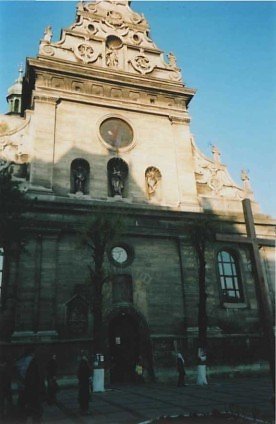
The Bernardine Church and Monastery, located in the heart of Lviv, Ukraine, stands as a striking testament to the city’s layered history, architectural splendor, and enduring religious significance. Founded in the mid-15th century by the Bernardine Order—a branch of the Franciscan monks—the complex has evolved into a remarkable fusion of Renaissance, Mannerist, and Baroque styles. Its imposing stone structures, intricate artistry, and storied past make it a must-visit for travelers, history enthusiasts, and architecture lovers exploring Lviv’s UNESCO-listed Old Town.
This guide provides detailed information on the Bernardine Church and Monastery’s visiting hours, ticketing, accessibility, historical context, and travel tips. Whether you are interested in its defensive fortifications, Baroque interiors, or vibrant cultural life, this article will equip you for a rewarding visit.
For in-depth background and current updates, see authoritative sources such as Wikipedia, Lviv Travel, and Trek.zone.

Origins and Foundation
The Bernardine Church and Monastery were established in 1460 when the Franciscan Observantists, known locally as Bernardines, arrived in Lviv at the invitation of Andrzej Odrowąż (Wikipedia). Their first wooden complex, built outside the city walls, was repeatedly destroyed by invaders, notably during the Moldovan attack in 1509 (Discover Ukraine). Despite these challenges, the Bernardines played a pivotal role in the spiritual and educational life of Lviv, contributing to the city’s religious diversity and monastic culture.
Architectural Evolution and Artistic Heritage
Transition to Stone:
With support from Polish King Sigismund III, the construction of a new stone church began in 1600 and was consecrated in 1630 as St. Andrew’s Church (Building.am). The church’s architecture is a blend of Renaissance, Mannerist, and Baroque elements, developed over three major phases:
- Renaissance Lower Tier: Designed by Peter the Roman (Pavlo Rymlianyn).
- Mannerist Middle Tier: Added by Ambrose Prihylny.
- Baroque Upper Façade: Completed by Andrzej Bemer, featuring sculptural decorations and statues of saints (Lviv Travel).
Artistic Masterpieces:
The church’s interior boasts 17th-century wooden altars, 18th-century frescoes by Benedykt Mazurkevych, and elaborate gilded ornamentation (Lviv Travel). Restoration efforts, particularly after the discovery of additional frescoes in 2007, continue to preserve these treasures (Ermakvagus).
Defensive and Strategic Significance
Originally situated outside the city fortifications, the Bernardine complex was a critical part of Lviv’s defense against Tatar and Turkish invasions. Its fortified walls, towers, moat, and ramparts are enduring symbols of the church’s dual religious and protective role (Discover Ukraine; Ermakvagus). The Hlyniany Gate, located behind the church, and remnants of the defensive wall are still visible.
Religious and Cultural Impact
The church is dedicated to St. Andrew the First-Called and is closely linked to St. John of Dukla, a patron saint of Lviv. Over centuries, the Bernardine monastery has been a center for monastic learning, charity, and interfaith engagement, reflecting Lviv’s multicultural character (Trek.zone). The complex now hosts cultural events, festivals, and exhibitions, maintaining its vibrant presence in community life (Ermakvagus).
Modern Role
Today, the church belongs to the Ukrainian Greek Catholic Church and remains an active place of worship, managed by the Order of St. Basil the Great. The former monastery buildings house the Lviv State Historical Archive (Wikipedia).
Architectural Features
Exterior and Fortifications
The Bernardine Church is a prominent example of early Baroque architecture with Mannerist influences (5 a.m. Magazine). Its façade, decorated with pilasters, volutes, and statues of saints, is both imposing and ornate. The adjacent Hlyniany Gate and remnants of the original moat evoke its defensive history (bbqboy.net). The bell tower, a key feature of Lviv’s skyline, combines functionality with Baroque artistry.

Interior Splendor
The church’s interior is a showcase of Baroque masterwork—featuring gilded altars, intricate woodcarvings, extensive biblical murals, and vibrant stained-glass windows (Lonely Planet). The high altar, with its twisting columns and dramatic sculpture of St. Andrew, dominates the sanctuary. Side chapels contain polychrome marble, gilded stucco, and paintings by local masters.

Monastic Complex
Surrounding the church, the monastery buildings form a tranquil cloister with Renaissance arcades and vaulted corridors (5 a.m. Magazine). The complex includes a library, refectory, former monastic cells, and auxiliary chapels—some now used for exhibitions and cultural events.
Visiting Information
Visiting Hours
- Daily: 9:00 AM – 6:00 PM
- Extended hours: Until 8:00 PM on Sundays and religious feast days
- Closed: On major religious holidays; confirm in advance via official sources
Tickets and Admission
- Entry: Free for general visits and religious services
- Guided tours & exhibitions: May require tickets (typically 30–100 UAH)
- Booking: Tours can be reserved onsite or via local tourism providers
Guided Tours and Events
Guided tours are offered in Ukrainian, English, and Polish, highlighting the church’s architecture, history, and religious life. Some tours include access to the bell tower for panoramic city views. The complex also hosts concerts, festivals, and community events—check schedules on the official Lviv tourism website.
Accessibility
- Physical access: The main church is wheelchair accessible; some monastery areas and the bell tower have stairs or uneven surfaces
- Assistance: Available on request at the entrance
- Gardens and cloisters: Offer smooth pathways suitable for visitors with mobility needs
Travel Tips
- Best time to visit: Weekday mornings, early or late in the day to avoid crowds and for ideal photography lighting
- Dress code: Modest attire is recommended, especially during services
- Photography: Allowed without flash; no tripods; respect the atmosphere during religious events
- Nearby amenities: Cafés, shops, and ATMs are within walking distance

Cultural Significance
Community Role
The Bernardine Church is deeply woven into Lviv’s identity, featuring prominently in local art, literature, and festivals. Its bells and music are part of the city’s soundscape, especially during religious holidays and civic celebrations. The complex also supports community outreach, charity work, and educational programs (Trek.zone).
Legends and Folklore
Rich in legends, the Bernardine Monastery is said to be connected by secret tunnels to other sites in Lviv, used in times of siege (nccconline.org). Tales of miraculous interventions and hidden treasures add to its mystique, while archaeological finds support the existence of underground passages.
Practical Information
How to Get There
- Address: 3 Soborna Square, Lviv
- From Rynok Square: 10-minute walk
- Public transport: Trams and buses with stops nearby; taxis and ride-share apps widely available
Nearby Attractions
- Dominican Cathedral
- Boim Chapel
- Arsenal Museum
- High Castle Park
- Rynok Square
Frequently Asked Questions (FAQ)
Q: What are Bernardine Church Lviv visiting hours?
A: 9:00 AM to 6:00 PM daily, with extended hours on Sundays and feast days.
Q: Is admission free?
A: Yes, general entry is free; guided tours and exhibitions may require tickets.
Q: Are guided tours available?
A: Yes, in multiple languages; some include bell tower access.
Q: Is photography allowed?
A: Yes, without flash or tripods; be respectful during services.
Q: Is the site accessible to visitors with disabilities?
A: The main church is accessible; some areas have stairs or uneven flooring.
Listen to the full story in the app
The whole Bernardine Church And Monastery,
told well.
Listen to sourced travel stories with local history and practical context — ready offline.
Verified, and shown.
Researched and written by the Audiala editorial team from historical records, architectural archives, and local expertise.
Andriia, 2024, Lviv Travel
Magazine
Built from cited sources · see the method · How we make our guides →