
Buganda's Royal City
Kampala makes more sense when you read it as a Buganda capital first and a modern metropolis second. Kasubi Tombs, Kabaka's Palace, Bulange, the Royal Mile, and Kabaka's Lake turn royal memory into streets, trees, and ceremony.
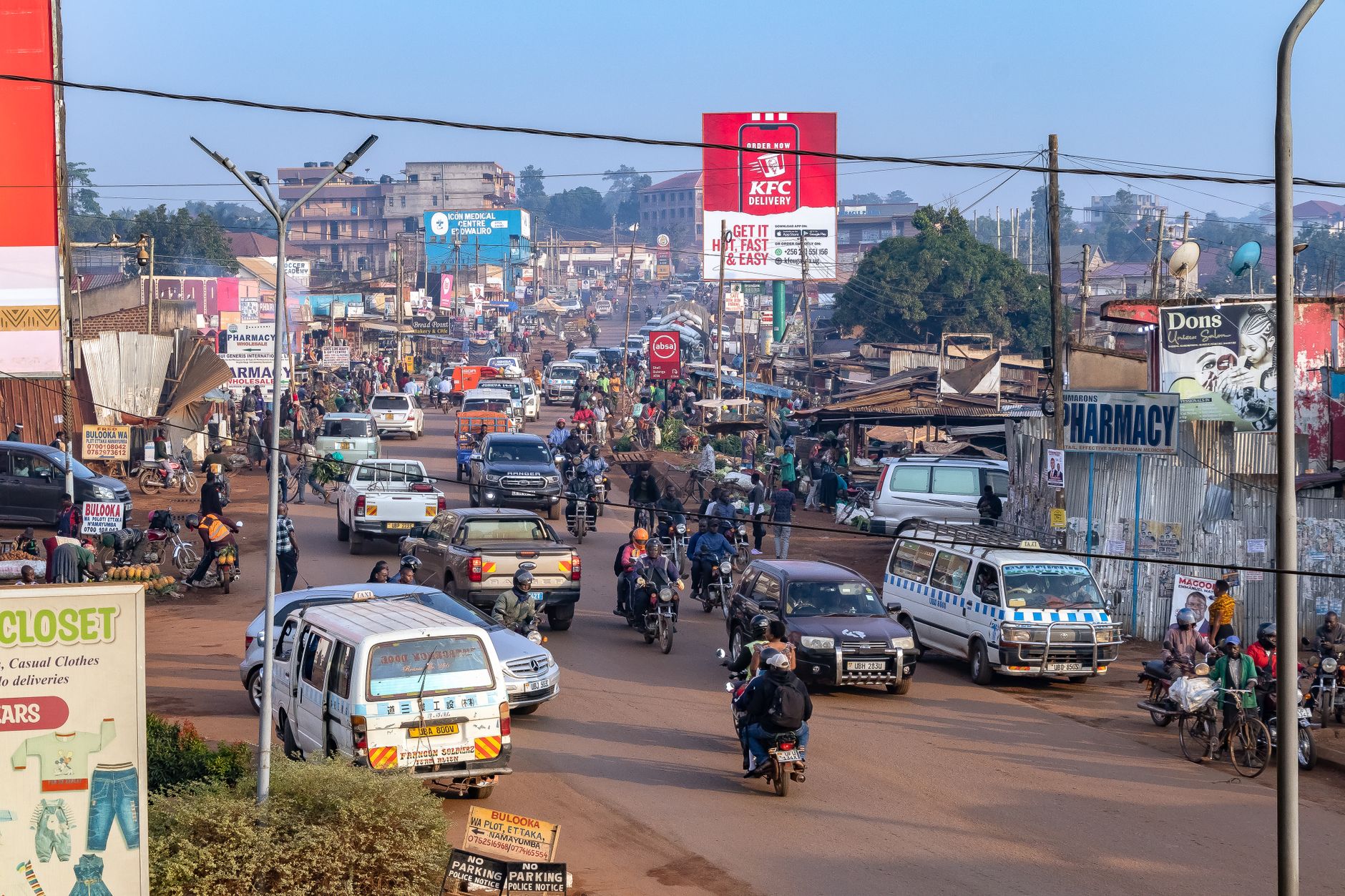
The call to prayer rolls off Old Kampala Hill, a boda-boda swerves past a stall frying chapati and eggs, and suddenly Kampala makes sense through sound before sight. Uganda's capital smells of charcoal smoke, rain on red earth, jackfruit, diesel, and coffee. Kampala can feel unruly at first glance, yet the city keeps revealing order: royal hills, cathedral hills, mosque hills, market roads, and the old Buganda logic still sitting under the traffic.
Researched from Wikidata, Wikipedia & official sources · fact-checked · How we make our guides →
KThe call to prayer rolls off Old Kampala Hill, a boda-boda swerves past a stall frying chapati and eggs, and suddenly Kampala makes sense through sound before sight. Uganda's capital smells of charcoal smoke, rain on red earth, jackfruit, diesel, and coffee. Kampala can feel unruly at first glance, yet the city keeps revealing order: royal hills, cathedral hills, mosque hills, market roads, and the old Buganda logic still sitting under the traffic.
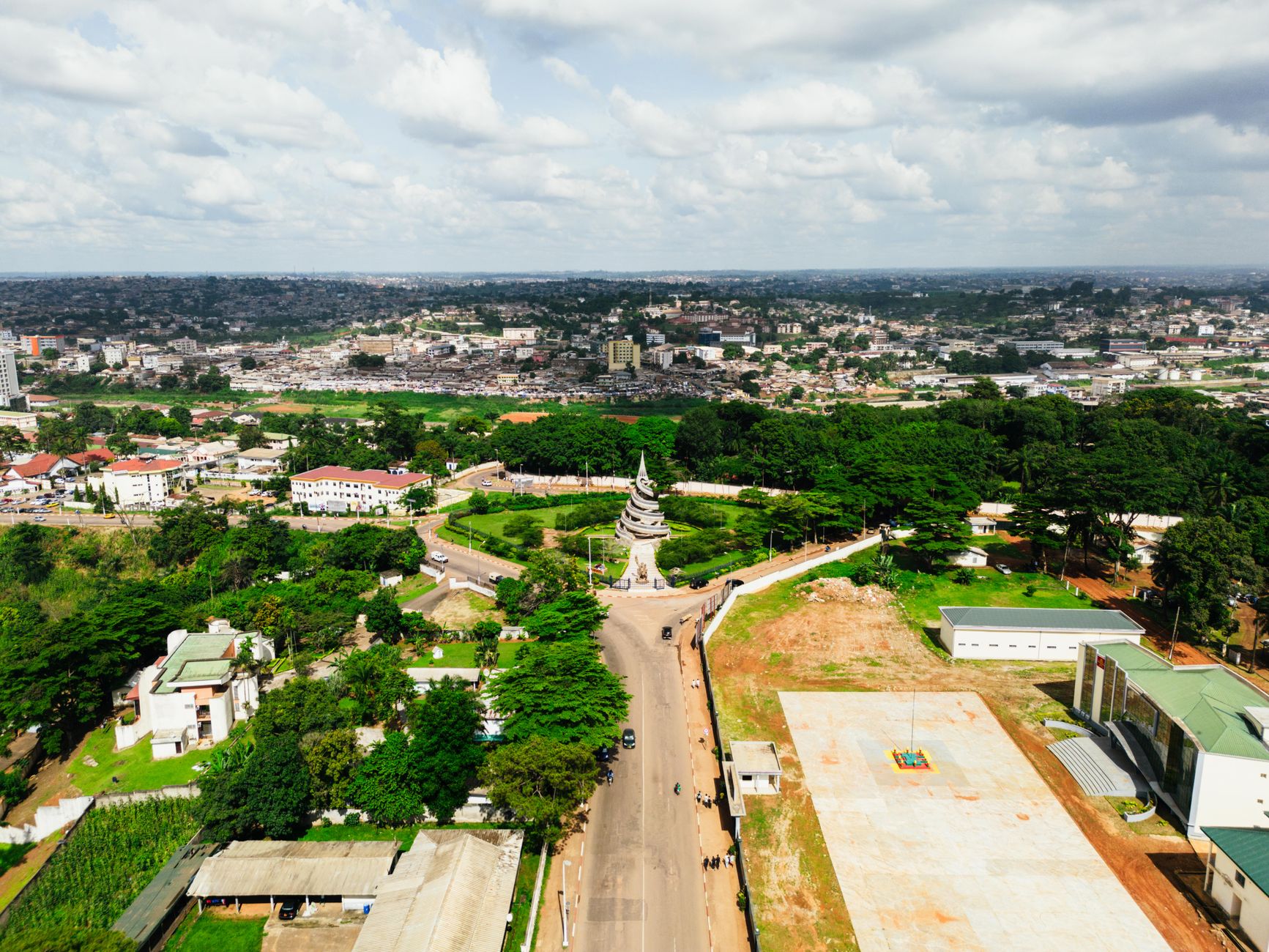
Kampala began as the hill country of Buganda's kings, and that history still gives the city its shape. Kasubi, Mengo, Bulange, Rubaga, Namirembe, Old Kampala: each hill carries its own argument about power, faith, or memory, and together they explain why this city never reads like a colonial capital pasted onto empty ground.
Food tells the same story in a different register. Morning starts with katogo or a hot roadside rolex, lunch leans toward matooke, beans, groundnut sauce, or luwombo wrapped in banana leaves, and night belongs to grilled meat, beer, live bands, and conversations that refuse to end when the clock says they should.
What makes this place worth slowing down for.
Kampala makes more sense when you read it as a Buganda capital first and a modern metropolis second. Kasubi Tombs, Kabaka's Palace, Bulange, the Royal Mile, and Kabaka's Lake turn royal memory into streets, trees, and ceremony.
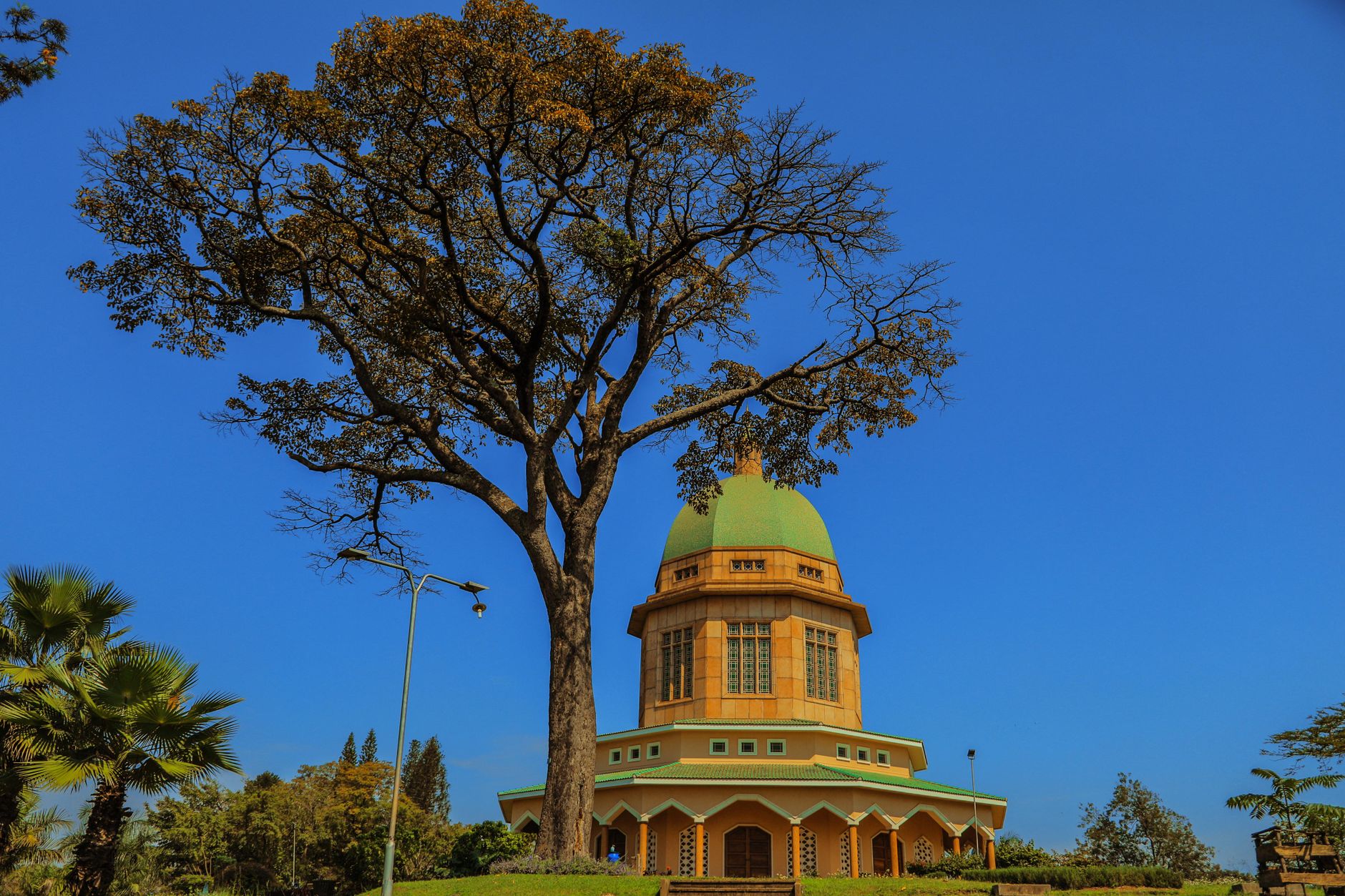
The city rises over a chain of hills, and each one seems to have claimed a monument: the Uganda National Mosque on Old Kampala, Rubaga Cathedral, Namirembe Cathedral, the Bahá'í House of Worship on Kikaaya. Climb the mosque minaret early and the whole place clicks into focus.
Kampala's cultural pulse sits in working venues, not sealed display cases. The National Theatre, Nommo Gallery, Afriart, 32° East, Makerere's art school, and Ndere Cultural Centre keep the city talking in paint, dance, film, and late-night conversation.
For a capital of roughly 3.5 million people, Kampala still gives you pockets of air. The Bahá'í grounds, Kabaka's Lake, and the southward pull toward Munyonyo and Lake Victoria offer birdsong, long views, and a break from the city's hard, honking tempo.
Where to wander, by quarter — each with its own rhythm.
Old Kampala gives you the city's clearest first reading. Climb the minaret of the Uganda National Mosque for the full sweep of hills and tin roofs, then come back down to streets where hardware shops, food stalls, and fast traffic keep the theory honest.
Mengo is Buganda royal ground, and you feel it in the spacing of the roads and compounds. The Kabaka's Palace, Bulange, the Royal Mile, Kisingiri House, and nearby Kabaka's Lake turn this part of Kampala into a lesson in monarchy, ceremony, and the aftertaste of state violence.
Rubaga rises west of the center with St. Mary's Cathedral on the hill and wide views over the city. The mood is quieter here, more residential and more reflective, and the Catholic history carries real weight rather than museum polish.
Kololo is where Kampala dresses a little sharper after dark. Expect cafes, lounges, rooftop bars, embassy-adjacent streets, and a crowd that comes for meetings at noon and stays for drinks after sunset.
Kisimenti and the Acacia area work well if you want an easy landing zone without retreating into hotel isolation. Restaurants, bars, coffee spots, and shops sit close together, and the evenings fill with Kampala's polished social life rather than its rougher edges.
Bugolobi gets food and nightlife right. Shaka Zulu and other local-food favorites sit within reach of Bandali Rise, where bar-hopping still has a certain Kampala looseness: less velvet rope, more live band, more smoke from the grill.
Muyenga spreads over a hill with cafes, neighborhood bars, good coffee, and some of the city's better-known street-food stops. Come here when you want Kampala life at a human scale, with enough altitude for a breeze and enough traffic below to remind you where you are.
Wandegeya runs on student appetite and low-margin speed. Near Makerere University, this is where rolex, kikomando, cheap plates, and late hours still feel tied to daily life rather than packaged for visitors.
From Buganda's moving court to a modern African capital that keeps rebuilding itself
Most scholars date the rise of Buganda to the late 14th century, on the north side of Lake Victoria. The hills that would become Kampala were already tied to royal movement, hunting grounds, and shifting court settlements rather than one fixed stone city. Power here traveled with the kabaka.
Muteesa I, later one of Buganda's defining rulers, is generally placed in the world of these same hills and died at Nabulagala in 1884. His life anchors Kampala to a precolonial political center that outsiders often miss when they treat the city as a British creation. The city was royal before it was colonial.
When Muteesa I came to the throne in 1856, the court around today's Kampala hills became sharper, wealthier, and more exposed to the outside world. He dealt with Arab traders, reorganized military power, and turned the royal capital into a place where diplomacy and danger sat side by side. Smoke from cooking fires, drums, and statecraft filled the same ridgelines.
John Hanning Speke reached Buganda's royal capital in 1862 and described a large, ordered hilltop court in the zone of present-day Kampala, Mengo, and Lubaga. His account matters less for romance than for scale: this was no village waiting to be discovered. Europeans arrived late to a place already running on its own terms.
Protestant missionaries arrived in Buganda in 1877, bringing new scripture, new alliances, and new trouble. Court politics changed fast. Religion here was never only prayer.
The White Fathers reached Buganda in 1879 and sharpened the rivalry already building at court. Chiefs, pages, and princes now sorted themselves through competing faiths as much as through clan and loyalty. Kampala's religious map started taking shape in argument before it rose in brick.
Mwanga II came to the throne in 1885, and the royal palace at Mengo is generally dated to his reign. The hill became the nerve center of a kingdom under strain, where conversion, succession, and colonial pressure collided. Some of Kampala's later political storms began in those courtyards.
The executions of Christian converts under Mwanga II reached their climax at Namugongo on 3 June 1886. The killings left a wound that never really closed, and the route from Kampala to Namugongo became one of East Africa's great pilgrimage corridors. Faith here was written in ash first.
Captain Frederick Lugard chose Old Kampala Hill in 1890 as the headquarters of the Imperial British East Africa Company. That date is usually treated as Kampala's founding, though the claim has a colonial neatness the hills themselves would dispute. A company post planted its flag inside an older kingdom.
On 24 January 1892, Protestant and Catholic factions fought on Kampala Hill while Lugard backed the Protestants with machine-gun fire. The battle helped settle British influence in Buganda by force rather than persuasion. Smoke drifted over the hills, and a colonial city moved closer to certainty.
Mengo Hospital traces its beginning to 22 February 1897, when Albert Ruskin Cook opened a clinic under a tree on Namirembe Hill. That image still has power: a hospital before the building, medicine before the institution. Kampala's modern public life often began that way, improvised first, formal later.
Apollo Kaggwa, Buganda's katikkiro and regent, stood at the center of the 1900 Buganda Agreement that fixed British rule into paperwork, land titles, and hierarchy. He helped shape colonial Kampala from the inside, especially in the Mengo court world where compromise often looked like survival. His fingerprints are on the city's political grammar.
The Uganda Museum began in 1908 at Fort Lugard before moving to its current site in 1954. Like many colonial museums, it collected the country while the country was being reordered around it. Glass cases and imperial curiosity made uneasy partners.
The present Namirembe Cathedral was consecrated in 1919 after earlier churches on the hill had been wrecked by storm, termites, and fire. Kampala architecture can feel oddly honest for that reason: the buildings keep admitting what can go wrong here. Timber, red earth, and faith learned to begin again.
Makerere began in 1922 as a technical school, then grew into East Africa's great intellectual engine. Generations of doctors, writers, civil servants, and critics passed through its hilltop classrooms. Few institutions have shaped Kampala's mind more deeply.
Edward Mutesa II was born in 1924 in the Kampala area and would become both Kabaka of Buganda and Uganda's first president. His life bound Mengo's royal hill to the new nation, then showed how fragile that marriage really was. Kampala adored symbols and punished them too.
St. Mary's Cathedral Rubaga, built between 1914 and 1925 and consecrated on 31 December 1925, fixed Catholic power visibly onto one of Kampala's seven famous hills. Its brick mass still dominates the ridge. Evening light makes the walls glow like fired clay fresh from the kiln.
Kampala became a municipality in 1949, formalizing the city the British had been sketching for decades. Plans, roads, racial zoning, and administrative boundaries all hardened. Ernst May's earlier planning ideas for eastward expansion lingered in the bones of the place.
The Uganda National Cultural Centre and National Theatre were inaugurated on 2 December 1959. A formal stage for drama, music, and argument appeared just as colonial rule was wobbling. Kampala likes culture best when it carries a little risk.
Rajat Neogy founded Transition magazine in Kampala in 1961, giving the city one of postcolonial Africa's sharpest literary voices. Writers argued here with real heat, not brochure politeness. Kampala briefly sounded like a continent thinking aloud.
Uganda became independent on 9 October 1962, and Kampala replaced Entebbe as the national capital. The change shifted more than offices. Royal hills, missionary hills, and commercial streets were suddenly asked to carry a country's future.
In May 1966, Milton Obote ordered the army under Idi Amin to attack the Lubiri at Mengo after a showdown with Buganda's leadership. Mutesa II fled into exile, and the assault broke the political bargain between kingdom and state. The palace grounds still hold that chill.
Idi Amin seized power on 25 January 1971, and Kampala became the seat of his military regime. Fear moved into ordinary places: offices, barracks, basement cells, whispered conversations at dusk. Cities remember terror in specific rooms.
Amin's expulsion of many Asians in 1972 ripped through Kampala's commercial life. Shops changed hands overnight, skills vanished, and whole streets lost the people who knew how they worked. You can still feel the aftershock in family histories and property stories.
The current Uganda Martyrs Basilica at Namugongo was formally opened on 3 June 1975. Its broad circular form turned memory into pilgrimage architecture on a grand scale. Prayer, grief, and national identity met under one roof.
Tanzanian and UNLF forces captured Kampala on 10 and 11 April 1979, ending Amin's rule. The city changed hands amid gunfire, wrecked streets, and the strange quiet that follows a regime collapse. Kampala has known that silence more than once.
During the Battle of Kampala in January 1986, Museveni's National Resistance Army captured the capital and ended the Okello government. That victory opened Uganda's long new political chapter. Since then, much of the country's power has been argued, concentrated, and contested in Kampala's traffic-choked core.
Buganda was restored as a traditional kingdom in 1993, and Ronald Muwenda Mutebi II became Kabaka. Mengo was no museum piece after that. Royal ritual and modern politics began sharing the city again, sometimes politely, sometimes not.
UNESCO inscribed the Kasubi Tombs in 2001, recognizing the royal burial ground as one of Africa's great architectural and spiritual sites. The grass-thatched main structure mattered for more than beauty. It held Buganda's monarchy, clan labor, and sacred memory under one immense woven roof.
The Uganda National Mosque was officially opened in June 2007 after a long, stop-start building history that began under Amin and resumed with Libyan funding. Its minaret gives the clearest lesson in Kampala's geography: hill after hill, tin roofs flashing, traffic growling below. Cities built on ridges never stay visually modest.
A major fire tore through the main structure at Kasubi on 16 March 2010, destroying much of the site that had come to embody Buganda's sacred kingship. The loss felt personal to many residents, not abstract heritage damage. Burned grass and blackened poles said more than official statements ever could.
On 11 July 2010, bomb blasts at Ethiopian Village and Kyadondo Rugby Club killed 74 people watching the World Cup final. Kampala's nightlife was pierced in a moment that should have been communal and careless. After that, screens, checkpoints, and suspicion sat closer together.
The Kampala Capital City Act, passed in 2010 and rolled out in 2011, replaced the old city council structure with the Kampala Capital City Authority. Governance became more centralized, more technocratic, and more tightly tied to national power. Even potholes here can lead back to constitutional questions.
UNESCO removed the Kasubi Tombs from the List of World Heritage in Danger on 12 September 2023 after years of reconstruction. That decision marked more than a repair job. Kampala had managed, slowly and with ritual care, to rebuild one of the places that explains the city to itself.
The people who shaped the city — and were shaped by it.
Muteesa II turned Kampala into more than an administrative capital; for Buganda, Mengo was the nerve center of a kingdom negotiating with colonial rule and then with independent Uganda. He would still recognize the symbolic weight of the Royal Mile, even if the traffic around it would test anyone's patience.
Mwanga II left one of Kampala's strangest pieces of royal infrastructure: a man-made lake cut into the city by order of a king who ruled during one of Buganda's most violent, unstable periods. Stand by Kabaka's Lake and the place stops feeling ornamental; it starts to feel like ambition carved into the ground.
Apollo Kaggwa helped shape the Buganda establishment that still gives western Kampala its political grammar: palace, parliament, ceremonial road, clan symbolism. He was one of the men who translated royal power into offices, paperwork, and urban form, which is why Mengo still feels planned rather than accidental.
Ernst May came to East Africa with modernist ideas and left fingerprints on Kampala's institutional architecture and planning logic. He would probably stare at today's traffic in disbelief, then quietly admit that the hills still make the city hard to tame.
Kony does not belong to Kampala in any affectionate sense, but the city carries part of his history in scar tissue. The 2010 bombings during the World Cup final pulled northern Uganda's long war into the capital's public memory, a reminder that Kampala's nightlife and national politics have never been fully separate.
Where locals actually book dinner — not the tourist menus.
Kampala's signature street bite is a rolled chapati filled with eggs, onions, tomatoes, and whatever the vendor feels like adding. Eat one hot off the pan, edges crisp and center soft, and you'll understand why this humble wrap turned into a civic emblem.
This Buganda classic cooks meat, chicken, or groundnut-rich sauce slowly in banana leaves until the flavors turn deep and almost smoky. Order it when you want a dish with royal roots rather than another plate of grilled meat.
Steamed green bananas sound plain on paper. They aren't. In Kampala they arrive soft, earthy, and comforting, usually with groundnut sauce, beans, or stew, the kind of food that settles you after a long day in traffic.
Goat, beef, or chicken roasted over charcoal shows up all over the city, from busy roadside joints to beer gardens. The smoke does half the work; the rest comes from salt, fire, and a cook who knows exactly when to pull the meat.
Peanut sauce in Kampala is less side dish than quiet authority. Spoon it over matoke, sweet potatoes, cassava, or chicken and it adds weight, sweetness, and that slow roasted smell that hangs in the air before the plate even lands.
Kampala's South Asian influence runs deep, so biryani, samosas, curries, and spiced grilled meats feel woven into the city rather than imported for visitors. This is one of the better places in East Africa to eat across that seam between Ugandan ingredients and Indian technique.
Small things that change how the city treats you.
Use hotel-arranged transport or a trusted driver after dark, especially between Entebbe and Kampala. UK and U.S. advisories flag theft, road risk, and security incidents around crowded areas, bars, and transport hubs.
Pack clothing that covers shoulders and knees if you're visiting the Uganda National Mosque, Kasubi Tombs, or the hilltop cathedrals. Kasubi remains an active royal-spiritual site, and women may be asked to wear a long skirt.
Kampala still runs heavily on cash for taxis, market snacks, and informal services, even though cards work in bigger hotels and malls. Keep small UGX notes handy so you are not trying to break a 50,000-shilling bill for a short ride.
January to February is the safest window for easier city sightseeing, with June to July close behind. Kampala stays warm all year; what changes your day is rain, traffic, mud, and the occasional flooded street.
Kampala has no metro or tram, and public transport is still mostly shared minibus taxis, boda-bodas, and private cars. Use ride-hailing or a driver for cross-city trips unless you already know the taxi park routes.
Follow the lunchtime crowd rather than the polished signboard. Kampala's food scene rewards curiosity, but check whether a restaurant has added a service charge before leaving an extra tip.
The city, as it actually looks.

A view of Kampala, Uganda.
Kelly on Pexels
A view of Kampala, Uganda.
Workman House on Pexels

A view of Kampala, Uganda.
Wings Panic on Pexels
A view of Kampala, Uganda.
Wings Panic on Pexels
A view of Kampala, Uganda.
Kelly on Pexels

A view of Kampala, Uganda.
Christian NZAYISENGA on Pexels
Yes, if you want a city with real texture rather than a polished capital. Kampala makes sense when you read it through its hills: Buganda royal sites, cathedral and mosque viewpoints, strong contemporary art spaces, and a street life that feels improvised but alive.
Two to three days is a good minimum. That gives you time for the Buganda royal core, the Uganda National Mosque or one of the cathedral hills for city views, the Uganda Museum, and at least one arts stop such as Afriart, Nommo, or Ndere.
Kampala is manageable with big-city caution, but it is not a city to treat casually. Official travel advisories warn about theft, road accidents, demonstrations, and occasional security incidents, so use arranged transport after dark, avoid political crowds, and keep valuables out of sight.
The simplest option is an official airport taxi or a pre-arranged hotel transfer. Uganda Civil Aviation Authority lists the airport about 40 km from Kampala, with official airport taxi fares published at about US$40 or UGX 100,000; cheaper commuter transport exists but involves a more fragmented trip.
Kampala has app-based and private car options, but its everyday public transport is still informal. Expect shared minibus taxis, boda-bodas, and cash payments rather than a metro, tram, or integrated city transit card.
January to February is the safest bet for dry weather, with June to July usually working well too. The city stays warm through the year, but the rainy seasons from March to May and September to November can slow everything down.
Kampala can be fairly budget-friendly if you are careful with transport and where you eat. Entry fees and private drivers add up, but local food, commuter transport, and craft shopping can stay affordable if you carry cash and avoid relying only on hotel pricing.
You can walk short stretches in selected central corridors, but Kampala is not a pedestrian-first city. KCCA has improved parts of the center with non-motorised corridors, though traffic, heat, and road conditions mean longer cross-city walks are rarely pleasant.
Ready to book?
Kampala's main gateway in 2026 is Entebbe International Airport (EBB), about 40 km southwest of the city. Uganda Civil Aviation Authority lists official airport taxi fare to Kampala at US$40 or UGX 100,000, with the Entebbe Express Highway usually the quickest road in. Kampala has no intercity passenger rail hub for tourists, so arrivals continue by road via the Entebbe-Kampala corridor and major highways linking Jinja to the east, Masaka to the southwest, and Gulu to the north.
Kampala has no metro, subway, or tram system in 2026. Daily movement runs on shared minibus taxis, boda-bodas, and private or special-hire cars, with route hubs around the Old Taxi Park and other central stages. KCCA has improved a few non-motorised corridors, including Namirembe Road and Luwum Street, and roads such as Lubiri Ring Road include bike lanes, but the cycling network is still patchy and cash remains the default for transport.
Kampala stays warm all year because of its elevation, with daytime temperatures usually around 24-28°C and nights around 16-18°C. The heaviest rains tend to fall from March to May and again from September to November, when traffic thickens and flash flooding can slow the city to a crawl. For easier sightseeing, January-February and June-July are the cleanest windows, while December and August often work well enough with a little weather luck.
English is Uganda's official language, Swahili is the second official language, and Luganda is the one you'll hear most often in Kampala taxis, markets, and casual street talk. The currency is the Ugandan shilling (UGX); Bank of Uganda notes commonly used bills from UGX 1,000 to UGX 50,000. Cards work in larger hotels, malls, and polished restaurants, but cash still runs much of the city and mobile money is everywhere.
In 2026, Kampala rewards alert travelers more than relaxed ones. Use arranged transport after dark, keep phones and cameras tucked away in congested areas, and think twice before hopping on a boda-boda unless you know the driver or the app. Foreign-government advisories still flag terrorism risk, demonstrations, theft, and road accidents, so avoid political gatherings, steer clear of security sites with your camera, and keep night travel simple.
0 places, one continuous walking route. Free with your first city.