
Introduction
Uganda travel guide: come for gorillas if you want, but the real surprise is how much water, altitude and cultural range fit inside one landlocked country.
Uganda works best when you stop imagining one big safari and start seeing a tightly packed country of radically different landscapes. In a single trip, you can land in Entebbe on Lake Victoria, spend a day in Kampala reading the country's social pulse through markets and matoke stalls, then push east to Jinja where the Nile leaves the lake in a rush of white water and river traffic. Head west and the air changes again: Fort Portal gives you crater lakes and tea country, while Kasese opens the road toward the Rwenzori, where Uganda climbs to 5,109 meters on Margherita Peak.
The strongest Uganda itinerary mixes primates, wildlife and highland towns rather than forcing a single theme. Kabale and Kisoro are the practical gateways to the southwest, where Bwindi and Mgahinga turn a gorilla permit into something far more physical and strange than a checklist sighting. Mbarara gives you access to cattle country and the road south-west, while Masindi is the classic springboard for Murchison Falls. Mbale shifts the story east toward Mount Elgon, waterfalls and coffee slopes; Gulu and Soroti pull you into a drier, less visited Uganda that rewards travelers who prefer long distances, history and fewer rehearsed encounters.
What makes Uganda memorable is density. The distances rarely look huge on a map, yet the country keeps changing register: roadside rolex in Kampala, bird calls in wet forest, evening smoke over lake edges, mountain light near Fort Portal, red dirt and wide skies farther north. English is widely useful, but the place reveals itself through local cadence, whether that is Luganda around Kampala, Lusoga near Jinja or Acholi in Gulu. Uganda does not flatten into one image, and that is exactly why it stays with people.
A History Told Through Its Eras
Ochre on Granite, Salt on Fire, and the Vanished Kings
Origins and Spirit Kingdoms, prehistory-1500
At Nyero, east of modern Mbale, the story begins not with a palace but with red circles painted on granite. The rock still carries them: loops, spirals, signs without a court chronicler to flatter them. Far to the west at Kibiro on Lake Albert, women still boil salt from brine-soaked earth, smoke rising at dusk from a craft that predates any modern border.
Ce que l'on ignore souvent, c'est que Uganda's earliest grandeur was not stone architecture in the Mediterranean sense but control over what people could not live without: salt, cattle, iron, rain. On Mount Elgon, caves such as Kitum were scratched and widened by elephants seeking minerals, a royal image before there were kings. The land was already organized by exchange, ritual and memory long before Europeans arrived to name it.
Then comes the great Ugandan enigma: the Chwezi. Oral tradition gives them pale skins, occult powers and the melancholy of a dynasty that knows it is ending. Archaeology is more sober, but no less impressive: at Bigo bya Mugenyi, near the Katonga basin, earthworks stretch for kilometers, ditches cut deep into laterite between roughly the 14th and 15th centuries, evidence of a court that could command labor on a formidable scale.
Legend holds that Wamara, last of the Chwezi rulers, heard prophecy whisper that strangers would inherit everything. He is said to have ordered his sacred cattle destroyed rather than surrendered, then vanished toward Lake Wamala with a court already half in this world, half in the next. History cannot certify the tears, of course, but it can confirm the afterlife: Chwezi spirits remained in western Uganda, speaking through mediums and cattle-healing rituals, and from that haunted inheritance the later kingdoms would claim descent, deny it, or fight over it.
Wamara survives less as a documented sovereign than as a ghost-king whose name still clings to a lake and to possession cults in western Uganda.
Colonial surveyors repeatedly mistook ritual stone enclosures on Mount Elgon for cattle kraals, missing that they belonged to ceremonial life rather than simple livestock management.
The King, the Drum, and the Court That Never Slept
The Lake Kingdoms, 1500-1875
A Buganda court day did not begin with a trumpet but with protocol. Barkcloth rustled, messengers moved barefoot, and somewhere the royal drum marked time more sternly than any clock. Around Lake Victoria, kingdoms such as Buganda, Bunyoro and Toro learned to turn banana groves, canoe routes, tribute and clan allegiance into power.
Buganda's own founding story is beautifully improper. Kintu arrives with a cow, a plantain shoot, a few seeds and the confidence of a man who means to stay; he marries Nambi and, by looking back when he was told not to, lets death into the world. Myth, yes. But myth with political function: it explains why kingship in Buganda was never mere administration and why the court treated ritual objects, royal bodies and lineage with an almost theatrical seriousness.
The Kabaka was not one body but several addresses at once. His umbilical cord had its shrine. After death, the royal jaw could be preserved and consulted, because a king in Buganda was expected to keep speaking even after burial. The sacred drum Mujaguzo sounded through a reign, and when it fell silent everyone understood what had happened before any official declaration.
To the northwest, Bunyoro-Kitara claimed older, broader legitimacy and guarded its own imperial memory with equal ferocity. This rivalry shaped the political map that later outsiders would exploit. By the time the 19th century opened, the kingdoms of the region were disciplined, ambitious and fully capable of diplomacy, war and statecraft; they were not waiting to be discovered. They were waiting to see what to do with the strangers sailing inland from the coast.
Kabaka Mutesa I inherited this world of drums, clan arithmetic and sacred kingship, then proved brilliant at turning foreign rivalries into court politics.
One Buganda tradition held that the silence of the royal drum announced a king's death before any messenger dared say the words aloud.
When the Palace Opened Its Gates and the Empire Walked In
Missionaries, Treaties and Protectorate, 1875-1962
Picture the hilltop court near today's Kampala in the late 1870s: Arab traders with cloth and firearms, Protestant missionaries with Bibles, Catholic White Fathers with rosaries, pages hurrying between compounds, and Kabaka Mutesa I watching all of them with the cool attention of a chess player. Stanley would later present the scene as the beginning of Christian awakening. That was vanity. Mutesa understood very well that rival foreigners could be balanced against one another.
Ce que l'on ignore souvent, c'est que Stanley's famous appeal for missionaries was written under Mutesa's gaze and, in spirit at least, with his permission. The Kabaka was not passively converted by Europe; he invited competition into his court because competition kept him at the center. Religion, in Buganda, arrived not as private faith alone but as faction, patronage and eventually armed politics.
The result was bloody. Court pages converted. Muslim, Catholic and Protestant factions fought for access to the throne. Young Christian converts, later remembered as the Uganda Martyrs, were executed in the 1880s under Kabaka Mwanga II, and their deaths were turned into one of the great sacred narratives of East African Christianity. Meanwhile Bunyoro's Omukama Kabalega fought with tenacity against encroaching British power, refusing the role of picturesque loser that empire likes to assign its enemies.
By 1894, Britain had declared the Uganda Protectorate. Agreements followed, especially the Buganda Agreement of 1900, which translated political loyalty into land, office and durable inequality. Cotton and then coffee reordered the economy. Chiefs became administrators, missionaries became school-builders, and colonial rule learned to govern through selected local elites. Independence in 1962 did not emerge from a blank slate; it arrived from a century of bargains made on hills, in churches, in county headquarters, and in palaces that had opened the door thinking they could still control the guest.
Kabalega of Bunyoro spent years fighting, retreating and returning, a king turned guerrilla rather than a monarch resigned to British paperwork.
Mutesa I is said to have kept a private matooke plantation from which no one else was allowed to harvest, a royal vanity as revealing as any crown.
The Republic Arrives, Then the Night Knocks at the Door
Independence, Coups and Fear, 1962-1986
Independence came with ceremony, flags and the dangerous hope that constitutional elegance might tame old rivalries. It did not. Uganda inherited kingdoms, regional loyalties, colonial distortions and a central state still arguing with itself about who truly owned sovereignty: elected politicians, traditional rulers, the army, or some tense compromise among them.
No episode captures that fracture better than 1966. Prime Minister Milton Obote suspended the constitution, and troops under Idi Amin attacked the Lubiri, the palace of Kabaka and President Edward Mutesa II in Kampala. The image is almost operatic: a modern army shelling a royal residence on a hill that had once dictated the etiquette of kingdoms. Mutesa fled into exile in London, where he died three years later, far from the drumbeat that had made him king.
Then came Amin in 1971, all swagger first, terror soon after. Asians were expelled in 1972, businesses were seized, and the state became erratic, violent and predatory. Some still remember the martial theatre, the uniforms, the theatrical titles. Families remember something else: disappearances, bodies, whispers, the calculation of what could safely be said after dark.
The murder of Archbishop Janani Luwum in 1977 stripped away any remaining pretense. When Amin fell in 1979 after war with Tanzania and internal resistance, Uganda did not slide gently into peace. Obote returned, conflict spread again, and the Luwero Triangle became a landscape of massacre and memory. By the time Yoweri Museveni's National Resistance Army took Kampala in 1986, the country had been taught, at terrible cost, that removing a ruler is one thing and rebuilding trust is another.
Edward Mutesa II, educated, elegant and politically trapped, ended as a king-president who lost both throne and country before dying in exile.
When Mutesa II died in London in 1969, rumors swirled so fiercely around the circumstances that even grief became political ammunition.
After the Guns, the Long Reign and a Country Too Young to Forget
Reconstruction and the Long Present, 1986-present
When Museveni entered Kampala in 1986, he arrived not as a ceremonial heir but as a victor promising discipline after years of blood. For many Ugandans, especially those exhausted by coups and countercoups, order itself felt almost luxurious. Roads reopened. Ministries functioned more regularly. The state, at least in parts, regained the habit of staying upright.
But history rarely offers clean endings. Traditional kingdoms, including Buganda, were restored in cultural form in the 1990s, which gave Uganda one of its most intriguing modern arrangements: a republic that still speaks the language of kingship. In Kampala, you can move in a single day from government offices to the Kabaka's world, from constitutional legality to dynastic memory, and feel that neither has fully cancelled the other.
The long present has also been marked by contradiction. Economic liberalization, urban growth and a youthful population have transformed daily life from Entebbe to Jinja and from Mbarara to Gulu. Yet the political center has remained tightly held, elections bitterly contested, and public memory unevenly distributed. In the north, the Lord's Resistance Army war scarred families for two decades, making questions of state power and abandonment painfully literal.
Ce que l'on ignore souvent, c'est how young the country now is in demographic terms: a nation where vast numbers were born long after Amin, yet still live among his shadows. Uganda today is not post-history. It is a place where spirit mediums, royal anniversaries, liberation narratives, Pentecostal microphones, army memoirs and startup ambition all speak at once. That is why its past feels so near. It has not finished arguing with the present.
Yoweri Museveni built his legitimacy on ending chaos, then stayed long enough to become, for a younger generation, the establishment he once opposed.
In modern Buganda ceremonies, ancient symbols of kingship still draw crowds large enough to remind the republic that dynastic memory was never abolished, only rearranged.
The Cultural Soul
A Greeting Longer Than a Road
In Uganda, speech begins before content. A woman in Kampala asks how you woke, how the night behaved, how the family breathes. Only then does business enter, slightly humbled. Luganda does this with elegance, Acholi with gravity, Ateso with a clean edge, and English arrives wearing local shoes.
You hear code-switching the way you hear rain on a tin roof: constant, patterned, never random. Someone says “I am coming” while still standing three streets away. Someone else tells you to “extend” greetings to a cousin you have never met. The sentence means more than the dictionary allows. That is culture at work.
Jinja, Gulu, Mbale, Mbarara: each town shifts the music of the mouth. Uganda does not speak in one tongue but in a parliament of them, and the miracle is not that people understand each other. The miracle is that they keep making room for one more voice.
Politeness Before Velocity
Uganda mistrusts haste, and rightly so. To rush past greeting is to behave like a person raised by luggage. In Entebbe, on a hotel terrace, in a market lane in Fort Portal, beside a taxi stage in Kabale, the ritual remains the same: recognize the other person first, then ask for what you want.
This is not empty ceremony. It is social engineering of a high order. “Ssebo.” “Nnyabo.” “Webale.” These small words keep the day from fraying. One thanks not only for the favor but for the effort, for the fact that another human being spent energy in your direction.
A country reveals itself by the way it handles minor encounters. Uganda handles them with patience, rank, softness, and sharp attention. Affection has rules here. That is why it lasts.
Banana Leaf, Smoke, and Obligation
Ugandan food understands the sacred value of starch. Matoke is not a side dish. It is a philosophy of steadiness wrapped in banana leaves and steamed until the fruit forgets itself. Luwombo arrives tied like a secret, and when the leaf opens, steam carries chicken, groundnut, mushroom, and leaf perfume into the room with the authority of incense.
Then the street answers the household table. A rolex in Kampala is breakfast, lunch, regret prevention, and national wit folded into chapati. Kikomando is what happens when economy refuses humiliation. Muchomo smokes at dusk. Gonja blackens sweetly over roadside charcoal. Hunger here is treated seriously.
Uganda cooks by texture as much as flavor. Soft matoke, dense posho, rough millet, slippery beans, the velvet of groundnut sauce. You learn quickly that the right hand is not merely a utensil. It is part of the recipe.
Sunday in White and Red Dust
Uganda prays in many registers. Cathedral bells in Kampala, mosque calls in Old Kampala, born-again preaching under iron sheets, Catholic processions in the southwest, shrines of older spirits in the west where the Chwezi never quite agreed to leave. Religion here is not filed away from ordinary life. It sits in the same room as politics, sickness, gratitude, exams, and bus departures.
What strikes the visitor is the wardrobe of faith. White dresses starched into geometry. Jackets despite the heat. Shoes polished for church in towns where roads still throw red dust at the ankles. People do not dress for God as an abstraction. They dress as if attendance matters.
And then the older layer persists. According to tradition, mediums still speak for royal spirits in western Uganda. A sermon and a spirit consultation may belong to different worlds on paper. In lived Uganda, paper is often the weakest witness.
Drums for Kings, Bass for Traffic
Uganda’s ear was trained early. Buganda made royalty audible through drums long before microphones arrived, and the logic survives: power should be heard. Traditional ensembles still move through weddings, clan ceremonies, and courtly performances with drums, endingidi, adungu, and voices that do not ask permission from the air.
Then Kampala turns the dial. Car speakers leak Afrobeats, dancehall, gospel, kadodi rhythms from the east, old Congolese guitar lines, and local pop that travels between romance and command. A taxi park is never silent. Even the engines seem to keep time.
In Mbale, near Mount Elgon, the Imbalu season remakes rhythm into public courage. Drums do not decorate the rite. They drive it. Music in Uganda often serves less as entertainment than as evidence: someone is arriving, someone is transforming, someone must dance or admit cowardice.
The Hill, the Courtyard, the Veranda
Uganda’s architecture rarely flatters itself. It shades, drains, receives, endures. In Kampala, hills carry bungalows with deep verandas, apartment blocks with tinted ambition, ministries in concrete, churches in imported styles, and markets that solve heat, trade, and crowd logic better than many planners. Practicality has its own beauty. It sweats less.
The royal compounds of Buganda tell another story. Space there was political. Courtyards, gates, drums, thresholds, the placement of the kabaka’s body and symbols: architecture as hierarchy made walkable. A kingdom can be read by its floor plan.
Elsewhere the country builds with what the weather permits and what the wallet forgives. Brick, corrugated iron, timber, banana fiber, cement block. In Kisoro and Kasese, in Gulu and Soroti, buildings often appear provisional until you notice how intelligently they face rain, slope, and sun. A house need not preen to know what it is doing.
What Makes Uganda Unmissable
Gorillas And Chimps
Bwindi and Mgahinga deliver the headline experience, but Uganda's primate strength runs wider than gorillas. Kibale, Budongo and other forests make this one of Africa's richest countries for close, guided encounters with great apes.
The Nile Begins Here
Jinja turns a geography lesson into a real itinerary. You can stand at the Source of the Nile, then spend the same day rafting, kayaking or taking a slower river cruise as the water pulls north.
Mountains With Weather
Uganda is not flat, and it is not uniformly hot. The Rwenzori near Kasese, the Kigezi highlands near Kabale and the Mount Elgon zone near Mbale bring cool air, long views and trekking that feels far removed from savannah clichés.
Safari Without Sprawl
Murchison Falls, Queen Elizabeth and Lake Mburo give Uganda a strong safari circuit, but the country stays compact enough to combine wildlife with cities, lakes and trekking. That mix is the advantage.
Street Food To Banana Leaves
Ugandan food is better than many first-time visitors expect. Eat rolex on a Kampala street corner, then move into matoke, luwombo, muchomo and groundnut sauce if you want to understand how region and routine shape the table.
Kingdoms And Living Memory
Uganda's past is not locked in museums. Buganda court history, Chwezi legend, salt-making at Kibiro and regional languages still shape how power, belonging and ceremony are understood today.
Cities
Cities in Uganda
Kampala
"Seven hills, a dozen languages, and a rolex stand on every corner — Uganda's capital runs on controlled chaos and extraordinary food."
Entebbe
"The colonial-era lakefront town where Lake Victoria begins and international flights end, still moving at the pace of its botanical gardens."
Jinja
"At the point where the Nile leaves Lake Victoria, the river that built Egypt begins as white water running past sugar-cane fields and red laterite cliffs."
Kabale
"Terraced hillsides stitched together like a green quilt at 1,900 metres — the mountain town that marks the gateway to gorilla country and the Rwenzori foothills."
Fort Portal
"A compact highland town ringed by crater lakes, tea estates, and the snow-capped silhouette of the Rwenzori on clear mornings."
Gulu
"The north's largest city carries its post-conflict decade lightly now — a fast-moving, music-loud town that travelers pass through but rarely stay in long enough."
Mbale
"Sitting at the base of Mount Elgon's western slope, this market town smells of coffee cherries and is the practical base for Uganda's most underrated highland trek."
Mbarara
"The commercial heart of the ankole cattle country, where long-horned herds cross the highway at dusk and the local dairy culture is quietly serious."
Kasese
"The last town before the Rwenzori range proper, a scrappy logistics hub whose only job is to send you higher into Africa's most improbable glaciated mountains."
Kisoro
"A small town pressed into the southwestern corner where Uganda, Rwanda, and the DRC converge, and mountain gorillas move through the volcanic forest above the market."
Soroti
"On the edge of the Teso plateau, this eastern town is the entry point to rock-art sites at Nyero and a landscape of granite inselbergs rising from flat red earth."
Masindi
"An old colonial district capital that functions as the northern staging post for Murchison Falls, where the entire Nile is forced through a six-metre rock gap."
Regions
Kampala
Central Corridor
Kampala is where Uganda stops being an outline on a map and turns into traffic, markets, churches, phone shops, and late-night roast meat. The city sprawls over hills, but it also works as the country's switchboard: buses, banks, embassies, visa fixes, better hospitals, and the fastest access to what comes next.
Entebbe
Lake Victoria Gateway
Entebbe has airport convenience, yes, but it also has a calmer pace than Kampala and a lakefront mood that makes arrival feel less like admin. This is where many trips begin and recover: botanical gardens, birdlife, old state avenues, and ferries and boats pushing out across Lake Victoria.
Jinja
Nile and Eastern Trade Route
Jinja sits on one of the few pieces of geography everybody thinks they know before they arrive: the Nile. The city itself is older, stranger, and more useful than the rafting brochures suggest, and the eastward road toward Mbale still carries the grain, sugar, and bus traffic that built this corridor.
Mbale
Mount Elgon and Teso
Mbale gives you cooler air, Bugisu coffee country, and the first sense that Uganda is really a nation of uplands rather than flat equatorial heat. Push north to Soroti and the land opens into Teso, where granite outcrops, broad roads, and a drier rhythm replace the crowded central corridor.
Fort Portal
Albertine West
Fort Portal is one of Uganda's most agreeable base towns: tea estates, crater lakes, and a measured pace that makes long drives easier to forgive. Farther south and north, Kasese and Masindi pull this western arc toward the Rwenzori, Queen Elizabeth, Semuliki, and Murchison country, where distances look short on paper and rarely feel that way on the road.
Kabale
Kigezi and the Gorilla Highlands
Southwest Uganda rises, folds, and narrows until the roads start twisting like wire. Kabale is the sensible base, Mbarara is the last major service city on many routes, and Kisoro is where the country turns steep, volcanic, and trek-focused near the borders with Rwanda and Congo.
Suggested Itineraries
3 days
3 Days: Entebbe, Kampala and Jinja
This is the clean short route for first-timers with little time. Start on the lake in Entebbe, use Kampala for markets and city rhythm, then finish in Jinja where the Nile turns from schoolbook fact into actual water, rapids, and long river light.
Best for: first-timers, stopovers, soft-adventure weekends
7 days
7 Days: Western Crater Lakes to the Rift
Western Uganda changes fast: tea country around Fort Portal, the Rwenzori backdrop near Kasese, then long cattle-country drives toward Mbarara. It works well for travelers who want scenery, park access, and cooler evenings without committing to a two-week circuit.
Best for: scenic road trips, safari add-ons, repeat East Africa travelers
10 days
10 Days: Elgon Highlands to the Acholi North
This route ties together very different Ugandas without feeling forced. Mbale brings coffee slopes and Mount Elgon weather, Soroti opens out into Teso plains and rock country, and Gulu gives you the north's sharper history, faster music, and wider skies.
Best for: travelers who want culture and landscape beyond the classic safari loop
14 days
14 Days: Murchison to the Gorilla Highlands
A long overland arc lets you watch the country fold from the Nile side into the southwest highlands. Masindi works as the Murchison gateway, Fort Portal shifts the mood toward crater lakes and forests, and Kisoro and Kabale finish in steep green country built for trekking, long views, and early starts.
Best for: two-week trips, wildlife-and-trekking mixes, photographers
Notable Figures
Kabaka Mutesa I
c. 1837-1884 · Kabaka of BugandaHe understood before most African rulers of his generation that missionaries, Muslim traders and explorers were not simply visitors but rival instruments to be played against one another. Stanley thought he was announcing Uganda to Europe; Mutesa had already decided that foreign competition would strengthen his own bargaining position.
Omukama Kabalega
1853-1923 · King of BunyoroKabalega refused the colonial script that reserved dignity for the obedient. He fought, retreated, rebuilt and fought again, turning Bunyoro's loss into one of Uganda's great stories of stubborn sovereignty.
Apolo Kagwa
1864-1927 · Katikkiro of Buganda and political brokerKagwa was not the romantic kind of patriot; he was more dangerous than that, an efficient survivor who understood paperwork, hierarchy and the value of being useful to empire. The 1900 settlement that remade Buganda bears his fingerprints, along with many of the inequalities it hardened.
Sir Edward Mutesa II
1924-1969 · Kabaka of Buganda and first President of UgandaNo one better embodies Uganda's constitutional tragedy: a king asked to become a republican president in a state that had never settled its argument with monarchy. When his palace in Kampala was attacked in 1966, the compromise collapsed in smoke.
Milton Obote
1925-2005 · Prime Minister and PresidentObote helped bring the colonial chapter to an end, then drove the republic into its first major constitutional rupture. His career has the sad architecture of many postcolonial leaders: intelligent, ambitious, persuasive, and finally destructive in the name of holding the center together.
Idi Amin
c. 1925-2003 · Military rulerAmin liked spectacle, medals and grotesque titles, which is why he photographed so well and governed so badly. Behind the performance stood expulsions, killings and a state so capricious that ordinary Ugandans learned to survive by silence.
Janani Luwum
1922-1977 · Archbishop of the Church of UgandaHe was not a court intriguer or a general, just a churchman who kept speaking when silence would have been safer. His murder in 1977 turned him into a moral witness whose power only grew after the regime that killed him had fallen.
Alice Lakwena
born 1956 · Spirit medium and rebel leaderShe emerged from Acholiland with biblical language, spirit possession and an army that believed ritual could stop bullets. It sounds impossible until one remembers how many Ugandans had lived through wars so brutal that the supernatural began to feel no less plausible than politics.
Princess Elizabeth Bagaya of Toro
born 1936 · Princess, diplomat and former foreign ministerBagaya brought aristocratic poise to modern Ugandan statecraft, moving from royal lineage to law, diplomacy and cabinet office with unusual elegance. She reminds you that Uganda's monarchic inheritance did not disappear after independence; it changed costumes.
Yoweri Museveni
born 1944 · President of UgandaHe first appeared as the man who would end the cycle of coups and arbitrariness. Decades later, he stands as the central paradox of modern Uganda: the ruler who restored stability and then stayed so long that stability itself became a contested word.
Photo Gallery
Explore Uganda in Pictures
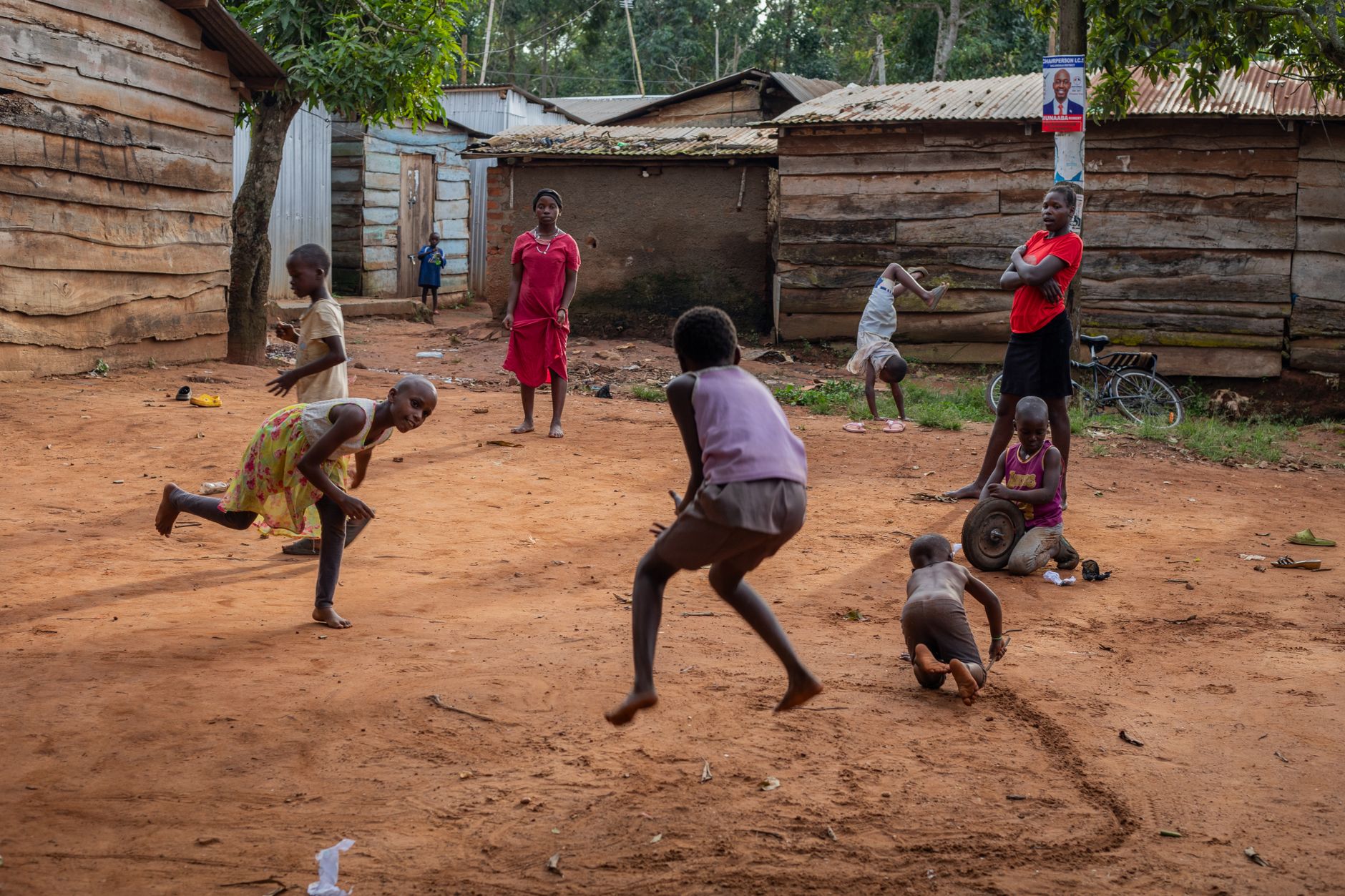
A lively scene of children playing in a rural Ugandan village street.
Photo by Muwanguzi Isaac on Pexels · Pexels License

Explore the bustling activity and vibrant colors of Jinja Central Market in Uganda.
Photo by Ana Kenk on Pexels · Pexels License
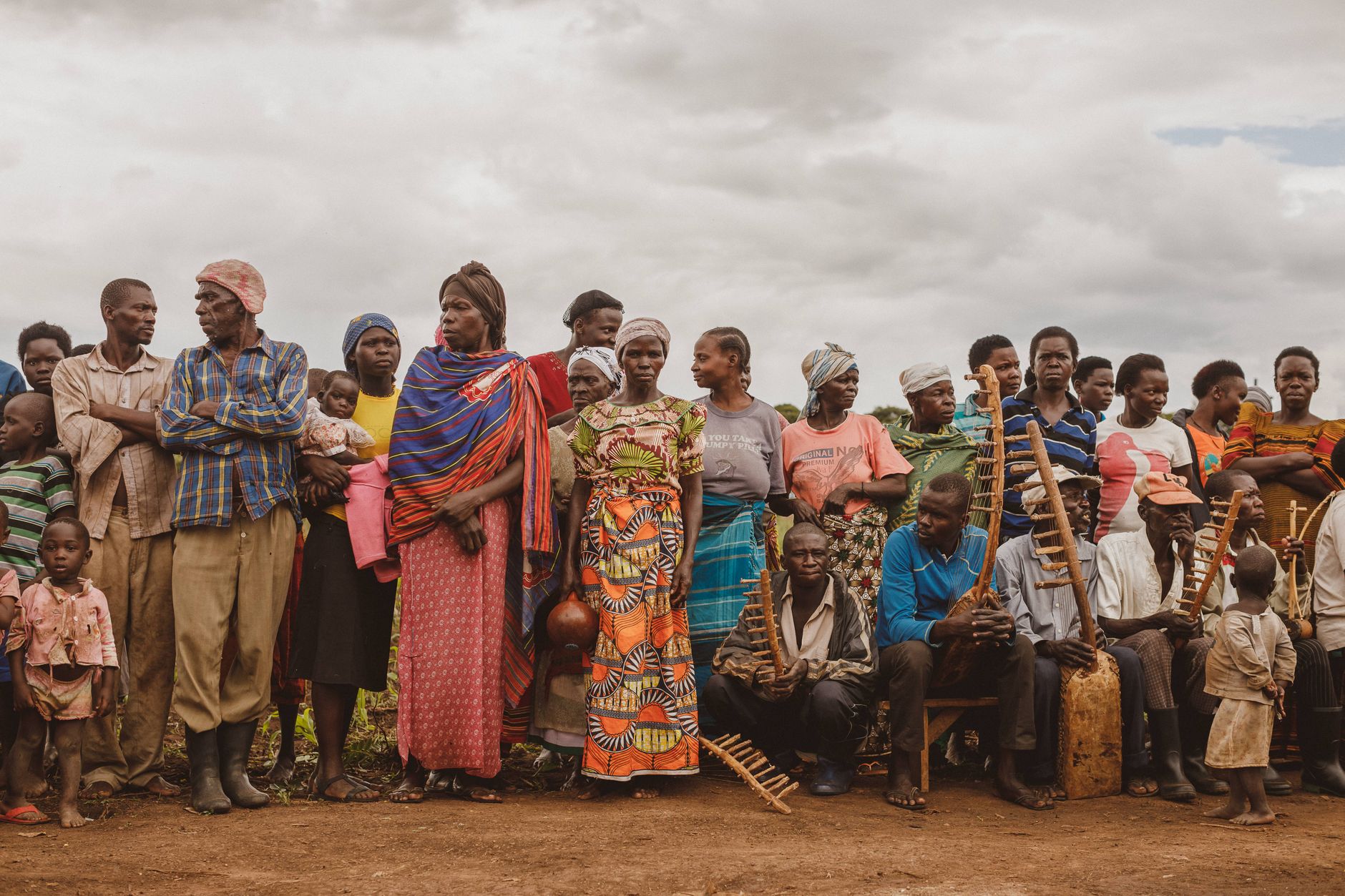
A vibrant group of people in traditional attire gathered outdoors in Masindi, Uganda.
Photo by illustrate Digital Ug on Pexels · Pexels License

A vibrant street scene capturing daily life in Uganda with people and vehicles.
Photo by Enock Ojambo on Pexels · Pexels License
Practical Information
Visa
Most travelers need an e-visa before arrival. A standard single-entry tourist visa costs USD 50, while the East African Tourist Visa costs USD 100, covers Uganda, Kenya, and Rwanda for 90 days, and requires first entry through the issuing country. Carry a passport valid for at least 6 months and your physical yellow fever certificate.
Currency
Uganda uses the Ugandan shilling, written UGX or USh. Cash still runs daily life outside Kampala, Entebbe, and higher-end lodges, so withdraw when you can and bring clean US dollar notes from 2009 onward if you plan to exchange money. In restaurants aimed at travelers, 5 to 10 percent is normal for good service if a charge has not already been added.
Getting There
Almost everyone arrives through Entebbe International Airport, 40 km southwest of Kampala on Lake Victoria. Official airport taxis are marked with a yellow Airport Taxi label, and the airport provides free Wi-Fi in passenger areas. Overland arrivals from Kigali or Nairobi can work for regional trips, but for a first Uganda trip Entebbe is usually the cleanest start.
Getting Around
Uganda moves by long-distance bus, minibus taxi, domestic flight, and private 4x4. Shared transport works on the main corridors linking Kampala, Jinja, Mbale, Gulu, Mbarara, and Kabale, but road speeds are slow and night driving is a bad idea outside major towns. In cities, SafeBoda, Uber, and Bolt are the useful apps; in the parks and wet-season countryside, a driver-guide saves time and arguments.
Climate
Uganda sits on high ground, so the equator does not translate into relentless heat. The driest all-round windows are usually June to August and December to February, while March to May and September to November bring the heaviest rain in much of the country. Kampala and Jinja stay mild by tropical standards, while Kabale, Fort Portal, and the Rwenzori side feel cooler, especially at night.
Connectivity
Mobile data is the practical internet backbone. MTN and Airtel are the names you will see most, and foreigners can register a SIM with a passport at an official service center; eSIM options and roaming work for some visitors, but local prepaid data is cheaper. Expect solid coverage in Kampala, Entebbe, Jinja, Mbarara, Gulu, and Mbale, then patchier service as you move toward parks, islands, and mountain roads.
Safety
Uganda rewards sensible habits more than bravado. Keep valuables out of sight in Kampala and Entebbe, use booked transport after dark, and avoid boda-bodas unless you are comfortable with local traffic risk. The U.S. State Department currently advises reconsidering travel because of crime, terrorism, unrest, and discriminatory laws, so check current advisories before booking border areas or election-period travel.
Taste the Country
restaurantMatoke and groundnut sauce
Banana leaves. Steam. Right hand. Family table. Noon meal. Slow talk.
restaurantLuwombo
Leaf parcel. Chicken or beef. Unwrapping at the table. Guests first. Rice or matoke after.
restaurantRolex
Chapati. Egg. Onion. Tomato. Street corner. Dawn hunger. One hand eats, one hand guards tea.
restaurantKatogo
Morning plate. Matoke or cassava with beans or offal. Spoon or fingers. Shops opening. Men talking politics.
restaurantMuchomo
Goat or beef. Smoke. Salt. Toothpicks. Evening bar. Beer. Friends standing near the grill.
restaurantMalewa
Smoked bamboo shoots. Peanut or sesame sauce. Bugisu tables near Mbale. Ceremony food. Wedding talk.
restaurantEshabwe
Ghee sauce. Millet or matoke beside it. Ankole households near Mbarara. Fingers. Quiet respect.
Tips for Visitors
Bring cash backup
ATMs are common in Kampala, Entebbe, Jinja, Mbarara, and Gulu, then less dependable beyond them. Keep enough shillings for fuel stops, park-road snacks, and a night in case the network fails.
Ignore rail fantasies
Uganda does have a commuter train around Kampala and Mukono, but it will not build your country itinerary. For almost every visitor route, think road or domestic flight instead.
Book park beds early
Rooms near gorilla trekking, Kibale, Queen Elizabeth, and Murchison can fill long before flights do in the dry seasons. Reserve permits and lodge nights first, then build the road plan around them.
Pad your timings
A drive that looks like four hours can become seven with rain, roadworks, police checks, or trucks. Leave daylight at both ends and avoid stacking a long transfer onto a border day or trek day.
Buy a local SIM
Airport and hotel Wi-Fi is fine until it isn't. A local MTN or Airtel SIM usually solves maps, payments, driver calls, and last-minute lodge messages for less money than roaming.
Skip random bodas
Boda-bodas are quick and everywhere, and they are also the transport mode most likely to ruin your week. In Kampala or Jinja, use app-booked rides if you must; on longer trips, stick to cars.
Greet before business
A rushed question lands badly in Uganda. Start with a greeting, use polite forms like ssebo or nnyabo when appropriate, then ask for the fare, the room, or the timetable.
Explore Uganda with a personal guide in your pocket
Your Personal Curator, in Your Pocket.
Audio guides for 1,100+ cities across 96 countries. History, stories, and local insight — offline ready.
Audiala App
Available on iOS & Android
Join 50k+ Curators
Frequently Asked
Do I need a visa for Uganda as a US or European tourist? add
Probably yes. Most US, UK, Canadian, Australian, and many EU passport holders need to apply online before travel, though a small number of nationalities are exempt, so check the official Uganda immigration list before you pay. The standard tourist visa is USD 50 and the East African Tourist Visa is USD 100.
Can I get a Uganda visa on arrival at Entebbe Airport? add
You should not plan on it. Uganda's immigration guidance directs visa-prone travelers to use the official online e-visa system before departure, and airlines may refuse boarding if your paperwork is incomplete. Apply early enough to avoid arguing with a check-in desk.
Is Uganda expensive for tourists? add
Uganda can be good value until you add primate permits and private safari logistics. A careful independent traveler can manage on roughly USD 30 to 55 a day in towns, while a comfortable mid-range trip often lands around USD 80 to 160 before park fees, flights, or gorilla trekking.
What is the best month to visit Uganda? add
June to August is the safest all-round answer. Roads are usually easier, wildlife viewing is strong, and trekking conditions are less muddy, while December to February is the other reliable dry window. If you care more about lower rates and greener landscapes, the shoulder months can still work.
Is Uganda safe for tourists right now? add
Uganda is manageable with caution, but it is not a place for lazy travel habits. Petty and violent crime, road accidents, and periodic security incidents are real risks, so use booked transport after dark, avoid unnecessary border-area improvisation, and read current government advisories before you go. Laws targeting LGBT travelers also matter and should be taken seriously.
Can you use credit cards in Uganda? add
Yes, but not everywhere you will want them. Cards work in better hotels, supermarkets, some restaurants, and many safari lodges, while cash still dominates local transport, smaller guesthouses, roadside food, and many town purchases outside Kampala and Entebbe.
How do you get around Uganda without driving yourself? add
Most travelers combine buses, private transfers, and a few app rides in cities. SafeBoda, Uber, and Bolt are useful in Kampala, domestic flights from Entebbe save huge amounts of time on safari routes, and a driver-guide is often the smartest spend once you leave the main highways.
Is Entebbe or Kampala better to stay in first? add
Entebbe is better if you land late, leave early, or want one quiet lakefront night before dealing with the capital. Kampala is better if you want city energy, more hotels and restaurants, and easier onward bus connections, but the traffic can turn a short map distance into a real commitment.
Sources
- verified Uganda Directorate of Citizenship and Immigration Control — Official tourist visa rules, fees, validity, and application process.
- verified East African Tourist Visa - Uganda Immigration — Official rules for the joint Uganda-Kenya-Rwanda tourist visa, including first-entry requirement.
- verified Uganda Civil Aviation Authority - Entebbe International Airport — Airport access, official airport taxi guidance, Wi-Fi, and arrival basics for Entebbe.
- verified U.S. Department of State - Uganda Travel Advisory — Current safety, transport, and security guidance, including road-risk warnings.
- verified AeroLink Uganda — Domestic flight network from Entebbe to key park airstrips and Jinja.
Last reviewed: