Oral Tradition and First Settlement
public
c. 1200
First Canoes Reach Funafuti
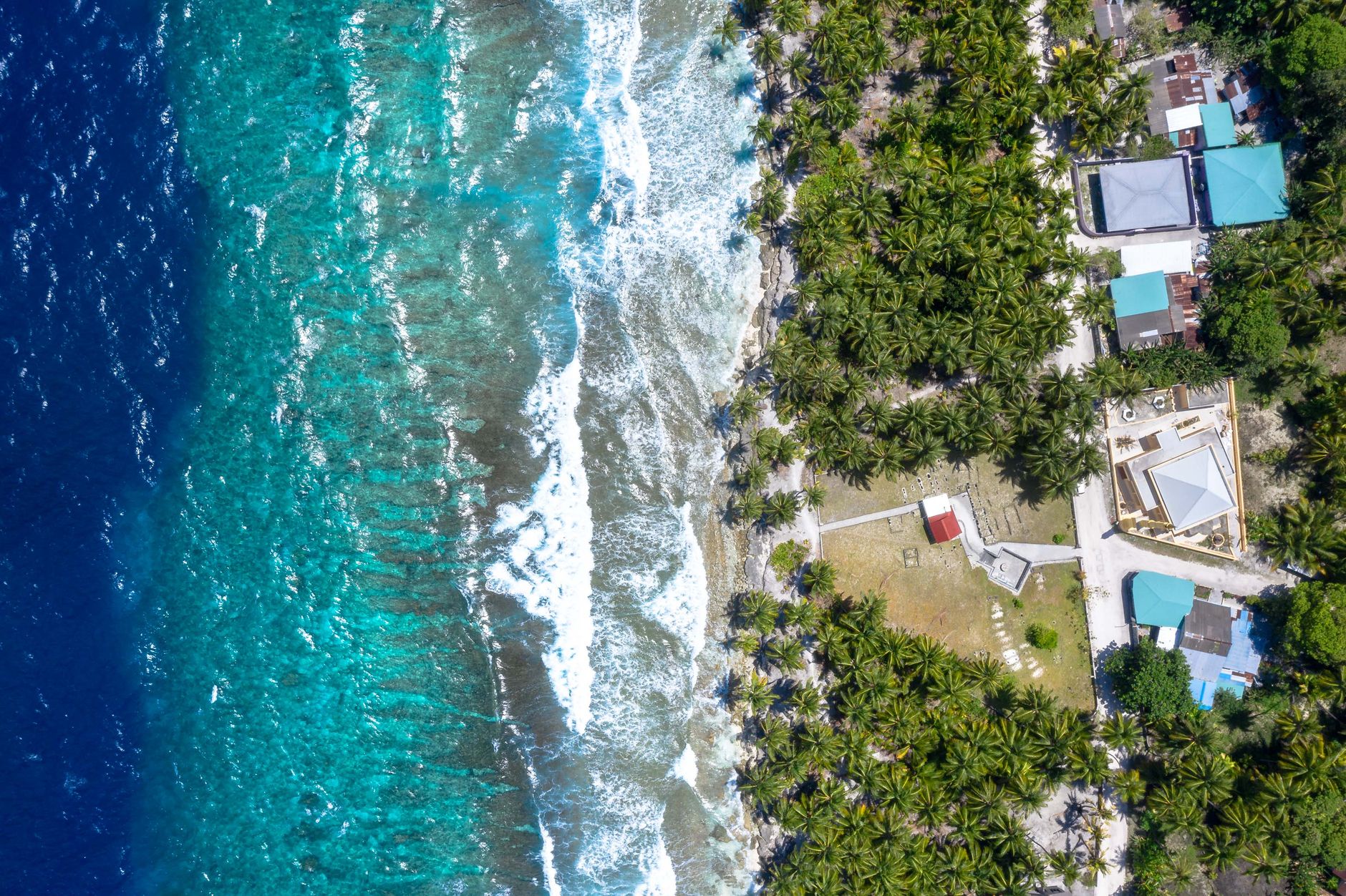
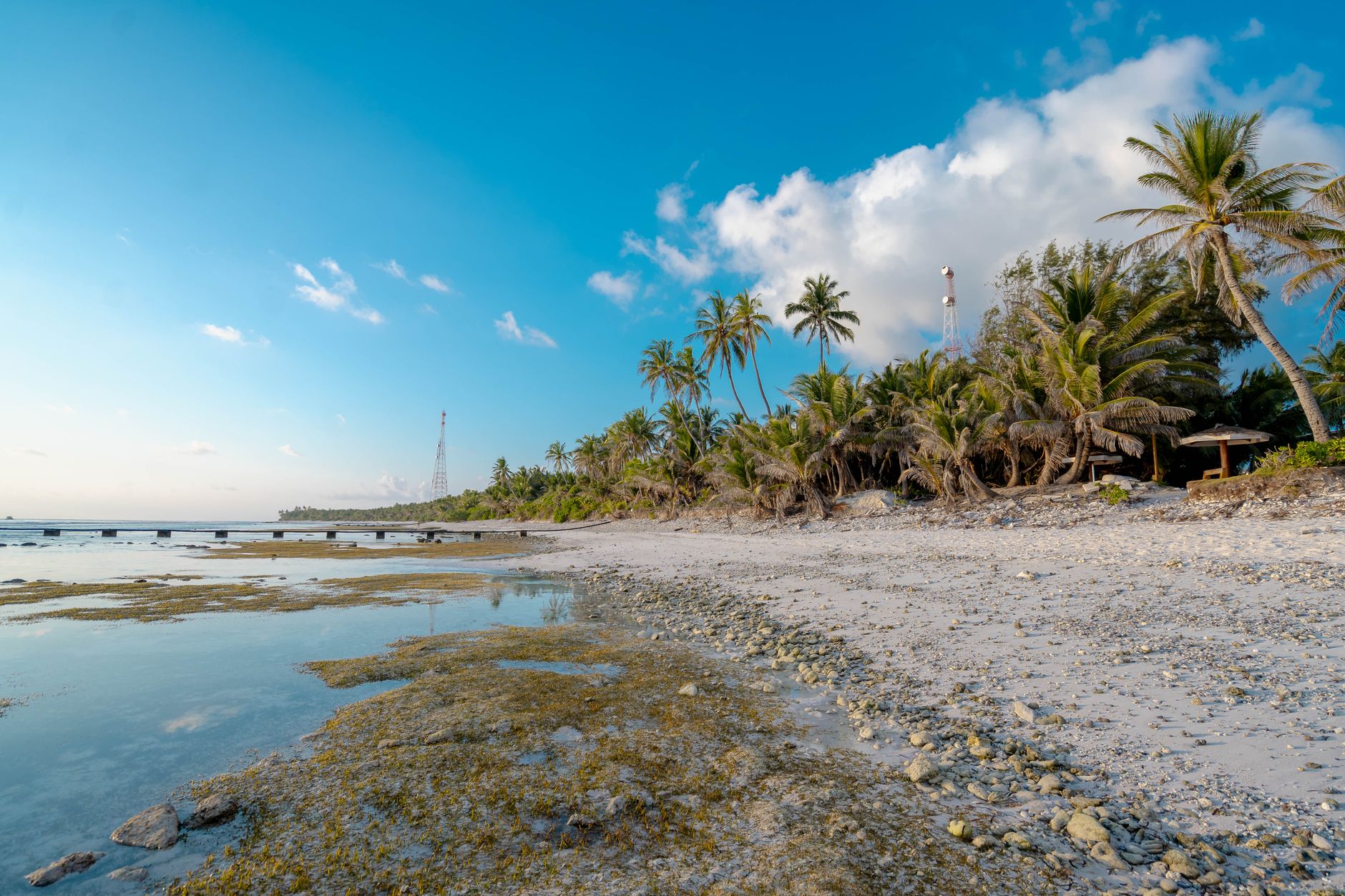
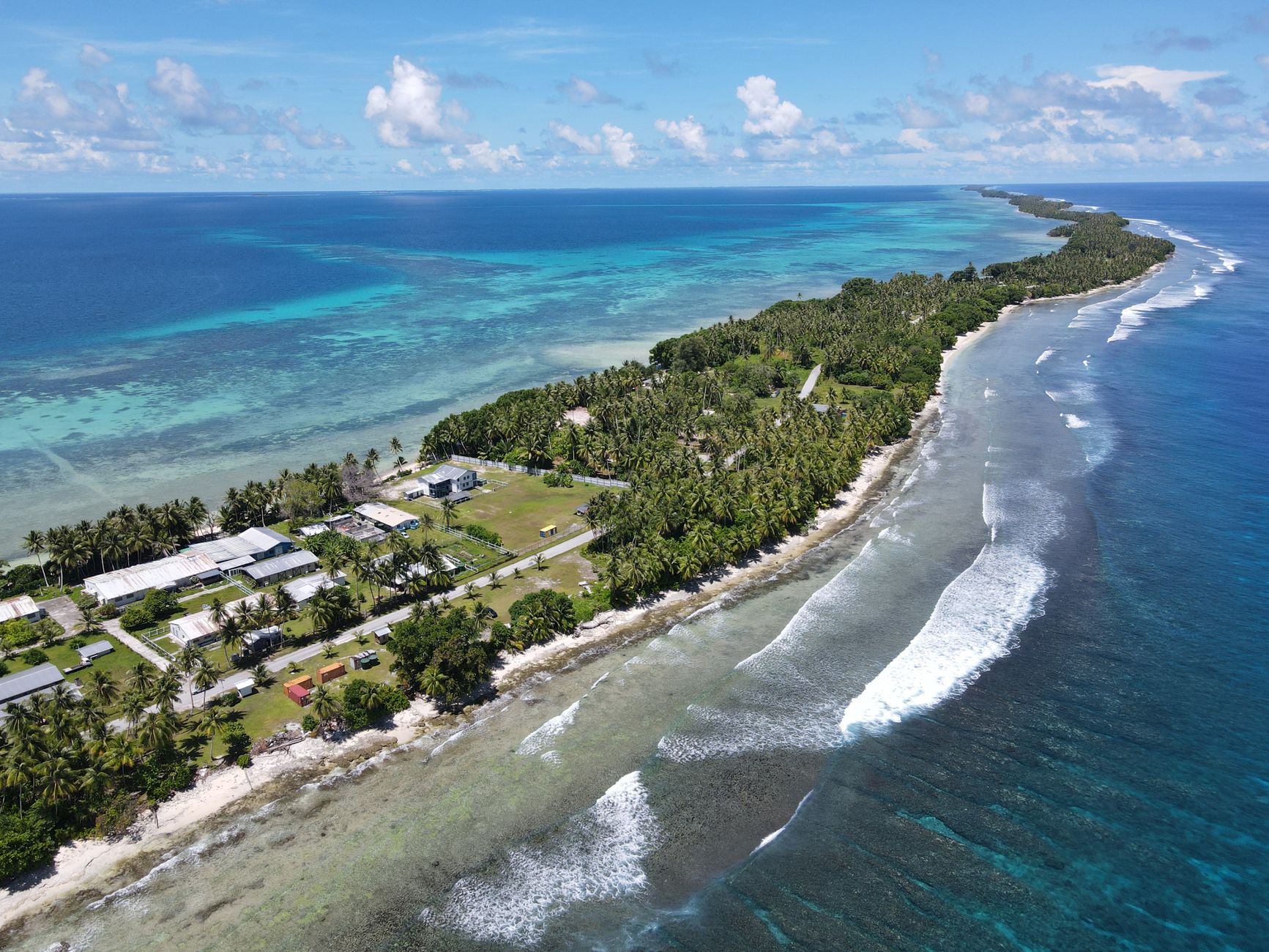
Most scholars place settlement of Funafuti in the pre-European Polynesian period, probably by voyagers from Samoa. They found an atoll ringed around a lagoon so wide it looks, from the shore, less like a pond than an inland sea. What they built was never a stone city. It was a society tuned to reef passages, breadfruit, pandanus, and the thin strip of land between salt water and sky.
person
c. 1200
Terematua Enters Memory
According to Funafuti's oral tradition, the earliest chief was Terematua, sometimes rendered Tilimatua. No dated record pins him to a calendar year, which is exactly how many Pacific founding figures survive: in genealogy, place names, and the stories people keep repeating because they still matter. Legend gives Funafuti a human beginning, not just a geological one.
Encounter and Mission Era
public
1819
Ellice's Island Is Named
In May 1819, Captain Arent Schuyler de Peyster sighted Funafuti while sailing under British colors and named it Ellice's Island after Edward Ellice. The gesture sounds small. It wasn't. One outsider's label would spread across the whole island group and linger through the colonial period.
public
1841
Wilkes Expedition Anchors Offshore
The United States Exploring Expedition under Charles Wilkes reached Funafuti in 1841. Survey ships, notebooks, and naval discipline arrived together, bringing the atoll into a wider imperial map of the Pacific. Funafuti was still remote. It was no longer unseen.
person
1850s
Jack O'Brien Stays
John "Jack" O'Brien became the first known European resident to settle on Funafuti in the 1850s. He married Salai, daughter of the atoll's paramount chief, which tells you more than any treaty about how contact worked here: through households, kinship, and negotiation at close range. The beach was the frontier. So was the family table.
swords
1863
Blackbirding Tears Through the Atoll
About 180 people from Funafuti were taken by Peruvian labor recruiters during the blackbirding era. Almost none returned. On an atoll with a small population, that kind of loss does not fade into statistics; it empties houses, weakens lineages, and leaves silence where names should be.
church
1860s
Christianity Takes Root
Samoan pastors of the London Missionary Society brought Christianity to Funafuti during the 1860s, and by 1900 Protestant worship was firmly established. The old spirit-centered world did not vanish overnight, but the weekly rhythm changed. Church bells and hymn singing began to order life on the atoll as much as tides and fishing runs.
local_fire_department
1883
Cyclone Ruins Christmas
A severe cyclone struck on 23 and 24 December 1883 and wrecked buildings on Fongafale, including a church under construction and the stores of resident traders. On a low coral atoll, storms do not stay politely at the shoreline. They tear through the whole width of the land in minutes, carrying salt, timber, and panic together.
British Protectorate and Scientific Fame
gavel
1892
Britain Claims the Atoll
Funafuti entered the British protectorate over the Ellice Islands in 1892. Paper sovereignty had arrived. The change mattered because colonial rule would pull the atoll into new systems of law, trade, and administration, even though the daily view remained breadfruit trees, coral tracks, and lagoon light.
science
1896
Charles Hedley Records the Atoll
Naturalist Charles Hedley came with the 1896 drilling expedition and produced one of the foundational written accounts of Funafuti. He paid attention to shells, reef life, and local society with the mixed curiosity and blind spots of his age. His work helped turn a remote atoll into a place the scientific world thought it knew.
science
1896
The Royal Society Starts Drilling
The first major coral-reef boring expedition began in 1896, part of a bold attempt to test Charles Darwin's theory of atoll formation. Picture the scene: steam-era equipment, scientists in wool and canvas, and a flat ring of coral asked to settle a global argument about geological time. Funafuti became famous because the reef had evidence locked inside it.
person
1897
Sollas Writes Down the Legends
In 1897, William J. Sollas published "The Legendary History of Funafuti," preserving chiefly genealogies and oral accounts that might otherwise have thinned with time. The text is filtered through a colonial recorder, so it needs caution. Even so, it kept names and stories alive on paper when paper was becoming power.
science
1898
David's Drill Goes Deep
Edgeworth David led the final and most successful drilling campaign in 1898, pushing the borehole to roughly 340 meters. That narrow shaft in the coral helped confirm Darwin's subsidence theory and gave Funafuti a place in world science far larger than its land area. Few capitals can claim a hole in the ground as a historic monument. This one can.
gavel
1909
Administration Settles on Funafuti
A district officer was appointed to administer the Ellice Islands from Funafuti in 1909. That decision shifted the atoll from one island among many to the administrative center of the group. Bureaucracy usually sounds dull. Here, it was destiny.
school
1913
The First Hospital Opens
Funafuti's first hospital was established in 1913. On distant islands, a hospital is never just a building. It is a promise that illness, childbirth, and injury might no longer depend entirely on weather, canoes, and prayer.
War and Airfield Era
swords
1942
American Forces Occupy Fongafale
U.S. forces occupied Funafuti on 2 October 1942 during Operation Fetlock, turning the atoll into an Allied base in the Pacific war. Parts of Fongafale's population were moved to smaller islets, especially Funafala, to make room for military works. War arrived not as a battlefield charge but as displacement, machinery, and the sound of engines over the lagoon.
flight
1943
The Airstrip Changes Everything
U.S. Seabees built the airfield on Fongafale in 1943, along with port and hospital facilities. Japanese aircraft raided the strip before dawn on 21 April, destroying one B-24 and damaging five others. The runway survived, and after the war it stayed, turning a piece of wartime infrastructure into the spine of modern Funafuti.
Independence and Nation-Building
local_fire_department
1972
Cyclone Bebe Rewrites the Shore
Cyclone Bebe struck on 21 and 22 October 1972, killing five people on Funafuti and knocking down about 90 percent of houses and trees. The storm hurled coral rubble onto the ocean side of Fongafale and Funafala, building a ridge miles long and up to 20 feet thick. You can read that as damage. You can also read it as geology happening in a single night.
gavel
1974
The Ellice Vote for Separation
Between July and September 1974, Ellice Islanders voted for separation from the Gilberts in a self-determination referendum. Funafuti, already the district center, sat close to the nerve endings of that political change. The future capital of Tuvalu was beginning to look like a capital before the new country officially existed.
gavel
1978
Independence Makes a Capital
Tuvalu became independent on 1 October 1978, and Funafuti, especially Fongafale and Vaiaku, became the seat of national government in practice. This was a tiny capital by global standards, little more than a ribbon of coral with ministries, homes, churches, and the runway threaded through it. Small did not mean symbolic. It meant every institution sat within walking distance of the sea.
person
1978
Toaripi Lauti Leads the New State
Sir Toaripi Lauti, the first prime minister of independent Tuvalu, was tightly bound to Funafuti through constituency politics, local leadership, and family ties. He helped turn the atoll from a colonial administrative post into the working center of a sovereign state. Nation-building here did not happen in marble halls. It happened on coral ground, in meeting halls, offices, and church-centered communities.
public
1979
Treaty Signed at Funafuti
The Treaty of Friendship with the United States was signed at Funafuti on 2 July 1979. When it later entered into force, it ended older U.S. territorial claims under the Guano Islands Act. For a place so often treated as peripheral, this was a sharp reminder that great-power paperwork can wash up even on the thinnest strip of coral.
public
1999
The Conservation Area Begins
The Funafuti Conservation Area formally took effect on 1 December 1999, protecting 33 square kilometers of reef, lagoon, and islets on the western rim of the atoll. That mattered environmentally, of course, but it also mattered culturally. On an atoll, sea country is not a backdrop. It is part of the town.
public
2000
Tuvalu Joins the United Nations
Tuvalu became the 189th member of the United Nations on 5 September 2000. The diplomatic theater happened far from Fongafale's coral roads, yet the meaning landed back in Funafuti fast: this tiny capital now spoke in its own name on the world stage. For a country often reduced to climate headlines, sovereignty was the first argument.
Climate Frontline Era
local_fire_department
2015
Cyclone Pam Triggers Emergency
Tuvalu declared a state of emergency during Cyclone Pam in March 2015. Funafuti was less damaged than some outer islands, but the capital became the command point for relief, repair, and anxious watching of tides. The future problem the world associates with Tuvalu felt, here, like a present-tense one.
person
2018
Simon Kofe Carries Funafuti Abroad
Simon Kofe entered parliament for Funafuti in 2018 and became one of the country's clearest international voices. His climate diplomacy drew cameras, but his authority comes from representing a capital where homes, offices, and the runway all sit close to sea level. In his case, global rhetoric had a street address.
public
2023
Heritage Status Enters the Picture
Tuvalu ratified the UNESCO World Heritage Convention on 18 May 2023, and the following nomination work placed Funafuti at the center of the proposed atoll-island cultural story. Darwin's Drill, wartime remains, Funafala's refuge history, and the working capital on Fongafale all became part of one argument: this place matters because people have kept living with the reef, not despite it.
public
2023
Falepili Union Is Signed
Tuvalu and Australia signed the Falepili Union treaty on 9 November 2023. Behind the legal language sat the blunt fact that Funafuti is both a capital and a climate front line. Few cities sign international agreements while arguing, at the same time, for the conditions of their own long-term physical survival.
public
2025
New Land Rises on Fongafale
UNDP announced in October 2025 that 8 hectares of reclaimed and elevated land had been completed on Fongafale. Eight hectares is not vast on a continental scale. On Funafuti, it is the difference between treating the future as an abstraction and pouring rock, sand, and engineering into the lagoon edge so the capital can keep functioning.