Selçuk.

37° N · 27° E Turkey

Storks build nests on utility poles above Selçuk, Turkey, while a 14th-century mosque, a Byzantine basilica, and the road to one of Rome's grandest cities sit within a few blocks of each other. Few places wear 8,000 years so lightly. The surprise isn't just Ephesus nearby; it's how calm the town feels once the tour buses pull away and the evening call to prayer drifts across Ayasuluk Hill.

Listen to the guide — 12 min Open the map
Selçuk, Turkey
Selçuk · Turkey
8
attractions
2-3 days
trip length
Late spring and early autumn (May-mid June, September-October)
best season
EN · EN
narration

01 An introduction

synthesized from 240+ sources ·

Researched from Wikidata, Wikipedia & official sources · fact-checked · How we make our guides →

SStorks build nests on utility poles above Selçuk, Turkey, while a 14th-century mosque, a Byzantine basilica, and the road to one of Rome's grandest cities sit within a few blocks of each other. Few places wear 8,000 years so lightly. The surprise isn't just Ephesus nearby; it's how calm the town feels once the tour buses pull away and the evening call to prayer drifts across Ayasuluk Hill.

Selçuk works best as a small Aegean town, not a staging post. The Ephesus Archaeological Museum in the center gives marble fragments, coins, and statues back their weight, and the Saturday pazar turns ordinary streets into a patchwork of tarps, peaches, herbs, and shouted prices. You smell bread first.

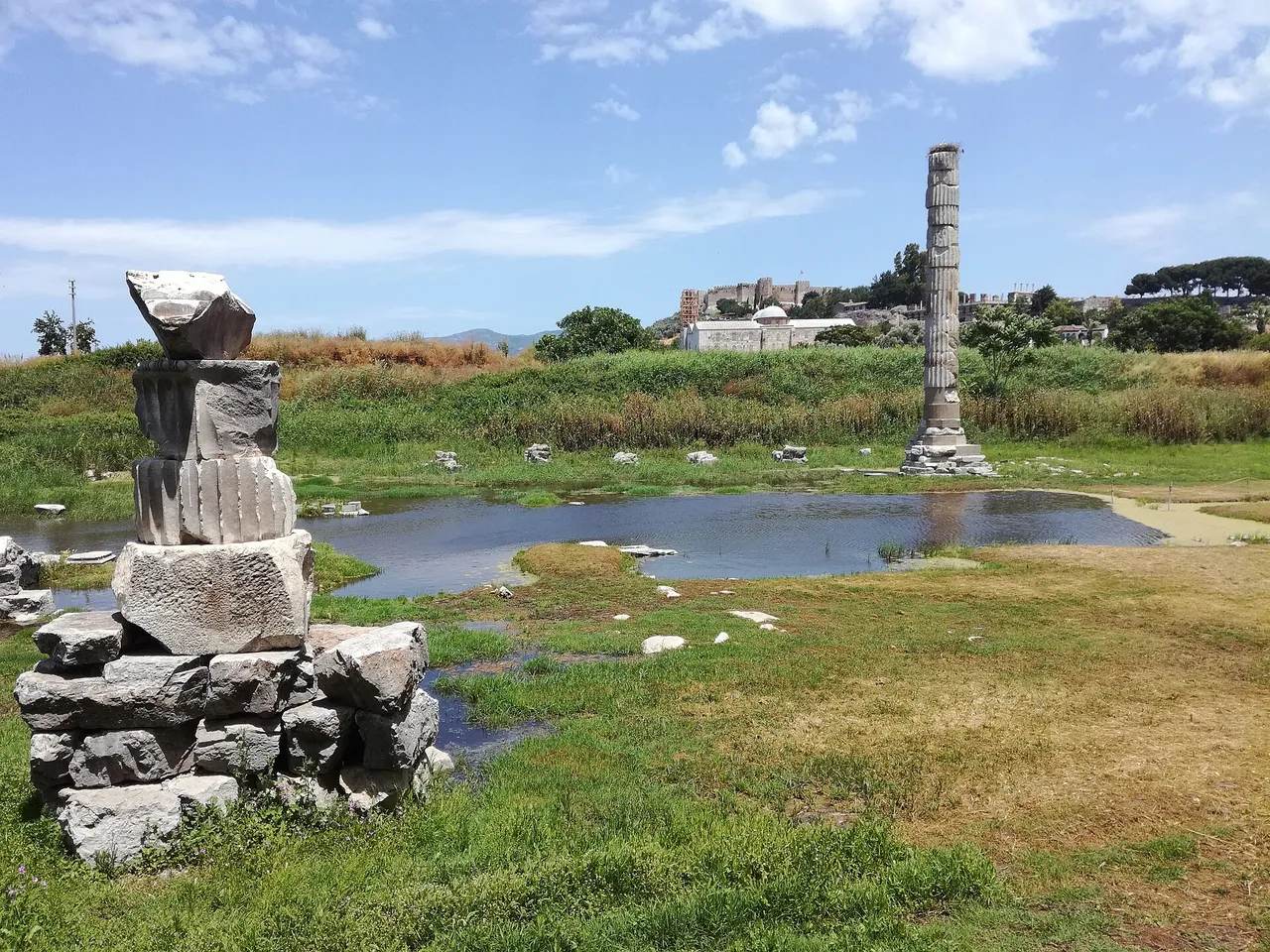
The city's real gift is compression. Within a short drive or walk you can stand at the House of the Virgin Mary on Mount Koressos, look across the plain from Ayasuluk Citadel, then drop down to the lonely column that marks the Temple of Artemis, once counted among the Seven Wonders and now reduced to a lesson in how empires vanish.

Budget Friendly Photography Hotspot

02 Why Selçuk.

What makes this place worth slowing down for.

Eight Millennia, Small Radius

Selçuk compresses an absurd span of history into a few square kilometers: Çukuriçi Mound reaches back to the 7th millennium BCE, Ephesus carries the Roman swagger, and Ayasuluk Hill holds Byzantine, Seljuk, and Ottoman layers in plain view. Few towns let you move from a Neolithic settlement to a 14th-century mosque before lunch.

Ephesus Beyond the Postcard

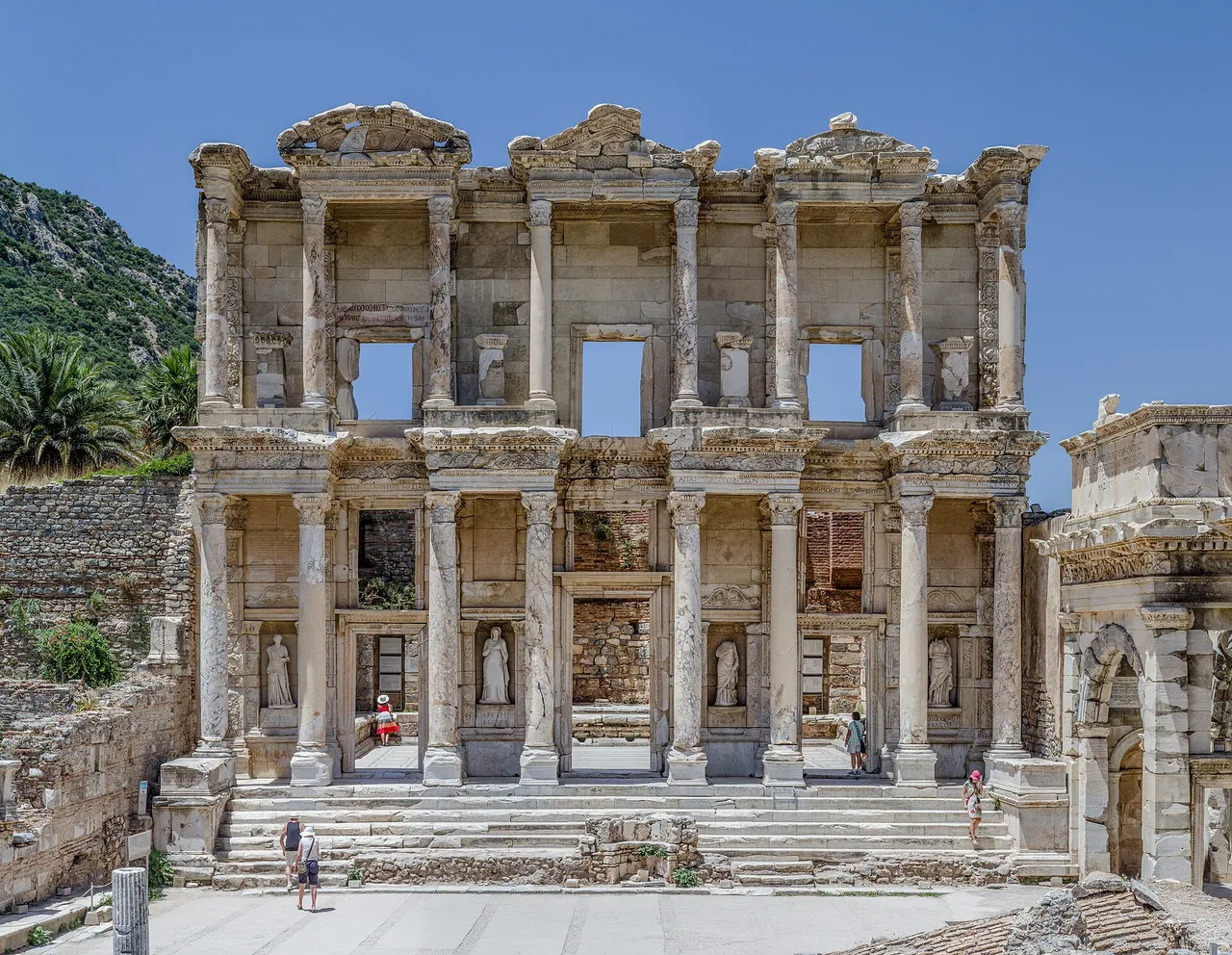
The Library of Celsus gets the photographs, but the real seduction is tactile: polished marble underfoot on Curetes Street, carved façades catching the hard Aegean light, and the Terrace Houses showing how wealth once looked indoors. Go early, before the stone starts throwing heat back at you.

Ayasuluk Hill

Ayasuluk is where Selçuk explains itself. The Basilica of St. John, the 14th-century Isa Bey Mosque, and the citadel walls sit so close together that theology, empire, and masonry start to feel like one long argument in stone.

Şirince After the Day-Trippers

Şirince, 8 kilometers east of town, works best late in the day when the tour buses thin out and the village smells of wood smoke, grapes, and baking dough. Its fruit wines are half curiosity, half local ritual; the real pleasure is sitting on a terrace while the hills turn bronze.


03 Places to Visit.

Not every monument, just the ones we'd walk you past ourselves.
Ephesus Ancient City
Editor's pick
01 · Place

Ephesus Ancient City

Once home to 200,000 people and a harbour — now 5 km from the sea. Ephesus spans 8,000 years, from Hittite Apasa to UNESCO icon.

Library of Celsus
02 Place

Library of Celsus

A Roman consul built this 12,000-scroll library over his father's secret tomb in the 2nd century CE. The iconic façade? Reconstructed in the 1970s.

Temple of Ephesian Artemis
03 Place

Temple of Ephesian Artemis

One of the Seven Wonders now survives as a lone column in a marsh, with storks overhead and Selçuk's layered skyline rising toward Ayasuluk Hill behind it.

All 3 places in Selçuk

04 Neighborhoods.

Where to wander, by quarter — each with its own rhythm.

01

Town Center and Otogar

This is the practical heart of Selçuk: the bus station, the Ephesus Museum, budget hotels, dolmuş stops, pide shops, and the kind of cafes where nobody rushes you out. Stay here if you want to walk almost everywhere and hear daily life instead of resort music.

02

Ayasuluk Hill

The streets climbing Ayasuluk Hill feel quieter with each turn. Up here you'll find the Basilica of St. John, the 14th-century Isa Bey Mosque, fortress walls, and broad views over the plain; at sunset, the light goes honey-colored and the whole town seems to exhale.

03

Isa Bey Mosque Quarter

Around the southwestern foot of Ayasuluk Hill, Selçuk's layers sit almost shoulder to shoulder. The mosque's Seljuk lines, old stonework, and nearby traces of bathhouses and older streets make this a good area for slow wandering, especially in the late afternoon when the stone loses its glare.

04

Temple of Artemis and Station Side

This side of town feels sparse, almost abrupt, which suits the site. One reconstructed column rises from the marshy remains of the Temple of Artemis, and the surrounding roads, railway edges, and scattered ruins make the point better than a polished plaza would: fame fades, ground remains.

05

Market Perimeter

On market day, the roads around the pazar become Selçuk at full volume. Farmers bring tomatoes, olives, greens, fabric, kitchenware, and gossip; for visitors, it's less about shopping lists than about the smell of ripe fruit under canvas shade and the rhythm of a town talking to itself.

06

Ephesus Approach Road

The western approach toward Ephesus has a different mood from the center: wider roads, tour traffic, artisan stops, and a sense of the ancient city pulling everything toward it. Carpet workshops and roadside businesses sit in the long shadow of ruins, which is a fair description of Selçuk as a whole.

Historical Timeline

Where a Wonder Fell and a Hilltop Town Endured

From Bronze Age Apasa to the modern district of Selçuk

Bronze Age Apasa
c. 1400 BCE

Apasa Enters the Record

Most scholars link Selçuk's deep past to Apasa, a western Anatolian city named in Hittite texts. That matters because the ground around Ayasuluk Hill was already part of a political world of treaties, tribute, and rival kings long before marble columns rose at Ephesus.

Archaic Ephesus
c. 1050 BCE

Ionian Greeks Arrive

After the upheavals at the end of the Bronze Age, Greek-speaking settlers established themselves on this coast and folded older Anatolian traditions into a new Ionian city. Salt air, river mud, and sea trade shaped everything here from the start.

c. 560 BCE

Artemis Gets Her Great Temple

The Temple of Artemis was rebuilt on a scale meant to stop travelers in their tracks. Its forest of columns made the sanctuary one of the ancient world's great showpieces, and wealth flowed in with pilgrims, merchants, and craftsmen.

546 BCE

Persia Takes Ionia

Cyrus the Great's empire absorbed Ephesus along with the rest of western Anatolia. Local life did not freeze, but the city now answered to a power that stretched far beyond the Aegean horizon.

Hellenistic Ephesus
334 BCE

Alexander Breaks Persian Rule

Alexander's campaign swept down the coast and ended two centuries of Persian control. Ephesus changed masters fast, as cities often do in wartime, but the shift tied it to the new Hellenistic order taking shape across the eastern Mediterranean.

c. 300 BCE

Lysimachus Moves the City

Lysimachus, one of Alexander's successors, relocated Ephesus toward the plain and enclosed it with strong walls after silting and insecurity made the older site less workable. A city can die from mud as easily as from armies. This move set the urban frame whose streets visitors still walk today.

Roman Ephesus
129 BCE

Rome Inherits Ephesus

When the kingdom of Pergamon passed to Rome, Ephesus became the leading port of the new province of Asia. Tax money, cargo, lawsuits, cult processions, and imperial ambition all began to funnel through the city.

52 CE

Paul Preaches to Ephesus

Paul's stay in Ephesus turned the city into one of early Christianity's decisive stages. The clash between new faith and old cult was not abstract here; it rang through workshops, streets, and the Artemis economy itself.

117 CE

Hadrian's Prosperous Port

Under Emperor Hadrian, Ephesus stood near its height, rich enough to pave grand streets in marble and line them with monuments, baths, and fountains. On a hot day, the city would have smelled of dust, olive oil, sea cargo, and crowded humanity.

135 CE

Library of Celsus Rises

The Library of Celsus was built as both library and tomb for the former governor Gaius Julius Celsus. Its famous facade, all staged symmetry and carved confidence, still looks like Rome trying to convince stone that it can think.

Late Roman and Early Byzantine
262 CE

Goths Sack the City

A Gothic raid damaged Ephesus and dealt a hard blow to the Temple of Artemis. Recovery came, but the old certainty had gone; the city was now fighting enemies, earthquakes, and the slow choke of the Küçük Menderes River's silt.

431

Council Meets at Ephesus

The Council of Ephesus brought bishops, arguments, and imperial politics to the city in a storm of doctrine. Theology was never quiet business. Decisions made here echoed across Christendom while the streets outside filled with factions and rumor.

Byzantine Ayasuluk
c. 550

Justinian Honors Saint John

Emperor Justinian ordered a vast basilica over the believed tomb of Saint John on Ayasuluk Hill. That shift mattered: the hill above the old port began to outshine the ancient city below, pulling sacred prestige uphill as the plain grew wetter and less healthy.

1090

Turks Reach Ayasuluk

Seljuk Turkish forces took control of the area in the late 11th century, part of the wider struggle for western Anatolia after Manzikert. Rule changed hands more than once in the next generations, but the Turkish chapter of the town had begun.

Aydinid and Ottoman Selçuk
1304

Aydinids Make It a Capital

Under the Aydinid beylik, Ayasuluk became an active Turkish center and, for a time, a capital tied to trade and seafaring power. The old Roman harbor was fading into marsh, yet the hilltop town found a second life in a different language and faith.

1312

Isa Bey Consolidates Rule

Isa Bey's rule gave the town political weight and left the strongest monument of its Turkish medieval age. His court belonged to that brief Anatolian moment when frontier beyliks could still act like confident little kingdoms.

1375

Isa Bey Mosque Opens

The Isa Bey Mosque was built beside Saint John's basilica, one of those pairings that tells the whole history of Selçuk without saying a word. Its reused stone, spacious courtyard, and measured geometry show a town remaking old material into a new sacred center.

1426

Ottomans Absorb Ayasuluk

The Ottoman state folded the Aydinid lands into its expanding realm. Ayasuluk, later called Selçuk, no longer stood at the center of power, but it remained a lived place among ruins that never stopped being quarried, prayed in, or remembered.

Late Ottoman and Early Archaeology
1869

Archaeology Starts Digging Again

John Turtle Wood's excavations, backed by the British Museum, began the modern search for Ephesus and the Temple of Artemis. Picks, notebooks, and imperial collecting habits arrived together. So did a new way of seeing the town: as layered evidence rather than just local stone.

1894

Austrian Excavations Expand

Austrian teams took over major excavations and, with interruptions, shaped much of what the world now recognizes as Ephesus. Their work cleared streets, theaters, terraces, and inscriptions from the soil, turning buried neighborhoods back into readable urban history.

Republican Turkey
1923

Republican Selçuk Begins

With the founding of the Republic of Turkey, Selçuk entered a new national frame after the violence and upheaval of the empire's final years. The modern town that grew beside the ruins was no museum piece; it was a working district with fields, trains, markets, and memory.

1964

Ephesus Museum Opens New Chapter

The museum in Selçuk gathered sculpture, coins, cult objects, and fragments that give the ruins back some of their lost voices. Outside, columns stand in the sun. Inside, faces stare back at you from marble with an intimacy the open site cannot manage.

2015

UNESCO Recognizes the Layered City

UNESCO added Ephesus, including Ayasuluk Hill, the House of the Virgin Mary, and the Temple of Artemis remains, to the World Heritage List. Fair enough. The designation confirmed what the place had been saying for centuries: this is not one city frozen in one era, but a stack of worlds sharing the same light.

Present Day

06 Who lived here.

The people who shaped the city — and were shaped by it.

Philosopher c. 535–c. 475 BCE

Heraclitus

Born in Ephesus

Heraclitus grew up in Ephesus and spent his life arguing that everything moves, shifts, and refuses to stay put. He would probably recognize the idea in Selçuk at once: a harbor turned plain, pagan city turned Christian center turned Turkish market town, all in one place.

Apostle and missionary c. 5–c. 64/65 CE

Saint Paul

Preached in Ephesus

Paul spent time preaching in Ephesus, where the city was large, wealthy, and touchy about its gods and trade. Reading his letters after walking the marble streets changes the scale of the story; this was not a village sermon, but an argument staged in one of the Roman world's loudest crossroads.

Roman statesman c. 45–114 CE

Gaius Julius Celsus Polemaeanus

Buried in Ephesus

Celsus ended up with one of antiquity's grandest tombs hidden inside a library facade built in his honor. The gesture still lands: scholarship, vanity, memory, and marble theater all folded into one building where modern visitors stop for photos before they realize someone lies beneath their feet.

08 Where to Eat.

Where locals actually book dinner — not the tourist menus.

Ayasuluk Şehir Lokantası Ayasuluk Şehir Lokantası
Local favorite €€

Ayasuluk Şehir Lokantası

4.9 View
AYSE'S KITCHEN AYSE'S KITCHEN
Local favorite €€

AYSE'S KITCHEN

4.9 View
Dürümcü Nizam Usta Dürümcü Nizam Usta
Quick bite €€

Dürümcü Nizam Usta

4.9 View
Meydan Pide Meydan Pide
Local favorite €€

Meydan Pide

4.9 View
Zade Selçuk Kebab Kahvaaltı Zade Selçuk Kebab Kahvaaltı
Quick bite €€

Zade Selçuk Kebab Kahvaaltı

5 View
Lezzet sofrası Lezzet sofrası
Local favorite €€

Lezzet sofrası

5 View

09 Insider tips.

Small things that change how the city treats you.

Start at Opening

Ephesus turns punishing between 12:00 and 15:00, especially from June to September when highs often reach 29-35°C. Go at opening time, carry more water than you think you need, and save the museum for the hot middle of the day.

Walk to Ephesus

From central Selçuk, the lower gate of Ephesus is about 4 km away, a 30-40 minute walk on marked roads. Leave early and wear proper shoes; cobbles and ancient stone chew through flimsy sandals.

Carry Small Cash

Cards work in hotels, museums, and bigger restaurants, but dolmuş rides, market snacks, and small cafes still lean on cash. Keep Turkish lira in small notes so you are not breaking a 200 TL bill for tea and simit.

Buy Izmirim Kart

If you are coming via İzmir, an Izmirim Kart saves money because onward rides within 90 minutes can be free on the regional network. Just do not assume it works everywhere; local dolmuş minibuses may still want cash.

Dress for Shrines

House of the Virgin Mary and Isa Bey Mosque call for covered shoulders and knees, and mosque visits mean shoes off at the entrance. A light scarf in your day bag solves the problem fast.

Use the Saturday Market

Selçuk's Saturday pazar is the place for cheap fruit, picnic supplies, and a clearer look at local life than any souvenir row. Prices near major gates rise quickly once they know you are headed for Ephesus.

12 Frequently asked

Is Selçuk worth visiting?

Yes, especially if you want more than a quick ruins stop. Selçuk gives you Ephesus, Ayasuluk Hill, the Basilica of St. John, the Ephesus Museum, and a lived-in Aegean town where you can still hear the market before you see it.

How many days in Selçuk?

Two to three days is the sweet spot. One day covers Ephesus in a rush, but a second day lets you add the museum, Ayasuluk Hill, Isa Bey Mosque, the House of the Virgin Mary, and maybe Şirince without sprinting.

How do I get from Izmir Airport to Selçuk?

The cheapest route is usually train via the airport station and the İZBAN line, with a transfer before the Selçuk branch. Havaş shuttles are easier when schedules line up, while taxis and private transfers are fastest but far more expensive.

Can you walk from Selçuk to Ephesus?

Yes, and many travelers do. The route is about 4 km from town center to the site, which means roughly 30-40 minutes on foot, best done early before the heat bounces off the stone.

Is Selçuk safe for tourists?

Selçuk is generally safe, with more hassle than danger. Watch for pickpockets in crowded areas, ignore unlicensed guides near major sights, and be more careful with heat, traffic, and uneven ruins than with violent crime.

Is Selçuk expensive?

No, not by Aegean resort standards. Guesthouses, pide shops, local markets, and regional rail keep costs reasonable, though private transfers, tickets, and anything parked right beside a headline attraction will raise the bill fast.

What should I wear in Selçuk?

Wear light clothes, solid walking shoes, and sun protection. Add modest layers for mosques and pilgrimage sites, because bare shoulders and short hems can turn a simple stop into an awkward one.

Ready to book?

13Before you go

Practical Information

Flight

Getting There

As of 2026, the main gateway is İzmir Adnan Menderes Airport (ADB), about 60 kilometers north; from the airport you can connect by İZBAN suburban rail toward Selçuk, usually with a change at Tepeköy, or continue by road transfer. Main rail points are Selçuk Station and İzmir Basmane Gar for regional TCDD services, while long-distance buses use the new Selçuk Otogar. By car, Selçuk sits on the D550 north-south corridor, with the D515 linking toward Kuşadası and the coast.

Directions transit

Getting Around

Selçuk itself has no metro or tram, and that helps: the center around the museum, basilica, and otogar is walkable, while Ephesus lies about 4 kilometers away. Regional public transport runs through İZBAN, a 136-kilometer suburban rail system with 41 stations; the Tepeköy-Selçuk branch is useful but less frequent than the core line, so check times in advance. In 2026, an anonymous İzmirim Kart costs 200 TL; city bus, metro, tram, and ferry rides in İzmir start at 35 TL with a 90-minute transfer benefit, but İZBAN uses separate distance-based fares and local dolmuş still often expect cash.

Thermostat

Climate & Best Time

Selçuk has a hot-summer Mediterranean climate: spring days usually sit around 17-25 C, summer climbs to 29-35 C, autumn eases back to roughly 22-31 C, and winter often lands near 12-14 C by day with nights around 5-7 C. Rain falls mainly from November to March, while July and August are bone-dry and punishing on exposed archaeological stone. Peak visitor months are June through September; the sweet spot is May to mid-June and early September to late October, when the light is still sharp but walking Ephesus feels humane.

Translate

Language & Currency

Turkish is the everyday language, though hotel staff, guides, and many restaurant owners in central Selçuk usually manage solid English. The currency is the Turkish lira, and in 2026 cards are widely accepted at hotels, museums, and larger restaurants, but cash still matters for dolmuş, market stalls, and small family-run places. Learn three words and life gets easier: merhaba for hello, teşekkür ederim for thank you, and ne kadar for how much.

Shield

Safety

Selçuk is generally easygoing, but the real hazards are heat, uneven Roman paving, and small opportunists in crowded areas rather than serious crime. Carry water, wear shoes with grip, and avoid the fiercest sun between 12:00 and 15:00 if you are walking Ephesus in summer. At major sites, ignore unlicensed guides and buy tickets only from official counters; at the House of the Virgin Mary, Basilica of St. John, and Isa Bey Mosque, modest dress saves awkwardness.

Take Selçuk with you

12 min of Selçuk,
downloaded once.

3 places, one continuous walking route. Free with your first city.

Get this guide on the app Open in browser

All Places to Visit.

3 places to discover

Ephesus Ancient City
Place

Ephesus Ancient City

Library of Celsus
Place

Library of Celsus

Temple of Ephesian Artemis
Place

Temple of Ephesian Artemis