


Place
Konya
Turkey Updated Aug 2026
A turquoise dome catches the afternoon light above streets that smell of fresh bread, dust, and tea: this is Konya, Turkey, a city where Seljuk stonework and Sufi music still shape the daily rhythm. Rumi’s tomb draws pilgrims from across the world, yet the city feels less like a shrine than a working Anatolian place, with tram bells, university cafés, and broad avenues circling an ancient hill.
 Photo: ORHAN BADUR / Pexels
- Attractions
- 6
- Trip length
- 2–3 days
- Best season
- Spring (April–May) and autumn (September–October)
Why Konya
Built from cited sources · see the method · How we make our guides →
Konya’s deepest historical layer is Seljuk. On Alaeddin Hill, the 13th-century Alaeddin Mosque shelters a forest of reused classical columns, a carved wooden minbar, and octagonal tombs for Seljuk rulers; nearby, the İnce Minareli Madrasah and Karatay Madrasah turn geometry, calligraphy, tile, and carved wood into something close to architectural theater.
The Mevlâna Museum occupies the former lodge of the Mevlevi Sufi order and holds the tomb of Jalal al-Din Muhammad Rumi, known here as Mevlâna, beneath the fluted Yeşil Kubbe. Inside, the atmosphere is hushed and tactile: felt hats, white dervish robes, ney flutes, kudüm drums, illuminated manuscripts, and the soft scrape of shoes across stone.
Konya makes more sense when music enters the picture. Official Saturday sema ceremonies at the Mevlâna Cultural Center, along with workshops in calligraphy, marbling, felt-making, and ney playing at IRFA, show that Mevlevi culture is not preserved behind glass; it is practiced, taught, and heard.
Rumi’s Turquoise Dome
The Mevlâna Museum occupies the former Mevlevi lodge where Jalal al-Din Muhammad Rumi is buried beneath the fluted Yeşil Kubbe. Inside, the smell of old wood and polished stone lingers among dervish robes, ney flutes, illuminated manuscripts, and the tombs of Mevlevi elders.Seljuk Stone and Tile
Konya’s 13th-century madrasas preserve a distinct Seljuk vocabulary: carved portals, thuluth calligraphy, star-patterned tiles, and shadowed courtyards. İnce Minareli Madrasah is the place for stone and woodwork; Karatay Madrasah turns glazed turquoise tiles into a dark, almost celestial interior.Alaeddin Hill
Alaeddin Hill rises from a prehistoric settlement mound at the city’s historic center, with Alaeddin Mosque spread across its summit. Its wide hypostyle hall reuses classical columns, while an octagonal royal tomb holds Seljuk sultans and gives the site a quiet dynastic gravity.Bread, Meat, and Fire
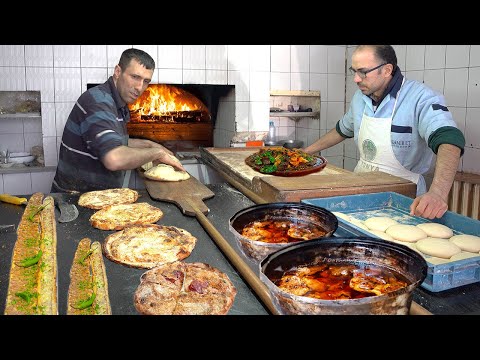
Konya’s food is built around long, thin breads, finely seasoned meat, and ovens hot enough to crisp the edges in minutes. Order etli ekmek, then try fırın kebabı or tirit when you want the city’s older, more ceremonial side at the table.
Places to Visit
Not every monument, just the ones we'd walk you past ourselves.
-
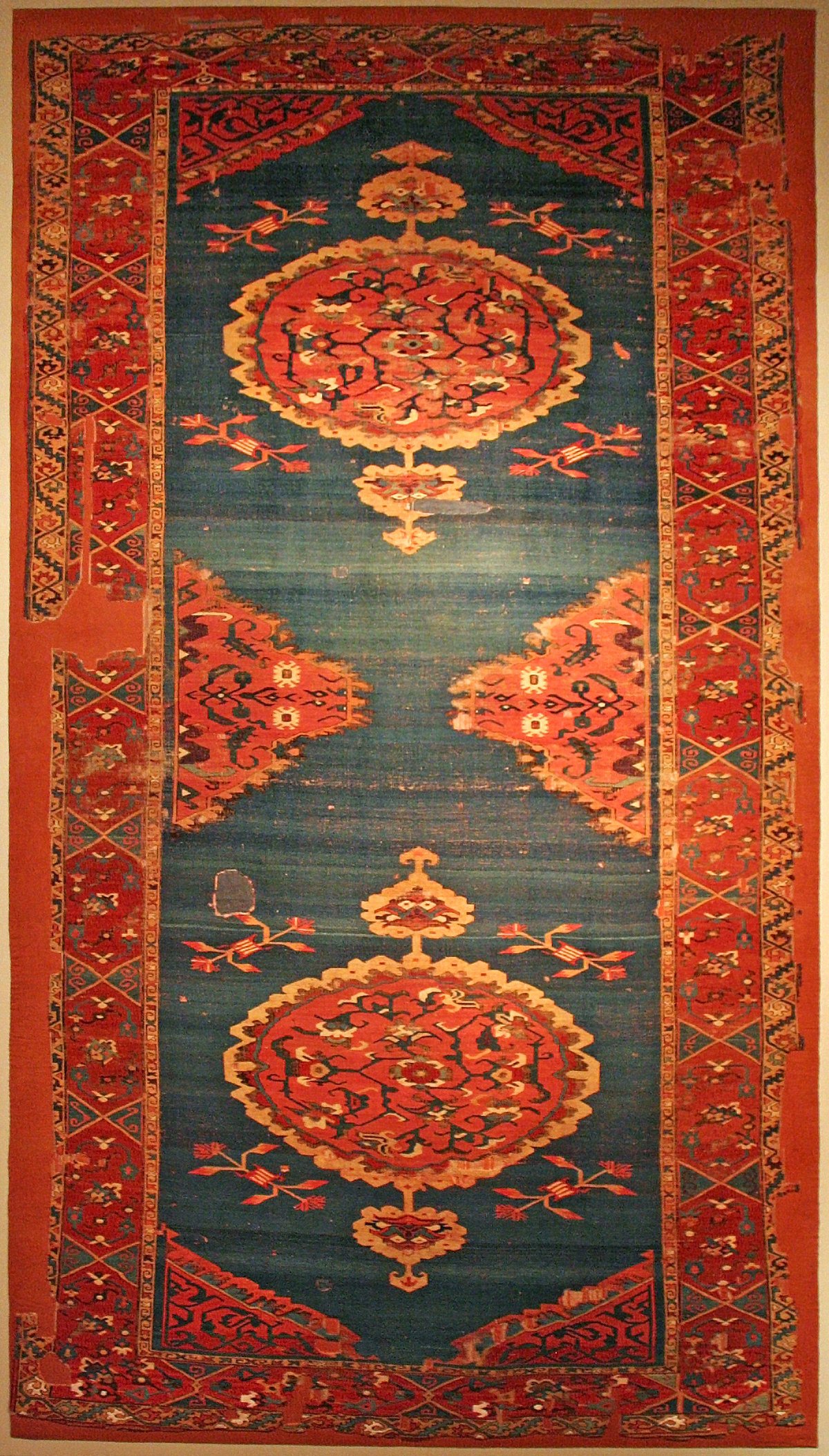
Alâeddin Mosque Nestled atop Alâeddin Hill in the historic city of Konya, Turkey, the Alâeddin Mosque (Alâeddin Camii) stands as a magnificent emblem of Seljuk architecture…
-
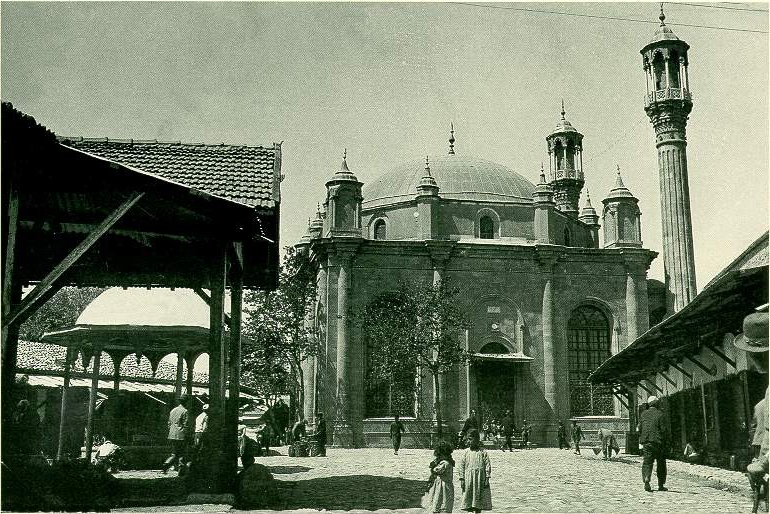
Aziziye Mosque Nestled in the vibrant heart of Konya, Turkey, the Aziziye Mosque stands as a remarkable testament to Ottoman architectural innovation and spiritual heritage.
-
Konya Archaeological Museum The Konya Archaeological Museum stands as a vital cultural institution in the heart of Turkey’s Anatolian region, offering an exceptional window into…

-
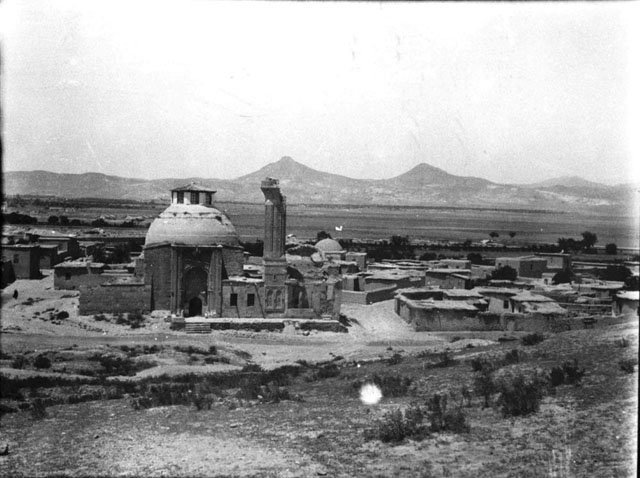
Ince Minaret Medrese Nestled in the historic heart of Konya, Turkey, the Ince Minaret Medrese stands as a magnificent emblem of 13th-century Seljuk architectural mastery and…
-
Konya Atatürk Stadium Konya Atatürk Stadium, once a celebrated sports landmark in Konya, Turkey, holds a distinguished place in the city’s sporting and cultural narrative.

- Mevlâna Museum Nestled in the heart of Konya, Turkey, the Mevlâna Museum stands as a profound spiritual and cultural landmark dedicated to the life and teachings of Jalal…
- Konya Ethnography Museum Situated in the cultural heart of Konya, Turkey, the Konya Ethnography Museum stands as a vital institution preserving and showcasing the rich and diverse…
- Sahip Ata Museum Situated in the historic city of Konya, Turkey, the Sahip Ata Museum offers a captivating journey into the heart of 13th-century Seljuk culture and Anatolian…
- Konya Büyükşehir Stadium Nestled in the vibrant Selçuklu district of Konya, Turkey, Konya Büyükşehir Stadium stands as a striking symbol of the city’s fusion of tradition and modernity.
Neighborhoods
Where to wander, by quarter — each with its own rhythm.
Mevlâna Quarter
The city’s spiritual center gathers around the Mevlâna Museum, the turquoise Yeşil Kubbe, and streets lined with bookshops, pilgrimage goods, tea houses, and modest restaurants. Come early for quieter museum galleries, then linger near the gates as visitors arrive with roses and prayer beads.Alaeddin Hill and Seljuk Center
Alaeddin Hill rises from the urban center on top of a prehistoric settlement mound, giving this part of Konya an unusual sense of historical compression. The Alaeddin Mosque, Seljuk royal tombs, İnce Minareli Madrasah, and Karatay Madrasah all sit within a walkable cluster of parks, tram stops, and busy central streets.Karatay
Named for the district that contains the Karatay Madrasah and Mevlâna complex, Karatay is where religious history meets ordinary city life. Its museums reward close looking: turquoise, black, and white tiles form starry patterns inside the madrasah, while the surrounding streets lead toward markets and traditional eateries.Meram
Meram lies southwest of the central monuments and is associated with gardens, old watercourses, and a slower residential rhythm. It is a good counterpoint to Konya’s formal Seljuk core, especially when the heat gathers over the broad avenues and the shade of trees becomes the main attraction.Sille
Sille, an old settlement on Konya’s western edge, has a distinct village character shaped by stone houses, narrow lanes, and surviving Christian heritage. Visitors come for its churches, hillside views, and quieter cafés; the contrast with central Konya is immediate, as if the city has briefly loosened its grip.Selçuklu
The modern Selçuklu district spreads west and north of the historic center, with universities, newer housing, shopping areas, and broad roads replacing the tight geometry of the old quarters. It is useful for contemporary Konya—the tram, student cafés, and everyday routines that keep the city from becoming a museum with traffic.
Plan your trip
Before you go
- Getting There
- Konya Airport (KYA) lies about 15 km north of the center, with domestic service chiefly via Istanbul; taxis and airport shuttles connect with town. Konya Gar is the high-speed rail station for trains to Ankara, Eskişehir, and Istanbul, while major road approaches include the D715 from Ankara, D300 from Afyonkarahisar and Aksaray, and D330 toward Karaman.
- Getting Around
- As of 2026, Konya’s tram network has two principal routes from Alaaddin: one toward Selçuk Üniversitesi campus and one toward Adliye, supported by municipal buses. Buy and top up a KonyaKart for trams and buses; fares and daily or student products change, so check the municipal tariff before loading it, and use the broad, mostly flat central streets for cycling between Alaeddin Hill, the madrasas, and the Mevlâna Museum.
- Climate & Best Time
- Spring usually runs from about 10–22°C, summer from 18–32°C, autumn from 8–24°C, and winter from roughly -2–8°C; April and May bring the clearest mix of mild days and rain, while July and August are dry and hot. April–October draws the largest sightseeing crowds, with another busy period around the December Şeb-i Arus commemorations; May, late September, and October offer the easiest walking weather.
- Language & Currency
- Turkish is the working language, and English is more reliable at museums, hotels, and train counters than in small restaurants. Prices are in Turkish lira (TRY); cards work in central businesses, but carry cash for bakeries, local lokantas, and small market purchases.
- Safety & Etiquette
- Central Konya is generally calm, though ordinary precautions still make sense around the train station, crowded tram stops, and busy market streets. The Mevlâna Museum and mosques are active religious places: dress with shoulders and knees covered, remove shoes where requested, and keep voices low near the tombs.
Who lived here
-
Poet and mystic · 1207–1273
Jalal al-Din Muhammad Rumi
Lived and died here, 1228–1273
Rumi came to Konya in 1228, then taught, wrote, and gathered disciples here until his death in 1273. The turquoise-domed tomb still anchors the city; he might recognize the reed flute and pilgrims, even if the tram outside would be a new sort of whirling.
-
Sufi mystic · c. 1185–1248
Shams al-Din Muhammad ibn Ali ibn Malikdad Tabrizi
Lived in Konya, c. 1244–1247
Shams’s meeting with Rumi in Konya around 1244 altered both men’s lives and became the emotional spark of the Mevlevi tradition; his disappearance three years later remains surrounded by competing accounts. In the city today, his presence survives less in grand architecture than in the charged silence around Rumi’s story.
-
Theologian and preacher · 1152–1231
Baha al-Din Muhammad Walad
Lived and died here, 1228–1231
Rumi’s father arrived in Konya with his family and became a respected teacher before his death in 1231. His tomb within the Mevlâna complex gives the city’s central shrine an older family story, one that predates the fame of the son buried beside him.
-
Seljuk sultan · 1190–1237
Alaeddin Keykubad I
Ruled from Konya, 1220–1237
Under Alaeddin Keykubad I, Konya served as the Seljuk capital and the city’s monumental building program gathered force. Alaeddin Mosque and the royal tombs on the hill preserve his political afterimage; he might recognize the stonework, though not the traffic circling it.
Where to Eat
Where locals actually book dinner — not the tourist menus.
-
Etli ekmek
A long, paddle-shaped flatbread carries a thin layer of minced meat, tomato, and pepper before going into a wood-fired oven. The crust snaps, the center stays tender, and the best versions arrive long enough to cover the table.
-
Fırın kebabı
Chunks of lamb are slow-roasted in a traditional bakery oven until the fat perfumes the meat and the edges darken. It is a spare dish—usually meat, bread, and little else—which makes the quality of the lamb impossible to disguise.
-
Tirit
Pieces of bread are soaked with broth and layered with meat, yogurt, and spices, producing the soft, savory texture its name suggests. Try it when the weather turns cool; it tastes like a dish shaped by long winters and a practical kitchen.
-
Bamya çorbası
Konya’s okra soup combines small okra pods with meat, tomato, and a sharp sour note, often lemon or sumac. The pods add body without making the soup heavy, and the tartness cuts through the richness of the main course.
-
Arabaşı
This winter specialty pairs a hot, peppery poultry soup with a firm, slippery dough served separately. The dough is traditionally swallowed rather than chewed, a small piece of table theatre that makes the dish especially memorable in a local home or traditional restaurant.
-
Sac arası
Thin layers of pastry are baked with butter, cream, or nuts and finished with syrup, creating a dessert that is crisp at the edges and soft in the middle. Share one after etli ekmek; a whole portion can outlast your appetite.
-
Mevlâna şekeri
These small, often mint-flavored sweets are associated with Konya and are sold around the Mevlâna Museum. They are less a grand dessert than a pocket-sized taste of the city’s devotional and confectionery traditions.
Insider tips
Small things that change how the city treats you.
Book Saturday Sema
The Mevlâna Cultural Center hosts official weekly Saturday sema ceremonies; check the current schedule and reserve ahead for Şeb-i Arus in December, when demand rises.Dress for Sacred Sites
Wear clothing covering shoulders and knees at the Mevlâna Museum and mosques, and carry a light scarf. Keep voices low around the mausoleum and follow staff directions.Load an Elkart
Use an Elkart for city transport, then take the Alaaddin–Adliye tram corridor toward the central Seljuk sights and Mevlâna Cultural Center. Check current routes and departures through Konya ATUS.Pair the Seljuk Museums
Alaeddin Hill, İnce Minareli Madrasah, and Karatay Madrasah sit around the historic center. Visit them in one walking circuit, checking each museum’s hours because they operate as separate sites.Use Marked Crossings
Tram tracks and broad roads meet around Alaeddin Hill and Mevlâna, so use marked crossings rather than stepping into traffic for a photograph. During Şeb-i Arus crowds, keep valuables in zipped pockets and arrive early for venue checks.Eat Etliekmek Locally
Order Konya’s thin, oven-baked etliekmek at a local pide restaurant and share it; the long shape makes it easy to split. Try fırın kebabı or tirit if the kitchen serves them that day.Choose Shoulder Seasons
April–May and September–October make walking between museums and open-air sights easier than high summer. If you travel for Şeb-i Arus, reserve accommodation and ceremony seats early.
Gallery
The city, as it actually looks.


Watch
Frequently asked
Is Konya worth visiting?
Yes, especially if you care about Sufi history, Seljuk architecture, tilework, and traditional music. Two days cover the Mevlâna complex and central museums without making the city feel like a quick stop.
How many days should I spend in Konya?
Plan on 2–3 days in Konya. Use two days for the Mevlâna Museum, sema ceremony, Alaeddin Hill, İnce Minareli Madrasah, and Karatay Madrasah; add a third day for Çatalhöyük or a slower food-and-museum schedule.
How do I get around Konya without a car?
Use the tram and buses with an Elkart, then walk between the closely grouped central museums. The Alaaddin–Adliye tram corridor is useful for linking Alaeddin Hill with the Mevlâna Cultural Center; check Konya ATUS for current routes.
Where can I watch a whirling dervish ceremony in Konya?
The official weekly Saturday sema ceremony takes place at the Mevlâna Cultural Center, not as part of every Mevlâna Museum visit. Check the current program and ticket rules before going, especially around the December Şeb-i Arus commemorations.
Is Konya safe for tourists?
Konya is generally safe for visitors who use ordinary city precautions and respect local religious customs. Take extra care around tram crossings, keep valuables secure in festival crowds, and dress modestly at the Mevlâna complex and mosques.
How expensive is Konya for travelers?
Konya can suit a moderate budget, particularly when you use public transport and eat at local pide restaurants or lokantas. Hotel prices and ceremony availability become less predictable around Şeb-i Arus, so December trips need earlier bookings.
What should I wear when visiting the Mevlâna Museum?
Cover your shoulders and knees, and bring a light scarf for added flexibility. The site functions as both a museum and a mausoleum, so quiet behavior and respectful clothing matter more here than at a standard historic building.
Can I visit Çatalhöyük from Konya?
Yes, Çatalhöyük works as a day trip from Konya, though it lies outside the city and needs separate transport planning. Allow extra time beyond the central museum circuit and check site access conditions before setting out.
All Places to Visit.
20 places to discover
Place
Alâeddin Mosque
Place
Aziziye Mosque
Place
Konya Archaeological Museum
Place
Konya Ethnography Museum
Place
Sahip Ata Museum
Place
Ince Minaret Medrese
Place
Konya Büyükşehir Stadium
Place
Konya Atatürk Stadium

Place
Sırçalı Madrasah
Place
İplikçi Mosque, Konya
Place
Karatay Madrasah
Place
Konya Airport
Place
Konya Food and Agriculture University
Place
Konya Technical University
Place
Kto Karatay University
Place
Necmettin Erbakan University
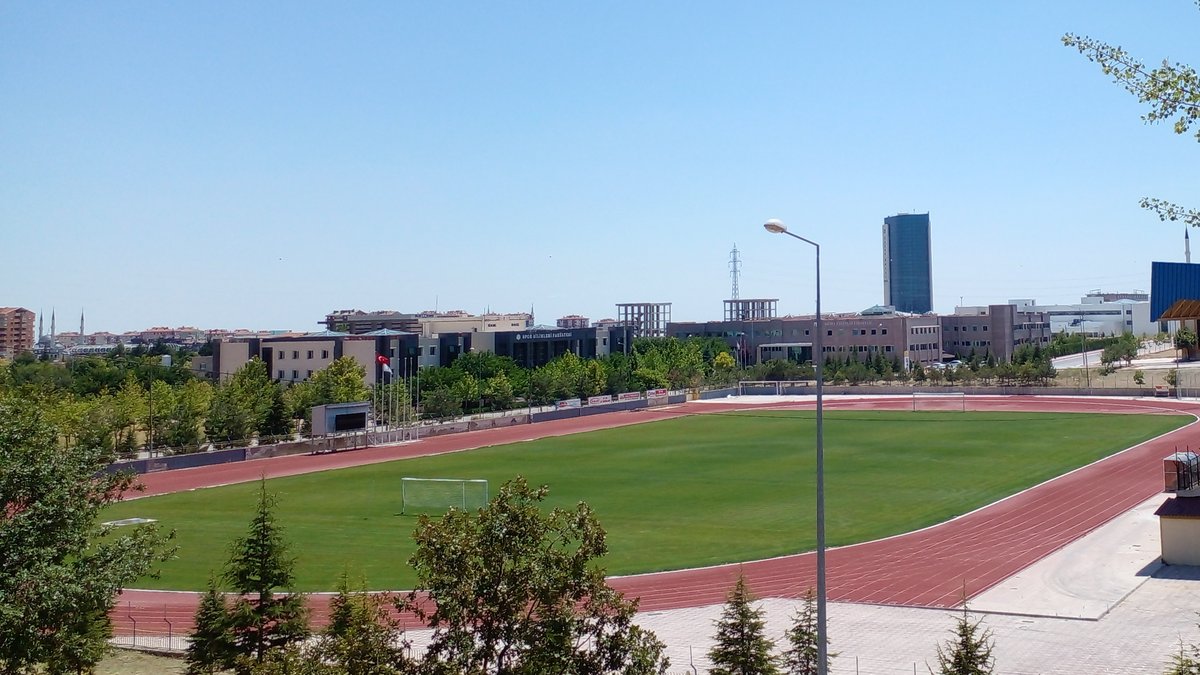
Place
Selçuk University
Place
Selçuk University Faculty of Medicine
Place
Tahir and Zühre Masjid and Türbe
Pick up where you left off
Saved and recently read places — kept on this device only.
Photo credits (11)
- ORHAN BADUR — Pexels License (https://www.pexels.com/license/) — Source: https://www.pexels.com/photo/19885633/
- Konya 11 09 1978 Gärten von Meram — Volker Höhfeld — CC BY-SA 4.0 (https://creativecommons.org/licenses/by-sa/4.0/) — Source: https://commons.wikimedia.org/wiki/File:Konya_11_09_1978_Gärten_von_Meram.jpg
- Konya 09 04 1993 Blick über die Stadt Konya nach Osten — Volker Höhfeld — CC BY-SA 4.0 (https://creativecommons.org/licenses/by-sa/4.0/) — Source: https://commons.wikimedia.org/wiki/File:Konya_09_04_1993_Blick_über_die_Stadt_Konya_nach_Osten.jpg
- Konya 12 — Imperissionist — CC BY-SA 4.0 (https://creativecommons.org/licenses/by-sa/4.0/) — Source: https://commons.wikimedia.org/wiki/File:Konya_12.jpg
- Konya 13 — Imperissionist — CC BY-SA 4.0 (https://creativecommons.org/licenses/by-sa/4.0/) — Source: https://commons.wikimedia.org/wiki/File:Konya_13.jpg
- Konya (Plate 116a, Voyage de l'Asie Mineure, 1838) — Laborde, Alexandre 1838 — CC BY-SA 4.0 (https://creativecommons.org/licenses/by-sa/4.0/) — Source: https://commons.wikimedia.org/wiki/File:Konya_(Plate_116a,_Voyage_de_l'Asie_Mineure,_1838).jpg
- Konya 2 — Imperissionist — CC BY-SA 4.0 (https://creativecommons.org/licenses/by-sa/4.0/) — Source: https://commons.wikimedia.org/wiki/File:Konya_2.jpg
- Konya 195 — Perencal — CC BY-SA 4.0 (https://creativecommons.org/licenses/by-sa/4.0/) — Source: https://commons.wikimedia.org/wiki/File:Konya_195.jpg
- Benim şehrim — Satirdan kahraman — CC BY-SA 4.0 (https://creativecommons.org/licenses/by-sa/4.0/) — Source: https://commons.wikimedia.org/wiki/File:Benim_şehrim.jpg
- Konya 19 09 2013 Getreidetransporter — Volker Höhfeld — CC BY-SA 4.0 (https://creativecommons.org/licenses/by-sa/4.0/) — Source: https://commons.wikimedia.org/wiki/File:Konya_19_09_2013_Getreidetransporter.jpg
- Konya 2010 2260 — Dosseman — CC BY-SA 4.0 (https://creativecommons.org/licenses/by-sa/4.0/) — Source: https://commons.wikimedia.org/wiki/File:Konya_2010_2260.jpg
Photos may have been resized or cropped.