Introduction
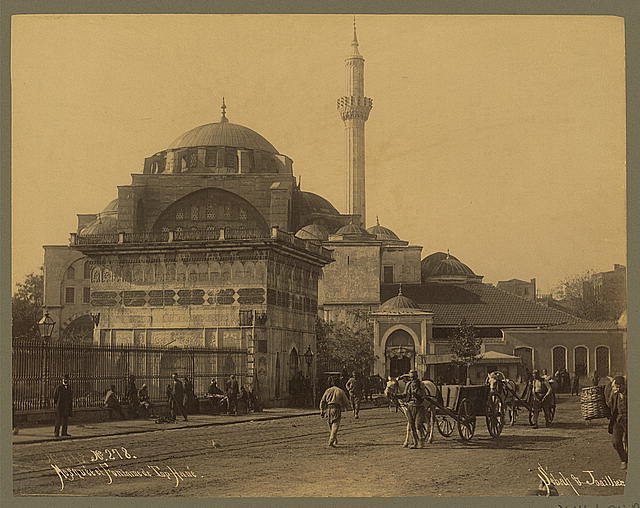
The architect who built the Süleymaniye Mosque called it merely his practice piece — and then asked to be buried beside it forever. Rising from one of Istanbul's seven hills in Turkey, this 16th-century imperial complex dominates the Golden Horn skyline the way a thesis statement dominates an essay: everything else arranges itself around it. Come here not for a single building but for a whole Ottoman city in miniature — mosque, hospital, soup kitchen, schools, baths, tombs — all designed by one mind in seven years.
Süleymaniye is the kind of place that reshapes your sense of scale. Four columns the Ottomans called "elephant legs" hold up a dome 53 meters above the floor — roughly the height of a 17-story building. Light enters through more than 130 stained-glass windows, many by the master glazier Ibrahim the Drunkard (his real epithet), and the effect at mid-morning is less like illumination than like standing inside a lantern.
But the mosque is only the centerpiece. The full complex, or külliye, once included four madrasas, a medical school, a hospital, a caravanserai, a public bath, and a soup kitchen that still serves food today. When Sultan Süleyman I commissioned this project in 1550, he wasn't just ordering a prayer hall. He was building infrastructure for a capital city the Ottomans had held for less than a century.
For visitors coming from Hagia Sophia, the comparison is immediate and deliberate. Sinan studied the older building's engineering, borrowed its central-dome-and-half-dome scheme, and then tried to surpass it. Whether he succeeded is a conversation Istanbul has been having for nearly 500 years.
Turkey, Istanbul Suleymaniye Mosque (April 2022) 4K Walking
Emil GurbanovWhat to See
The Prayer Hall and Its Hidden Orchestra
Step past the threshold and the city drops away. The central dome floats 53 meters above the carpet — roughly the height of a 17-story building — yet Mimar Sinan's genius was making it feel buoyant rather than crushing. He buried the massive buttresses inside the walls, so instead of seeing the engineering that holds everything up, you see light: hundreds of windows, including original 16th-century stained glass on the south wall, pouring color across an almost square room of startling clarity. The Blue Mosque overwhelms with tile; Süleymaniye persuades with proportion.
What you can't see matters too. Embedded in the dome above your head are 224 clay pots, placed by Sinan's builders as acoustic resonators. They tune the reverberation so that a whispered prayer carries further than it should, and the imam's voice gains a warm, low-frequency bloom that modern concert halls spend millions trying to reproduce. Stand still for a moment. Listen to the hush amplify itself. Then look down: the mother-of-pearl and ivory inlaid window shutters at eye level are some of the finest woodwork in the city, and almost everyone walks past them staring upward.

The Tomb Garden and Sinan's Quiet Corner
Behind the qibla wall, through a gate most tour groups breeze past, lies a walled cemetery garden that rewards slowness. Sultan Süleyman the Magnificent and his wife Hürrem Sultan — known in the West as Roxelana — rest in separate mausoleums here, surrounded by cypress trees and birdsong. Hürrem's tomb is the surprise: its İznik tilework is arguably finer and more saturated than her husband's, a riot of cobalt, turquoise, and coral-red that feels almost defiant in its beauty. The sultan's tomb carries deliberate references to the Prophet Solomon, his namesake. Both are free to enter and rarely crowded.
Then find Sinan himself. His tomb isn't inside the imperial garden — it sits outside the complex wall, near the northeast street edge, modest and triangular-roofed. The man who built over 300 structures across the Ottoman Empire, who called Süleymaniye merely his "journeyman's work," chose to rest just beyond the boundary of the masterpiece he gave his patron. That small distance says more about the relationship between architect and sultan than any inscription could. According to tradition, Sinan asked to be buried here specifically so he could remain near his creation without presuming to share the sultan's ground.
The Terrace Walk: Külliye to Golden Horn at Sunset
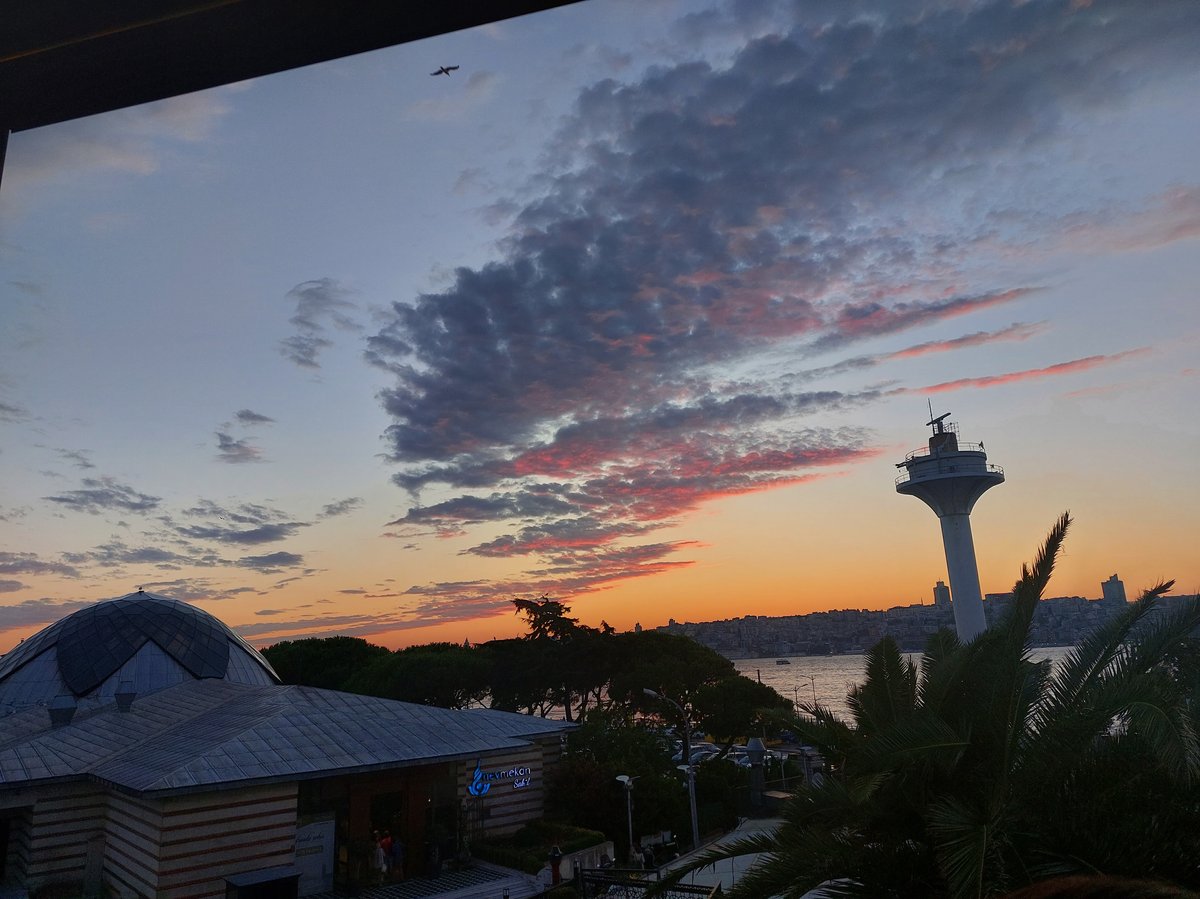
Süleymaniye is not a single building — it's an entire neighborhood designed as one organism. Sinan's 1550–1557 complex included madrasas, a hospital, a public kitchen, a bathhouse, and a caravanserai, all arranged around the mosque on Istanbul's Third Hill. Start your visit by walking up through the steep surrounding streets, where the transition from market noise to hilltop stillness is part of the architecture. Cross the marble courtyard with its granite and porphyry columns, then after the prayer hall and tombs, make your way to the rear terrace. This is where the building gives you its final gift: a panorama across the Golden Horn to the Galata Tower, with ferries cutting white lines on the water below and the call to prayer layering in from minarets across the city. Come an hour before sunset. The light turns the stone from grey to gold, and you'll understand why Sinan placed the mosque exactly here — not just to be seen from the water, but to see everything from above. Pair this with a visit to Topkapi Palace the same morning, or walk downhill afterward toward Hagia Sophia to feel the conversation between the two domes that shaped Istanbul forever.
Videos
Watch & Explore Suleymaniye Mosque
Amazing Places to Visit in Turkey - Travel Video
Süleymaniye Mosque: A Masterpiece of Ottoman Architecture | FULL DOCUMENTARY
Look up at the four massive 'elephant leg' columns (fil ayağı) that support the central dome — run your eye along where they meet the arches above. Sinan engineered these monolithic shafts to carry the entire dome load while keeping the interior open and luminous, a structural solution he considered imperfect enough to call this only his 'journeyman's work.'
Visitor Logistics
Getting There
Take the M2 metro to Vezneciler-İstanbul Üniversitesi, then walk about 10 minutes uphill. Alternatively, the T1 tram to Beyazıt-Kapalıçarşı puts you a 5-minute walk from the north gate of the Grand Bazaar, and another 5 minutes from the mosque. If you're coming from Eminönü or the Spice Bazaar, brace yourself — it's only 8–10 minutes on the map, but the hill is steeper than it looks and will feel longer. A taxi dropped near the kuru fasulye restaurants on Prof. Sıddık Sami Onar Caddesi saves you the climb entirely.
Opening Hours
As of 2026, the mosque is generally open to visitors Monday–Thursday and Saturday–Sunday from roughly 09:00 to 18:30, with last entry around 18:00. On Fridays, tourist access typically resumes after 14:30 due to the extended midday congregational prayer. Expect brief closures of about 30 minutes during each of the five daily prayer times — these shift with the seasons, so the exact windows move through the year.
Time Needed
A focused look at the courtyard and prayer hall takes 30–45 minutes. For the full experience — the tombs of Süleyman and Hürrem Sultan out back, the terrace views over the Golden Horn, and a slow absorb of the külliye's scale — plan 1 to 2 hours. Add another 30 minutes if a prayer-time closure catches you mid-visit, which is common and honestly a good excuse to sit in the courtyard and watch the light shift.
Accessibility
The courtyard and main prayer hall have ramps and are generally wheelchair accessible once you arrive. The real obstacle is the hill: cobbled, steep, and uneven on most approach streets. Wheelchair users and anyone with reduced mobility should take a taxi to the upper side of the complex rather than walking up from Eminönü or the tram stops. Vezneciler metro station on the M2 line has elevators and accessible facilities.
Cost & Tickets
Entry is completely free — this is an active mosque, not a museum. No ticket, no reservation, no skip-the-line product needed. Guided tours and audio guides are sold by third-party operators starting around €10–15, but they buy interpretation, not admission. Restrooms near the courtyard may charge a small maintenance fee of a few lira.
Tips for Visitors
Dress Code Matters
Women must cover hair, shoulders, and legs; men should avoid shorts above the knee. Bring your own scarf — loaner scarves sometimes appear at the entrance but aren't guaranteed, and arriving prepared saves you an awkward shuffle at the door.
Photography Etiquette
Photos are allowed inside but skip the flash, never aim at worshippers, and leave the tripod at your hotel — they block movement and draw unwanted attention. The best light for the interior pours through the stained glass in the morning; for the Golden Horn terrace view, late afternoon gives you the warmest color.
Eat Beans, Seriously
The slope beside the mosque is Istanbul's kuru fasulye street — white bean stew with rice and pickles, the neighborhood's signature meal. Erzincanlı Ali Baba on Prof. Sıddık Sami Onar Caddesi is the classic budget pick. Then walk 10 minutes downhill to Vefa Bozacısı for a glass of boza, the fermented millet drink that tastes like the Ottoman Empire's answer to a milkshake.
Weekday Mornings Win
Arrive between 09:00 and 11:00 on a weekday for the calmest experience — fewer tour groups, no Friday prayer closure, and the morning light flooding through 138 windows is worth setting an alarm for. Avoid Friday before 14:30 entirely unless you're there to worship.
Combine With Neighbors
The mosque sits between the Grand Bazaar (5 minutes south) and the Spice Bazaar at Eminönü (10 minutes downhill). A natural half-day loop runs: Süleymaniye → beans → downhill through old streets to Vefa Bozacısı → Spice Bazaar → ferry across to the Asian side or tram to Hagia Sophia and Topkapı Palace. Walk downhill, not up.
Watch Your Pockets Downhill
The mosque precinct itself feels safe and calm, but the walk down toward Eminönü and the Grand Bazaar passes through denser crowds where pickpockets work. Keep your phone in a front pocket and skip the shoe-shine guys who "accidentally" drop a brush in front of you — it's Istanbul's oldest street hustle.
Historical Context
A Journeyman's Ambition
Before the mosque existed, this hilltop held the Eski Saray — the Old Palace, the first Ottoman residence in Istanbul after the 1453 conquest. Clearing it for a mosque was itself a statement: Süleyman was replacing a seat of private power with a public monument. The old court gave way to something meant to outlast any dynasty.
Construction ran from 1550 to 1557, employing over 3,500 workers — a mixed labor force of Muslims and Christians, free laborers and conscripts, reflecting the composite empire that paid for it. The finished complex carried symbolic arithmetic in its very silhouette: four minarets marking Süleyman as the fourth sultan to rule from Istanbul, ten balconies across them marking him as the tenth Ottoman sultan overall.
Sinan, Süleyman, and the Weight of a Dome
Mimar Sinan was already in his sixties when Sultan Süleyman I handed him the commission. He had built the Şehzade Mosque a decade earlier — his self-described "apprentice work" — and now the most powerful ruler in the Islamic world wanted something that could stand alongside Hagia Sophia, a building that had humbled architects for a thousand years. The personal stakes were absolute. If the dome cracked or the proportions fell flat, the failure would belong not just to Sinan but to the sultan's imperial image.
Sinan's solution was structural honesty dressed in elegance. He anchored the dome on four massive piers — the "elephant legs" — and flanked it with two half-domes, channeling lateral thrust down into the hillside itself. He oriented the courtyard so that worshippers approaching from the north would see the dome floating above a cascade of descending vaults, each one slightly smaller, like a visual argument building to its conclusion. The engineering worked. The dome has never collapsed.
According to tradition, when the mosque was finished, Sinan offered the keys to Süleyman. The sultan refused them and told the architect to open the doors himself. Sinan later classified the Süleymaniye as his "journeyman work" — kalfalık eseri — reserving the title of masterpiece for the Selimiye Mosque in Edirne. But the journeyman chose to be buried just outside the Süleymaniye's walls, in a modest tomb he designed himself. Whatever he called the building, he wanted to spend eternity next to it.
Fire, Earthquake, Ammunition
The building Sinan left behind has been tested repeatedly. The Great Fire of 1660 damaged the interior, and restoration under Mehmed IV introduced elements foreign to the original scheme. The earthquake of 22 May 1766 — strong enough to send Istanbulites fleeing into open ground at dawn — scarred the structure again, prompting further repair that altered surviving decoration. Then came World War I, when the courtyard was requisitioned as an ammunition depot; an explosion and fire caused yet more damage. Full restoration came only in 1956, with major campaigns following in 1961–1967 and again in 2007–2010. The Süleymaniye visitors see today is Sinan's skeleton wearing several centuries of surgical scars.
The Tombs in the Garden
Behind the mosque, in a walled garden with views toward the Bosphorus, lie the türbes of Sultan Süleyman and his wife Hürrem Sultan — known in the West as Roxelana. Süleyman's octagonal mausoleum, completed between 1566 and 1568 according to mosque records, carries Solomonic references throughout: the sultan's very name is the Turkish form of Solomon, and the tomb's decoration plays on that lineage. Hürrem's smaller türbe, dating to around 1558, sits nearby. Together with Sinan's own modest tomb just outside the complex wall, the garden holds the patron, the beloved, and the builder — three lives that shaped Ottoman Istanbul, resting within a few dozen meters of each other.
Listen to the full story in the app
Your Personal Curator, in Your Pocket.
Audio guides for 1,100+ cities across 96 countries. History, stories, and local insight — offline ready.
Audiala App
Available on iOS & Android
Join 50k+ Curators
Frequently Asked
Is Suleymaniye Mosque worth visiting? add
Yes — many repeat visitors and locals rank it above the Blue Mosque for atmosphere, architecture, and views. The prayer hall is a masterclass in light and proportion designed by Mimar Sinan between 1550 and 1557, the rear terrace offers one of Istanbul's finest panoramas over the Golden Horn, and the surrounding neighborhood serves the city's best kuru fasulye. It draws far fewer tour groups than Sultanahmet's headline sites, so you can actually stand still and look up.
How long do you need at Suleymaniye Mosque? add
Budget at least 45–60 minutes for the courtyard, prayer hall, and tombs. If you add the rear terrace viewpoint, Sinan's tomb outside the wall, and a bowl of beans at one of the nearby fasulye houses, plan closer to 90 minutes to two hours. Prayer-time closures (roughly 30 minutes each) can extend your visit unexpectedly.
Can you visit Suleymaniye Mosque for free? add
Entry is completely free — there is no admission ticket. The mosque is an active place of worship, not a museum. Third-party guided tours and audio guides exist for purchase, but they are optional add-ons, not entry requirements.
What is the best time to visit Suleymaniye Mosque? add
Weekday mornings between 9:00 and 11:00 give you the clearest light, fewest visitors, and no prayer-time interruptions. Late afternoon (15:00–17:30) is also good, especially if you want golden-hour photographs from the rear terrace. Avoid Friday before 14:30, when the mosque closes to tourists for congregational prayer.
How do I get to Suleymaniye Mosque from Sultanahmet? add
Walk about 1.5 km northwest, roughly 15–20 minutes on foot through the university district. Alternatively, take the T1 tram to Beyazıt-Kapalıçarşı and walk 5–10 minutes uphill from the Grand Bazaar's north gate. The M2 metro stop Vezneciler is also close. Be warned: the approach from the Eminönü/Golden Horn side is steep and tiring in summer heat.
What should I not miss at Suleymaniye Mosque? add
Three things most visitors walk past: the original 1550s stained glass on the south wall of the prayer hall, the mother-of-pearl and ivory inlaid window shutters at floor level, and Sinan's own tomb — deliberately modest, tucked outside the complex wall rather than in the imperial burial garden. The rear terrace view and Hürrem Sultan's mausoleum (which has finer İznik tilework than the sultan's own tomb) also reward a slower pace.
Do you need to cover your head at Suleymaniye Mosque? add
Women must cover their hair, shoulders, and legs before entering the prayer hall. Men should avoid shorts above the knee and sleeveless tops. Everyone removes shoes at the entrance. Headscarves are sometimes available on-site, but bringing your own is far more reliable.
What is the history of Suleymaniye Mosque Istanbul? add
Sultan Süleyman the Magnificent commissioned Mimar Sinan to build it in 1550 on the site of the Old Palace, and it was completed in 1557 with over 3,500 workers — a mixed Muslim and Christian workforce. The complex was damaged by the Great Fire of 1660, the devastating earthquake of 22 May 1766, and a World War I ammunition explosion in its courtyard. Much of the visible interior paint dates from later restorations rather than Sinan's original scheme, making the building a layered record of survival as much as a single act of design.
Sources
-
verified
UNESCO World Heritage Centre — Historic Areas of Istanbul
Official UNESCO listing confirming construction dates, külliye description, and heritage status
-
verified
Archnet — Süleymaniye Complex
Architectural documentation including workforce composition, spatial layout, and construction history
-
verified
Museum With No Frontiers — Süleymaniye Mosque
Detailed description of materials, craftsmanship, stained glass, and tile use
-
verified
Britannica — Suleymaniye Mosque
Overview of construction, damage history (1660, 1766, WWI), and restoration timeline
-
verified
Khan Academy — Sinan and the Süleymaniye Mosque
Architectural analysis and discussion of later restoration layers
-
verified
Istanbul Clues — Süleymaniye Mosque Guide
Current visitor logistics, transport options, neighborhood context, and dress code
-
verified
Tickets Istanbul — Süleymaniye Opening Hours
Visitor hours, prayer-time closures, Friday restrictions, and photography rules
-
verified
Istanbul Daire — Süleymaniye Mosque
Visit duration estimates, accessibility notes, and practical tips
-
verified
Headout — Süleymaniye Mosque
Tour options, accessibility information, and restroom availability
-
verified
Metro Istanbul — M2 Line
Nearest metro station (Vezneciler) and accessibility services
-
verified
İSPARK — Süleymaniye Cami Altı Parking
Nearby official parking capacity and hours
-
verified
Moovit — Süleymaniye Camii Transit
Bus, tram, metro, and ferry routes to the mosque
-
verified
Daily Sabah — Süleymaniye Mosque Shapes Ramadan Life
Contemporary Ramadan use, local cultural significance, and külliye functions
-
verified
Inside Out in Istanbul — Süleymaniye Mosque
Interior details, Hürrem Sultan tomb tilework, astronomer's chambers
-
verified
Bilkent University Repository — Acoustics of Süleymaniye
Research on 224 embedded clay pots in the dome and acoustic properties
-
verified
ResearchGate — On The Acoustics of Süleymaniye Mosque
Academic study of the mosque's acoustic design and reverberation
-
verified
Turkey Ministry of Culture — Süleymaniye Mosque
Official government description including Sinan's tomb location and acoustic gallery
-
verified
Advantour — Süleymaniye Mosque
Visitor experience description, terrace views, and sensory details
-
verified
MIT Dome — Süleymaniye entry
Architectural analysis and confirmed construction dates
-
verified
Foresyte App — Süleymaniye Terrace Viewpoint
Best times for terrace photography and sunset views
-
verified
TripAdvisor — Süleymaniye Mosque Reviews
Visitor experiences, crowd levels, and informal guide encounters
-
verified
Wikipedia — Süleymaniye Mosque
Foundation inscription, mausoleum dates, and restoration timeline
-
verified
Archnet — Hürrem Sultan Mausoleum
Details on Hürrem Sultan's tomb within the complex
-
verified
Harvard Scholar — Necipoglu interpretation
Scholarly interpretation of the complex's political and religious symbolism
-
verified
EMIDIUS — 1766 Istanbul Earthquake
Confirmed date and parameters of the 1766 earthquake
-
verified
The Roaming Renegades — Underrated Istanbul
Visitor sensory impressions and crowd comparison with other mosques
-
verified
Reddit r/istanbul
Local opinions comparing Süleymaniye favorably to the Blue Mosque
-
verified
Financial Times — Istanbul travel piece
Insider perspective on Süleymaniye as preferred by repeat visitors
-
verified
Istanbul Cool — Kuru Fasulye Houses
Local food culture and ordering customs at bean houses near the mosque
-
verified
UNESCO State of Conservation 2023
Ongoing restoration projects at the Süleymaniye complex hospital and soup kitchen
-
verified
Walks in Istanbul — Dress Code
Practical mosque dress code guidance for Istanbul visitors
-
verified
LA Times — Ramadan mahya artisan
Ramadan light displays on mosque minarets including Süleymaniye
-
verified
ODÖO Government Listing — Süleymaniye Camii
Official Turkish government listing with accessibility marking and basic hours
-
verified
Osmanlı Mirası — 1858-1859 Restoration Study
Archive-based study confirming 19th-century repair campaigns
-
verified
Cambridge University Press — Great Fire of 1660
Confirmed date and scope of the 1660 Istanbul fire
Last reviewed: