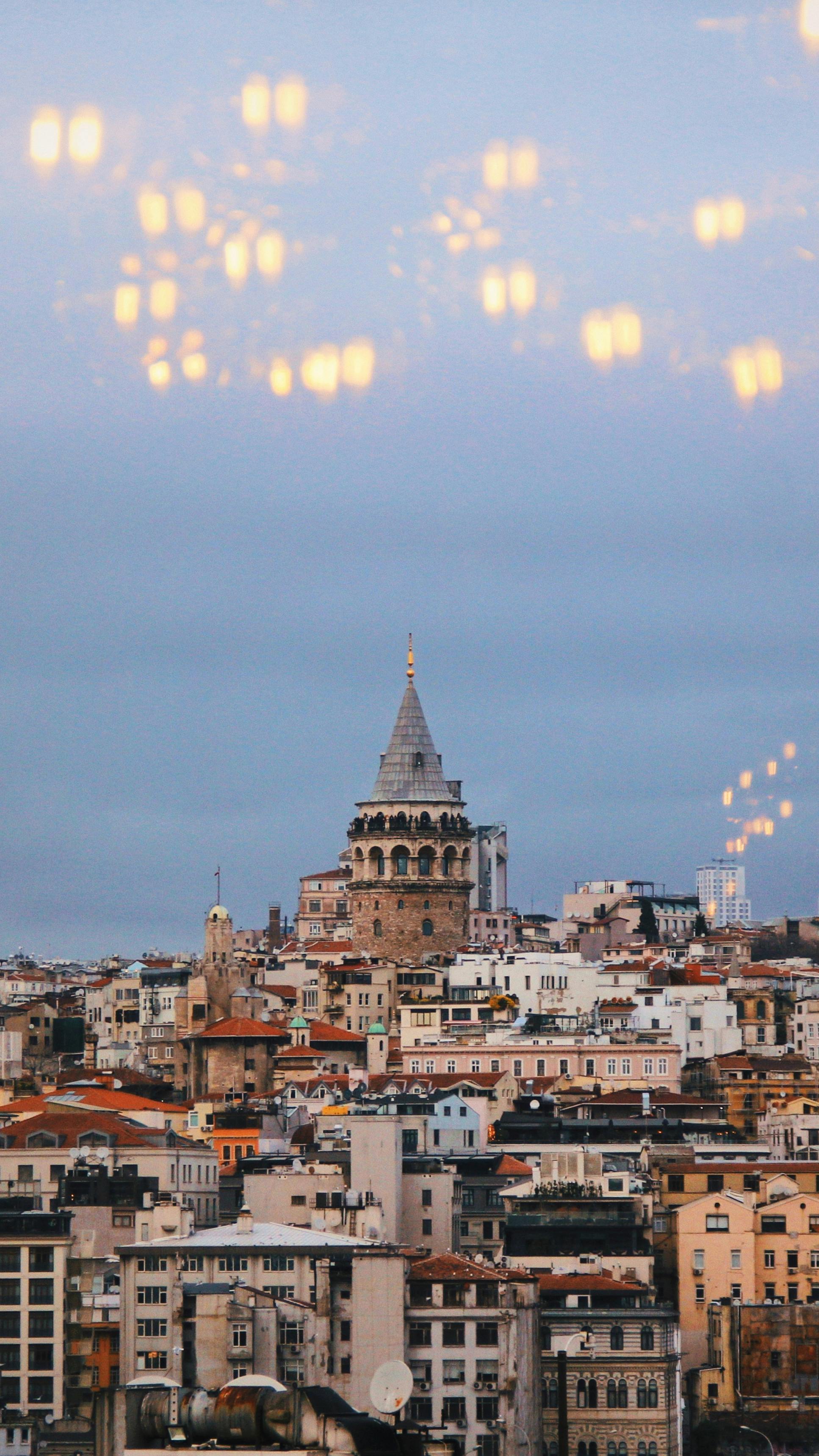
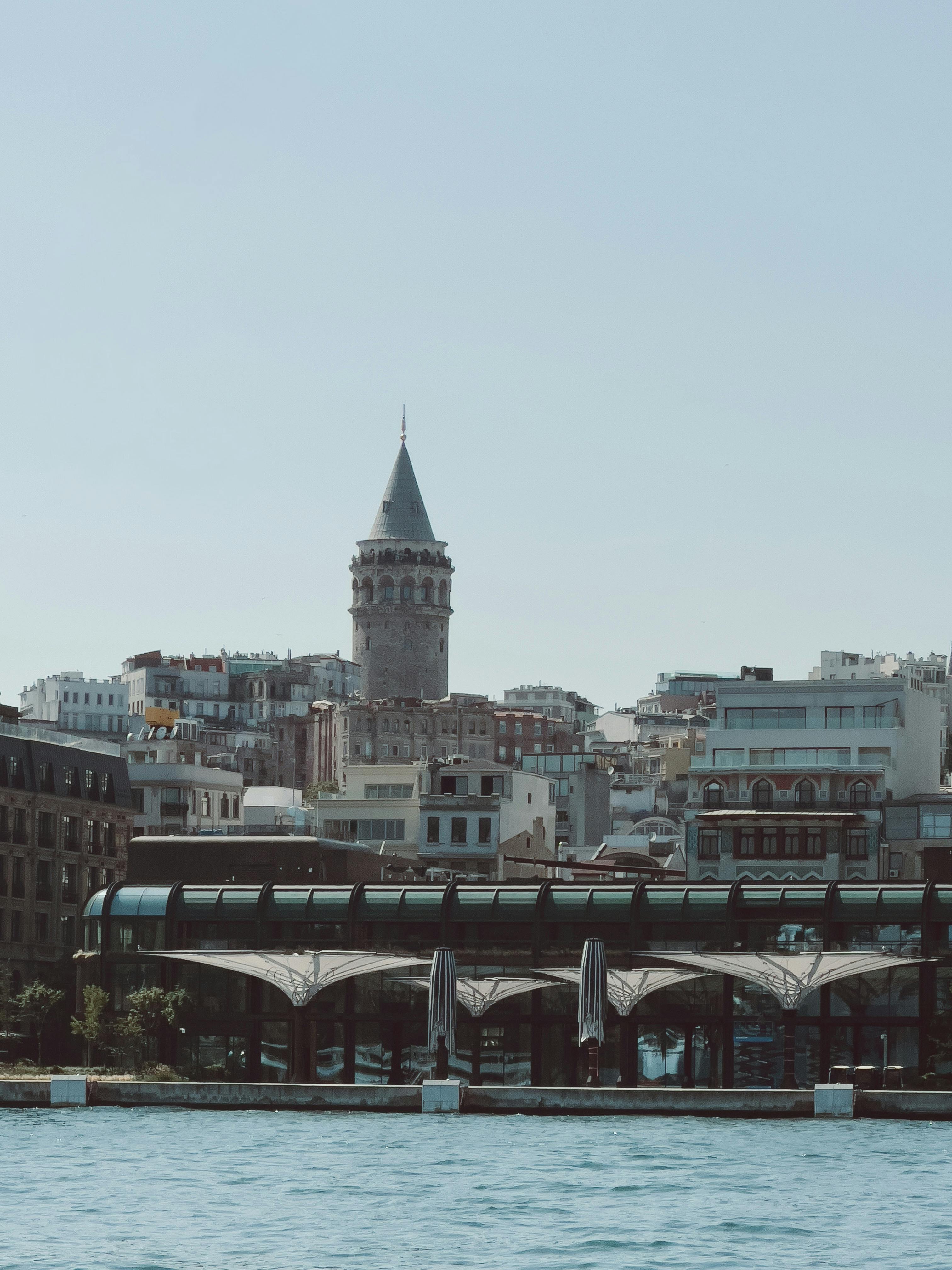
WWhy does Galata Tower look medieval at first glance, then start betraying the centuries the longer you stare? Visit Galata Tower in Istanbul, Turkey, because few places explain the city so quickly: Genoese ambition, Ottoman control, urban fire, modern restoration, and one stubborn skyline all stacked inside a 66.9-meter cylinder, about the height of a 22-story apartment block. Today you arrive through the steep lanes of Bereketzade, hear espresso cups and tram-bell echoes from lower Beyoglu, then step under thick stone that still feels cooler than the street outside.
The first surprise is that the famous cone tourists treat as ancient is not ancient at all in any simple sense. Records show the present stone tower began as a Genoese fortification in 1348, then fire, earthquake, imperial repair, storm damage, and a 20th-century rebuilding kept rewriting its silhouette.
And yet the building's job has stayed oddly consistent. Soldiers watched the harbor from here, Ottoman fire guards scanned timber roofs from here, and now visitors lean on the rail to read the same city spread toward the Blue Mosque, Hagia Sophia, and the Golden Horn.
Go for the view, yes. Stay for the correction: Galata Tower is not a frozen relic but a worked-over machine for watching Istanbul, and once you understand that, every stone course and repaired upper level makes more sense than the postcard version ever will.
01 What to See
The Tower Itself


The Inscriptions and the Streets Below
A Short Walk That Explains the District
Videos
Watch & Explore Galata Tower
30 Best Places to Visit in Istanbul: Must-See Attractions for 2026
Top Five Cities to visit in Turkey #cities #best #place #turkey #ankara #istanbul #izmir #göreme
Plan and listen to Galata Tower with Audiala
Audio guide in your pocket, itinerary in your browser. Built for the way you actually visit.
03 Visitor logistics.
The practical scaffolding for a good visit — kept short.
Getting There
The easy approach starts on Metro M2 at Şişhane; from the Istanbul Galata University exit, the tower is a 2 to 5 minute walk on gentler streets. Coming from Sultanahmet or Eminönü, take tram T1 to Karaköy or a ferry to Karaköy, then climb 10 to 15 minutes uphill on Galip Dede Caddesi and cobbles that feel steeper than they look; drivers should use Kuledibi or Şişhane parking garages, because the tower itself has no parking.
Opening Hours
As of 2026, official museum pages agree that Galata Tower opens daily at 08:30 and closes at 23:00, with no weekly closing day. The awkward part is the split: daytime entry ends somewhere between 17:45 and 18:14 depending on which official page you trust, while night entry runs from about 19:00 until the 22:00 last ticket, so early arrival beats arguing with a clock.
Time Needed
Give it 30 to 45 minutes if you already have a ticket and mainly want the exhibits and the view. Most visitors spend 45 to 60 minutes, while 60 to 90 minutes feels right if you want terrace photos without elbowing for space; add 2 to 3 hours if you plan to drift through Galata, Karaköy, or uphill toward Beyoğlu after.
Accessibility
Galata Tower is only partly accessible: the lift helps with the museum floors, reportedly up to around the 6th or 7th floor, but the final climb to the open-air deck still requires stairs. The terrace is narrow, the route can turn slick in wet weather, and the uphill approaches from Karaköy are rough on wheels and knees, so Şişhane is the better starting point.
Cost & Tickets
As of 2026, the official single ticket is €30, sold through the Ministry's e-ticket system. MuseumPass Istanbul and MuseumPass Türkiye cover daytime entry only and are not valid for Night Museology after 19:00; Turkish MüzeKart holders can buy a separate night ticket for 200 TL, and no official recurring free-entry day appears on the current museum pages.
05 Tips for visitors.
Small things that change the day.
Shoot Fast
Photos are allowed, but tripods are banned on the rooftop and drones over central Istanbul can bring fines or confiscation without permits. The balcony is as narrow as a crowded train aisle, so take your shots quickly and don't expect room for a long setup.
Watch Your Wallet
Pickpockets work the queue area, Galip Dede Caddesi, and the spillover routes toward İstiklal, especially when people stop mid-slope to film the tower. Skip any overly friendly stranger inviting you to a "traditional" bar; that old Istanbul inflated-bill trick is still alive.
Eat Off-Square
The tower-side cafés often charge 2 to 3 times neighborhood prices for the privilege of staring at the same stone cylinder everyone else is photographing. Better bets nearby are Falafel Köy for budget bites, Sirinfirin Bakery for börek and coffee in the mid-range, and Aheste if you want a splurge dinner worth remembering rather than regretting.
Go Early Or Late
First entry at 08:30 gives you the calmest visit and cleaner light over the Golden Horn, before the terrace turns into a slow-moving ring of phones. Night sessions have their own appeal, but the city glow comes with tighter crowds and a stricter 22:00 last-entry cutoff.
Take The Easier Hill
Karaköy to the tower looks short on a map, then punishes you with steep grade and uneven paving polished by years of shoes and rain. Use the Tünel or M2 to Şişhane on the way up, then walk down afterward when the view opens and your knees are no longer negotiating.
Pair It Properly
Galata Tower works best as one stop in a neighborhood circuit, not the whole afternoon: combine it with SALT Galata, Serdar-ı Ekrem Street, or a walk down to the bridge for balık ekmek. If you want another skyline icon afterward, cross the city for Hagia Sophia or Topkapi Palace; the contrast makes Galata's Genoese stone feel sharper, almost defiant.
Where to Eat
Don't Leave Without Trying
Dining Tips
- check Tipping 5–10% is standard; 10–15% for high-end dining. Always tip in cash to ensure it reaches the staff.
- check Cash is king in Istanbul; keep Turkish Lira on you for smaller eateries and street vendors.
- check Book ahead for rooftop restaurants with Bosphorus/Galata views, especially if you want a sunset table.
- check Grand Bazaar and Spice Bazaar are closed on Sundays and national/religious holidays.
- check Service is generally not included on the bill, so consider the tip as a gesture of appreciation.
Restaurant data powered by Google
04 History
A Tower That Never Stopped Watching
Galata Tower has changed rulers, rooflines, and meanings, but its core function has held. Records show the Genoese built the present tower in 1348 as the high point of their fortified colony, and every regime after that kept using height as power: first to guard trade, then to watch for fire, now to frame the city for visitors.
That continuity matters more than the romantic myths. The tower no longer warns a wooden city about flames, yet the act remains the same: climb, look out, understand where you are in Istanbul.
What Changed
Almost everything visible near the top changed. Official history says the tower was repaired after the 1509 earthquake by Murad bin Hayreddin, used as a prison under Suleiman I, tied to observatory use under Murad III, turned into a formal fire-warning post in 1717, rebuilt after the 1794 and 1831 fires, left without its cone after the 1875 storm, then structurally remade in 1965-1967 with a reconstructed roof and modern interior materials. The medieval shell endured; the upper image Istanbul loves is a patchwork.
What Endured
Height endured, and so did the human urge to use that height to master a difficult city. Genoese guards watched sea traffic from here, Ottoman fire watchers scanned dense wooden neighborhoods from here, and according to tradition Hezarfen Ahmed Celebi chose this very summit for his leap toward Uskudar during Murad IV's reign because nowhere else offered such command of wind and distance. Even as function shifted from defense to warning to spectacle, Galata remained a place where Istanbul is read from above.
Listen to the full story in the app
06 Frequently asked.
Is Galata Tower worth visiting?
Yes, if this is your first trip to Istanbul, Galata Tower earns the ticket with one of the city’s sharpest skyline readings. The surprise is that the famous cone belongs to a tower rebuilt and repaired over centuries, not some untouched medieval relic. Inside, the real payoff comes late: rough stone underfoot, a tight final climb, then wind and a full ring of domes, ferries, and the old peninsula with Hagia Sophia and Topkapi Palace laid out below.
How long do you need at Galata Tower?
Most visitors need 45 to 60 minutes. Give it 30 to 45 minutes if you already have a ticket and only want the museum floors and terrace, or 60 to 90 minutes if you want photos and patience for the narrow deck. Add another hour if you plan to drift through the steep lanes around Büyük Hendek Caddesi and Galip Dede Street.
How do I get to Galata Tower from Sultanahmet?
Take the T1 tram to Karakoy, then walk uphill to the tower. The walk takes about 10 to 15 minutes and the slope is no joke, especially on slick cobbles, so many visitors prefer coming via M2 to Sisthane for the easier approach. If you want the classic arrival, cross toward Galata and watch the tower rise above the roofs like a stone periscope.
What is the best time to visit Galata Tower?
Weekday mornings right after 08:30 are the best balance of clear views, shorter queues, and breathing room on the terrace. Sunset brings warmer light and more drama, but also the thickest crowds and the most elbow-to-elbow shuffling on the narrow balcony. Spring and autumn usually give the kindest weather for the uphill walk and the clearest air over the Golden Horn.
Can you visit Galata Tower for free?
No regular free-entry day appears in the official visitor information. The official single ticket is listed at 30 euros, while MuseumPass covers daytime entry only and does not work for Night Museology after 19:00. Turkish citizens using MuzeKart can buy a separate night ticket for 200 TL, which is the closest thing to a cheaper back door.
What should I not miss at Galata Tower?
Do not rush past the entrance inscriptions or the final stair section. The 16-line inscription tied to Mahmud II's 1832-1833 rebuilding and the marble text about Galata's 1453 handover give the tower its memory, while the rough stone and thick walls make the climb feel older than the museum screens. At the top, linger long enough to pick out Suleymaniye Mosque, Blue Mosque, the Golden Horn, and the Bosphorus instead of treating the terrace like a photo checkpoint.
Researched and written by the Audiala editorial team from historical records, architectural archives, and local expertise.
Official museum page used for opening hours, ticket price, address, inscriptions, 1348 dating, and key restoration notes.
Official e-ticket page used to confirm current official ticketing for Galata Tower.
Used for the daytime-only MuseumPass access rule and the cutoff before Night Museology.
Used for the tower's 1348 Genoese identity, dimensions, and status on UNESCO's Tentative List rather than full inscription.
Official history page used for the Ottoman uses of the tower, including fire-watch, prison, and observatory phases.
Used for context on the tower's contested early history and the argument that the standing structure is medieval Genoese rather than securely Byzantine.
Used for practical visitor timing, terrace crowd patterns, route details, and the best times of day to visit.
Used for the elevator-to-upper-floors route, final stair climb, terrace experience, and the feel of the interior spaces.
Used to frame Hezarfen Ahmed Celebi as legend or tradition rather than documented fact.
Last reviewed