Plan and listen to Church Of St. George with Audiala.
Audio guide in your pocket, itinerary in your browser. Built for the way you actually visit.
Introduction
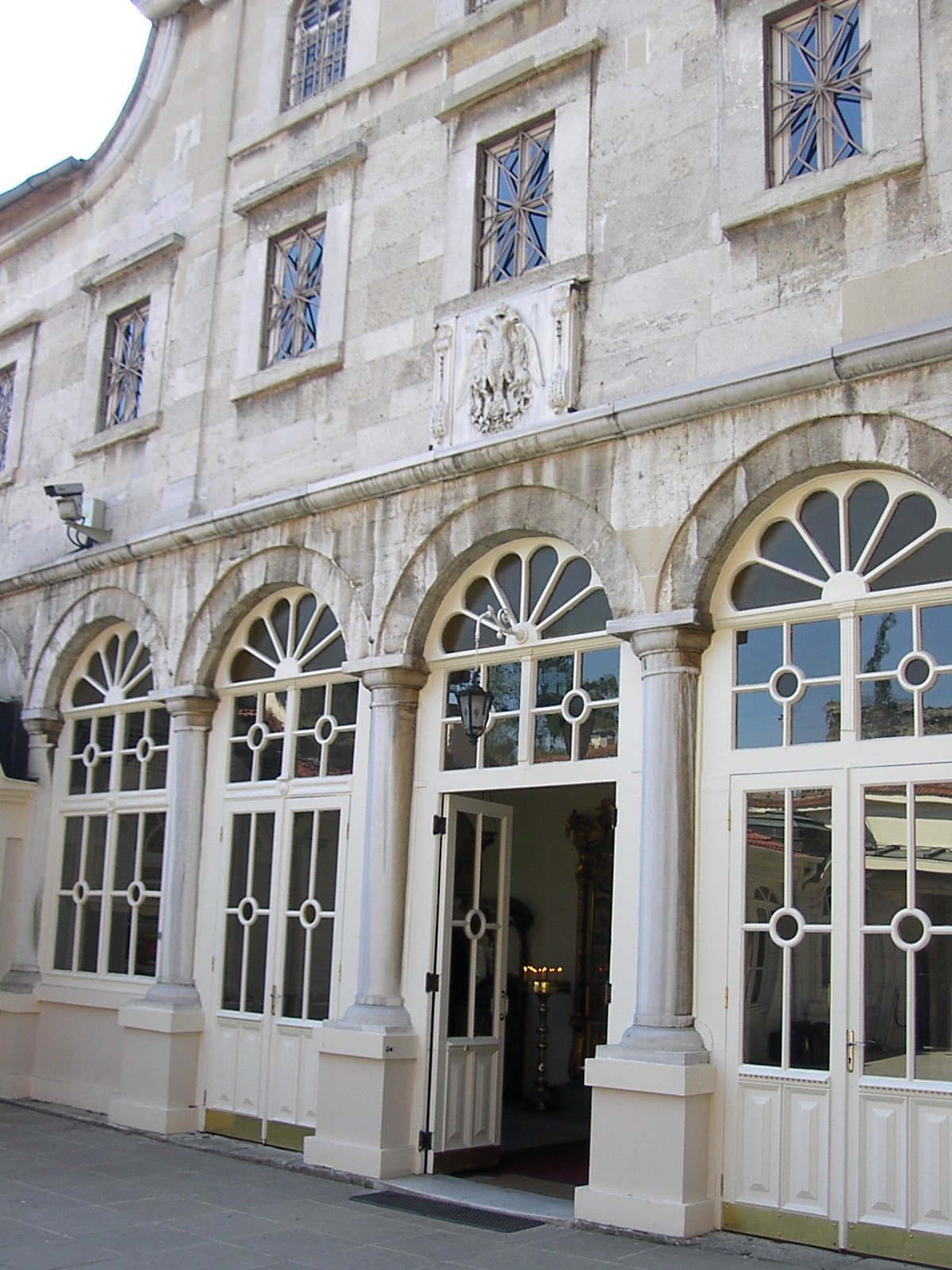
Nestled in the heart of Istanbul’s Fener district, the Church of St. George (Aya Yorgi Rum Patrikhane Kilisesi) is a cornerstone of Eastern Orthodox Christianity and a living monument to the city’s Byzantine past. As the spiritual and administrative seat of the Ecumenical Patriarchate of Constantinople since 1601, the church embodies a remarkable blend of religious, historical, and cultural significance. Its interior houses ancient relics, a renowned iconostasis, and the patriarchal throne, making it an essential stop for pilgrims, history enthusiasts, and travelers alike (istanbuljoy.com, nomadicniko.com). This guide offers detailed information on the church’s history, architecture, visiting hours, ticketing, accessibility, surrounding attractions, and practical tips for visitors.

Origins and Early History
The Church of St. George stands on a site that was originally part of a Byzantine convent for Orthodox nuns, rooted in the Christian history of Constantinople. Following the Ottoman conquest in 1453, the Ecumenical Patriarchate relocated several times before establishing its seat at St. George in 1600 under Patriarch Matthew II. Prior to its current location, the patriarchate resided in other significant Byzantine churches, including Hagia Sophia and the Church of the Holy Apostles (nomadicniko.com).
Architectural Evolution
Repeated fires and political turmoil have led to several reconstructions of the church. While the building’s exterior remains modest, a result of Ottoman regulations on non-Muslim religious structures, the interior is a showcase of Byzantine, Renaissance, Baroque, and Ottoman influences. The present form largely dates to the 1797 restoration, with subsequent renovations in the 19th and 20th centuries (thebest.istanbul). The church’s iconostasis, patriarchal throne, and marble details reflect centuries of artistic and religious continuity.
Religious and Cultural Significance
As the seat of the Ecumenical Patriarchate, St. George is the most important Orthodox church in Istanbul and serves as the focal point for major liturgical celebrations, synods, and ecumenical events. It houses relics of the Three Hierarchs—St. Basil the Great, St. Gregory the Theologian, and St. John Chrysostom—alongside a fragment of the Pillar of Flagellation, venerated as a link to the Passion of Christ (nomadicniko.com). The church’s ongoing liturgical role—especially the consecration of holy myron (chrism)—underscores its enduring relevance (istanbuljoy.com).
Key Historical Events
- Execution of Patriarch Gregory V (1821): Executed at the church’s gate in response to the Greek War of Independence; the gate remains welded shut in his memory (nomadicniko.com).
- Fires and Pogroms: The church faced devastating fires in 1720 and 1941 and suffered during the 1955 Istanbul pogrom, which dramatically reduced the Greek Orthodox population (istanbuljoy.com).
- Modern Developments: The signing of the Tomos of autocephaly for the Orthodox Church of Ukraine in 2019 demonstrates the church’s ongoing ecclesiastical influence (istanbuljoy.com).
Architectural and Artistic Highlights
- Iconostasis: An 18th-century gold-leafed wooden screen, blending various artistic traditions (nomadicniko.com).
- Patriarchal Throne: Believed to date from the 5th century, symbolizing ecclesiastical authority (thebest.istanbul).
- Relics: Marble reliquaries contain the remains of the Three Hierarchs and a fragment of the Pillar of Flagellation.
- 11th-Century Mosaic Icon: A rare mosaic of the Virgin Mary from the church of Pammakaristos (Lonely Planet).
- Bishop’s Stalls and Pulpit: Intricately carved, reflecting Byzantine heritage (istanbulclues.com).
Visiting the Church of St. George
Visiting Hours and Tickets
- Hours: Open Tuesday to Sunday, generally from 9:00 AM to 5:00 PM. Closed on Mondays and during major Orthodox feasts, with possible restrictions during services (Lonely Planet).
- Admission: Free for all visitors; donations are appreciated.
Guided Tours & Accessibility
- Guided Tours: Available by prior arrangement through local agencies or the Patriarchate’s office. Tours offer in-depth historical and artistic context.
- Accessibility: The church is partially accessible; some areas have steps. Assistance is available upon request (betteristanbul.com).
Travel Tips
- Dress Code: Modest attire is required (covered shoulders and knees).
- Photography: Allowed in most areas, but restrictions apply during services.
- Behavior: Visitors should maintain silence and respect during liturgies and avoid disruptive behavior.
Nearby Attractions
After visiting St. George, explore the vibrant Fener and Balat neighborhoods, known for their colorful Ottoman-era architecture, bustling street life, and historic religious sites. Notable attractions include:
- Fener Greek Orthodox College: A striking red-brick educational landmark.
- St. Stephen of the Bulgars (Iron Church): Unique cast-iron Orthodox church on the waterfront.
- Yavuz Selim Mosque: Offers panoramic views over the Golden Horn.
- Church of St. Mary of the Mongols: The only Byzantine church in Istanbul never converted to a mosque (trek.zone).
The Fener District
Fener, meaning "lantern" in Greek, historically served as the center of Greek Orthodox life in Istanbul. The district’s winding streets are lined with pastel-colored houses, traditional cafes, and centuries-old religious institutions, providing a unique glimpse into Istanbul’s multicultural heritage (istanbuljoy.com).
Frequently Asked Questions (FAQ)
Q: What are the visiting hours for the Church of St. George?
A: Open Tuesday–Sunday, 9:00 AM–5:00 PM; closed Mondays and during major feast days.
Q: Is there an entry fee?
A: No, admission is free; donations are welcomed.
Q: Can I take photographs inside?
A: Photography is generally permitted, except during services.
Q: Are guided tours available?
A: Yes, by prior arrangement.
Q: Is the church accessible for wheelchairs?
A: Partially; some areas have steps.
Q: How do I get there?
A: By tram (Line T1, Aksaray or Eminönü stop) and a short walk, or by bus/taxi to Fener.
Listen to the full story in the app
The whole Church Of St. George,
told well.
Audio guides for 1,100+ cities across 96 countries. History, stories, and local insight — offline ready.
Verified, and shown.
Researched and written by the Audiala editorial team from historical records, architectural archives, and local expertise.
George Istanbul: A Complete Guide to History, Visiting Hours, Tickets & More, 2024, IstanbulJoy
George in Istanbul: Hours, Tickets, and Historical Significance, 2024, Nomadic Niko
George in Istanbul: Visiting Hours, Tickets, and Historical Insights, 2024, Istanbul Beyond
George Istanbul: Visiting Hours, Tickets & Historical Significance, 2024, Better Istanbul
Researched from Wikidata, Wikipedia & official sources · fact-checked · How we make our guides →