Plan and listen to Beyazıt Square with Audiala.
Audio guide in your pocket, itinerary in your browser. Built for the way you actually visit.
Introduction
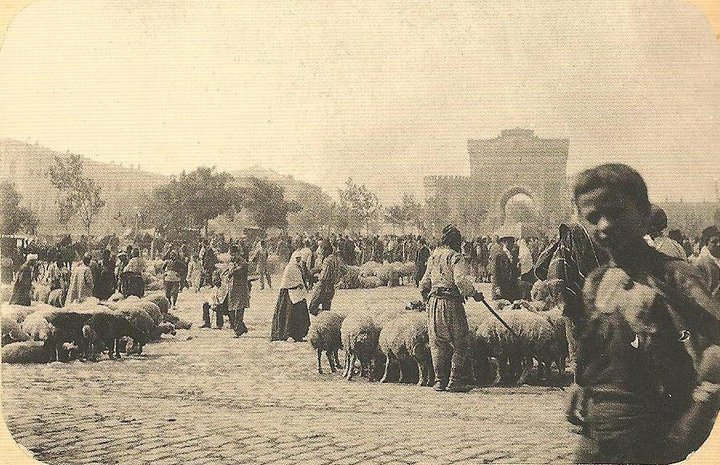
Beyazit Square, known as Beyazıt Meydanı in Turkish, is a vibrant and historically rich public space located in the heart of Istanbul, Türkiye. Its origins date back to the Byzantine era when it was known as the Forum of Theodosius, serving as a central hub for political, social, and commercial activities in Constantinople. Over the centuries, Beyazit Square has witnessed significant transformations, particularly during the Ottoman period when it became a focal point of the newly established capital. One of the most notable additions during this time was the construction of the Beyazit Mosque between 1500 and 1506, an architectural marvel designed to rival the grandeur of the Hagia Sophia (Istanbul Clues) (ArchNet) (Istanbul University).
In the Republican era, Beyazit Square continued to evolve, reflecting the new republic's ideals with the addition of various monuments and public buildings, including the Istanbul University Library. This transformation underscored the square's enduring cultural and social significance, making it a venue for public gatherings, political demonstrations, and cultural events (Republic of Turkey Ministry of Culture and Tourism) (Hurriyet Daily News).
Today, Beyazit Square is not only a testament to Istanbul's rich and diverse history but also a bustling hub of activity that attracts both locals and tourists. From its historical landmarks like the Beyazit Mosque and Istanbul University to nearby attractions such as the Grand Bazaar and Suleymaniye Mosque, Beyazit Square offers a unique blend of history, architecture, and culture that continues to captivate visitors (Beyazit State Library) (Istanbul Metropolitan Municipality).

Historical Background
Origins and Early History
Beyazit Square's origins date back to the Byzantine era when it was known as the Forum of Theodosius, named after Emperor Theodosius I who reigned from 379 to 395 AD. The forum was a grand public square that served as a central hub for political, social, and commercial activities in Constantinople, the capital of the Byzantine Empire. The Forum of Theodosius was adorned with monumental structures, including a triumphal arch and a column dedicated to the emperor, which underscored its importance in the urban landscape (Istanbul Clues).
Ottoman Transformation
With the conquest of Constantinople by the Ottoman Empire in 1453, the city's urban fabric underwent significant changes. Beyazit Square was no exception. The Ottomans repurposed the area, and it became a focal point of their new capital. One of the most notable transformations was the construction of the Beyazit Mosque (Beyazıt Camii) between 1500 and 1506 during the reign of Sultan Bayezid II. The mosque, an architectural marvel, was designed to rival the grandeur of the Hagia Sophia and became a central feature of the square (ArchNet).
Architectural and Urban Developments
Throughout the Ottoman period, Beyazit Square continued to evolve. The square was surrounded by various important buildings, including the Old Palace (Eski Saray), which served as the first residence of the Ottoman sultans before the construction of Topkapi Palace. Additionally, the Istanbul University, originally established as the Darülfünun in 1846, is located adjacent to the square. The university's main gate, an iconic symbol of higher education in Turkey, adds to the historical and architectural significance of the area (Istanbul University).
Republican Era and Modern Developments
Following the establishment of the Republic of Turkey in 1923, Beyazit Square underwent further transformations. The square was modernized to reflect the new republic's ideals, and several monuments and public buildings were added. One of the most notable additions was the Istanbul University Library, which houses an extensive collection of manuscripts and rare books, making it a vital center for academic research (Republic of Turkey Ministry of Culture and Tourism).
Cultural and Social Significance
Beyazit Square has long been a site of cultural and social significance. It has been a venue for public gatherings, political demonstrations, and cultural events. The square's strategic location in the heart of Istanbul, coupled with its historical and architectural heritage, makes it a vibrant and dynamic space that continues to attract locals and tourists alike. The square is also home to the Beyazit State Library, one of Turkey's oldest libraries, which was established in 1884 and houses a vast collection of Ottoman-era manuscripts and printed works (Beyazit State Library).
Preservation and Restoration Efforts
In recent years, there have been concerted efforts to preserve and restore the historical and architectural heritage of Beyazit Square. Various restoration projects have been undertaken to maintain the structural integrity and aesthetic appeal of the square's historic buildings. These efforts are crucial in ensuring that Beyazit Square remains a testament to Istanbul's rich and diverse history, offering visitors a glimpse into the city's past while serving as a vibrant public space in the present (Istanbul Metropolitan Municipality).
Key Historical Events
Beyazit Square has been the backdrop for several key historical events. During the Ottoman period, it was a site for public ceremonies and royal processions. In the early 20th century, the square witnessed significant political demonstrations, including those during the Turkish War of Independence. More recently, it has been a focal point for various social and political movements, reflecting its enduring role as a space for public expression and civic engagement (Hurriyet Daily News).
Visitor Information
Visiting Hours and Tickets
Beyazit Square is open to the public 24/7, making it an accessible destination for both early birds and night owls. While the square itself does not require an entry fee, some of the surrounding attractions, such as the Beyazit Mosque and the Istanbul University Library, may have specific visiting hours and nominal entry fees. It's advisable to check the official websites or contact these institutions directly for the most up-to-date information.
Travel Tips
- Best Time to Visit - Early mornings and late afternoons are ideal for visiting Beyazit Square to avoid the midday crowds.
- Getting There - The square is easily accessible via public transportation, including trams, buses, and the metro. The Beyazit-Kapalıçarşı tram stop is just a short walk away.
- What to Wear - Comfortable walking shoes are recommended as the area is best explored on foot. If you plan to visit the mosque, dress modestly.
Nearby Attractions
Grand Bazaar
Just a stone's throw away from Beyazit Square is the Grand Bazaar (Kapalıçarşı), one of the world's largest and oldest covered markets. With over 4,000 shops, it offers a unique shopping experience where you can find everything from traditional Turkish crafts to modern-day souvenirs.
Suleymaniye Mosque
A short walk from the square will take you to the Suleymaniye Mosque, another architectural masterpiece from the Ottoman era. Designed by the famous architect Mimar Sinan, it offers stunning views of the city.
Istanbul University
Adjacent to Beyazit Square, Istanbul University is worth a visit for its historical significance and beautiful architecture. Don't miss the iconic main gate and the serene campus gardens.
FAQs
Q: What are the best times to visit Beyazit Square?
A: Early mornings and late afternoons are ideal to avoid the crowds.
Q: Are there any entrance fees for Beyazit Square?
A: The square itself is free to enter, but some surrounding attractions may have entry fees.
Q: How can I get to Beyazit Square using public transportation?
A: The square is easily accessible via trams, buses, and the metro. The Beyazit-Kapalıçarşı tram stop is nearby.
Q: What should I wear when visiting Beyazit Square?
A: Comfortable walking shoes are recommended. If you plan to visit the mosque, dress modestly.
Tickets & tours.
These are guided options from our partners — same price as booking direct.
Prices are indicative — final pricing and availability are confirmed at checkout. Audiala may earn a commission from bookings made through these links.
Listen to the full story in the app
The whole Beyazıt Square,
told well.
Audio guides for 1,100+ cities across 96 countries. History, stories, and local insight — offline ready.
Verified, and shown.
Researched and written by the Audiala editorial team from historical records, architectural archives, and local expertise.
Exploring Beyazit Square - History, Visiting Hours, Tickets, and Nearby Attractions in Istanbul
Exploring Beyazit Square - History, Visiting Hours, Tickets, and Nearby Attractions in Istanbul
Exploring Beyazit Square - History, Visiting Hours, Tickets, and Nearby Attractions in Istanbul
Exploring Beyazit Square - History, Visiting Hours, Tickets, and Nearby Attractions in Istanbul
Exploring Beyazit Square - Historical Significance, Visiting Hours, and Travel Tips in Istanbul
Exploring Beyazit Square - History, Visiting Hours, Tickets, and Nearby Attractions in Istanbul
Exploring Beyazit Square - History, Visiting Hours, Tickets, and Nearby Attractions in Istanbul
Researched from Wikidata, Wikipedia & official sources · fact-checked · How we make our guides →