An introduction.
Researched by the Audiala editorial team from historical records, architectural archives, and local expertise.
TTwelve carved bundles of rods flank an entrance no one can walk through anymore. They're fasces — the exclusive badge of Roman consular authority — and they announce, in stone, that somebody very important was once buried inside Hıdırlık Tower on the cliff edge of Antalya, Turkey. Two thousand years later, we still don't know his name.
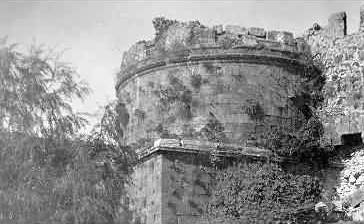
The tower sits at the southern tip of Kaleiçi, the old walled city, where the Roman harbor opens into the Gulf of Antalya. It's a squat square base of honey-colored limestone with a cylindrical drum on top, 14 meters tall — about the height of a four-story building — and from its upper terrace the Taurus Mountains rise behind you while the Mediterranean drops away at your feet.
Most guides call it a lighthouse. That's the Byzantine chapter, not the Roman one. Scholars date the original structure to the turn of the 2nd century AD, and the architectural grammar — square-plus-cylinder, cruciform burial niches inside, fresco fragments on interior walls — reads as funerary monument, not signal tower. The lighthouse came later, along with a chapel, a warehouse, a watchtower, and a spring festival that still draws crowds every May 6.
Come at sunset. The limestone turns apricot, the container ships stack up on the horizon, and Kaleiçi's red-tile roofs glow behind you. It's the best free view in Antalya, and the stones under your hand have watched Roman consuls, Arab fleets, Seljuk governors, and Ottoman harbor inspectors come and go.
Antalya Turkey - Complete Travel Guide - Beaches, 5 Star Resorts, Historical Sites & More!
Ultimate Bucket List01 What to see.
The Fasces at the Door
Most visitors photograph Hıdırlık Tower from thirty paces back and miss the single detail that rewrites what they're looking at. Carved in high relief on either side of the lower entrance are twelve fasces — six bundles of rods per side — the symbol Roman lictors carried to announce a consul's arrival. Worn, salt-bleached, easy to walk past. But this is why archaeologist George Bean argued in 1989 that the tower isn't a watchtower or lighthouse at all. It's a tomb. Specifically, the tomb of somebody important enough to rate consular honors in stone.
Run your hand along the limestone beside them. The block is rough-cut, granular, warm from the afternoon sun that's been hitting this face since Hadrian was alive. Then look up at the junction where the 6.5-metre square base meets the 7.5-metre cylindrical drum above — that seam is the architectural signature of Roman funerary monuments, not defensive towers. The whole building has been hiding in plain sight as a fortification for about 1,500 years.
Step through the door. Four stone steps descend into the burial chamber, worn concave by two thousand years of feet. Mediterranean glare vanishes. Your eyes need a full minute to adjust.
The Chamber and Its Ghosts
Inside, three cruciform niches cut through the walls act as the only light source — crenels the Byzantines added when they walled the original Ionic gate shut and recycled the tomb as a chapel. Light moves across the stone floor in slow patches through the day. Mid-morning is when the eastern niche does its best work, angling a shaft onto the faded remnants of apostle frescoes still clinging to the limestone from the 5th or 6th century.
You have to know they're there. Nobody will tell you. The pigment is ghost-faint, more suggestion than image, but in the right light you can make out drapery, the curve of a halo, the outline of a bearded face. Christian paint on a Roman consul's tomb — the building has been at least three things, and the walls remember all of them.
A thirty-step internal staircase climbs to the upper platform. At the top, a square pedestal — once the plinth for a funerary statue of whoever was buried below. The statue is gone. The pedestal is smooth from centuries of weather and, lately, tourist hands. Stand beside it and the view opens: the harbour mouth to the southwest, the Roman breakwater ruins offshore, Kesik Minare's stub to the north, and in winter the snow line on the Bey Mountains held until May.
Karaalıoğlu Park to the Tower at Golden Hour
Do this walk between about an hour before sunset and the last light. Enter Karaalıoğlu Park from the north and take the clifftop path south — the whole east edge of the park sits on the line of the old city wall, so every few metres opens another unobstructed drop to Antalya Bay. Bougainvillea and citrus in April and May; the scent carries. Tea gardens appear on your right; resist until after.
The tower reveals itself at the park's southern tip, sitting on bedrock directly above the sea cliff. Approach from the south side, drop to a low angle, and shoot up — this is the frame that actually shows the square-to-cylinder transition against the sky, and it's the one almost nobody takes. Winter golden hour is longer and softer than summer; the limestone turns amber. Then climb to the platform, wait for the sun to sit on the Mediterranean horizon, and stay until the call to prayer rolls up from Kaleiçi below.
After, walk back through the park to a tea garden on the wall edge. If the old town still has appetite in you, the nearby Antalya Mosque and the rest of Kaleiçi's Roman bones are ten minutes on foot — or save the morning for the cold spray of the Düden Waterfalls on the city's eastern edge.
02 In pictures.


Watch & Explore Hidirlik Tower.
Plan and listen to Hidirlik Tower with Audiala.
Audio guide in your pocket, itinerary in your browser. Built for the way you actually visit.
03 Visitor logistics.
The practical scaffolding for a good visit — kept short.
Getting There
Walk south down Hesapçı Sokak from Hadrian's Gate — 10 to 15 minutes, about 700 metres through Kaleiçi's stone lanes, and you hit the tower at the cliff's edge. The nostalgic tram stops at Karaalioğlu, a few minutes' walk away (fare roughly 3.20 TRY on an Antalyakart, though Turkish transit prices drift upward often). Taxis know both 'Hıdırlık Kulesi' and 'Karaalioğlu Parkı' — don't try to drive into Kaleiçi itself, streets are too narrow.
Opening Hours
As of 2026, the interior stays closed to the general public — only the exterior and surrounding Karaalioğlu Park are accessible, and the park is effectively open all hours. Official site hours of 08:00–19:00 (April–October) and 08:30–17:30 (November–March) linger from when the interior was accessible. Interior opens only for occasional cultural events tied to the Antalya Kültür Yolu Festivali.
Time Needed
Fifteen minutes if you're ticking it off a list. Allow 45 minutes to walk the clifftop terraces and sit at the park's tea garden, and 90 minutes if you time it for sunset — which you should. A full Kaleiçi loop from Hadrian's Gate down to the tower and back via the marina runs 2–3 hours.
Cost
Free. No ticket, no booking, no skip-the-line hustle — the tower is an open-air monument at the park's edge. One outdated listing floating online cites a 36 TRY admission; ignore it, it's stale data from a brief period when the interior was open.
Accessibility
The park approach from Karaalioğlu Bulvarı is paved and relatively flat, manageable for wheelchairs and strollers with care. Cliff-edge terraces have some uneven stone typical of Turkish historic districts. The tower interior is closed, so the spiral stair question is moot — everyone gets the same exterior view.
04 Tips for visitors.
Small things that change the day.
Come At Sunset
The tower faces west over the Gulf of Antalya, and the golden hour light on its honey-coloured stone is why locals show up. Arrive 45 minutes before sunset, claim a spot on the upper terrace, and watch the Bey Mountains turn pink across the water.
Eat Like Kaleiçi
For splurge-level seafood meyhane, book Ayar Meyhanesi or Balikci Meyhanesi — stone courtyards, fresh turbot, raki rituals. Castle Cafe & Bistro sits right next to the tower for mid-range sunset drinks, and don't leave Antalya without trying piyaz, the regional white bean salad with tahini.
Drones Grounded
Exterior photos with phone, camera, or tripod are unrestricted and nobody will bother you. Drones are a different story — Turkey restricts flights over historic centres and near harbours, and Kaleiçi ticks both boxes, so leave the drone at the hotel unless you've secured a permit.
Kaleiçi Scam Watch
The tower itself is low-risk, but walking back through Kaleiçi, decline the 'friendly local' dinner invitation — the bill arrives, the friend vanishes. For taxis, use Bitaksi or agree the fare before you move; 'broken meter' is the usual opener.
Park Tea Garden
Skip the tourist cafés and order çay at the Karaalioğlu Park tea garden — a few lira, glass tulip cups, Antalya students at the next table. This is the actual neighbourhood ritual, not a performance staged for visitors.
Chain The Walk
Start at Hadrian's Gate, stroll Hesapçı Sokak to Hıdırlık, then descend the cliff path to the Roman Harbour for dinner. You'll cover 2,000 years of Antalya — Roman, Byzantine, Seljuk, Ottoman — in under two kilometres.
Hıdırellez Timing
The tower is named for Hıdırellez, the Turkish spring festival on May 5–6 when Hızır and İlyas are said to meet. Visit Antalya around those dates and the Kaleiçi quarter hums with wish-writing, bonfires, and flower rituals — the folk layer beneath the Roman stone.
Where to Eat
Don't Leave Without Trying
Pastorale restaurant
local favoriteOrder: The lamb is perfectly cooked with just the right marbling — guests call it the best meal of their entire week. Start with the homemade pickles the staff brings as a welcome gesture.
This is where locals eat. The courtyard is intimate, the staff treats you like family, and every dish shows genuine care. 1,797 reviews at 4.8 stars proves it's the real deal.
Mandjie Gastro Bar & Restaurant
fine diningOrder: The ceviche is impeccably fresh and beautifully plated — reviewers rank it among the best in Turkey. The eggplant is revelatory: sophisticated yet deeply rooted in Turkish tradition.
This isn't a tourist trap. Cocktails are creative, dishes thoughtful, and diners return two nights in a row. One reviewer said they wouldn't be shocked if it got a Michelin star.
My Friends Pub
local favoriteOrder: Order the Borsch — one diner raved about it on Christmas Eve. Pair with a creative mojito and save room for the cheesecake. They serve excellent Russian and Turkish beer.
This St. Petersburg–themed pub sits right on the same street as Hidirlik Tower, with sunset views reviewers call unforgettable. Live music, warm atmosphere, and a 4.9 rating make it unmissable.
Sunset view restaurant & bar
local favoriteOrder: The Mexican burger is as good as it gets, spiced exactly how you ask for it. The soup arrives with a subtle spicy touch that elevates the whole meal.
Harbor views that reviewers call 'ridiculous' in the best way. Prices are unexpectedly reasonable for the location, service is attentive, and Bekir the waiter treats guests like old friends.
Dining Tips
- check Tips must be cash, handed directly to your server (10–15% standard in Kaleiçi). Card machines don't have tip fields.
- check Meals are social rituals — lingering is normal and expected. Dishes arrive sequentially, so don't rush.
- check Shared meze plates are the standard at dinner — food is communal, meant for the whole table.
- check Breakfast (kahvaltı) is leisurely and multi-course: cheese, olives, eggs, bread, honey. Often replaces lunch.
- check Dinner typically runs 19:00–22:00+; it's the main social meal. Arrive early on weekends for popular spots.
- check Small bowl of water brought to table = hand-washing water, not soup.
- check Tahini is Antalya's signature flavor — it appears in savory dips, meat sauces, and even desserts.
Restaurant data powered by Google
05 A Consul's Tomb That Forgot Its Consul
Hıdırlık Tower is one of only two structures that survive from Roman Attaleia, the port city founded by Attalos II of Pergamon around 150 BC. Everything else — the forum, the baths, the original harbor moles — lies under modern Kaleiçi or was quarried away centuries ago. The tower outlasted its city because every successor civilization found a new use for it.
Scholars date the construction to the turn of the 2nd century AD, and the evidence points squarely at funerary architecture: the cruciform interior niches, surviving fresco fragments, the monumental Ionic gate on the northeast face, and — most telling — the 12 fasces reliefs flanking the lower entrance, six on each side. Fasces were legally restricted to Roman consuls. Carving them on your tomb was a state identity claim in stone.
The Consul With No Name
The strongest candidate for the man buried here is Marcus Petronius Umbrinus, who served as consul suffectus — a replacement consul — for two months in September and October of AD 81, and later held the office of curator locorum publicorum iudicandorum, overseeing Roman public spaces. A second name sometimes proposed is Marcus Calpurnius Longus, documented in mid-2nd-century inscriptions from the Attaleia–Kibyratis road. Neither identification is confirmed. No readable epitaph survives.
What was at stake, for whichever consul this was, is legible in the stonework itself. Attaleia was the maritime gateway to southern Anatolia, the Roman Empire's pivot between the Aegean and the Levant. A tomb on this cliff — visible from every ship entering the harbor, built to outlast the man inside it — was a permanent advertisement of family power. The archaeologist George E. Bean, in Turkey's Southern Shore (1989), rejected the lighthouse theory outright: the architectural grammar, he argued, is Roman monumental tomb from bottom to top.
The turning point came somewhere in the 5th or 6th century, when early Byzantine engineers expanded the city walls outward and absorbed the mausoleum into the defensive circuit. The consul stopped being the point. The tower became a bastion, then a signal post, then — by the 7th–9th centuries, under pressure from Arab fleets raiding the Cibyrrhaeot Theme — something more desperate. Someone ordered the original Ionic entrance walled shut with stone. You can still see the blocked archway on the inland side. That masonry is the moment a tomb stopped being a tomb.
From Chapel to Warehouse
Hızır and the Spring Fires
Listen to the full story in the app
The whole Hidirlik Tower,
told well.
Audio guides for 1,100+ cities across 96 countries. History, stories, and local insight — offline ready.

06 Frequently asked.
The questions travellers send us most about Hidirlik Tower.
Is Hıdırlık Tower worth visiting?
Yes, but come for the clifftop sunset, not the tower alone. The 2,000-year-old Roman structure anchors the southern edge of Karaalioğlu Park, where locals gather every evening to watch the sun drop into the Mediterranean. Pair it with a walk through Kaleiçi old town and you've got one of Antalya's best free experiences.
Can you go inside Hıdırlık Tower?
No, the interior is closed to the general public and has been for years. Access opens only during organised cultural events, typically tied to the Antalya Kültür Yolu Festival. The exterior, the fasces reliefs flanking the old entrance, and the surrounding park are freely accessible at all times.
How much does it cost to visit Hıdırlık Tower?
Free. The tower exterior and Karaalioğlu Park around it carry no admission fee. Some older travel sites still list a 36 TRY ticket, but that reflects a past period when the interior was open — ignore it.
How long do you need at Hıdırlık Tower?
Ten to fifteen minutes for a quick photo stop, 30–45 minutes if you want to walk the clifftop and absorb the view. Most visitors fold it into a longer Kaleiçi stroll of 2–3 hours starting from Hadrian's Gate. For sunset, arrive 30 minutes before and stay through golden hour.
How do I get to Hıdırlık Tower from Antalya city centre?
Walk. From Hadrian's Gate head straight down Hesapçı Sokak through Kaleiçi — about 10–15 minutes, 700 metres, and you arrive at the tower. The nostalgic tram also stops at Karaalioğlu, a short walk away, for roughly 3.20 TRY.
What is the best time to visit Hıdırlık Tower?
Late afternoon into sunset, year-round. The tower faces west, so golden-hour light turns the limestone amber and the Mediterranean behind it goes molten. Spring (April–May) and autumn (September–October) give you mild temperatures and thinner crowds; in winter the park empties entirely and the Taurus Mountains show snow on the horizon.
What was Hıdırlık Tower originally used for?
Scholars lean toward a Roman consular mausoleum from the late 1st or early 2nd century AD, not a lighthouse as guidebooks often repeat. The 12 fasces reliefs carved beside the original entrance — symbols only consuls could display — and the cruciform burial niches inside match Roman tomb typology. Lighthouse and fortress uses came later, under the Byzantines and Ottomans.
What should I not miss at Hıdırlık Tower?
The fasces reliefs on the lower facade — six bundled-rod carvings on each side of the walled-up northeast entrance that most tourists walk right past. Also look for the seam where the square base meets the cylindrical drum, a signature detail of Roman funerary architecture. Then walk 30 metres west to the clifftop mirador for the Mediterranean panorama.
Verified, and shown.
Researched and written by the Audiala editorial team from historical records, architectural archives, and local expertise.
Baseline dating, dimensions (6.5m square base, 7.5m cylindrical drum), and construction chronology.
Interior layout, entrance steps, opening hours, and photography guidance.
Fasces reliefs detail, Byzantine fresco remnants, visitor experience.
Walking routes from Hadrian's Gate, Kaleiçi context.
Nostalji tram route, Karaalioğlu stop, fares.
Official tram operator route and service info.
2020–2024 excavation status: Roman bath, mosaics, colonnaded street, wooden walkway construction.
Academic context on cruciform niches, Byzantine fortification.
Cultural event access policy, chapel reuse through 19th century.
Construction dating debate, lighthouse vs mausoleum theories.
Visitor reviews, current access conditions.
Listed (stale) admission fee reference, hours.
Park context and tower-park relationship.
2024 site visit notes.
Limestone materials, block construction technique.
Seasonal visiting guidance, photography timing.
Photography viewpoints, angles, park layout.
Meyhane culture, restaurant recommendations.
Park hours, local use patterns, sunset ritual.
Park facilities, cafés, tea garden.
Local Sunday ritual, evening atmosphere.
Resident perspective, park as neighborhood space.
Self-guided audio tour content.
Park description and features.
Wheelchair-accessible tour options including tower exterior.
2026 festival programme for Antalya, event venues in Kaleiçi.
Current festival schedule updates.
Government cultural events listing for Antalya.
2026 festival programme announcement.
Local seafood meyhane near tower.
Kaleiçi fish meyhane reviews.
Kaleiçi dining and cultural orientation.
Drone regulations near historic sites.
Permit requirements for drones near heritage sites.
Kaleiçi-area scam awareness.
Practical visitor warnings for Antalya.
Safety ratings and precautions.
Travel attraction overview.
Scholarly basis for the consular mausoleum interpretation; rejection of lighthouse theories.
Researched from Wikidata, Wikipedia & official sources · fact-checked · How we make our guides →