An introduction.
Researched by the Audiala editorial team from historical records, architectural archives, and local expertise.
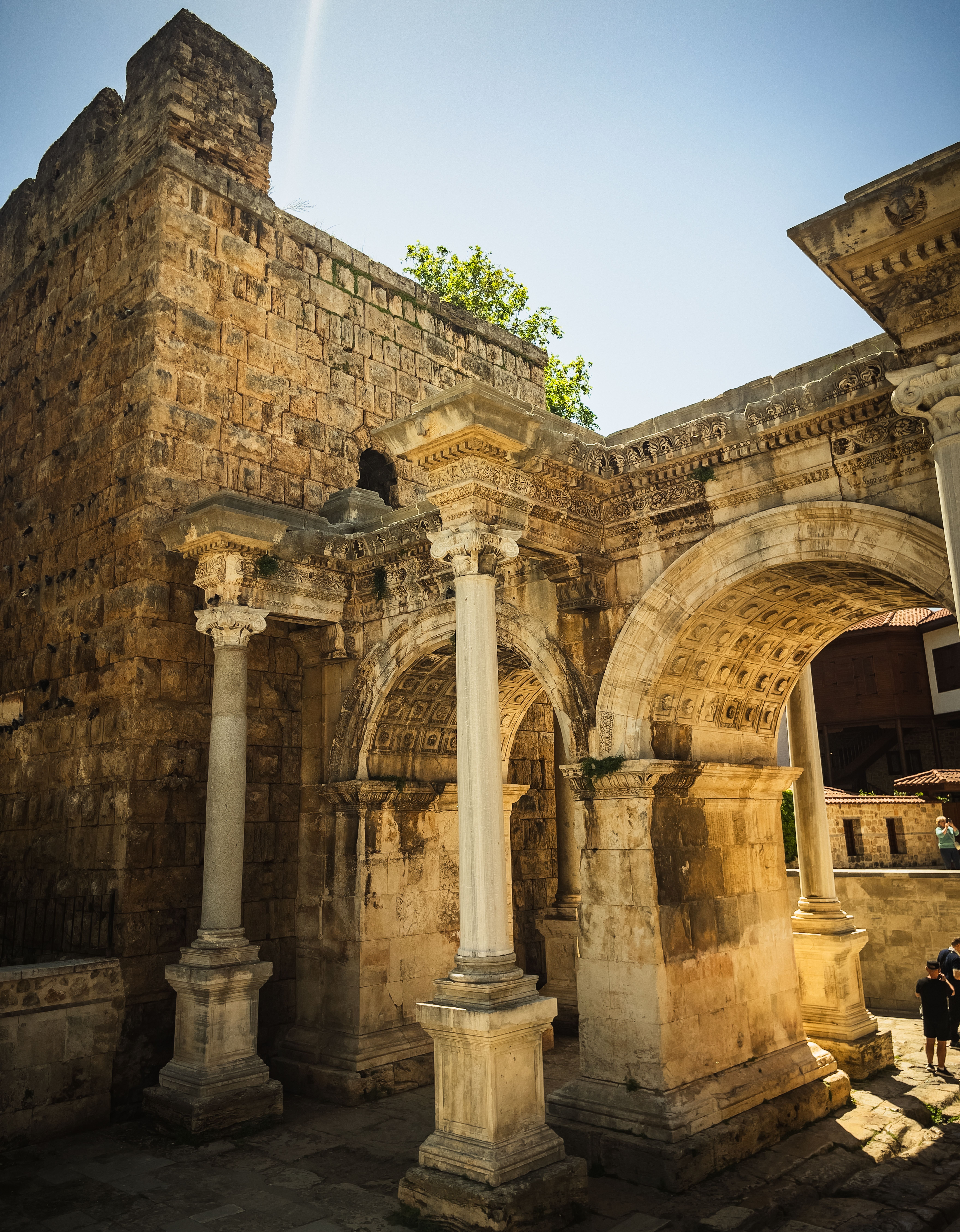
HHow does a Roman triumphal arch survive because later rulers buried it alive? Hadrian's Gate in Antalya, Turkey, answers that question in marble: three arches, blackened grooves cut by cart wheels, and a coffered ceiling that still catches the light as people stream into Kaleiçi. Visit because this is not a dead monument behind a fence; it is a 1,900-year-old city threshold still doing its job.
Most visitors arrive expecting a victory arch for Emperor Hadrian and leave with something stranger. The gate was built to flatter a passing ruler in 130 CE or soon after, then spent centuries trapped inside later fortifications, which protected details that open weather would have rubbed away. Burial saved it.
Stand here for five minutes and the place makes its case. Scooter engines fade behind you, footsteps click on stone, the air shifts as the old town narrows ahead, and the Roman arch frames the route toward Hidirlik Tower and the harbor like a piece of urban stagecraft that never stopped performing.
And the setting matters. Hadrian's Gate is the cleanest hinge between modern Antalya and the older city around Antalya Mosque, where Seljuk, Ottoman, and Roman layers sit almost shoulder to shoulder, close enough to read in one slow walk.
01 What to see.
The Triple Arch and the Roman Road
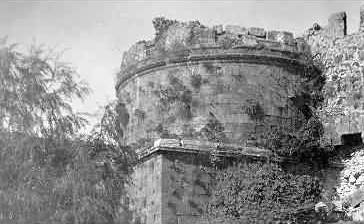
The Two Towers, Roman Below and Seljuk Above
Cross Into Kaleiçi and Walk to Hıdırlık
02 In pictures.


Plan and listen to Hadrian'S Gate with Audiala.
Audio guide in your pocket, itinerary in your browser. Built for the way you actually visit.
03 Visitor logistics.
The practical scaffolding for a good visit — kept short.
Getting There
Hadrian's Gate sits on Atatürk Caddesi at the eastern edge of Kaleiçi, about a 5-minute walk east from Kalekapısı and the Clock Tower. The nostalgic tram is the cleanest option: ride toward the Hadrian stop or get off at Kalekapısı and walk; from Antalya Airport, take the tram toward the center, change as needed toward Kaleiçi, or expect a 20-30 minute taxi ride depending on traffic.
Opening Hours
As of 2026, the gate is open 24 hours a day, every day of the year, because it stands on a public street rather than inside a ticketed archaeological park. No seasonal closure pattern is reported, and evening visits work well because the arch is lit after dark.
Time Needed
Give it 15-30 minutes if you want a quick look and photos, especially from the Atatürk Caddesi side. Stay 45-60 minutes if you want to study the coffered ceiling, the three arches, and the mismatched towers, then allow 2-4 hours if you continue through the gate into Kaleiçi and down toward the harbor or Hidirlik Tower.
Accessibility
The passage through the gate itself is relatively flat, but the surrounding streets in Kaleiçi are paved with uneven cobblestones that can feel like rolling over a bag of stones. Wheelchair users can reach and pass through the arch, though exploring deeper into the old quarter gets harder; nearby restaurants such as Vanilla and Arma are better bets for accessible seating than many small laneside cafes.
Cost & Tickets
As of 2026, entry is free and no ticket, reservation, or timed slot applies. Save your money for the places beyond the arch: a tea by the harbor, or better, a plate of Antalya piyaz with sis kofte in Kaleiçi.
04 Tips for visitors.
Small things that change the day.
Best Light
Go early, around 7-9 AM, if you want soft light and a street that still belongs to locals. Golden hour also flatters the stone, but midday heat in summer turns the marble and pavement into a griddle.
Look Up
Most people photograph the arches and miss the ceiling. Step into the central passage, tilt your head back, and catch the coffered panels that survived because later walls sealed them up like a time capsule.
Skip The Drone
Personal photography is fine, and tripods in a public street usually draw no fuss. Drones are another matter: Kaleiçi is a historic urban zone, and flying without permits is a bad idea in Turkey.
Check The Bill
The gate itself is easygoing; the tourist traps start once menus appear. In Kaleiçi, ask for a written menu with prices before you order, and if a taxi drops you nearby, insist on the meter before the car moves.
Order Piyaz
Don't settle for generic kebab near the arch. Go for Antalya's local pairing of tahini-rich piyaz and sis kofte; Topcu Kebap is the name locals and repeat visitors bring up for the real thing.
Go Through It
The common mistake is treating the gate as the destination. Walk through it, keep going toward the harbor, then loop back past Antalya Mosque or onward to Hidirlik Tower; the arch makes more sense once you feel how it still divides modern Antalya from the old walled quarter.
Where to Eat
Don't Leave Without Trying
Hare Restaurant
local favoriteOrder: Order the Hare Special if you want the table to do the work for you: reviewers call it a filling sampler of classic Turkish dishes, with bulgur rice that stands out.
This is the rare Kaleiçi restaurant that feels tuned to visitors without flattening the food into generic old-town fare. Reviews keep coming back to the terrace, the thoughtful service, and a menu built around recognizable Turkish dishes from different regions rather than tourist filler.
Çömlekçi Restaurant
local favoriteOrder: Go straight for the lamb shish or Urfa kebab, and if you want something more old-school, reviewers rave about the kelle paca lamb head soup with garlic sauce, vinegar, and fresh bread.
This one reads like a place people return to for substance, not just atmosphere. The menu runs from grills to soup-house classics, portions are generous, and the ayran, lentil soup, and slow-cooked lamb dishes give it the feel of a proper city restaurant rather than a polished old-town stage set.
Maria Lounge Hadrian
cafeOrder: Breakfast is the point here: reviewers single out the eggs and sausage dish, served with traditional Turkish sides, and one guest mentions a special vegan menemen made with fresh vegetables.
Around Hadrian's Gate, breakfast can be better than dinner if you pick the right place. This one sounds warm rather than performative, with homemade sausage, a patio shaded by pomegranate trees, and the kind of welcome that makes people start planning a second visit before they finish tea.
Mandjie Gastro Bar & Restaurant
fine diningOrder: Order the eggplant and the ceviche; both come up in reviews as the dishes that justify the higher bill.
Hadrian's Gate has no shortage of lazy kebab-and-pizza menus. Mandjie goes the other way: sharp cocktails, a more ambitious kitchen, and a dinner crowd that seems to come for the cooking rather than the postcard setting.
Dining Tips
- check Near Hadrian's Gate, expect the overlap of Kaleiçi tourist dining and everyday Muratpaşa eating, with breakfast spreads, grills, meyhane-style dinners, sweets, and snack foods all in the mix.
- check Breakfast usually runs about 07:00-10:00, though weekend kahvaltı often stretches later.
- check Lunch is typically 12:00-14:00.
- check Dinner is typically 19:00-21:00, often later in summer and in tourist-heavy Kaleiçi.
- check A full Turkish breakfast is usually a spread of cheeses, olives, eggs, tomatoes, cucumbers, bread, jams, honey, and tea rather than a quick coffee-and-pastry stop.
- check Tipping is appreciated but not mandatory; 5% to 10% is a practical norm for good service, while rounding up or leaving small change works in simpler daytime places.
- check Cards are widely accepted in Antalya restaurant districts, but cash is still smart to carry for tips, markets, snack stalls, and smaller lokantas.
- check If you are visiting a market, go early for the best produce; later in the day can mean better bargaining or end-of-day markdowns.
Restaurant data powered by Google
05 Buried, Looted, Reused, Still Standing
Records show that Attaleia, the Roman city beneath modern Antalya, raised this arch to honor Emperor Hadrian during his eastern tour of 130 CE or very soon after. The date sounds tidy. The stone does not.
Look closely and the monument refuses the simple version. Roman marble carries a dedication to Hadrian, a Seljuk tower rises on one side, missing bronze letters leave their pinholes behind, and the road under your feet still bears wheel ruts worn over centuries of daily use.
The Gate That Survived by Disappearing
At first glance, Hadrian's Gate looks like a Roman monument that somehow stayed intact from 130 CE to now. That surface story is comforting: emperor visits city, city builds arch, centuries pass, tourists take photos.
Then doubts creep in. Francis Beaufort, the Irish naval surveyor who described the gate after visiting Attaleia in 1811 or 1812, recorded a taller structure with an upper story that no longer exists. Karol Lanckoroński, the Polish aristocrat who paid for a scientific expedition from his own fortune in 1884, reached Antalya with architect George Niemann and found that upper level almost entirely gone. For Lanckoroński, the stakes were personal as well as scholarly: if his team did not document what remained, one of Pamphylia's finest Roman monuments would keep vanishing piece by piece.
The revelation is less romantic and more interesting. This gate survived the long centuries not because people left it alone, but because later city walls enclosed it so tightly that they shielded its carved ceiling from rain and salt air; by the time those walls fell away in the 1959-1962 restoration period, the arch emerged like something uncorked from the dark. Once you know that, you stop seeing a pristine Roman relic and start seeing a survivor shaped by Romans, Seljuks, Ottoman reuse, European collectors, and modern conservators all at once.
Roman Favor and Civic Theater (150 BCE-4th century CE)
Seljuk Walls, Borrowed Survival (13th century-19th century)
Rediscovery, Loss, and Restoration (1811-1962)
Listen to the full story in the app
The whole Hadrian'S Gate,
told well.
Audio guides for 1,100+ cities across 96 countries. History, stories, and local insight — offline ready.
06 Frequently asked.
The questions travellers send us most about Hadrian'S Gate.
Is Hadrian's Gate worth visiting?
Yes, especially if you want one place that explains Antalya in a few steps. The gate itself takes 15 to 30 minutes, but the real payoff comes from crossing through it into Kaleiçi, where Roman marble gives way to Ottoman lanes, cafés, cats, and the old harbor route.
How long do you need at Hadrian's Gate?
Most people need 15 to 30 minutes for the gate alone. Give it closer to 45 minutes if you want to study the coffered ceilings, look down at the Roman wheel ruts under the central arch, and compare the Roman south tower with the Seljuk-rebuilt north tower.
How do I get to Hadrian's Gate from Antalya?
If you're already in central Antalya, walk or take the nostalgic tram to the Hadrian or Kalekapısı stop. From Antalya Airport, the usual route is bus or tram into the city center, then a short transfer or walk toward Atatürk Caddesi, where the gate marks the entrance to Kaleiçi.
What is the best time to visit Hadrian's Gate?
Early morning and the last hour before sunset are best. Morning gives you softer light and fewer people, while evening warms the marble and makes the threshold between the boulevard and old town feel sharper; summer midday can feel like standing on a griddle.
Can you visit Hadrian's Gate for free?
Yes, Hadrian's Gate is free and open at all hours because it still functions as a public passageway. You don't need a ticket or reservation, and that everyday use is part of its charm: locals pass through the same arches tourists stop to photograph.
What should I not miss at Hadrian's Gate?
Don't miss four things: the wheel grooves under the central arch, the carved rosettes in the coffered ceilings, the seam between Roman and Seljuk masonry on the north tower, and the blank stone where bronze letters once gleamed. Most visitors photograph the facade and keep moving; the better experience starts when you look down, then up.
Verified, and shown.
Researched and written by the Audiala editorial team from historical records, architectural archives, and local expertise.
Basic chronology, architecture, tower history, inscription details, and restoration-date conflict.
Hadrian's visit, inscription context, and scattered bronze-letter history.
Historical background, inscription dating nuance, upper-story loss, and tower phases.
Details on the 1884 expedition, early documentation, and Jacek Malczewski's role.
General historical summary and confirmation of the gate's Hadrianic dedication.
Popular-history framing and visitor-oriented monument overview.
Visitor context, disputed construction/restoration dates, and practical orientation.
On-site details, wheel ruts, coffered ceilings, local practical advice, and folklore.
Confirmation of Malczewski drawings and their later donation history.
Background on the Lanckoroński family and postwar history of the collection.
Supplementary local-history and monument overview.
Comparative source for Hadrianic arches and imperial-visit commemoration context.
Free-entry and practical visitor information.
Tour-marketplace listing used for current visitor-access context.
Transport routes from Antalya Airport to the gate.
Supplementary transport guidance and route ideas.
Visitor overview and city-context orientation.
Nostalgic tram route and stop context near the gate.
Accessibility context for wheelchair users in Antalya and Kaleiçi.
Supplementary practical tips for visitors.
Architecture, sensory experience, and visitor timing guidance.
Official cultural listing with architectural description and monument details.
Visitor observations about time needed, physical experience, and commonly noticed details.
Photo-spot and viewpoint guidance.
Third-party self-guided audio-tour reference for current visitor experience.
Third-party audio-guide option covering Antalya sights including the gate.
Supplementary self-guided audio-tour option.
Current guided-tour offering that includes the gate area.
Supplementary guided-tour listing for Kaleiçi.
Guide-led tour context linking the gate with broader old-town visits.
Neighborhood identity and official old-town context.
Background on Kaleiçi as a living old-town district and neighborhood history.
Local food context, especially Antalya-style piyaz near the gate.
Specific local recommendation for piyaz and köfte in Antalya.
Regional-dish background used for local food advice.
Current safety context for travelers in Antalya.
Common scam patterns relevant to tourist areas around Kaleiçi.
Atmosphere, neighborhood life, and old-town character.
Recent travel-context summary and civic-symbol framing.
Nearby dining options and restaurant context.
Festival use of the gate as a civic stage and ceremonial anchor.
Official festival dates, scale, and programming around the gate.
Program details showing the gate's role in festival geography.
Official note on the Antalya Culture Route Festival and procession context.
Festival schedule and event context for the gate area.
Background on the city's major film festival and seasonal old-town activity.
Folklore references including Queen of Sheba traditions.
Supplementary folklore and traveler-facing cultural framing.
Good-fortune tradition associated with the central arch.
Living-neighborhood context and mixed historical community memory.
Regional living-heritage context tied to nomadic culture near Antalya.
Supplementary reporting on active Yörük migration in southern Turkey.
Recent local-tourism framing and civic-symbol use of the gate.
Researched from Wikidata, Wikipedia & official sources · fact-checked · How we make our guides →