Type 2+ letters to search all countries, cities, and places
/Ctrl KEsc
travel_explore
Type 2+ letters to search all countries, cities, and places
Press Enter to open the top result
Aspendos Theatre
Antalya·Turkey·36° N · 30° E·Updated Apr 2026
A Roman theater so perfectly preserved that opera still fills it, Aspendos also carries Seljuk paintwork and the hush of a village-edge ruin outside Antalya.
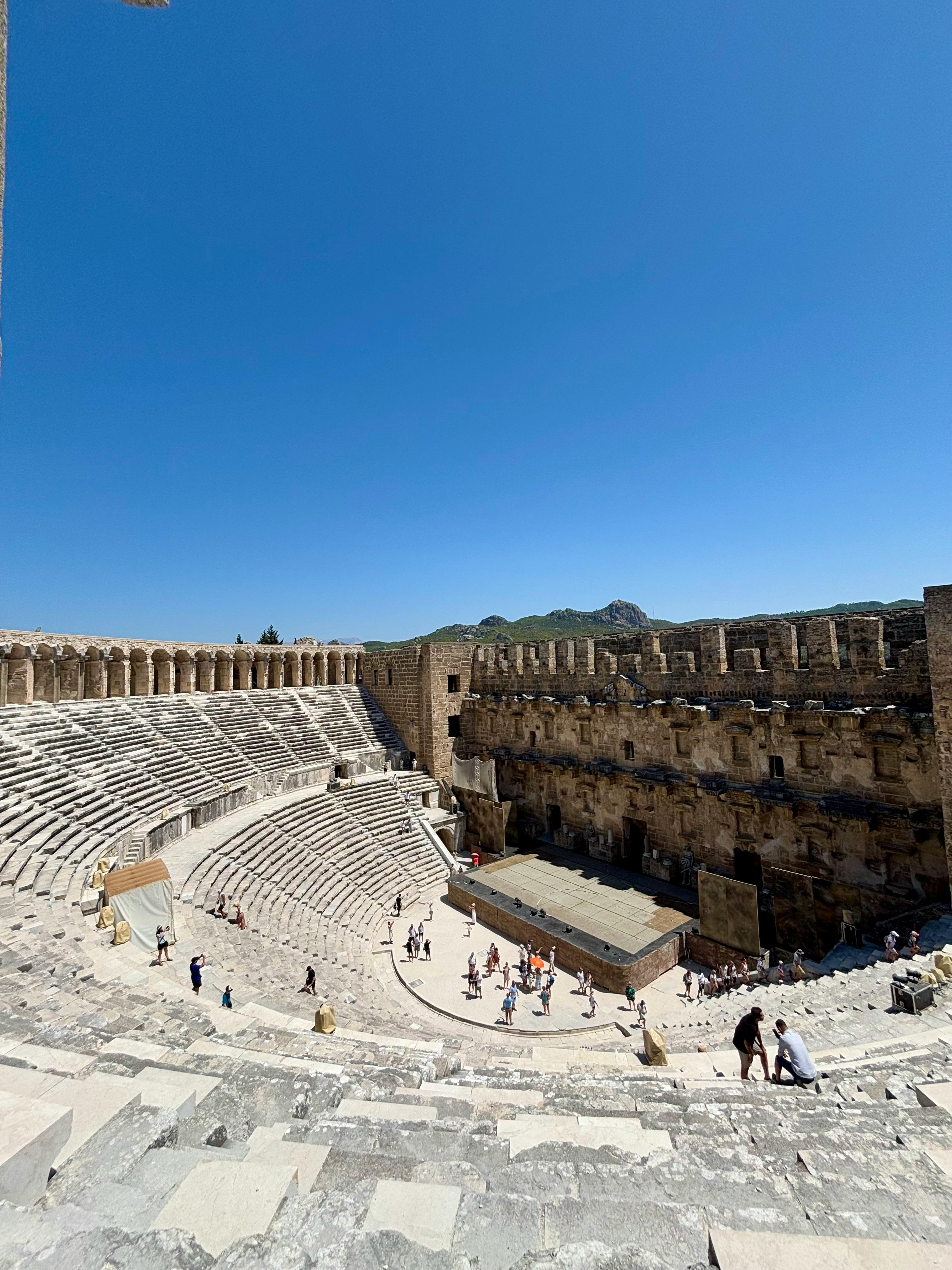
Why does Aspendos Theatre, near Antalya, Turkey, feel less like a ruin than a building that expects the next performance to start at sunset? That question is the real reason to come: this is one of the rare ancient theatres where the stone still behaves like a stage, catching voices, gathering light, and turning a visit into an argument with time. From the upper seats, the curve of the cavea drops toward a stage wall 96 meters wide, about the length of a football field, while swallows cut through the hot air and every footstep clicks back from the limestone.
Most people arrive expecting a Roman postcard. What they meet is stranger. Records show the theatre was built between 160 and 180 AD by Zenon, son of Theodorus, yet the building you face also carries Seljuk repainting, altered doorways, and the aftertaste of a palace as much as a playhouse.
And the sound is the thing that stays with you. Even without actors, the place feels tuned: a murmur rides the seats, the stage wall throws back the smallest consonants, and the whole structure seems to prove that geometry can be more persuasive than brute force.
Go for the architecture, yes, but also for the changed way it makes you look at endurance. Aspendos does not survive because nobody touched it; it survives because rulers, builders, performers, and modern restorers kept finding reasons to fill it with people.
Researched by the Audiala editorial team from historical records, architectural archives, and local expertise.
What to see
The Theatre Bowl and Stage Wall
Aspendos makes most Roman theatres look half-finished. Built between 160 and 180 AD in the reign of Marcus Aurelius, its 41 rows of seats still rise in a clean sweep toward a stage building almost 100 meters wide and 22 meters high, roughly the length of a football field and as tall as a seven-story block. Climb past the worn limestone benches and the place stops feeling like a ruin you photograph from outside; it feels like a machine built for voices, where a cough skips through the air, the sun bounces hard off the stone, and Zenon, son of Theodorus, suddenly becomes real because his name is still carved by the western entrance.
The Upper Gallery and the Seljuk Afterlife
Most visitors stare at the orchestra and leave, which is a mistake. The covered gallery above the cavea is where Aspendos turns intimate: shade after glare, cooler air in the vaulted passage, and a higher view that lets you catch the small evidence of how carefully this place was run, including the mast holes for the lost velarium that once stretched over the crowd like a giant awning. Then look closer at the stage building, because the story did not end with Rome; UNESCO records show the Seljuks turned it into a palace in the 13th century, and the faint red zigzag paint still clinging to the masonry gives the theatre a second life, less pure and far more interesting.
Walk the Theatre, Then the Forgotten City
Start low in the orchestra, where the stage wall fills your vision, then climb to the diazoma and the top rows before walking out toward the basilica and the upper-city ruins behind the theatre. Few people bother, which means you get the better version of Aspendos: not a single masterpiece in isolation, but a working city above the Köprüçay river, with the acropolis at your back and the aqueduct nearby reminding you that Roman spectacle depended on pipes, money, and logistics as much as beauty. If you are choosing between this and another quick stop from Antalya, give Aspendos the extra hour.
Plan your visit
Getting There
Aspendos sits in Belkıs, Serik, about 45 to 60 minutes east of Antalya by car via the D400, then the signed turn for Aspendos. Without a car, the least-fuss route is Antalya Otogar to Serik by bus, then a local dolmuş or taxi for the final leg; Moovit also shows stop 42658 - Belek Mh Turizm Cd-5 about 260 meters away, a four-minute walk.
Opening Hours
As of 2026, the safest official reading is daily opening from 08:00 to 17:00, with the ticket office closing at 16:30 and no regular weekly closure. A ministry brochure also shows longer seasonal hours, and older official pages mention evening "Night Museology," so check the same day before you go if you are counting on a late visit.
Time Needed
Give the theatre alone 45 to 60 minutes if you want the headline view, the cave-like echo under the vaults, and a few photos. A proper visit takes 1.5 to 2 hours, and 2.5 to 3 hours if you also climb toward the upper-city ruins and linger over the Seljuk details that kept this Roman shell alive.
Accessibility
Bottom-level viewing is the realistic best case for many wheelchair users: some paths toward the theatre are smoother, but the seating tiers and the back-area ruins involve uneven stone, steps, and slopes that can feel steeper than they look in photos. As of 2026, I found no verified elevator; if an accessible toilet is essential, call ahead at +90 242 892 13 25 rather than trusting older crowd-sourced listings.
Tickets & Passes
As of 2026, the last verified standard admission shown on the official English ministry page was €15, and the site also has an official e-ticket page. MüzeKart is valid for Turkish citizens, and MuseumPass holders can skip the ticket queue, though security checks still apply.
Photo Gallery
A view of Aspendos Theatre, Antalya, Turkey. · DossemanA view of Aspendos Theatre, Antalya, Turkey. · YusseleEA view of Aspendos Theatre, Antalya, Turkey. · DossemanA view of Aspendos Theatre, Antalya, Turkey. · DossemanA view of Aspendos Theatre, Antalya, Turkey. · DossemanA view of Aspendos Theatre, Antalya, Turkey. · DossemanA view of Aspendos Theatre, Antalya, Turkey. · Alexander Buschorn
History
A Stage That Refused to Fall Silent
Aspendos kept one habit longer than empires usually last: it gathered people to watch, listen, and measure themselves against a public spectacle. Records show the theatre rose in the Antonine period, between 160 and 180 AD, in a city made wealthy by the Eurymedon River, and its basic social function has proved harder to erase than dynasties.
What endured was not untouched stone but repeated use. Roman patrons paid for a theatre, Seljuk rulers turned the stage building into a palace in the 13th century, and modern Turkey put audiences back in the seats, which means the building's deepest continuity is not style but assembly.
The turning point
The Building Was Saved by People Who Refused to Treat It as a Relic
At first glance, Aspendos looks like the fantasy version of antiquity: a Roman theatre so complete that tourists often call it untouched. That surface story is comforting. Sit high in the cavea and the building seems to have leapt intact across 18 centuries for your benefit.
But the walls give themselves away. UNESCO records show the red zigzag paint on the stage building is Seljuk, not Roman, and altered openings in the inner structure belong to the 13th-century conversion under Sultan Alaeddin Keykubat I, who used the theatre as a palace because a working building was more valuable to him than a noble ruin.
The next turning point came on 9 March 1930, when Mustafa Kemal Atatürk visited and ordered that the theatre be restored yet kept active for performances. A dead monument would have been easier. For Atatürk, what was at stake was larger than masonry: the young republic's claim that Anatolia's past belonged in public life, with voices and crowds, not behind a rope.
Once you know that, the place changes under your eyes. The audience seats stop reading as survival by accident, and start reading as a chain of decisions by people who kept this stage useful, from Zenon in his hometown to a Seljuk sultan, then to a modern state that put music back where rhetoric once rang.
What Changed
Almost everything except the act of gathering has shifted. Scholars date the theatre to 160-180 AD, though popular writing often repeats the exact year 155 without solid support; the wooden stage roof is gone, the stage building was reworked in the Seljuk period, and modern restoration has added its own arguments, including the much-criticized pale replacement stone installed in 2015. Even the city around it changed names and rulers. The theatre did not stay pure. It stayed adaptable.
What Endured
The old contract between stage and audience still holds. Ancient capacity was probably 7,300 to 7,600 spectators, according to UNESCO, rising toward 8,500 if stairways filled too, and that human scale still feels exact: big enough for ceremony, small enough for a voice to matter. Modern opera, ballet, and large public performances continue the same social fact the Romans understood. People come here to listen together.
Tips for visitors
Go Early
Morning works best. Tour groups thicken later, while the first light catches the honey-colored stone and the empty seating bowl still feels more like architecture than backdrop.
Shade Is Scarce
The upper ruins offer very little cover, especially once the sun starts pressing down on the stone like a griddle. Buy your drink near the entrance and pace the exposed sections first, then retreat toward the lower areas before the heat turns the visit punitive.
Eat In Belkıs
Food nearby is practical, not glamorous, and that is part of the point. Try Star Belkıs for a budget local meal, Zenon Cafe for a coffee or light stop, or Riverside Restaurant for a calmer river-view lunch at mid-range local prices.
Buy Ahead
Use the official e-ticket if you can, or a MuseumPass if you already have one. The line savings matter most when buses arrive in clusters and everyone suddenly remembers the box office closes at 16:30.
Pair It Smart
Aspendos works well with nearby Sillyon if you want another ancient hilltop site the same day, but don't cram it into a rushed mega-itinerary. The theatre deserves enough time for the upper ruins too, because the place makes more sense once you stop treating it as a single monument.
Sort Your Ride Back
Belkıs gets quiet after dark unless a performance is on, so confirm your return taxi or dolmuş before you go in. That matters even more around festival season: the Aspendos Opera and Ballet Festival usually lands in September, and evening event traffic can scramble casual transport plans.
Where to Eat
local_dining
Don't Leave Without Trying
Antalya Piyazı (white bean salad with tahini sauce)Şiş Köfte (charcoal-grilled meatball skewers)Hibeş (tahini, garlic, and cumin dip)Tahinli Cevizli Kabak Tatlısı (pumpkin dessert with tahini)Yanık Dondurma (burnt-milk ice cream)Citrus marmalades (bergamot, kumquat, orange)
Alâka cafe restaurant
local favorite
Vegan-Friendly Mediterranean€€star4.9(102)
Order: The Adana burger is a must-try, even for non-vegans; it’s widely considered one of the best burgers in the city.
This family-run backyard gem feels less like a restaurant and more like being welcomed into a home. It’s the perfect spot for those seeking fresh, homemade food with an emphasis on plant-based options.
Order: The baked Veal is consistently rated as the best in the city, and the handmade noodles with shrimp sauce are an absolute delight.
Nomades stands out for its incredible attention to texture and flavor, making it a place you'll want to visit twice. The atmosphere is warm and the service is exceptionally attentive.
Order: Don't miss the Benedict eggs on sourdough bread or their authentic, hearty Turkish breakfast spread.
With its cozy couches and shelves full of books, this is the ultimate spot for a relaxed morning. It’s a favorite for those who want a healthy, reasonably priced meal in a comfortable, homey setting.
Order: The chicken BBQ pizza is a standout, but the classic Margarita is equally impressive for its authentic, fresh taste.
Bruschetta is the perfect antidote to too many kebabs; it offers a chilled, chic atmosphere where you can enjoy genuinely healthy and delicious meals. The staff are incredibly friendly and helpful.
checkA standard tip is 10% of the bill; for exceptional service, 15–20% is appreciated.
checkAlways carry cash for tips, as card terminals often do not have a tip line.
checkCards are widely accepted, but keep cash on hand for small vendors and street food.
checkDinner in Antalya is a leisurely affair, typically enjoyed between 19:00 and 21:00.
checkSerpme kahvaltı (extended buffet-style breakfast) is an Antalya institution you shouldn't miss on weekends.
Food districts:Kaleiçi (Old Town) for atmospheric diningKonyaaltı Beach for seaside evening mealsLara district for modern cafes and restaurants
Restaurant data powered by Google
Watch & Explore Aspendos Theatre.
Explore Antalya
Antalya Turkey / Turkey 4K Beach Walk
Best Summer0 min16M
Explore Antalya
Best things to do in Antalya | Turkey #shortsyoutube #shorts
GlowWithGrace0 min190K
Frequently asked
Is Aspendos Theatre worth visiting?
Yes, especially if you want one Roman theatre that still feels built for voices rather than postcards. The stage wall still stands almost whole, which is rare, and the facade stretches about 100 meters wide, roughly a football field without the end zones, while the 22-meter height reads like a seven-storey stone backdrop. What changes the visit is the Seljuk afterlife: those faint red zigzag traces mean you are not looking at frozen Rome, but at a building reused, repainted, and kept alive.
How long do you need at Aspendos Theatre?
Most visitors need 1.5 to 2 hours for a satisfying visit. Give yourself 45 to 60 minutes if you only want the theatre, then another hour if you plan to climb higher, pause in the covered gallery, and walk beyond the headline view into the wider ruins. Slow walkers or photo-heavy visitors can easily stretch it to 2.5 or 3 hours.
How do I get to Aspendos Theatre from Antalya?
The easiest route from Antalya is by car or taxi, usually 45 to 60 minutes east via the D400 toward Serik. If you are using public transport, take a bus from Antalya Otogar to Serik, then switch to a local dolmus or a taxi for the final leg to Belkis. That last stretch is the awkward part.
What is the best time to visit Aspendos Theatre?
Spring and autumn are the best seasons, and early morning is the best time of day. Summer heat hits the stone hard, and the seating bowl can feel like a shallow pan left in the sun, while morning gives you softer light, thinner crowds, and a better chance to hear the place breathe. September also brings festival energy if you want the theatre as a living stage, not only an ancient shell.
Can you visit Aspendos Theatre for free?
Usually no, and I would plan on buying a ticket. The official museum system lists Aspendos as a paid archaeological site with an e-ticket option, while MuseumPass and MuzeKart rules depend on your eligibility; I did not find a current 2026 Aspendos-specific free-entry notice. Check the official page the same day if you are traveling during Museum Week or a special event window.
What should I not miss at Aspendos Theatre?
Do not stop at the first grand photo of the seating bowl and leave. Look for the western entrance inscription naming Zenon, son of Theodorus, climb high enough to notice the upper gallery and the old mast holes for the lost sunshade, and study the surviving stage building, which still holds the space together like a stone curtain 22 meters high, about a seven-storey wall. Also watch for the Seljuk red zigzag paint, because that small detail changes the whole story of the place.
Sources & attribution10
Researched and written by the Audiala editorial team from historical records, architectural archives, and local expertise. Last updated April 2026.
UNESCO World Heritage Centre — Historical dating, architect inscription, dimensions of the theatre, seating layout, Seljuk reuse, and the site’s wider archaeological importance.
MuseumPass — How online tickets and museum passes work, including queue-skipping language and pass context.
Aspendos Excavations - Buildings — Construction date range support, inscription details, and the theatre’s architectural components.
Passport and Pixels — Realistic visit duration, driving time from Antalya, practical transport advice, shade and facility notes, and independent visitor pacing.
TravelSetu — Public-transport routing from Antalya via Serik and last-leg access advice.
European Festivals Association — Festival context supporting Aspendos as an active performance venue in the warmer season.
Turkish Museums Blog — Legend material around the acoustics and the cultural afterlife of the theatre’s famous whisper story.
Turkish Archaeological News — Support for overlooked features such as the stage building, velarium details, and the theatre’s preserved Roman form.
Georgii Eletskikh — Unsplash License (https://unsplash.com/license) — Source: https://images.unsplash.com/photo-1752071744202-77858ef00d19
Georgii Eletskikh — Unsplash License (https://unsplash.com/license) — Source: https://images.unsplash.com/photo-1752071743522-7f9becf0022f
Georgii Eletskikh — Unsplash License (https://unsplash.com/license) — Source: https://images.unsplash.com/photo-1752071743795-4e19ccda789e
Aspendos North of Basilica 4690 — Dosseman — CC BY-SA 4.0 (https://creativecommons.org/licenses/by-sa/4.0/) — Source: https://commons.wikimedia.org/wiki/File:Aspendos_North_of_Basilica_4690.jpg
Aspendos North of Basilica 4724 — Dosseman — CC BY-SA 4.0 (https://creativecommons.org/licenses/by-sa/4.0/) — Source: https://commons.wikimedia.org/wiki/File:Aspendos_North_of_Basilica_4724.jpg
Aspendos Probably Near South Gate 7351 — Dosseman — CC BY-SA 4.0 (https://creativecommons.org/licenses/by-sa/4.0/) — Source: https://commons.wikimedia.org/wiki/File:Aspendos_Probably_Near_South_Gate_7351.jpg
Aspendos Structure along road to theatre at 450 meters SW 4595 — Dosseman — CC BY-SA 4.0 (https://creativecommons.org/licenses/by-sa/4.0/) — Source: https://commons.wikimedia.org/wiki/File:Aspendos_Structure_along_road_to_theatre_at_450_meters_SW_4595.jpg
Aspendos Plan — Dosseman — CC BY-SA 4.0 (https://creativecommons.org/licenses/by-sa/4.0/) — Source: https://commons.wikimedia.org/wiki/File:Aspendos_Plan.jpg
Aspendos plan axb01 — Alexander Buschorn — CC BY-SA 3.0 (https://creativecommons.org/licenses/by-sa/3.0/) — Source: https://commons.wikimedia.org/wiki/File:Aspendos_plan_axb01.jpg
Aspendos Structure NW of market hall 3235 — Dosseman — CC BY-SA 4.0 (https://creativecommons.org/licenses/by-sa/4.0/) — Source: https://commons.wikimedia.org/wiki/File:Aspendos_Structure_NW_of_market_hall_3235.jpg
Aspendos Structure NW of market hall 3236 — Dosseman — CC BY-SA 4.0 (https://creativecommons.org/licenses/by-sa/4.0/) — Source: https://commons.wikimedia.org/wiki/File:Aspendos_Structure_NW_of_market_hall_3236.jpg
Aspendos Structure NW of market hall 3240 — Dosseman — CC BY-SA 4.0 (https://creativecommons.org/licenses/by-sa/4.0/) — Source: https://commons.wikimedia.org/wiki/File:Aspendos_Structure_NW_of_market_hall_3240.jpg
Aspendos Structure N of market hall 4675 — Dosseman — CC BY-SA 4.0 (https://creativecommons.org/licenses/by-sa/4.0/) — Source: https://commons.wikimedia.org/wiki/File:Aspendos_Structure_N_of_market_hall_4675.jpg
Strictly necessary cookies keep the site working. Analytics (PostHog, Google Analytics) measures how each visitor uses our pages. Marketing loads YouTube videos and walking-route maps without a tap and lets Google Analytics set advertising cookies. We never sell your data. You can change this any time from the footer.
Privacy
Cookie preferences
Pick what you're okay with. You can change this any time from the footer.
Strictly necessary
Always on
Sign-in, language, navigation. Always on.
Product analytics
PostHog (EU) and Google Analytics record which pages you view and how you use them, under a random identifier stored in your browser. Helps us see which pages work and which need fixing. Google's ad personalisation stays off. No selling.
Marketing
Loads YouTube videos and the walking-route maps (OpenFreeMap) without a tap; without it, they load only when you tap them. If analytics is also on, Google Analytics may set advertising cookies. Ad personalisation stays off.