Type 2+ letters to search all countries, cities, and places
/Ctrl KEsc
travel_explore
Type 2+ letters to search all countries, cities, and places
Press Enter to open the top result
Antalya Mosque
Antalya·Turkey·36° N · 30° E·Updated Apr 2026
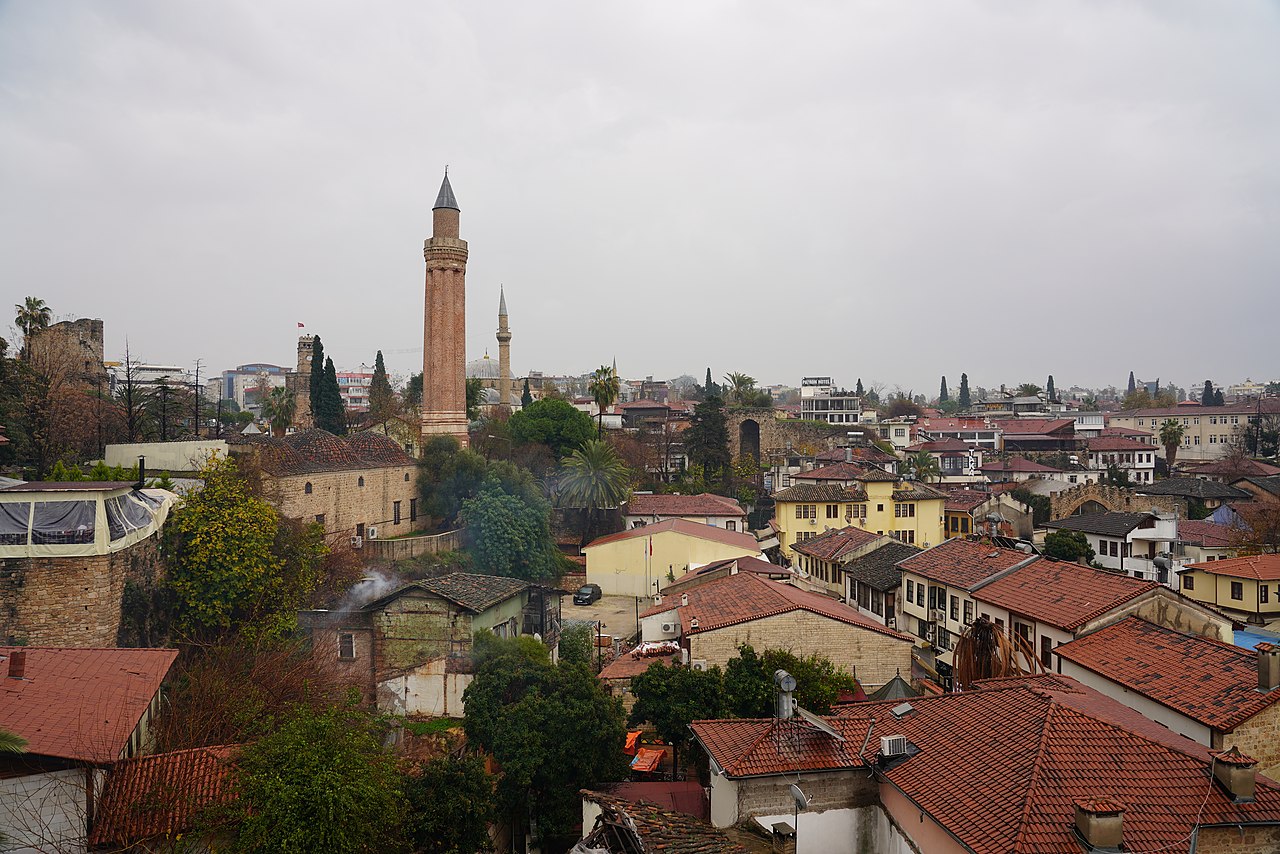
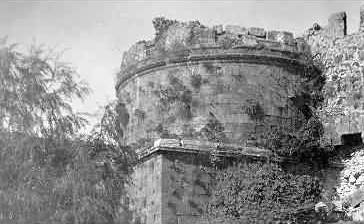
Antalya's 38m fluted minaret is the city's football badge and civic soul — built 1230, it outlasted its own prayer hall by a century before a new one rose beneath it.
Photo: Paul VanDerWerf from Brunswick, Maine, USA · CC BY 2.0
Time needed
30-45 minutes
Entry
Free
Best season
Spring (April-May) or autumn (Sept-Oct)
Ninety steps spiral inside the fluted minaret of Antalya Mosque — not the 99 that would match the names of Allah, and nobody has ever explained the missing nine. The 38-meter tower has stood in Antalya, Turkey since the 1220s, outliving the sultan who built it, a 12-year Crusader occupation, and the original prayer hall it was meant to call worshippers to. Climb Kaleiçi's cobblestones, look up, and you're reading eight centuries of turquoise brick.
Locals call it Yivli Minare Camii — the Fluted Minaret Mosque. The minaret is the oldest thing standing: red brick shaft, eight semi-circular grooves running its full height, fragments of cobalt and turquoise glazed tile still clinging between the courses like the last scales of a drained pool.
The prayer hall beside it is younger than it looks. Six low domes in two rows, twelve columns propped up on reused Roman and Byzantine capitals, an Arabic inscription plaque dated 774 A.H. The minaret is Seljuk. The hall around it is a victory monument, rebuilt after Antalya was taken back from Christian occupiers.
Come at the late afternoon call to prayer. Light slides down the flutes, the grooves catch shadow in eight vertical stripes, and the whole tower looks briefly like it's moving. Shoes off at the door, women's scarf at the entrance, five minutes of quiet inside — that's all it asks.
Researched by the Audiala editorial team from historical records, architectural archives, and local expertise.
What to see
The Fluted Minaret
Count the grooves. Eight semi-circular flutes run the full 38 metres of red baked brick, and no other minaret in Anatolia wears this ribbing — it's the reason the whole complex took its name (yivli means fluted). The square stone base stands 6.5 metres tall and 5.5 metres wide, roughly the footprint of a small studio apartment, before the brick shaft takes over and the geometry gets strange.
Look closer on the eastern and western faces. Fragments of turquoise and cobalt-blue glaze still cling between brick courses, remnants of a tile skin that once wrapped the whole tower — a Seljuk instinct to dress engineering in jewellery. At golden hour, around 16:00 to 18:00, what survives lights up like chipped sapphire.
The 90 steps inside spiral tight and dim to a balcony that opens onto Kaleiçi's rooftops, the marina, and the Taurus Mountains beyond. Climb it last. Everything you've just seen at ground level rearranges itself from up there.
The Six-Dome Prayer Hall
Step inside and look up first, then down. Six domes in two rows of three sit on twelve columns, and this is the oldest surviving multi-domed mosque in Anatolia — rebuilt in 1373 by Mehmet Bey of the Hamidids, an inscription plaque dates it precisely to 774 A.H. The interior is intentionally spare. Seljuk restraint, not neglect.
The columns are the tell. Run your eye along the capitals and you'll spot Corinthian curls and Byzantine volutes — spolia lifted from the 5th-century church that stood here before 1230, reused without apology. Thicknesses vary deliberately; what looks sloppy is structural. Stone stays cool to the touch year-round, a 10-degree drop from the July street outside.
Now the floor. Near the centre, a glass panel reveals 800-year-old water channels running beneath — medieval passive cooling that most visitors stride straight over. Ask staff; they'll happily point it out if you linger.
The 1239 Madrasa & Tomb Courtyard
Cross the threshold into the madrasa courtyard and the acoustic changes before you do. Built in 1239 by Atabeg Ataman during the reign of Gıyaseddin Keyhüsrev II, the four-iwan school sits behind a grand Seljuk portal now flanked — absurdly, brilliantly — by souvenir shops selling evil eyes and fridge magnets. Stand in the north iwan and clap once. The echo is cleaner than anything the prayer hall returns.
Two domed tombs anchor the complex: the Zincirkıran türbesi and Nigar Hatun's smaller mausoleum, plus a former Mevlevi lodge where whirling dervishes once turned. Around 2020 restoration work unearthed 40 graves beneath the grounds — the dead still surface here.
Finish at Keçili Park cliff terrace five minutes downhill, where the minaret, the harbour, and the Mediterranean stack into one frame. Then, if you've got daylight left, the Düden Waterfalls are twenty minutes east.
Plan your visit
Getting There
Mosque sits on Kalekapısı Square at the threshold of Kaleiçi old town, 3 minutes west of Hadrian's Gate on foot. From Antalya Airport take the Antray tram to İsmetpaşa stop, then walk 10 minutes downhill — about 40 minutes total. City buses KL08, LF09 and TC93 stop at Cumhuriyet Meydanı (5-minute walk); fare around ₺15 on an AntalyaKart contactless card, since most drivers refuse cash.
Opening Hours
As of 2026 the mosque is open daily with no fixed closing time and free entry, but non-Muslims are turned away during the five daily prayers — Fajr around 05:00, Dhuhr 12:30, Asr 16:00, Maghrib 19:30, Isha 21:00 (shift ±1 hour seasonally). The adjacent Mevlevihane Museum runs Tue–Sun 08:30–17:30, closed Mondays, extended to 22:00 on Sema ceremony nights. Check live prayer times at diyanet.gov.tr before you head over.
Time Needed
Ten minutes gets you the fluted minaret and a courtyard photo. Budget 30 minutes to slip inside the six-domed prayer hall and spot the reused Roman capitals on the 12 columns, or 45–60 minutes for the full complex including the Mevlevihane and the Seljuk madrasa next door, now a state fine arts gallery.
Accessibility
Courtyard is paved and wheelchair-friendly, but the prayer hall has steps at the entrance plus mandatory shoe removal, and the 90-step spiral inside the minaret is off-limits to anyone on wheels. Kaleiçi's streets are steep, uneven cobbles — comfortable shoes are non-negotiable. Modern Antray trams and city buses are accessible; the nostalgic Kaleiçi tram is not.
Cost
Entry to both the mosque and the Mevlevihane Museum is free year-round, with no ticketing system or online booking. Donations are welcomed but not expected. If you plan to pair it with paid museums elsewhere in town, the standalone visit leaves budget for a proper lunch in Kaleiçi.
Photo Gallery
Antalya Mosque rises above the red-tiled rooftops and stone walls of Antalya's old town. Soft overcast light gives the cityscape a muted, atmospheric look. · Ray Swi-hymn from Sijhih-Taipei, TaiwanAntalya Mosque appears here with its low terracotta domes, weathered stone walls and a tall brick minaret framed by trees. The elevated daytime view shows the historic building set against a dense urban backdrop. · Paul VanDerWerf from Brunswick, Maine, USAAntalya Mosque rises above the red-tiled roofs of Antalya's historic quarter in this elevated city view. Soft, overcast light gives the old town skyline a muted, atmospheric look. · Ray Swi-hymn from Sijhih-Taipei, TaiwanAntalya Mosque stands out with its tall brick minaret above palm trees and red-tiled roofs in Antalya, Turkey. Soft evening light gives the historic cityscape a calm, layered look. · StevenLThe tiled dome and white tower of Antalya Mosque rise above pine trees in bright daylight. Clear blue skies and weathered rooflines give the scene a calm, local character. · HALUK COMERTELAntalya Mosque rises above tiled rooftops and trees with its slender brick minaret dominating the skyline. Bright daylight brings out the contrast between the historic stone structure and the modern city behind it. · Wolfgang SauberAntalya Mosque stands above Antalya's historic neighborhood, framed by red-tiled roofs, stone houses, and tall minarets. Bright daytime light reveals the layered skyline of old and modern Antalya. · Wolfgang Sauber
History
The Chain-Breaker's Mosque
Records show Sultan Alaaddin Keykubad I ordered the minaret around 1230, shortly after the Seljuks took Antalya from its Byzantine rulers. The mosque rose on the foundations of a Byzantine church whose dedication no source now remembers — sacred ground reclaimed in stone and glazed tile, visible from ships miles offshore.
The original prayer hall didn't survive the 14th century. Scholars cannot agree on what destroyed it — earthquake, fire, or siege damage — only that by the 1370s the minaret stood alone. What rose around it afterward was not a restoration. It was a reconquest in masonry.
The turning point
August 1361: When the Minaret Fell Silent
On August 24, 1361, a fleet of 120 Cypriot ships anchored off Antalya. King Peter I of Cyprus took the city in a Crusader lightning strike and held it for twelve years. Sources don't record what happened to the mosque during the Lusignan occupation — whether it was closed, converted, or simply abandoned — only that Muslim merchants were pushed from the port and the azaan went quiet above Kaleiçi.
The man who got it back was Mubariz al-Din Mehmed Bey, a local Hamidid emir history remembers by the epithet Zincirkıran — Chain-Breaker. In 1373 he drove the Lusignan garrison out. That same year, not one season later, he rebuilt the destroyed prayer hall in six domes around the surviving Seljuk minaret. A six-line Arabic inscription above the west entrance names him as patron and dates the work to 774 A.H.
His mausoleum still stands a few steps from the mosque. Most visitors photograph the fluted tower and walk straight past the plaque that explains why the hall beneath it exists — a post-Crusader reconstruction dressed as continuity, built fast and built to stay.
The Sultan Poisoned by His Own Son
Alaaddin Keykubad I spent eight years imprisoned by his brother before taking the Seljuk throne in 1220. Antalya was his prize — captured in 1221, renamed Alaiyya, sealed with a political marriage to the daughter of the defeated Byzantine lord Kyr Vart. The minaret was his victory declaration, 38 meters of turquoise-clad brick visible from the harbor. On June 1, 1237, he died at a banquet, poisoned with fried chicken. Historians suspect his son Giyaseddin Keyhüsrev II arranged it. The mosque outlived him by nearly 800 years.
Six Domes, Twelve Borrowed Capitals
The 1373 prayer hall is the oldest surviving multi-domed mosque in Anatolia — a UNESCO Tentative List claim since 2016. Inside, twelve columns carry the six domes, and every capital is a salvaged Roman or Byzantine piece. Corinthian acanthus leaves, Doric simplicity, nothing matching. No source confirms whether they came from the Byzantine church that once stood here or from coastal ruins further afield. The hall is medieval Islamic architecture built from classical antiquity's spare parts, held up by stones older than the mosque by a thousand years.
Tips for visitors
Dress for a Working Mosque
This is an active neighborhood masjid, not a museum — shoulders and knees covered for everyone, long trousers for men, headscarf for women (usually available at the door). Shoes come off before the prayer hall; speak quietly inside.
Avoid Friday Midday
Cuma namazı pulls a huge crowd between roughly 11:30 and 13:30 on Fridays, with prayer rugs spilling into the square. Come any other day, or plan for exterior-only photos during that window.
Photography Timing
Shoot the red-brick minaret from Cumhuriyet Meydanı in early morning light (7–9 AM), when the sun hits from the east and fragments of the original turquoise tile still catch. Interior photos are fine outside prayer times — no flash, no tripods during worship, and forget drones: Kaleiçi's historic zone bans them without a municipal permit.
Eat Piyaz, Not Pizza
Antalya's signature dish is tahinli piyaz — white beans with tahini, lemon and egg — and the legendary spot is Piyazcı Sami, open since 1933 (budget). For a sit-down dinner, Vanilla near Hadrian's Gate does seasonal Mediterranean (mid-range); Seraser in a 300-year-old mansion is the splurge.
Menu Price Switch
Classic Kaleiçi scam: a tourist menu appears at payment with prices 2–3x what you were shown. Photograph the menu before you order, and on card terminals always choose TRY — not EUR or USD — to dodge the dynamic currency markup.
Skip Next Door Is a Mistake
The 1239 Seljuk madrasa flanking the mosque is now the Devlet Güzel Sanatlar Galerisi, a free state art gallery where locals attend openings in a 13th-century classroom. Twenty minutes well spent, and almost no tour group bothers.
Chain the Old Town
The mosque pairs naturally with a downhill loop: Hadrian's Gate (3 min), Kesik Minare ruins, the Roman harbor, then back up via Hıdırlık Tower — about 2–3 hours total. Cool off afterward at the Düden Waterfalls on the city's eastern edge, or see the full Antalya guide for a longer itinerary.
Come at Sunrise
First light turns the eight fluted brick ribs almost copper, the square is empty apart from arriving worshippers, and summer temperatures are still bearable. By 10 AM the tour groups arrive and the magic thins.
Where to Eat
local_dining
Don't Leave Without Trying
Antalya Piyaz—white bean salad with tarator (tahini, lemon, garlic), served with köfte skewersKöfte skewers—charcoal-grilled meatballs with onion and pepperYanık dondurma—'burnt ice cream,' Antalya's distinctive frozen treatBağaça—sesame and cinnamon pastry, a local tradition since the 1940sKabak tatlısı—slow-cooked candied pumpkin with tahini and walnutsSerpme börek—layered hand-rolled pastry with cheese, spinach, meat, or potatoFresh grilled red mullet—Mediterranean coast specialtyHibeş—tahini, lemon, and garlic dip, common in meze spreads
Çömlekçi Restaurant
local favorite
Turkish Traditional€€star4.8(2563)
Order: Order the lamb head soup (kelle paca) with garlic and vinegar sauce—dip fresh bread in it for the full experience. The lamb shish and urfa kebab are grilled to perfection and fresh.
2500+ reviews don't lie. This is where locals eat. Authentic Turkish cuisine executed with care, from traditional lamb head soup to perfectly grilled kebabs. The atmosphere, service, and portion sizes justify every lira.
Order: The ceviche is exceptional—refined, fresh, and among the best anywhere. The eggplant dish is outstanding. Pair with their sophisticated cocktails for a true gastro experience.
Michelin-caliber dining in Kaleiçi. Playful dishes and impeccable plating that elevate Turkish cuisine beyond kebabs. Not cheap, but absolutely worth it for a special evening.
Order: Order fresh lemonade and house-made desserts that aren't overly sweet. The owner bakes everything herself daily—you taste the care in every bite.
A gem where the owner personally crafts every dish and pastry. Warm hospitality, thoughtfully decorated space, and honest food made with love—the kind of place that makes traveling memorable.
Order: The Mexican burger is excellent and spicy if you ask for it. Try the soup with its nice kick, well-cooked beef, and finish with the crème brûlée.
Stunning harbor and mountain views paired with genuinely good food and attentive service. Don't mistake it for a tourist trap—the kitchen delivers, prices are fair, and the vibe is relaxed and real.
checkTipping: 5–10% at mid-range restaurants, 10–15% at upscale spots. Always tip in cash directly to your server—card machines rarely have a tip option.
checkMeal times: Dinner is the main meal, typically 19:00–22:00. Late dining (21:00+) is common in tourist areas.
checkPayment: Visa/Mastercard widely accepted. Small family-run places may be cash-only—carry Turkish lira.
checkReservations: Not needed for casual spots. Book ahead for terrace seating, sea views, or Friday/Saturday evenings.
checkKaleiçi (Old Town) is dining central—walking distance of the Mosque, with restaurants in Ottoman-era buildings and harbor views.
Food districts:Kaleiçi (Old Town)—historic walled quarter with restaurants in Ottoman-era buildings, harbor views, perfect for walking and exploring near the MosqueKonyaalti Beach—upscale restaurants with fresh seafood and mountain backdropOld Bazaar & city center—spice market and street food culture
Restaurant data powered by Google
Watch & Explore Antalya Mosque.
Explore Antalya
How to Spend 5 Days in ANTALYA Turkey | Traveling Antalya on a Budget
Exotic Vacation7 min233K
Explore Antalya
Experiencing ISLAM in ANTALYA as a MUSLIM Revert 🇹🇷 (TRAVEL VLOG)
Jan - The Slovak Muslim13 min7K
Frequently asked
Is Yivli Minare Mosque worth visiting?
Yes — it's Antalya's civic symbol and the oldest surviving multi-domed mosque in Anatolia. The 38m fluted red-brick minaret from around 1230 is on the Antalyaspor football badge and appears on most city branding. Entry is free and it sits at the gateway to Kaleiçi old town, so you pass it anyway.
How long do you need at Yivli Minare Mosque?
Plan 20–30 minutes for the mosque and courtyard, or 45–60 minutes if you include the adjacent Mevlevihane Museum and former madrasa (now a State Fine Arts Gallery). A quick exterior photo stop takes 10–15 minutes. Combined with a Kaleiçi stroll down to Hadrian's Gate and the marina, budget 2–3 hours.
How do I get to Yivli Minare Mosque from Antalya Airport?
Take the Antray tram from the airport and get off at İsmetpaşa stop, then walk 10 minutes — about 40 minutes total. HAVAŞ airport buses drop at the city centre, from where it's a short taxi or walk into Kaleiçi. The mosque sits beside Kalekapısı (Clock Tower) Square on Cumhuriyet Caddesi.
Can you visit Yivli Minare Mosque for free?
Yes — entry to the mosque, the courtyard, and the adjacent Mevlevihane Museum is free, with no ticketing system or online booking. Donations are appreciated but not expected. The Mevlevihane is closed Mondays and otherwise open Tue–Sun 08:30–17:30.
What is the best time to visit Yivli Minare Mosque?
Early morning around sunrise — the red brick minaret glows, the square is quiet, and you avoid prayer-time closures. Golden hour between 16:00 and 18:00 gives the best light on the surviving turquoise and cobalt tile fragments. Spring (April–June) and autumn (September–November) are ideal; avoid Friday midday prayers (11:30–13:30).
What should I not miss at Yivli Minare Mosque?
Look down, not just up — a glass floor panel in the prayer hall reveals 800-year-old water channels that most visitors walk straight over. Read the 1373 Arabic inscription plaque naming Mehmed Bey, proof the hall is a post-Crusader rebuild rather than Seljuk original. Climb the 90 steps inside the minaret for a 360° view over the harbour, Taurus Mountains, and Mediterranean.
What is the dress code for Yivli Minare Mosque?
Shoulders and knees covered for everyone, plus a headscarf for women — scarves are usually available at the entrance. Remove shoes before entering the prayer hall, and no shorts or sleeveless tops. It's an active neighbourhood mosque, so keep voices low and step out during the five daily prayers.
Why is it called Yivli Minare?
"Yivli" means "fluted" in Turkish, referring to the eight semi-circular vertical grooves running the full 38m height of the red-brick shaft. The design is rare in Anatolian Seljuk architecture and still shows fragments of the original turquoise and cobalt-blue glazed tiles. Locals also call it Alaaddin Camii after Sultan Alaaddin Keykubad I, who commissioned it around 1230.
Sources & attribution44
Researched and written by the Audiala editorial team from historical records, architectural archives, and local expertise. Last updated April 2026.
Saved and recently read places — kept on this device only.
Photo credits (12)
20180111 Atatürk@Antalya 5211 (39398717034) — Ray Swi-hymn from Sijhih-Taipei, Taiwan — CC BY-SA 2.0 (https://creativecommons.org/licenses/by-sa/2.0/) — Source: https://commons.wikimedia.org/wiki/File:20180111_Atatürk@Antalya_5211_(39398717034).jpg
2007 0211TurkeySatB0013 (3277184887) — Paul VanDerWerf from Brunswick, Maine, USA — CC BY 2.0 (https://creativecommons.org/licenses/by/2.0/) — Source: https://commons.wikimedia.org/wiki/File:2007_0211TurkeySatB0013_(3277184887).jpg
20180111 Atatürk@Antalya 5211 (39398717034) (cropped) — Ray Swi-hymn from Sijhih-Taipei, Taiwan — CC BY-SA 2.0 (https://creativecommons.org/licenses/by-sa/2.0/) — Source: https://commons.wikimedia.org/wiki/File:20180111_Atatürk@Antalya_5211_(39398717034)_(cropped).jpg
Antalya - 2010 - panoramio (3) — StevenL — CC BY-SA 3.0 (https://creativecommons.org/licenses/by-sa/3.0/) — Source: https://commons.wikimedia.org/wiki/File:Antalya_-_2010_-_panoramio_(3).jpg
ANTALYA - panoramio — HALUK COMERTEL — CC BY 3.0 (https://creativecommons.org/licenses/by/3.0/) — Source: https://commons.wikimedia.org/wiki/File:ANTALYA_-_panoramio.jpg
Antalya - Alaeddin-Moschee 2 — Wolfgang Sauber — CC BY-SA 3.0 (https://creativecommons.org/licenses/by-sa/3.0/) — Source: https://commons.wikimedia.org/wiki/File:Antalya_-_Alaeddin-Moschee_2.jpg
Antalya - Alaeddin-Moschee 1 — Wolfgang Sauber — CC BY-SA 3.0 (https://creativecommons.org/licenses/by-sa/3.0/) — Source: https://commons.wikimedia.org/wiki/File:Antalya_-_Alaeddin-Moschee_1.jpg
Antalya - Kaleiçi (cropped) — Dat doris — CC BY-SA 4.0 (https://creativecommons.org/licenses/by-sa/4.0/) — Source: https://commons.wikimedia.org/wiki/File:Antalya_-_Kaleiçi_(cropped).JPG
Antalya 633DSC 0446 (48189180387) — János Korom Dr. >17 Million views from Wien, Austria — CC BY-SA 2.0 (https://creativecommons.org/licenses/by-sa/2.0/) — Source: https://commons.wikimedia.org/wiki/File:Antalya_633DSC_0446_(48189180387).jpg
Antalya - Kaleiçi — Dat doris — CC BY-SA 4.0 (https://creativecommons.org/licenses/by-sa/4.0/) — Source: https://commons.wikimedia.org/wiki/File:Antalya_-_Kaleiçi.JPG
Antalya Fluted Minaret Mosque exterior 2786 — Dosseman — CC BY-SA 4.0 (https://creativecommons.org/licenses/by-sa/4.0/) — Source: https://commons.wikimedia.org/wiki/File:Antalya_Fluted_Minaret_Mosque_exterior_2786.jpg
20180111 Atatürk@Antalya 5208 (25238549647) — Ray Swi-hymn from Sijhih-Taipei, Taiwan — CC BY-SA 2.0 (https://creativecommons.org/licenses/by-sa/2.0/) — Source: https://commons.wikimedia.org/wiki/File:20180111_Atatürk@Antalya_5208_(25238549647).jpg
Strictly necessary cookies keep the site working. Analytics (PostHog, Google Analytics) measures how each visitor uses our pages. Marketing loads YouTube videos and walking-route maps without a tap and lets Google Analytics set advertising cookies. We never sell your data. You can change this any time from the footer.
Privacy
Cookie preferences
Pick what you're okay with. You can change this any time from the footer.
Strictly necessary
Always on
Sign-in, language, navigation. Always on.
Product analytics
PostHog (EU) and Google Analytics record which pages you view and how you use them, under a random identifier stored in your browser. Helps us see which pages work and which need fixing. Google's ad personalisation stays off. No selling.
Marketing
Loads YouTube videos and the walking-route maps (OpenFreeMap) without a tap; without it, they load only when you tap them. If analytics is also on, Google Analytics may set advertising cookies. Ad personalisation stays off.