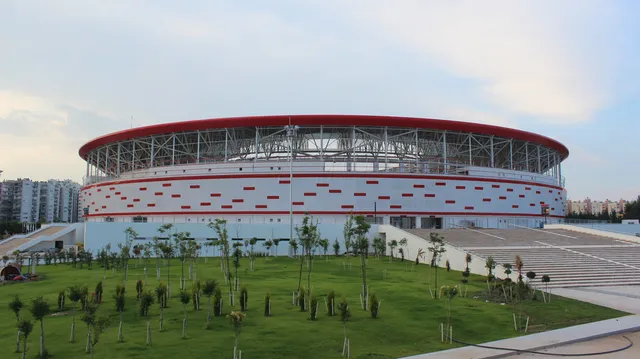
A student center named after a half-lost ancient city sits beside one of Turkey's boldest transplant hospitals, and that odd pairing tells you almost everything about Akdeniz University in Antalya, Turkey. Most visitors come for the sea or the old walls, then miss this place entirely. They shouldn't. Akdeniz University rewards a visit because it shows Antalya thinking out loud: ambitious, modern, civic-minded, and still haunted by the older coast beneath its feet.
Records show the institution formally took shape on 20 July 1982, yet its pulse starts earlier, with the Antalya Faculty of Medicine approved on 9 January 1973 and a local support foundation formed weeks later to push a university into being. That origin matters. Akdeniz was not dropped onto the city from nowhere; Antalya argued for it, funded it, and kept building.
The campus in Konyaaltı feels less like a cloistered university quarter than a working piece of the city. You hear buses grinding along Dumlupınar Bulvarı, smell pine and hot asphalt in summer, and then walk into the Olbia Cultural Centre, where Cengiz Bektaş turned a practical social hub into an award-winning civic street under a roof. A visit here also sharpens your sense of Antalya: this is where the resort city gives way to its research labs, lecture halls, and hospital wards.
Best of all, the place carries two stories at once. One is documented in decrees, rector appointments, and student statistics that now top 58,000, a population larger than many Anatolian towns. The other is less settled: the name "Olbia" keeps surfacing on this campus, pointing toward an ancient settlement near Arapsuyu that scholars still argue over.
Researched by the Audiala editorial team from historical records, architectural archives, and local expertise.
What to see
Olbia Cultural Centre
Akdeniz University keeps its best surprise in plain sight: Olbia Cultural Centre, a 1999 work by Cengiz Bektaş that turns a campus shortcut into a real piece of city. The Aga Khan Award jury noticed what most first-time visitors miss, and the secret is still the same today: follow the water channel running down the curved spine, listen to the low splash under the cafe talk, and watch the wood-slat canopy throw striped shade across granite walls and concrete beams that feel built for Antalya's heat rather than in spite of it.
Stand in the sculpture garden and look north to the clock tower, then climb the 1,500-seat amphitheatre, which holds about as many people as a full-sized village square during a festival. The place changes your reading of the whole university. What looked like a spread-out public campus starts to make sense as a sequence of shelter, sun, water, and conversation.
Central Library
The university library won't hit you with grandeur, which is exactly why it works. Opened in 1985 and spread across 4,407 square meters, about the size of two-thirds of a football pitch, it trades monumentality for concentration: the air feels cooler, the light flatter, the sound reduced to chair legs, page turns, and the soft electronic hum from a building made for 850 readers at once.
The detail worth seeking out is the Electronic Hall for the Visually Impaired, created in 2010 with assistive technology and a large audio collection, because it reveals the library's real character better than any facade could. After Olbia's theatrical street, this place resets your senses. And that contrast is the point.
Olbia to Botanic Park Campus Walk
Give yourself 90 minutes and walk Akdeniz University as a small city rather than a checklist: start at Olbia, drift past Yakut's dining halls and everyday services, then keep going toward the Botanic Park and the sports precinct. One minute you hear coffee cups and student chatter, the next you hit a greener stretch where the campus loosens, and the whole institution reads less like a collection of faculties than a place where 58,178 students create their own weather.
Spring suits this route best, when university events spill into the planted areas and the air has not yet hardened into full Antalya summer. If you've already seen Roman Antalya at Hadrian'S Gate or the sea-edge drama of Düden Waterfalls, this walk shows you another city entirely: younger, less polished, more revealing.
Plan your visit
Getting There
Akdeniz University’s main campus sits on Dumlupınar Bulvarı in Pınarbaşı, Konyaaltı, about 1.5 km from Antalya Otogar, so the walk from the bus terminal usually takes 18-22 minutes if you are not dragging luggage. City buses serving the hospital and campus side include 600, AK03, KA07, AC03, AF04, 503, and TA08, and recent transit listings place Light Rail T3 within a 3-5 minute walk of the east gate and medical side.
Opening Hours
As of 2026, the university does not publish one simple set of visitor hours for the whole campus; access depends on which part you want to use. The clearest official timetable belongs to the Central Library: 08:30-24:00 in teaching periods, 24 hours during exam periods, loan desk 08:30-17:30 on weekdays, and public holidays open only during exams.
Time Needed
Give the campus 30-45 minutes for a quick look at the public core, especially Olbia and the main pedestrian areas. A more useful visit takes 1.5-2 hours for Olbia, a coffee, and a short walk, while 3-4 hours makes sense only if you are also heading to the library or the hospital side, which stretches across the grounds like a small district rather than a single building.
Accessibility
Akdeniz University has a dedicated Disability Support Unit, and the library includes assistive services for visually impaired users; the university also publicized a campus wayfinding web tool designed for blind and low-vision movement. Distances matter here: moving from Olbia to the library and then to the hospital can feel longer than visitors expect, so wheelchair users or anyone with limited stamina should treat the campus as a series of stops, not one casual loop.
Cost and Tickets
As of 2026, no official admission fee or ticketing system appears for the campus public areas, so a general visit is best treated as free. The library is not ticketed either, though outside users may need a guest entry card, and hospital appointments or professor consultations can carry medical fees that have nothing to do with sightseeing.
Photo Gallery
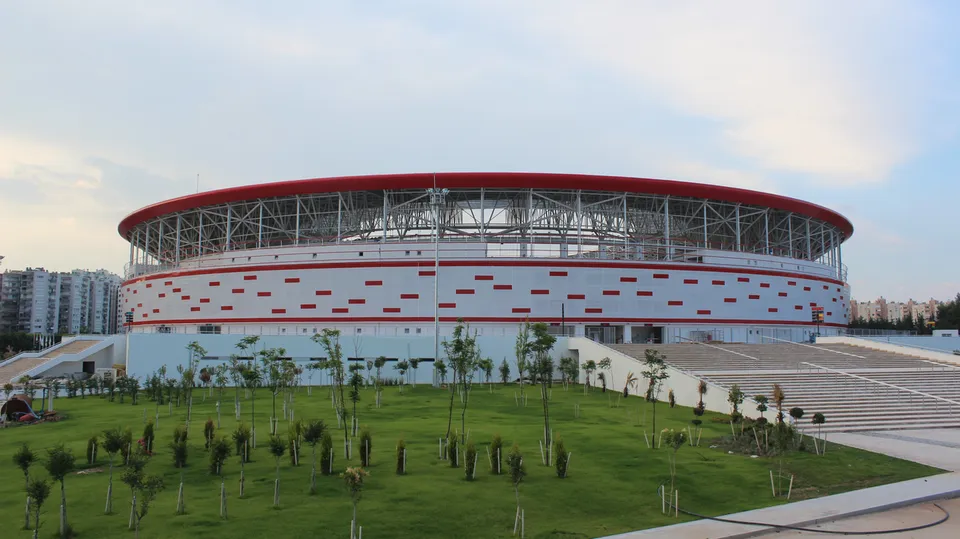
A modern Akdeniz University building stands beneath clear blue skies, framed by autumn foliage on the Antalya campus. The crisp daylight and landscaped grounds give the scene a calm, orderly feel. · Enessubasi33A sailboat display stands beside the lake at Akdeniz University in Antalya, framed by spring flowers, trees, and a fountain. Bright midday light gives the campus scene a calm, open feel. · Enessubasi33A panel of speakers sits behind a long conference table during an academic event at Akdeniz University in Antalya, Turkey. The plain lecture hall setting and bright indoor lighting give the scene a formal university atmosphere. · OnurThe stadium at Akdeniz University in Antalya, Turkey opens onto a broad green field framed by modern grandstands and a running track. Bright daylight and an empty scene give the campus sports venue a calm, spacious feel. · AntalyasporFCThe Faculty of Education at Akdeniz University stands between modern campus buildings, with Turkish flags, glass facades, and landscaped greenery under clear midday light. The bright, open courtyard gives the campus a clean and contemporary feel. · Enessubasi33A modern Akdeniz University building in Antalya glows in warm late-day light, framed by trees and a quiet campus road. The Turkish flag and a lone figure at the entrance add a sense of place and scale. · Lipsum at Turkish WikipediaThe ceremonial entrance gate of Akdeniz University stands along a broad road lined with gardens and palms in Antalya, Turkey. Soft overcast light gives the campus approach a calm, formal look. · The original uploader was Ozgurcelebi at Turkish Wikipedia.
History
A Campus That Kept Becoming More Necessary
Akdeniz University has changed shape repeatedly since the 1970s, but its core function has held steady: train people, heal people, and tie Antalya more tightly to the wider southwest of Turkey. Records show that pattern began with medicine before the university fully existed in law, then spread outward into agriculture, sciences, culture, and a hospital complex that turned the campus into a place of national consequence.
That continuity is the real story here. Faculties moved from Topçular to Kepez and then to the Konyaaltı campus; regional units later spun off into new universities in Isparta, Burdur, and Alanya. The mission stayed put. Akdeniz kept serving as a public machine for learning and care, even as the buildings, boundaries, and ambitions around it kept shifting.
The turning point
Ömer Özkan and the Day the Hospital Held Its Breath
If you want the turning point, stand in the hospital on 21 January 2012. Documented reports show Akdeniz University Hospital carried out Turkey's first face transplant on Uğur Acar that day, while another team attempted a triple-limb transplant on Atilla Kavdır using tissues from the same donor, Ahmet Kaya. Corridors would have smelled of disinfectant and stale coffee, and every door beyond the operating suites carried the weight of national attention.
For Prof. Dr. Ömer Özkan, the stakes were personal as well as professional. Success could confirm Akdeniz as the place where Turkish transplant medicine stopped following and started leading; failure could leave patients dead, families shattered, and years of surgical credibility in ruins. Then the day split in two. Uğur Acar's operation became a national milestone, while Kavdır's case turned tragic after complications, a brutal reminder that medical history is usually written in equal parts skill and risk.
That moment did not break the university's long continuity of care; it exposed it. The same institution that began with a medical faculty approved in 1973 had become a campus where the country's most difficult surgeries were attempted in public view, under pressure, with no room for empty rhetoric.
What Changed
The map kept being redrawn. Records show Akdeniz University absorbed units across southwestern Turkey after 1982, then lost major branches as new state universities were created in 1992, 2006, and 2015. The built fabric changed just as sharply: a 425-bed hospital came into use in 1997, the Emergency, Trauma and Organ Transplantation Hospital followed in 1999, and after the emergency-department fire of 26 March 2025 the campus entered another rebuilding cycle.
What Endured
One habit survived every reorganization: Antalya kept using this institution as a public answer to local need. The pattern starts with Governor Hüseyin Öğütçen and 53 benefactors backing the 1973 foundation, continues through the move of medical training from Ankara to Antalya in 1977, and still reads clearly in the campus today, where students cross the same grounds that patients enter for life-changing treatment. Even the Olbia Cultural Centre, completed in 1999, serves that older continuity by stitching scattered buildings into a shared civic spine.
Tips for visitors
Start At Olbia
Head for Olbia Cultural Center first. That is the campus social core, with cafés, shops, event halls, and the easiest way to see how Antalya’s student life, errands, and ceremony culture all spill into one square.
Hospital Boundaries
Use the hospital side only if you have an appointment, a patient to visit, or a real reason to be there. Quiet matters, queues run long, and wandering in as if it were a cultural stop will feel wrong fast.
Ask Before Shooting
Outdoor phone photos in public campus areas are usually low-friction, but the hospital is a different world. Skip patient and staff photos, leave tripods alone unless you have written permission, and treat drones as permit-only because Konyaaltı has official flight restrictions around sensitive sites.
Watch The Taxi
The main annoyance here is not campus crime but transport friction near the otogar. If a driver starts inventing a complicated route for a campus that is only 1.5 km away, walk, take a bus, or use app-based navigation instead of arguing in the heat.
Eat Nearby Smart
For a cheap campus stop, try Yelken Cafe Olbia or Chaplin Art Cafe around Olbia; both fit the student rhythm better than hunting for a polished meal inside the grounds. If you want something more deliberate after your visit, 7 Mehmet near Kültür Parkı is the stronger call, and ordering Antalya piyazı or kabak tatlısı with tahini makes more sense here than default kebab.
Pair It Well
Akdeniz University works best as part of a practical Antalya day, not as a standalone destination. Combine it with the Antalya Museum district or continue toward Düden Waterfalls or Antalya Airport if you are already moving across the city, because the campus sits on the city-working side of Antalya rather than the postcard one.
Where to Eat
local_dining
Don't Leave Without Trying
Antalya piyazıYörük kebabıYanık dondurmaPumpkin dessert with tahini and walnutsHibeşŞiş köfteBağaçaTirmisFinike orange and citrus jams
Chaplin Art Cafe
cafe
Cafe with hearty Turkish-style comfort plates and coffee€€star4.8(97)
Order: Order the thyme chicken and a strawberry lemonade. That chicken gets singled out in reviews for a reason.
This is the one that feels built for the Akdeniz University orbit: warm staff, a lived-in atmosphere, and live music that people mention without sounding like they were paid to. It reads less like a polished concept and more like a place people settle into.
Seafront bistro for breakfast, mezes, and casual Turkish-Mediterranean meals€€star4.3(2600)
Order: Go for breakfast if you want the safest bet from the reviews, then linger over coffee with the sea in front of you.
Nar Beach&Bistro trades on its setting, but not only that. The better reviews keep coming back to generous portions, fair prices for the view, and owners who still seem to care whether you had a good meal.
Modern Turkish fine dining with seasonal seafood and inventive desserts€€star4.6(453)
Order: Order the duck baklava and the seabass with celery puree, glasswort, and green apple. Finish with the creme baklava.
Cava is the ambitious one on this list: garden setting, polished service, and a kitchen trying to do more than standard grill-house autopilot. It is not flawless, but when it lands, it lands with style.
Scenic Mediterranean-style all-day restaurant and bar€€star4.6(851)
Order: The Mexican burger gets unusually specific praise in reviews, and the creme brulee seems to hold up as dessert.
The location could easily have produced a lazy, overpriced room with a nice terrace. Reviews suggest the opposite: strong service, a kitchen that beats expectations, and prices people call reasonable despite the view.
checkAntalya piyazı is a local signature and often eaten as a main dish, not just a side. Look for the tahini-based sauce.
checkBreakfast usually runs 07:00-10:00, lunch 12:00-14:00, afternoon tea or snacks 15:00-17:00, and dinner 19:00-21:00, often later in summer.
checkTurkish breakfast is usually substantial: bread, cheese, olives, tomatoes, cucumbers, eggs, tea, and sometimes börek or menemen.
checkTipping is not mandatory, but 5-10% is standard for good service. Around 10% is the common rule of thumb, and cash tips are preferred.
checkService is often not included. If it is, look for wording such as "servis dahil" or a listed hizmet bedeli.
checkCards are widely accepted in Antalya city restaurants, especially in tourist and urban areas, but carry cash for weekly markets, smaller cafes, and tips.
checkDo not rely on Apple Pay. A physical Visa or Mastercard plus some cash is the safest setup.
checkAntalya does not seem to have one standard restaurant closing day, so if a specific meal matters, check the same day.
Yes, if you treat it as a working piece of Antalya rather than a postcard sight. The draw is Olbia Cultural Centre, a 1999 social spine by Cengiz Bektaş that bends through cafes, shade, water, sculpture, and a 1,500-seat amphitheatre; the wider campus also shows the city in study mode, hospital mode, and everyday mode. If you want ruins, go elsewhere first, but if you want to understand modern Antalya, this place earns an hour or two.
How long do you need at Akdeniz University?
Most visitors need 1.5 to 2 hours. That gives you enough time to walk Olbia slowly, sit for a coffee, and peek into the library if guest access works out; a broader sweep of Olbia, the library, green zones, and the hospital side can stretch to 3 or 4 hours because this campus feels more like a small district than a single site.
How do I get to Akdeniz University from Antalya?
The easiest route is by tram or city bus to the university or hospital side in Konyaaltı. The campus sits at Pınarbaşı Mahallesi on Dumlupınar Bulvarı, about 1.5 kilometers from Antalya’s intercity bus terminal, which means roughly a 20-minute walk if you are lightly packed; if you are coming from Antalya Airport, the hospital’s transport guidance points to bus connection combinations via line 600 and onward city lines.
What is the best time to visit Akdeniz University?
Spring is the best time to visit. Olbia’s shaded walkways and water channel make sense all year, but March and April bring softer light, greener campus edges, and event activity in the botanic areas, while July and August average around 29°C, hot enough that midday walking can feel like crossing a parking deck with no mercy.
Can you visit Akdeniz University for free?
Yes, the public-facing parts of campus appear to be free to enter. No official ticketing system, admission charge, or skip-the-line product shows up for the main campus, though specific buildings such as the library, hospital, and event spaces each run by their own access rules.
What should I not miss at Akdeniz University?
Do not miss Olbia Cultural Centre. Look for the water channel that pulls the whole composition together, the wood-slat shade throwing striped light across the paving, and the sightline from the sculpture garden toward the clock tower; that is where the campus stops feeling improvised and starts making architectural sense.
Can visitors use the library at Akdeniz University?
Yes, but only in a limited way and under library rules. The Central Library publishes the clearest visitor-facing hours on campus, typically 08:30 to 24:00 in teaching periods and 24 hours during exams, and it allows certain outside users through guest entry cards rather than open tourist admission.
Sources & attribution94
Researched and written by the Audiala editorial team from historical records, architectural archives, and local expertise. Last updated April 2026.
Saved and recently read places — kept on this device only.
Photo credits (6)
Akduni — The original uploader was Ozgurcelebi at Turkish Wikipedia. — CC BY-SA 2.5 (https://creativecommons.org/licenses/by-sa/2.5/) — Source: https://commons.wikimedia.org/wiki/File:Akduni.JPG
Akdeniz Üniversitesi Eğitim Fakültesi 2 — Enessubasi33 — CC BY-SA 4.0 (https://creativecommons.org/licenses/by-sa/4.0/) — Source: https://commons.wikimedia.org/wiki/File:Akdeniz_Üniversitesi_Eğitim_Fakültesi_2.jpg
Akdeniz Üniversitesi 2 — Enessubasi33 — CC BY-SA 4.0 (https://creativecommons.org/licenses/by-sa/4.0/) — Source: https://commons.wikimedia.org/wiki/File:Akdeniz_Üniversitesi_2.jpg
View of Konyaaltı Beach and Beydağları Mountains, Antalya — FingerWiki — CC BY-SA 4.0 (https://creativecommons.org/licenses/by-sa/4.0/) — Source: https://commons.wikimedia.org/wiki/File:View_of_Konyaaltı_Beach_and_Beydağları_Mountains,_Antalya.jpg
Akdeniz Mimarlık - 6.11.18 — Onur — CC BY-SA 4.0 (https://creativecommons.org/licenses/by-sa/4.0/) — Source: https://commons.wikimedia.org/wiki/File:Akdeniz_Mimarlık_-_6.11.18.jpg
Strictly necessary cookies keep the site working. Analytics (PostHog, Google Analytics) measures how each visitor uses our pages. Marketing loads YouTube videos and walking-route maps without a tap and lets Google Analytics set advertising cookies. We never sell your data. You can change this any time from the footer.
Privacy
Cookie preferences
Pick what you're okay with. You can change this any time from the footer.
Strictly necessary
Always on
Sign-in, language, navigation. Always on.
Product analytics
PostHog (EU) and Google Analytics record which pages you view and how you use them, under a random identifier stored in your browser. Helps us see which pages work and which need fixing. Google's ad personalisation stays off. No selling.
Marketing
Loads YouTube videos and the walking-route maps (OpenFreeMap) without a tap; without it, they load only when you tap them. If analytics is also on, Google Analytics may set advertising cookies. Ad personalisation stays off.