Plan and listen to Ethnography Museum Of Ankara with Audiala.
Audio guide in your pocket, itinerary in your browser. Built for the way you actually visit.
Introduction
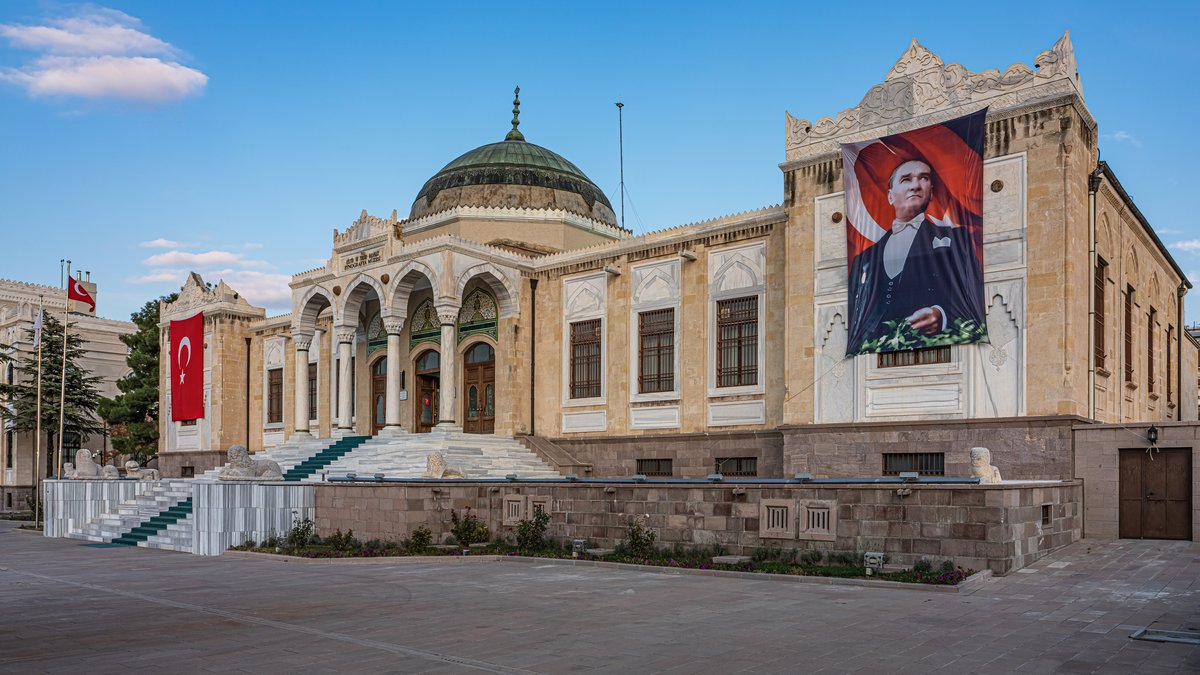
Nestled in the heart of Ankara, the Ethnography Museum stands as a testament to Turkey’s rich cultural heritage and the evolution of its modern identity. Established in 1930, it was one of the first cultural institutions of the Turkish Republic, designed to celebrate and preserve the diverse traditions of Anatolia. Architect Arif Hikmet Koyunoğlu’s design harmonizes Ottoman, Seljuk, and early Republican motifs, making the museum an architectural and cultural landmark (TripClap; cagdasmuzebilim.ankara.edu.tr).
Notably, the museum served as the temporary mausoleum for Mustafa Kemal Atatürk, the founder of the Turkish Republic, from 1938 to 1953, giving it a unique place in the nation’s modern history (Turkey Holiday Diary; wikipedia.org). Today, visitors can expect a comprehensive journey through Turkish ethnographic traditions, interactive exhibits, and a respectful atmosphere honoring Atatürk’s legacy. The museum is centrally located and easily accessible by public transport, with affordable tickets and visitor-friendly facilities (whichmuseum.com; TripClap).

History and Architectural Development
Origins
The Ethnography Museum of Ankara was inaugurated in 1930 as part of Turkey’s efforts to preserve and showcase its diverse cultural heritage. The site, formerly Namazgah Hill, was selected for its symbolic significance, as it had served as a gathering point for Friday prayers during the War of Independence (cagdasmuzebilim.ankara.edu.tr; nomadicniko.com). The land was officially allocated to the Ministry of Education in 1925 (ktb.gov.tr).
Design and Construction
Arif Hikmet Koyunoğlu’s vision combined classical Ottoman and Seljuk architecture with early Republican sensibilities. The construction team included skilled artisans such as marble master Hüseyin Avni Efendi and metal founder Master Hakkı (wikipedia.org; turkishmuseums.com). The museum’s monumental approach features 28 marble steps with lion statues symbolizing guardianship. The rectangular building is crowned with a single dome and features a colonnaded courtyard and richly decorated marble pediment (memphistours.com).
A notable exterior highlight is the bronze statue of Atatürk by Pietro Canonica, unveiled in 1927, facing west as a symbol of the Republic’s forward vision (nomadicniko.com).
Atatürk’s Temporary Mausoleum
Historical Context
After Atatürk’s passing in 1938, the Ethnography Museum was chosen as his temporary resting place due to its prominence and symbolic value. A solemn procession brought his remains from Istanbul to Ankara, and the museum’s main hall was transformed into a site of national mourning (Turkey Holiday Diary).
Temporary Mausoleum and Public Access
Between 1938 and 1953, the museum became a focal point for public commemoration. The central hall was adapted to allow visitors to pay their respects, with Atatürk’s casket placed in the main exhibition space, surrounded by honor guards and national symbols.
Transition to Anıtkabir
Planning for the permanent mausoleum, Anıtkabir, commenced soon after Atatürk’s death. The winning design by Emin Onat and Orhan Arda was constructed from 1945 to 1953. On November 10, 1953, Atatürk’s remains were transferred to Anıtkabir with a grand state ceremony, concluding the museum’s role as the temporary mausoleum (Turkey Holiday Diary).
Architectural Features and Symbolism
Exterior Elements
The grand staircase, lion statues, and domed structure set the tone for a monumental experience. The tripartite entrance, impressive columns, and carved marble decorations recall Anatolian traditions and Republican ideals (memphistours.com).
Interior Layout
The central domed hall once housed a marble pool, later replaced by Atatürk’s sarcophagus. Thematic galleries are arranged to the right and left of the entrance, dedicated to ceremonial traditions, embroidery, carpets, ceramics, and religious artifacts (memphistours.com; nomadicniko.com).
Collections and Must-See Exhibits
The Ethnography Museum’s collections illustrate Turkey’s diverse cultural tapestry:
- Folk Costumes and Textiles: Regional attire, Ottoman-era kaftans, and rare silk textiles (Live the World).
- Carpets and Kilims: Rich displays from weaving centers like Uşak, Bergama, and Kula.
- Woodwork and Religious Artifacts: 14th-century coffin of Ahi Şerafeddin, 13th-century Seljuk throne, mosque doors and minbars (nomadicniko.com).
- Ottoman Calligraphy and Ceramics: Masterpieces of calligraphy, Iznik and Kütahya ceramics.
- Musical Instruments and Performing Arts: Traditional instruments, shadow puppets, and folk dance costumes (Travels Bliss).
- Jewelry and Adornments: Silver and gold pieces reflecting Turkish artistry.
- Calligraphy and Manuscripts: Illuminated Qur’ans and historic manuscripts.
Must-See Galleries:
- Ottoman Textile Gallery (imperial robes)
- Anatolian Village Room (reconstructed home)
- Jewelry display
- Manuscript and calligraphy hall
Visiting Hours, Tickets, and Accessibility
Hours and Admission
- Opening Hours: Tuesday to Sunday, 9:00 AM – 5:00 PM; closed Mondays and public holidays
- Admission: General adult ticket: 40 TRY; discounted rates for students, seniors, and groups. Children under 12 enter free. Confirm current prices on the official museum or Ministry of Culture and Tourism website (whichmuseum.com).
Location
- Address: Atatürk Bulvarı No: 34, Altındağ, 06100 Ankara, Turkey
- Public Transport: Near Ulus Metro Station; accessible by city buses and taxis (TripClap)
Accessibility and Facilities
- Wheelchair accessible (ramps and elevators)
- Restrooms on site
- Gift shop and nearby cafés
- Guided tours available in multiple languages (advance booking recommended)
Photography
Non-flash photography is generally permitted; restrictions may apply in sensitive areas, particularly around Atatürk’s mausoleum space.
Visitor Experience and Tips
- Best Times: Early morning or late afternoon on weekdays for fewer crowds.
- Guided Tours: Enhance your visit with a guide, especially if you don’t speak Turkish.
- Interactive Elements: Look for workshops and educational programs for all ages.
- Family Visits: Children are welcome; supervision is recommended with delicate artifacts.
- Plan for Accessibility: Contact the museum in advance if you have specific mobility needs.
Nearby Attractions and Suggested Itineraries
Combine your visit with:
- Museum of Anatolian Civilizations: Archaeological treasures
- State Art and Sculpture Museum: Turkish art
- Ankara Castle and Roman Baths: Historical sites within walking distance
Suggested itinerary:
Morning at Ethnography Museum, lunch nearby, afternoon at Museum of Anatolian Civilizations and State Art and Sculpture Museum.
Frequently Asked Questions (FAQ)
Q: What are the Ethnography Museum of Ankara’s opening hours?
A: Tuesday to Sunday, 9:00 AM – 5:00 PM; closed Mondays.
Q: How much are tickets?
A: 40 TRY for adults; discounts for students, seniors, and groups.
Q: Is the museum wheelchair accessible?
A: Yes, with ramps and elevators throughout.
Q: Can I take photos?
A: Non-flash photography is allowed in most areas; check signage for restrictions.
Q: Are guided tours available?
A: Yes; booking in advance is recommended.
Q: What other sites are nearby?
A: Museum of Anatolian Civilizations, State Art and Sculpture Museum, Ankara Castle, and Roman Baths.
Listen to the full story in the app
The whole Ethnography Museum Of Ankara,
told well.
Audio guides for 1,100+ cities across 96 countries. History, stories, and local insight — offline ready.
Verified, and shown.
Researched and written by the Audiala editorial team from historical records, architectural archives, and local expertise.
Researched from Wikidata, Wikipedia & official sources · fact-checked · How we make our guides →