
Foundation and Legacy
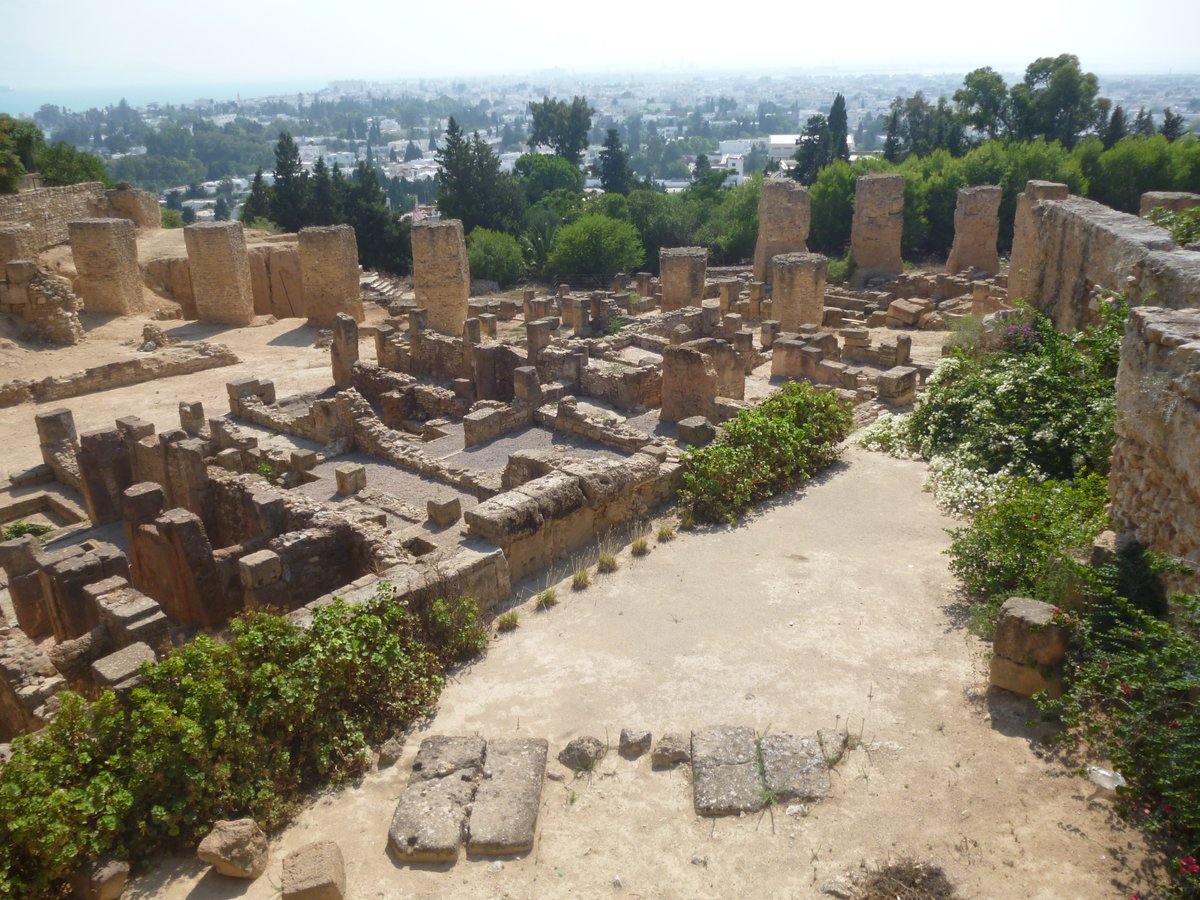
Al-Zaytuna Mosque’s origins trace back to the late 7th or early 8th century CE. Tradition credits Hasan ibn Numan with its foundation in 699 CE, while a significant reconstruction occurred between 732–734 CE. Built atop the remains of a Roman basilica, the mosque reflects the historical transitions from classical antiquity to the Islamic era in North Africa. Its location and layered construction tell the story of a city shaped by Punic, Roman, Byzantine, and Islamic civilizations (Museum With No Frontiers, Archnet).
Architectural Evolution
The mosque’s present form is the result of successive expansions and renovations under various dynasties:
- Aghlabids (9th century) Major rebuilding in 863 CE, including the hypostyle prayer hall and courtyard.
- Fatimids and Hafsids Added ornamental domes, horseshoe arches, and painted wooden ceilings.
- Ottomans (19th century) Erected the 43–44 meter-high square minaret, inspired by Almohad design, and installed Italian marble capitals.
The use of 160 columns, many repurposed from ancient Carthage, exemplifies the practice of spolia—recycling architectural elements to create new grandeur (travellingfoot.com, Live the World).
Center of Scholarship
Al-Zaytuna has long been more than a house of worship. It is home to Zaytuna University, one of the oldest centers of Islamic learning in the world. Renowned for theology, law, rhetoric, mathematics, and astronomy, it attracted scholars from across the Maghreb and the broader Muslim world, rivaling the prestige of Al-Qarawiyyin and Al-Azhar (Islamic Bridge).
Architectural Features
Mosque Layout
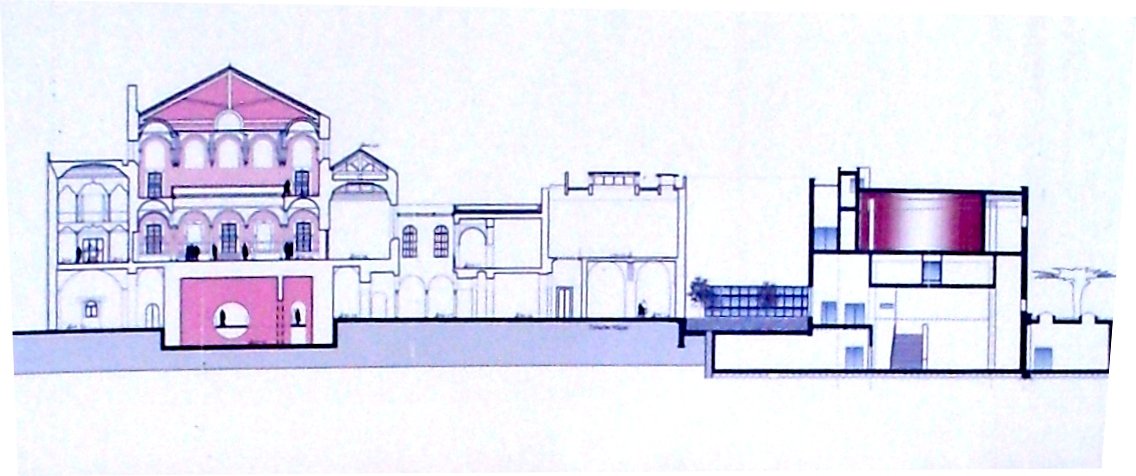
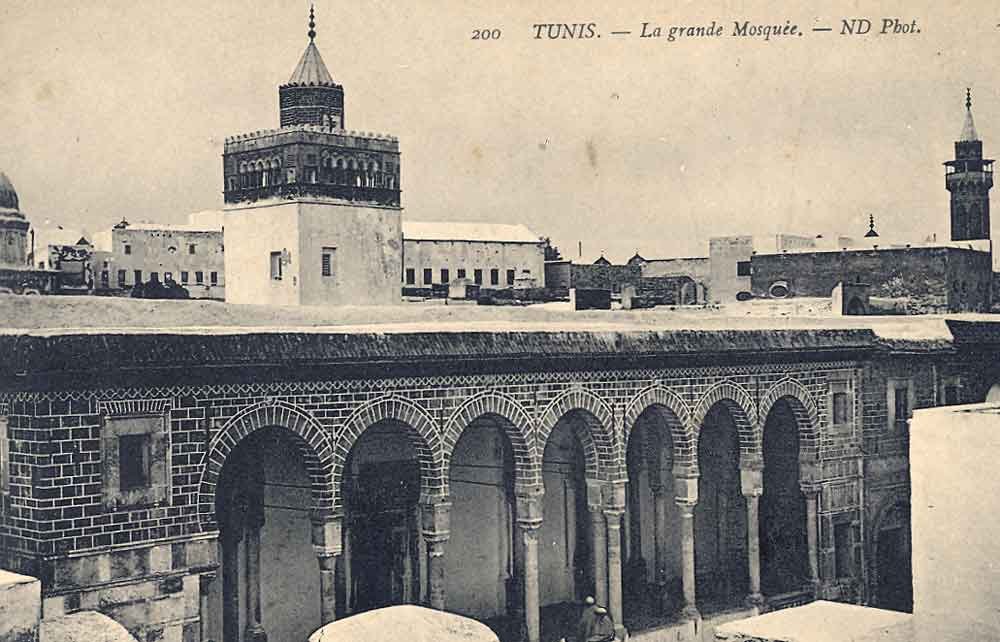
- Plan Rectangular, oriented towards Mecca, with a large hypostyle prayer hall on the southern side and a vast courtyard (sahn) surrounded by arcaded porticoes.
- Columns 160 columns, mostly spolia from Roman and Byzantine sites, support horseshoe arches throughout the mosque.
- Courtyard The open courtyard is a tranquil space for ablutions, reflection, and gathering, paved with flagstones and centered around a fountain.
- Minaret The 44-meter-high square minaret, rebuilt in 1894, dominates the Medina skyline and is an iconic feature of Tunisian architecture.
- Ornamentation Features include painted wooden ceilings, carved stucco, geometric tilework (zellige), and Quranic calligraphy.
Artistic and Symbolic Elements
- Mihrab Decorated with intricate stucco, geometric motifs, and Abbasid inscriptions.
- Minbar Traditionally carved from wood and adorned with vegetal and calligraphic designs.
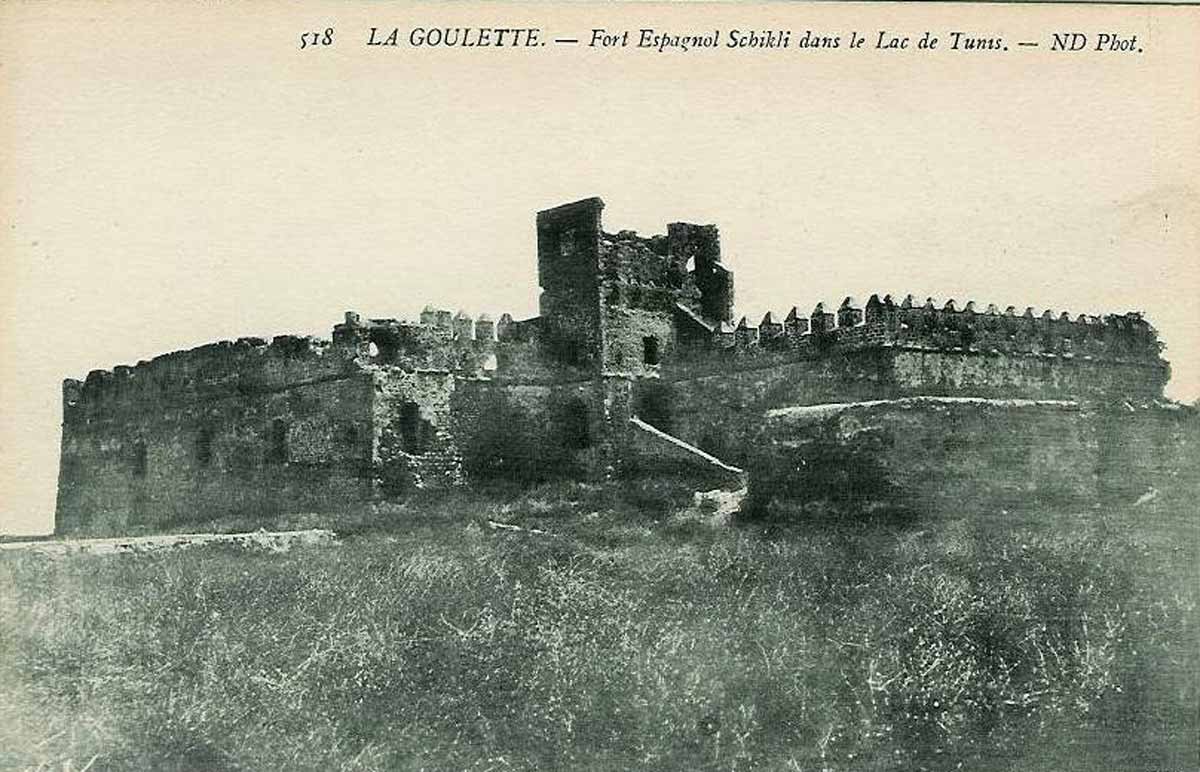
- Defensive Architecture Thick walls and corner towers reflect its historical role as both sanctuary and citadel (archiqoo.com, travellingfoot.com).
Religious and Social Role
Al-Zaytuna Mosque is the spiritual heart of Tunis. It hosts daily prayers, Friday congregational prayers, and major religious festivities. Historically, it wielded influence over religious appointments and urban regulation, cementing its position as guardian of Islamic tradition and civic life. Its proximity to key souks and streets (such as Souk Attarine and Rue de la Kasbah) intertwines religious, educational, and commercial life (The Boutique Vibe).
Visiting Al-Zaytuna Mosque
Location
- Address 30 Rue Jamaa Ezzitouna, Medina of Tunis, Tunisia (Trek Zone)
- Access Easily reachable on foot within the Medina, or via taxi/ride-hailing from other parts of Tunis or from La Marsa using the TGM train to Tunis Marine station.
Visiting Hours & Entry
- Worshippers Mosque is open 24 hours.
- Tourists Generally permitted Saturday to Thursday, 9:00 AM–12:00 PM and 2:00 PM–5:00 PM; closed for prayers and on Fridays during main congregational prayer (Ibn Battuta Travel).
- Entry Fee No official ticket or entrance fee; donations appreciated (Carthage Magazine).
- Non-Muslim Access Restricted to courtyard and exterior only; prayer hall access is reserved for Muslims (Templeseeker).
- Guided Tours Local guides offer Medina walking tours with historical insights. Advance booking is recommended.
- Dress Code Modest attire required—long trousers/sleeved shirts for men, arms/legs/hair covered for women.
Facilities
- Restrooms Not available inside the mosque; use nearby cafés or restaurants.
- Shops & Cafés Souks and rooftop cafés nearby offer refreshments, souvenirs, and panoramic views.
- Accessibility Historic architecture and Medina cobblestones can be challenging for those with mobility impairments.
What to See and Do
- Courtyard Admire the arcaded galleries and historic columns, enjoying a peaceful escape from the Medina’s bustle.
- Minaret View the iconic minaret, especially striking at sunset.
- Rooftop Views Nearby cafés provide excellent vantage points for photos of the mosque and medina.
- Explore the Medina Stroll souks like Souk El Attarine and visit nearby sites such as Dar Ben Abdallah Museum and Zitouna Square (Touristlink).
Visitor Tips
- Best Times Early morning or late afternoon to avoid crowds and heat.
- Photography Allowed in the courtyard and exterior; always seek permission, especially when photographing people or religious activities.
- Cultural Etiquette Remove shoes before entering any prayer-designated areas; maintain quiet and respect during prayers.
- Safety Medina is safe by day; remain vigilant against pickpocketing in crowded areas.
Frequently Asked Questions (FAQ)
Q: What are the Al-Zaytuna Mosque visiting hours?
A: Open to tourists Saturday–Thursday, 9:00 AM–12:00 PM and 2:00 PM–5:00 PM. Closed during prayers and on Fridays for the main prayer.
Q: Is there an entry fee?
A: No official fee; donations are welcome.
Q: Can non-Muslims enter the mosque?
A: Non-Muslims may enter the courtyard and exterior areas but not the prayer hall.
Q: Are guided tours available?
A: Yes, via local guides and Medina tour operators.
Q: Is the mosque accessible for those with disabilities?
A: Access is limited due to historic architecture and cobbled streets.
Nearby Attractions
- Medina of Tunis Explore the vibrant souks, artisan workshops, and historic buildings.
- Dar Ben Abdallah Museum Offers insights into Tunisian urban life and traditions.
- Kasbah Mosque Another masterpiece of North African Islamic architecture.
- Hammouda Pacha Mosque, Dar Hussein Notable nearby historical sites (Trek Zone).
Plan Your Visit
Al-Zaytuna Mosque is a living monument—a place where faith, learning, and history converge. Plan your visit around the mosque’s opening hours, respect local customs, and consider guided tours for a fuller experience. For additional resources, download the Audiala app for audio guides, stay connected via social media, and explore related articles on Tunisian history and Islamic architecture.