Tunis

Tunisia

Tunis

Tunis hides a 3,000-year-old Roman colosseum 2 hours south and a still-functioning 7th-century Medina where Friday couscous appears by silent agreement.

location_on 12 attractions
calendar_month Spring (April–May) and Autumn (September–November)
schedule 3–4 days

Introduction

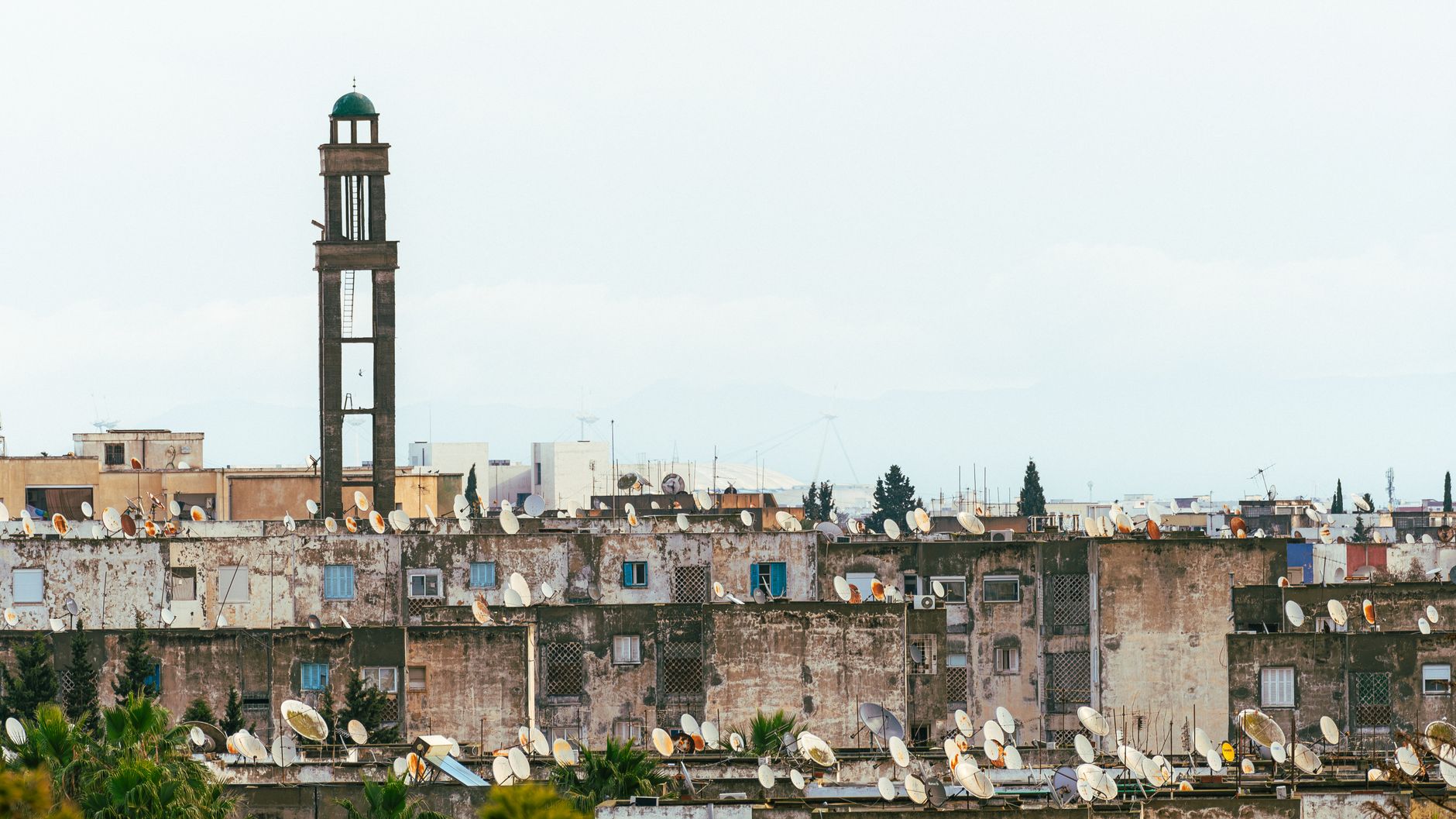
Tunis hits you first with the smell of diesel and cardamom, then with the sight of a 13th-century minaret framed by a humming tramline. The only capital where you can breakfast on runny-egg brik in a café that opened in 1885, then twenty minutes later stand on Carthaginian foundations older than Rome. Tunisia’s capital doesn’t whisper its history—it piles it layer upon layer until the ground beneath your feet feels hollow with stories.

Inside the medina, painted-blue doors open onto courtyards where silversmiths still beat patterns first drawn by Andalusian exiles. Outside the walls, French-built Avenue Habib Bourguiba stretches like a Parisian boulevard dropped into North Africa: its cafés serve tiny glasses of black coffee that cost less than the metro ticket you used to get there. The city keeps two clocks—one for the call to prayer that drifts over the rooftops, one for the commuter trains that leave on time.

This is a place where couscous is serious politics (UNESCO gave it heritage status in 2020) and where the fiercest debate is whether the best fricassé is fried at 06:00 or 18:00. The sea is always twenty minutes away, salt on the air mixing with harissa heat. Stay long enough and someone will hand you a bowl of lablabi, tear up your stale baguette for you, and explain, between spoonfuls, why Tunis invented the Mediterranean before anyone thought to name it.

What Makes This City Special

Mosaic Capital of the Mediterranean

The Bardo Museum holds the world's largest collection of Roman mosaics—3,000 sqm of them—hauled from villas that once lined the coast. Stand on the mezzanine and you look down on Medusa's face made from 1.2 million tesserae; the colors still look wet 1,700 years after the last craftsman pressed them into place.

A Medina That Still Works

Tunis' 7th-century Medina isn't a tourist set; it's a functioning city of 110,000 people. At dawn you hear the slap of dough being stretched for msammen while fork-lifts squeeze through alleys no wider than a donkey. Look up: every door is a geometry exam—iron nails driven into cedar in star patterns that pre-date Islam.

Carthage in 20 Minutes

Hop the TGM light-rail and in 12 km you trade diesel fumes for sea air and the bones of Rome's third-largest city. Walk the cisterns of Antonine Baths—taller than a four-storey house—then climb Byrsa Hill; the same horizon Hannibal scanned for Roman sails is now dotted with white yachts.

Historical Timeline

Where Phoenicians, Romans, and Revolutionaries Walked the Same Stones

Three thousand years of power shifts in a city that never forgot how to overthrow its rulers

castle
814 BCE

Phoenicians Found Carthage

Tyrian merchants sail past the Berber settlement of Tunet and build Carthage on the cape above. They bring purple dye secrets and the alphabet that will conquer the Mediterranean. The new city glows with cedar wood imported from Lebanon, visible for miles along the coast.

swords
146 BCE

Rome Destroys Carthage

Scipio Aemilianus burns the city for seventeen days straight. The ground is so hot that Roman soldiers' boots melt. Tunis, the small Berber town nearby, is destroyed too. Salt is scattered on the fields—more legend than fact, but the message is clear: Carthage will never rise again.

castle
100 CE

Antonine Baths Rise

Roman engineers build the largest baths outside Rome itself. The caldarium alone could fit four thousand sweating senators. The sea-facing walls are three meters thick—wide enough for chariots to drive along the top. Today, children use the fallen columns as diving platforms into the Mediterranean.

castle
698 CE

Arabs Make Tunis the Capital

Muslim general Hassan ibn al-Nu'man burns the last remnants of Roman Carthage. He chooses Tunis for its harbor and freshwater springs. The Medina's first walls rise within months, built with stones scavenged from Roman ruins. You can still spot Latin inscriptions in the foundation blocks.

church
863 CE

Zitouna Mosque Completed

The minaret rises 43 meters above the Medina, built from recycled Roman columns. It becomes the intellectual heart of North Africa—scholars debate astronomy while merchants sell saffron and manuscripts in the courtyard below. The university predates Oxford by three centuries.

person
1252 CE

Ibn Khaldun Born Here

The greatest Arab historian first sees light in a house near Bab Jedid. He'll grow up to write the Muqaddimah, inventing sociology eight centuries before Europeans claim credit. His childhood playground is the Medina's alleyways where storytellers compete with muezzins for attention.

swords
1270 CE

St. Louis Dies Outside Walls

French King Louis IX camps his crusader army beneath the Hafsid walls. Dysentery kills him faster than Tunisian archers could. His rotting body is boiled down to bones for transport back to Paris. The olive grove where he died still produces oil pressed from thousand-year-old trees.

swords
1535 CE

Charles V's Fleet Arrives

Four hundred Spanish ships anchor in the Gulf of Tunis. Charles V lands 30,000 troops who storm the city walls. The Hafsid sultan flees barefoot through the Bab Saadoun gate. For three years, Spanish soldiers drink wine in the Zitouna Mosque before the Ottomans return.

castle
1574 CE

Ottomans Take Permanent Control

Admiral Occhiali sails his fleet into the harbor under cover of darkness. By dawn, Ottoman banners fly from every tower. The city's first janissary barracks is built where the French embassy stands today. Turkish coffee arrives and never leaves.

music_note
1609 CE

Morisco Refugees Flood In

Eighty thousand Spanish Muslims arrive with nothing but Andalusian music and architectural knowledge. They rebuild the Jewish quarter with whitewashed walls and blue doors—colors that survive in Sidi Bou Saïd today. Their oud music becomes the foundation of modern Tunisian malouf.

local_fire_department
1818 CE

The Great Plague Decimates Tunis

Fifty thousand dead in six months—half the city's population. Bodies are collected by cart each dawn. The wealthy flee to the countryside; the poor die where they fall. The Medina's narrow lanes become mass graves. Recovery takes a generation.

gavel
1881 CE

French Troops March Down Avenue

General Borgnis-Desbordes' army enters through Bab el Bhar. The Bey signs the Treaty of Bardo under a fig tree in the palace garden. Overnight, street signs appear in French. The first café serves pastis to soldiers who can't pronounce the local wine.

person
1936 CE

Habib Bourguiba Rallies the Avenue

The future president stands on a café table on Avenue de France, now Avenue Habib Bourguiba. Three thousand Tunisians hear him demand independence in French and Arabic. The colonial police watch from the cathedral steps but don't dare arrest him—yet.

gavel
1956 CE

Independence Declared at Palace

March 20th—French flags come down from government buildings. Bourguiba walks from the Grand Synagogue to the Zitouna Mosque without bodyguards. Women ululate from balconies while European settlers pack steamer trunks. The last French cruiser departs that night.

public
January 2011 CE

Revolution Erupts on Avenue

Hundreds of thousands flood Avenue Habib Bourguiba. Police fire tear gas under the plane trees planted by the French. After 29 days, Ben Ali flees to Saudi Arabia. The same street where Bourguiba once spoke becomes the stage where dictators fall.

local_fire_department
March 2015 CE

Bardo Museum Attacked

ISIS gunmen kill 21 tourists inside the world's greatest Roman mosaic collection. Bullet holes scar a 2,000-year-old depiction of Neptune. Within days, Tunisians march holding up signs: 'Tunis is stronger than terrorism.' The museum reopens with more visitors than before.

person
2019 CE

Kais Saied Elected Professor-President

A constitutional law professor wins the presidency on an anti-corruption platform. His campaign office is above a kebab shop in the Lafayette district. Voters know him from the lectures he gave for free in the university café. Another peaceful transition proves the revolution stuck.
schedule
Present Day

Notable Figures

Hannibal Barca

247–183 BC · Carthaginian General
Born in Carthage (now a Tunis suburb)

The boy who learned war watching elephants thunder across the same shoreline you’ll see from a Sidi Bou Saïd café. He’d recognise the salt wind; the city walls, not at all.

Claudia Cardinale

born 1938 · Film Actress
Born and raised in Tunis to an Italian-Tunisian family

She grew up speaking French in the Ville Nouvelle, dreaming in Italian, and stealing figs from the Medina. Today she says the city still smells of jasmine and engine oil—exactly as she remembers.

Habib Bourguiba

1903–2000 · First President of Tunisia
Led independence from Tunis; main avenue renamed after him

Every evening he walked the length of Avenue Habib Bourguiba to gauge the city’s mood. Locals still time their strolls by his ghost’s measured pace.

Tertullian

c. 155–240 AD · Christian Theologian
Lived and wrote in Carthage (modern Tunis)

He coined the word ‘Trinity’ in a study overlooking the same Mediterranean that once carried Phoenician traders. His fierce logic still echoes in the stone acoustics of the old Carthage basilica ruins.

Practical Information

flight

Getting There

Tunis–Carthage International (TUN) sits 8 km northeast of centre; immigration can drag 25–35 min. By rail: Gare de Tunis (Place Barcelone) receives TGV-style trains from Gabès, plus the suburban TGM line. Roads: A1 motorway barrels south to Sousse; A3 heads west to Béja.

directions_transit

Getting Around

Metro Léger has six light-rail lines; Line 4 links Tunis Marine to the TGM coastal tram. TGM runs 19 km: Tunis → La Goulette → Carthage → Sidi Bou Saïd → La Marsa every 10 min (1.4 TND). No city bike-share; shared taxis (louages) leave from Gare Routière for Hammamet, Dougga.

thermostat

Climate & Best Time

Spring (Mar–May): 20–28 °C, wildflowers on Roman stones. Summer: 30–40 °C, coast crowded. Autumn (Sep–Nov): 20–28 °C, clear light for mosaics. Winter: 10–16 °C, rain Jan–Feb; hotels half-price. Come April–May or late Sept–Oct; you get warm seas minus cruise-ship hordes.

translate

Language & Currency

Arabic is official; French is the working language of menus, tickets and taxi meters. English works in museums, rarely in souks. Currency: Tunisian dinar (TND) — illegal to import/export; change cash on arrival. ATMs in arrivals hall; carry small notes for taxis (metered rides 8–12 TND to centre).

Where to Eat

local_dining

Don't Leave Without Trying

Couscous Brik Lablabi Harissa Mechouia salad Tajine Fricassé Ojja/Shakshuka Kabkabou Bsissa

Restaurant Ben Ayed

local favorite
Tunisian Home Cooking €€ star 5.0 (13)

Order: The rotisserie chicken with chips is a must-try—locals swear by it.

A hidden gem with warm, attentive service and dishes that feel like home-cooked meals. Perfect for a no-frills, hearty meal.

schedule

Opening Hours

Restaurant Ben Ayed

Monday 8:00 AM – 12:00 AM
Tuesday 8:00 AM – 11:00 PM
Wednesday 8:00 AM – 11:00 PM
map Maps

Restaurant Set Al Habayeb

local favorite
Tunisian Traditional €€ star 4.9 (824)

Order: The couscous with lamb is a standout—perfectly cooked and rich in flavor.

A family-run spot where you’ll feel like you’re dining in someone’s home. The owners’ hospitality and authentic dishes make it unforgettable.

schedule

Opening Hours

Restaurant Set Al Habayeb

Monday 11:30 AM – 9:00 PM
Tuesday 11:30 AM – 9:00 PM
Wednesday 12:00 – 10:00 PM
map Maps

مطعم فندق الغلة restaurant Le jardin des légumes

local favorite
Tunisian Vegetarian €€ star 4.9 (129)

Order: The shakshouka is a must—spiced just right and served with fresh bread.

A cozy spot with a focus on fresh, locally sourced ingredients. The staff’s warmth and the authentic flavors make it a standout.

schedule

Opening Hours

مطعم فندق الغلة restaurant Le jardin des légumes

Monday 7:00 AM – 4:30 PM
Tuesday 7:00 AM – 4:30 PM
Wednesday 7:00 AM – 4:30 PM
map Maps

bleue!

cafe
Tunisian & Iraqi Fusion €€ star 4.8 (716)

Order: The Iraqi sandwiches are a unique twist—fresh, flavorful, and generously portioned.

A relaxed café with a mix of Tunisian and Iraqi flavors. The ambiance is perfect for a laid-back meal with a view of Carthage.

schedule

Opening Hours

bleue!

Monday 7:30 AM – 8:30 PM
Tuesday 7:30 AM – 8:30 PM
Wednesday 7:30 AM – 8:30 PM
map Maps language Web

Bab Tounès

local favorite
Tunisian Traditional €€ star 4.8 (435)

Order: The couscous with fish is a delightful surprise—unexpected but delicious.

A cozy, welcoming spot in the medina that serves up authentic Tunisian flavors with a friendly touch.

schedule

Opening Hours

Bab Tounès

Monday 2:30 – 10:00 PM
Tuesday 12:00 – 10:00 PM
Wednesday 12:00 – 10:00 PM
map Maps

Com Art Restaurant

local favorite
Tunisian Seafood €€ star 4.8 (392)

Order: Any seafood dish is a winner—especially the grilled fish with harissa.

A small but excellent spot with big flavors. The value for money is incredible, and the portions are generous.

schedule

Opening Hours

Com Art Restaurant

Monday 8:30 AM – 11:03 PM
Tuesday 8:30 AM – 11:03 PM
Wednesday 8:30 AM – 11:03 PM
map Maps

La Gargote

quick bite
Italian €€ star 4.8 (196)

Order: The homemade pasta dishes are a highlight—simple, balanced, and full of flavor.

A cozy, warm spot with a focus on homemade Italian dishes. The ambiance is as delightful as the food.

schedule

Opening Hours

La Gargote

Monday 12:00 – 3:00 PM
Tuesday 12:00 – 3:00 PM
Wednesday 12:00 – 3:00 PM
map Maps

Cafe Lounge Ksar Ayed

cafe
Tunisian Tea House €€ star 4.7 (153)

Order: The traditional Arabic coffee and pastries are a must—especially the bambalouni.

A charming spot with a rooftop view of the medina. The traditional decor and friendly staff make it a perfect place to relax.

schedule

Opening Hours

Cafe Lounge Ksar Ayed

Monday 8:30 AM – 8:00 PM
Tuesday 8:30 AM – 8:00 PM
Wednesday 8:30 AM – 8:00 PM
map Maps language Web
info

Dining Tips

  • check Tipping is appreciated but not required—rounding up the bill is customary.
  • check Use the right hand when eating with bread.
  • check Accept mint tea when offered—it’s a cultural norm.
  • check Modest dress is recommended in the medina.
  • check Street food prices are typically 1–3 TND (~30p–£1).
  • check Reservations are recommended for groups at traditional sit-down restaurants.
  • check Cash is dominant, especially in the medina and street food spots.
  • check Try everything offered—refusal can seem impolite.
Food districts: Medina (traditional food, street stalls, sweets shops) La Goulette (best seafood in Tunis) Berges du Lac (upscale dining, international cuisine) Avenue Habib Bourguiba (grand boulevard cafés, French-colonial café culture) Sidi Bou Said (famous for bambalouni doughnuts, tourist-oriented but charming)

Restaurant data powered by Google

Tips for Visitors

attach_money
Cash Only

Tunisian dinars cannot be bought outside the country. Exchange at the airport before you leave arrivals—ATMs are reliable and rates are fair.

warning
Taxi Meter Rule

Yellow taxis must use the meter. If the driver ‘forgets’, step out and wave down the next one. A ride to the centre costs 8–12 TND by day.

restaurant
Friday Couscous

Every family eats couscous after midday prayers. Turn up hungry at a small Medina café on Friday—most will serve you a plate even if the sign says closed.

photo_camera
Door Hunt Hour

Shoot Medina doors at 5–6 pm when the light is gold and shadows carve the iron nails. Start at Souk Ech-Chaouachine and drift south.

train
Coastal Rail Hack

The TGM light rail from Tunis Marine to Sidi Bou Saïd costs under 1 TND and drops you inside the village—skip the taxi queue entirely.

Explore the city with a personal guide in your pocket

Your Personal Curator, in Your Pocket.

Audio guides for 1,100+ cities across 96 countries. History, stories, and local insight — offline ready.

smartphone

Audiala App

Available on iOS & Android

download Download Now

Join 50k+ Curators

Frequently Asked

Is Tunis worth visiting? add

Yes. Within one morning you can walk a 1,300-year-old souk, stand in Carthaginian ruins and eat lunch overlooking the Mediterranean. The city layers Phoenician, Roman, Islamic and French stories so tightly that alleyways feel like time machines.

How many days do I need in Tunis? add

Plan 3–4 days: one for the Medina and Bardo Museum, one for Carthage and Sidi Bou Saïd, a third for day trips like Dougga or El Jem. Add an extra night if you want beach time in nearby Hammamet.

Is Tunis safe for tourists? add

Generally yes. Tourist zones have extra police, and violent crime is rare. The real nuisances are unofficial guides in the Medina and taxi meters that ‘break’. A polite ‘Non, merci’ and insisting on the meter handle 90 % of issues.

How much money should I budget per day? add

Between 25–40 USD if you eat in local cafés, use public transport and stay in restored dars. Splurge meals at sea-view restaurants in Sidi Bou Saïd or La Marsa can push it to 70 USD.

What’s the best way from Tunis airport to the city? add

Metered white taxi: 8–12 TND and 20–30 min to Avenue Habib Bourguiba. The Transtu bus (lines 35/635) costs 1 TND but stops at 6 pm—fine for daytime arrivals, useless for night flights.

Sources

  • verified Tunisia Airports FAQ — Updated 2026 airport transport, taxi fares and safety tips from official airport authority.
  • verified Secret Flying — Tunis Guide — Street food prices, currency rules and metro timings from travel-hacking community.
  • verified Lonely Planet Tunisia — Day-trip details for Dougga, El Jem and Kerkouane plus crowd-flow timing.
  • verified GoWithGuide Tunis Blog — Insider Medina walking routes, café etiquette and festival calendar for 2026.

Last reviewed: