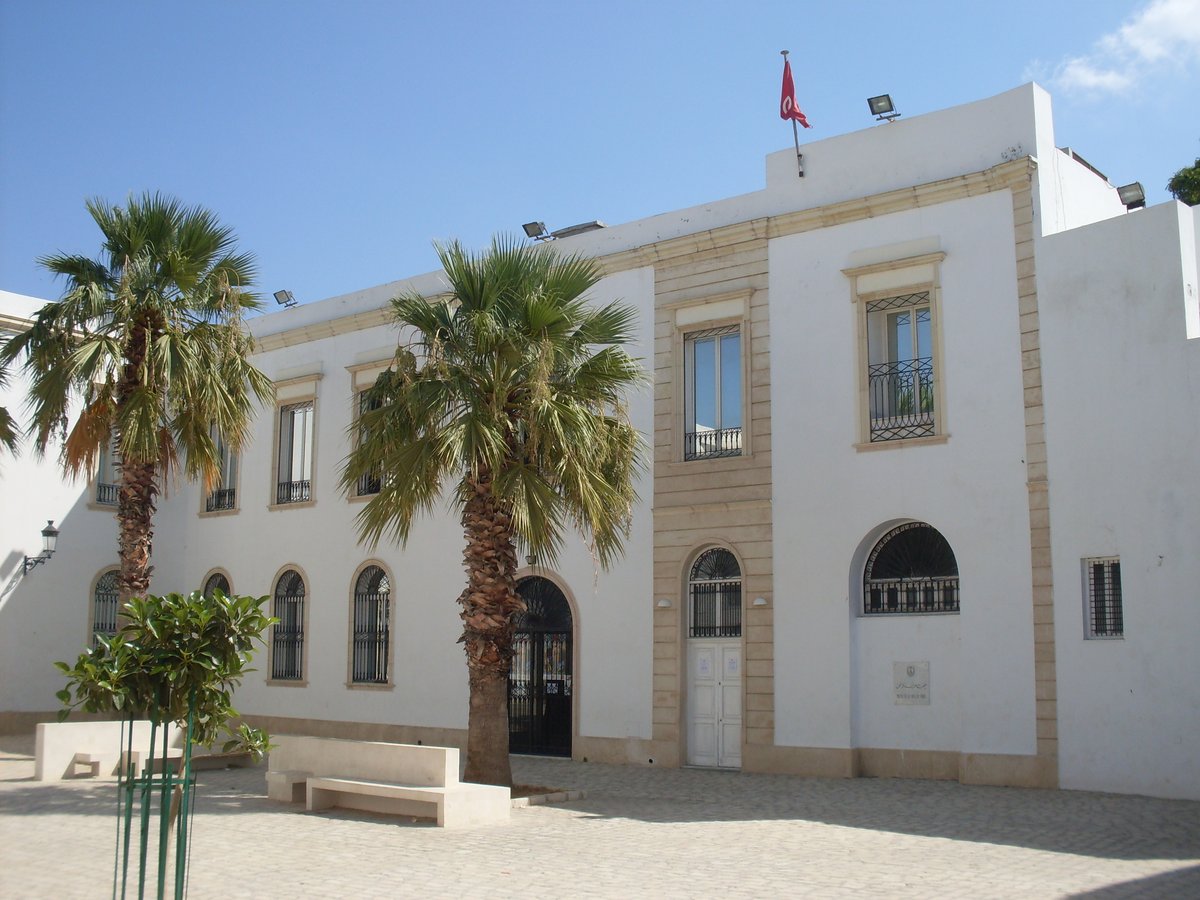
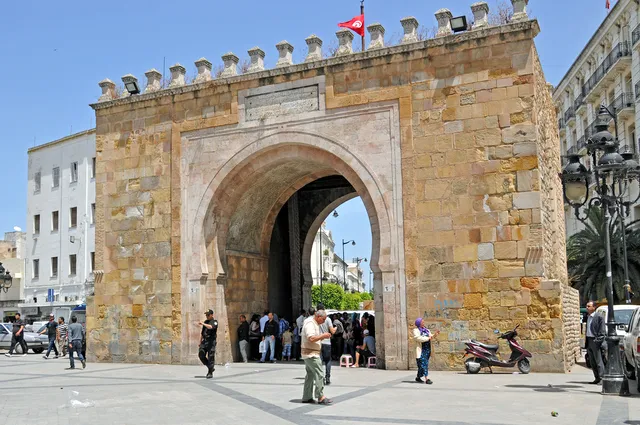
Plan and listen to Madrasa Of Ech Chamaiya with Audiala.
Audio guide in your pocket, itinerary in your browser. Built for the way you actually visit.
Introduction
The Madrasa of Ech Chamaiya, nestled in the coastal suburb of La Marsa near Tunis, is a distinguished monument that embodies the rich Islamic educational heritage and architectural splendor of Tunisia. As the first madrasa constructed in the Maghreb between 1236 and 1249 CE, it marks a turning point in the region’s religious and intellectual development. Commissioned by Abû Zakariyâ Yahyâ, the inaugural sultan of the Hafsid dynasty, the madrasa was created to promote the Almohad rite and reinforce the scholarly prestige of his era. Its architecture—characterized by Maghrebi, Andalusian, and Ottoman influences—displays horseshoe arches, intricate zellige tilework, and a tranquil central courtyard, all crafted by generations of local artisans (Discover Islamic Art; Wildyness).
Beyond its breathtaking aesthetics, the madrasa played a crucial educational and social role, serving as a center for advanced religious studies and nurturing generations of scholars in partnership with institutions like the Ez-Zitouna Mosque. Today, while functioning primarily as a training center for artisans, it remains a compelling destination for visitors interested in history, architecture, and Tunisian culture. This guide offers detailed insights into visiting hours, ticketing, accessibility, nearby attractions, and practical travel tips to help you make the most of your visit (Tourism Tunisia).
Historical Background
The Madrasa of Ech Chamaiya (المدرسة الشماعية) is renowned as the first madrasa built in the Maghreb region (Discover Islamic Art; Carthage Magazine). Constructed between 1236 and 1249 CE under the guidance of architect Ali ibn Mohamed ibn al-Kacem, it was commissioned by Abû Zakariyâ Yahyâ, the first sultan of the Hafsid dynasty, to establish a center for the dissemination of the Almohad rite and strengthen his rule’s intellectual authority.
This madrasa’s creation initiated a tradition of Islamic educational institutions in the Maghreb and set the architectural and educational standard for subsequent centers of learning in the region.
Cultural and Educational Significance
The Madrasa of Ech Chamaiya rapidly became a leading institution for advanced religious and legal studies, especially in the Maliki school of Islamic jurisprudence, closely linked with the influential Ez-Zitouna Mosque. Over time, it evolved from a training ground for civil servants and religious leaders to a center hosting university-level students and, more recently, as a venue for artisan training (Carthage Magazine).
The madrasa was notable for its innovative teaching methods, which included interactive and activity-based learning, group discussions, and collaborative projects. This pedagogical approach enhanced student engagement and intellectual development, setting a precedent for educational reform (The Daras).
Its role as a community hub extended beyond education; the madrasa hosted religious festivals, public lectures, and charitable activities, embodying an inclusive ethos and providing support for disadvantaged students (UNESCO).
Architectural Highlights
Layout and Structure
The madrasa is organized around a central courtyard—a hallmark of Islamic educational design—providing natural light and ventilation to the surrounding rooms. The layout includes:
- Prayer Hall: Oriented toward Mecca, featuring a mihrab and simple interior to facilitate spiritual contemplation.
- Classrooms: Arranged along the courtyard, designed for optimal light and airflow.
- Student Quarters: Modest rooms for resident students, opening onto the courtyard or side corridors.
Decorative Elements and Materials
- Zellige Tilework: Walls and floors are adorned with geometric, multicolored zellige tiles arranged in complex patterns and calligraphic inscriptions (Tunisia.com).
- Stucco Carvings: Ornate stucco, employing muqarnas (stalactite-like features), decorates arches and doorways.
- Woodwork: Doors, lintels, and beams made from cedar or olive wood, often intricately carved and occasionally inlaid with mother-of-pearl.
- Marble Columns: Supporting the arcades, these sometimes include repurposed Roman or Byzantine capitals.
Unique Features of La Marsa
- Whitewashed Facades: Lime-plastered exteriors reflect sunlight and harmonize with the Mediterranean setting.
- Blue Accents: Doors and windows are painted blue, a regional aesthetic linked to the sea and sky (Wildyness).
- Rooftop Terraces: Flat roofs offer panoramic coastal views and communal gathering spaces.
Visiting Information: Hours, Tickets, and Tips
Access and Location
The madrasa is located in the medina of Tunis, near the historic souks and not far from La Marsa. Access is via the city’s winding alleys, best approached on foot or by public transportation. La Marsa is easily reachable by taxi or the TGM light rail from central Tunis (Tourism Tunisia).
Visiting Hours
- Standard Hours: The madrasa is generally open Tuesday to Sunday, 9:00 AM–5:00 PM, and is closed on Mondays and public holidays.
- Note: As the site functions primarily as an artisan training center, public access may be limited or by special arrangement. Always check with local tourism offices or guides for the most current visiting information.
Admission and Tickets
- Fees: Entry is typically free, though guided tours or participation in artisan workshops may require a modest fee.
- Booking: Group tours and workshops often require advance booking.
Guided Tours
Guided tours led by knowledgeable local guides are recommended for a deeper understanding of the madrasa’s history and architecture. These are available in Arabic, French, and English.
Visitor Etiquette
- Dress Modestly: Clothing should cover shoulders and knees.
- Photography: Always ask for permission, especially during artisan training sessions.
- Respect Educational Activities: Avoid interrupting ongoing classes or workshops.
Accessibility
The historic medina’s narrow alleys and uneven surfaces present challenges for visitors with mobility issues. Wheelchair access is limited, and comfortable walking shoes are advised. Contact the site in advance to inquire about possible accommodations.
Nearby Attractions and Suggested Itineraries
- Ez-Zitouna Mosque: An iconic center of Islamic learning, just a short walk from the madrasa.
- Souks of the Medina: Explore the vibrant markets, including souk El Attarine and souk El Blaghgia (Wikipedia).
- La Marsa: After your visit to the medina, head north to La Marsa for seaside views, cafes, and galleries (The New Arab).
- Abdelliya Palace and El Ahmadi Mosque: Historical sites nearby, ideal for a comprehensive cultural itinerary.
Preservation and Restoration
Ongoing restoration efforts by Tunisian heritage authorities, with leadership from experts such as Dr. Mohamed Béji Ben Mami, have maintained the madrasa’s structural and decorative integrity. The site’s inclusion in UNESCO’s Medina of Tunis World Heritage listing underscores its global cultural value (UNESCO; Archnet; Archiqoo).
Visitor Experience and Practical Tips
- Hire a Guide: Local guides provide invaluable historical and architectural insights.
- Attend a Workshop: Engage with Tunisian craftsmanship by observing or participating in artisan workshops.
- Best Seasons: Visit during spring or autumn (March–May, September–October) for mild weather and fewer crowds.
- Photography: Take advantage of the interplay of light and shadow in the courtyard for memorable photos.
- Support Local Businesses: Enjoy the nearby cafes and markets to enrich your cultural experience.
Frequently Asked Questions (FAQ)
Q: What are the visiting hours?
A: Generally open Tuesday–Sunday, 9:00 AM–5:00 PM; closed on Mondays and public holidays. Confirm access before visiting due to its primary use as an artisan center.
Q: Is there an admission fee?
A: Usually free, though guided tours or workshops may charge a small fee.
Q: Are guided tours available?
A: Yes, through local agencies or guides, often in multiple languages.
Q: Is the madrasa wheelchair accessible?
A: Accessibility is limited due to the historic layout; contact ahead for details.
Q: Can visitors take photographs?
A: Yes, but always ask for permission, especially during artisan activities.
Q: What else can I visit nearby?
A: Ez-Zitouna Mosque, souks of the medina, La Marsa, Abdelliya Palace, and El Ahmadi Mosque.
Listen to the full story in the app
The whole Madrasa Of Ech Chamaiya,
told well.
Audio guides for 1,100+ cities across 96 countries. History, stories, and local insight — offline ready.

Verified, and shown.
Researched and written by the Audiala editorial team from historical records, architectural archives, and local expertise.
Madrasa of Ech Chamaiya. Retrieved from https://islamicart.museumwnf.org/database_item.php?id=monument;ISL;tn;Mon01;13;fr
Marsa Guide: Travel Activities. Retrieved from https://wildyness.com/news/marsa-guide-travel-activities
Medina of Tunis. Retrieved from https://whc.unesco.org/en/list/36/
Madrasa Of Ech Chamaiya. Retrieved from https://archnet.org/sites/3776
La Marsa Travel Guide. Retrieved from https://www.tourismtunisia.com/marsa-travel-guide/
Madrasas of Medina of Tunis. Retrieved from https://carthagemagazine.com/madrasas-medina-of-tunis/
Médersa Ech Chamaiya. Retrieved from https://fr.wikipedia.org/wiki/M%C3%A9dersa_Ech_Chamaiya
Medina Tunis Culture. Retrieved from https://www.discovertunisia.com/en/culture/medina-tunis
La Marsa: Tunisia’s Coastal Gem. Retrieved from https://www.newarab.com/features/la-marsa-tunisias-coastal-gem-where-shop-eat-sleep
Researched from Wikidata, Wikipedia & official sources · fact-checked · How we make our guides →