history_edu
Roman Africa, intact
Carthage and El Jem are the obvious names, but the surprise is how close these places still feel to ordinary life. You leave a modern street, climb a few steps, and suddenly Rome is back in the frame.
Tunisia is the rare Mediterranean trip where a UNESCO medina, a Roman amphitheatre, and the Sahara can all belong to the same week without feeling rushed.
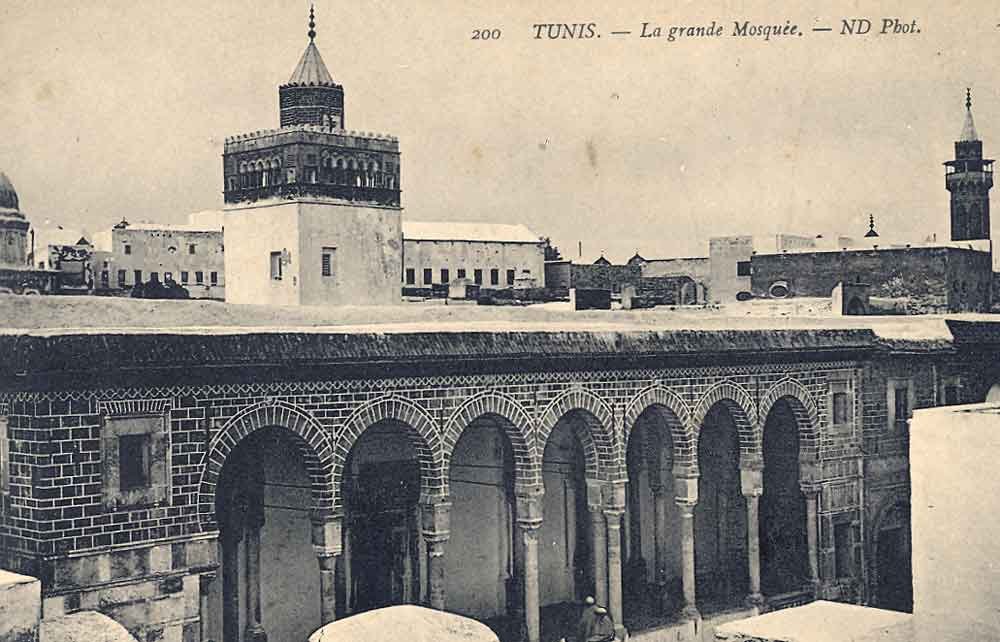 Tunisia
EntryOutside Schengen; many US, UK, EU, Canadian, and Australian travelers can enter visa-free for up to 90 days.
TTunisia travel guide: Roman arenas, mosque cities, and Sahara dunes sit within a day’s drive of the Mediterranean. Few countries pack this much contrast into 163,610 square kilometers.
Tunisia works for travelers who want range without wasting days in transit. You can start in Tunis with espresso, jasmine, and the Medina’s tight alleyways, stand over the ruined harbors of Carthage by lunch, then watch the light turn silver in Sidi Bou Said before dinner. That compression changes the trip. Roman Africa, Ottoman courtyards, French-era boulevards, and a very modern street life all sit on top of each other, and the joins still show.
The country’s real strength is not one headline sight but the way different worlds keep colliding. Kairouan has one of the great sacred landscapes of the Maghreb; Sousse gives you sea walls and a medina that still feels lived in; El Jem drops a 3rd-century amphitheatre with room for 35,000 people into an otherwise ordinary town. Then the ground dries out. In Tozeur and Douz, salt flats, date palms, and desert roads pull the trip south toward the Sahara.
Founding Myths and Punic Ascendancy, c. 1100 BCE-146 BCE
The wind comes first on the hill of Byrsa in Carthage, sharp with salt from the Gulf of Tunis, and then the old story arrives behind it. A Tyrian princess steps ashore with fugitives, a dead husband behind her, a murderous brother somewhere across the sea, and asks only for as much land as an oxhide can cover. Ce que l'on ignore souvent, c'est that the famous trick matters because it tells you how Tunisians and their conquerors imagined the country from the start: not as a quiet colony, but as an act of intelligence under pressure.
Legend calls her Elissa, or Dido if you prefer Virgil's stage lighting, and legend also gives her that splendidly royal refusal to be cornered. She cuts the hide into strips, encloses Byrsa, and founds a city on calculation rather than brute force. It is a queen's beginning, with blood in the family, gold in the holds, and no patience for self-pity.
Then myth gives way to merchants, admirals, and accountants. Carthage rose from this coast into a trading empire that tied North Africa to Sicily, Iberia, and the Levant; purple dye, silver, grain, timber, and slaves moved through its harbors, while inland Tunisia fed the machine. Kerkuane, farther along the Cap Bon coast, preserves something even more intimate: a Punic town the Romans never rebuilt, with streets and houses that still suggest how ordinary people lived behind the grand rhetoric of empire.
By the 3rd century BCE, Rome had become obsessed with Carthage in the way rivals become obsessed when admiration curdles into fear. Hannibal crossed the Alps and made himself a nightmare in Italy, but the emotional center of the struggle stayed here, on the Tunisian shore. In 146 BCE Rome destroyed Carthage with ceremonial thoroughness, and the smoke rising over the gulf closed one age while preparing the next: Tunisia would now feed the empire that had tried so hard to erase it.
Elissa, half queen and half legend, remains the rare founder whose first recorded political act is not conquest but an elegant real-estate fraud.
Archaeologists at Kerkuane found private bathtubs in Punic houses, a reminder that this supposedly severe mercantile world enjoyed comfort behind closed doors.
Roman Africa and the Afterlives of Empire, 146 BCE-670 CE
Stand in the amphitheatre of El Jem in late afternoon and the stone changes color by the minute, from pale honey to something almost pink, as if the building were embarrassed by its own violence. This was Thysdrus, prosperous on olive oil and trade, wealthy enough in the 3rd century to raise an arena that held around 35,000 spectators. The scale still startles. So does the implication: provincial Tunisia was not provincial at all.
Rome destroyed Carthage, then rebuilt it because empires are rarely consistent when profit is involved. Roman Carthage became one of the great cities of Africa Proconsularis, rich from wheat, olives, and tax revenue, with forums, baths, villas, and mosaics underfoot. Ce que l'on ignore souvent, c'est that Tunisia under Rome was not merely occupied territory; it became one of the empire's productive hearts, the place that helped feed Italy while local elites learned to speak Latin ambition fluently.
Yet the human voices survive best where power faltered. In 203 CE, Perpetua of Carthage, a young noblewoman, wrote from prison before her execution, leaving one of the rare female voices from the ancient world speaking without mediation. You can almost hear the gate scraping open, the dust of the arena rising, the appalling intimacy of a woman refusing to save herself by saying words she no longer believed.
Late antiquity gave Tunisia a sequence of masters with none of Rome's confidence. Vandals seized Carthage in 439, Byzantines retook it in 533, and the old imperial order began to look tired, expensive, and thin. That fatigue matters because by the time Arab armies arrived in the 7th century, they were not striking a triumphant Roman Africa, but a land whose great cities were still magnificent and already vulnerable.
Perpetua is remembered as a martyr, but on the page she feels more unsettling than saintly: educated, stubborn, and entirely aware of what her choice would cost.
Later sources say Gelimer, the last Vandal king, asked his conqueror for three things after defeat: a loaf of bread, a sponge for his eye trouble, and a lyre.
Ifriqiya, Kairouan, and the Making of a Medieval Power, 670-1534
The first image is not a palace but a camp. Sand, leather, tethered horses, and a military encampment laid down in 670 far from the vulnerable coast: that is how Kairouan begins. It was founded as a base, yes, but bases have a way of becoming capitals when generals stay, mosques rise, and scribes begin to copy the world onto paper.
Kairouan soon became one of the great cities of the Islamic Maghrib, and the Great Mosque still carries that founding seriousness in its vast courtyard and heavy columns. Under the Aghlabids in the 9th century, Tunisia filled with cisterns, ribats, and fortifications; Sousse keeps some of that martial piety in stone, a city that watched the sea while scholars argued inland. Ce que l'on ignore souvent, c'est that the dynasty which sent armies toward Sicily also invested in waterworks and urban life with almost domestic care. Empire needs tanks and prayer halls. It also needs reservoirs.
Then the center of gravity shifted again. The Fatimids rose from Ifriqiya and, from Mahdia before Cairo, turned this stretch of coast into the cradle of a caliphate. Few countries can say that one of medieval Islam's most formidable dynasties began on their shoreline and then carried its ambition east to found a new world on the Nile.
The story darkens in the 11th century, as it so often does in Tunisia when political quarrels elsewhere arrive on horseback. The Zirids broke with the Fatimids, Hilalian tribes moved westward, and the countryside was battered hard enough to alter the balance between inland and coast. Out of those shocks, Tunis emerged more decisively under the Hafsids from the 13th century, drawing merchants from Sicily, al-Andalus, and the Sahara, while Ibn Khaldun, born there in 1332, learned early how plague, exile, and power strip illusions from history. A kingdom of trade had become a kingdom of memory.
Ibn Khaldun lost both parents to the Black Death in Tunis in 1349, and one feels that wound behind every cold sentence he later wrote about dynasties rising and collapsing.
The Aghlabid Basins in Kairouan were not decorative pools but an engineering system so advanced that medieval rulers turned water storage into a public statement of legitimacy.
Corsairs, Beys, and Ottoman Manners, 1534-1881
A harbor at dawn is the right place to begin this chapter: ropes wet with spray, gulls screaming, customs men already suspicious, and somewhere in the crowd a captive, a broker, a renegade, and a man who claims to be all three. When Tunis entered the Ottoman orbit for good in 1574, it did not become a simple provincial outpost. It became a negotiating table with cannons.
The regency of Tunis lived on ambiguity. Janissaries, deys, and then the Husainid beys ruled in the sultan's shadow but guarded local habits jealously, while corsair warfare tied Tunis to a Mediterranean economy of ransom, diplomacy, and calculated terror. Ce que l'on ignore souvent, c'est that piracy here was not a romantic sideshow with striped sashes and theatrical daggers; it was bureaucracy, ledgers, diplomatic letters, and human misery turned into revenue.
The population changed too. After the expulsions from Spain, Muslims and Jews from al-Andalus brought skills, recipes, crafts, and urban polish that still echo in Tunisian houses and kitchens. One can trace that inheritance in courtyards, in tilework, in music, and in the stubborn elegance of cities that learned to survive by absorbing the shipwrecked.
By the 18th and 19th centuries, the Husainid dynasty gave Tunisia a courtly face of receptions, uniforms, debts, reforms, and family rivalries. Ahmad Bey tried to modernize army and state; ministers borrowed, improvised, and postponed disaster in the usual manner of governments that know the creditors are already at the door. The French protectorate of 1881 did not fall from a clear sky. It arrived after decades in which sovereignty had been nibbled at, negotiated away, and mortgaged piece by piece.
Khayr al-Din Pasha, born far from Tunisia and sold into slavery as a child, became one of the regency's sharpest reformers, which tells you all you need to know about how strange Ottoman politics could be.
European consuls in Tunis sometimes spent as much time bargaining over redeemed captives as over trade, because in this Mediterranean world a human body could be both tragedy and diplomatic currency.
Protectorate, Republic, and the Unfinished Present, 1881-present
Picture a desk in the Bardo in the late 19th century: French papers stacked beside Arabic petitions, ink drying on decrees that insist the bey still reigns while everyone in the room knows where power has gone. The protectorate imposed itself in 1881 with the usual colonial talent for legal fictions. Tunisia kept a throne, a court, and ceremonial fabric, but sovereignty had slipped into another language.
And yet Tunisians answered in many registers at once. Trade unionists, Destour and Neo Destour militants, lawyers, teachers, women in reformist circles, and workers in the streets built a national movement that was never as tidy as schoolbooks pretend. Habib Bourguiba, brilliant, vain, modernizing, relentless, led the country to independence in 1956 and abolished the monarchy the next year, replacing dynastic ceremony with republican theater of his own.
Ce que l'on ignore souvent, c'est how much of modern Tunisia was fought over in the domestic sphere: family law, education, dress, the status of women, the shape of public piety. Bourguiba liked dramatic gestures, including drinking orange juice on television during Ramadan to argue for economic productivity, a stunt equal parts audacity and paternalism. Then came Zine El Abidine Ben Ali, whose long rule perfected the sour blend of police control, polished surfaces, and quiet fear.
The hinge turned on 17 December 2010 in Sidi Bouzid, when Mohamed Bouazizi set himself on fire after humiliation by local officials. His act was not staged for history, yet history rushed in; by January 2011 Ben Ali had fled, and Tunisia gave the Arab world its first successful uprising of that season. The years since have been full of argument, grief, elections, reversals, and constitutional rewrites. That is precisely why they matter. Tunisia's story does not end with a statue or a flag; it remains what it has long been, a country arguing in public about how power should behave.
Bourguiba cultivated the pose of the stern father of the nation, but his politics were inseparable from ego, theatrical instinct, and an almost royal taste for staging his own destiny.
When Bourguiba visited Monastir or Tunis, crowds were often arranged with a precision that would have pleased a court chamberlain, proof that republics can inherit monarchical habits without admitting it.
In Tunisia, speech does not move in one line. It braids. A greeting in derja opens the door, French slips in for the invoice or the diagnosis, Qur'anic formulas settle over the exchange like a hand on the shoulder, and nobody treats this as performance. It is respiration.
You hear it most clearly in Tunis, where a sentence can begin with "aslema," borrow a French noun halfway through, and finish with "hamdullah" as if grammar were a set of adjoining rooms. The effect is not confusion. It is precision. Each language knows what work it has come to do.
A few words carry more weight than whole polite speeches elsewhere. "Labes" asks after your state with almost indecent efficiency. "Aaychek" thanks, asks, pleads, softens. "Sa77a" blesses a meal, a haircut, a purchase, a shower, as if ordinary life deserved liturgy.
An English speaker may expect speed and receive ceremony instead. Better. The Tunisian greeting insists that health, family, and weather of the soul deserve at least half a minute. A country is sometimes defined by what it refuses to abbreviate.
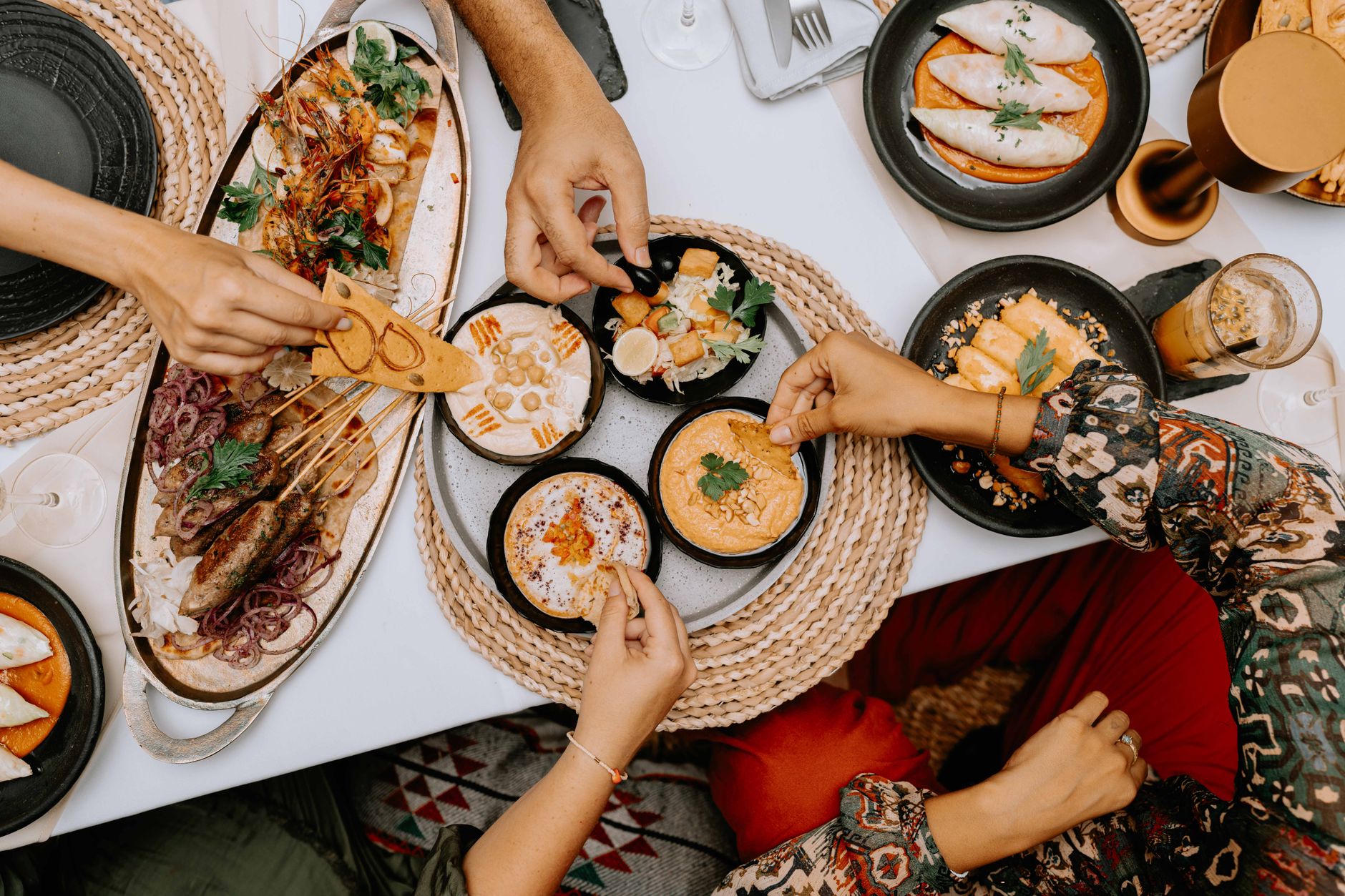
Tunisian cuisine distrusts blandness the way a cat distrusts water. Heat arrives first, then acid, then olive oil, then the grain that steadies the whole affair; harissa is the emblem foreigners remember, but the deeper principle is balance, a stern domestic peace negotiated between chile, tomato, capers, bread, and appetite.
At breakfast, someone is already eating lablabi with the seriousness other nations reserve for law. In the medina of Tunis, or after a cold morning in Kairouan, chickpeas, broth, torn bread, cumin, lemon, olive oil, tuna, and a soft egg become a bowl that asks for no elegance. You do not sip it. You excavate it.
Brik is Tunisia's small act of cruelty and tenderness. The pastry shatters, the egg threatens your sleeve, the hand learns humility. Couscous, here redder than in Morocco and less interested in sweetness, arrives as family architecture: mound, broth, vegetables, meat, spoons orbiting the same center.
Then come the sweets, which behave like traps laid by benevolent conspirators. Makroud in Kairouan leaves honey on your fingers and dignity on the table. Bambalouni in Sidi Bou Said tastes best while still indecently hot, sugar falling on your shirt like evidence.
Tunisian politeness is warm without being casual. It asks for form. You greet properly, you ask after health, you do not rush the first exchange as if efficiency were a moral virtue, and if tea or coffee appears you accept at least a little, because refusal can sound less like modesty than mistrust.
The right hand matters at the table and in small acts of offering. Older people receive deference without discussion. A woman may offer her hand first to a man, or not; the intelligent traveler waits half a second and learns more from that pause than from any etiquette manual.
In homes, hospitality has the force of weather. Plates multiply. Bread reappears. A second serving advances toward you with the calm inevitability of taxation. To protest too much is useless, and slightly rude.
This is not lavishness for display. It is a code. Feed the guest, lengthen the greeting, insist once more, and the world becomes less exposed. Tunisia understands that manners are not decoration. They are shelter.
Religion in Tunisia rarely performs itself for outsiders. It inhabits the day instead. The call to prayer threads over traffic, shop shutters, frying oil, and sea wind, and the result is neither solemn nor casual. It is woven in.
Kairouan makes this visible with unusual force. The Great Mosque carries the weight of 670 and everything that followed, yet the city's sacredness lives as much in habits as in stone: the cadence of Friday, the gravity around Ramadan, the way food, visiting, charity, and patience acquire sharper outlines during fasting. Piety here is often practical. It organizes hours, thresholds, and obligations.
Tunisia also has the intelligence of old coexistence. On Djerba, the Ghriba synagogue keeps alive a Jewish presence older than many states, and nobody who pays attention can mistake the island for a simple story. Arab, Jewish, Berber, Muslim, French-marked, Mediterranean: these are not boxes. They are sediments.
What strikes the outsider is not rigidity but texture. A blessing after a meal. A formula before a drive. A lowered voice near a shrine. Faith appears less as abstraction than as choreography, and choreography is always easier to believe than doctrine.
Tunisia builds in layers and leaves the seams visible. Roman columns rest inside later walls, Ottoman proportions lean into Arab courtyards, French boulevards open beside alleys designed for shade and privacy, and the country shows no anxiety about this. Purity is for bad ideologues. Cities prefer memory.
In Carthage, antiquity behaves like a difficult ancestor: grand, broken, impossible to ignore. In Tunis, the medina folds inward with stucco, carved doors, and houses that keep their splendor behind plain walls, as if modesty were the final luxury. Then the Ville Nouvelle appears with its French facades and straight lines, and the shock is not contradiction but succession.
Kairouan gives you the stern geometry of early Islamic power. Sidi Bou Said, by contrast, offers white walls and blue joinery so exact that the place can seem invented by a calligrapher with a marine obsession, until a cat slips through a gate and restores proportion. Even beauty needs interruption.
Farther south, in Tozeur, brickwork turns into ornament by patience alone. Repeated patterns catch the light, release it, catch it again. Architecture here is not just shelter. It is grammar written in lime, stone, and shade.
Tunisian music does not ask to be separated neatly into sacred, urban, rural, refined, popular. It passes between them with the same ease as the language. Malouf, inherited from al-Andalus and disciplined by memory, gives the country one of its noble registers: violin, oud, qanun, measured voice, the sense that elegance can survive exile if rhythm keeps the ledger.
But Tunisia also loves percussion with less restraint. In weddings and local festivals, the body understands before the mind does. Bendir, tabla, clapping, ululation, the sudden tightening of a circle: music becomes instruction in how a group turns into a temporary organism.
On Djerba and in the south, Berber and sub-Saharan currents alter the pulse. In Sousse or Tunis, a cafe may drift from Fairouz to rap to old classics without anyone announcing a cultural thesis. They are simply listening to their century.
What remains constant is the social function. Music accompanies reunion, fasting's end, marriage, mourning, and the slow prestige of evening. A melody in Tunisia is rarely alone. It arrives carrying chairs, cousins, and sugar.
Carthage and El Jem are the obvious names, but the surprise is how close these places still feel to ordinary life. You leave a modern street, climb a few steps, and suddenly Rome is back in the frame.
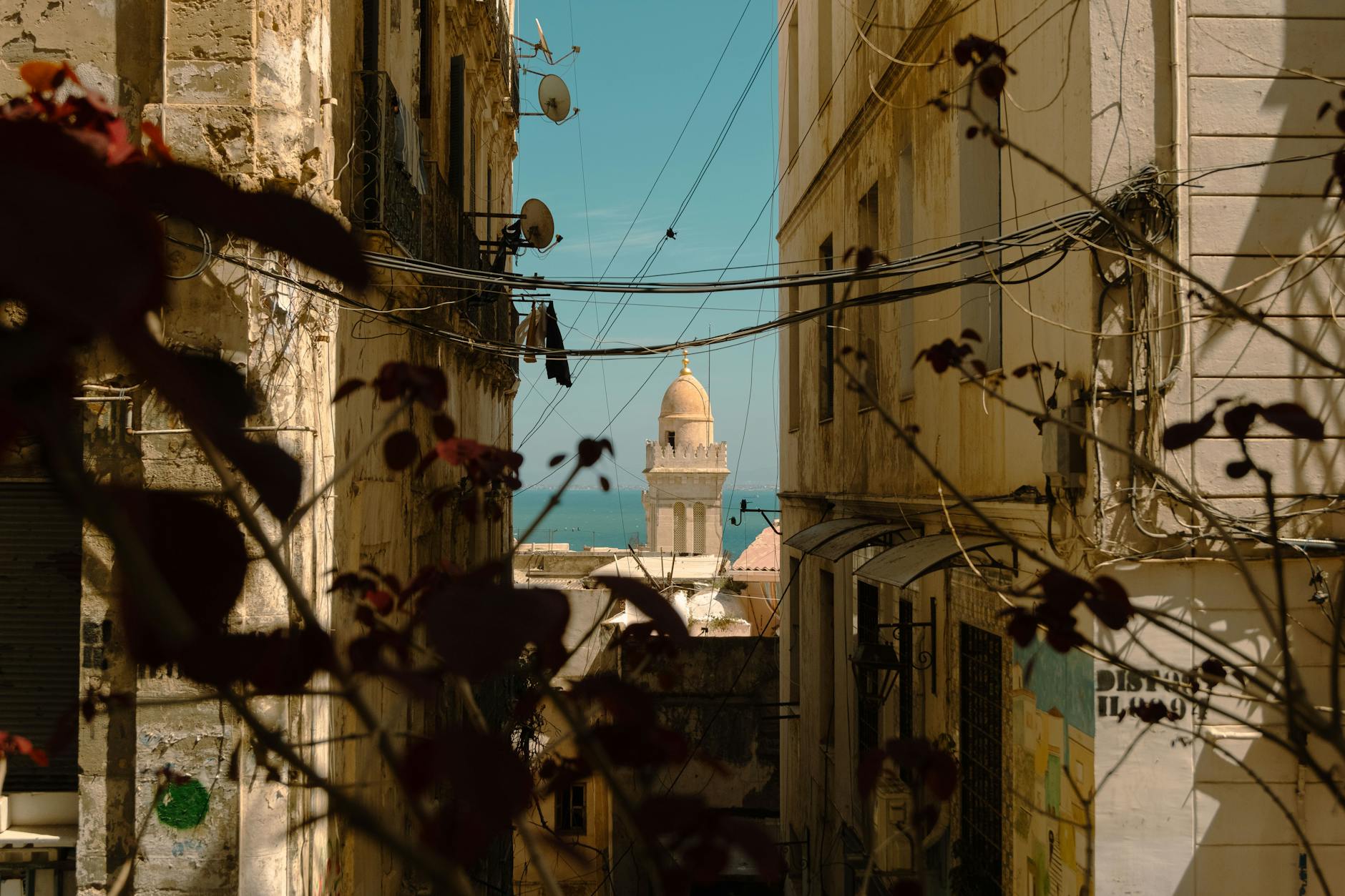
The old quarters of Tunis, Kairouan, and Sousse were built for trade, prayer, argument, and daily routine, not stage scenery. They still smell of soap, leather, frying oil, and old stone warming in the sun.
Few countries shift this fast. North-coast light, olive country, salt flats, and the first real dunes around Douz fit into one route without turning the holiday into a logistics exercise.
Tunisian food has more edge than many first-time visitors expect. Harissa, capers, preserved lemon, grilled fish, and a just-fried brik give the cooking its own grammar, separate from Morocco or Algeria.
Djerba is not just a beach stop. Its settlement pattern, old mosques, Jewish heritage, and village-scale rhythm show how Arab, Berber, Jewish, and Mediterranean histories can coexist without being flattened into a slogan.
13 cities — start with the ones we'd send you to first.
In Tunis Governorate, Roman baths face the sea, a 9th-century mosque anchors the medina, and the evening call to prayer drifts over Art-Déco theatres—three millennia compressed into one horizon.
The medina's ninth-century grid of souks — perfumers, chechia-makers, Quranic bookshops — runs directly beneath the French colonial boulevards laid on top of it, and neither layer apologizes to the other.
What Rome destroyed in 146 BCE and then rebuilt grander, you walk across today as a suburb of Tunis: Punic tophet, Roman baths, and a view over the Gulf of Tunis that explains why every empire wanted this hill.
Founded in 670 CE as a military camp and still one of Islam's holiest cities, it holds the Great Mosque's original ninth-century columns — each one a Roman or Byzantine spoil, recycled without ceremony into something ent
The ribat watchtower here is not a ruin to admire from a distance but a climbable ninth-century fortress from whose roof the medina, the sea, and the modern city arrange themselves into a single argument about continuity
The amphitheatre rises out of the flat Sahel plain with no warning — 35,000-capacity, third-century Roman, better preserved than the Colosseum, and surrounded by a small town that has simply grown up around it like a fra
The island's hara, one of the oldest continuously inhabited Jewish quarters in Africa, sits a short walk from a mosque and a whitewashed church, which is less a tourism talking point than a description of an ordinary Tue
The old town, Ouled el Hadef, is built entirely from a distinctive herringbone-patterned brick that turns amber at dusk, and just beyond it the Chott el Djerid salt flat begins its 5,000-square-kilometre argument that th
The blue-and-white clifftop village above Tunis was a working fishing settlement long before Paul Klee and August Macke painted it in 1914 and inadvertently turned it into a pilgrimage site for people who like the idea o
This is where Tunisia introduces itself in layers rather than slogans: Hafsid lanes in the Medina of Tunis, French-era boulevards, Punic and Roman ground at Carthage, and café terraces looking over the bay in Sidi Bou Said. Distances are short, traffic is not, and that contrast matters; one day can move from 9th-century mosque courtyards to suburban train platforms and a plate of grilled fish in La Goulette.
Tunisia's east coast is not one thing. Sousse carries a walled medina and port-city energy, while the beaches and resort belts nearby explain why so many package flights land here first. Go beyond the hotel strip and the region starts making more sense: olive country inland, working towns on the coast, and easy links south toward El Jem.
Kairouan changes the tone of a Tunisia trip. The streets feel more inward, the history is argued through mosques, cisterns, carpets, and pastry shops, and the country's Islamic story stops being background material and becomes the main event. This is also where practical travel pays off: mornings are cooler, medina lanes are easier before noon, and Makroud tastes better when you have actually earned it.
South of the central plains, Tunisia opens out into date-palm oases, salt flats, and long horizons that make time feel slower than the map suggests. Tozeur is the most useful base, Douz is the threshold to the dunes, and the road itself matters here, especially across Chott el Djerid where light and distance play tricks all afternoon.
Djerba has beaches, yes, but that is the least interesting way to describe it. The island's settlement pattern, Jewish heritage, Berber traces, and low white architecture give it a rhythm unlike mainland resort towns, and it works best if you leave room for villages, roadside grills, and detours rather than treating it as a sealed hotel compound.
Northern Tunisia catches many travelers off guard because the country they imagined was drier, flatter, and more uniformly Arab-Mediterranean than this. Tabarka sits near forested hills and coral coasts, while Kerkuane on Cap Bon gives you a Punic city preserved by abandonment rather than glory, a useful reminder that Tunisia's oldest stories are not all Roman.
Bab El Bhar means Gate of the Sea, though it faced Tunis's lake and maritime side, not open water; today it marks the seam between medina and ville nouvelle.
From Punic queens to the revolution of dignity
Tradition says Elissa, fleeing Tyre after a palace murder, founded Carthage on the Byrsa hill. The oxhide story is more than folklore; it frames Tunisia's first famous city as a triumph of wit under pressure.
By this period Carthage had moved far beyond a trading station, commanding routes, tribute, and colonies across the sea. Tunisia's coast became the center of a maritime empire rich enough to alarm every rival.
Hannibal's life would bind Carthage to one of history's most ferocious rivalries. His later campaigns were fought far from Tunisia, but his imagination was formed by a city raised to hate Rome's ambitions.
When Hannibal crossed into Italy, the fear he generated made Carthage feel present in Roman nightmares for years. Tunisia was no longer a distant shore; it had become the name behind Rome's panic.
After the Third Punic War, Rome razed Carthage with exemplary severity. The act was meant as an ending, yet it prepared the rebirth of the region as one of Rome's richest African provinces.
Rome rebuilt what it had annihilated, because fertile land and a good harbor make moral consistency difficult. Carthage returned as a Roman city of forums, villas, baths, and imperial administration.
Perpetua's prison diary gives Roman Africa one of its most intimate surviving voices. Her execution in Carthage joined the city's public spectacle to a private text of belief and defiance.
In the prosperous olive-growing interior, Thysdrus built one of the largest amphitheatres in the Roman world. El Jem still proves how wealthy Roman Tunisia had become.
Genseric's forces took Carthage and made it the capital of a Vandal kingdom. Imperial Africa did not vanish overnight, but its old Roman confidence was broken.
Belisarius restored the city to imperial rule, though not to old stability. Tunisia entered a final late antique phase, still urban and wealthy, but politically worn thin.
Uqba ibn Nafi established Kairouan as a military base in the interior, away from vulnerable coasts. It soon became a religious and intellectual capital for the Islamic Maghrib.
Under the Aghlabids, Ifriqiya gained architectural confidence and administrative muscle. Kairouan flourished, while ribats, cisterns, and mosques reshaped the country.
A revolutionary Shi'i dynasty rose in Tunisia and turned the region into the springboard of a caliphate. Medieval Tunisia became, briefly, the center of a world project.
When the Fatimid center moved east, Tunisia did not lose importance so much as lose its role as imperial capital. The transfer linked Ifriqiya permanently to the history of Egypt and the wider Mediterranean.
Tribal migrations backed by Fatimid politics destabilized much of inland Ifriqiya. The balance between city and steppe, coast and interior, changed for generations.
With the Hafsids, Tunis emerged as the political and commercial center of the kingdom. The city tied Sicily, al-Andalus, Italy, and the Sahara into a dense trading world.
One of history's keenest analysts of power began life in a city marked by plague, court politics, and scholarship. Tunisia still claims him with good reason.
After years of contest with Spain, Tunis entered the Ottoman world for good. The result was not simple submission but a regency balancing imperial ties with local ambition.
Husayn ibn Ali founded the beylik dynasty that would rule Tunisia into the modern era. Court culture, reform, debt, and family politics would all pass through this house.
The Treaty of Bardo turned Tunisia into a French protectorate while preserving the fiction of beylical sovereignty. It was colonial rule dressed in local ceremony.
After decades of agitation, negotiation, prison, and political organization, Tunisia regained independence. Habib Bourguiba soon dominated the new state with reformist zeal and monumental self-confidence.
The Husainid dynasty ended and Tunisia became a republic. A country that had lived for centuries with courts and beys now entered a new age of presidential theater.
Zine El Abidine Ben Ali removed the aging Bourguiba in a bloodless palace move framed as medical necessity. The regime that followed promised order and delivered surveillance.
After repeated harassment by local officials in Sidi Bouzid, Bouazizi set himself on fire on 17 December 2010. His act turned private humiliation into a national revolt against corruption and contempt.
On 14 January 2011, the president left the country as protests overwhelmed the regime. Tunisia became the first state of the Arab uprisings to force out its ruler.
After years of argument, compromise, and grief, Tunisia adopted a constitution widely praised for its balance of rights and institutions. It was an ambitious attempt to turn revolt into law.
Following the political crisis that began in 2021, Tunisia approved a new constitution strengthening the presidency. The old question returned in modern dress: how much power can one office hold before the republic forgets itself?
Founding Myths and Punic Ascendancy
Elissa, half queen and half legend, remains the rare founder whose first recorded political act is not conquest but an elegant real-estate fraud.
The wind comes first on the hill of Byrsa in Carthage, sharp with salt from the Gulf of Tunis, and then the old story arrives behind it. A Tyrian princess steps ashore with fugitives, a dead husband behind her, a murderous brother somewhere across the sea, and asks only for as much land as an oxhide can cover. Ce que l'on ignore souvent, c'est that the famous trick matters because it tells you how Tunisians and their conquerors imagined the country from the start: not as a quiet colony, but as an act of intelligence under pressure.
Legend calls her Elissa, or Dido if you prefer Virgil's stage lighting, and legend also gives her that splendidly royal refusal to be cornered. She cuts the hide into strips, encloses Byrsa, and founds a city on calculation rather than brute force. It is a queen's beginning, with blood in the family, gold in the holds, and no patience for self-pity.
Then myth gives way to merchants, admirals, and accountants. Carthage rose from this coast into a trading empire that tied North Africa to Sicily, Iberia, and the Levant; purple dye, silver, grain, timber, and slaves moved through its harbors, while inland Tunisia fed the machine. Kerkuane, farther along the Cap Bon coast, preserves something even more intimate: a Punic town the Romans never rebuilt, with streets and houses that still suggest how ordinary people lived behind the grand rhetoric of empire.
By the 3rd century BCE, Rome had become obsessed with Carthage in the way rivals become obsessed when admiration curdles into fear. Hannibal crossed the Alps and made himself a nightmare in Italy, but the emotional center of the struggle stayed here, on the Tunisian shore. In 146 BCE Rome destroyed Carthage with ceremonial thoroughness, and the smoke rising over the gulf closed one age while preparing the next: Tunisia would now feed the empire that had tried so hard to erase it.
Archaeologists at Kerkuane found private bathtubs in Punic houses, a reminder that this supposedly severe mercantile world enjoyed comfort behind closed doors.
Roman Africa and the Afterlives of Empire
Perpetua is remembered as a martyr, but on the page she feels more unsettling than saintly: educated, stubborn, and entirely aware of what her choice would cost.
Stand in the amphitheatre of El Jem in late afternoon and the stone changes color by the minute, from pale honey to something almost pink, as if the building were embarrassed by its own violence. This was Thysdrus, prosperous on olive oil and trade, wealthy enough in the 3rd century to raise an arena that held around 35,000 spectators. The scale still startles. So does the implication: provincial Tunisia was not provincial at all.
Rome destroyed Carthage, then rebuilt it because empires are rarely consistent when profit is involved. Roman Carthage became one of the great cities of Africa Proconsularis, rich from wheat, olives, and tax revenue, with forums, baths, villas, and mosaics underfoot. Ce que l'on ignore souvent, c'est that Tunisia under Rome was not merely occupied territory; it became one of the empire's productive hearts, the place that helped feed Italy while local elites learned to speak Latin ambition fluently.
Yet the human voices survive best where power faltered. In 203 CE, Perpetua of Carthage, a young noblewoman, wrote from prison before her execution, leaving one of the rare female voices from the ancient world speaking without mediation. You can almost hear the gate scraping open, the dust of the arena rising, the appalling intimacy of a woman refusing to save herself by saying words she no longer believed.
Late antiquity gave Tunisia a sequence of masters with none of Rome's confidence. Vandals seized Carthage in 439, Byzantines retook it in 533, and the old imperial order began to look tired, expensive, and thin. That fatigue matters because by the time Arab armies arrived in the 7th century, they were not striking a triumphant Roman Africa, but a land whose great cities were still magnificent and already vulnerable.
Later sources say Gelimer, the last Vandal king, asked his conqueror for three things after defeat: a loaf of bread, a sponge for his eye trouble, and a lyre.
Ifriqiya, Kairouan, and the Making of a Medieval Power
Ibn Khaldun lost both parents to the Black Death in Tunis in 1349, and one feels that wound behind every cold sentence he later wrote about dynasties rising and collapsing.
The first image is not a palace but a camp. Sand, leather, tethered horses, and a military encampment laid down in 670 far from the vulnerable coast: that is how Kairouan begins. It was founded as a base, yes, but bases have a way of becoming capitals when generals stay, mosques rise, and scribes begin to copy the world onto paper.
Kairouan soon became one of the great cities of the Islamic Maghrib, and the Great Mosque still carries that founding seriousness in its vast courtyard and heavy columns. Under the Aghlabids in the 9th century, Tunisia filled with cisterns, ribats, and fortifications; Sousse keeps some of that martial piety in stone, a city that watched the sea while scholars argued inland. Ce que l'on ignore souvent, c'est that the dynasty which sent armies toward Sicily also invested in waterworks and urban life with almost domestic care. Empire needs tanks and prayer halls. It also needs reservoirs.
Then the center of gravity shifted again. The Fatimids rose from Ifriqiya and, from Mahdia before Cairo, turned this stretch of coast into the cradle of a caliphate. Few countries can say that one of medieval Islam's most formidable dynasties began on their shoreline and then carried its ambition east to found a new world on the Nile.
The story darkens in the 11th century, as it so often does in Tunisia when political quarrels elsewhere arrive on horseback. The Zirids broke with the Fatimids, Hilalian tribes moved westward, and the countryside was battered hard enough to alter the balance between inland and coast. Out of those shocks, Tunis emerged more decisively under the Hafsids from the 13th century, drawing merchants from Sicily, al-Andalus, and the Sahara, while Ibn Khaldun, born there in 1332, learned early how plague, exile, and power strip illusions from history. A kingdom of trade had become a kingdom of memory.
The Aghlabid Basins in Kairouan were not decorative pools but an engineering system so advanced that medieval rulers turned water storage into a public statement of legitimacy.
Corsairs, Beys, and Ottoman Manners
Khayr al-Din Pasha, born far from Tunisia and sold into slavery as a child, became one of the regency's sharpest reformers, which tells you all you need to know about how strange Ottoman politics could be.
A harbor at dawn is the right place to begin this chapter: ropes wet with spray, gulls screaming, customs men already suspicious, and somewhere in the crowd a captive, a broker, a renegade, and a man who claims to be all three. When Tunis entered the Ottoman orbit for good in 1574, it did not become a simple provincial outpost. It became a negotiating table with cannons.
The regency of Tunis lived on ambiguity. Janissaries, deys, and then the Husainid beys ruled in the sultan's shadow but guarded local habits jealously, while corsair warfare tied Tunis to a Mediterranean economy of ransom, diplomacy, and calculated terror. Ce que l'on ignore souvent, c'est that piracy here was not a romantic sideshow with striped sashes and theatrical daggers; it was bureaucracy, ledgers, diplomatic letters, and human misery turned into revenue.
The population changed too. After the expulsions from Spain, Muslims and Jews from al-Andalus brought skills, recipes, crafts, and urban polish that still echo in Tunisian houses and kitchens. One can trace that inheritance in courtyards, in tilework, in music, and in the stubborn elegance of cities that learned to survive by absorbing the shipwrecked.
By the 18th and 19th centuries, the Husainid dynasty gave Tunisia a courtly face of receptions, uniforms, debts, reforms, and family rivalries. Ahmad Bey tried to modernize army and state; ministers borrowed, improvised, and postponed disaster in the usual manner of governments that know the creditors are already at the door. The French protectorate of 1881 did not fall from a clear sky. It arrived after decades in which sovereignty had been nibbled at, negotiated away, and mortgaged piece by piece.
European consuls in Tunis sometimes spent as much time bargaining over redeemed captives as over trade, because in this Mediterranean world a human body could be both tragedy and diplomatic currency.
Protectorate, Republic, and the Unfinished Present
Bourguiba cultivated the pose of the stern father of the nation, but his politics were inseparable from ego, theatrical instinct, and an almost royal taste for staging his own destiny.
Picture a desk in the Bardo in the late 19th century: French papers stacked beside Arabic petitions, ink drying on decrees that insist the bey still reigns while everyone in the room knows where power has gone. The protectorate imposed itself in 1881 with the usual colonial talent for legal fictions. Tunisia kept a throne, a court, and ceremonial fabric, but sovereignty had slipped into another language.
And yet Tunisians answered in many registers at once. Trade unionists, Destour and Neo Destour militants, lawyers, teachers, women in reformist circles, and workers in the streets built a national movement that was never as tidy as schoolbooks pretend. Habib Bourguiba, brilliant, vain, modernizing, relentless, led the country to independence in 1956 and abolished the monarchy the next year, replacing dynastic ceremony with republican theater of his own.
Ce que l'on ignore souvent, c'est how much of modern Tunisia was fought over in the domestic sphere: family law, education, dress, the status of women, the shape of public piety. Bourguiba liked dramatic gestures, including drinking orange juice on television during Ramadan to argue for economic productivity, a stunt equal parts audacity and paternalism. Then came Zine El Abidine Ben Ali, whose long rule perfected the sour blend of police control, polished surfaces, and quiet fear.
The hinge turned on 17 December 2010 in Sidi Bouzid, when Mohamed Bouazizi set himself on fire after humiliation by local officials. His act was not staged for history, yet history rushed in; by January 2011 Ben Ali had fled, and Tunisia gave the Arab world its first successful uprising of that season. The years since have been full of argument, grief, elections, reversals, and constitutional rewrites. That is precisely why they matter. Tunisia's story does not end with a statue or a flag; it remains what it has long been, a country arguing in public about how power should behave.
When Bourguiba visited Monastir or Tunis, crowds were often arranged with a precision that would have pleased a court chamberlain, proof that republics can inherit monarchical habits without admitting it.
In Tunisia, speech does not move in one line. It braids. A greeting in derja opens the door, French slips in for the invoice or the diagnosis, Qur'anic formulas settle over the exchange like a hand on the shoulder, and nobody treats this as performance. It is respiration.
You hear it most clearly in Tunis, where a sentence can begin with "aslema," borrow a French noun halfway through, and finish with "hamdullah" as if grammar were a set of adjoining rooms. The effect is not confusion. It is precision. Each language knows what work it has come to do.
A few words carry more weight than whole polite speeches elsewhere. "Labes" asks after your state with almost indecent efficiency. "Aaychek" thanks, asks, pleads, softens. "Sa77a" blesses a meal, a haircut, a purchase, a shower, as if ordinary life deserved liturgy.
An English speaker may expect speed and receive ceremony instead. Better. The Tunisian greeting insists that health, family, and weather of the soul deserve at least half a minute. A country is sometimes defined by what it refuses to abbreviate.
Tunisian cuisine distrusts blandness the way a cat distrusts water. Heat arrives first, then acid, then olive oil, then the grain that steadies the whole affair; harissa is the emblem foreigners remember, but the deeper principle is balance, a stern domestic peace negotiated between chile, tomato, capers, bread, and appetite.
At breakfast, someone is already eating lablabi with the seriousness other nations reserve for law. In the medina of Tunis, or after a cold morning in Kairouan, chickpeas, broth, torn bread, cumin, lemon, olive oil, tuna, and a soft egg become a bowl that asks for no elegance. You do not sip it. You excavate it.
Brik is Tunisia's small act of cruelty and tenderness. The pastry shatters, the egg threatens your sleeve, the hand learns humility. Couscous, here redder than in Morocco and less interested in sweetness, arrives as family architecture: mound, broth, vegetables, meat, spoons orbiting the same center.
Then come the sweets, which behave like traps laid by benevolent conspirators. Makroud in Kairouan leaves honey on your fingers and dignity on the table. Bambalouni in Sidi Bou Said tastes best while still indecently hot, sugar falling on your shirt like evidence.
Tunisian politeness is warm without being casual. It asks for form. You greet properly, you ask after health, you do not rush the first exchange as if efficiency were a moral virtue, and if tea or coffee appears you accept at least a little, because refusal can sound less like modesty than mistrust.
The right hand matters at the table and in small acts of offering. Older people receive deference without discussion. A woman may offer her hand first to a man, or not; the intelligent traveler waits half a second and learns more from that pause than from any etiquette manual.
In homes, hospitality has the force of weather. Plates multiply. Bread reappears. A second serving advances toward you with the calm inevitability of taxation. To protest too much is useless, and slightly rude.
This is not lavishness for display. It is a code. Feed the guest, lengthen the greeting, insist once more, and the world becomes less exposed. Tunisia understands that manners are not decoration. They are shelter.
Religion in Tunisia rarely performs itself for outsiders. It inhabits the day instead. The call to prayer threads over traffic, shop shutters, frying oil, and sea wind, and the result is neither solemn nor casual. It is woven in.
Kairouan makes this visible with unusual force. The Great Mosque carries the weight of 670 and everything that followed, yet the city's sacredness lives as much in habits as in stone: the cadence of Friday, the gravity around Ramadan, the way food, visiting, charity, and patience acquire sharper outlines during fasting. Piety here is often practical. It organizes hours, thresholds, and obligations.
Tunisia also has the intelligence of old coexistence. On Djerba, the Ghriba synagogue keeps alive a Jewish presence older than many states, and nobody who pays attention can mistake the island for a simple story. Arab, Jewish, Berber, Muslim, French-marked, Mediterranean: these are not boxes. They are sediments.
What strikes the outsider is not rigidity but texture. A blessing after a meal. A formula before a drive. A lowered voice near a shrine. Faith appears less as abstraction than as choreography, and choreography is always easier to believe than doctrine.
Tunisia builds in layers and leaves the seams visible. Roman columns rest inside later walls, Ottoman proportions lean into Arab courtyards, French boulevards open beside alleys designed for shade and privacy, and the country shows no anxiety about this. Purity is for bad ideologues. Cities prefer memory.
In Carthage, antiquity behaves like a difficult ancestor: grand, broken, impossible to ignore. In Tunis, the medina folds inward with stucco, carved doors, and houses that keep their splendor behind plain walls, as if modesty were the final luxury. Then the Ville Nouvelle appears with its French facades and straight lines, and the shock is not contradiction but succession.
Kairouan gives you the stern geometry of early Islamic power. Sidi Bou Said, by contrast, offers white walls and blue joinery so exact that the place can seem invented by a calligrapher with a marine obsession, until a cat slips through a gate and restores proportion. Even beauty needs interruption.
Farther south, in Tozeur, brickwork turns into ornament by patience alone. Repeated patterns catch the light, release it, catch it again. Architecture here is not just shelter. It is grammar written in lime, stone, and shade.
Tunisian music does not ask to be separated neatly into sacred, urban, rural, refined, popular. It passes between them with the same ease as the language. Malouf, inherited from al-Andalus and disciplined by memory, gives the country one of its noble registers: violin, oud, qanun, measured voice, the sense that elegance can survive exile if rhythm keeps the ledger.
But Tunisia also loves percussion with less restraint. In weddings and local festivals, the body understands before the mind does. Bendir, tabla, clapping, ululation, the sudden tightening of a circle: music becomes instruction in how a group turns into a temporary organism.
On Djerba and in the south, Berber and sub-Saharan currents alter the pulse. In Sousse or Tunis, a cafe may drift from Fairouz to rap to old classics without anyone announcing a cultural thesis. They are simply listening to their century.
What remains constant is the social function. Music accompanies reunion, fasting's end, marriage, mourning, and the slow prestige of evening. A melody in Tunisia is rarely alone. It arrives carrying chairs, cousins, and sugar.
She arrives in Tunisia carrying grief, gold, and a political instinct sharp enough to turn an oxhide into a city. Whether she lived exactly as told matters less than this: Carthage imagined its own birth through a woman who outwitted men before Rome ever entered the scene.
The boy from Carthage who, according to later tradition, swore hatred of Rome made the Tunisian coast echo through Mediterranean history. His genius happened on battlefields far away, but the oath, the family ambition, and the city's pride are all rooted in Carthage.
Perpetua matters because she does not speak through a historian's summary; she speaks in her own prison voice. In Roman Carthage, a young elite woman turned private conviction into a text so intimate that two thousand years later it still feels dangerous.
He planted a military camp in the Tunisian interior and unintentionally founded one of the decisive cities of the Islamic West. Kairouan began as strategy, but his name stayed because foundations sometimes outlive conquests.
Before Cairo dazzled the world, the Fatimid experiment was anchored in Tunisia. Al-Mu'izz carries that forgotten truth: one of the medieval Mediterranean's most ambitious dynasties first learned how to rule from the Tunisian coast.
Born in Tunis into a cultivated family, he grew up in a city tied to plague, politics, and trade, then wrote about dynasties with almost surgical coldness. His great insight about power rising from group solidarity and dying in luxury feels less abstract when you remember he watched Tunisia live through both.
Sold into slavery as a child and later raised to high office, he brought outsider's discipline to a state drifting toward insolvency. In Tunis he argued that reform was not a European trick but a condition of survival, which is a less glamorous message and usually the truer one.
Bourguiba gave Tunisia independence, a republic, and a version of modernity shaped by his own immense self-belief. He could be brave, reformist, and intolerably theatrical in the same week, which is one reason he remains more interesting than a bronze statue in dark glasses.
He was not a party chief or an ideologue, just a young man trying to earn a living when everyday humiliation broke into national history. Tunisia changed because one private despair became a public reckoning with power.
This is the compact first-timer route that stays around the Gulf of Tunis instead of pretending the whole country can be done in a weekend. You get the Medina of Tunis, the Roman-Punic layers of Carthage, and the white-and-blue calm of Sidi Bou Said without spending half the trip in transit.
This east-coast and central route moves in a clean line through Tunisia's urban heartland, where Islamic history, Roman engineering, and beach-town commerce sit close together. Start in Kairouan for the country's great religious city, continue to El Jem for the arena, then finish in Sousse where the medina and the sea keep the days balanced.
This is the southern Tunisia route for travelers who want space, not just monuments. Gafsa gives you the inland hinge, Tozeur opens the oases and Chott el Djerid, and Douz is where the paved road starts giving way to dune country before the trip winds down on Djerba.
This longer loop avoids the standard north-south checklist and shows how varied Tunisia gets once you leave the obvious corridor. Tabarka brings pine-covered hills and a rougher coast, Tunis Governorate resets the urban rhythm, and Kerkuane ends the journey with one of the Mediterranean's rare Punic sites that Rome never rebuilt in its own image.
Winter breakfast after market errands. Chickpeas, bread, broth, harissa, tuna, egg; spoon, tears, lemon, argument.
Ramadan tables, family lunches, street counters. Fingers bite, yolk runs, wrists surrender.
Friday meal, coast, household table. Platter in the middle, spoons around, broth, fish, silence, then talk.
Late lunch, shared skillet, bread instead of forks. Tomatoes bubble, eggs set, sausage burns, hands tear and dip.
Afternoon visit, Eid tray, paper box for the road. Semolina, dates, honey; fingers stick, coffee follows.
Seafront ritual in Sidi Bou Said or La Goulette. Dough fries, sugar falls, people walk and eat before heat escapes.
After dinner, after business, after news. Glasses arrive, mint steams, pine nuts float, conversation slows and deepens.



Tunisia is not in Schengen, and Schengen time does not count here. US, UK, Canadian, Australian, and most EU passport holders can usually enter visa-free for up to 90 days, but passport-validity advice varies by government; six months beyond departure is the safer standard.
Tunisia uses the Tunisian dinar, written TND or DT, and cash still runs much of daily travel. Expect cards in larger hotels and smarter restaurants in Tunis, Sousse, and Djerba, but keep notes for taxis, louages, medina shops, and small cafes; a simple meal in Tunis runs about 12 TND, and a mid-range dinner for two about 65 TND.
Most first trips start through Tunis-Carthage Airport for Tunis, Carthage, and Sidi Bou Said, or through Djerba-Zarzis for the southeast. Enfidha-Hammamet and Monastir also matter if you are heading straight to the Sahel coast around Sousse.
Rail works best on the north and east coast spine, especially Tunis to Sousse and onward toward the Sahel. For Kairouan, Tozeur, Douz, Kerkuane, or deep-south desert loops, louages, buses, private drivers, or a rental car make more sense than waiting for a train that does not go where you need.
March to May and October to November are the sweet spot for most of the country: warm days, manageable heat, and easier sightseeing in medinas and ruins. June to September suits beach time in Djerba and Sousse, while desert travel around Tozeur and Douz is best from October to March, when midday does not feel like a furnace.
Mobile coverage is generally solid in cities and along the main coastal corridor, and hotel Wi-Fi is common though not always fast enough for video calls. Buy a local SIM or eSIM if you plan to rely on maps, taxi apps, or remote work, because desert stretches south of Gafsa and around Douz can still thin out.
Most trips go smoothly if you use the same habits you would in any large city: watch your bag in crowded medinas, avoid isolated streets late, and do not flash cash. The bigger practical risk is transport judgment, especially night driving outside cities and long summer heat exposure in the south.
Tunis and Djerba usually cost more than inland cities, especially for hotels and airport transfers. If you want the trip to stay lean, put more nights in Kairouan, Gafsa, or Tozeur and fewer in resort zones.
Trains are useful on the coastal corridor, not as a national solution. For routes involving Kairouan, Douz, Kerkuane, or desert stops, check louages first and treat rail as the wrong tool.
Southbound rooms and camp stays tighten first in October, November, and around holiday weeks. Reserve Tozeur or Douz before you reserve city hotels in Tunis, because the latter give you more last-minute flexibility.
Drivers, cafes, and market stalls often struggle with large bills. Keep change for louages, station snacks, and short taxi rides unless you want a long discussion about who owes whom 3 dinars.
In smaller towns, kitchens can run out of the good stuff by mid-afternoon, especially fish and grilled meats. Eat the main meal at lunch when possible; dinner is often simpler and sometimes barely a meal at all.
A quick "aslema" or "labes" goes further than rushing straight to the question. Tunisians often start with courtesy before business, and the extra 20 seconds usually saves you friction.
In the south, schedule walking and ruins for early morning or late afternoon from June through September. Heat exhaustion will ruin a trip faster than any missed booking, and shade can be rare outside the old town cores.
Explore Tunisia with a personal guide in your pocket
Audio guides for 1,100+ cities across 96 countries. History, stories, and local insight — offline ready.

Usually no for tourist stays under 90 days. Bring a passport with strong remaining validity, proof of onward travel, and accommodation details, because entry is simple until a border officer decides your paperwork looks thin.
No, Tunisia is still good value by Mediterranean standards. A budget traveler can manage on roughly 120 to 180 TND a day, while a comfortable mid-range trip often lands around 250 to 450 TND depending on transport and hotel choices.
Use trains on the coast and louages for everything that falls outside the rail spine. That combination works well for Tunis, Sousse, and some north-south links, but once you head toward Kairouan, Tozeur, or Douz you need to think more like a local than a European rail pass holder.
For most travelers, yes, with normal urban caution and sensible route planning. The practical issues are petty theft in crowded areas, aggressive driving, and heat in the south, not daily trouble in the places most visitors actually go.
March to May and October to November give the best all-round balance. If your trip is mostly beach time in Djerba or Sousse, summer works; if it is mostly Tozeur and Douz, go between October and March.
Yes, but not everywhere that matters. Cards work in many hotels and larger restaurants, while taxis, louages, medina stalls, and plenty of everyday cafes still expect cash.
Seven days is enough for one clear region or a north-to-Sahel route, but not for the whole country. Ten to fourteen days gives you room to combine Tunis, the central heritage belt, and the south without turning the trip into a transport exercise.
Yes, especially if you want North African history and Mediterranean ease in the same trip. French is widely used, distances are manageable, and places like Tunis, Carthage, Kairouan, and Sousse give you strong cultural contrast without the scale or logistical drag of larger countries.
Last reviewed