Port of Spain

Trinidad and Tobago

Port of Spain

Port of Spain wraps one of the world's largest city roundabouts around mansions, panyards, and street food. Plan 2-3 days for culture, views, and late-night eating.

location_on 8 attractions
calendar_month Late January to March
schedule 2-3 days

Introduction

Corn soup steams beside a six-lane road, parrots cut across the evening sky, and 260 acres of grass sit in the middle of the capital like someone forgot to finish the city. That jolt is Port of Spain, Trinidad and Tobago: part government town, part street-food circuit, part rehearsal room for Carnival. You hear bass before you see it. Then a row of fantasy mansions on the edge of Queen's Park Savannah reminds you that this place has always liked spectacle.

Port of Spain works best when you stop expecting a polished colonial set piece and let the city show its real shape. Woodford Square carries the weight of speeches, riots, and independence politics; a few minutes away, the Savannah fills with joggers, cricket, vendors, and the smell of frying dough after dark. Few capitals switch registers this fast.

Culture here isn't locked behind a museum door, though the National Museum and Art Gallery helps with the backstory. Carnival grew out of Port of Spain and still organizes the city's emotional calendar, whether you're here in pre-Lenten frenzy or months later when mas camps, panyards, and calypso still leave traces in conversation. Steel pan was born nearby in Laventille. That matters.

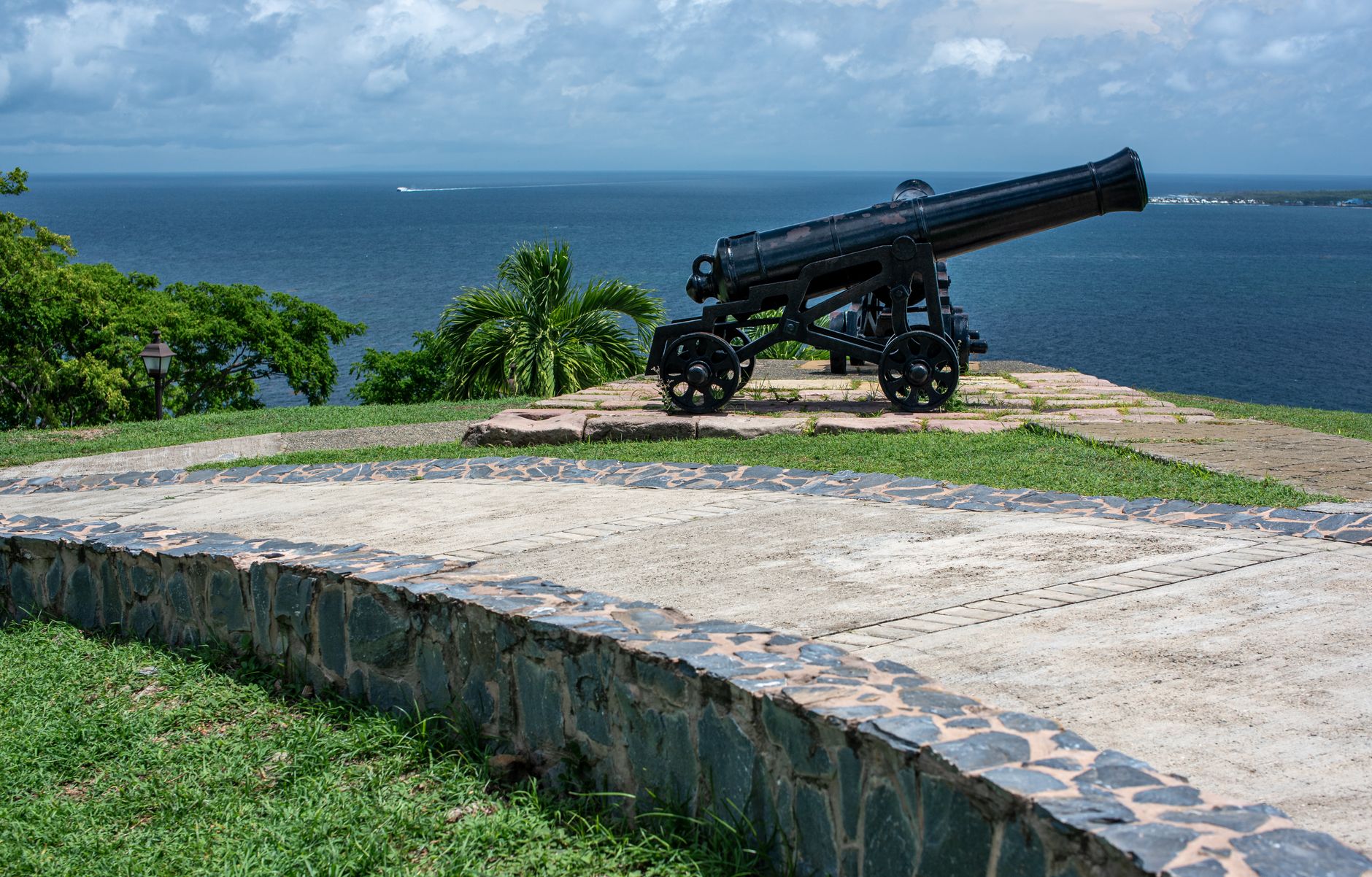
The city can feel rough-edged, humid, and gloriously unscripted, which is exactly why it stays with people. One hour gets you the neo-Renaissance drama of the Red House, the Gothic lines of Holy Trinity Cathedral, and a hilltop view from Fort George where the Gulf of Paria opens west toward Venezuela on a clear day. Port of Spain isn't trying to charm you. It assumes you can keep up.

What Makes This City Special

Carnival Engine Room

Port of Spain doesn't save its cultural energy for one long weekend. Mas camps in Woodbrook work year-round, and in panyards from Laventille to St. James you can hear steelpan rehearsals that sound half like precision engineering, half like thunder made musical.

The Magnificent Seven

Along the western edge of Queen's Park Savannah, seven eccentric mansions line up like rich relatives who refused to agree on one style. Moorish flourishes, baroque bravado, turreted fantasy: this row tells you Port of Spain was never interested in colonial neatness.

Politics in Public

Woodford Square has carried more history than most capitals manage in their official museums. Water riots shook it in 1903, independence-era speeches earned it the nickname 'the University of Woodford Square,' and the Red House still gives the whole area a charged, watchful air.

A Capital With Breathing Room

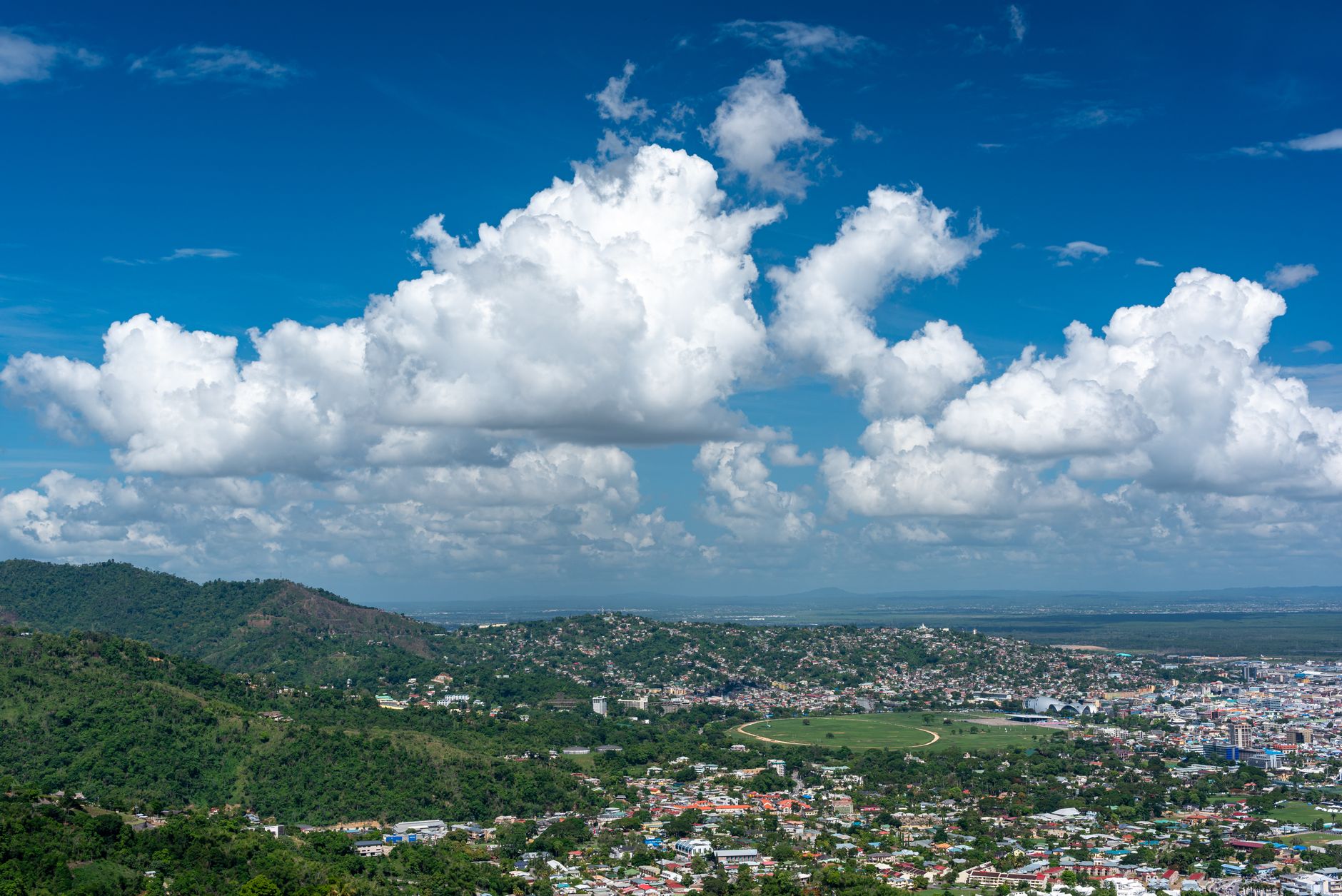
Queen's Park Savannah spreads across about 260 acres, a green pause between downtown and the northern neighborhoods. By late afternoon the place smells of grass, exhaust, and street food, with joggers on the loop, cricket in the distance, and the city loosening its collar.

Historical Timeline

A Capital Built from Fire, Protest, and Carnival

From Cumucurapo's fishing shore to the political stage of modern Trinidad and Tobago

public
c. 5000 BCE

First People Cross the Gulf

Most scholars date the island's earliest settlement to around 5000 BCE, when small communities came by boat from the South American mainland. The crossing is short on a map, barely 11 kilometers at the Dragon's Mouth, but it changed everything. Long before Port of Spain had streets, this coast was already a lived-in edge of the Americas.

public
c. 1000

Cumucurapo on the Shore

By about 1000 CE, an Amerindian settlement stood near the future city: Cumucurapo, usually glossed as either "place of the silk-cotton trees" or "place of hummingbirds." That double meaning suits Port of Spain. Even now, it feels like a city pulled between rooted ground and quick flight.

public
1498

Columbus Names Trinidad

Christopher Columbus sighted Trinidad on 31 July 1498 during his third voyage and gave the island its Christian name. The future capital was still an Indigenous waterfront then, not a European town. Names arrived before control did.

castle
1560

Puerto Espaรฑa Takes Shape

Sources describe a small Spanish fort and settlement rising near Cumucurapo around 1560, with mud walls facing the Gulf of Paria. Puerto Espaรฑa began less as a grand colonial project than as a fragile foothold in heat, salt air, and mosquito country. Still, the name stuck.

gavel
1783

The Cรฉdula Changes Everything

Spain's Cรฉdula de Poblaciรณn invited Roman Catholic settlers from the French Caribbean to Trinidad with land grants in exchange for loyalty to the crown. French Creole planters arrived with enslaved Africans, and the sleepy port changed fast. Carnival, plantation wealth, and a new urban elite all came ashore in the same tide.

person
1784

Chacรณn Expands the Capital

Governor Josรฉ Marรญa Chacรณn oversaw the city's late Spanish boom, when population and ambition both surged. Warehouses, churches, and townhouses replaced much of the older wattle-and-daub fabric. Port of Spain stopped behaving like a minor outpost and started acting like a capital.

swords
1797

Britain Takes the Port

In February 1797, a British fleet under Ralph Abercromby arrived with overwhelming force, and Governor Chacรณn surrendered after burning the Spanish ships in Chaguaramas Bay. No heroic last stand, just smoke on the water and a transfer of empire. Port of Spain became British before the paperwork caught up.

church
1808

Cathedral Foundations Rise

Holy Trinity Cathedral began in 1808 on what became Woodford Square, and its Gothic Revival lines announced the new rulers in stone. The building still feels slightly improbable in tropical light, all English ecclesiastical confidence under a Caribbean sky. Empire liked to build itself into the view.

local_fire_department
1813

Woodford Rebuilds After Fire

A series of fires wrecked large parts of the wooden town, and Governor Ralph Woodford used disaster as an excuse to remake Port of Spain. He imposed a stricter street grid and pushed masonry construction over timber. Ash made the city more orderly.

castle
1816

Queen's Park Savannah Opens

By 1816, the Savannah had been established as public open ground on former crown land. At roughly 260 acres, it gave Port of Spain a lung large enough to shape the whole city, separating downtown from the northern rise in a single sweep of grass. The road around it still feels like urban planning with a breeze.

church
1818

Gardens and Cathedral Completed

Holy Trinity Cathedral was completed in 1818, and the Royal Botanic Gardens were established in the same year near the Savannah. One offered hammered timber, pointed arches, and Anglican authority. The other offered shade, roots, and the smell of wet earth after rain.

gavel
1838

Emancipation Reshapes the City

Full emancipation arrived on 1 August 1838, ending the apprenticeship system that had mocked freedom for four years. Formerly enslaved people left estates in large numbers, and Port of Spain absorbed new communities, new pressure, and new political life. The city's modern social history begins here.

music_note
1881

Canboulay Fights Back

Police tried to crush Canboulay processions before Carnival in 1881, and working-class Afro-Trinidadians fought them in the streets. Torchlight, drums, stickfighters, mounted police: the whole argument over who owned public culture turned physical. Carnival survived because people refused to surrender it.

castle
1897

Red House Rises on the Square

The first Red House opened on Woodford Square in 1897, designed by Daniel Meinerts Hahn and painted in the color that gave it its name. Parliament took its place beside cathedral, court, and open square, which is about as blunt a lesson in colonial power as a city plan can offer. Port of Spain put government on display.

person
1901

C. L. R. James Is Born

C. L. R. James was born in Trinidad in 1901 and came into Port of Spain through Queen's Royal College, where the city's disciplined colonial schooling met a mind far too large for it. He saw how empire trained its subjects because he sat in the classroom where that training happened. Years later, his writing gave the Caribbean a harder, sharper vocabulary for freedom.

local_fire_department
1903

Water Riots Burn Parliament

On 23 March 1903, protests against a water-rate ordinance exploded outside the Red House and the building was set ablaze. Police opened fire; 16 people were killed and around 40 wounded. Woodford Square never forgot that the capital could turn from civic theater to blood and smoke in an afternoon.

person
1911

Eric Williams Arrives

Eric Williams was born in Port of Spain in 1911, studied at Queen's Royal College, and learned early how the city stored power in buildings, schools, and rules. He later turned Woodford Square into an outdoor lecture hall and political classroom. Few people have argued with a city so effectively.

music_note
1941

Steel Pan Finds Its Voice

During the 1940s, in East Port of Spain and Laventille, musicians began shaping tuned notes from discarded oil drums. Steel pan came out of poverty, police pressure, wartime industry, and pure sonic stubbornness. A global instrument was born from hammered metal and neighborhood pride.

person
1941

Stokely Carmichael Is Born

Stokely Carmichael, later Kwame Ture, was born in Port of Spain in 1941 before becoming one of the century's most forceful Black Power voices. His early schooling in the city matters. Port of Spain had already taught generations how race, class, and empire share the same street corner.

school
1956

Woodford Square Becomes a University

When Eric Williams founded the People's National Movement in 1956, his public lectures in Woodford Square had already made the place famous as the "University of Woodford Square." Politics in Port of Spain did not stay behind parliamentary doors. It spilled into open air, where anyone could listen, heckle, or be changed.

gavel
1962

Independence Rewrites the Capital

Trinidad and Tobago became independent on 31 August 1962, with Port of Spain confirmed as the national capital. The same streets built by Spanish governors and British officials now hosted a self-governing state. Names changed, flags changed, and the city had to learn a new tone of authority.

gavel
1970

Black Power Fills the Streets

Demonstrations in 1970 brought students, trade unionists, and Black Power activists through Port of Spain in one of the republic's defining confrontations. The protests challenged the old colonial habits still hiding inside the economy and state. Independence, the city learned, had not finished the argument.

swords
1990

Gunmen Storm the Red House

On 27 July 1990, Jamaat al Muslimeen gunmen seized the Red House and the state television station, taking Prime Minister A. N. R. Robinson hostage. For six days, Port of Spain lived with looting, fear, and the crackle of emergency broadcasts. The coup failed, but the city was marked by how close collapse had come.

public
2009

Obama Lands at the Waterfront

Port of Spain hosted the Fifth Summit of the Americas in April 2009, turning its waterfront towers and conference rooms into a hemispheric stage. Barack Obama and 34 other leaders arrived, and for a few days the capital was the diplomatic center of the Americas. A city built on colonial shipping lanes found itself speaking for a region instead.
schedule
Present Day

Notable Figures

Eric Williams

1911โ€“1981 ยท Prime Minister and historian
Born here

Port of Spain shaped Eric Williams before he shaped Trinidad and Tobago. He studied at Queen's Royal College, turned Woodford Square into the so-called University of Woodford Square, and made public speech feel like a national instrument. He'd still recognize the city by its argument.

C. L. R. James

1901โ€“1989 ยท Writer and historian
Studied and taught here

C. L. R. James was born in Tunapuna, but Port of Spain mattered because Queen's Royal College gave him one of his first stages. The city fed the sharp, unsentimental intelligence that runs through his writing. He would have appreciated how much politics still leaks into ordinary street talk here.

Kwame Ture

1941โ€“1998 ยท Civil rights leader
Born here

Born in Port of Spain as Stokely Carmichael, he left young and became one of the defining voices of Black Power. The connection still matters because this city has always produced people fluent in power, performance, and dissent. Woodford Square would not have felt unfamiliar to him.

Claudia Jones

1915โ€“1964 ยท Journalist and activist
Born in Belmont, Port of Spain

Claudia Jones began in Belmont before exile carried her into the wider Atlantic world. Her politics were fierce, but so was her understanding of celebration as public life; that line from Port of Spain to Carnival culture abroad is hard to miss. She would have heard the city in the drums before she wrote about it.

Geoffrey Holder

1930โ€“2014 ยท Actor, dancer, and artist
Born here

Geoffrey Holder grew up in Port of Spain and carried its theatrical scale with him onto international stages and screens. Few cities teach spectacle this early: Carnival, steelpan, painted facades, voices built to carry. He turned that inheritance into style.

Boscoe Holder

1921โ€“2007 ยท Painter and choreographer
Lived and worked here

Boscoe Holder wasn't born in Port of Spain, but the city became one of his lasting addresses, and his Newtown studio still lingers in local memory. He painted and staged Trinidad with elegance, though never the bloodless kind. He knew this city was formal on the surface and gloriously unruly underneath.

Nicki Minaj

born 1982 ยท Rapper and singer
Born in Saint James, Port of Spain

Nicki Minaj was born in the Saint James district before her career exploded far from Trinidad. The connection is easy to flatten into trivia, but Saint James sits inside a city that prizes performance, wit, volume, and reinvention. Port of Spain taught the rhythm first.

Practical Information

flight

Getting There

Piarco International Airport (POS) sits about 23 to 27 km east of central Port of Spain, and in 2026 it's the main international gateway for Trinidad. Trinidad has no passenger rail service, so there are no main train stations to list; most arrivals reach the city by airport taxi or PTSC bus, then enter via the Churchill-Roosevelt Highway and Beetham Highway corridor.

directions_transit

Getting Around

Port of Spain has no metro, subway, tram, or urban rail system in 2026. Most local trips rely on PTSC buses from City Gate, color-banded maxi-taxis, and route taxis; fares are low, usually paid in cash, and no tourist transport pass exists. Walking works well in daylight around downtown, Woodbrook, Brian Lara Promenade, and the 3.5 km Savannah loop, but cycling remains mostly recreational because dedicated lanes are scarce.

thermostat

Climate & Best Time

Spring runs roughly 25 to 31ยฐC and is the driest stretch; summer and autumn stay near 25 to 32ยฐC, with the wet season from June to December and August often the soggiest month at about 213 mm of rain. Winter stays warm too, around 24 to 30ยฐC, with slightly easier humidity. January to May is the sweet spot for walking the city, while February or March brings Carnival crowds, higher hotel prices, and the city's loudest mood.

translate

Language & Currency

English is the official language, though you'll hear Trinidadian Creole English everywhere, especially in markets, taxis, and food lines. The local currency is the Trinidad and Tobago dollar (TTD); in 2026, cards work in hotels and larger restaurants, but buses, maxi-taxis, and many street-food stalls still expect cash. ATMs at Piarco dispense TTD, which usually gets you a fairer price than paying in US dollars.

shield

Safety

Port of Spain rewards attention, not bravado. In 2026, government advisories still warn against walking alone after dark and advise extra caution east of Charlotte Street, in East Port of Spain, Laventille, Morvant, Sea Lots, and around the docks at night. Woodbrook, St. Clair, Newtown, and the Savannah perimeter are more comfortable by day, but use reputable taxis after dark and keep phones and cash out of sight in slow traffic.

Tips for Visitors

warning
Street-Smart After Dark

Stick to busy areas like the Queen's Park Savannah edge, Ariapita Avenue, and hotel-lined waterfront at night. Downtown Port of Spain changes fast after office hours, so use a licensed taxi rather than improvising a walk back.

local_taxi
Use Airport Taxis

From Piarco, take the official airport taxi rank outside Arrivals and confirm the fare before you leave. Research for 2026 shows daytime city fares around TTD 204 and nighttime around TTD 305, though some transfer sites quote higher numbers.

savings
Eat Like Locals

Don't start with a formal dinner. Begin with doubles, roti, or a cup of corn soup around the Savannah or Ariapita Avenue, where the city does some of its best eating standing up.

schedule
Time Carnival Season

Late January and February are the weeks when Port of Spain feels most itself, with panyards rehearsing for Panorama and mas camps building costumes. Book early if you're coming then, because rooms and flights tighten quickly.

photo_camera
Go Up High

Visit Fort George in late afternoon when the city softens and the Gulf of Paria starts to glow. Save the Savannah and the Magnificent Seven for earlier or golden hour, when the facades photograph better and the heat eases off.

directions_walk
Walk The Loop

For a compact first look, pair Woodford Square, the Red House area, and the waterfront in one outing, then shift north to the Savannah. That gives you the political core, the harbor edge, and the grand colonial facade line without wasting time in traffic.

Explore the city with a personal guide in your pocket

Your Personal Curator, in Your Pocket.

Audio guides for 1,100+ cities across 96 countries. History, stories, and local insight โ€” offline ready.

smartphone

Audiala App

Available on iOS & Android

download Download Now

Join 50k+ Curators

Frequently Asked

Is Port of Spain worth visiting? add

Yes, especially if you care more about culture than polished beaches. Port of Spain gives you steelpan, Carnival history, political drama around Woodford Square, and one of the Caribbean's sharpest mixes of street food and colonial architecture. It works best as a city of texture and sound, not a resort fantasy.

How many days in Port of Spain? add

Two to three days is enough for the city itself. That gives you time for the Savannah, downtown civic core, Fort George, the National Museum, and one food-heavy evening around Ariapita Avenue or the Savannah. Add another day if you want a Maracas Bay or Caroni excursion.

How do I get from Piarco Airport to Port of Spain? add

The easiest option is an official airport taxi from the rank outside Arrivals. The drive is usually 20 to 45 minutes depending on traffic, and 2026 research lists fixed daytime fares around TTD 204 and nighttime fares around TTD 305. A PTSC bus to City Gate exists, but taxi is the more practical choice for most visitors with luggage.

Is Port of Spain safe for tourists? add

Port of Spain is manageable with judgment, but it is not a city for careless wandering after dark. Stay in active areas, use licensed taxis at night, and treat downtown with more caution once offices close. The city rewards alert visitors, not distracted ones.

Is Port of Spain expensive? add

It can be moderate if you mix street food and taxis carefully. A plate of doubles or roti costs far less than hotel dining, and many of the city's strongest experiences, like the Savannah, Woodford Square, and waterfront walks, cost little or nothing. Costs rise quickly during Carnival season.

What is the best time to visit Port of Spain? add

Late January through Carnival is the city's loudest and most revealing season. You'll hear steelbands rehearsing in panyards and feel the whole place tilting toward the street. If you want lower prices and less pressure on hotels, go outside Carnival and keep the Savannah, Fort George, and food circuits as your anchor.

What should I eat in Port of Spain? add

Start with doubles, roti, corn soup, and if you head out toward Maracas, bake and shark. Port of Spain's food identity lives in stalls, corners, and late-night runs as much as in dining rooms. A rigid reservation-heavy plan misses the point.

Can you walk around Port of Spain? add

Yes, in pieces rather than all day end to end. The downtown civic area, the Savannah perimeter, and parts of the waterfront each work well on foot, but the heat and traffic wear you down faster than the map suggests. Split the city into short walking zones and use taxis between them.

Sources

Last reviewed: