Destinations Trinidad and Tobago

Trinidad and Tobago.

Port of Spain 12 cities

Trinidad and Tobago is not one island escape but two sharply different worlds joined by music, migration, and some of the Caribbean's best food and wildlife.

Get the app Cities in Trinidad and Tobago
Trinidad and Tobago
Port of Spain
Capital
12
Cities
Dry season (January-May)
best season
7-10 days
trip length
Trinidad and Tobago dollar (TTD)
currency

EntryMany US, UK, EU and Canadian travelers can visit visa-free for up to 90 days; online arrival card required within 72 hours.

01 An introduction

verified

TA Trinidad and Tobago travel guide starts with one surprise: this Caribbean nation sits on South America's shelf, and it sounds unlike anywhere else in the region.

Trinidad and Tobago works best when you stop expecting one tidy island mood. Trinidad moves fast: steelpan rehearsals in Port of Spain, doubles vendors working breakfast crowds in Chaguanas, and the strange black shine of Pitch Lake near La Brea, where the earth keeps pushing asphalt to the surface. Tobago shifts the tempo without turning bland. Scarborough still feels lived-in rather than staged, while Crown Point offers the easy airport-beach access most travelers want before they branch out to quieter coves and reef trips.

The country's real advantage is range. You can spend one day in the mangroves watching Scarlet Ibis return to roost, another eating bake and shark after a sea swim, then head east toward Arima or north to Blanchisseuse for rainforest roads and a coastline that looks closer to Venezuela than to the brochure version of the Caribbean. On Tobago, Speyside rewards divers and birders, while Castara keeps its fishing-village rhythm. And San Fernando, often skipped by first-timers, gives you a sharper read on south Trinidad than any resort ever could.

Foodie History Buff Outdoor Adventure Photography Hotspot Off the Beaten Path

A History Told Through Its Eras

Before Columbus, a canoe world already knew these shores

First Peoples and the Orinoco World, c. 5000 BCE-1498

A burial at Banwari Trace changes the whole scale of the story. Around 5000 BCE, someone was laid in the earth of southwest Trinidad with ochre and a dog at their feet, and the distance between prehistory and tenderness suddenly collapses.

Ce que l'on ignore souvent, c'est que Trinidad was never an isolated outpost in the minds of its first inhabitants. The island sat at the northern edge of an Orinoco trading world that carried cassava bread, ornaments, parrots and pottery between river and sea, so what now looks like a neat Caribbean republic was once part of a continental corridor.

La Brea already mattered then. Long before geologists and tour buses, the great black surface of Pitch Lake at La Brea gave Amerindian communities asphalt to seal canoes, and early accounts suggest that this strange wound in the ground inspired more than practical respect.

By the centuries before European contact, waves of Arawakan and Cariban peoples had made the island a place of movement, trade and conflict rather than a static paradise. That matters, because the history of Trinidad and Tobago begins not with discovery, but with a crowded human world that Port of Spain, Arima and Moruga still inherit in fragments of memory, food and place names.

The first recognizable inhabitant of Trinidad and Tobago is not a king but the unnamed Banwari person, buried with care more than seven millennia ago.

The oldest known human burial in the southern Caribbean included a dog, a detail so intimate it feels almost contemporary.

A Spanish island that Spain barely held

Spanish Claims, Mission Bells and French Creole Arrival, 1498-1797

At dawn on 31 July 1498, Christopher Columbus saw three peaks and named the island La Trinidad, honoring a vow to the Holy Trinity. The name endured; the empire behind it barely did.

For much of the next three centuries, Trinidad remained oddly neglected. Spanish officials claimed it, missionaries pushed inland, and Amerindian communities resisted with a ferocity that official reports tried to flatten into disorder; the revolt at Arena in 1699 ended with priests dead, buildings burned and retaliation that was systematic, cold and devastating.

Meanwhile Tobago became the Caribbean in miniature, only more absurd. Dutch, French, British and even the Duchy of Courland fought over it so often that the island seemed to change allegiance with the weather, and Fort King George above present-day Scarborough still looks like the sort of place where rival governors might have unpacked their trunks before being chased out again.

Then came the great social reversal. The Cedula of Population of 1783 invited Roman Catholics to settle Trinidad with land grants, and French Creole planters, free people of color and enslaved Africans arrived from Martinique, Guadeloupe and Saint-Domingue carrying language, recipes, dance, family names and the early forms of Carnival. Ce que l'on ignore souvent, c'est que the British would later conquer an island whose tone had already been set in French.

That is why Chaguanas and Port of Spain never read like simple British colonial creations. By the time the Union Jack appeared, the society underneath had already been remade by French Creole ambition, slavery and exile, and the next regime would inherit a colony speaking in accents it did not control.

José María Chacón, the last Spanish governor, lost Trinidad to the British in 1797 and then paid for that surrender with public disgrace.

Tobago was once claimed by the Duchy of Courland, a Baltic power from present-day Latvia, which is not a sentence many islands can produce with a straight face.

Empire arrives in English, but the island answers in many tongues

British Conquest, Slavery and Emancipation, 1797-1838

The British fleet entered Trinidad in February 1797 with overwhelming force, and Governor Chacón surrendered without a battle. It was a neat military success and a messy political inheritance, because the new rulers took possession of a colony that was already French Creole in manners, African in labor, Catholic in habit and multilingual in daily life.

Then came the scandal that still burns. In 1801, Louisa Calderon, a free mixed-race girl of fourteen, was tortured under the authority of Governor Thomas Picton, suspended in the picquet position over a sharpened stake during an investigation into theft; she survived, traveled to London and forced the empire to hear what colonial power looked like when it felt untouchable.

Picton later stood trial in 1806. Not for abstract tyranny, but for what had been done to one girl with one body, and that is why the affair matters: it stripped away imperial ceremony and showed the naked mechanics of race, class and fear in an island society where law often bent toward those who owned property and people.

Emancipation did not arrive as a clean moral dawn. Slavery ended in 1834, apprenticeship followed, and full freedom came in 1838, yet the plantation order left scars in land ownership, wages and hierarchy that shaped everything from San Fernando's growth to the roads leading south toward Point-à-Pierre and La Brea.

Still, this period left one irreversible fact. The people once counted as labor became the makers of the country's future, and the end of slavery opened the next chapter, when new migrants from India would alter the balance of Trinidad again.

Louisa Calderon was a teenager, not a symbol, and her decision to testify in London turned private cruelty into imperial scandal.

Thomas Picton later became a celebrated British war hero, which says as much about imperial memory as it does about the man himself.

From plantation colony to restless modern country

Indenture, Cocoa, Oil and the Invention of a Nation, 1838-1962

On 30 May 1845, the ship Fatel Razack arrived in Trinidad carrying the first large group of indentured laborers from India. They stepped into a post-emancipation colony hungry for workers, and the social arithmetic changed at once: estates gained labor, villages gained temples and mosques, kitchens gained new spices, and the island gained another language of belonging.

Ce que l'on ignore souvent, c'est que modern Trinidad and Tobago was built as much by argument as by administration. Afro-Trinidadian and Indo-Trinidadian communities were pushed into competition by colonial structures, yet they also created shared habits in markets, music, food stalls and political life, especially in places like Arima, Chaguanas and San Fernando where commerce made neighbors of people history had sorted into categories.

The economy meanwhile kept changing masks. Cocoa made fortunes in the late nineteenth century; oil at places like Point Fortin and the refinery belt near Point-à-Pierre would later do the same with more smoke and less romance, while Port of Spain grew into a capital of clerks, dockworkers, merchants and newspapers rather than one of grandees in powdered wigs.

And then, out of restriction, came invention. When colonial authorities limited African drums, young men in working-class districts began experimenting with bamboo percussion, then with tuned metal, and by the 1930s and 1940s the steelpan was emerging from places polite society preferred not to see. A national instrument was being born from stigma.

Politics caught up in the end. Labor unrest in 1937, constitutional reform, party building and Eric Williams's brilliant, combative campaign for self-government carried the colony toward independence in 1962, but the new state would inherit every old tension: race, class, oil wealth, memory and the question of who truly represented the people.

Eric Williams could fill Woodford Square with words alone, turning history lectures into a political weapon.

The steelpan, now treated as a national treasure, was once associated with gangs and treated by elites as street noise.

A small republic with a very large voice

Independence, Black Power and the Republic, 1962-present

Independence arrived on 31 August 1962 with flags, speeches and a disciplined optimism that photographs still preserve. Yet the country was never going to become tidy, because Trinidad and Tobago had been made from too many histories pressed together too tightly for that.

The first decade exposed the fault lines quickly. The Black Power movement of 1970 challenged racial hierarchy and economic exclusion, the state declared a crisis, and ordinary citizens forced the young nation to ask whether political sovereignty meant anything without social dignity.

Oil wealth in the 1970s brought highways, construction and swagger. It also brought illusions. Port of Spain expanded, San Fernando held its southern weight, Tobago marketed sea and calm to outsiders, and places like Crown Point, Speyside and Castara entered the national imagination as part of a tourism future that sat uneasily beside refineries, inequality and periodic violence.

Then came the shock no one could dismiss as mere bacchanal. In July 1990, the Jamaat al Muslimeen stormed Parliament and state television in Port of Spain, holding the prime minister hostage for six days; in a country famous for wit, music and argument, the image of gunmen in the Red House was a brutal reminder that democracies can wobble even when they seem theatrically alive.

And yet the deeper story is one of invention without purity. Carnival, calypso, soca and steelpan became global languages; Scarborough guarded Tobago's older pace; La Brea still watched the earth bubble up from below; and the republic learned, imperfectly but unmistakably, to turn contradiction into identity. That is the bridge to the present: not harmony, exactly, but coexistence performed at full volume.

Hasely Crawford's Olympic gold in 1976 gave the young nation a victory that felt larger than sport.

During the 1990 coup attempt, state television was seized, and the crisis unfolded before viewers in real time in a country more used to political theatre than armed insurrection.

The Cultural Soul

A Tongue Seasoned With Pepper

Conversation in Trinidad and Tobago does not stroll. It darts, doubles back, throws a joke like a knife, then offers you another drink. In Port of Spain, you hear English, then Creole, then one sentence that carries French shadow, Hindi memory, and a Spanish shrug from across the water. A country is a table set for strangers.

Certain words do more work than whole essays. A lime is not an appointment but a surrender to time. Picong is teasing with blade work. Tabanca sounds like heartbreak after it has slept badly and skipped lunch. People say "good morning" before they ask anything, and that tiny rite changes the air at once: courtesy first, business after.

The pleasure lies in compression. One vendor can ask about pepper, your mother, the government, and your courage in a single breath while folding doubles with fingers that never hesitate. You answer quickly or you become material. Nobody here is afraid of language. They eat it hot.

The Republic of Appetite

Trinidad and Tobago cooks the way some nations argue: with memory, heat, and no patience for purity. Indian indenture, African technique, French Creole ceremony, Chinese shopkeeping, Venezuelan proximity, British habits improved by force: all of it lands in the pot and refuses to separate. The result is not fusion. It is conquest by appetite.

Doubles prove the point best. Two soft bara, curried channa, tamarind, kuchela, pepper sauce, and the whole matter handed over in paper that immediately surrenders to grease. Breakfast, yes. Also penance, also comfort, also a reason to stand under weak shade in Chaguanas or San Fernando with strangers who suddenly discuss the proper ratio of sour to fire as if drafting a constitution.

Then Tobago changes the grammar. Crab and dumpling in Scarborough or Castara arrives with a marine authority Trinidad does not imitate. You crack shells, suck curry from corners, wipe your wrist, and understand that manners were invented to be suspended in the presence of crab. Even La Brea, famous for Pitch Lake and its black geological seriousness, belongs to this republic of appetite. Asphalt by day, pepper by lunch.

Metal That Learned to Sing

The steelpan remains one of the few inventions that makes civilization seem like a good idea. Out of oil drums, prohibition, Carnival pressure, and neighborhood genius came an instrument that can sound like rain discovering arithmetic. You hear it in Port of Spain and the body understands before the mind does.

A panyard is not merely a rehearsal space. It is workshop, parliament, flirtation hall, memory bank. Someone is tuning. Someone is arguing about tempo. Someone is eating from a container balanced on a car bonnet while a melody rises into the humid dark with the calm certainty of prayer. Music here is not decoration. It is public thought.

And then soca enters, which is less a genre than a civic command. The bass instructs the knees. Calypso, sly and merciless, keeps the right to mock everyone, especially the powerful. A nation that can dance and satirize in the same breath has understood something most empires never do.

Ceremonies of Heat and Respect

Politeness here begins before the request. You greet first. Always. "Good morning," then the question, whether you are buying water, asking for the way, or stepping into a maxi taxi with the expression of someone who would like not to get lost. This is not quaintness. It is social engineering of a high order.

Respect for elders arrives in titles that are both formal and tender: Miss, Mister, Auntie, Uncle. They create a structure around daily life, a light scaffolding of regard. But do not mistake courtesy for softness. The same person who calls you "dear" may also correct your foolishness with a smile so exact it leaves a mark.

Visitors often notice the warmth first. They should notice the calibration. People are friendly, but they listen for arrogance the way cooks listen for oil at the right temperature. Speak too loudly, complain too quickly, or skip the greeting, and you announce yourself as badly as a dropped tray.

Many Altars, One Humidity

Religious life in Trinidad and Tobago has the intimacy of proximity. A church hymn drifts across a road where tassa drums are tightening for a Hindu celebration; not far away, a mosque gathers the afternoon into order. Faith does not hide indoors here. It sounds itself into the street.

That closeness matters because the country was assembled from forced crossings and hard bargains. African descendants, Indian descendants, Christians of many churches, Hindus, Muslims, people who keep ritual and irony in the same household: each group brought forms sturdy enough to survive transport. The marvel is not that these forms remain. The marvel is that they remain audible to one another.

You feel it most during feast days and processions, when clothing sharpens, food multiplies, and the ordinary road becomes ceremonial for a few hours. Even the unbeliever receives an education. A society reveals its theology by how it gathers, feeds, and waits.

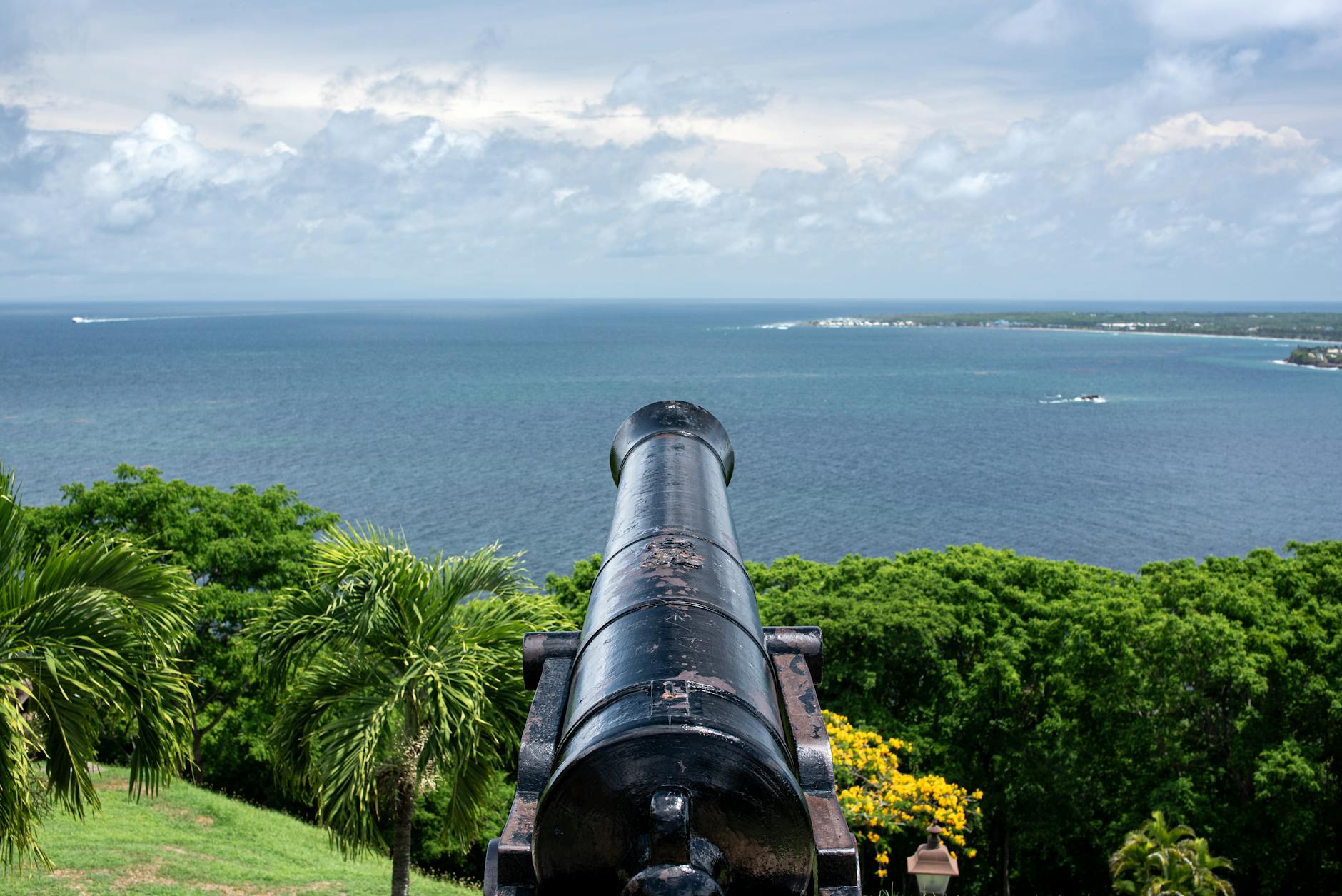
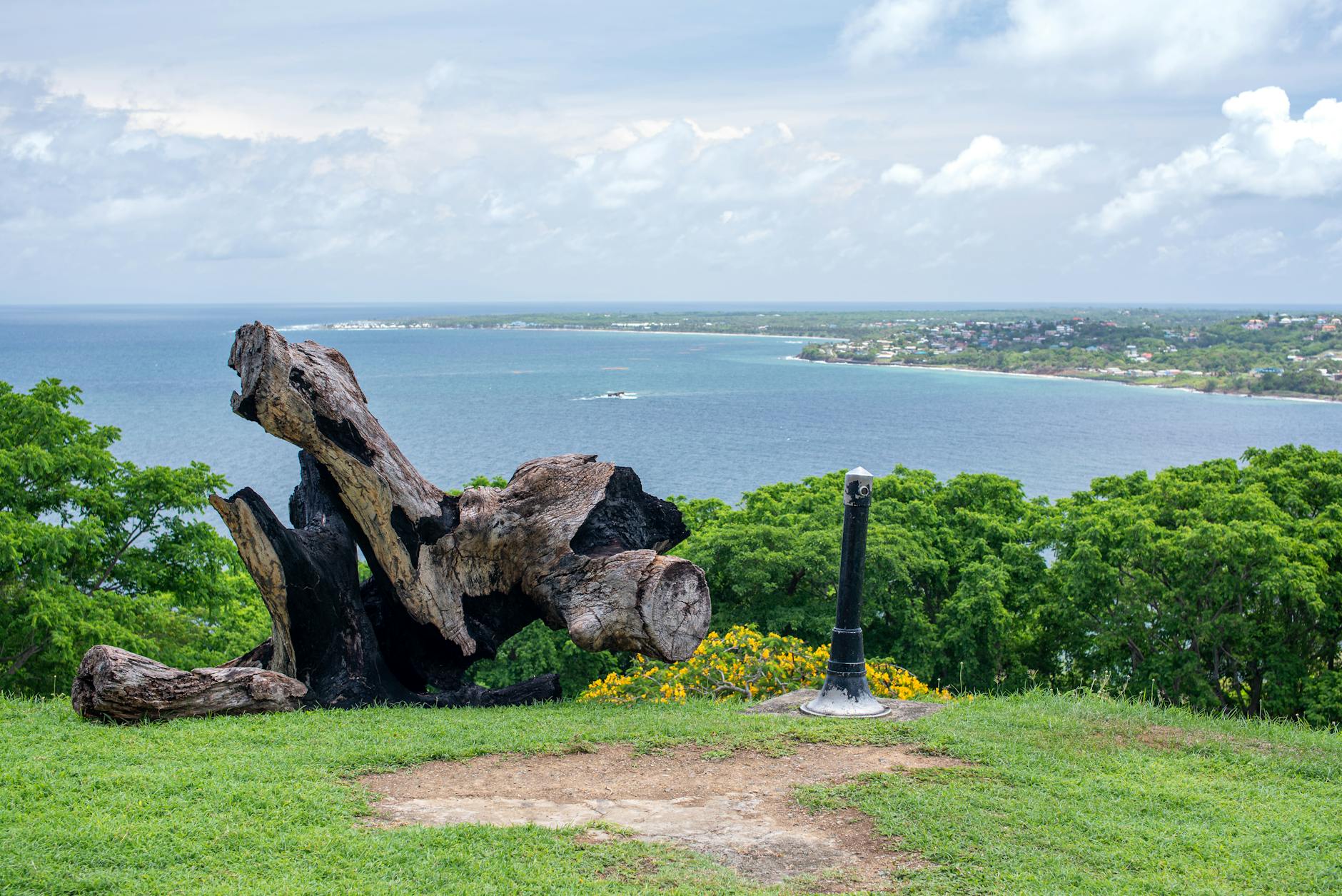
02 What Makes Trinidad and Tobago Unmissable.

music_note

Steelpan and Carnival

Trinidad invented the steelpan, and you hear its afterlife everywhere from panyards to Carnival season in Port of Spain. Even outside February, the country moves with a rhythm that feels public, competitive, and gloriously unpolished.

forest

Rainforest and rare birds

Tobago's Main Ridge Forest Reserve, protected since 1776, is often described as the oldest legally protected rainforest in the Western Hemisphere. Add Caroni Swamp and Nariva Swamp, and birdwatchers get scarlet ibis, hummingbirds, and serious bragging rights.

restaurant

Street food with swagger

Doubles, roti, pholourie, corn soup, bake and shark, and Tobago crab and dumplings tell the country's history better than any museum label. The best meals often come wrapped in paper, eaten standing up, with pepper that demands commitment.

public

Two islands, two tempos

Trinidad gives you city energy, industrial edges, and layered cultural history; Tobago answers with reef trips, village gravity, and quieter beaches. Few countries this small offer such a sharp split in atmosphere without long travel days.

landscape

Pitch Lake to coral reef

You can walk on the world's largest natural asphalt lake near La Brea, then snorkel Buccoo Reef or head for drift dives off Speyside. The geological contrast is absurd in the best way.

03 Cities in Trinidad and Tobago.

12 cities — start with the ones we'd send you to first.

Port of Spain
01

Port of Spain

A capital that invented steelpan and Carnival, where the Queen's Park Savannah doubles as a racetrack, a food court, and a Sunday-morning social institution all at once.

San Fernando
02

San Fernando

Trinidad's industrial south — oil refineries on the horizon, a bustling commercial Main Street, and a Hindu temple built on a sacred lake that the petrochemical age somehow left intact.

Scarborough
03

Scarborough

Tobago's compact capital climbs a hill above the harbor where the most-contested island in Caribbean history changed flags thirty-one times, and the 1777 Fort King George still looks out to sea.

La Brea
04

La Brea

A small town built around the world's largest natural asphalt lake — forty hectares of self-replenishing pitch that Columbus's contemporaries caulked their ships with and Amerindians treated as a wound in the earth.

Arima
05

Arima

The last town in Trinidad with a documented Carib community, where the Santa Rosa Festival in August is the oldest continuous Amerindian celebration in the Caribbean.

Chaguanas
06

Chaguanas

The demographic and commercial heart of Indo-Trinidadian life, where a market street sells both sari fabric and doubles from vendors who have held the same corner for two generations.

Point-À-Pierre
07

Point-À-Pierre

A company town swallowed by a refinery that somehow contains a wildlife trust and a pair of flamingo-stocked lakes inside the industrial fence — one of the more surreal conservation sites in the hemisphere.

Crown Point
08

Crown Point

The flat, wind-raked southwestern tip of Tobago where the airport lands you directly into beach-bar range and the glass-bottom boats for Buccoo Reef leave before the heat peaks.

Speyside
09

Speyside

A northeast Tobago fishing village facing Goat Island and Little Tobago, where manta rays pass through the channel and the Main Ridge Forest Reserve — the Western Hemisphere's oldest protected rainforest, gazetted 1776 —

All 12 cities

04 Regions.

Port of Spain

Northwest Trinidad

Port of Spain is the country's loudest front room: government blocks, panyards, rum history, and some of the sharpest eating in the republic. The region stretches quickly from city streets to the Northern Range, so a morning in St. James or Woodbrook can turn into an afternoon on the road to Maracas Bay without much ceremony.

Queen's Park Savannah Magnificent Seven St. James Woodbrook Maracas Bay
Arima

East Trinidad and the Northern Range

Arima is a practical eastern gateway rather than a polished showpiece, which is part of its value. From here the island tilts toward forest, river valleys, and the rougher north coast, with Blanchisseuse feeling a world away from the highways even though it is only a hard mountain drive from the lowlands.

Blanchisseuse Asa Wright Nature Centre Aripo Savannas La Vega area Mount Saint Benedict
Chaguanas

Central Plains

Chaguanas is not built to charm at first glance; it is built to function, trade, and feed people. That makes central Trinidad useful for understanding the country's Indo-Trinidadian religious life, market culture, and road geography, especially if you want to eat well and move efficiently between north and south.

Temple in the Sea Dattatreya Temple Chaguanas Market Couva Carapichaima
San Fernando

South Gulf Corridor

San Fernando faces the Gulf of Paria with less swagger than Port of Spain and more working-day momentum. Nearby Point-à-Pierre, refinery infrastructure, and the road south give this region a tougher edge, but it also holds some of Trinidad's strongest food stops and easiest access to the water taxi back north.

San Fernando Hill Point-à-Pierre Wildfowl Trust Lady Hailes Avenue waterfront Gulf of Paria shoreline Water taxi terminal
La Brea

Southwest Peninsula

La Brea is where Trinidad stops pretending to be a standard Caribbean island and starts behaving like a geology lesson with fishermen. Pitch Lake dominates the map and the imagination, but the wider southwest also rewards slow road travel, blunt scenery, and detours to villages that rarely appear on first-trip wish lists.

Pitch Lake Cedros coast Icacos shoreline Columbus Bay Erin
Scarborough

Tobago

Scarborough is Tobago's administrative anchor, but the island's character changes every 20 or 30 kilometers. Crown Point handles arrivals and beach logistics, Castara feels village-scaled and self-contained, and Speyside opens onto the wetter, greener, more reef-focused side of Tobago where Main Ridge and the sea sit very close together.

Crown Point Fort King George Castara Speyside Main Ridge Forest Reserve

06 From Amerindian passageway to loud, modern republic

Trinidad and Tobago's history is not a straight line but a chain of arrivals, collisions and reinventions.

  1. graveyard
    c. 5000 BCEFirst Peoples

    Banwari Trace burial

    A human burial in southwest Trinidad becomes the oldest known archaeological evidence of people in the southern Caribbean. The body was laid with ochre and a dog, a small scene of care at the start of the islands' recorded human story.

  2. sailing
    c. 1200-1400First Peoples

    Orinoco-linked communities reshape Trinidad

    Arawakan and Cariban-speaking groups move through Trinidad as part of wider river-and-sea networks tied to the Orinoco basin. Trade, migration and conflict make the island a frontier of exchange rather than an isolated world.

  3. explore
    1498Spanish Claim

    Columbus names La Trinidad

    On his third voyage, Columbus sights three peaks and names the island La Trinidad. The title sticks, even though the Spanish hold on the colony remains thin for generations.

  4. travel
    1595Spanish Claim

    Walter Raleigh loads Pitch Lake asphalt

    Raleigh stops at La Brea, takes natural asphalt to caulk his ships and continues toward Guiana in search of El Dorado. Trinidad enters English writing not as a kingdom but as a practical stop on a doomed fantasy.

  5. fort
    1654Contested Tobago

    Courland establishes a foothold in Tobago

    The Duchy of Courland, from present-day Latvia, founds a colony in Tobago. It is one of those Caribbean episodes so improbable that it sounds invented, which is precisely why it should be remembered.

  6. local_fire_department
    1699Spanish Claim

    Arena mission revolt

    Amerindian resistance erupts at the Arena mission, where priests are killed and the church is burned. Spanish retaliation is harsh, and the demographic collapse of indigenous communities accelerates.

  7. description
    1783French Creole Turn

    Cedula of Population transforms Trinidad

    Spain opens Trinidad to Roman Catholic settlers with generous land grants, including incentives tied to enslaved labor. French Creole planters, free people of color and enslaved Africans arrive in large numbers, reshaping language, customs and class structure.

  8. swords
    1797British Conquest

    Britain captures Trinidad

    A British fleet takes Trinidad with little resistance from Governor José María Chacón. London inherits a colony that is already French Creole in social texture and African in labor.

  9. gavel
    1801British Conquest

    Louisa Calderon is tortured

    Teenage Louisa Calderon is subjected to the picquet under authority of Governor Thomas Picton during a theft investigation. Her survival and later testimony turn a colonial abuse case into an imperial scandal.

  10. balance
    1806British Conquest

    Thomas Picton stands trial in London

    Picton is tried over the torture of Louisa Calderon, forcing Britain to confront the violence hidden inside colonial administration. Trinidad, briefly, becomes impossible to romanticize from afar.

  11. broken_image
    1834Emancipation

    Slavery is abolished

    Emancipation begins in the British Empire, though apprenticeship delays full freedom. In Trinidad and Tobago, the legal ending of slavery changes everything and solves almost nothing at once.

  12. campaign
    1838Emancipation

    Full freedom after apprenticeship

    The apprenticeship system ends, and formerly enslaved people become fully free under law. Plantation society remains powerful, but the old order has lost its legal foundation.

  13. directions_boat
    1845Indenture and Estates

    The Fatel Razack arrives

    The first ship carrying indentured laborers from India reaches Trinidad on 30 May 1845. The arrival changes the demographic, religious, culinary and political future of the country.

  14. account_tree
    1888Colonial Union

    Trinidad and Tobago are administratively joined

    Britain unites the two islands under one colonial administration. The merger is bureaucratic on paper, but its consequences will shape politics, identity and long arguments about balance between Trinidad and Tobago.

  15. groups
    1937Labor Awakening

    Labor unrest shakes the colony

    Oilfield and labor protests erupt, with figures like Tubal Uriah Butler galvanizing workers against low wages and colonial inequality. Modern mass politics in Trinidad and Tobago begins in heat, not ceremony.

  16. music_note
    1940sCultural Invention

    Steelpan emerges from urban yards

    Experiments with tuned metal develop into the steelpan in working-class neighborhoods of Trinidad. A sound once treated as unruly street culture becomes the national instrument and a gift to world music.

  17. person
    1956Road to Independence

    Eric Williams founds the PNM

    Eric Williams launches the People's National Movement, turning historical argument into mass politics. His speeches in Port of Spain help redefine self-government as a practical demand rather than a distant abstraction.

  18. flag
    1962Independence

    Independence

    Trinidad and Tobago becomes independent on 31 August 1962. The new nation inherits oil, Carnival, racial complexity, colonial institutions and a remarkable talent for public argument.

  19. campaign
    1970Post-Independence Reckoning

    Black Power uprising

    Protests and mutiny during the Black Power movement force the state to confront racial exclusion and economic imbalance. Independence, citizens insist, must mean more than a change of flag.

  20. account_balance
    1976Republican Era

    The republic is declared

    Trinidad and Tobago becomes a republic, replacing the British monarch with a president as head of state. In the same decade, oil wealth fuels both ambition and dangerous confidence.

  21. military_tech
    1976Republican Era

    Hasely Crawford wins Olympic gold

    Crawford takes the 100 meters in Montreal and delivers the country's first Olympic gold medal. For a young nation, the victory is athletic and symbolic at once.

  22. warning
    1990Republican Era

    Jamaat al Muslimeen coup attempt

    Armed insurgents seize Parliament and the state television station in Port of Spain, holding the prime minister hostage for six days. The episode remains one of the sharpest shocks in the history of the republic.

  23. forest
    2003Environmental Heritage

    Main Ridge Forest Reserve gains wider recognition

    Tobago's Main Ridge, protected since 1776, is increasingly celebrated as one of the oldest legally protected forest reserves in the Western Hemisphere. The claim turns an old local fact into an international argument for heritage and ecology.

  24. public
    2023Contemporary Trinidad and Tobago

    Pitch Lake stays central to the national imagination

    As energy debates, heritage tourism and environmental questions converge, La Brea's Pitch Lake remains one of the country's strangest emblems: industrial, sacred, geological and stubbornly alive. Few places explain Trinidad so well by refusing to fit a single category.

07 The story of Trinidad and Tobago.

01c. 5000 BCE-1498

Before Columbus, a canoe world already knew these shores

First Peoples and the Orinoco World

The first recognizable inhabitant of Trinidad and Tobago is not a king but the unnamed Banwari person, buried with care more than seven millennia ago.

A burial at Banwari Trace changes the whole scale of the story. Around 5000 BCE, someone was laid in the earth of southwest Trinidad with ochre and a dog at their feet, and the distance between prehistory and tenderness suddenly collapses.

Ce que l'on ignore souvent, c'est que Trinidad was never an isolated outpost in the minds of its first inhabitants. The island sat at the northern edge of an Orinoco trading world that carried cassava bread, ornaments, parrots and pottery between river and sea, so what now looks like a neat Caribbean republic was once part of a continental corridor.

La Brea already mattered then. Long before geologists and tour buses, the great black surface of Pitch Lake at La Brea gave Amerindian communities asphalt to seal canoes, and early accounts suggest that this strange wound in the ground inspired more than practical respect.

By the centuries before European contact, waves of Arawakan and Cariban peoples had made the island a place of movement, trade and conflict rather than a static paradise. That matters, because the history of Trinidad and Tobago begins not with discovery, but with a crowded human world that Port of Spain, Arima and Moruga still inherit in fragments of memory, food and place names.

1fr

The oldest known human burial in the southern Caribbean included a dog, a detail so intimate it feels almost contemporary.

021498-1797

A Spanish island that Spain barely held

Spanish Claims, Mission Bells and French Creole Arrival

José María Chacón, the last Spanish governor, lost Trinidad to the British in 1797 and then paid for that surrender with public disgrace.

At dawn on 31 July 1498, Christopher Columbus saw three peaks and named the island La Trinidad, honoring a vow to the Holy Trinity. The name endured; the empire behind it barely did.

For much of the next three centuries, Trinidad remained oddly neglected. Spanish officials claimed it, missionaries pushed inland, and Amerindian communities resisted with a ferocity that official reports tried to flatten into disorder; the revolt at Arena in 1699 ended with priests dead, buildings burned and retaliation that was systematic, cold and devastating.

Meanwhile Tobago became the Caribbean in miniature, only more absurd. Dutch, French, British and even the Duchy of Courland fought over it so often that the island seemed to change allegiance with the weather, and Fort King George above present-day Scarborough still looks like the sort of place where rival governors might have unpacked their trunks before being chased out again.

Then came the great social reversal. The Cedula of Population of 1783 invited Roman Catholics to settle Trinidad with land grants, and French Creole planters, free people of color and enslaved Africans arrived from Martinique, Guadeloupe and Saint-Domingue carrying language, recipes, dance, family names and the early forms of Carnival. Ce que l'on ignore souvent, c'est que the British would later conquer an island whose tone had already been set in French.

That is why Chaguanas and Port of Spain never read like simple British colonial creations. By the time the Union Jack appeared, the society underneath had already been remade by French Creole ambition, slavery and exile, and the next regime would inherit a colony speaking in accents it did not control.

1fr

Tobago was once claimed by the Duchy of Courland, a Baltic power from present-day Latvia, which is not a sentence many islands can produce with a straight face.

031797-1838

Empire arrives in English, but the island answers in many tongues

British Conquest, Slavery and Emancipation

Louisa Calderon was a teenager, not a symbol, and her decision to testify in London turned private cruelty into imperial scandal.

The British fleet entered Trinidad in February 1797 with overwhelming force, and Governor Chacón surrendered without a battle. It was a neat military success and a messy political inheritance, because the new rulers took possession of a colony that was already French Creole in manners, African in labor, Catholic in habit and multilingual in daily life.

Then came the scandal that still burns. In 1801, Louisa Calderon, a free mixed-race girl of fourteen, was tortured under the authority of Governor Thomas Picton, suspended in the picquet position over a sharpened stake during an investigation into theft; she survived, traveled to London and forced the empire to hear what colonial power looked like when it felt untouchable.

Picton later stood trial in 1806. Not for abstract tyranny, but for what had been done to one girl with one body, and that is why the affair matters: it stripped away imperial ceremony and showed the naked mechanics of race, class and fear in an island society where law often bent toward those who owned property and people.

Emancipation did not arrive as a clean moral dawn. Slavery ended in 1834, apprenticeship followed, and full freedom came in 1838, yet the plantation order left scars in land ownership, wages and hierarchy that shaped everything from San Fernando's growth to the roads leading south toward Point-à-Pierre and La Brea.

Still, this period left one irreversible fact. The people once counted as labor became the makers of the country's future, and the end of slavery opened the next chapter, when new migrants from India would alter the balance of Trinidad again.

1fr

Thomas Picton later became a celebrated British war hero, which says as much about imperial memory as it does about the man himself.

041838-1962

From plantation colony to restless modern country

Indenture, Cocoa, Oil and the Invention of a Nation

Eric Williams could fill Woodford Square with words alone, turning history lectures into a political weapon.

On 30 May 1845, the ship Fatel Razack arrived in Trinidad carrying the first large group of indentured laborers from India. They stepped into a post-emancipation colony hungry for workers, and the social arithmetic changed at once: estates gained labor, villages gained temples and mosques, kitchens gained new spices, and the island gained another language of belonging.

Ce que l'on ignore souvent, c'est que modern Trinidad and Tobago was built as much by argument as by administration. Afro-Trinidadian and Indo-Trinidadian communities were pushed into competition by colonial structures, yet they also created shared habits in markets, music, food stalls and political life, especially in places like Arima, Chaguanas and San Fernando where commerce made neighbors of people history had sorted into categories.

The economy meanwhile kept changing masks. Cocoa made fortunes in the late nineteenth century; oil at places like Point Fortin and the refinery belt near Point-à-Pierre would later do the same with more smoke and less romance, while Port of Spain grew into a capital of clerks, dockworkers, merchants and newspapers rather than one of grandees in powdered wigs.

And then, out of restriction, came invention. When colonial authorities limited African drums, young men in working-class districts began experimenting with bamboo percussion, then with tuned metal, and by the 1930s and 1940s the steelpan was emerging from places polite society preferred not to see. A national instrument was being born from stigma.

Politics caught up in the end. Labor unrest in 1937, constitutional reform, party building and Eric Williams's brilliant, combative campaign for self-government carried the colony toward independence in 1962, but the new state would inherit every old tension: race, class, oil wealth, memory and the question of who truly represented the people.

1fr

The steelpan, now treated as a national treasure, was once associated with gangs and treated by elites as street noise.

051962-present

A small republic with a very large voice

Independence, Black Power and the Republic

Hasely Crawford's Olympic gold in 1976 gave the young nation a victory that felt larger than sport.

Independence arrived on 31 August 1962 with flags, speeches and a disciplined optimism that photographs still preserve. Yet the country was never going to become tidy, because Trinidad and Tobago had been made from too many histories pressed together too tightly for that.

The first decade exposed the fault lines quickly. The Black Power movement of 1970 challenged racial hierarchy and economic exclusion, the state declared a crisis, and ordinary citizens forced the young nation to ask whether political sovereignty meant anything without social dignity.

Oil wealth in the 1970s brought highways, construction and swagger. It also brought illusions. Port of Spain expanded, San Fernando held its southern weight, Tobago marketed sea and calm to outsiders, and places like Crown Point, Speyside and Castara entered the national imagination as part of a tourism future that sat uneasily beside refineries, inequality and periodic violence.

Then came the shock no one could dismiss as mere bacchanal. In July 1990, the Jamaat al Muslimeen stormed Parliament and state television in Port of Spain, holding the prime minister hostage for six days; in a country famous for wit, music and argument, the image of gunmen in the Red House was a brutal reminder that democracies can wobble even when they seem theatrically alive.

And yet the deeper story is one of invention without purity. Carnival, calypso, soca and steelpan became global languages; Scarborough guarded Tobago's older pace; La Brea still watched the earth bubble up from below; and the republic learned, imperfectly but unmistakably, to turn contradiction into identity. That is the bridge to the present: not harmony, exactly, but coexistence performed at full volume.

1fr

During the 1990 coup attempt, state television was seized, and the crisis unfolded before viewers in real time in a country more used to political theatre than armed insurrection.

08 The cultural soul.

language

A Tongue Seasoned With Pepper

Conversation in Trinidad and Tobago does not stroll. It darts, doubles back, throws a joke like a knife, then offers you another drink. In Port of Spain, you hear English, then Creole, then one sentence that carries French shadow, Hindi memory, and a Spanish shrug from across the water. A country is a table set for strangers.

Certain words do more work than whole essays. A lime is not an appointment but a surrender to time. Picong is teasing with blade work. Tabanca sounds like heartbreak after it has slept badly and skipped lunch. People say "good morning" before they ask anything, and that tiny rite changes the air at once: courtesy first, business after.

The pleasure lies in compression. One vendor can ask about pepper, your mother, the government, and your courage in a single breath while folding doubles with fingers that never hesitate. You answer quickly or you become material. Nobody here is afraid of language. They eat it hot.

cuisine

The Republic of Appetite

Trinidad and Tobago cooks the way some nations argue: with memory, heat, and no patience for purity. Indian indenture, African technique, French Creole ceremony, Chinese shopkeeping, Venezuelan proximity, British habits improved by force: all of it lands in the pot and refuses to separate. The result is not fusion. It is conquest by appetite.

Doubles prove the point best. Two soft bara, curried channa, tamarind, kuchela, pepper sauce, and the whole matter handed over in paper that immediately surrenders to grease. Breakfast, yes. Also penance, also comfort, also a reason to stand under weak shade in Chaguanas or San Fernando with strangers who suddenly discuss the proper ratio of sour to fire as if drafting a constitution.

Then Tobago changes the grammar. Crab and dumpling in Scarborough or Castara arrives with a marine authority Trinidad does not imitate. You crack shells, suck curry from corners, wipe your wrist, and understand that manners were invented to be suspended in the presence of crab. Even La Brea, famous for Pitch Lake and its black geological seriousness, belongs to this republic of appetite. Asphalt by day, pepper by lunch.

music

Metal That Learned to Sing

The steelpan remains one of the few inventions that makes civilization seem like a good idea. Out of oil drums, prohibition, Carnival pressure, and neighborhood genius came an instrument that can sound like rain discovering arithmetic. You hear it in Port of Spain and the body understands before the mind does.

A panyard is not merely a rehearsal space. It is workshop, parliament, flirtation hall, memory bank. Someone is tuning. Someone is arguing about tempo. Someone is eating from a container balanced on a car bonnet while a melody rises into the humid dark with the calm certainty of prayer. Music here is not decoration. It is public thought.

And then soca enters, which is less a genre than a civic command. The bass instructs the knees. Calypso, sly and merciless, keeps the right to mock everyone, especially the powerful. A nation that can dance and satirize in the same breath has understood something most empires never do.

etiquette

Ceremonies of Heat and Respect

Politeness here begins before the request. You greet first. Always. "Good morning," then the question, whether you are buying water, asking for the way, or stepping into a maxi taxi with the expression of someone who would like not to get lost. This is not quaintness. It is social engineering of a high order.

Respect for elders arrives in titles that are both formal and tender: Miss, Mister, Auntie, Uncle. They create a structure around daily life, a light scaffolding of regard. But do not mistake courtesy for softness. The same person who calls you "dear" may also correct your foolishness with a smile so exact it leaves a mark.

Visitors often notice the warmth first. They should notice the calibration. People are friendly, but they listen for arrogance the way cooks listen for oil at the right temperature. Speak too loudly, complain too quickly, or skip the greeting, and you announce yourself as badly as a dropped tray.

religion

Many Altars, One Humidity

Religious life in Trinidad and Tobago has the intimacy of proximity. A church hymn drifts across a road where tassa drums are tightening for a Hindu celebration; not far away, a mosque gathers the afternoon into order. Faith does not hide indoors here. It sounds itself into the street.

That closeness matters because the country was assembled from forced crossings and hard bargains. African descendants, Indian descendants, Christians of many churches, Hindus, Muslims, people who keep ritual and irony in the same household: each group brought forms sturdy enough to survive transport. The marvel is not that these forms remain. The marvel is that they remain audible to one another.

You feel it most during feast days and processions, when clothing sharpens, food multiplies, and the ordinary road becomes ceremonial for a few hours. Even the unbeliever receives an education. A society reveals its theology by how it gathers, feeds, and waits.
09 Notable Figures.

Christopher Columbus

1451-1506Navigator
Named Trinidad in 1498

He passed by only briefly, but he gave Trinidad its enduring name after sighting three peaks at dawn on 31 July 1498. Few of Columbus's Caribbean names survived so cleanly, which is an irony he would probably have enjoyed.

José María Chacón

1747-1833Spanish colonial governor
Last Spanish governor of Trinidad

Chacón presided over the Cedula of Population era that transformed Trinidad with French Creole settlement, then lost the island to the British in 1797 without a battle. Chacon Street in Port of Spain remembers him more kindly than Madrid did.

Thomas Picton

1758-1815British governor and soldier
Governor of Trinidad during the Calderon scandal

Picton ruled Trinidad with the kind of brutality empire often rewarded until the case of Louisa Calderon dragged his methods into the light. He later died a hero of Waterloo, which leaves history with the awkward task of holding two truths in the same hand.

Louisa Calderon

1788-after 1806Witness of colonial abuse
Her torture case in Trinidad became a major imperial scandal

At fourteen, she survived torture ordered under colonial authority and then did the most dangerous thing possible: she spoke. Her testimony in London forced Britain to look at Trinidad not as a possession on a map, but as a place where power had a face and a victim had a name.

Arthur Andrew Cipriani

1875-1945Labor leader and politician
Led early working-class politics in Trinidad

Cipriani gave dockworkers and laborers a political vocabulary before mass democracy fully arrived. In Port of Spain he became the kind of tribune colonies produce when respectability and rebellion decide, briefly, to share a platform.

Eric Williams

1911-1981Historian and first Prime Minister
Architect of independence

Williams brought a scholar's memory and a campaigner's bite to public life, turning Woodford Square into an open-air classroom. He did not merely lead Trinidad and Tobago to independence in 1962; he taught citizens to see colonial history as something built, not fated.

Beryl McBurnie

1913-2000Dancer and cultural pioneer
Elevated Trinidad and Tobago's folk performance traditions

McBurnie took dance forms often dismissed as local or rough and placed them on serious stages without sanding off their character. She helped the country look at its own cultural inheritance with less embarrassment and more pride.

Hasely Crawford

born 1950Sprinter
Won Trinidad and Tobago's first Olympic gold medal

When Crawford won the 100 meters at Montreal in 1976, the young republic gained a global triumph no colonial governor could have arranged and no schoolchild could miss. He gave the national story a clean, fast image of excellence at a moment when symbols mattered.

A. N. R. Robinson

1926-2014Statesman
Prime Minister, President and major Tobagonian political voice

Robinson mattered because he made Tobago impossible to treat as an afterthought. His career linked island politics to international stature, and the airport at Crown Point now carries the name of a man who never accepted small-island marginality as destiny.

The Mighty Sparrow

born 1935Calypsonian
Shaped Trinidad's musical and political voice

Slinger Francisco turned calypso into a sharp instrument of wit, seduction and social criticism, the sort of art form that can flatter a crowd while exposing it. To understand Trinidad, you could read policy papers; or you could listen to Sparrow and learn faster.

10 Suggested Itineraries.

3 days

3 Days: Port of Spain to the North Coast

This short route works for travelers who want Trinidad's fastest contrasts: city energy, mountain road, then surf-pounded coast. Base first in Port of Spain, head east through Arima for the Northern Range, and finish in Blanchisseuse where the country suddenly feels quieter and wetter.

Port of SpainArimaBlanchisseuse
Best for: first-timers with limited time, food lovers, north-coast day trippers
7 days

7 Days: South Trinidad by Water Taxi and Road

This one is about working Trinidad rather than postcard Trinidad: Gulf traffic, refinery country, fishing villages, and the strange black surface of Pitch Lake. Start in San Fernando, use Point-à-Pierre as a practical base for the central-south coast, then continue to La Brea and Moruga for geology and shoreline life.

San FernandoPoint-à-PierreLa BreaMoruga
Best for: repeat visitors, industrial history fans, travelers who prefer roads to resorts
10 days

10 Days: Tobago Reef and Rainforest Circuit

Tobago rewards a slower loop, and this one gives each coast room to breathe. Arrive through Crown Point, spend time in Scarborough for logistics and markets, then move north to Castara and Speyside for reef trips, forest edges, and the island's best sense of distance from the mainland rush.

Crown PointScarboroughCastaraSpeyside
Best for: snorkelers, divers, couples, travelers who want one-island focus
14 days

14 Days: Central Trinidad to Tobago Without Backtracking

This two-week route suits travelers who want to see how the country actually fits together, not just collect beaches. Begin in Chaguanas for central Trinidad's market and transport spine, pause in Port of Spain for museums and late-night food, continue south to Point-à-Pierre, then cross to Crown Point for a final Tobago stretch.

ChaguanasPort of SpainPoint-à-PierreCrown Point
Best for: independent travelers, mixed-interest couples, second-time Caribbean visitors

11 Taste the Country.

Doubles

Morning queue. Paper wrap, bent wrist, tamarind, pepper, apology to clean shirts. Eat standing, often with strangers.

Bake and shark

Maracas ritual. Fried bake, shark, shadow beni, sauces, dripping elbows. Beach bench, sea salt, argument over pineapple.

Pelau

Pot food, beach food, fete food. Rice, pigeon peas, chicken, burnt sugar. Spoon, plastic plate, family table.

Pholourie with tamarind sauce

Paper bag, hot fingers, roadside pause. Share first, then regret generosity.

Curried crab and dumpling

Tobago noon meal. Fingers, shell cracks, curry on knuckles, silence between bites. Best with company that does not fear mess.

Corn soup after a fete

Midnight cup. Corn, split peas, dumplings, steam in the dark. Drink slowly while music still rings in the ribs.

Pastelle at Christmas

Banana leaf parcel, twine, patient unwrapping. Family kitchen, ham nearby, sorrel on the table, opinions everywhere.

14Before you go

Practical Information

passport

Visa

Most US, Canadian, UK, and many EU passport holders can enter Trinidad and Tobago visa-free for up to 90 days. Every traveler should complete the online Arrival/Departure Card at travel.gov.tt within 72 hours before arrival or departure, and border officers may ask for a return ticket, proof of funds, and your first accommodation address.

payments

Currency

The local currency is the Trinidad and Tobago dollar, or TTD. Cards work in hotels, supermarkets, and many restaurants, but cash still matters for route taxis, doubles stands, beach bars, and small guesthouses, so keep small notes on hand.

flight

Getting There

Most international arrivals land at Piarco International Airport near Port of Spain, while Tobago uses A.N.R. Robinson International Airport in Crown Point. If your trip is mostly Tobago, compare a same-day domestic flight from Trinidad with the Port of Spain ferry; the flight saves time, the ferry can save money.

directions_bus

Getting Around

This is a no-trains country. You move by domestic flights, ferries, buses, maxi taxis, route taxis, water taxis, and rental cars, with the Port of Spain-San Fernando water taxi standing out as one of the best-value intercity hops.

wb_sunny

Climate

Dry season runs roughly from January to May and is the easiest window for beach time, wildlife trips, and intercity moving. Rainier months fall between June and December, especially July to September, though the country sits south of the main hurricane belt and avoids many of the disruptions common farther north.

wifi

Connectivity

Mobile coverage is solid in Port of Spain, San Fernando, Chaguanas, Scarborough, and Crown Point, then patchier on remote coasts and forest roads. Hotels and apartments usually offer Wi-Fi, but speeds vary, so download ferry tickets, maps, and offline directions before heading to Speyside, Blanchisseuse, or Moruga.

health_and_safety

Safety

Treat urban safety seriously, especially after dark in parts of Port of Spain and on unfamiliar roads. Use registered taxis, avoid flashing cash or jewelry, and do not build tight night transfers around public transport; Tobago generally feels calmer, but the same basic caution still applies.

15 Tips for visitors.

Carry Small Cash

Budget around cash for route taxis, street food, and beach stops even if your hotel takes cards. Small bills matter more than a fat wallet when a doubles vendor, ferry kiosk, or taxi driver cannot break a TTD 100 note.

Forget Trains

Do not plan around rail because there is no passenger train network. For fixed schedules, think ferry, domestic flight, or water taxi; for local hops, think maxi taxi, route taxi, or rental car.

Greet First

Say good morning or good afternoon before asking for directions, prices, or help. It is a small social rule, but skipping it can make you sound abrupt even when your wording is polite.

Book Carnival Early

If your dates touch Carnival, reserve rooms, internal flights, and airport transfers months ahead. Prices rise fast around Port of Spain, and the best-located places disappear long before the bands hit the road.

Leave Buffer Time

Road traffic around Port of Spain, Chaguanas, and the Churchill-Roosevelt Highway can wreck a tight schedule. Add slack before flights, ferries, and evening dinner bookings, especially on Fridays and public-holiday weekends.

Use Registered Taxis

At airports and for late-night rides, use registered taxis or a ride arranged by your hotel. This matters most in Port of Spain and on unfamiliar routes after dark, when improvising transport stops being charming.

Sleep by Geography

Choose bases for what you actually want to do, not by the map alone. Port of Spain suits museums and nightlife, San Fernando works for the south, and Crown Point beats Scarborough if your Tobago days revolve around early flights and beach access.

Explore Trinidad and Tobago with a personal guide in your pocket

Your personal curator

The whole Trinidad and Tobago,
told well.

Audio guides for 1,100+ cities across 96 countries. History, stories, and local insight — offline ready.

The Audiala app

16 Frequently asked

Do I need a visa for Trinidad and Tobago as a US or EU traveler?

Usually no for short tourist stays, but you still need to meet entry rules. US citizens can usually stay up to 90 days visa-free, and many EU nationals get the same general treatment, though less common passports should be checked individually before booking.

Is the Trinidad and Tobago arrival form mandatory?

Yes, the online Arrival/Departure Card is now mandatory. You complete it at travel.gov.tt within 72 hours before arrival or departure, and paper cards have been phased out.

Is Trinidad and Tobago expensive for tourists?

It can be moderate rather than cheap, especially if you rely on taxis and book Tobago resorts. A realistic daily range is about TTD 450 to 700 for a budget traveler and TTD 900 to 1,500 for a comfortable mid-range trip.

What is the best time to visit Trinidad and Tobago?

January to May is the easiest season for most travelers. Those months are drier, better for beach and wildlife days, and less likely to bring the long wet-season downpours that slow roads and outdoor plans.

Is Tobago better than Trinidad for beaches?

Yes, for most travelers Tobago is the easier beach island. Trinidad has strong coastal days around Maracas Bay and the north coast, but Tobago has the denser run of swim-friendly bays, reef trips, and resort-style stays.

Should I take the ferry or fly between Trinidad and Tobago?

Fly if time matters, take the ferry if budget and baggage matter more. The domestic flight is much quicker, while the fast ferry usually takes about 3 to 3.5 hours and can make more sense if you are already in Port of Spain.

Can you get around Trinidad and Tobago without renting a car?

Yes, but it is easier on Trinidad's main corridors than on remote coasts. You can combine domestic flights, ferries, water taxis, buses, and route taxis, though a rental car becomes much more useful for Tobago loops, wildlife sites, and places like Blanchisseuse or Moruga.

Is Trinidad and Tobago safe for tourists at night?

Parts of it are, but night planning should be conservative. Stick to registered taxis, avoid walking in unfamiliar urban areas after dark, and do not assume that a route that felt fine by day will feel the same late at night.

17 Sources & attribution

Last reviewed
