water
Lagoons and old ports
The coast is less resort strip than working shoreline. Between Lomé, Aného, and Togoville, you get surf, fishing beaches, colonial traces, and Lake Togo's lagoon world in one compact arc.
Togo makes sense once you travel it overland: in a single narrow country, Atlantic lagoons, Ewe historical memory, mountain farms, and Batammariba tower-houses line up on the same journey.
EntryE-visa required for most travelers; Schengen visa does not apply
TThis Togo travel guide starts with a surprise: Atlantic lagoons, mountain farms, and UNESCO mud towers all fit along one slim country road.
Start in Lomé, where the country announces itself with sea air, motorbike traffic, grilled fish, and French spoken with southern cadence. East of the capital, Aného still carries the weight of the Slave Coast in its cemetery, church facades, and old merchant houses, while Togoville sits across Lake Togo with Catholic shrines, Vodun memory, and water that looks calm until the wind changes. This short southern stretch explains Togo better than any slogan could: trade, faith, empire, and family history all pressed into a coastline just 51 kilometers long.
Then the land lifts. Around Kpalimé, cocoa and coffee farms climb greener slopes, waterfalls cut through the hills, and Mount Agou rises to 986 meters, high enough to cool the air and change the light. Atakpamé makes a smart stop farther north, but Notsé is the place that stays with you: oral tradition ties it to the Ewe escape from the tyrant Agokoli, and the story still shapes ritual memory today. Few countries let you move this fast from lagoon heat to red-earth highlands without a domestic flight.
Before the Border, c. 800-1600
A furnace glows in the Bassar country long before anyone writes the word "Togo" on a map. The clay shaft stands almost as tall as a man, its form recalling a body in labor, while smiths feed it charcoal and air as if they were attending a birth. In the plateau lands north of present-day Sokodé and toward Kara, iron is already more than a trade good. It is status, ritual, and proof that knowledge can pass through families without ever entering an archive.
Ce que l'on ignore souvent, c'est que Togo's oldest prestige does not begin at the coast. It begins inland, with metal, migration, and the slow weaving together of peoples who would later be called Bassar, Kabiyé, Ewe, Mina, Tem, and many others besides. The country is narrow on a modern atlas, yet the human traffic through it was anything but small.
The landscape shaped the movement. Forest gave way to plateau, plateau to savanna, and each shift in soil and rain created a different way of living, planting, building, and praying. By the time coastal settlements thickened around what would later become Aného and Lomé, inland societies had already spent centuries making kingdoms of kinship rather than stone.
That matters because Togo's history did not begin with Europeans arriving by ship. They arrived late. When they did, they found trading worlds, sacred geographies, and political habits already in motion, which is why so much of the country's later drama is really the story of outside powers trying, with mixed success, to pin down a land that had never been still.
The anonymous Bassar smith is the first great Togolese figure: no portrait, no diary, only the stubborn evidence of skill buried in iron and earth.
Archaeologists found iron objects in Bassar burials that had rusted into lace but still kept their shape, as if the dead had been sent into the next world with tools that refused to disappear.
The Notsé Memory, c. 1600-1720
A wall rises around Notsé, thick with packed earth and fear. Oral tradition across southern Togo, eastern Ghana, and western Benin remembers the city as both refuge and prison, ruled by the formidable Agokoli, whose name still lands with a chill in Ewe memory. Whether every detail is documented is another matter; that the story left a scar is beyond doubt.
According to tradition, Agokoli demanded impossible labor. Subjects were said to mix thorn branches into the clay used for construction, trampling the mass until feet bled, while punishments turned obedience into spectacle. This is the sort of detail one does not invent lightly. It has the hard edge of remembered pain.
Then comes the scene that belongs in a chronicle and in a theatre. Families pour water, little by little, against one section of the wall until the earth softens; when the opening is finally made, they flee at night and walk backwards, dragging branches to confuse pursuit. It is one of those stories so vivid that even if a historian trims the legend, the emotional truth remains intact.
The consequence was enormous. The dispersal from Notsé helps explain why Ewe-speaking communities are spread across modern frontiers, and why the memory of departure still shadows ritual life. A people left one city and, in leaving it, made a region. After that, the coast would matter more than ever.
Agokoli survives less as a man than as a warning: the ruler whose excess gave a people its founding story of escape.
In Notsé's Agbogbo-Za festival, the backward walk still recalls that escape, turning strategy into ceremony centuries after the wall itself lost its power.
Lagoon Kingdoms and Coastal Brokers, 1720-1884
The surf breaks hard on the coast near Aného, and that detail changes everything. European ships could anchor offshore, but the bar was treacherous, so wealth belonged to the people who knew how to move between sea and beach, canoe and counting house, shrine and ledger. On this strip of the Slave Coast, commerce depended on African intermediaries who understood the water better than the foreigners who claimed to command it.
Aného grew rich in this world. Mina and related merchant families dealt in palm products, cloth, captives, and credit, while Catholic names, Brazilian ties, and local lineages mixed in the same households. A man might sign a letter in Portuguese, bargain in Ewe, and consult a shrine before finalizing a deal. The colonial villas still visible in Aného are not romantic décor; they are the afterimage of a brutal economy.
Togoville, across Lake Togo, carried a different gravity. Chiefs there negotiated with newcomers while holding on to older sacred authority, and the lagoon itself became a corridor of power, not a scenic backdrop. Missionaries would later leave churches, statues, and pious paperwork, but the older spiritual map never vanished. It merely learned to coexist, sometimes politely, sometimes not.
This was the age in which Togo's coast learned the habit of mediation. It would prove useful and dangerous. The same talent for dealing with outsiders that enriched Aného and strengthened places like Togoville also prepared the ground for the next set of men arriving with treaties in one pocket and gunboats in the other.
King Mlapa III of Togoville understood that a chief on the lagoon had to read visitors quickly, because one bad signature could outlive him by generations.
Some coastal merchant families kept European-style parlors for official calls and maintained Vodun obligations with equal seriousness, which tells you more about West African pragmatism than any colonial report ever could.
German Togoland and the Mandate Years, 1884-1960
In July 1884, a treaty is signed at Togoville under the eye of Gustav Nachtigal, the German envoy with a talent for making coercion look administrative. Berlin would later boast of Togoland as a "model colony," a phrase that sounds tidy until one asks who built the roads, who paid the taxes, and who had the right to refuse. The answer, of course, is that refusal had limits.
German rule brought railways, plantations, telegraph lines, and a bureaucratic severity that still lingers in the colonial record. Lomé became the hinge of the system, tied to the interior by transport corridors designed for export rather than comfort. Kpalimé's highlands fed cash-crop dreams, while labor demands and taxation taught villagers exactly what a modern colony meant when it arrived with survey tools and rifles.
The First World War shattered the arrangement almost overnight. British and French forces occupied Togoland in 1914; then came partition, League of Nations mandates, and later the United Nations trusteeship, which gave the territory a new language of legality without ending the old imbalance of power. A line on a map split Ewe communities between British and French administrations, turning one historical people into a diplomatic inconvenience.
And yet colonial rule also created the generation that would challenge it in French, in petitions, in party politics, and in the streets. Sylvanus Olympio emerged from this world of schools, commerce, and hard calculation. The road to independence did not begin in a glorious burst. It began in files, grievances, and the dangerous discovery that empire could be made to answer for itself.
Sylvanus Olympio was not a romantic dreamer but a cool strategist, which is often how empires are finally beaten.
German officials called Togoland their best-run African possession, but one reason it looked orderly on paper is that they relied heavily on forced labor the paperwork preferred not to dramatize.
Independence and the Long Shadow of Power, 1960-Present
Midnight approaches on 27 April 1960, and the new state steps into the light with Sylvanus Olympio at its head. He had argued, maneuvered, and outlasted rivals to bring French Togoland to independence, and for a moment the future seemed almost elegant: a small country, a disciplined leader, a chance to write a new script between Lomé and the northern towns. History, alas, dislikes elegance when power is at stake.
On 13 January 1963, Olympio was killed outside the American embassy in Lomé during the first military coup in independent sub-Saharan Africa. The scene still shocks because it is so intimate. A president in flight, a gate, a burst of gunfire, and a republic suddenly taught that sovereignty does not protect a man from his own soldiers.
After the brief presidency of Nicolas Grunitzky came the rise of Gnassingbé Eyadéma in 1967, and with him one of the longest rules on the continent. He wrapped authority in military discipline, regional loyalties, nationalism, and an artful reading of the Cold War and its aftermath. Roads were built, the state endured, and dissent was repeatedly contained, sometimes by patronage, sometimes by fear, often by both.
The 1990s opened the great democratic argument without settling it. Protest, national conference, constitutional promises, dynastic succession in 2005, and continued opposition pressure all reshaped the country without breaking its central question: who truly owns the state. To travel today from Lomé through Atakpamé toward Kara and on to Koutammakou is to cross not one Togo but several, each still negotiating the inheritance of independence.
Gnassingbé Eyadéma cultivated the image of an indestructible father of the nation, yet his authority always depended on a very human skill: knowing whom to reward, whom to frighten, and when to do each.
Olympio reportedly wanted Togo to avoid building an oversized army for a poor young state; the bitter irony is that soldiers then destroyed his presidency before the republic was three years old.
In Togo, speech does not begin with information. It begins with weather, sleep, health, kin, the fact of your face appearing in the morning. French runs the offices and the school registers, but in Lomé the day warms properly in Ewe and Gen, where a greeting can sound like a door opening on hinges you did not know were there.
A blunt question lands like a plate dropped on tiles. You say bonjour first, then you ask after the person, then only then do you reach your reason, and by that point the reason has become almost modest. Civilization, I suspect, starts exactly here.
Words carry biographies. Ablodé does not merely mean freedom; it arrives with independence still clinging to it like dust on a hem. Nana means mother, grandmother, rank, tenderness, authority, and the right to be obeyed without raising the voice. English hates such abundance. It likes one drawer per object.
Head north and the music of the country changes. Kabiyé takes the weight that Ewe carries in the south, while French remains the paper language, the stamp language, the language that signs and receipts trust. But the real nation lives in the passage between tongues, in the swift way a market woman can measure you in one language, tease you in another, and close the sale in a third.
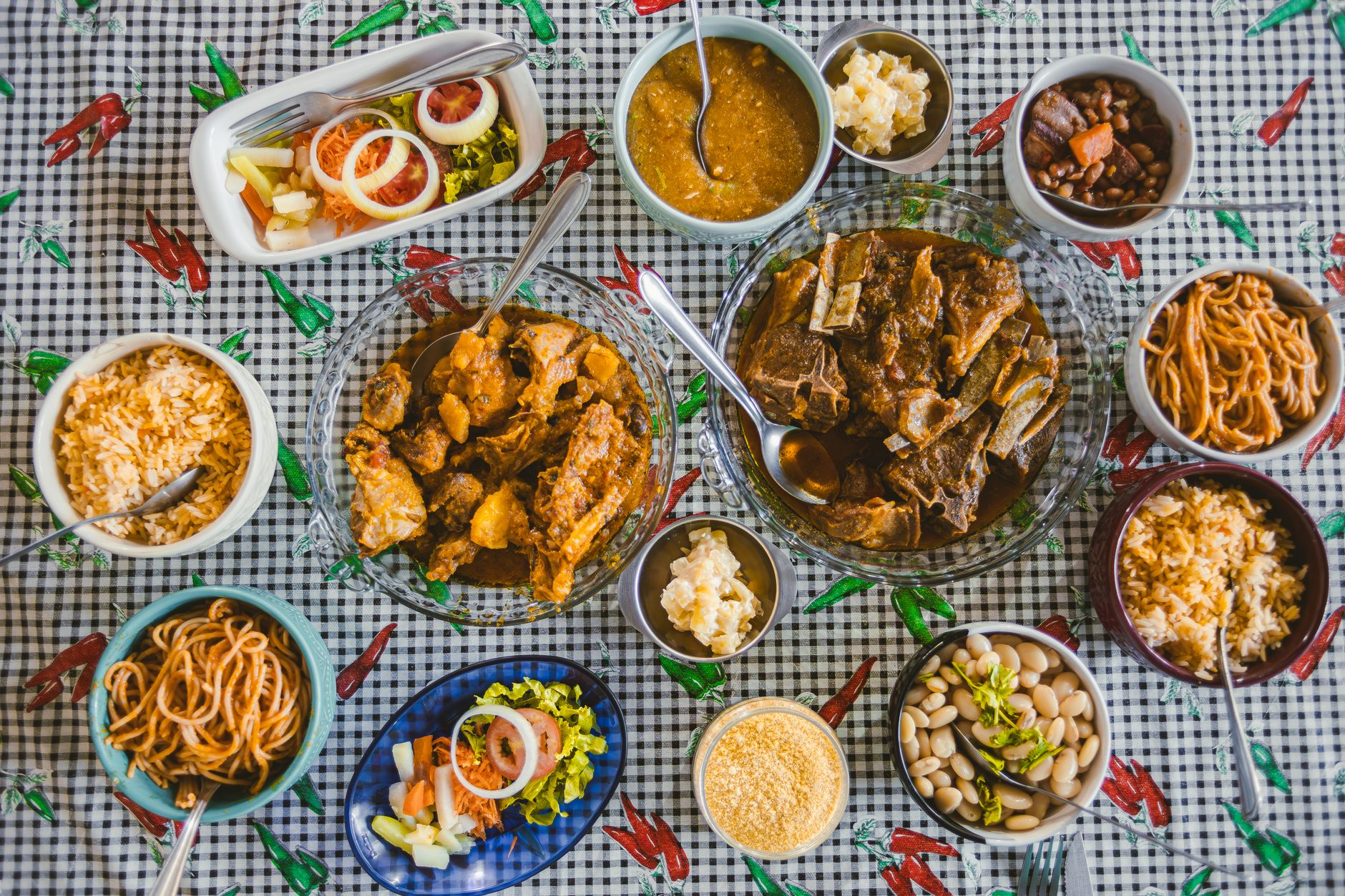
Togo eats with seriousness and with the fingers. Akume arrives as a mound of fermented maize, dense and elastic, a thing less served than installed, and you tear off a piece with the right hand, never the left, roll it with the fingertips, then send it into ademe or gombo as if introducing one old friend to another. A country is a table set for strangers.
The palate here likes maturity. Sourness appears at breakfast in akassan, at lunch in ablo, under sauce, beside fish, inside steam, proof that time belongs in food and not only in history books. Fermentation is not an accident of storage; it is taste with memory.
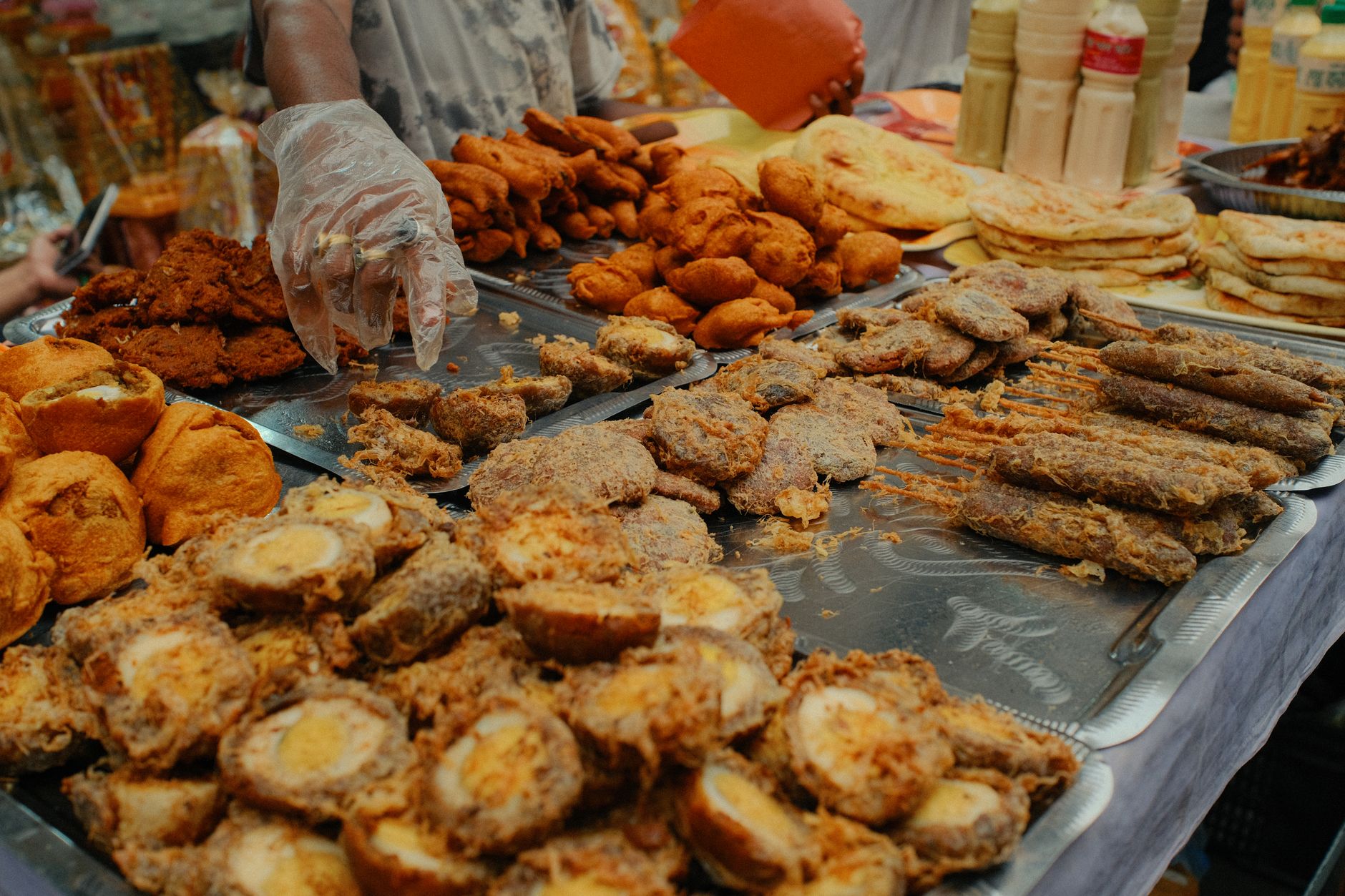
In Lomé, smoke and palm oil do half the speaking. Koklo meme crackles over charcoal, alloco browns at the edges, fried plantain offering the only sweetness a respectable lunch requires, while near the coast at Aného fish arrives with the Atlantic still visible in its flesh and salt still conducting the argument. You eat, you wipe the sauce with starch, you understand more than before.
Then come the leaf sauces, the green magnificence. Gboma dessi tastes dark, mineral, patient. Ademe is slippery in the way silk is slippery: not a defect, a doctrine. Anyone frightened by texture will suffer a little in Togo. This is useful.
Courtesy in Togo is not ornamental. It has bones. You do not stride into a shop in Tsévié or a courtyard in Atakpamé and announce your need as though the world were your clerk; you greet, you wait, you acknowledge age, you notice hierarchy, and only then do you ask for water, directions, the price of mangoes, the impossible thing you came for.
This can confuse travelers trained by efficiency. Efficiency is often just bad manners wearing a watch. In Togo, a greeting spends no time at all; it buys the right atmosphere.
Respect is audible in titles, in monsieur and madame, in the care given to elders, in the slight shift of the body when one addresses someone whose years or standing require it. The social sentence is arranged before the verbal one. Even bargaining, that noble theatrical art, works better when it begins with recognition rather than attack.
And one rule deserves gold leaf: use the right hand for food shared from a common bowl. The left hand stays discreet. Such customs are not quaint. They are forms of grammar, and grammar is what keeps appetite from becoming barbarism.
The architecture of Togo does not flatter the lazy eye. In Lomé, colonial facades and concrete commerce stand shoulder to shoulder, while in Aného old trading houses still hold the melancholy of the Slave Coast in their verandas and proportions, as if the walls had learned to keep accounts of both money and shame.
Then you reach Koutammakou, and the very idea of house becomes inadequate. The takienta is dwelling, granary, altar, defensive tower, family map. Mud rises into rounded forms that look, from a distance, almost playful; step closer and the severity appears, each curve earned by climate, belief, storage, danger, ritual, and the plain fact that beauty has no obligation to separate itself from use.
I distrust architecture that wants only to be looked at. These structures want to be lived in, climbed, stocked, protected, inherited. UNESCO can classify them all it likes; the buildings themselves remain stubbornly uninterested in abstraction.
Even the landscape collaborates. Near Kpalimé and the Agou highlands, the greener air softens edges; farther north, the light hardens them. Togo is narrow on the map and vast in wall logic. One country. Several philosophies of shelter.
Religion in Togo does not arrange itself politely into separate drawers. Catholic bells ring. Protestant hymns rise. The mosque orders time. Vodun remains present in shrines, ceremonies, objects, prohibitions, and the stubborn continuity of gestures that outlived both missionaries and administrators. Syncretism is too tidy a word for this. Life is messier and more exact.
Go to Togoville across Lake Togo and you feel it at once. Marian devotion, local ritual, water memory, pilgrimage, possession, rosaries, offerings: none of them cancel the others. They coexist with the frankness of relatives who know they will never agree and have stopped pretending otherwise.
Among Ewe communities, venavi figures for twins belong to a world where absence continues to require care. This is not metaphor. It is obligation. A carved figure can receive washing, clothing, feeding, address, because love is sometimes practical before it is philosophical.
What moved me most was not contrast but continuity. The sacred in Togo is less a building than a habit of attention. A tree, a room, a lake crossing, a church feast, a family threshold in Notsé: each can suddenly reveal that the visible world has been sharing space all along.
Togo has writers who refuse the easy sentence about Africa, which is already a moral achievement. Félix Couchoro stands near the beginning of francophone West African fiction, an early cartographer of the possible; Kossi Efoui writes with the elegance of someone allergic to expected frames; Sami Tchak travels through ideas and bodies with an appetite that does not ask permission first.
This matters because the country itself resists simplification. Any literature worthy of Togo must do the same. It must be able to hold Lomé without reducing it to traffic and sea air, Kpalimé without turning green into innocence, and Koutammakou without insulting it by calling it picturesque.
I think often of Notsé, where oral tradition remembers Agokoli, the tyrant king, and the night the Ewe escaped by softening the wall and walking backward to confuse pursuit. That story contains a whole library: cruelty, cunning, architecture, memory, diaspora, ritual. The body remembers what the archive misplaces.
Togolese literature, written or spoken, shares that talent for keeping a second blade under the fabric. It narrates, yes. It also watches the narrator. Dryness helps. So does irony. Affection, if it exists, arrives armed.
The coast is less resort strip than working shoreline. Between Lomé, Aného, and Togoville, you get surf, fishing beaches, colonial traces, and Lake Togo's lagoon world in one compact arc.
Notsé is not just a name in a history book. The story of Agokoli, the breached wall, and the backward escape still shapes how Ewe identity is remembered across modern Togo, Ghana, and Benin.
Kpalimé and Mount Agou deliver the greenest side of Togo: coffee slopes, waterfalls, steep roads, and air that feels different from the coast. It is the easiest place in the country to trade humidity for elevation.
Koutammakou is Togo's signature cultural landscape for a reason. The takienta mud tower-houses are defensive design, spiritual map, and family dwelling at once, still used rather than staged.
Togolese food is built on fermentation, smoke, pepper, and starch you eat with your right hand. In Lomé markets and roadside stops inland, akume, ablo, ademe, and grilled chicken tell you more than a hotel buffet ever will.
Togo rewards travelers who like movement. From Lomé to Kara, the country works as a clean north-south itinerary with clear shifts in language, landscape, food, and architecture rather than one-note repetition.
12 cities — start with the ones we'd send you to first.
The only capital in Africa you can walk into from a beach, where the Grand Marché's voodoo stalls sit three blocks from French colonial arcades and the Atlantic rolls in unimpeded by any natural harbour.
A hill-town in the southwestern highlands where coffee and cacao plantations climb toward waterfall trails and the air is cool enough at night to need a second layer — rare anywhere on the Gulf of Guinea coast.
A UNESCO-listed landscape in the far northeast where the Batammariba people still live in takienta — two-storey mud tower-houses that function simultaneously as granary, sleeping quarters, and family altar.
The walled city whose softened western ramparts mark the spot where the Ewe people broke free from a tyrant king one night in the 17th century, walking backwards through the breach to confuse his soldiers.
A plateau crossroads town at Togo's geographic midpoint where the red-earth market runs on Kabyè, Ewe, and French in the same breath and the surrounding hills hide waterfalls most visitors drive straight past.
Togo's second-largest city and the heartland of the Tem people, known for the Adossa festival in which initiates demonstrate firewalking and knife-handling as public proof of spiritual protection.
A faded colonial port town on a thin sand strip between the lagoon and the Atlantic, where Afro-Brazilian merchant family villas — louvred shutters, crumbling plasterwork — record the slave-trade fortunes that built them
A village of barely a few thousand people on the northern shore of Lake Togo that carries outsized history: it is where German colonial officer Gustav Nachtigal signed the 1884 protectorate treaty that put Togo on Europe
The northern city that is both a practical base for Koutammakou and the home territory of the Kabyè people, whose wrestling traditions — lutte traditionnelle — are not sport so much as a social institution with ritual st
Southern Togo runs on traffic, sea air, market noise, and a coastline that looks tempting from the road but deserves respect in the water. Lomé is where you sort cash, SIM cards, transport, and sleep, while the lagoon belt east of the city carries older stories through Togoville and Aného rather than beach-resort fantasy.
The southwest uplands around Kpalimé are cooler, greener, and less abrasive than the coast, with steep roads, cocoa and coffee country, and some of the easiest hiking terrain in Togo. Badou adds a quieter frontier-town mood near the Ghana side, and Mount Agou country gives the landscape a shape many travelers do not expect this close to the Gulf of Guinea.
This is where southern Togo turns inward from the coast and starts speaking in founding myths, roadside farms, and market towns that still feel tied to clan geography. Notsé matters because the Ewe memory of escape from Agokoli's wall is not museum folklore here; it still sits in ritual, language, and the map itself.
Atakpamé sits on the country's spine, the stretch where long-distance buses, freight traffic, and everyday north-south movement define the mood. It is less polished than Lomé and less lush than Kpalimé, but that is the point: central Togo shows how the country actually connects, one ridge town and bus stop at a time.
North of the center, the architecture hardens, the light gets drier, and the road feels farther from the sea than the map suggests. Kara works as the logistical hinge for Koutammakou, where takienta tower-houses are still lived in as family architecture rather than staged heritage, while Dapaong marks the threshold of the Savanes and the point where security planning becomes part of the itinerary.
Togo's history is short on ancient stone and long on memory, movement, and contested power.
Archaeology and oral tradition point to an old metallurgical culture in the Bassar region, where iron was worked with both technical skill and ritual gravity. Long before colonial borders, inland Togo already held specialized knowledge that shaped status, trade, and belief.
Traditions place Notsé at the heart of early Ewe political life. What later generations remembered was not simply a town but a walled concentration of power that would become a founding trauma.
Accounts across Ewe communities describe Agokoli as the harsh ruler whose excess made escape necessary. Historians debate details, but the story's durability shows how deeply the episode marked collective identity.
According to tradition, Ewe families weakened one section of the wall, fled at night, and walked backwards to confuse pursuit. The tale explains later dispersal across present-day Togo, Ghana, and Benin, and still echoes in ritual memory.
On the dangerous surf coast, African merchants who controlled canoes, credit, and local alliances became indispensable middlemen. Aného's wealth came from that coastal skill, and from the brutal Atlantic commerce tied to it.
German envoy Gustav Nachtigal concluded a protectorate treaty at Togoville, giving Berlin its claim to Togoland. The scene has the neatness of diplomacy and the reality of imperial pressure.
Nachtigal's name is inseparable from Togo's colonial turning point. He represented an empire that specialized in making conquest look contractual.
Germany shifted the capital to Lomé, whose coastal position made it ideal for export administration. From then on, the city's political weight would only grow.
Rail lines linked Lomé to the interior, serving plantations and extraction more than local comfort. The network became one of the colonial state's proudest symbols and one of its clearest priorities.
British and French forces occupied the colony within weeks of the war's outbreak. Imperial confidence collapsed quickly; the map would soon be redrawn by victors rather than residents.
The former colony was divided into British and French mandate territories. For Ewe communities, this was not an abstract legal arrangement but a border cutting through older social worlds.
The new trusteeship language suggested oversight, accountability, and eventual self-government. Colonial reality changed more slowly than the terminology.
Olympio's party triumphed in elections that set French Togoland firmly on the road to sovereignty. He emerged as the central civilian strategist of independence.
On 27 April 1960, Togo entered independence with Sylvanus Olympio as president. The new republic looked disciplined and hopeful, though its institutions were still fragile.
Olympio was killed during the coup of 13 January 1963 outside the American embassy in Lomé. The murder gave independent Togo one of the earliest and most shocking military ruptures in sub-Saharan Africa.
Grunitzky became president after the coup, trying to steady a state already marked by faction and force. His brief tenure showed how hard civilian politics had become once soldiers entered the center of power.
A second coup brought Eyadéma to power, beginning a rule that would last nearly four decades. He built a resilient presidential system that shaped every later political contest.
Opposition groups, unions, and civic voices pushed for democratic change in a charged national conference. The opening was real, but so was the regime's capacity to survive it.
The killing of opposition figure Tavio Amorin became one of the darkest symbols of the democratic struggle. It showed how dangerous political renewal remained in practice.
After Eyadéma's death, power passed in tumultuous circumstances to his son Faure Gnassingbé. The transition proved that in Togo, the question of succession had never been theoretical.
Before the Border
The anonymous Bassar smith is the first great Togolese figure: no portrait, no diary, only the stubborn evidence of skill buried in iron and earth.
A furnace glows in the Bassar country long before anyone writes the word "Togo" on a map. The clay shaft stands almost as tall as a man, its form recalling a body in labor, while smiths feed it charcoal and air as if they were attending a birth. In the plateau lands north of present-day Sokodé and toward Kara, iron is already more than a trade good. It is status, ritual, and proof that knowledge can pass through families without ever entering an archive.
Ce que l'on ignore souvent, c'est que Togo's oldest prestige does not begin at the coast. It begins inland, with metal, migration, and the slow weaving together of peoples who would later be called Bassar, Kabiyé, Ewe, Mina, Tem, and many others besides. The country is narrow on a modern atlas, yet the human traffic through it was anything but small.
The landscape shaped the movement. Forest gave way to plateau, plateau to savanna, and each shift in soil and rain created a different way of living, planting, building, and praying. By the time coastal settlements thickened around what would later become Aného and Lomé, inland societies had already spent centuries making kingdoms of kinship rather than stone.
That matters because Togo's history did not begin with Europeans arriving by ship. They arrived late. When they did, they found trading worlds, sacred geographies, and political habits already in motion, which is why so much of the country's later drama is really the story of outside powers trying, with mixed success, to pin down a land that had never been still.
Archaeologists found iron objects in Bassar burials that had rusted into lace but still kept their shape, as if the dead had been sent into the next world with tools that refused to disappear.
The Notsé Memory
Agokoli survives less as a man than as a warning: the ruler whose excess gave a people its founding story of escape.
A wall rises around Notsé, thick with packed earth and fear. Oral tradition across southern Togo, eastern Ghana, and western Benin remembers the city as both refuge and prison, ruled by the formidable Agokoli, whose name still lands with a chill in Ewe memory. Whether every detail is documented is another matter; that the story left a scar is beyond doubt.
According to tradition, Agokoli demanded impossible labor. Subjects were said to mix thorn branches into the clay used for construction, trampling the mass until feet bled, while punishments turned obedience into spectacle. This is the sort of detail one does not invent lightly. It has the hard edge of remembered pain.
Then comes the scene that belongs in a chronicle and in a theatre. Families pour water, little by little, against one section of the wall until the earth softens; when the opening is finally made, they flee at night and walk backwards, dragging branches to confuse pursuit. It is one of those stories so vivid that even if a historian trims the legend, the emotional truth remains intact.
The consequence was enormous. The dispersal from Notsé helps explain why Ewe-speaking communities are spread across modern frontiers, and why the memory of departure still shadows ritual life. A people left one city and, in leaving it, made a region. After that, the coast would matter more than ever.
In Notsé's Agbogbo-Za festival, the backward walk still recalls that escape, turning strategy into ceremony centuries after the wall itself lost its power.
Lagoon Kingdoms and Coastal Brokers
King Mlapa III of Togoville understood that a chief on the lagoon had to read visitors quickly, because one bad signature could outlive him by generations.
The surf breaks hard on the coast near Aného, and that detail changes everything. European ships could anchor offshore, but the bar was treacherous, so wealth belonged to the people who knew how to move between sea and beach, canoe and counting house, shrine and ledger. On this strip of the Slave Coast, commerce depended on African intermediaries who understood the water better than the foreigners who claimed to command it.
Aného grew rich in this world. Mina and related merchant families dealt in palm products, cloth, captives, and credit, while Catholic names, Brazilian ties, and local lineages mixed in the same households. A man might sign a letter in Portuguese, bargain in Ewe, and consult a shrine before finalizing a deal. The colonial villas still visible in Aného are not romantic décor; they are the afterimage of a brutal economy.
Togoville, across Lake Togo, carried a different gravity. Chiefs there negotiated with newcomers while holding on to older sacred authority, and the lagoon itself became a corridor of power, not a scenic backdrop. Missionaries would later leave churches, statues, and pious paperwork, but the older spiritual map never vanished. It merely learned to coexist, sometimes politely, sometimes not.
This was the age in which Togo's coast learned the habit of mediation. It would prove useful and dangerous. The same talent for dealing with outsiders that enriched Aného and strengthened places like Togoville also prepared the ground for the next set of men arriving with treaties in one pocket and gunboats in the other.
Some coastal merchant families kept European-style parlors for official calls and maintained Vodun obligations with equal seriousness, which tells you more about West African pragmatism than any colonial report ever could.
German Togoland and the Mandate Years
Sylvanus Olympio was not a romantic dreamer but a cool strategist, which is often how empires are finally beaten.
In July 1884, a treaty is signed at Togoville under the eye of Gustav Nachtigal, the German envoy with a talent for making coercion look administrative. Berlin would later boast of Togoland as a "model colony," a phrase that sounds tidy until one asks who built the roads, who paid the taxes, and who had the right to refuse. The answer, of course, is that refusal had limits.
German rule brought railways, plantations, telegraph lines, and a bureaucratic severity that still lingers in the colonial record. Lomé became the hinge of the system, tied to the interior by transport corridors designed for export rather than comfort. Kpalimé's highlands fed cash-crop dreams, while labor demands and taxation taught villagers exactly what a modern colony meant when it arrived with survey tools and rifles.
The First World War shattered the arrangement almost overnight. British and French forces occupied Togoland in 1914; then came partition, League of Nations mandates, and later the United Nations trusteeship, which gave the territory a new language of legality without ending the old imbalance of power. A line on a map split Ewe communities between British and French administrations, turning one historical people into a diplomatic inconvenience.
And yet colonial rule also created the generation that would challenge it in French, in petitions, in party politics, and in the streets. Sylvanus Olympio emerged from this world of schools, commerce, and hard calculation. The road to independence did not begin in a glorious burst. It began in files, grievances, and the dangerous discovery that empire could be made to answer for itself.
German officials called Togoland their best-run African possession, but one reason it looked orderly on paper is that they relied heavily on forced labor the paperwork preferred not to dramatize.
Independence and the Long Shadow of Power
Gnassingbé Eyadéma cultivated the image of an indestructible father of the nation, yet his authority always depended on a very human skill: knowing whom to reward, whom to frighten, and when to do each.
Midnight approaches on 27 April 1960, and the new state steps into the light with Sylvanus Olympio at its head. He had argued, maneuvered, and outlasted rivals to bring French Togoland to independence, and for a moment the future seemed almost elegant: a small country, a disciplined leader, a chance to write a new script between Lomé and the northern towns. History, alas, dislikes elegance when power is at stake.
On 13 January 1963, Olympio was killed outside the American embassy in Lomé during the first military coup in independent sub-Saharan Africa. The scene still shocks because it is so intimate. A president in flight, a gate, a burst of gunfire, and a republic suddenly taught that sovereignty does not protect a man from his own soldiers.
After the brief presidency of Nicolas Grunitzky came the rise of Gnassingbé Eyadéma in 1967, and with him one of the longest rules on the continent. He wrapped authority in military discipline, regional loyalties, nationalism, and an artful reading of the Cold War and its aftermath. Roads were built, the state endured, and dissent was repeatedly contained, sometimes by patronage, sometimes by fear, often by both.
The 1990s opened the great democratic argument without settling it. Protest, national conference, constitutional promises, dynastic succession in 2005, and continued opposition pressure all reshaped the country without breaking its central question: who truly owns the state. To travel today from Lomé through Atakpamé toward Kara and on to Koutammakou is to cross not one Togo but several, each still negotiating the inheritance of independence.
Olympio reportedly wanted Togo to avoid building an oversized army for a poor young state; the bitter irony is that soldiers then destroyed his presidency before the republic was three years old.
In Togo, speech does not begin with information. It begins with weather, sleep, health, kin, the fact of your face appearing in the morning. French runs the offices and the school registers, but in Lomé the day warms properly in Ewe and Gen, where a greeting can sound like a door opening on hinges you did not know were there.
A blunt question lands like a plate dropped on tiles. You say bonjour first, then you ask after the person, then only then do you reach your reason, and by that point the reason has become almost modest. Civilization, I suspect, starts exactly here.
Words carry biographies. Ablodé does not merely mean freedom; it arrives with independence still clinging to it like dust on a hem. Nana means mother, grandmother, rank, tenderness, authority, and the right to be obeyed without raising the voice. English hates such abundance. It likes one drawer per object.
Head north and the music of the country changes. Kabiyé takes the weight that Ewe carries in the south, while French remains the paper language, the stamp language, the language that signs and receipts trust. But the real nation lives in the passage between tongues, in the swift way a market woman can measure you in one language, tease you in another, and close the sale in a third.
Togo eats with seriousness and with the fingers. Akume arrives as a mound of fermented maize, dense and elastic, a thing less served than installed, and you tear off a piece with the right hand, never the left, roll it with the fingertips, then send it into ademe or gombo as if introducing one old friend to another. A country is a table set for strangers.
The palate here likes maturity. Sourness appears at breakfast in akassan, at lunch in ablo, under sauce, beside fish, inside steam, proof that time belongs in food and not only in history books. Fermentation is not an accident of storage; it is taste with memory.
In Lomé, smoke and palm oil do half the speaking. Koklo meme crackles over charcoal, alloco browns at the edges, fried plantain offering the only sweetness a respectable lunch requires, while near the coast at Aného fish arrives with the Atlantic still visible in its flesh and salt still conducting the argument. You eat, you wipe the sauce with starch, you understand more than before.
Then come the leaf sauces, the green magnificence. Gboma dessi tastes dark, mineral, patient. Ademe is slippery in the way silk is slippery: not a defect, a doctrine. Anyone frightened by texture will suffer a little in Togo. This is useful.
Courtesy in Togo is not ornamental. It has bones. You do not stride into a shop in Tsévié or a courtyard in Atakpamé and announce your need as though the world were your clerk; you greet, you wait, you acknowledge age, you notice hierarchy, and only then do you ask for water, directions, the price of mangoes, the impossible thing you came for.
This can confuse travelers trained by efficiency. Efficiency is often just bad manners wearing a watch. In Togo, a greeting spends no time at all; it buys the right atmosphere.
Respect is audible in titles, in monsieur and madame, in the care given to elders, in the slight shift of the body when one addresses someone whose years or standing require it. The social sentence is arranged before the verbal one. Even bargaining, that noble theatrical art, works better when it begins with recognition rather than attack.
And one rule deserves gold leaf: use the right hand for food shared from a common bowl. The left hand stays discreet. Such customs are not quaint. They are forms of grammar, and grammar is what keeps appetite from becoming barbarism.
The architecture of Togo does not flatter the lazy eye. In Lomé, colonial facades and concrete commerce stand shoulder to shoulder, while in Aného old trading houses still hold the melancholy of the Slave Coast in their verandas and proportions, as if the walls had learned to keep accounts of both money and shame.
Then you reach Koutammakou, and the very idea of house becomes inadequate. The takienta is dwelling, granary, altar, defensive tower, family map. Mud rises into rounded forms that look, from a distance, almost playful; step closer and the severity appears, each curve earned by climate, belief, storage, danger, ritual, and the plain fact that beauty has no obligation to separate itself from use.
I distrust architecture that wants only to be looked at. These structures want to be lived in, climbed, stocked, protected, inherited. UNESCO can classify them all it likes; the buildings themselves remain stubbornly uninterested in abstraction.
Even the landscape collaborates. Near Kpalimé and the Agou highlands, the greener air softens edges; farther north, the light hardens them. Togo is narrow on the map and vast in wall logic. One country. Several philosophies of shelter.
Religion in Togo does not arrange itself politely into separate drawers. Catholic bells ring. Protestant hymns rise. The mosque orders time. Vodun remains present in shrines, ceremonies, objects, prohibitions, and the stubborn continuity of gestures that outlived both missionaries and administrators. Syncretism is too tidy a word for this. Life is messier and more exact.
Go to Togoville across Lake Togo and you feel it at once. Marian devotion, local ritual, water memory, pilgrimage, possession, rosaries, offerings: none of them cancel the others. They coexist with the frankness of relatives who know they will never agree and have stopped pretending otherwise.
Among Ewe communities, venavi figures for twins belong to a world where absence continues to require care. This is not metaphor. It is obligation. A carved figure can receive washing, clothing, feeding, address, because love is sometimes practical before it is philosophical.
What moved me most was not contrast but continuity. The sacred in Togo is less a building than a habit of attention. A tree, a room, a lake crossing, a church feast, a family threshold in Notsé: each can suddenly reveal that the visible world has been sharing space all along.
Togo has writers who refuse the easy sentence about Africa, which is already a moral achievement. Félix Couchoro stands near the beginning of francophone West African fiction, an early cartographer of the possible; Kossi Efoui writes with the elegance of someone allergic to expected frames; Sami Tchak travels through ideas and bodies with an appetite that does not ask permission first.
This matters because the country itself resists simplification. Any literature worthy of Togo must do the same. It must be able to hold Lomé without reducing it to traffic and sea air, Kpalimé without turning green into innocence, and Koutammakou without insulting it by calling it picturesque.
I think often of Notsé, where oral tradition remembers Agokoli, the tyrant king, and the night the Ewe escaped by softening the wall and walking backward to confuse pursuit. That story contains a whole library: cruelty, cunning, architecture, memory, diaspora, ritual. The body remembers what the archive misplaces.
Togolese literature, written or spoken, shares that talent for keeping a second blade under the fabric. It narrates, yes. It also watches the narrator. Dryness helps. So does irony. Affection, if it exists, arrives armed.
Agokoli matters less for what can be proved in an archive than for the fear he left in memory. In Notsé, his name is tied to the wall, the forced labor, and the night escape that scattered Ewe communities across modern borders, which is a remarkable form of immortality for a ruler who may survive more in story than in stone.
Mlapa III stands at one of those cruel turning points where a local ruler receives foreign envoys and cannot know how much the signature will cost. His connection to Togoville is not ceremonial; it is the moment when lagoon politics became world politics, and Togo's fate narrowed into treaty language.
Nachtigal arrived as a diplomat and left as one of the men who changed West Africa with paper as effectively as others did with cannon. In Togo, his name belongs to that polished imperial style that called coercion consultation and annexation protection.
Olympio was elegant, reserved, and harder than his manners suggested. He turned anti-colonial politics into a disciplined campaign for sovereignty, then died in front of the American embassy in Lomé, which gave Togo one of the most brutal founding tragedies in modern African history.
Grunitzky always seems to enter the story through the side door of crisis. He tried to stabilize a country already wounded by assassination and faction, but his presidency shows how narrow the civilian space had become once the military discovered its own power.
Eyadéma built one of postcolonial Africa's great systems of durable rule, mixing force, ceremony, patronage, and a carefully staged closeness to ordinary people. He could seem at once invincible and intensely local, which is often the secret of long presidencies.
Gilchrist carried one of Togo's heaviest surnames into the dangerous theatre of opposition. For decades he embodied the unfinished business of 1963, turning family loss into political persistence even when exile, violence, and electoral frustration made the struggle look almost hereditary.
Amorin belongs to that brief, electric moment when democratic language seemed ready to upend the habits of fear. His assassination in 1992 froze him in the national imagination as a young man who represented a different future precisely because he did not live to compromise with it.
This is the shortest route that still gives you more than city errands and airport asphalt. Start in Lomé for the practical base, then move east through Tsévié to Togoville and Aného, where lagoon crossings, old Catholic memory, and the Slave Coast story all sit within easy striking distance.
This week-long route cuts into the greener southwest, where the heat loosens, the roads climb, and coffee-country landscapes replace the coast. Kpalimé and Badou give you hikes and market towns, Atakpamé adds a central ridge-town feel, and Notsé brings the Ewe founding story back into focus.
This is the strongest long overland route if you want Togo's changing architecture and cultural geography in one line. Sokodé marks the Muslim-influenced center, Kara shifts the social texture again, Koutammakou delivers the country's defining mud-tower landscape, and Dapaong sits at the edge of the Sahel with all the planning caveats that implies.
Right hand. Pinch. Roll. Dip. Noon meal. Shared bowl. Family table. Market bench.
Steam basket. Morning or late afternoon. Fingers. Pepper sauce. Street stall in Lomé or Aného. Talk and waiting.
Charcoal grill. Chicken leg. Fingers. Chili. Beer or water. Evening. Friends. Smoke on clothes.
Cup or bowl. Spoon. Dawn. Corn porridge, peanuts, botokoin. Bus station, roadside, workday start.
Plantain slices. Frying oil. Paper wrap or plate. Snack, side dish, rescue meal. Shared without ceremony.
Rice and beans. Spoon. Midday. Market lunch. Solo eating, fast eating, return to work.
Leaf sauce. Steamed cakes. Tear, press, scoop. Lunch after church, lunch with kin, lunch that lasts.

Use Togo's official portal, voyage.gouv.tg, before you book a tight connection. As of April 2026, tourist visas are handled online, applications should be filed at least 5 days before arrival, and travelers arriving by air also need the portal's immigration registration. Yellow-fever proof is required for travelers aged 9 months and older.
Togo uses the West African CFA franc, or XOF, with a fixed peg of 1 EUR = 655.957 XOF. Cash still runs the day outside larger hotels and supermarkets in Lomé, so carry small notes for taxis, market food, and roadside stops. A realistic daily budget starts around 20,000 to 35,000 XOF for basic travel and climbs fast once you add air-conditioned rooms or a private driver.
Most trips begin in Lomé at Gnassingbé Eyadéma International Airport, the country's only practical air gateway for normal tourist arrivals. The easiest long-haul routings usually connect through Paris, Brussels, Addis Ababa, Casablanca, Accra, or Abidjan. Overland arrivals from Ghana or Benin are common, but border formalities are slower than a short map line suggests.
Plan on the road for everything. Togo has no useful passenger rail network and no domestic flights that matter for ordinary trip planning, so you will piece together shared taxis, intercity buses, and hired cars along the Lomé-Cinkassé corridor. In Lomé, Gozem is the one app worth downloading before you land.
November to February is the easiest broad-country travel window, with lower rain risk and better road conditions from Lomé to Kara. The southwest around Kpalimé and Mount Agou is greener and wetter than the coast, while the north has one main rainy season from roughly June to September and a dusty Harmattan period in the dry months. July and August can work in the south, but they are a weaker bet for northern overland plans.
Lomé has the strongest mobile signal, the best hotel Wi-Fi, and the least friction for ATM, card, and eSIM setup. Coverage thins as you move into the Plateaux highlands and parts of the north, where power cuts and slower data are common enough to affect route planning. Download offline maps, keep cash on hand, and do not assume your guesthouse in Koutammakou can process a card.
The main traveler risks are road accidents, strong coastal currents, petty theft in busy urban areas, and the security situation in the far north. As of April 15, 2026, the UK government advises against all travel within 30 km of the Burkina Faso border except Dapaong and the N1 approach, and against all but essential travel to the rest of the Savanes Region. For most visitors, Lomé, Kpalimé, Notsé, Atakpamé, Aného, and central Togo are the simpler planning core.
ATMs and card terminals are easiest in Lomé, not in roadside towns. Break larger bills in supermarkets or decent hotels before you head toward Kpalimé, Atakpamé, or Kara.
Do not build a Togo itinerary around rail. There is no practical passenger train network, so every realistic route is by road.
Start with bonjour, bonsoir, madame, or monsieur before you ask for a room, a fare, or a favor. In Togo, skipping the greeting lands harder than using imperfect French.
Treat the 5-day online visa lead time as a floor, not a target. Apply earlier if you are flying on weekends, on a multi-leg ticket, or into Lomé late at night.
For day trips outside Lomé, a car with driver often saves more time than stringing together bush taxis. Fix the total fare, route, waiting time, and fuel assumptions before the key turns.
The Gulf of Guinea can look flat from the sand and turn dangerous fast in the water. Swim only where locals clearly do, and do not treat the beach near Lomé or Aného like a sheltered Mediterranean bay.
Signal is strongest in Lomé and less dependable once you move into the highlands or the far north. Save your route, hotel pins, and border-town contacts before you lose data.
Explore Togo with a personal guide in your pocket
Audio guides for 1,100+ cities across 96 countries. History, stories, and local insight — offline ready.

Probably yes if you are traveling on a standard US, Canadian, UK, EU, or Australian tourist passport. Togo's official portal says visa-on-arrival is suspended, applications are handled online through voyage.gouv.tg, and the exact exemption list is mostly limited to ECOWAS states and specific statuses.
Do not plan on it. Togo's official travel portal says visa-on-arrival is suspended until further notice, and air travelers are expected to complete the online process before departure.
Yes. CDC states that yellow-fever vaccination is required for arriving travelers aged 9 months and older, and it also recommends the vaccine for travelers to Togo more broadly.
Much of the country is manageable with ordinary caution, but the far north needs active checking before you go. As of April 15, 2026, the UK advises against all travel within 30 km of the Burkina Faso border except Dapaong and the N1 route to it, and against all but essential travel to the rest of the Savanes Region.
January is the easiest single bet for a broad-country trip. More generally, November to February gives you the best odds for dry roads, easier heat, and simpler logistics from Lomé through central Togo.
Seven days is the practical minimum if you want more than Lomé and a rushed day trip. That gives you time for the coast and either the Plateaux around Kpalimé or a central route through Atakpamé and Sokodé without spending the whole week in transit.
Yes, but you need patience and cash. Shared taxis and buses cover the main corridor well enough, though a hired car with driver becomes much more efficient once you want waterfalls, village roads, or flexible stops outside the main highway.
No, not reliably. French is the working language for transport, hotels, paperwork, and most practical travel interactions, while Ewe dominates much of the south and Kabiyé is strong in the north.
Last reviewed