An introduction.
Researched by the Audiala editorial team from historical records, architectural archives, and local expertise.
DDawn at Kata Beach Meeting Point for Scuba Divers begins with fins slapping pavement, tanks clinking like loose bells, and the Andaman Sea lying flat as hammered tin. In Phuket, Thailand, that small patch of sand matters because you can walk straight from breakfast to a reef, then spend an hour face to face with cuttlefish, pipefish, and the patient chaos of a training dive. Most visitors come for the beach. Divers come because Kata turns an ordinary shoreline into an underwater front door.
Kata Beach is not a pier, a monument, or a purpose-built dive center with a plaque out front. The place is simpler than that. It is a 1.5-kilometer bay on Phuket's west coast, roughly the length of 15 football fields laid end to end, and one of the few spots on the island where shore diving feels practical rather than punishing.
That matters if you are rusty, curious, or traveling with someone who wants an easy first descent. In calm-season water, instructors can brief you in the shade, shoulder tanks across warm sand, and have you in shallow reef within minutes instead of after a long boat ride that smells of diesel and sunscreen.
And Kata has a second life after the first splash. Lift your head and the green ridge behind the bay rises toward landmarks such as The Big Buddha, Phuket, a reminder that Phuket is built in layers: reef below, beach in front, hills and shrines behind.
Where to stay in Phuket to ACTUALLY have a good time!
Bangkok Jack01 What to see.
The Southern Shore Entry
The Shallow Reef and Its Small Drama
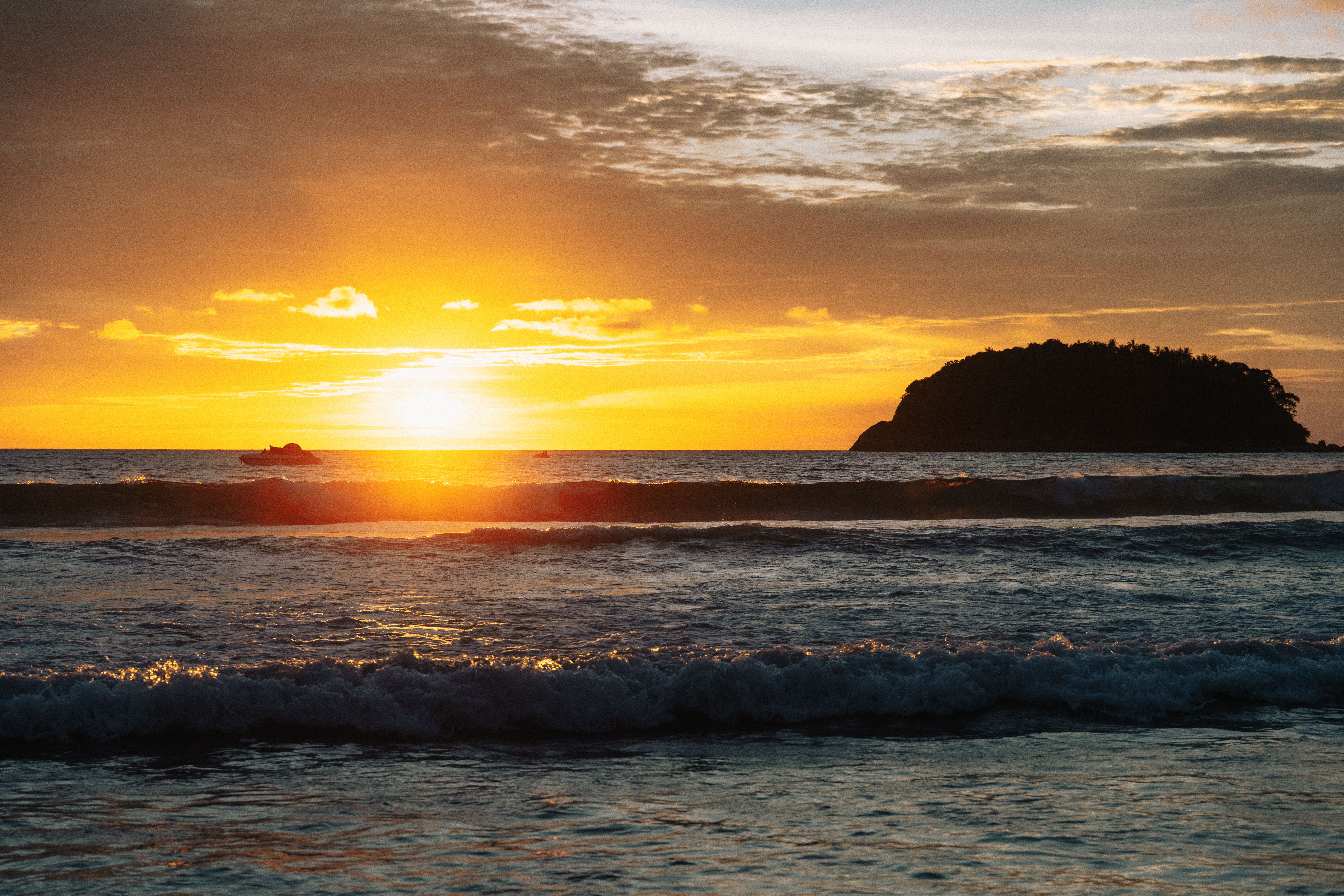
Sunset, When the Beach Changes Shift
02 In pictures.


Plan and listen to Kata Beach Meeting Point for Scuba Divers with Audiala.
Audio guide in your pocket, itinerary in your browser. Built for the way you actually visit.
03 Visitor logistics.
The practical scaffolding for a good visit — kept short.
Getting There
Kata Beach sits about 20 km west of Phuket Town, and most divers reach the meeting point by pre-arranged dive-shop pickup or taxi rather than by hunting for a formal gate. From Kata or Karon, the usual drill is simple: meet your operator near Kata Road or the beach edge, then walk over sand to the shore-entry area; from Phuket Town, allow about 45-60 minutes by car depending on traffic.
Opening Hours
As of 2026, Kata Beach itself is open all day because this is a public beach, but scuba activity follows sea conditions rather than a posted clock. Shore dives run in Phuket's calmer season, and many operators treat the southwest-monsoon months, usually May to October, as poor or unsafe for regular beach diving; night dives and training dives happen only when visibility and surf behave.
Time Needed
Give yourself 1.5 to 2 hours for a refresher or single training-style shore dive, which is enough for kit setup, a slow entry, and the easy swim back. A macro-focused dive with photos or a night dive usually wants half a day once briefings, rinsing gear, and waiting for the light to change are included.
Accessibility
The meeting point is easy to reach by car, but the last stretch is the problem: soft sand, uneven footing, and carrying tanks across the beach. Wheelchair users can get close on paved streets near the bay, though the actual shore entry is not accessible in any meaningful way, especially when surf has cut ruts into the sand.
04 Tips for visitors.
Small things that change the day.
Pick Your Season
Kata works best in Phuket's calm season, when the bay settles down and shore entry feels manageable instead of like a wrestling match with foam and fins. If you're visiting between May and October, ask your operator that same day whether the beach is genuinely divable rather than trusting an old schedule.
Go For Macro
This is not the place for cathedral-sized coral scenery; it's where patient divers stare into rubble, sea grass, and reef edges until small creatures start appearing. Bring the macro setup, not the widest lens you own.
Don't Self-Guide
Map pins make this sound like a fixed dive landmark, but the real meeting point shifts with operator habits, surf, and beach access on the day. Book with a local shop and get the exact rendezvous in writing, because 'Kata Beach' covers 1.5 km of sand, about the length of 15 football fields laid end to end.
Easy Pairing
Kata works well as a first or last Phuket dive day because entry is from the beach, not a long boat run, so you spend less time staring at engines and more time in the water. If you want a land-based follow-up, the hill roads inland lead toward The Big Buddha, Phuket, which makes more sense after a shore dive than committing to another transfer across the island.
Save On Logistics
The cheap move is staying in Kata or Karon and choosing an operator that meets locally, because paying for long cross-island transfers to reach a shore dive is faintly ridiculous. Many shops around Kata sell this beach as a refresher, training, or night-dive site, so compare packages before you commit.
Conservation Matters
Kata has also been used as a marine clean-up gathering point, including the April 3-4, 2021 'Phuket - Save the Sea Project,' and that tells you something about the place: this bay is worked hard and watched closely. Treat the shallows gently, keep fins off the bottom, and don't chase marine life for photos just because the water feels easy.
Where to Eat
Don't Leave Without Trying
Baan Khao Soi (Kata)
local favoriteOrder: Order the beef khao soi. Reviews keep coming back to its creamy broth, deep flavor, and the crisp noodles on top. If you want dessert, the burnt butter toast with vanilla ice cream gets real affection too.
This is the kind of place built around one dish and very clearly obsessed with getting it right. The warmth in the reviews matters here almost as much as the cooking: careful packaging, a welcoming owner, and food people remember after one bowl.
Mun Prao’s Cafe & Restaurant (มันพร้าวส์)
local favoriteOrder: Go for the prawns in tamarind sauce or the green curry. Regulars also call out the seafood fried rice and traditional Thai red curry, which suggests the kitchen is reliable well beyond one signature plate.
This is the flexible pick when your dive group wants Thai food done seriously without turning dinner into a debate. It opens early, runs late, and the reviews point to consistently polished cooking rather than one flashy dish.
Two friends kitchen
local favoriteOrder: The chicken breast with vegetables shows up more than once in reviews for good reason: well seasoned, generous, and carefully plated. If your table wants range, the burger and Thai dishes both get unusually strong praise.
A mixed group restaurant usually means compromise. Not here. Reviews suggest they manage the hard trick of doing Thai plates and Western comfort food with equal care, which makes it useful after a day in the water when nobody wants the same thing.
Art Space Cafe
cafeOrder: Order the double cheeseburger if you're hungry after a late dive day. Reviews also mention butter honey wings, sweet and spicy wings, and a solid spread of vegan options.
This one wins on personality. The food matters, but the bigger draw is the setting: rock music, hand-made artwork, and a place that feels more like somebody's private obsession than a polished beach-town formula.
Dining Tips
- check Phuket is a UNESCO Creative City of Gastronomy, and its food reflects Thai, Hokkien Chinese, Malay, and Peranakan influences.
- check Breakfast in Thailand is usually eaten early, generally before 9:00 AM.
- check Meal boundaries are loose in Thailand, so rice and noodle dishes can show up at any time of day.
- check If you want Phuket's traditional dim sum culture, Phuket Town is the stronger bet, usually from around 7:00 AM to noon, with the best selection around 8:00 AM to 10:00 AM.
- check Kata Night Market is the most relevant market near Kata Beach, typically running daily from 4:00 PM to 10:00 PM along Patak Road and Taina Road.
- check Phuket does not have one reliable island-wide restaurant closing day. Tourist-area venues are often open daily, but independent restaurants may shut one or two days a week, often Monday or Tuesday, so check current hours before you go.
Restaurant data powered by Google
05 How a Holiday Beach Became Phuket's Shore-Dive Classroom
Kata Beach does not offer the kind of history that comes with coronation dates or carved foundation stones. Its story is more recent and more revealing: a broad public bay in Phuket slowly turned into the island's most dependable shore-entry dive classroom, the place where beginners learn to breathe calmly and experienced photographers kneel in the sand waiting for something tiny to twitch.
Records from tourism authorities describe Kata first as a west-coast beach around 20 kilometers from Phuket Town, not as a dive landmark. Divers changed that reading. Over time, meeting points, training routines, and repeatable shore entries gave one section of the bay a new identity, and the beach started doing two jobs at once.
The King's Cup and the Moment Kata Entered the Sporting Imagination
Kata's shift from pretty bay to organized marine stage became visible in December 2016, when the Phuket King's Cup Regatta opened at Kata Beach Resort and Spa. The event honored King Bhumibol Adulyadej, Rama IX, and for one week the shoreline was no longer just a place to swim or sunburn. It was a working coast.
Sails replaced umbrellas as the day's main geometry, and the beach took on the clipped sound of race crews, support boats, and officials calling time. Divers were not the headline act, but the regatta mattered anyway because it confirmed something locals and operators already knew: Kata could handle marine activity that depended on timing, access, and disciplined use of the shore.
That reputation stuck. A beach trusted for organized sailing, training, and sea access also becomes a beach where dive shops are happy to tell nervous first-timers, yes, meet us here.
Operators Made the Habit
The Sea Fought for Attention Too
Listen to the full story in the app
The whole Kata Beach Meeting Point for Scuba Divers,
told well.
Audio guides for 1,100+ cities across 96 countries. History, stories, and local insight — offline ready.
06 Frequently asked.
The questions travellers send us most about Kata Beach Meeting Point for Scuba Divers.
Is Kata Beach Meeting Point for Scuba Divers worth visiting?
Yes, if you want Phuket's easiest shore-dive scene without committing to a full-day boat trip. This is really Kata Beach, a 1.5-kilometer bay in Karon where divers meet for training dives, refreshers, macro hunting, and night entries. The surprise is how practical it feels: fins in hand, sand underfoot, then reef.
How long do you need at Kata Beach Meeting Point for Scuba Divers?
Plan on 2 to 4 hours for a shore dive session. That usually covers the meetup, gear check, a beach entry, and one guided dive, with more time if you're doing a course or staying for a night dive. Sunset is often the sweet spot.
Can beginners dive at Kata Beach in Phuket?
Yes, beginners are one of the main reasons this spot matters. Dive operators use Kata for entry-level training because the beach access is easy and the reef sits in manageable depths during the calm season. Conditions still depend on weather, so ask about visibility and surf before you book.
What is Kata Beach scuba diving known for?
Kata Beach is known for shore diving, training dives, and tiny marine life that rewards patient eyes. Photographers come for macro subjects rather than dramatic drop-offs, and local operators keep returning because the walk-in access makes logistics easy. It works best when the sea is calm.
Is Kata Beach good for night diving?
Yes, many operators treat Kata as one of Phuket's most practical night-dive beaches. Shore entry means no boat schedule, and the reef changes character after dark when torchlight picks out movement in the sand and coral. That said, night dives should always go with a guide who knows the entry and exit points.
When is the best season to dive at Kata Beach?
The best season is the calmer dry-season window, usually November to April. That's when operators most often run shore dives here because surf and visibility are generally more cooperative. Monsoon months can turn the same beach into a poor entry.
Is Kata Beach a real dive site or just a meeting point?
It's both, but the name can mislead you. The map label sounds like a separate attraction, yet the documented place is Kata Beach itself, with dive shops and beach access points functioning as meetup spots for actual shore dives. Think beach first, pin second.
Verified, and shown.
Researched and written by the Audiala editorial team from historical records, architectural archives, and local expertise.
Confirmed that the canonical place is Kata Beach rather than a separate monument or museum.
Provided the beach identity, west-coast location, approximate 1.5-kilometer length, and distance from Phuket Town.
Used for operator context on Kata as a local shore-diving area and meeting point for scuba trips.
Supported the description of Kata as a practical shore-dive site used for beach dives and training.
Used for course and trip patterns centered on Kata and nearby beaches.
Provided supporting operator evidence that Kata Beach is used for shore dives, training, and guided packages.
Used to verify UNESCO context for Thailand and avoid implying UNESCO status for Kata Beach.
Used to confirm tentative-list context and that Kata Beach itself is not listed as a UNESCO property.
Provided conservation context for Andaman marine sites in Thailand without conflating them with Kata Beach.
Verified that Phuket hosted the 18th World Heritage Committee session in December 1994.
Confirmed the 2016 King's Cup Regatta opening at Kata Beach Resort and Spa, showing Kata's role in organized coastal events.
Researched from Wikidata, Wikipedia & official sources · fact-checked · How we make our guides →