Phuket.

7° N · 98° E Thailand

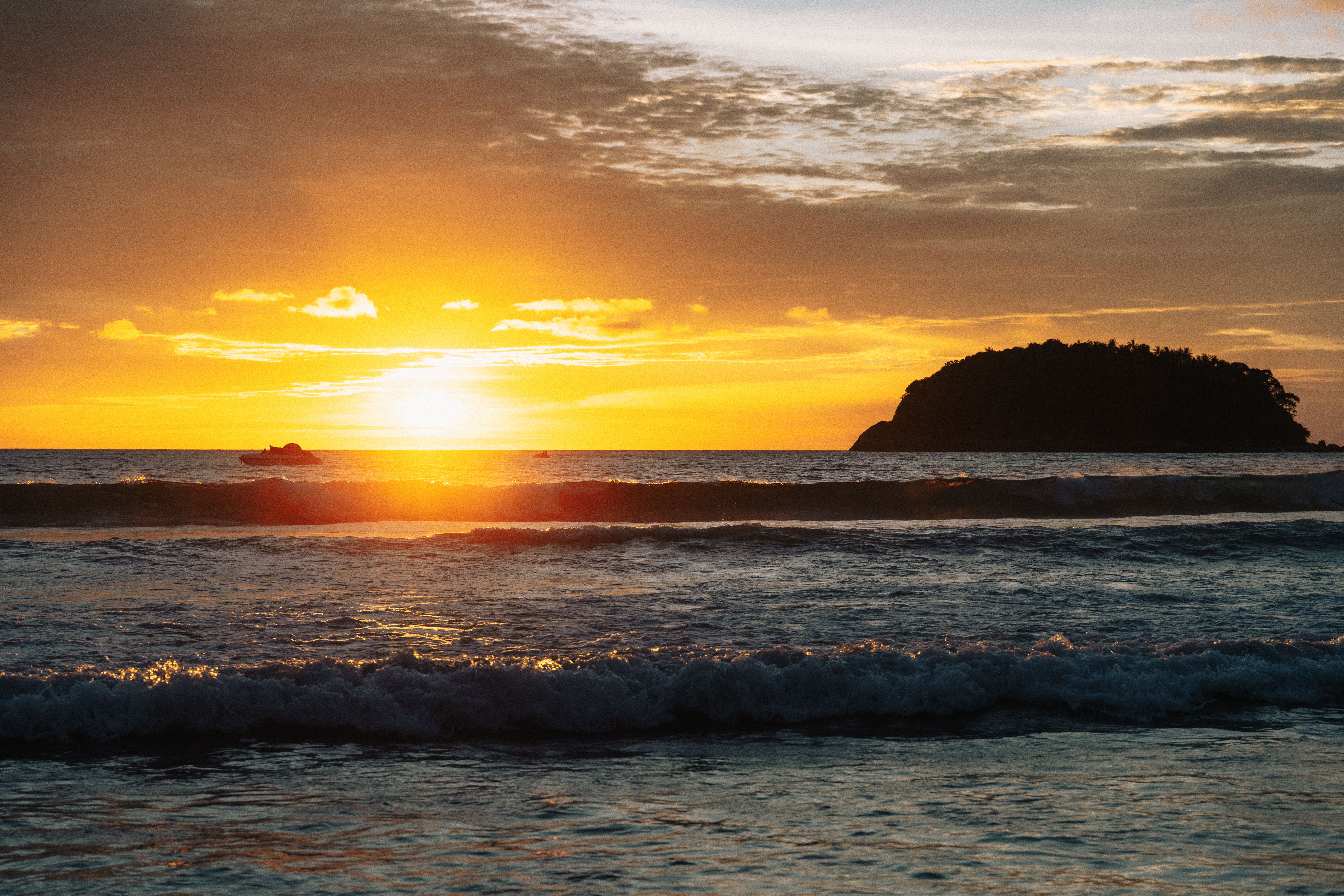
Incense drifts out of a Chinese shrine, a wok hisses on Yaowarat Road, and 20 minutes later the Andaman is flashing white beyond a cape crowded with sunset phones. That contrast is Phuket, Thailand: an island sold for beaches but remembered for stranger, older things. Tin money built Sino-Portuguese facades here, Hokkien families shaped its kitchens, and the place still feels less like a resort bubble than a trading port that learned how to wear flip-flops.

Listen to the guide — 47 min Open the map
Phuket, Thailand
Phuket · Thailand
25
attractions
4-5 days
days suggested
December-March
best season
EN · EN
narration

03 Top tickets in Phuket.

Book ahead

Curated from places in this city. Same price as official sites.

Travstore Original Phuket Discovery Tour - Shared Half Day City Tour
The Big Buddha, Phuket
Travstore Original Phuket Discovery Tour - Shared Half Day City Tour
4.6 from €22.28
Phuket City Tour with Wat Chalong, Big Buddha & Famous Viewpoints
The Big Buddha, Phuket
Phuket City Tour with Wat Chalong, Big Buddha & Famous Viewpoints
4.4 from €22.89
Phuket City Tour: Big Buddha, Wat Chalong & Scenic Viewpoints
The Big Buddha, Phuket
Phuket City Tour: Big Buddha, Wat Chalong & Scenic Viewpoints
4.5 from €21.48
Phuket City Sights : Big Buddha, Wat Chalong & Scenic Viewpoints
The Big Buddha, Phuket
Phuket City Sights : Big Buddha, Wat Chalong & Scenic Viewpoints
4.3 from €28.36
Phuket City Tour Sightseeing and Night Market Everyday
The Big Buddha, Phuket
Phuket City Tour Sightseeing and Night Market Everyday
4.1 from €20
Phi Phi Islands, Maya Bay & Khai Island: Guided Speedboat Tour from Phuket
Seastar Andaman
Phi Phi Islands, Maya Bay & Khai Island: Guided Speedboat Tour from Phuket
5.0 from €38.19

Prices shown are indicative — final pricing and availability are confirmed at checkout. Audiala may receive a commission from bookings made via these links.

01 An introduction

synthesized from 240+ sources ·

PIncense drifts out of a Chinese shrine, a wok hisses on Yaowarat Road, and 20 minutes later the Andaman is flashing white beyond a cape crowded with sunset phones. That contrast is Phuket, Thailand: an island sold for beaches but remembered for stranger, older things. Tin money built Sino-Portuguese facades here, Hokkien families shaped its kitchens, and the place still feels less like a resort bubble than a trading port that learned how to wear flip-flops.

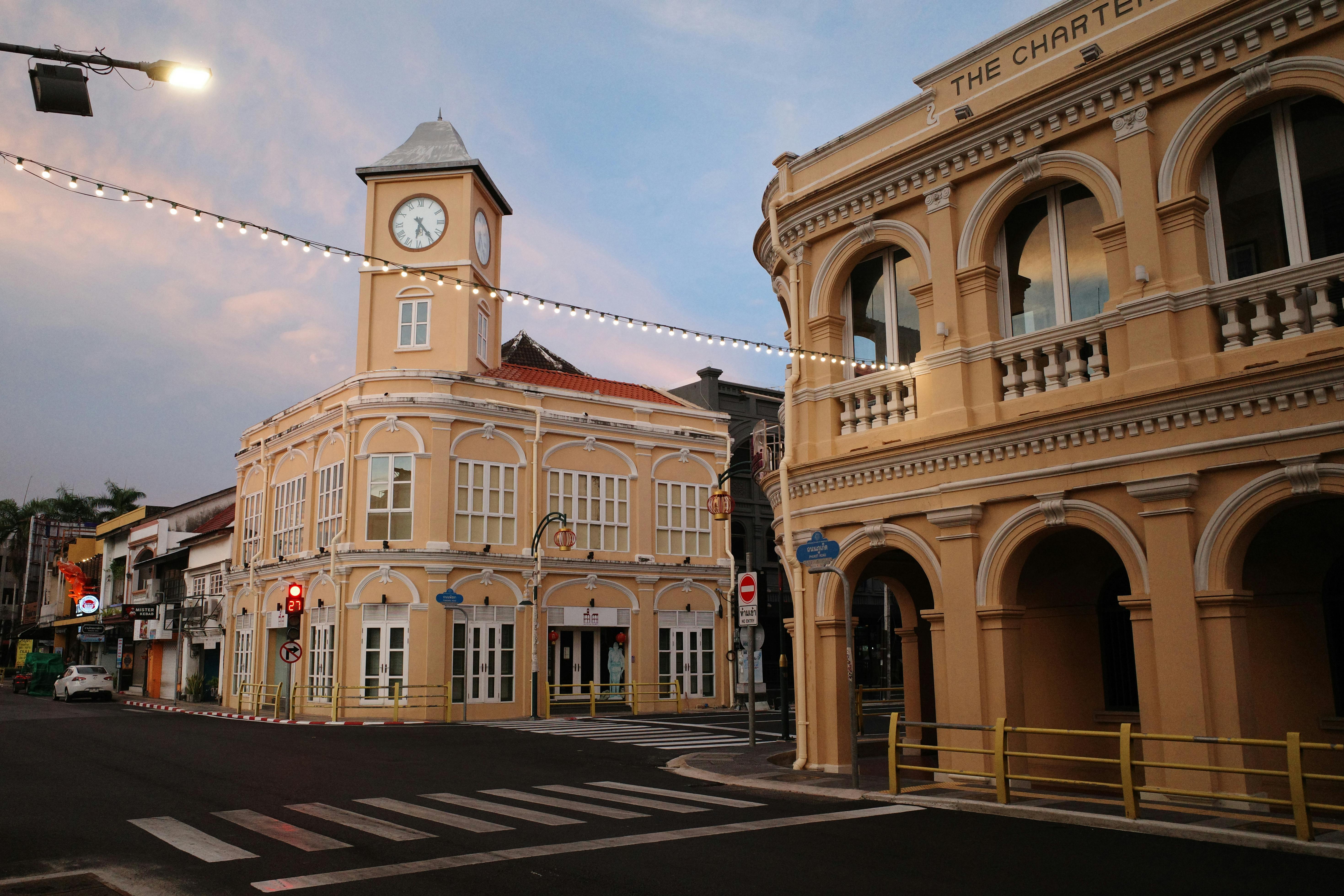
Old Phuket Town is where the island explains itself. On Thalang, Dibuk, Krabi, and Phuket roads, shophouses painted in faded pistachio, mustard, and blue hold museums, kopi shops, shrines, and dining rooms serving moo hong, Hokkien noodles, and o-aew under slow fans. Go in the morning. Phuket tastes sharper before the beach crowd wakes up.

Phuket's real appeal is its double life. You can spend the day in mangroves at Bang Rong, in the last serious block of rainforest at Khao Phra Thaeo, or on a quieter beach like Ao Yon, then come back to town for a late bowl at Go Benz and a drink behind an unmarked door in Old Town. Patong still exists, neon and all. It just isn't the whole story.

Budget Friendly Photography Hotspot

02 Why Phuket.

What makes this place worth slowing down for.

Old Town Layers

Phuket's real plot twist sits inland, along Thalang, Dibuk, Krabi, and Phang Nga roads, where tin money built Sino-Portuguese shophouses and Peranakan families shaped the city's manners, food, and festivals. Walk here in late afternoon, when the walls throw back heat and the five-foot ways smell faintly of coffee, incense, and old plaster.

Sea Cliffs And Quiet Forest

Promthep Cape and Karon Viewpoint get the camera crowd, but Phuket makes more sense when you pair those big coastal reveals with Khao Phra Thaeo Wildlife Sanctuary, the island's last serious evergreen forest. One hour you're staring at the Andaman from a cliff edge; the next you're under wet leaves and gibbon-country shade.

A Gastronomy City

UNESCO lists Phuket as a Creative City of Gastronomy, and that matters because the cooking here carries Hokkien, Thai, Malay, Muslim, and Baba-Nyonya histories in the same bowl. This isn't beach-town filler food; it's a trading-port kitchen with memory baked into it.

After Dark, Two Phukets

Patong stays useful if you want bars, neon, malls, and late services in one district, but it is only one version of the island after sunset. The other lives in Old Town's Sunday Lard Yai market and at Saphan Hin, where shrine smoke, joggers, skewers, and sea air replace the Bangla Road volume.


03 Places to Visit.

Not every monument, just the ones we'd walk you past ourselves.

Phuket Giant Buddha
Editor's pick
01 · Place

Phuket Giant Buddha

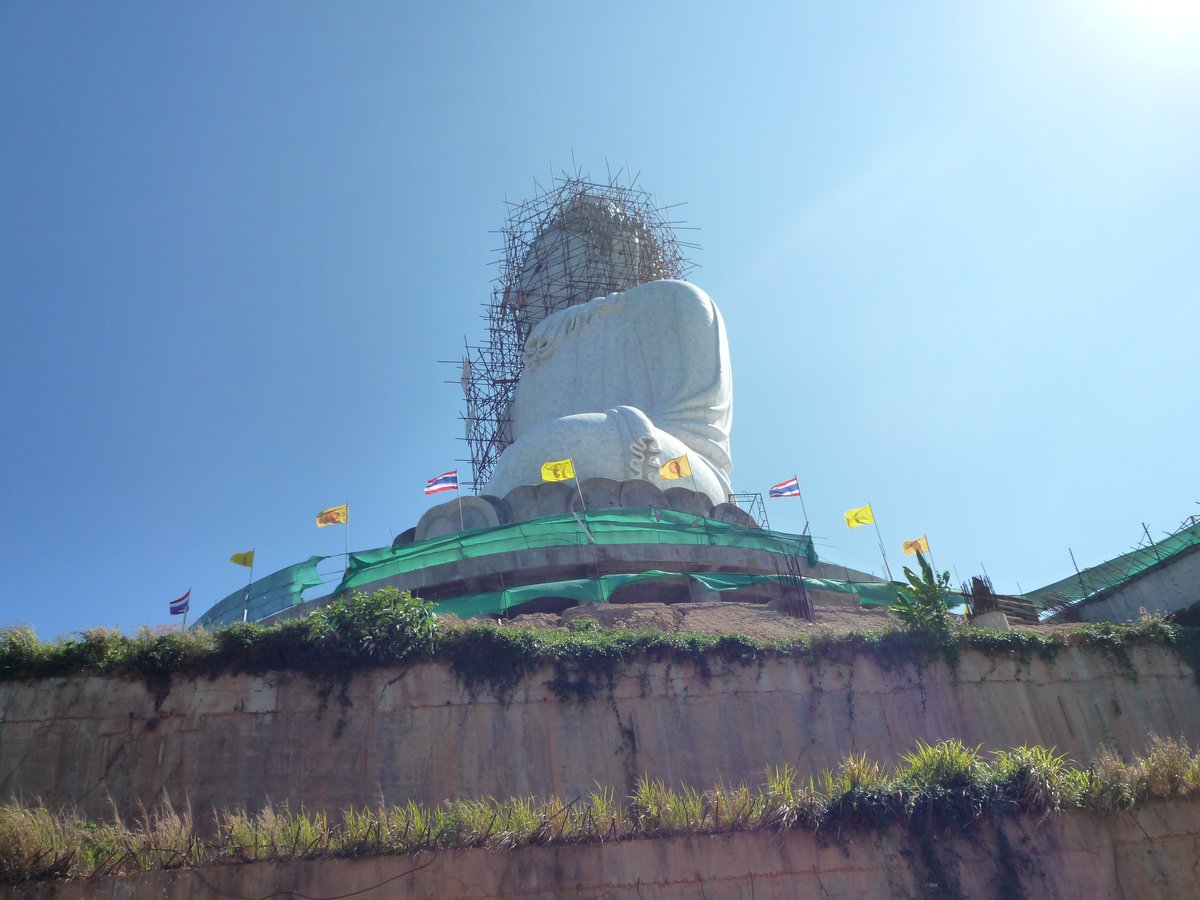
The Big Buddha, also known as Phra Phutta Ming Mongkol Eknakiri, stands as one of Phuket's most iconic landmarks, drawing visitors from all corners of the…

The Big Buddha, Phuket
02 Place

The Big Buddha, Phuket

Reopened in March 2026 after a deadly landslide closure, Phuket's Big Buddha is part hilltop shrine, part argument written across Phuket's skyline.

Khao Rang
03 Place

Khao Rang

Phuket Town's favorite hill is less about height than habit: sunset dinners, civic memory, temple bells, and monkeys bold enough to raid parked bikes.

04 Place

Beverly Hills, California

Rang Yai Island, located just off the eastern coast of Phuket, Thailand, is a serene and captivating destination that offers a blend of natural beauty and…

Wat Mongkhon Nimit
05 Place

Wat Mongkhon Nimit

Phuket's only royal temple sits steps from Soi Romanee, where candle processions, old-town traffic, and quiet merit-making still meet behind cafe facades.

06 Place

Ko Sire

Ko Sire, also known as Koh Sirey, is a small yet culturally rich island located off the east coast of Phuket, Thailand.

Seastar Andaman
07 Place

Seastar Andaman

Seastar Andaman isn't a sight so much as Phuket's polished jumping-off pier: private departures, fast boats, and day trips to Phi Phi and beyond.

All 13 places in Phuket

04 Neighborhoods.

Where to wander, by quarter — each with its own rhythm.

01

Old Phuket Town

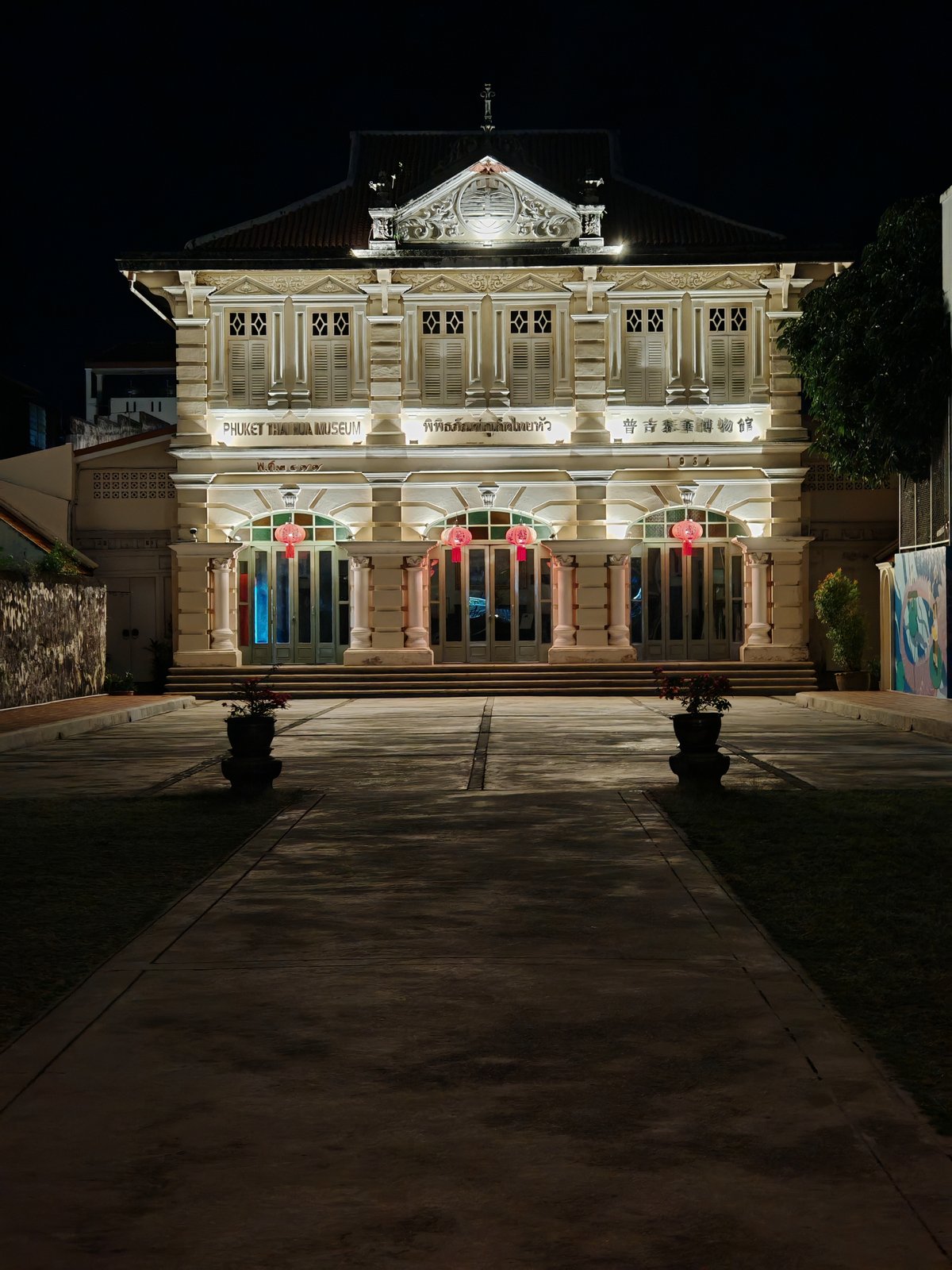
This is the part of Phuket that lingers. Thalang Road, Dibuk Road, Krabi Road, Phang Nga Road, Yaowarat Road, and Phuket Road pack in Sino-Portuguese shophouses, Chinese shrines, street art, Thai Hua Museum, Museum Phuket, kopitiam breakfasts, cocktail bars, and the Sunday Lard Yai market. Stay here if you want the island's memory, not just its weather.

02

Patong

Patong is Phuket at full volume: a broad beach, Bangla Road after dark, shopping centers, big hotels, hospitals, and every convenience a first-timer could want. It works well if you want nightlife and easy logistics. Spend a night here for the spectacle, then leave before you start believing this is the whole island.

03

Bang Tao

Bang Tao is where Phuket dresses up. Beach clubs, polished international restaurants, resort compounds, and sunset-drinks money gather along this stretch, with places like RAVA and Carpe Diem shaping the after-dark mood. Come here for comfort and sea-facing evenings, not for old Phuket character.

04

Rawai

Rawai feels looser, saltier, and more lived-in than the west-coast resort strip. The seafood market is still an event, though more theater than bargain, and the area makes a good base for dinners, long-tail departures, and detours to quieter southern beaches and viewpoints. Nights here tend to stay human-sized.

05

Chalong

Chalong is practical, busy, and more useful than pretty. Wat Chalong gives the district its headline stop, marinas and roadside eateries keep it moving, and good local-food addresses nearby make it a strong base for day trips south or dinners that don't require beach-club choreography. Pair it with Rawai or Old Town rather than treating it as a destination on its own.

06

Kathu

Kathu shows you Phuket without the polish. This old working district is better for breakfast than postcards, with dim sum shops, neighborhood restaurants, and everyday rhythms that start early and fill fast. If Old Town feels curated by noon, Kathu still feels like people are simply getting on with lunch.

07

Cape Panwa

Cape Panwa sits on the southeast side of the island and keeps a quieter profile than the west-coast beach belt. The aquarium, linked to the Phuket Marine Biological Center, gives the area a research-and-sea-life angle, and the roads around Khao Khad and the viewpoint tower feel calmer, greener, and less rushed. Good choice if you want sea views without Patong's appetite for noise.

Historical Timeline

An Island Forged by Tin, Trade, and Survival

From prehistoric stone tools to tsunami sirens and UNESCO kitchens

Early Settlement and Maritime Routes
c. 1000 BCE

First Traces at Kamala

Stone tools and axes found near Ban Kamala suggest people were living on Phuket more than 3,000 years ago. That matters because the island's story did not begin with beaches or ports, but with small communities reading monsoon weather, forest cover, and the pull of the sea.

1st century BCE

Settlement Takes Firm Root

Britannica places settlement on Phuket by the 1st century BCE at the latest. Long before the island had a fixed name, it was already part of the traffic of the Andaman Sea, a place where boats stopped, traded, repaired, and moved on.

2nd century CE

Ptolemy Marks the Cape

Provincial history links Phuket to Ptolemy's 'Tagola Cape,' a clue that navigators in the wider Indian Ocean world knew this coast. A mark on an ancient map can feel thin. Here, it signals something larger: Phuket was never remote, only peripheral to whoever happened to be drawing the map.

Tin Port under Ayutthaya and Foreign Powers
16th century

Ayutthaya Claims the Island

By about the 16th century, Phuket had been drawn into the Ayutthaya kingdom and into a more organized Siamese political order. Tin pulled it inward. Ships moving between India and China stopped here for ore, water, labor, and gossip.

1545

Junk Ceylon Enters Charts

Local histories say Fernao Mendes Pinto referred to the island as Junk Ceylon, one of the foreign names that clung to Phuket for centuries. The name sounds like a port heard through salt wind and bad handwriting. That was common in the Indian Ocean world.

1682

French Power Reaches Phuket

King Narai appointed the French missionary Rene Charbonneau as governor of Phuket in the early 1680s, part of a push to curb Dutch and English influence over the island's tin. Phuket was rich enough to attract empires, but small enough that foreign schemes could still hinge on one port, one monopoly, one court alliance.

1685

French Tin Monopoly Granted

King Narai granted the French a monopoly over Phuket's tin, tightening the island's ties to court politics in Ayutthaya and diplomacy in Europe. Tin does not look dramatic when stacked in ingots. It can still rearrange sovereignty.

1689

French Return Fails

After the 1688 Siamese Revolution broke French influence, a French attempt to recover Phuket in 1689 failed. The island slipped back out of direct French control. Foreign merchants would keep coming, but no outsider held the place cleanly for long.

Thalang Under Siege
1777

Francis Light in Thalang

A Thai letter from Thalang in 1777 shows Francis Light deeply woven into local politics and trade. He was no passing trader with a ledger and a flag. Phuket helped make him before Penang made him famous.

1785/1786

The Siege of Thalang

Thai memory places the Burmese attack in 1785, while many English accounts date the siege itself to February and March 1786. Either way, the moment is clear: after the governor died, Lady Chan and Lady Mook organized the defense, and local tradition says women were dressed as soldiers on the walls to make the garrison look larger. It worked.

1786

Lady Chan Honored

King Rama I awarded Lady Chan the title Thao Thep Krasattri after the defense of Thalang. Phuket remembers her as more than a wartime heroine. She became one of the island's fixed moral reference points, the kind of figure whose bronze statue can still shape a crossroads.

1786

Lady Mook Honored

Lady Mook received the title Thao Si Sunthon in the same royal recognition. Her story survives in Phuket's public memory as strategy, nerve, and improvisation under pressure. The siege made sisters into symbols.

1809-1810

Burmese Return and Ruin

A second Burmese invasion struck Phuket in 1809 and 1810, devastating Thalang again and driving much of the population to flee. Smoke, burned fields, and empty settlements followed. The old northern center never fully recovered its former weight.

Tin Boom and Peranakan Phuket
1825

Festival Begins in Kathu

According to tradition, Phuket's Vegetarian Festival began in Kathu in 1825 when a Chinese opera troupe fell ill during an epidemic, adopted vegetarian rites for the Nine Emperor Gods, and recovered. Whether every detail is documented is less important than the result. The festival turned ritual pain, smoke, drums, and devotion into one of Phuket's defining annual acts.

1827

Phuket Town Takes Shape

Modern Phuket Town is commonly dated to 1827, when power and commerce shifted south from old Thalang into the tin-mining zone. This is the real urban pivot. The island's center of gravity moved away from a war-scarred settlement and toward ore, warehouses, shophouses, and account books.

1837

Wat Chalong Is Founded

Local tradition dates Wat Chalong, formally Wat Chaiyathararam, to 1837. The temple would become more than a religious site. In Phuket, monasteries often doubled as moral shelter, social nerve center, and emergency refuge when politics turned violent.

1876

Angyee Rebellion Erupts

Chinese miners' unrest tied to tax pressure, low tin prices, and secret-society conflict erupted into arson and looting in Phuket Town in 1876. Contemporary accounts suggest more than 100 people may have died, though the count is uncertain. Bangkok could no longer treat the island as a distant tin outpost run on local improvisation.

1876

Luang Pho Chaem Shelters the Town

During the rebellion, Luang Pho Chaem of Wat Chalong sheltered refugees, treated the injured, and helped calm the island. That is why his name still carries weight in Phuket beyond temple walls. He turned a monastery into a place of triage, prayer, and survival.

Provincial Modernization
1902

Khaw Sim Bee Modernizes Phuket

When Phraya Ratsadanupradit Mahitsaraphakdi, better known as Khaw Sim Bee, became commissioner of Monthon Phuket in 1902, he pushed the island deeper into Siam's centralized state. He is remembered for administrative reform and for backing rubber cultivation. Phuket's future stopped belonging to tin alone.

1904

Bang Niew Shrine Founded

Bang Niew Shrine was founded in Phuket Town in 1904, serving the Chinese community that had remade the island's economy and culture. Shrines like this carry more than incense smoke. They hold migration stories, dialects, trading networks, and family memory in one courtyard.

1933

Province in the Modern State

The dissolution of Monthon Phuket in 1933 placed Phuket into Thailand's modern provincial structure. Administrative language can sound dry. On the ground, it meant the island's place in the kingdom was no longer a frontier arrangement but a formal provincial one.

Tourism Island and Global Phuket
1967

Bridge Ends the Water Gap

Sarasin Bridge opened on 7 July 1967, linking Phuket to the mainland by a fixed road for the first time. It stretched 660 meters and cost 28,770,000 baht. After that, the island could be reached by truck, bus, and private car without waiting on a ferry's timetable or mood.

1967

Heroines Cast in Bronze

The Heroines Monument was unveiled in 1967, fixing Thao Thep Krasattri and Thao Si Sunthon in public space as well as public memory. Roundabouts rarely carry this much historical weight. In Phuket, traffic literally circles the island's founding act of resistance.

1970s

Patong's Bungalow Era Begins

By the 1970s, beach bungalows at Patong signaled the start of Phuket's tourism boom. The old economy of pits, ore, and merchant houses began giving way to guesthouses, bars, package tours, and a west coast remade for sun rather than tin.

1985

Tin Prices Collapse

The collapse of world tin prices in 1985 effectively ended the industry that had built modern Phuket. That break still explains the city you see now. The pastel shophouses in Old Town were paid for by mines; the hotels that came later rose from the ruins of that economy.

26 December 2004

Tsunami Hits the West Coast

The Indian Ocean tsunami struck Phuket's Andaman beaches on 26 December 2004, hitting places such as Patong and Kamala and killing around 250 people on the island in many summaries. Sirens, broken seawalls, overturned boats, and the silence after the water pulled back changed local memory for good. Phuket's modern history now has a before and after.

16 September 2007

Flight 269 Crashes

One-Two-Go Airlines Flight 269 crashed at Phuket International Airport in heavy rain and wind on 16 September 2007. Eighty-nine people died immediately, with later counts often reaching 90. It remains the island's worst modern transport disaster, a brutal reminder that paradise rhetoric evaporates fast on a wet runway.

2015

UNESCO Names a Food City

UNESCO admitted Phuket to its Creative Cities Network as a City of Gastronomy in 2015. The title matters because it recognizes the island for kitchens, not just coastlines. Hokkien noodles, Muslim curries, Baba sweets, and market recipes became part of Phuket's official world-facing identity.

2016

Airport Expansion Opens

A new international terminal opened at Phuket International Airport in 2016, increasing capacity for the flood of arrivals the island had spent decades attracting. Airports are usually the least romantic buildings in a city. They still tell the truth about scale.

August 2024

Landslide Below Big Buddha

Heavy rain triggered a deadly landslide near the Big Buddha and Karon area in August 2024, killing 13 people and affecting more than 200 households. The disaster cut through the usual island fantasy in one muddy rush. Hillsides built up too carelessly eventually answer back.

Present Day

06 Who lived here.

The people who shaped the city — and were shaped by it.

Governor and reformer 1857–1913

Phraya Ratsadanupradit Mahitsaraphakdi

Served as governor of Phuket in the early 20th century

Phraya Ratsadanupradit helped drag Phuket from a tin-boom town into a more organized modern port, pushing roads, administration, and trade when the island's wealth still depended on ore and shipping. His name still hangs over Khao Rang, and he would probably recognize the ambition in today's Phuket even if the traffic might test his patience.

Local heroine 1735–1792

Thao Thep Kasattri

Defended Thalang, historic Phuket, during the Burmese attack of 1785

Local records and long-held Thai accounts place Thao Thep Kasattri at the center of Phuket's defining siege story, when Thalang resisted Burmese forces in 1785. She survives in statues, museum narratives, and street-level memory; modern Phuket, with its beach clubs and airport buses, still leans on her era when it tells itself who it is.

Local heroine 1740–1792

Thao Sri Sunthon

Defended Thalang, historic Phuket, during the Burmese attack of 1785

Thao Sri Sunthon stands beside her sister in Phuket's civic memory, less as a decorative legend than as part of the island's survival story. Visit the Thalang National Museum and the old war stops feeling distant; you can see how a place now sold for sea views still remembers a moment when endurance mattered more than scenery.

08 Where to Eat.

Where locals actually book dinner — not the tourist menus.

Thai Mueang Restaurant Phuket Thai Mueang Restaurant Phuket
Local favorite €€

Thai Mueang Restaurant Phuket

4.9 View
Local Canteen Phuket Local Canteen Phuket
Local favorite €€

Local Canteen Phuket

4.9 View
Flavor Restaurant Flavor Restaurant
Local favorite €€

Flavor Restaurant

4.9 View
Lao Pa Sat Phuket Town Lao Pa Sat Phuket Town
Quick bite

Lao Pa Sat Phuket Town

4.8 View
KANTA PHUKET KANTA PHUKET
Local favorite €€

KANTA PHUKET

4.8 View
Baboon Phuket Baboon Phuket
Cafe €€

Baboon Phuket

4.8 View

09 Insider tips.

Small things that change how the city treats you.

Use the buses

Airport Bus 8411 is the cheapest ride into Phuket Town at 100 THB, while the Phuket Smart Bus is the budget link from the airport down the west coast to Patong, Karon, Kata, Promthep, and Rawai. Check the operator websites on the day because official airport pages still show older hours and older Smart Bus fares.

Plan around heat

December to March usually brings the calmest beach weather; April is hotter, stickier, and more likely to end with a wet afternoon. In the May to October monsoon period, seas get rougher, so treat island-boat plans as weather-dependent, not fixed.

Skip airport markups

Shared airport minibuses are officially posted at 150 THB to Phuket Town and 180 THB to Patong, which can beat a private transfer by a wide margin if you are not in a hurry. If you're heading to a west-coast beach and traveling light, the Smart Bus usually saves even more.

Dress for shrines

Wat Chalong and Chinese shrines such as Jui Tui are active religious places, not stage sets for quick photos. Cover shoulders and knees, keep your voice down, and remember that incense smoke, offerings, and ritual spaces are part of daily worship here.

Walk the right areas

Old Phuket Town is the part of the island that really rewards walking, helped by a free Old Town shuttle loop. Outside that core, Phuket gets road-heavy fast, so do not assume shade, sidewalks, or easy crossings in beach and highway areas.

Treat scooters seriously

Road accidents are one of Phuket's most common tourist problems, especially on rented motorbikes. If you are not already comfortable riding in heat, rain, and dense traffic, use Grab, buses, or songthaews instead.

10 Watch.

A few films to set the scene before you go.

Best Things To Do in Phuket Thailand 4K
Island Hopper TV

Best Things To Do in Phuket Thailand 4K

BEST Things To Do in Phuket Thailand 2025 🇹🇭 | 5 Day Itinerary
live.with.grace

BEST Things To Do in Phuket Thailand 2025 🇹🇭 | 5 Day Itinerary

The ONLY Phuket Itinerary you will EVER Need!
Bangkok Jack

The ONLY Phuket Itinerary you will EVER Need!

🇹🇭 4K HDR | Bangla Road Phuket, Thailand | Nightlife | Full Walking Tour
Travelsland

🇹🇭 4K HDR | Bangla Road Phuket, Thailand | Nightlife | Full Walking Tour

12 Frequently asked

Is Phuket worth visiting?

Yes, if you want more than a beach resort strip. Phuket works best when you treat it as a mix of old trading town, Chinese-Peranakan culture, shrine life, food city, forest edges, and island day trips, not just Patong and a sunset cape.

How many days in Phuket?

Four to five days is the sweet spot for most travelers. That gives you one day for Old Town and museums, one for beaches or viewpoints, one for a boat trip, and one slower day for shrines, food, or a place like Khao Phra Thaeo or Saphan Hin.

What is the cheapest way from Phuket Airport to Phuket Town?

Airport Bus 8411 is the cheapest direct option at 100 THB. The trip takes about 1 hour 15 minutes, and if you arrive internationally you may need to walk to the domestic terminal area for the stop.

How do I get from Phuket Airport to Patong, Kata, or Karon?

The Phuket Smart Bus is the main budget option for the west-coast beach corridor. Current official pages show a flat 100 THB fare, but the same site still carries older distance-based fare pages, so check the latest posted details before you board.

Is Phuket expensive?

Phuket can be cheap or pricey depending on how you move around. Public buses, blue songthaews, food courts, and Old Town guesthouses keep costs down, while private airport transfers, resort areas, and last-minute boat trips push the bill up fast.

Is Phuket safe for tourists?

Generally yes, but transport is the weak point. Tourist Police are reachable at 1155, and the bigger day-to-day risk is road accidents, especially with scooters, plus rough seas in the wetter months.

What is the best area to stay in Phuket?

Patong suits first-timers who want beach, nightlife, hospitals, malls, and easy logistics in one place. Old Phuket Town is better if you care about food, heritage streets, and walking; quieter beach stays make more sense around places like Bang Tao, Kamala, or Rawai.

What is Phuket known for besides beaches?

Phuket's real surprise is its trading-town history. Sino-Portuguese streets, Peranakan culture, Chinese shrines, tin-mining wealth, and a UNESCO Creative City of Gastronomy title give the island a deeper identity than its postcard coves suggest.

Can you get around Phuket without renting a scooter?

Yes, but you need to be selective. The Airport Bus, Smart Bus, Old Town shuttle, and blue songthaews cover useful corridors, while Grab fills the gaps; what Phuket does not offer is a citywide rail or high-frequency urban transit system.

Ready to book?

03 Top tickets in Phuket.

Book ahead

Curated from places in this city. Same price as official sites.

Travstore Original Phuket Discovery Tour - Shared Half Day City Tour
The Big Buddha, Phuket
Travstore Original Phuket Discovery Tour - Shared Half Day City Tour
4.6 from €22.28
Phuket City Tour with Wat Chalong, Big Buddha & Famous Viewpoints
The Big Buddha, Phuket
Phuket City Tour with Wat Chalong, Big Buddha & Famous Viewpoints
4.4 from €22.89
Phuket City Tour: Big Buddha, Wat Chalong & Scenic Viewpoints
The Big Buddha, Phuket
Phuket City Tour: Big Buddha, Wat Chalong & Scenic Viewpoints
4.5 from €21.48
Phuket City Sights : Big Buddha, Wat Chalong & Scenic Viewpoints
The Big Buddha, Phuket
Phuket City Sights : Big Buddha, Wat Chalong & Scenic Viewpoints
4.3 from €28.36
Phuket City Tour Sightseeing and Night Market Everyday
The Big Buddha, Phuket
Phuket City Tour Sightseeing and Night Market Everyday
4.1 from €20
Phi Phi Islands, Maya Bay & Khai Island: Guided Speedboat Tour from Phuket
Seastar Andaman
Phi Phi Islands, Maya Bay & Khai Island: Guided Speedboat Tour from Phuket
5.0 from €38.19

Prices shown are indicative — final pricing and availability are confirmed at checkout. Audiala may receive a commission from bookings made via these links.

13Before you go

Practical Information

Flight

Getting There

Phuket International Airport (HKT) is the island's only airport and, as of 2026, the main air gateway for both domestic and international arrivals. Phuket has no train station and no rail service, so overland access comes by road via Route 402 across Sarasin Bridge to Phang Nga, linking onward to Phetkasem Road (Highway 4) on the mainland.

Directions transit

Getting Around

Phuket has no metro, subway, or tram system in 2026. Public transport works on a few useful corridors: Airport Bus 8411 runs between HKT and Phuket Town for 100 THB, Phuket Smart Bus connects the airport to west-coast beaches down to Rawai with a current flat fare of 100 THB, and the operator also runs a free Old Town shuttle loop; for late nights or cross-island hops, most visitors end up using Grab, taxis, or rented scooters.

Thermostat

Climate & Best Time

Phuket stays hot all year, but the rhythm changes: spring (March-May) runs about 33-34C with rain building sharply by May, summer (June-August) sits near 32C with frequent showers, autumn (September-November) is wettest at roughly 31-32C, and winter (December-February) is driest at 32-33C by day and 23-24C at night. Peak beach season falls from December to March; May to October brings rougher seas and more red-flag days, so the safest all-around window is late November through March.

Translate

Language & Currency

Thai is the official language, but English is widely used in hotels, tours, malls, and restaurant districts, especially around Patong, Kata, Karon, and Old Town. Currency is the Thai Baht (THB); cards work in larger businesses, but buses, night markets, shrine stalls, and many small eateries still run on cash, so keep small notes handy.

Shield

Safety

The biggest visitor risk in Phuket is not petty crime but the road: scooter and motorbike crashes are common, especially on steep or wet roads such as Patong Hill. Respect red beach flags, skip any rental shop that wants your passport as collateral, and save the key numbers for 2026 travel: Tourist Police 1155, police 191, ambulance 1669, fire 199.

Take Phuket with you

47 minutes of Phuket,
downloaded once.

13 places, one continuous walking route. Free with your first city.

Get this guide on the app Open in browser

All Places to Visit.

13 places to discover

Phuket Giant Buddha
Place

Phuket Giant Buddha

The Big Buddha, Phuket
Place

The Big Buddha, Phuket

Khao Rang
Place

Khao Rang

Place

Beverly Hills, California

Wat Mongkhon Nimit
Place

Wat Mongkhon Nimit

Place

Ko Sire

Seastar Andaman
Place

Seastar Andaman

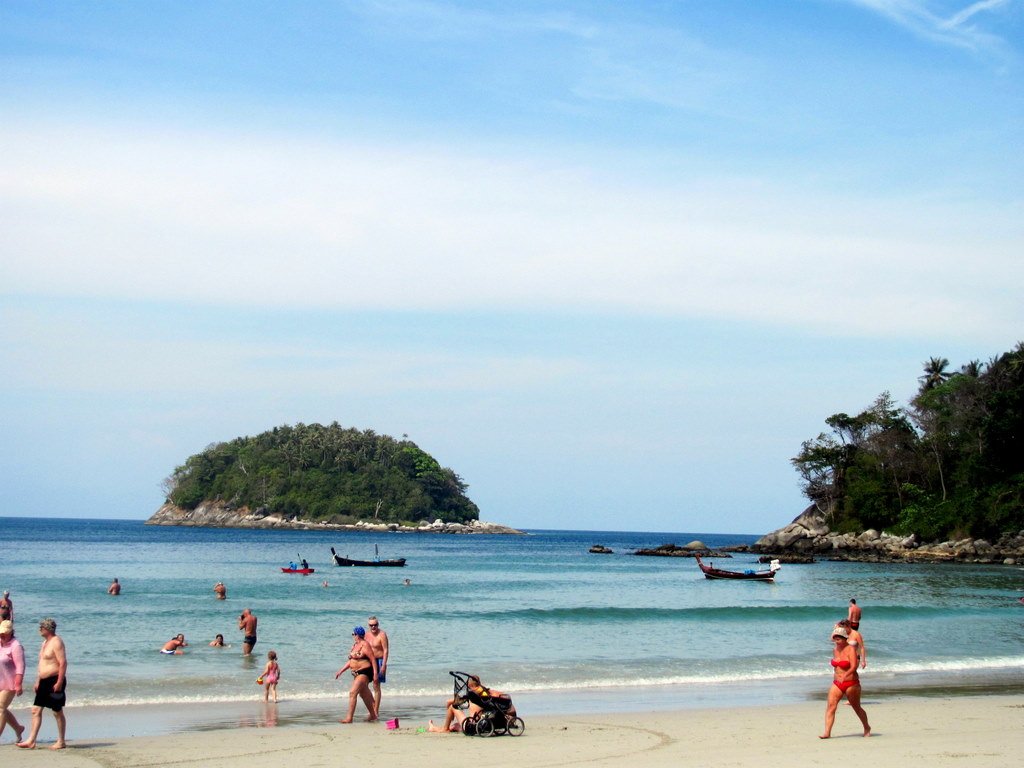
Hat Kata
Place

Hat Kata

Kata Beach Meeting Point for Scuba Divers
Place

Kata Beach Meeting Point for Scuba Divers

Ancient Buildings in Sino-European Style
Place

Ancient Buildings in Sino-European Style

Phuket Thai Hua Museum
Place

Phuket Thai Hua Museum

Cape Panwa
Place

Cape Panwa

Place

Rawai