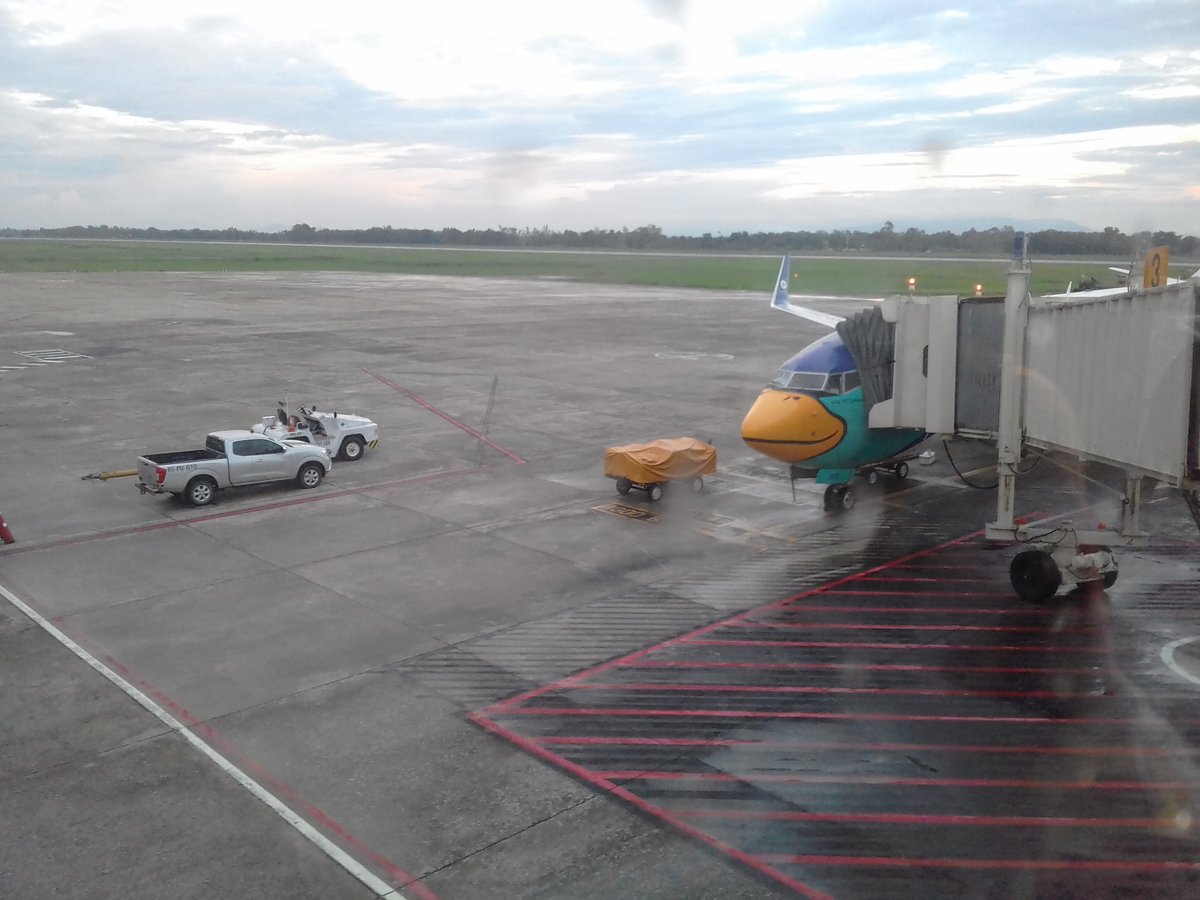
Visiting Hours and Access Information
Opening Hours:
The Old Chiang Rai Airport grounds are open daily from 6:00 AM to 8:00 PM. These extended hours accommodate both early-morning joggers and evening visitors. Event-specific hours may vary, so check local listings for updates.
Entry and Tickets:
General admission is free of charge. Special events, concerts, or guided tours may require tickets, which are typically affordable and available on-site or via local tourism platforms.
Accessibility:
The site is accessible by foot, bicycle, tuk-tuk, or songthaew from the city center. Pathways are mostly flat and suitable for wheelchairs and strollers, though some event setups may affect accessibility. Visitors with mobility needs should confirm details for specific events ahead of time (Will Fly for Food).
Guided Tours:
While regular guided tours are not provided on-site, some local tour operators and community groups occasionally offer historical tours. These can be booked through travel agencies or online platforms.
What to See and Do at Old Chiang Rai Airport
-
Historic Runways and Structures
Explore stretches of the original runway and surviving World War II-era facilities, offering tangible insights into the site’s military and aviation past. -
Community Events and Festivals
The grounds frequently host local festivals, including Songkran (Thai New Year), Loy Krathong, concerts, and sports events, reflecting Chiang Rai’s vibrant community spirit (The Thaiger). -
Markets and Local Commerce
On weekends and special occasions, pop-up markets feature Northern Thai delicacies, handicrafts, and souvenirs, providing a lively social atmosphere. -
Recreational Space
Outside event hours, the grounds function as an informal city park, popular for jogging, cycling, group exercises, and family outings. -
Emergency and Rescue Operations Hub
The airport serves as a base for rescue helicopters and emergency missions, most notably during the 2018 Tham Luang cave rescue (Wikipedia - Old Chiang Rai Airport).
How to Get There
Location:
The Old Chiang Rai Airport is located in the Rop Wiang subdistrict, approximately 2 kilometers from Chiang Rai city center.
Transportation Options:
- Taxi or Ride-Hailing Taxis are readily available. The Grab app offers convenient, fixed-price rides.
- Tuk-Tuk or Songthaew Affordable and authentic local transport for short distances.
- Bicycle Bike rentals are available in the city center.
- Rental Vehicles Car and scooter rentals offer flexibility; an international driving permit is recommended.
Parking:
Limited parking is available on-site and in adjacent areas.
Founding and Early Years (1926–1941)
Established in 1926, the airport connected Chiang Rai to the rest of Thailand at a time when overland travel was arduous. By the 1950s, it expanded to include two runways (Airports-Worldwide).
Wartime Role (1941–1945)
During World War II, the airport was used by both the Royal Thai Air Force and Japanese forces. Japanese troops constructed additional runways and used the site as a military base (WW2 North Thailand).
Postwar Civil Aviation (1945–1992)
After the war, the airport resumed civil operations, boosting regional economic growth. However, the rise in air traffic and the need for modern infrastructure led to the opening of Mae Fah Luang–Chiang Rai International Airport in 1992 (Chiang Rai International Airport Official Site).
Adaptive Reuse (1992–Present)
The decommissioned airport grounds shifted to public use, hosting community events, markets, and serving as an emergency hub. Architectural remnants have been preserved to maintain a link to the past (Wikimedia Commons).
Community and Cultural Activities
-
Festivals and Public Events
The grounds host major Thai festivals, parades, lantern releases, concerts, and sports tournaments throughout the year. -
Art and Education
Local schools and NGOs use the site for history walks, environmental projects, and youth programs, fostering cultural pride and historical awareness. -
Markets
Weekend and night markets feature local cuisine and crafts, supporting small businesses and artisans (The Lost Passport).
Facilities and Visitor Experience
-
Amenities
Facilities are basic; public restrooms and shaded seating are available during large events. Bring water and sun protection for daytime visits. -
Safety
The site is generally safe. Community volunteers and local police provide assistance during events. -
Photography
The juxtaposition of preserved infrastructure and community life offers excellent photo opportunities.
Connectivity and Nearby Attractions
The Old Chiang Rai Airport is a convenient starting point for exploring Chiang Rai’s top attractions:
- Wat Rong Khun (White Temple) 13 km south of city center—world-renowned for its contemporary all-white design (Salt in Our Hair).
- Blue Temple (Wat Rong Suea Ten) Notable for its vibrant blue hues and intricate architecture.
- Baan Dam Museum (Black House) A striking art complex showcasing dark, unique architecture (The Lost Passport).
- Chiang Rai Night Bazaar Evening market with food, crafts, and performances.
- Art Bridge Chiang Rai A nearby contemporary art gallery with rotating exhibitions.
Practical Visitor Tips
-
Best Times to Visit
The cool season (October to February) offers pleasant weather for outdoor exploration. -
Language
English is not widely spoken outside tourist areas; download the Google Translate Thai language pack for convenience (Salt in Our Hair). -
Cash
Bring cash for markets and small vendors. -
Connectivity
4G coverage is reliable; offline maps and translation apps are advised. -
Attire
Dress modestly, especially when attending local events or entering temples.
Frequently Asked Questions (FAQ)
Q: What are the visiting hours of Old Chiang Rai Airport?
A: Open daily from 6:00 AM to 8:00 PM.
Q: Is there an entrance fee?
A: General access is free. Some events or tours may require tickets.
Q: Are guided tours available?
A: Occasionally, through local tour operators; advance booking is recommended.
Q: Is the site wheelchair accessible?
A: Most areas are accessible, but event setups may temporarily limit access.
Q: Can I visit the airport as part of other Chiang Rai attractions?
A: Yes. The site is near several major temples and museums, making it easy to include in a day’s itinerary.