Plan and listen to Phisan Thaksin Throne Hall with Audiala.
Audio guide in your pocket, itinerary in your browser. Built for the way you actually visit.
Introduction
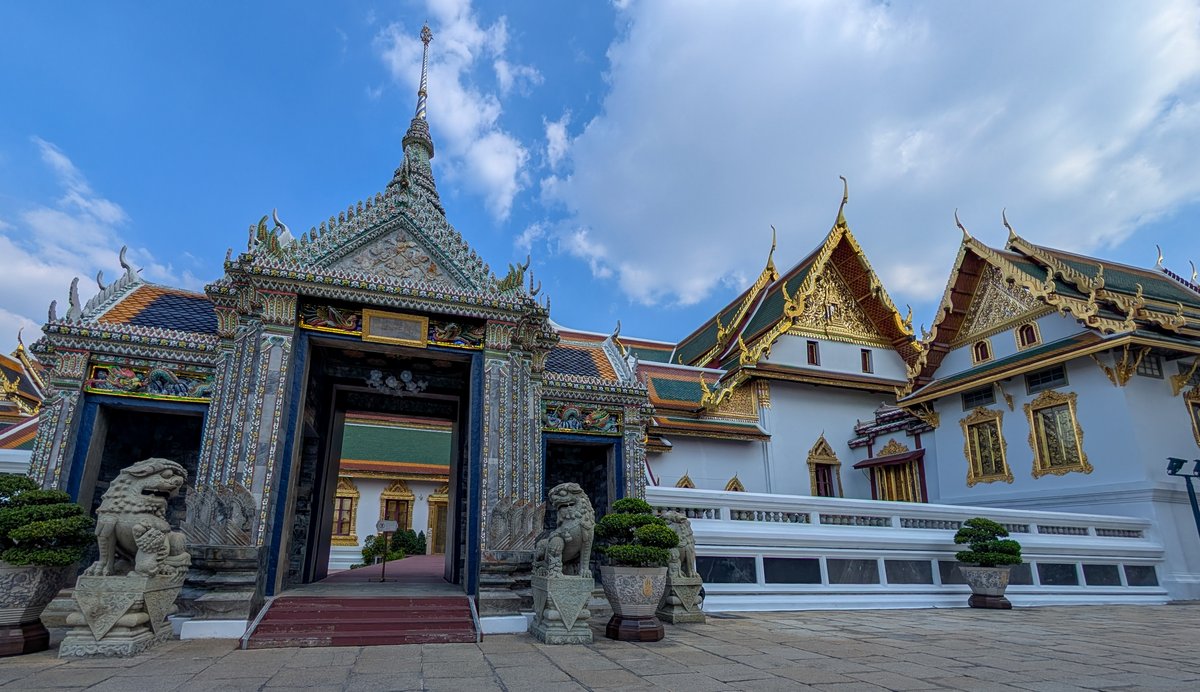
The Phisan Thaksin Throne Hall is a profound emblem of Thailand’s royal heritage, located within the revered Grand Palace complex in Bangkok. Constructed in 1782 under King Rama I, the hall marks the rebirth of Thai sovereignty after the fall of Ayutthaya and serves as a sacred site for the most venerable royal ceremonies, including coronations and guardian spirit rituals. Although public access to the hall itself is restricted, visitors can appreciate its grandeur from the exterior and deepen their understanding through guided tours and interpretative materials.
This comprehensive guide covers the hall’s historical background, architectural features, ceremonial significance, and all practical information required for visitors, including ticketing, accessibility, etiquette, nearby attractions, and frequently asked questions.

Historical Background of the Phisan Thaksin Throne Hall
Origins and Early History
Built in 1782 as part of the Phra Maha Monthien group, the Phisan Thaksin Throne Hall (Phra Thinang Phisan Thaksin) was integral to the new capital’s royal complex alongside Amarin Winitchai Throne Hall and Chakkraphat Phiman Residence. It symbolized the restoration of Thai monarchy after Ayutthaya’s fall and served as the king’s private chamber during significant ceremonies. The hall’s placement between public and private palace areas reflects its function as a transitional ceremonial space.
Architectural Features and Layout
The hall exhibits traditional Thai architecture drawing inspiration from the Ayutthaya era, with a rectangular layout and two gilded thrones at either end. Used exclusively for coronation ceremonies, its design harmonizes Thai aesthetics with cosmological symbolism, reflecting the divine kingship central to Thai culture.
Architectural Composition and Symbolism
Structural Organization
The Phisan Thaksin Throne Hall is divided into three main elements:
- Basement (Lion Setting): Built with Thai lime, the “Lion Setting Basement” symbolizes strength and royal authority, providing a foundation reserved for sacred and royal structures.
- Main Body: Features robust walls, grand entrances, and elaborate windows and doors, adorned with intricate ornamentation, highlighting the hall’s ceremonial importance.
- Roof Structure: The multi-tiered roof with chofahs (finial spires) represents celestial palaces, situating the king as the axis mundi (center of the universe).
Interior Artistry and Decorative Elements
While public entry is not permitted, the interior is known for ceiling paintings of the sky, murals with mythological and royal themes, guardian statues, gilded woodwork, mother-of-pearl inlays, and glass mosaics. Motifs such as lotus flowers and nagas symbolize purity, protection, and spiritual awakening.
Symbolism and Cultural Significance
The hall exemplifies the Deva Raja (divine kingship) concept, portraying the king as an earthly deity. Its design aligns with cosmological beliefs, with the throne representing Mount Meru—the universe’s center. Access is strictly limited to royalty and officials, underscoring its sanctity.
Visiting the Phisan Thaksin Throne Hall
Public Access and Visiting Hours
Phisan Thaksin Throne Hall is not open to the public except during rare royal ceremonies. Visitors to the Grand Palace can view its exterior and learn about its historical and cultural significance through guided tours and displays. The Grand Palace grounds, including accessible sites such as the Amarin Winitchai Throne Hall and Wat Phra Kaew, are open daily from 8:30 AM to 3:30 PM.
Tickets and Entry Fees
- Admission: 500 THB (approx. 15 USD) for foreign visitors.
- Purchasing Tickets: Tickets are available at the Grand Palace entrance or online via official tourism platforms.
- Inclusions: Admission covers the palace grounds and most public halls, but not the interior of Phisan Thaksin Throne Hall.
Dress Code and Etiquette
A strict dress code is enforced—shoulders and knees must be covered; sleeveless shirts, shorts, and slippers are not permitted. Rental garments are available at the entrance. Modest attire is a sign of respect for the monarchy and the site's sacredness.
Accessibility
The Grand Palace complex offers limited wheelchair access due to historic architecture and uneven surfaces. Assistance can be requested at the main entrance. Guided tours for visitors with special needs are available through some operators.
Photography and Tours
Photography inside the hall is strictly prohibited. However, visitors may photograph its exterior from designated viewpoints. Guided tours are highly recommended for deeper insight into the history, rituals, and symbolism of the hall.
Cultural and Ceremonial Significance
Coronation Rites
The hall is the venue for the most sacred parts of Thai coronation ceremonies. It houses the Octagonal Throne (for royal anointing) and the Phatharabit Throne (where the king is crowned and invested with royal regalia). The transition to the nine-tiered royal umbrella during the ceremony marks the monarch's full consecration.
Guardian Spirit Rituals
During Songkran (Thai New Year), the King and Queen perform annual rites in the hall to honor the nation’s guardian spirit, reinforcing the monarchy’s spiritual guardianship.
Symbolic Importance
Phisan Thaksin Throne Hall symbolizes the fusion of Buddhist and Brahmanical elements in Thai royal ceremonies, underlining the monarch’s dual spiritual and temporal authority and the continuity of the Chakri dynasty.
Nearby Attractions and Travel Tips
- Wat Phra Kaew (Temple of the Emerald Buddha): Thailand’s most sacred Buddhist temple, located within the Grand Palace.
- Amarin Winitchai Throne Hall: Adjacent to Phisan Thaksin, often visible to visitors.
- Queen Sirikit Museum of Textiles: Exhibits royal textiles and craftsmanship.
Travel Tips:
- Arrive early to avoid crowds and midday heat.
- Dress appropriately (as per palace dress code).
- Consider guided tours or audio guides for a richer experience.
- The Grand Palace is accessible via Chao Phraya River ferry (Tha Chang Pier), taxi, or public bus.
Guided Tours and Visitor Experience
While you cannot enter the hall, official and reputable private tours provide detailed explanations of its history and significance. Photography is allowed in most public areas but is restricted in certain temples and halls.
Frequently Asked Questions (FAQ)
Q: Can I enter the Phisan Thaksin Throne Hall?
A: No, it is reserved for royal ceremonies and not open to the public.
Q: How much are Grand Palace tickets?
A: 500 THB for foreign visitors; tickets include most public areas, excluding the hall’s interior.
Q: Is the Grand Palace accessible for those with disabilities?
A: There is some wheelchair access, but historic features may limit mobility in certain areas. Assistance can be requested.
Q: Are guided tours available?
A: Yes, in English and other languages. Audio guides may also be available.
Q: Is photography allowed?
A: Only in designated exterior areas. No photography inside the hall or sacred spaces.
Listen to the full story in the app
The whole Phisan Thaksin Throne Hall,
told well.
Audio guides for 1,100+ cities across 96 countries. History, stories, and local insight — offline ready.
Verified, and shown.
Researched and written by the Audiala editorial team from historical records, architectural archives, and local expertise.
Researched from Wikidata, Wikipedia & official sources · fact-checked · How we make our guides →