temple_buddhist
Temple Cities
Bangkok, Ayutthaya, and Sukhothai show three different Thailands at once: living ritual, imperial ruin, and the early kingdom that shaped the national imagination.
Thailand is not one holiday but a whole set of climates, cuisines, and historical worlds stitched into a single country. That's why it rewards travelers who plan by region, not by postcard.
 Thailand
EntryMany passport holders get 60 days visa-exempt; TDAC required before arrival.
TThis Thailand travel guide starts with a useful truth: one trip can hold Bangkok canal chaos, Chiang Mai temple quiet, and seas that reset your pulse.
Thailand works because it refuses to be one thing. In Bangkok, the Chao Phraya still behaves like an old trade route even as the skyline keeps climbing; an hour or two north, Ayutthaya breaks into brick towers and headless Buddhas that explain how rich Siam once was, then how violently it fell. Sukhothai offers an earlier chapter altogether: lotus-bud chedis, wide lawns, and the uneasy question of how much of Thailand's founding story was written by kings who knew the power of myth. This is a country where history is not tucked away in museums. It keeps showing up on the street, in royal rituals, in train routes, in the shape of a bowl of noodles sold beside a moat.
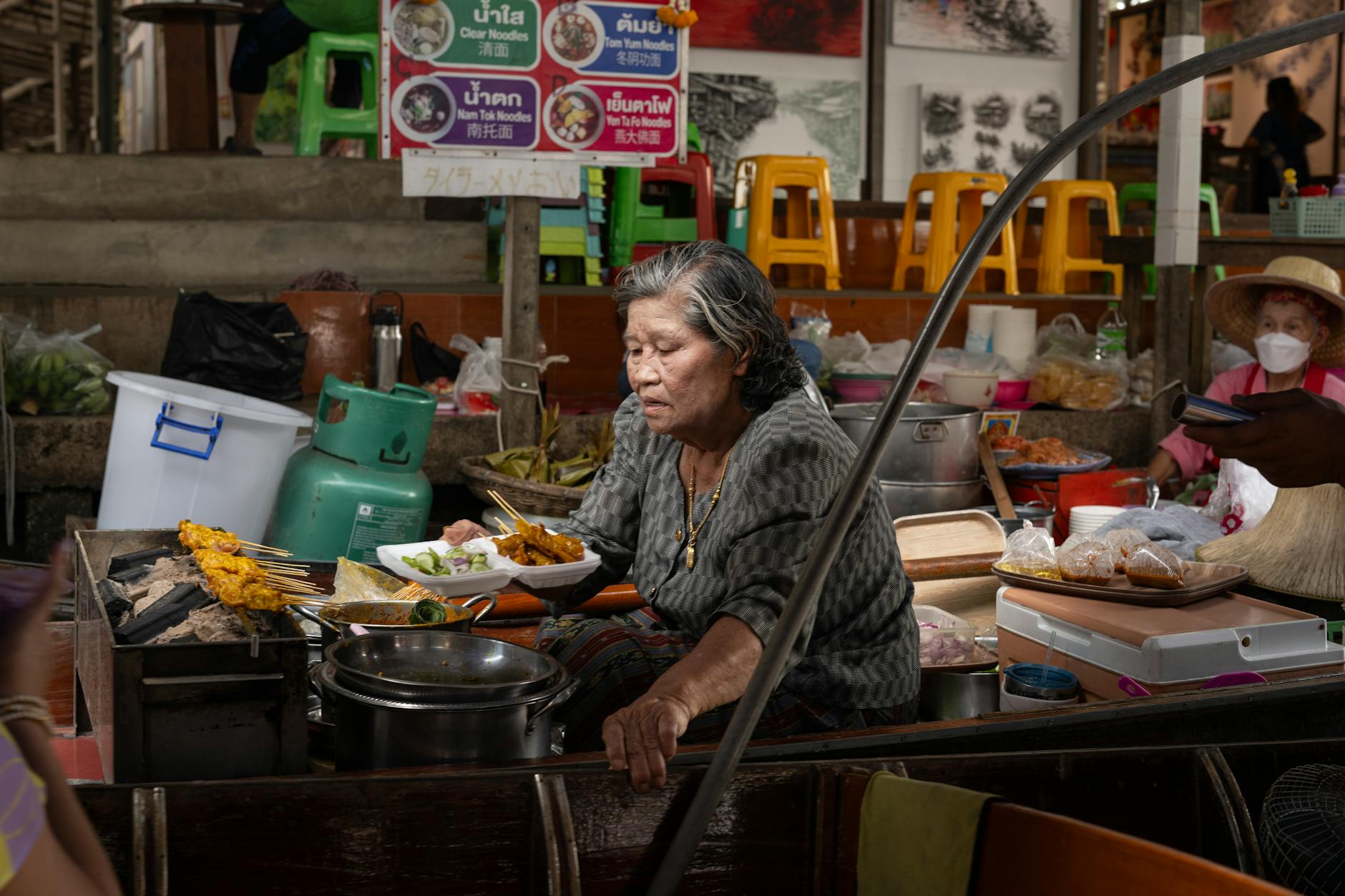
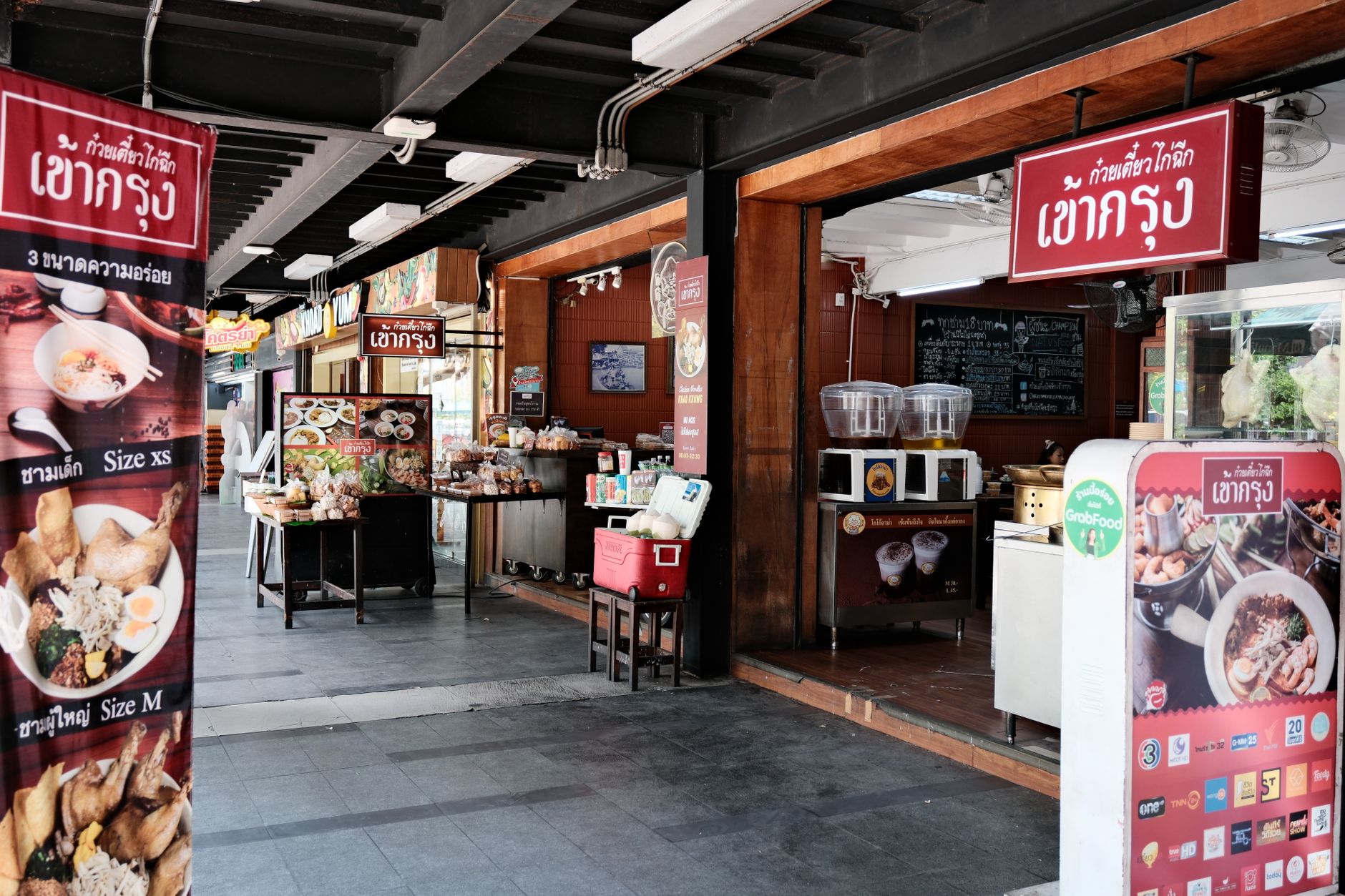
Food maps Thailand faster than any guidebook. Bangkok gives you pad krapao at office-worker speed, boat noodles in dark, concentrated broth, and khao man gai that lives or dies on its chili sauce. Head north to Chiang Mai and the mood changes: khao soi turns rich and fragrant, sai ua tastes of lemongrass and pork fat, and markets run on smoke, herbs, and sticky rice rather than polish. Chiang Rai opens toward the Golden Triangle and a borderland story that feels looser, stranger, more layered. Even the etiquette tells you something. Thailand prizes calm, tact, and the art of not making a room hotter than it needs to be.
Before Siam, c. 2100 BCE-1238
A burial jar appears first. Red spirals, clay the color of dried blood, bracelets left on the wrists of the dead at Ban Chiang in what is now Udon Thani. Long before any king called himself lord of Siam, people here were already casting bronze, burying their families with care, and leaving archaeologists with one of history's most unsettling clues: the earliest graves contain ornaments, not weapons.
Ce que l'on ignore souvent, c'est que Thailand's story did not begin with the Thai language or with Bangkok. Between the 6th and 11th centuries, Mon-speaking rulers built the Dvaravati world across the central plains, filling cities with Theravada Buddhist imagery, moats, walls, and stone wheels of the law. At Sri Thep, now a UNESCO site, the ruins still suggest a kingdom that preferred devotion to spectacle.
Then the Khmer shadow lengthened from Angkor. Court ritual, sacred kingship, temple planning, and the grammar of power moved westward across the Chao Phraya basin, while Tai-speaking groups drifted south from the uplands and frontier valleys, absorbing what they found rather than wiping it away. That matters. Thailand was assembled from borrowings, marriages, and opportunism before it was ever ruled from one throne.
By the time early Tai polities emerged in places like Sukhothai and the northern valleys around Chiang Mai, the stage was already dressed: Mon Buddhism, Khmer statecraft, river trade, and local loyalties that no royal decree would ever fully tame. The first great Thai kingdoms inherited more than they invented. And that inheritance would shape every dynasty that followed.
The unnamed dead of Ban Chiang tell the first intimate truth of Thailand: a civilization can be old, refined, and still leave its rulers faceless.
Ban Chiang entered modern scholarship after a visiting student reportedly stumbled over a pottery rim in 1966 and exposed one of Southeast Asia's most important prehistoric sites.
Sukhothai and the Northern Courts, 1238-1438
A stone inscription sits in judgment. On it, King Ramkhamhaeng presents Sukhothai as a kingdom so benevolent that "in the water there are fish, in the fields there is rice," and trade flows without harassment. One can almost see the performance: a ruler having his version of the world cut into stone so that posterity would confuse politics with truth.
Ce que l'on ignore souvent, c'est que the famous Sukhothai inscription is also one of Southeast Asia's most elegant historical scandals. Thai tradition treats it as the birth certificate of the Thai script and the manifesto of a golden age. Some scholars have long suspected later editing or even a 19th-century reworking. The debate has never quite died, which only makes the object more fascinating.
Still, propaganda this polished rarely works without a foundation. Sukhothai did become a powerful court in the 13th century, drawing on Khmer models while insisting on something gentler, more intimate, almost familial in tone. Its Buddha images, with their flame-like finials and walking poses, are among the most graceful ever made in the region. They do not dominate the viewer. They seem to glide past.
North of it, other centers were rising. Chiang Mai, founded in 1296 by King Mangrai, belonged to the Lanna world, which looked both to the Tai principalities and to the Burmese and Mon cultural spheres. Thailand was not one kingdom becoming itself in a straight line. It was a contest of courts, scripts, monasteries, and river routes.
And Sukhothai's great lesson is this: charm is not permanence. Within a generation of Ramkhamhaeng's death, its influence began to fray, and the heavier machinery of Ayutthaya would soon pull the center of gravity south.
Ramkhamhaeng stands in schoolbook bronze as a father of the nation, yet behind the statue one senses a canny ruler who understood that memory is the most valuable territory of all.
Thai tradition credits Ramkhamhaeng with bringing Chinese ceramic expertise to Sukhothai, and shipwrecks across maritime Southeast Asia have indeed yielded Sangkhalok wares once traded like treasure.
Ayutthaya Kingdom, 1351-1767
A queen rides into battle in male armor. In 1548, as Burmese forces pressed Ayutthaya, Queen Suriyothai is said to have mounted an elephant and thrown herself between her husband and the enemy, dying under a blade meant for the king. Whether every detail is embroidered by later chronicles hardly matters. The image endured because Ayutthaya understood theater, and because royal women in Siam were rarely as passive as official history liked to pretend.
This capital, founded in 1351 on an island embraced by rivers, grew into one of the great cities of the 17th-century world. Persian merchants, Japanese adventurers, Chinese traders, Portuguese soldiers, and French envoys all turned up at court, sweating through brocade and trying to read the etiquette. When visitors described Ayutthaya, they reached for superlatives because the city demanded them: gilded temples, canal traffic, diplomatic ritual, and a monarchy so elevated that access to the king became a drama in itself.
Ce que l'on ignore souvent, c'est how much of this glitter rested on danger. Palace coups were common, succession disputes frequent, and the chronicles relish scandal with almost indecent pleasure. Queen Sri Sudachan, accused of poisoning King Chairacha and raising her lover Worawongsathirat to the throne, remains one of the great villains of the royal imagination. Forty-two days later, both were dead. Ayutthaya could forgive blood. It forgave broken hierarchy far less easily.
Then came King Narai, the cosmopolitan monarch who welcomed embassies from Louis XIV and made the court at Lopburi feel, for a moment, like a Southeast Asian Versailles with better heat and worse intrigue. The Greek adventurer Constantine Phaulkon rose scandalously high in his service, only to be destroyed when anti-foreign factions turned the court inside out. In Siam, openness and suspicion have often traveled together.
The end, in 1767, was almost unbearable. Burmese armies sacked Ayutthaya, temples collapsed into flame, libraries vanished, and a city that had dazzled the world became a field of brick and ash. Modern Ayutthaya still carries that wound. Out of it would come a new ruler, a new capital, and a new idea of what Siam had to become to survive.
Naresuan, the warrior king of Ayutthaya, is remembered for royal courage, but the hostage years he spent in Burma may have taught him something colder and more useful: how enemies think.
French envoys at Narai's court complained about Siamese ceremonial rules with the injured dignity of men discovering that Versailles was not the only place on earth obsessed with rank.
Thonburi, Rattanakosin, and Modern Thailand, 1767-present
A general enters a ruined kingdom and refuses to accept that the story is over. Taksin, half-Chinese by background and ferociously ambitious, rallied forces after Ayutthaya's destruction, drove out the Burmese, and made Thonburi his capital on the west bank of the Chao Phraya. One imagines the river then: brown, busy, lined with makeshift authority, as if the state itself had been rebuilt from boats, warehouses, and willpower.
His reign was brilliant and brief. Taksin reunited much of the kingdom, then seemed to unravel into religious extremity and political paranoia; by 1782 he was overthrown and executed. His successor, Rama I, founded the Chakri dynasty and moved the capital across the river to Bangkok, where the Grand Palace and Wat Phra Kaew announced that Siam had not merely survived. It had restaged itself.
Ce que l'on ignore souvent, c'est how delicately the 19th century was played. While neighbors fell under British or French rule, Kings Mongkut and Chulalongkorn yielded territory, borrowed Western science, reformed administration, ended slavery gradually, and recast the monarchy as both ancient and modern. It was statecraft under pressure, elegant on the surface and ruthless underneath. Independence was preserved, but never for free.
Then the old order cracked. In 1932, a bloodless revolution ended absolute monarchy, and Siam, soon renamed Thailand, entered constitutional life with the kind of instability that never feels entirely finished: coups, charters, student uprisings, military returns, royal prestige, popular anger. The country many visitors meet through Bangkok street food, Chiang Mai temples, Phuket beaches, or the ruins of Sukhothai is also a nation still negotiating who truly speaks for it.
And that is the bridge to the present. Thailand's modern history is not the story of a timeless kingdom smiling serenely through change. It is the story of a court learning to share the stage, of citizens repeatedly demanding a larger role, and of a monarchy that remains emotionally central even when politics turns openly contentious.
King Chulalongkorn appears in portraits as an assured reformer, yet behind the gold braid stood a ruler making painful concessions in order to keep foreign empires from swallowing his realm whole.
Bangkok's full ceremonial name is so long and elaborate that Guinness once recognized it as the world's longest place name, a capital introduced with the grandeur of a royal procession.
Thai is one of the few languages that can make courtesy sound edible. A sentence arrives, then the little final particle lands: khrap from a man, kha from a woman. The effect is minute and immense. In English, politeness often feels like legal padding; in Thailand, it is music added at the last second, a lacquer brushed over the wood until the grain glows.
Then comes the harder seduction: the language asks you to hear status, tenderness, distance, and play inside tiny shifts of tone and address. Khun plus a first name gives a person rank without freezing them into formality. Kreng jai, that famous reluctance to impose, is not a proverb for export but a daily technology of coexistence. Bangkok teaches it at traffic-light speed. Chiang Mai lets you hear it more slowly, in the pause before refusal.
A foreigner who learns only hello and thank you has learned nothing. Learn jai yen instead, the cool heart that keeps a room from boiling over. Learn sanuk, and you begin to see why a market stall, a temple fair, and a family lunch all contain some element of play, as if boredom were not a moral failing exactly, but very bad arrangement.
This is what Thai speech does to you. It makes bluntness feel underdressed.
Thai food is often described as balanced by people who have not been properly contradicted by it. A bowl of tom yum kung does not balance anything in the timid sense. It stages an ambush: river prawn sweetness, galangal like cold perfume, lime that cuts with silver precision, chili that arrives half a second late, which is the cruelest method because it gives you time to believe you are safe.
The country reveals its map through the mouth. Bangkok eats pad krapao at office-worker speed, fork and spoon striking porcelain in bright little acts of necessity. In Chiang Mai, khao soi behaves differently, richer and more secretive, with crisp noodles on top and soft ones below, as if one bowl had been granted two textures out of greed. Ayutthaya still carries the memory of river trade in boat noodles so concentrated they seem reduced from an argument into an essence.
Then Isan overturns the table. Som tam is not salad; it is percussion. The mortar does half the cooking, chilies and garlic bruised into papaya until the whole thing becomes a doctrine of freshness sharpened into violence. Sticky rice follows like absolution. Fingers replace cutlery. Civilization survives.
A country is a table set for strangers. Thailand proves that strangers can be corrected, fed, and delighted in the same gesture.
Thai manners are less about obedience than about preserving oxygen in the room. Faces matter. Tone matters more. A raised voice is not impressive here; it is a small social failure, like spilling fish sauce on a white shirt and pretending nobody noticed. The admired person is not the loud one but the controlled one, the one whose temper remains folded and put away.
This restraint is easy to misread. Visitors from blunt cultures mistake gentleness for agreement, or a smile for surrender. Bad mistake. Thailand has perfected the velvet form of refusal. A host may soften the edges of a no until it almost resembles yes, not from deceit but from mercy. Kreng jai again. The wish not to burden. The wish not to humiliate. The wish to leave everyone standing upright.
The wai makes this visible. Palms together, slight bow, height of the hands adjusted by circumstance: the body performing social intelligence in one concise movement. You do not use it carelessly. You do not throw it around like confetti. In Bangkok offices, in Chiang Rai guesthouses, in the quieter lanes of Lampang, it still carries calibration, memory, rank.
And shoes tell their own story. You remove them before entering certain homes, temples, sometimes shops, because the threshold is not just wood or tile. It is a line between kinds of attention. Cross it correctly.
Theravada Buddhism in Thailand does not float above life like a pure idea. It sits in traffic, hangs from rearview mirrors, glows from neighborhood shrines, receives mangoes and marigolds and packets of incense with the practicality of an old civilization that has long since stopped pretending spirit and routine are separate departments. A temple bell rings, and somewhere a food delivery rider checks his phone. The contradiction is perfect. Therefore it is no contradiction.
Visit Wat Pho in Bangkok early enough and the city still feels washable. Monks move in saffron folds that catch the morning like polished metal. Gold everywhere, yes, but not vulgar gold. Gold as discipline. Gold as a way of acknowledging that human beings require splendor if they are to think seriously about dust.
The monkhood remains woven into ordinary time. Many Thai men spend a period in robes, sometimes briefly, sometimes longer, and the act carries family pride, merit, and ritual gravity. Offerings are made not because belief must always be dramatic, but because repetition is one of the engines of belief. Rice, flowers, candles, kneeling. The body learns first.
Then the older layer flickers through. Spirit houses. Animist residue. The local genius of a place treated not as folklore but as a neighbor requiring courtesy. Thailand never chose between metaphysics. It arranged them on the same shelf and kept the house in order.
Thai architecture understands vertical desire. Temple roofs rise in stacked, tapering planes, their chofah finials cutting into the sky like the beaks of mythical birds. They do not suggest humility. They suggest aspiration trained into elegance. A wat roofline in late afternoon can make a whole street look provisional.
But the national architectural intelligence may be aquatic before it is monumental. Ayutthaya was built among rivers because power here long depended on boats, canals, and the management of wet ground. Bangkok inherited that logic and then tried to outbuild it with concrete, towers, expressways, and air-conditioning. The old water-city remains beneath the new one like a second text under the first, still legible if you take a long-tail boat and watch warehouses, shrines, houses on stilts, and apartment blocks drift into the same frame.
In the north, another temperament appears. Chiang Mai temples hold more wood, more shade, more intimacy in their proportions. Lanna forms soften the glare. The buildings seem less intent on dazzling an empire than on teaching the eye how to dwell.
Thailand builds for heat, rain, hierarchy, ceremony, and spectacle, often in the same structure. This is not excess. It is climate turned into style.
Thailand has a genius for pairing the sacred and the synthetic without embarrassment. An orchid garland swings from a taxi mirror beneath a sticker of a cartoon bear. A spirit house stands beside a convenience store. Chrome, gold leaf, fluorescent tubing, teak, jasmine, PVC stools, silk the color of ripe mango: the national eye does not fear adjacency. It composes by confidence.
This is why Thai design so often feels alive rather than pure. Purity is a northern obsession. Thailand prefers aptness. The street food cart in Bangkok, all stainless steel, clipped bags of sauce, crushed ice, plastic baskets, and handwritten signs, is a masterpiece of functional theatre. The market table is arranged not minimally but memorably. Chili red next to basil green next to the silver sheen of mackerel. Appetite first. Theory later.
Jim Thompson understood one side of this when he turned Thai silk into an international fetish, though the country had always known cloth could carry rank, region, and seduction at once. Contemporary cafés in Chiang Mai know the other side: rough plaster, old wood, brutal espresso machines, monk-orange accents, a fern where a European designer would have put empty space and called it restraint.
Thai design does not ask whether something is high or low. It asks whether it works on the senses, whether it honors ritual, whether it can survive humidity, and whether it has enough style to make necessity look deliberate.
Bangkok, Ayutthaya, and Sukhothai show three different Thailands at once: living ritual, imperial ruin, and the early kingdom that shaped the national imagination.
Thai cooking changes dramatically by region, from Bangkok street staples to Chiang Mai khao soi and the sharper, fiercer flavors of the northeast and south.
Thailand has both the Andaman Sea and the Gulf of Thailand, which means beach weather depends on where you go, not just what month you travel.
Overnight trains, ferries, and long bus rides still make sense here. Bangkok to Chiang Mai or the old route north through Ayutthaya turns travel time into part of the trip.
Gold chedis at noon, canal reflections in Bangkok, mist above Pai, and karst cliffs near Phuket give Thailand the kind of visual range photographers chase.
Thailand rewards anyone who goes past the headline stops. Chiang Rai, Lampang, Kanchanaburi, and Nakhon Si Thammarat each reveal a different regional character.
12 cities — start with the ones we'd send you to first.
Bangkok feels like a city tuned to two frequencies at once: temple bells over the river at dawn, then neon and wok smoke rising under skytrain tracks by night.
The lanterns rise like quiet mistakes nobody wants to correct. For one night the sky belongs to the city again.
The island's interior — rubber plantations, Sino-Portuguese shophouses in Phuket Town, a Portuguese fort nobody visits — bears almost no resemblance to the beach-bar coast that made its name.
A former capital of one million people, larger than 17th-century London, now a flat plain of headless Buddhas and crumbling brick prangs you can cycle between in an afternoon.
The White Temple's mirror-glass facade and the Black House's animal skulls sit 13 kilometers apart and represent two Thai artists' entirely different answers to the same question about mortality.
An island so small you can walk its main road end to end in 20 minutes, yet it trains more open-water divers annually than almost anywhere else on earth.
A mountain valley town in Mae Hong Son province where the single main street fills nightly with travelers who came for three days and are quietly renegotiating their departure.
The ruins of Thailand's first true capital spread across a UNESCO historical park where you can arrive by bicycle at 6am and have a 13th-century royal temple entirely to yourself.
The only city in Thailand that still runs horse-drawn carriages as routine transport, with a Burmese-influenced temple, Wat Phra That Lampang Luang, that predates the kingdom of Siam.
Central Thailand is where river power turned into court power, and then into modern sprawl. Bangkok dominates the region now, but Ayutthaya still explains the old logic of canals, floodplains, and kingship better than any museum label can.
The north feels older, cooler, and more layered in mood than the center, with mountain roads, Lanna temple forms, and a kitchen built around herbs, smoke, and sticky rice. Chiang Mai is the practical base, but Pai, Lampang, and Chiang Rai show how quickly the region slips from polished to remote.
West of Bangkok, the country starts to stretch out and breathe, with rivers, wartime rail history, caves, and border landscapes that feel far from the capital's glass towers. Kanchanaburi is the anchor, less for the bridge itself than for the way the whole province mixes memory, forest, and water.
Northeast Thailand has its own cadence, its own food logic, and a stronger pull toward Laos than many visitors expect. Udon Thani works as the entry point, and the wider region rewards anyone curious about archaeology, Mekong river towns, and the sharper flavors of Isan cooking.
The lower peninsula is not just transit country on the way to a beach. Nakhon Si Thammarat carries one of the south's oldest urban histories, and the region shows the meeting point of Thai Buddhist, Malay Muslim, and maritime trading worlds without needing to announce the fact.
Southern island travel splits cleanly between the Andaman coast and the Gulf, and the weather matters as much as the map. Phuket is the logistical heavyweight, while Koh Tao works on a smaller scale, with ferries, dive boats, and a horizon that dictates the day more than the clock does.
Built inside a 1922 ministry on Sanam Chai Road, Museum Siam turns Thai identity into a playful, question-driven museum by Wat Pho and the MRT station.
A 700-year-old royal reservoir turned free public park, open 5 AM–9 PM.
From prehistoric burial fields to modern Thailand, a history built on courts, rivers, and uneasy reinvention
In what is now Udon Thani province, communities at Ban Chiang bury their dead with painted pottery and bronze objects. The site later forces historians to widen the map of early Southeast Asian civilization.
Mon-speaking Buddhist polities spread through central Thailand, leaving moated settlements, stone wheels of the law, and a distinct sacred art. Long before Siam, the central plains already had urban memory.
Court ritual, temple planning, and sacred kingship from Angkor shape much of mainland Southeast Asia, including lands that would later become Thai kingdoms. Thailand's future rulers inherit as much as they invent.
Thai tradition marks this as the founding of the Sukhothai kingdom by local Tai leaders. Whether the rupture was clean or gradual, later generations would treat it as the dawn of Thai sovereignty.
Under Ramkhamhaeng, Sukhothai reaches its legendary height. He becomes the ruler most associated with early Thai kingship, script, and the idealized image of a prosperous realm.
The famous stone stele presents a kingdom of abundance and royal benevolence. It is revered, debated, and still capable of starting academic quarrels many centuries later.
King Mangrai establishes Chiang Mai as the capital of Lanna. Northern Thailand gains a courtly center with its own style, diplomacy, and political destiny.
Ramathibodi I establishes a new capital on a river island north of the Gulf. Its position gives it control over trade, and over time Ayutthaya grows into one of Asia's major cities.
Thai chronicles say the queen rode an elephant into combat against Burmese forces and died protecting the king. History and legend blur here, but the scene became one of the kingdom's defining memories.
King Naresuan is said to defeat the Burmese crown prince in single combat atop war elephants. The moment becomes a national parable of defiance, taught far beyond the battlefield itself.
Narai's reign draws Persian, French, Chinese, and other foreign actors into Siam's orbit. Ayutthaya becomes a place where diplomacy, commerce, and intrigue share the same rooms.
After Narai's illness, court factions overthrow the foreign-leaning order associated with Constantine Phaulkon. The episode leaves a lasting Thai lesson: openness invites profit, but also suspicion.
Burmese forces sack the capital, destroying temples, archives, and the prestige of a dynasty that had ruled for more than four centuries. The trauma becomes one of Thailand's central historical wounds.
In the wreckage after Ayutthaya, Taksin gathers troops, expels enemies, and establishes a new capital at Thonburi. The state is rebuilt with astonishing speed and equally astonishing strain.
Rama I founds the Chakri dynasty and shifts the capital across the river to Bangkok. The Grand Palace and Wat Phra Kaew announce a kingdom determined to restore dignity through architecture and ritual.
Rama IV takes the throne after decades in the monkhood and meets Western pressure with study, diplomacy, and careful concession. Siam starts to modernize without surrendering its sovereignty outright.
Rama V centralizes administration, reduces old noble power, and gradually ends slavery. His reign gives Siam the bureaucratic shape of a modern state while preserving the monarchy's prestige.
A bloodless revolution by civilian and military reformers transforms Siam into a constitutional monarchy. The old court survives, but it no longer rules alone.
The country's new name emphasizes Thai identity and modern nationalism. It is more than a cosmetic change; it signals a new political imagination with winners and exclusions.
The young king is found dead from a gunshot in mysterious circumstances, one of the monarchy's darkest modern moments. His brother Bhumibol Adulyadej succeeds him and will reign for seven decades.
Mass protests in Bangkok force a temporary end to a military dictatorship. Modern Thai politics begins to show its now familiar rhythm: public mobilization, hope, backlash, return.
The collapse of the baht helps trigger a regional economic crisis. It also changes Thai politics, exposing the fragility beneath years of growth and confidence.
The death of King Bhumibol Adulyadej closes one of the longest and most emotionally charged reigns in modern history. Thailand mourns a monarch who had become, for many, part of the country's moral furniture.
Voting returns, but under rules written by the military government that seized power in 2014. The ballot offers a reminder that constitutional forms and democratic substance are not the same thing.
Before Siam
The unnamed dead of Ban Chiang tell the first intimate truth of Thailand: a civilization can be old, refined, and still leave its rulers faceless.
A burial jar appears first. Red spirals, clay the color of dried blood, bracelets left on the wrists of the dead at Ban Chiang in what is now Udon Thani. Long before any king called himself lord of Siam, people here were already casting bronze, burying their families with care, and leaving archaeologists with one of history's most unsettling clues: the earliest graves contain ornaments, not weapons.
Ce que l'on ignore souvent, c'est que Thailand's story did not begin with the Thai language or with Bangkok. Between the 6th and 11th centuries, Mon-speaking rulers built the Dvaravati world across the central plains, filling cities with Theravada Buddhist imagery, moats, walls, and stone wheels of the law. At Sri Thep, now a UNESCO site, the ruins still suggest a kingdom that preferred devotion to spectacle.
Then the Khmer shadow lengthened from Angkor. Court ritual, sacred kingship, temple planning, and the grammar of power moved westward across the Chao Phraya basin, while Tai-speaking groups drifted south from the uplands and frontier valleys, absorbing what they found rather than wiping it away. That matters. Thailand was assembled from borrowings, marriages, and opportunism before it was ever ruled from one throne.
By the time early Tai polities emerged in places like Sukhothai and the northern valleys around Chiang Mai, the stage was already dressed: Mon Buddhism, Khmer statecraft, river trade, and local loyalties that no royal decree would ever fully tame. The first great Thai kingdoms inherited more than they invented. And that inheritance would shape every dynasty that followed.
Ban Chiang entered modern scholarship after a visiting student reportedly stumbled over a pottery rim in 1966 and exposed one of Southeast Asia's most important prehistoric sites.
Sukhothai and the Northern Courts
Ramkhamhaeng stands in schoolbook bronze as a father of the nation, yet behind the statue one senses a canny ruler who understood that memory is the most valuable territory of all.
A stone inscription sits in judgment. On it, King Ramkhamhaeng presents Sukhothai as a kingdom so benevolent that "in the water there are fish, in the fields there is rice," and trade flows without harassment. One can almost see the performance: a ruler having his version of the world cut into stone so that posterity would confuse politics with truth.
Ce que l'on ignore souvent, c'est que the famous Sukhothai inscription is also one of Southeast Asia's most elegant historical scandals. Thai tradition treats it as the birth certificate of the Thai script and the manifesto of a golden age. Some scholars have long suspected later editing or even a 19th-century reworking. The debate has never quite died, which only makes the object more fascinating.
Still, propaganda this polished rarely works without a foundation. Sukhothai did become a powerful court in the 13th century, drawing on Khmer models while insisting on something gentler, more intimate, almost familial in tone. Its Buddha images, with their flame-like finials and walking poses, are among the most graceful ever made in the region. They do not dominate the viewer. They seem to glide past.
North of it, other centers were rising. Chiang Mai, founded in 1296 by King Mangrai, belonged to the Lanna world, which looked both to the Tai principalities and to the Burmese and Mon cultural spheres. Thailand was not one kingdom becoming itself in a straight line. It was a contest of courts, scripts, monasteries, and river routes.
And Sukhothai's great lesson is this: charm is not permanence. Within a generation of Ramkhamhaeng's death, its influence began to fray, and the heavier machinery of Ayutthaya would soon pull the center of gravity south.
Thai tradition credits Ramkhamhaeng with bringing Chinese ceramic expertise to Sukhothai, and shipwrecks across maritime Southeast Asia have indeed yielded Sangkhalok wares once traded like treasure.
Ayutthaya Kingdom
Naresuan, the warrior king of Ayutthaya, is remembered for royal courage, but the hostage years he spent in Burma may have taught him something colder and more useful: how enemies think.
A queen rides into battle in male armor. In 1548, as Burmese forces pressed Ayutthaya, Queen Suriyothai is said to have mounted an elephant and thrown herself between her husband and the enemy, dying under a blade meant for the king. Whether every detail is embroidered by later chronicles hardly matters. The image endured because Ayutthaya understood theater, and because royal women in Siam were rarely as passive as official history liked to pretend.
This capital, founded in 1351 on an island embraced by rivers, grew into one of the great cities of the 17th-century world. Persian merchants, Japanese adventurers, Chinese traders, Portuguese soldiers, and French envoys all turned up at court, sweating through brocade and trying to read the etiquette. When visitors described Ayutthaya, they reached for superlatives because the city demanded them: gilded temples, canal traffic, diplomatic ritual, and a monarchy so elevated that access to the king became a drama in itself.
Ce que l'on ignore souvent, c'est how much of this glitter rested on danger. Palace coups were common, succession disputes frequent, and the chronicles relish scandal with almost indecent pleasure. Queen Sri Sudachan, accused of poisoning King Chairacha and raising her lover Worawongsathirat to the throne, remains one of the great villains of the royal imagination. Forty-two days later, both were dead. Ayutthaya could forgive blood. It forgave broken hierarchy far less easily.
Then came King Narai, the cosmopolitan monarch who welcomed embassies from Louis XIV and made the court at Lopburi feel, for a moment, like a Southeast Asian Versailles with better heat and worse intrigue. The Greek adventurer Constantine Phaulkon rose scandalously high in his service, only to be destroyed when anti-foreign factions turned the court inside out. In Siam, openness and suspicion have often traveled together.
The end, in 1767, was almost unbearable. Burmese armies sacked Ayutthaya, temples collapsed into flame, libraries vanished, and a city that had dazzled the world became a field of brick and ash. Modern Ayutthaya still carries that wound. Out of it would come a new ruler, a new capital, and a new idea of what Siam had to become to survive.
French envoys at Narai's court complained about Siamese ceremonial rules with the injured dignity of men discovering that Versailles was not the only place on earth obsessed with rank.
Thonburi, Rattanakosin, and Modern Thailand
King Chulalongkorn appears in portraits as an assured reformer, yet behind the gold braid stood a ruler making painful concessions in order to keep foreign empires from swallowing his realm whole.
A general enters a ruined kingdom and refuses to accept that the story is over. Taksin, half-Chinese by background and ferociously ambitious, rallied forces after Ayutthaya's destruction, drove out the Burmese, and made Thonburi his capital on the west bank of the Chao Phraya. One imagines the river then: brown, busy, lined with makeshift authority, as if the state itself had been rebuilt from boats, warehouses, and willpower.
His reign was brilliant and brief. Taksin reunited much of the kingdom, then seemed to unravel into religious extremity and political paranoia; by 1782 he was overthrown and executed. His successor, Rama I, founded the Chakri dynasty and moved the capital across the river to Bangkok, where the Grand Palace and Wat Phra Kaew announced that Siam had not merely survived. It had restaged itself.
Ce que l'on ignore souvent, c'est how delicately the 19th century was played. While neighbors fell under British or French rule, Kings Mongkut and Chulalongkorn yielded territory, borrowed Western science, reformed administration, ended slavery gradually, and recast the monarchy as both ancient and modern. It was statecraft under pressure, elegant on the surface and ruthless underneath. Independence was preserved, but never for free.
Then the old order cracked. In 1932, a bloodless revolution ended absolute monarchy, and Siam, soon renamed Thailand, entered constitutional life with the kind of instability that never feels entirely finished: coups, charters, student uprisings, military returns, royal prestige, popular anger. The country many visitors meet through Bangkok street food, Chiang Mai temples, Phuket beaches, or the ruins of Sukhothai is also a nation still negotiating who truly speaks for it.
And that is the bridge to the present. Thailand's modern history is not the story of a timeless kingdom smiling serenely through change. It is the story of a court learning to share the stage, of citizens repeatedly demanding a larger role, and of a monarchy that remains emotionally central even when politics turns openly contentious.
Bangkok's full ceremonial name is so long and elaborate that Guinness once recognized it as the world's longest place name, a capital introduced with the grandeur of a royal procession.
Thai is one of the few languages that can make courtesy sound edible. A sentence arrives, then the little final particle lands: khrap from a man, kha from a woman. The effect is minute and immense. In English, politeness often feels like legal padding; in Thailand, it is music added at the last second, a lacquer brushed over the wood until the grain glows.
Then comes the harder seduction: the language asks you to hear status, tenderness, distance, and play inside tiny shifts of tone and address. Khun plus a first name gives a person rank without freezing them into formality. Kreng jai, that famous reluctance to impose, is not a proverb for export but a daily technology of coexistence. Bangkok teaches it at traffic-light speed. Chiang Mai lets you hear it more slowly, in the pause before refusal.
A foreigner who learns only hello and thank you has learned nothing. Learn jai yen instead, the cool heart that keeps a room from boiling over. Learn sanuk, and you begin to see why a market stall, a temple fair, and a family lunch all contain some element of play, as if boredom were not a moral failing exactly, but very bad arrangement.
This is what Thai speech does to you. It makes bluntness feel underdressed.
Thai food is often described as balanced by people who have not been properly contradicted by it. A bowl of tom yum kung does not balance anything in the timid sense. It stages an ambush: river prawn sweetness, galangal like cold perfume, lime that cuts with silver precision, chili that arrives half a second late, which is the cruelest method because it gives you time to believe you are safe.
The country reveals its map through the mouth. Bangkok eats pad krapao at office-worker speed, fork and spoon striking porcelain in bright little acts of necessity. In Chiang Mai, khao soi behaves differently, richer and more secretive, with crisp noodles on top and soft ones below, as if one bowl had been granted two textures out of greed. Ayutthaya still carries the memory of river trade in boat noodles so concentrated they seem reduced from an argument into an essence.
Then Isan overturns the table. Som tam is not salad; it is percussion. The mortar does half the cooking, chilies and garlic bruised into papaya until the whole thing becomes a doctrine of freshness sharpened into violence. Sticky rice follows like absolution. Fingers replace cutlery. Civilization survives.
A country is a table set for strangers. Thailand proves that strangers can be corrected, fed, and delighted in the same gesture.
Thai manners are less about obedience than about preserving oxygen in the room. Faces matter. Tone matters more. A raised voice is not impressive here; it is a small social failure, like spilling fish sauce on a white shirt and pretending nobody noticed. The admired person is not the loud one but the controlled one, the one whose temper remains folded and put away.
This restraint is easy to misread. Visitors from blunt cultures mistake gentleness for agreement, or a smile for surrender. Bad mistake. Thailand has perfected the velvet form of refusal. A host may soften the edges of a no until it almost resembles yes, not from deceit but from mercy. Kreng jai again. The wish not to burden. The wish not to humiliate. The wish to leave everyone standing upright.
The wai makes this visible. Palms together, slight bow, height of the hands adjusted by circumstance: the body performing social intelligence in one concise movement. You do not use it carelessly. You do not throw it around like confetti. In Bangkok offices, in Chiang Rai guesthouses, in the quieter lanes of Lampang, it still carries calibration, memory, rank.
And shoes tell their own story. You remove them before entering certain homes, temples, sometimes shops, because the threshold is not just wood or tile. It is a line between kinds of attention. Cross it correctly.
Theravada Buddhism in Thailand does not float above life like a pure idea. It sits in traffic, hangs from rearview mirrors, glows from neighborhood shrines, receives mangoes and marigolds and packets of incense with the practicality of an old civilization that has long since stopped pretending spirit and routine are separate departments. A temple bell rings, and somewhere a food delivery rider checks his phone. The contradiction is perfect. Therefore it is no contradiction.
Visit Wat Pho in Bangkok early enough and the city still feels washable. Monks move in saffron folds that catch the morning like polished metal. Gold everywhere, yes, but not vulgar gold. Gold as discipline. Gold as a way of acknowledging that human beings require splendor if they are to think seriously about dust.
The monkhood remains woven into ordinary time. Many Thai men spend a period in robes, sometimes briefly, sometimes longer, and the act carries family pride, merit, and ritual gravity. Offerings are made not because belief must always be dramatic, but because repetition is one of the engines of belief. Rice, flowers, candles, kneeling. The body learns first.
Then the older layer flickers through. Spirit houses. Animist residue. The local genius of a place treated not as folklore but as a neighbor requiring courtesy. Thailand never chose between metaphysics. It arranged them on the same shelf and kept the house in order.
Thai architecture understands vertical desire. Temple roofs rise in stacked, tapering planes, their chofah finials cutting into the sky like the beaks of mythical birds. They do not suggest humility. They suggest aspiration trained into elegance. A wat roofline in late afternoon can make a whole street look provisional.
But the national architectural intelligence may be aquatic before it is monumental. Ayutthaya was built among rivers because power here long depended on boats, canals, and the management of wet ground. Bangkok inherited that logic and then tried to outbuild it with concrete, towers, expressways, and air-conditioning. The old water-city remains beneath the new one like a second text under the first, still legible if you take a long-tail boat and watch warehouses, shrines, houses on stilts, and apartment blocks drift into the same frame.
In the north, another temperament appears. Chiang Mai temples hold more wood, more shade, more intimacy in their proportions. Lanna forms soften the glare. The buildings seem less intent on dazzling an empire than on teaching the eye how to dwell.
Thailand builds for heat, rain, hierarchy, ceremony, and spectacle, often in the same structure. This is not excess. It is climate turned into style.
Thailand has a genius for pairing the sacred and the synthetic without embarrassment. An orchid garland swings from a taxi mirror beneath a sticker of a cartoon bear. A spirit house stands beside a convenience store. Chrome, gold leaf, fluorescent tubing, teak, jasmine, PVC stools, silk the color of ripe mango: the national eye does not fear adjacency. It composes by confidence.
This is why Thai design so often feels alive rather than pure. Purity is a northern obsession. Thailand prefers aptness. The street food cart in Bangkok, all stainless steel, clipped bags of sauce, crushed ice, plastic baskets, and handwritten signs, is a masterpiece of functional theatre. The market table is arranged not minimally but memorably. Chili red next to basil green next to the silver sheen of mackerel. Appetite first. Theory later.
Jim Thompson understood one side of this when he turned Thai silk into an international fetish, though the country had always known cloth could carry rank, region, and seduction at once. Contemporary cafés in Chiang Mai know the other side: rough plaster, old wood, brutal espresso machines, monk-orange accents, a fern where a European designer would have put empty space and called it restraint.
Thai design does not ask whether something is high or low. It asks whether it works on the senses, whether it honors ritual, whether it can survive humidity, and whether it has enough style to make necessity look deliberate.
He is remembered as the king who gave Thailand its script and its first great self-portrait. The inscription linked to his reign reads like a ruler's dream of himself: generous, wise, indispensable. That is precisely why historians keep circling it.
Mangrai did not merely found Chiang Mai; he placed it with a strategist's eye in a basin ringed by mountains and trade routes. Northern Thailand still carries his imprint in its city plan, its monasteries, and its stubborn sense of being more than a footnote to Bangkok.
She survives in Thai memory at the instant of impact: mounted on an elephant, intervening in battle, dying for the crown. Whether every chronicler's detail is exact, the force of the story is unmistakable. She gave Ayutthaya a heroine with steel in her hands.
As a boy he lived at the Burmese court as a hostage; as a man he turned that humiliation into doctrine. His most famous image is the elephant duel, but his real gift may have been psychological: he knew the enemy from the inside.
Narai made the court of Ayutthaya feel startlingly global. Jesuits, envoys, merchants, and schemers all found their way into his orbit, and for a brief, glittering moment Siam looked outward with unusual appetite. The backlash after his reign proved how dangerous that openness could be.
He emerged from catastrophe with the energy of a man who had no time for despair. Merchant's son, military commander, kingdom-maker, he stitched Siam back together after 1767. Then power consumed him, as it so often does in Thai history.
Before taking the throne, Mongkut spent 27 years as a monk, studying languages, astronomy, and the machinery of foreign power. That long apprenticeship made him unusually alert to the world beyond Siam's borders. He knew charm would not be enough; knowledge had to become policy.
Thai households still display his portrait with an affection that is almost filial. He abolished slavery gradually, centralized the kingdom, and dressed reform in the language of monarchy so that change would feel less like surrender. Few rulers have been both so loved and so politically calculating.
Sent from Chiang Mai to the Siamese court, Dara Rasami was often treated as a provincial outsider and then quietly changed the center by bringing the north with her. She preserved Lanna dress, music, and ceremony at court. Through one woman's endurance, a region kept its dignity.
This is the sharpest short route for first-time visitors who want the capital, a former royal city, and one strong river-and-rail detour without wasting time in transit. Bangkok gives you the tempo, Ayutthaya adds the brick-and-stupa past, and Kanchanaburi brings wartime history and slower water-bound landscapes.
North Thailand rewards overland travel because the mood changes town by town rather than all at once. Chiang Mai gives you temples and markets, Pai loosens the pace, Lampang keeps old commercial streets and horse-carriage stubbornness, and Chiang Rai finishes with border-country atmosphere.
This southern route skips the predictable island-only shuffle and gives you both coasts plus an older peninsular center. Phuket covers the Andaman side, Nakhon Si Thammarat adds deep south history and a more local rhythm, and Koh Tao ends with clear water, ferries, and days built around the sea.
This is a long cross-country cut for travelers who want Thailand's regional contrast, not one neat theme. Udon Thani opens on the northeast and Ban Chiang country, Sukhothai brings the early kingdom into focus, Bangkok resets the scale, and Phuket closes with sea air and easy onward connections.
Shared at lunch or dinner, always with rice, never treated like a delicate prelude. Spoon broth and prawns together. Sweat in company.
Ordered for a table, pounded to the heat level the group can survive or pretend to survive. Eaten with fingers, grilled chicken, raw cabbage, and laughter that sounds slightly alarmed.
Weekday haste food. Lunch counter, office break, plastic stool, five minutes. Break the yolk over the basil and minced meat, then eat before the rice has time to cool.
Northern late breakfast or lunch, especially in Chiang Mai. Chopsticks for the noodles, spoon for the broth, lime at the end. Crisp noodles first, soft noodles after.
Best as repetition, not as a single bowl. Midday ritual with friends or family, stacks of emptied bowls proving seriousness. Season with chili, vinegar, and nerve.
Dawn food. Pork, ginger, white pepper, soft egg, fluorescent light, people already dressed for work. Eaten quietly, before the day begins arguing back.
Hot season reward, often in the afternoon or after dinner. Spoon the coconut rice and ripe mango in alternation. Texture does the talking.

Most EU, US, Canadian, UK, and Australian passport holders can enter Thailand visa-free for up to 60 days, with a possible 30-day extension at immigration offices. All non-Thai nationals now need to submit the Thailand Digital Arrival Card within 3 days before arrival, whether entering by air, land, or sea.
Thailand uses the baht (THB), and cash still runs daily life in markets, food courts, ferries, and small guesthouses. Foreign cards work in cities, but ATMs usually add a local fee, so larger withdrawals make more sense than repeated small ones.
Bangkok is the main long-haul gateway through Suvarnabhumi (BKK), while Don Mueang (DMK) handles a large share of low-cost regional traffic. Phuket and Chiang Mai also work well if you want to start on the coast or in the north without backtracking through Bangkok.
Thailand works best when you mix transport instead of expecting one perfect system. Use trains for long north-south legs, buses and vans for provincial links like Chiang Mai to Pai, ferries for island hops, and domestic flights when a 90-minute flight saves you a lost day on the road.
Thailand does not have one national best season. Bangkok and the north are easiest from November to February, Phuket and the Andaman side are strongest from November to April, while Gulf islands such as Koh Tao usually hold up better deeper into the middle of the year.
Mobile coverage is excellent in cities and solid across most tourist routes, with tourist SIMs and eSIMs easy to set up on arrival. Airport kiosks sell AIS, DTAC, and True packages, and even budget plans usually give you more data than you will finish.
Thailand is generally easy to travel, but transport is the real risk rather than street crime. Motorbike accidents are common, rough seas can cancel island crossings in monsoon months, and April heat plus smoke season in the north can turn a simple sightseeing day into a punishing one.
Keep ฿1,000 to ฿2,000 on you for food stalls, market snacks, songthaews, and ferry piers. Cards are common in malls and hotels, not in the places where Thailand often eats best.
On routes such as Bangkok to Chiang Mai, an overnight train can save both hotel cost and daylight hours. Book sleepers ahead in high season, especially from December to February and around Songkran.
Peak-season ferries, holiday weekends, and beach hotels in Phuket and Koh Tao fill faster than mainland travelers expect. If your route depends on a specific sailing, reserve it before you land.
A cheap local lunch usually ends at the menu price, but hotels and polished restaurants may add 7% VAT and a 10% service charge. If service is already on the check, extra tipping is optional.
Public anger lands badly in Thailand and rarely gets you what you want faster. A calm tone, a smile, and one precise question usually move things further than volume.
Motorbike rentals look casual until they are not. Wear a real helmet, carry the right license and IDP if needed, and do not hand over your passport as deposit.
Set up your SIM or eSIM before leaving the airport or station if you are arriving late. Ride-hailing, train tickets, ferry updates, and hotel messages all work better once your phone is live.
Explore Thailand with a personal guide in your pocket
Audio guides for 1,100+ cities across 96 countries. History, stories, and local insight — offline ready.

Usually no, if your stay is 60 days or less and your passport is on Thailand's visa-exempt list. US citizens and most EU passport holders can currently enter visa-free, but you still need to submit the Thailand Digital Arrival Card before arrival and rules can change quickly.
No, not by European or North American standards, but the gap between regions is wide. Bangkok and Chiang Mai can still be good value, while Phuket and high-season islands can climb quickly once you add boats, air-con rooms, and last-minute bookings.
A mix of trains, buses, ferries, and domestic flights works best. Use rail for long mainland legs, buses for places the rail map misses, ferries for islands, and flights when a long transfer would erase a full day.
November to February is the easiest all-round answer, but it is not universally perfect. Phuket and the Andaman side are strongest from November to April, the north is best before smoke season, and Gulf islands such as Koh Tao often work well when the Andaman coast turns wet.
Yes, generally, especially in established routes such as bangkok, Chiang Mai, and Phuket. The bigger hazards are road accidents, late-night scooter decisions, heat, dehydration, and rough-sea boat days rather than violent crime.
You need both, but cash matters more than many first-time visitors expect. Cards cover hotels, malls, and better restaurants, while street food, markets, tuk-tuks, and many small transport operators still run on baht notes.
Seven to ten days is enough for one region plus one contrast, not the whole country. A sensible first route might combine bangkok with Ayutthaya and Kanchanaburi, or pair Chiang Mai with nearby northern stops instead of trying to force in both coasts.
Yes for sleepers, island routes, and holiday periods; not always for short local hops. Overnight trains, New Year dates, Songkran week, and ferries serving Koh Tao can sell out well before the day of travel.
Last reviewed