Moshi.

3° S · 37° E Tanzania

Dawn in Moshi, Tanzania often begins with a trick of light: banana leaves shining wet, coffee drying in the air, and then Kilimanjaro appearing above the haze as if someone had pulled back a curtain. That mountain dominates every map of the place, but Moshi feels smaller and stranger on the ground. Rivers run down volcanic soil, Chagga farms climb the lower slopes, and daily life carries on beneath Africa's highest peak with very little fuss.

Listen to the guide Open the map
Moshi, Tanzania
Moshi · Tanzania
6
attractions
2-4 days
trip length
January-March and June-October
best season
EN · EN
narration

01 An introduction

synthesized from 240+ sources ·

Researched from Wikidata, Wikipedia & official sources · fact-checked · How we make our guides →

MDawn in Moshi, Tanzania often begins with a trick of light: banana leaves shining wet, coffee drying in the air, and then Kilimanjaro appearing above the haze as if someone had pulled back a curtain. That mountain dominates every map of the place, but Moshi feels smaller and stranger on the ground. Rivers run down volcanic soil, Chagga farms climb the lower slopes, and daily life carries on beneath Africa's highest peak with very little fuss.

Moshi makes sense once you understand the Chagga relationship to the mountain. Fertile land on Kilimanjaro's southern and eastern slopes supported dense farming communities, autonomous chiefdoms ruled by mangi, and the kihamba system of shared agricultural work that shaped both livelihoods and social life. Coffee, bananas, medicinal plants, and fruit trees still define the texture of the region; walk through a home garden in Machame and the whole economy seems to grow in layers above your head.

Culture here is not a museum piece sealed behind glass. Chagga oral history, drum and flute music, wood carving, basketry, and dances such as rosi and irirui still carry memory from one generation to the next, while Christianity, Islam, and older beliefs tied to Ruwa sit side by side in everyday life. The result is a town and hinterland that feel intellectually alert rather than staged, helped by a long history of education and the easy switching between Kichagga, Swahili, and English.

Budget Friendly Photography Hotspot

02 Why Moshi.

What makes this place worth slowing down for.

Kilimanjaro at Street Level

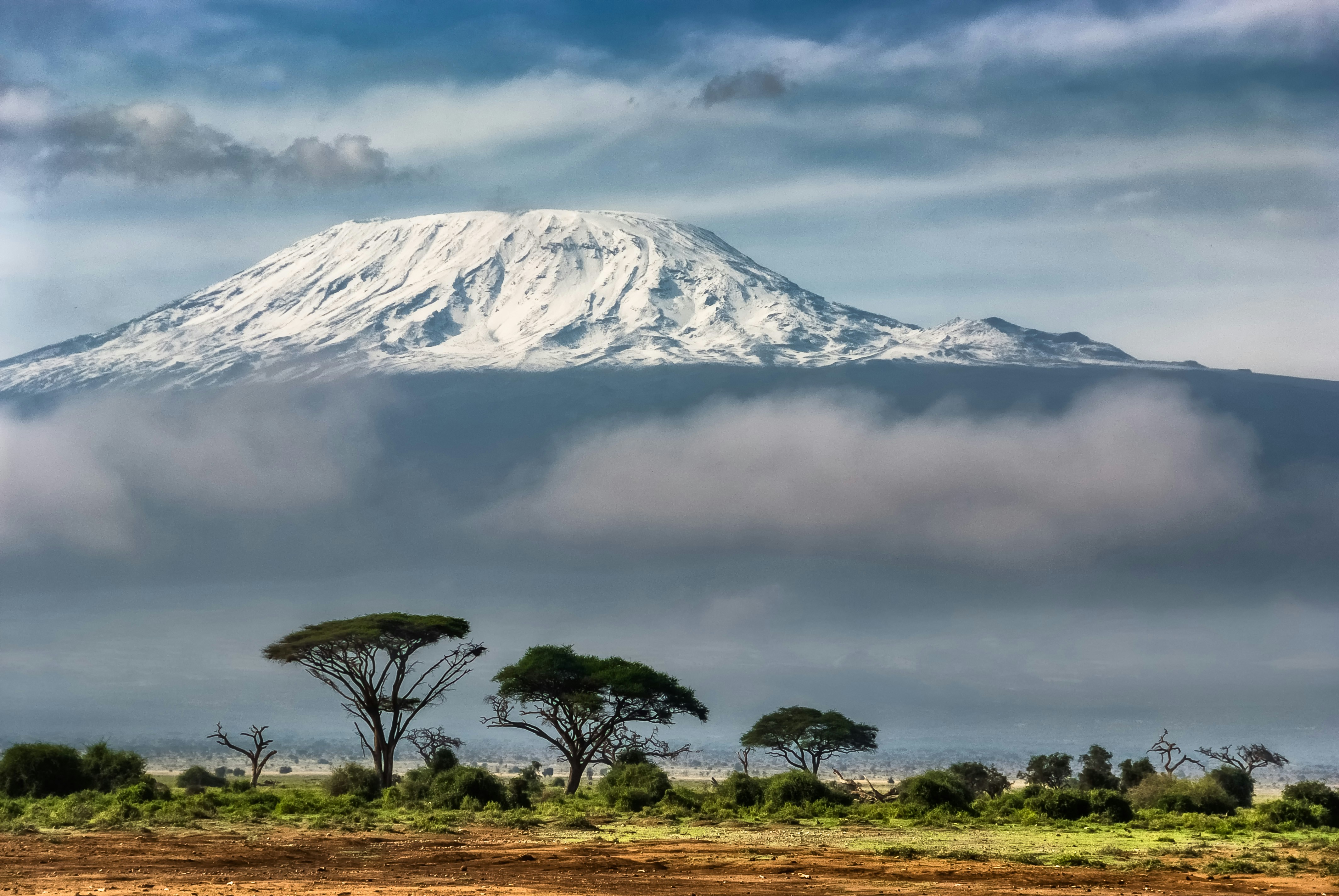
Moshi lives under Africa's highest mountain, and that changes the mood of the whole town. On a clear morning the summit hangs above the rooftops like a painted backdrop, while the volcanic slopes send down the water and fertile soil that made this place rich in coffee and bananas.

Waterfall and Spring Country

The countryside east and north of town is full of sudden green luxuries: Materuni's waterfall drops more than 90 meters through coffee farms, and Kikuletwa's mineral spring glows an improbable blue-green. Bring swimwear. You will regret not having it.

Chagga Memory

Moshi makes more sense once you understand the Chagga, whose chiefdoms, irrigation, and banana-coffee farms shaped the mountain's southern slopes long before trekking agencies arrived. Marangu's Chagga Museum and village walks around Machame give that history a human scale, with stories, tools, tunnels, and songs instead of museum fog.

Coffee With Dirt Under Its Nails

This is coffee country, but not in the polished, tasting-flight way some travelers expect. Beans are grown in shaded home gardens, often beside cooking bananas and medicinal plants, and a good farm visit smells of wet earth, wood smoke, and freshly roasted coffee pounded by hand.


03 Places to Visit.

Not every monument, just the ones we'd walk you past ourselves.

Mount Kilimanjaro
Editor's pick
01 · Place

Mount Kilimanjaro

The Chagga name means roughly 'we failed to climb it' — and most of Moshi's 10,000 porters have never stood on the summit they work.

All 1 places in Moshi

04 Neighborhoods.

Where to wander, by quarter — each with its own rhythm.

01

Materuni

Materuni sits in the green belt above Moshi, where coffee shrubs, banana groves, and damp red earth frame the walk to a waterfall more than 90 meters high. Visitors come for the cascade, but the better reason to spend time here is the Chagga cultural trail and the old farming logic of the slope, where every planted layer has a purpose.

02

Marangu

Marangu feels more historical than dramatic at first glance, then the details catch up with you. The Chagga Museum grounds the area in local history, and nearby underground tunnels recall a period when defense shaped settlement as much as agriculture did. This is where Moshi's mountain culture becomes legible.

03

Machame

Machame is worth your time if you want to see how the Kilimanjaro foothills actually work. Guided walks through Chagga home gardens reveal a tightly organized agroforestry system of coffee, bananas, tropical fruit, and medicinal plants, with village life unfolding in the shade rather than on display.

04

Kikuletwa

Kikuletwa, often called Chemka Hot Springs, lies out in the rural outskirts where the ground suddenly gives way to clear, mineral-bright water. People come to swim and take photos, which is fair enough, but the stronger impression is the contrast: dry countryside, then a pool so green it looks invented.

06 Who lived here.

The people who shaped the city — and were shaped by it.

Chagga chief and resistance leader c.1866-1900

Mangi Meli

Ruled Old Moshi

Mangi Meli was the Chagga chief of Old Moshi who fought German colonial control and paid for it with his life on 2 March 1900. His story still hangs over the town like weather: a reminder that Moshi was never just a gateway, but a place where power was argued over in public.

Paramount chief and modernizer 1915-1993

Thomas Marealle

Lived and led from Moshi in the 1950s

Thomas Marealle became the first paramount chief to unite the Chagga chiefdoms, and Moshi was the political stage from which he pushed education and cooperative development. He would probably recognize the ambition in today's university town, though the traffic might test his patience.

Clergyman and church leader 1906-1976

Stefano Reuben Moshi

Born in Moshi district; served on Moshi Town Council

Stefano Reuben Moshi rose from local teacher to the first president of the Evangelical Lutheran Church of Tanganyika, and he served on the Moshi Town Council between 1959 and 1961. His career says something sharp about this place: on Kilimanjaro's slopes, church, education, and politics have long shared the same table.

Environmental lawyer and UN leader born 1957

Elizabeth Maruma Mrema

Born and raised in Moshi

Elizabeth Mrema grew up in Moshi watching rivers and tree cover change around Kilimanjaro, then carried that memory into global environmental law and UN leadership. She has spoken plainly about those childhood landscapes, which makes her feel like a very Moshi figure: grounded in local water, thinking on a planetary scale.

08 Where to Eat.

Where locals actually book dinner — not the tourist menus.

Ndizi Nyama

Ndizi Nyama

This banana-and-beef stew is the Kilimanjaro slopes on a plate: cooking bananas softened in a savory sauce until they turn silky and faintly sweet. Order it in a local restaurant, not a generic hotel buffet.

★ local pick
Mbege

Mbege

The Chagga banana beer matters because it tells you more about local social life than any souvenir ever will. It is cloudy, lightly sour, and often shared at ceremonies and family gatherings rather than dressed up for tourists.

★ local pick
Kilimanjaro Coffee

Kilimanjaro Coffee

Moshi's coffee is grown in volcanic soil under banana shade, which gives many cups a round, earthy sweetness rather than sharp acidity. A farm visit where the beans are roasted and pounded by hand is worth more than another polished espresso in town.

★ local pick
Ugali with Maharage or Mchicha

Ugali with Maharage or Mchicha

Ugali is the steady center of daily eating here, a firm maize staple meant for scooping up beans or greens. On a cool Moshi evening, especially after rain, it feels exactly right.

★ local pick
Nyama Choma and Mishkaki

Nyama Choma and Mishkaki

Charcoal smoke is part of the town's evening smell, and this is why. Grilled goat or beef, plus skewers cut small enough to take on the street, make the best case for lingering at a no-frills local grill with a cold beer.

★ local pick
Chipsi Mayai

Chipsi Mayai

Tanzania's beloved fries omelet shows up everywhere from bus-stand stalls to casual cafes. It is cheap, filling, slightly ridiculous, and much better than it has any right to be.

★ local pick

09 Insider tips.

Small things that change how the city treats you.

Use the shuttle

From Kilimanjaro International Airport, the shared shuttle to Moshi costs Tsh 10,000. It is the cheapest researched airport transfer, and it leaves from just outside the terminal.

Leave early for flights

If you are flying Air Tanzania, their Moshi airport shuttle boards at Kibo Tower and leaves 3 hours before departure. Build that timing into your last morning instead of gambling on a same-day taxi.

Pick the dry months

January to March and June to October give you the clearest mountain views and the least mud on village trails. April to May is wetter, with slippery paths around places like Materuni.

Pack for Materuni

Materuni combines a plantation walk, a waterfall trail, and a swim beneath the falls. Wear shoes with grip, and bring a dry change of clothes unless you want to ride back to town damp and cold.

Book a village guide

Machame and Marangu make more sense with a local guide because the value is in the stories: coffee gardens, medicinal plants, caves, and the older Chagga farming system. Wandering in alone turns a layered place into just another pretty walk.

Skip political crowds

Current U.S. travel advice for Tanzania warns that demonstrations can turn unpredictable and may bring checkpoints or roadblocks. If a crowd starts forming, leave early rather than waiting to see how it develops.

10 Watch.

A few films to set the scene before you go.

MOSHI | Kilimanjaro the best drone footage ever captured 2024 #travel #tanzania #tourism #city
Azizi Visuals

MOSHI | Kilimanjaro the best drone footage ever captured 2024 #travel #tanzania #tourism #city

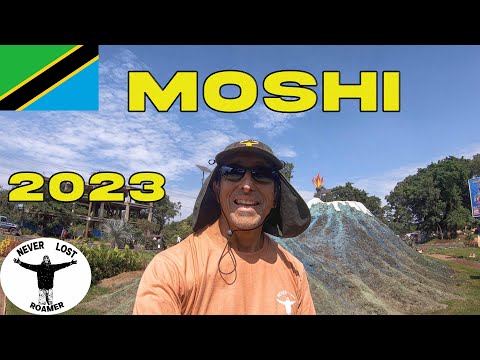
A WALKING TOUR OF MOSHI, TANZANIA 2023
Never Lost Roamer

A WALKING TOUR OF MOSHI, TANZANIA 2023

12 Frequently asked

Is Moshi worth visiting?

Yes, especially if you want more than a Kilimanjaro staging post. Moshi has a strong sense of place: Chagga coffee villages, waterfall trails, hot springs, and that strange daily sight of snow floating above banana groves. Give it time and the town stops feeling like a stopover.

How many days in Moshi?

Two to four days works well for most travelers. That gives you time for one town day, one cultural or waterfall day in Materuni or Machame, and one swim or recovery day at Kikuletwa. Add more if you are acclimatizing before a Kilimanjaro trek.

How do I get from Kilimanjaro Airport to Moshi?

The cheapest researched option is the shared airport shuttle for Tsh 10,000 from outside the terminal. Taxis are available on the forecourt, and Air Tanzania passengers can also use the airline shuttle from Kibo Tower in Moshi for the return trip.

Is Moshi safe for tourists?

Usually yes for ordinary sightseeing, but it is not a place to switch off completely. Current official U.S. advice for Tanzania warns about crime, unrest, and demonstrations, so keep valuables out of sight and avoid political gatherings. Use arranged transport at night instead of drifting around on foot.

What is the best time to visit Moshi?

January to March and June to October are the best months for clearer skies and drier trails. Those windows are especially useful if you want Kilimanjaro views, coffee walks, or a Materuni hike without ankle-deep mud. The long rains usually make April and May the messier choice.

Can you visit Moshi without climbing Kilimanjaro?

Absolutely. Some of Moshi's strongest days happen below the summit: coffee tours in Materuni, Chagga history in Marangu, home-garden walks in Machame, and a swim in the blue-green water at Kikuletwa. The mountain still shapes everything, even when you never lace up for the ascent.

Is Moshi expensive?

No, Moshi can be fairly manageable if you choose local transport and day trips carefully. The airport shuttle is only Tsh 10,000, and researched Materuni day experiences start around US$40 rather than safari-level prices. Kilimanjaro climbs are the expensive part; the town itself usually is not.

Ready to book?

13Before you go

Practical Information

Flight

Getting There

Kilimanjaro International Airport (JRO) is the main air entry point, about 40 km west of Moshi; Arusha Airport (ARK) handles useful domestic connections, and Julius Nyerere International Airport (DAR) is the long-haul fallback. For rail, Moshi Railway Station is the town's main station on the old Tanga line, though passenger service is limited in 2026 and most visitors arrive by road. The key highway links are the paved A23 from Arusha through Moshi to Holili on the Kenya border, and the B1, which ties Moshi to Same and Segera.

Directions transit

Getting Around

Moshi has no metro, subway, or tram system. Day-to-day movement runs on daladala minibuses from the central dala-dala station, with typical 2026 in-town fares around TSh 500 to 800 and Moshi-Arusha rides around TSh 3,000 to 4,000; boda-bodas and taxis cover the last mile. Dedicated bike lanes are scarce, but the center is manageable by bicycle and the flatter roads toward villages like Rau and Shimbwe are popular with local cycling outfitters; no city transport pass or tourist card currently exists.

Thermostat

Climate & Best Time

Spring, roughly March to May, brings 16 to 28 C days and the long rains, with April usually the wettest month; summer, June to August, is cooler and drier at about 12 to 27 C. Autumn, September to November, warms back to roughly 16 to 31 C and picks up short rains in November, while winter, December to February, is warmest at about 18 to 32 C. Peak trekking traffic usually lands in January to February and again from August to October; June to October is the safest bet for clear mornings, with January and February a good second choice.

Translate

Language & Currency

Swahili is the everyday language in town, Kichagga is still heard in surrounding communities, and English is widely used in hotels, climbing companies, and many cafes. Tanzania uses the Tanzanian shilling (TZS), and in 2026 cash still matters for daladalas, local markets, and smaller restaurants, even though ATMs and card payments are easy enough in banks, supermarkets, and midrange lodgings.

Take Moshi with you

All of Moshi,
downloaded once.

1 places, one continuous walking route. Free with your first city.

Get this guide on the app Open in browser

All Places to Visit.

1 place to discover

Mount Kilimanjaro
Place

Mount Kilimanjaro