Destinations

Tanzania

"Tanzania is what happens when the Indian Ocean, the Great Rift, and the earliest human record meet in one country. You come for the wildlife and leave talking about history, language, and the strange luxury of geographic scale."

location_city

Capital

Dodoma

translate

Language

Swahili, English

payments

Currency

Tanzanian shilling (TZS)

calendar_month

Best season

June-October; January-March

schedule

Trip length

10-14 days

badge

EntryMost travelers need a visa; US passports require a multiple-entry visa.

Introduction

This Tanzania travel guide starts with a shock: one country holds 3.6-million-year-old footprints, Africa's highest peak, and coral-stone port cities.

Tanzania works because it refuses to be one thing. You can land in Dar es Salaam for ferries, markets, and the heat of the Indian Ocean coast, drift to Zanzibar for carved doors and clove-scented alleys, then fly north to Arusha where safari talk replaces sea air. A few hours away, Moshi sits in Kilimanjaro's shadow, all coffee slopes and summit logistics. Most countries make you choose between beach, mountain, and wildlife. Tanzania stacks them in one itinerary, then adds the Swahili coast, where trade once tied East Africa to Oman, India, and Persia.

History here starts earlier than almost anywhere else a traveler can stand. Near Olduvai and Laetoli, the story reaches back millions of years; farther south, Kilwa Kisiwani and Bagamoyo tell a later chapter of merchants, sultans, missionaries, and empire on the Indian Ocean rim. Inland, Dodoma anchors the political center, while Kigoma opens onto Lake Tanganyika, one of the deepest lakes on earth. Tanga, Lindi, and Iringa pull the map wider still. That range matters. Tanzania is not a single headline destination but a country where each region changes the argument.

Come for safari if you want, but don't stop there. The strongest trips mix scale with texture: elephant herds and crater rims, yes, but also pilau heavy with cloves, ferry decks at dawn, carved coral mosques, banana farms near Moshi, and the slow authority of Swahili greetings. Mafia Island adds reefs and whale sharks; Kilwa Kisiwani adds ruined palaces where trade once moved gold across the ocean. Tanzania rewards travelers who leave room for contrast. That is where the country gets under your skin.

A History Told Through Its Eras

Footprints in Ash, Then Silence on the Plain

Before Kingdoms, c. 3.6 million BCE-800 CE

A sheet of volcanic ash lies at Laetoli, south of the Ngorongoro highlands, and three beings walk across it after fresh rain 3.6 million years ago. One print is larger, one smaller, and a third steps into the first as though the ground were still soft. Ce que l'on ignore souvent, c'est que this most intimate scene in Tanzania's story was found in 1976 almost by accident, when Mary Leakey's team noticed odd depressions in the grey surface and understood, with a shiver, that they were looking at movement turned to stone.

Olduvai Gorge, or Oldupai in the Maasai form, gave the world the same sensation on a grander scale. On 17 July 1959, while Louis Leakey lay sick in camp, Mary walked out alone and found the skull later nicknamed "Nutcracker Man," a face built for grinding hard food and surviving harder landscapes. He became famous. She should have been more famous.

These places matter because they refuse the old European habit of placing Africa at the edge of the human story. Here, in northern Tanzania near present-day Arusha, the sequence runs in the opposite direction: the beginning is here, the tools are here, the bones are here, and later civilizations arrive on a stage prepared by unimaginable stretches of time. Even the names tell a small colonial comedy, since the German rendering "Olduvai" stuck in science while the local plant, oldupai, had been there all along.

For many centuries after those early traces, the record grows quieter, though not empty. Pastoral communities moved through the Rift Valley, ironworking spread, and trade paths linked interior regions to the coast long before foreign chroniclers began writing down what they saw. The silence is only in the archives. Human life never stopped.

That is the bridge to everything that follows. Once the coast drew merchants from Arabia, Persia and India, the deep time of the interior met the glitter of the Indian Ocean, and Tanzania's history changed scale.

Mary Leakey appears in this opening act not as the wife in camp but as the sharp-eyed field scientist who saw, in a patch of ash, the oldest family walk on earth.

Members of the Laetoli team later recalled that the discovery happened during a day of joking and horseplay, including the throwing of elephant dung around camp.

When Kilwa Kisiwani Taxed Gold and Perfumed the Sea Wind

Swahili Coast and Kilwa's Ascendancy, 800-1505

Picture the harbor of Kilwa Kisiwani in the early 14th century: stitched-sail dhows rocking at anchor, coral rag mansions catching white light, merchants weighing ivory, cloth and ambergris under carved doorframes. In 1331 Ibn Battuta arrived and declared it one of the finest cities he had seen. He was not being polite.

Ce que l'on ignore souvent, c'est que Kilwa's genius was not simple wealth but choreography. Gold from the Zimbabwe plateau moved to Sofala, then north to Kilwa Kisiwani, where rulers taxed it, stamped authority onto copper coins, and sent it onward into the Indian Ocean world. Chinese coins found in the ruins tell the rest of the tale: this was east Africa looking outward, not waiting to be discovered.

The old founding legend gives the island to Ali ibn al-Hasan, a Persian prince who supposedly bought it from a local ruler with lengths of cloth. Legend, perhaps. But like many good court stories, it reveals a truth beneath the embellishment: Swahili civilization grew from African roots while speaking in several accents at once, Bantu and Arab, Persian and Indian, local and maritime.

Then came the palace world. Husuni Kubwa rose above the sea in the 14th century, vast and eccentric, with vaulted rooms, octagonal courts and a pool cut into coral stone. A sultan who could build a swimming pool over the Indian Ocean was not merely rich; he was staging power as theatre, and one can almost hear the rustle of imported textiles in those corridors.

The ending was brutal. Vasco da Gama appeared in 1498, and in 1505 Francisco de Almeida returned with cannon, garrison and the Portuguese conviction that trade worked best at gunpoint. Kilwa declined, the coral houses cracked, and the center of gravity shifted north toward Zanzibar and other coastal ports that would inherit both the splendor and the violence of this oceanic world.

Sultan al-Hasan ibn Sulaiman, remembered through the Kilwa Chronicle and the stones of Husuni Kubwa, ruled like a prince who understood that architecture could be a form of statecraft.

Kilwa Kisiwani is the only known sub-Saharan African city of the medieval period to have minted its own copper coins.

Cloves, Ivory, and the Sultan Who Moved His Court to Zanzibar

Omani Zanzibar and the Plantation Century, 1698-1888

When the Omani Arabs drove the Portuguese from much of the Swahili coast in 1698, they did not simply change a flag. They changed the rhythm of power. By the time Seyyid Said began favoring Zanzibar in the 1820s and then shifted his capital there in 1840, the island had become a court, a counting house and a perfume cabinet all at once, scented with clove blossom and shadowed by the slave trade.

Walk through Stone Town in Zanzibar and one still feels the geometry of that century: narrow streets, carved teak doors, balconies built for watching without being seen. Said imported clove trees and ordered large landholders to plant them; refusal could cost property. Wealth bloomed quickly, and so did cruelty, because the plantations and caravan trade depended on enslaved labor dragged from the mainland through places such as Bagamoyo, where departures for the island and the wider ocean world carried a grief the ledgers rarely record.

Ce que l'on ignore souvent, c'est how domestic this empire could appear from the inside. Princess Salme, later Emily Ruete, left one of the sharpest portraits of palace life in Zanzibar: jealousies among half-siblings, corridors filled with gossip, women who understood politics perfectly well even when men pretended otherwise. Behind the carved doors stood not an exotic fairy tale but a family with rival mothers, contested inheritance and the usual dangerous blend of money and wounded pride.

The port also fed the interior. Ivory caravans tied Zanzibar to Tabora, Ujiji near present-day Kigoma, and routes that reached deep into the continent. Men such as Tippu Tip grew rich in this world, half merchant, half warlord, useful to every empire until he became inconvenient. European abolitionists arrived with moral outrage, but also with maps and ambitions of their own.

By the late 19th century, pressure from Britain and Germany tightened around the coast. The plantation century had made Zanzibar dazzling and infamous; it also made the mainland harder for outsiders to ignore. Commerce was becoming conquest.

Seyyid Said was no abstract sultan but a ruler with a nose for profit, who looked at Zanzibar's damp heat and clove scent and decided an empire should live there.

Princess Salme of Zanzibar eloped with a German merchant in 1866 while pregnant, then wrote one of the 19th century's most revealing memoirs of an Arab ruling house.

The Germans Arrive, the Water Turns to War, and Tanganyika Learns to Resist

Conquest, Rebellion, and Colonial Rule, 1888-1961

The German period began with contracts, flags and bluff, then turned almost at once into coercion. From the late 1880s the German East Africa Company tried to impose coastal control, only to meet the Abushiri revolt, led by Abushiri ibn Salim al-Harthi, who understood before many others that commercial treaties were merely a polite preface to occupation. He was hanged in 1889. The lesson was meant to be clear.

Then the Germans built their colony with railways, taxes and the whip. Dar es Salaam grew as an administrative port, Tanga became a strategic coastal node, and inland towns were drawn into a system designed for extraction. Cotton schemes spread in the south. So did anger.

In 1905 that anger took a prophetic form. Kinjekitile Ngwale, a spirit medium from Ngarambe, announced that sacred water would turn German bullets to water, and the Maji Maji uprising surged across southern and central Tanganyika. One hears the tragedy immediately: faith, courage, desperation, and an empire that answered with scorched earth. Famine followed. Hundreds of thousands died, not only by gunfire but by the planned destruction of crops and villages.

Ce que l'on ignore souvent, c'est that the defeat changed the colonizers too. Berlin understood that naked brutality had nearly ruined the colony, and later administrators softened certain methods without yielding control. The First World War finished the German chapter in military terms, with East Africa turned into a campaign zone of marches, disease and exhaustion rather than grand decisive battles.

After 1919 the British governed Tanganyika under League of Nations mandate and then UN trusteeship. They ruled more discreetly than the Germans, which is not the same as ruling gently. Yet this slower, bureaucratic order created the political space in which a new elite of teachers, clerks and organizers emerged, and among them stood Julius Nyerere, preparing a language of independence that would outlast empire.

Kinjekitile Ngwale was not a caricature of revolt but a man who gave scattered communities a common grammar of defiance, even if the promise of maji could not stop machine guns.

At the Battle of Tanga in 1914, attacking British-Indian troops were thrown into confusion not only by German defense but also by swarming bees disturbed during the fighting.

Nyerere's Republic, Zanzibar's Revolution, and the Union That Still Defines Tanzania

Independence, Union, and the Long Republic, 1961-present

Midnight, 9 December 1961: the Union Jack comes down in Dar es Salaam and Tanganyika becomes independent. Julius Nyerere, schoolmaster in manner and iron in discipline, was 39 years old and already spoke with the calm authority of a man who had decided history should be argued through ethics. His gift was political language. His burden was that he believed it.

Three years later the islands detonated. In January 1964 the Zanzibar Revolution overthrew the Arab-dominated sultanate, and the violence that followed was intimate, chaotic and remembered unevenly depending on who tells it. Abeid Amani Karume emerged from the upheaval as leader of the People's Republic of Zanzibar and Pemba. In April 1964 he and Nyerere fused their states into the United Republic of Tanzania, a union born partly from idealism, partly from urgency, and partly from Cold War fear that the islands might become a dangerous pawn.

Ce que l'on ignore souvent, c'est how audacious Nyerere's social experiment was. Through ujamaa, the policy of African socialism, he tried to build a republic around village life, literacy, Swahili unity and moral seriousness rather than ethnic patronage. He succeeded brilliantly in some areas: national cohesion, language policy, education. Economically, the record was harsher. Forced villagization uprooted millions, production faltered, and the noble sermon sometimes sounded different in the fields than it did in State House.

Yet Tanzania acquired something rare in postcolonial Africa: a political identity that did not collapse at once into military rule or civil war. The capital shifted toward Dodoma, Dar es Salaam remained the commercial lung, and places such as Arusha became diplomatic stages for African negotiations from decolonization to the East African Community. Even opposition, when it grew louder, operated inside a state that Nyerere had helped bind together with language and restraint.

Modern Tanzania still lives inside those unresolved inheritances. Zanzibar guards its autonomy and memory. The mainland carries the weight of Nyerere's moral prestige while arguing over what to keep and what to abandon. That tension is not a flaw in the story. It is the story.

Julius Nyerere could quote Shakespeare, translate Julius Caesar into Swahili and still spend years trying to persuade peasants, diplomats and party men that nationhood was an ethical project.

Nyerere translated both Shakespeare's Julius Caesar and The Merchant of Venice into Swahili, treating language not as ornament but as statecraft.

The Cultural Soul

A Greeting Is a Meal Served Standing

Swahili in Tanzania does not begin with information. It begins with recognition. A stranger in Dar es Salaam may ask how you are, then how your work is, then how your morning went, and only after this verbal laying of the table will the real matter appear, modestly, as if it had been waiting outside in the sun.

The genius lies in the sequence. "Shikamoo" offered to an elder is not a decorative politeness but a bow made of syllables; "Marahaba" answers by lifting you back up. Europe mistakes speed for honesty. Tanzania knows that respect is the shortest route between two people.

Then comes "pole," that miraculous word of sympathy used for fatigue, heat, delay, grief, inconvenience, existence itself. In Arusha, in Moshi, in Zanzibar, you hear it until you understand that a society may choose tenderness as its operating system. A country is also the way it notices your burden.

The Pot Decides the Grammar

Tanzanian food refuses hysteria. It does not perform for the plate. Ugali arrives like a white verdict, beans in coconut milk spread beside it, and the hand learns what the mouth cannot yet explain: starch is not neutral, it is a pact, a way of saying you will stay long enough to be fed properly.

On the coast, the sentence grows more elaborate. In Zanzibar and Bagamoyo, cloves, cardamom, cinnamon, black pepper, coconut, lime, cassava, octopus, shark, tamarind, and rice pass through the kitchen as if the Indian Ocean had decided to write in aromas instead of ink. Pilau is not spiced rice. It is trade made edible.

The beauty of it is the absence of vanity. A pot of maharage ya nazi at lunch can say more about history than a museum label, because the spoon enters Bantu agriculture, Omani plantations, monsoon routes, and family habit in one motion, and none of these ingredients feels obliged to announce itself as heritage. They simply taste of having survived.

The Ceremony of Not Rushing

Tanzania has a refined suspicion of hurry. "Pole pole" is often translated as "slowly," which is accurate in the way a skeleton is accurate: the structure is there, the life is missing. The phrase means that haste insults the hour, the road, the person in front of you, and perhaps your own dignity.

Watch what happens when tea is served. Chairs are adjusted. News is exchanged in layers. Nobody lunges for the point as if silence were a fire to extinguish. In Kigoma or Dodoma, the ritual can look casual to an impatient visitor; it is anything but casual. It is social architecture, and like all good architecture it prevents collapse.

Even permission has elegance here. "Karibu" does not merely invite you in. It grants moral space. You may sit, eat, linger, ask. Many cultures offer hospitality as performance. Tanzania offers it as household physics.

Drums for the Street, Taarab for the Vein

Music in Tanzania moves along two temperaments that should not coexist and do: public pulse and private intoxication. In Dar es Salaam, singeli races at a speed that makes thought seem underdressed. Beats pile up, voices jab, bodies answer before the mind files a report. The city does not ask whether you approve.

Then the coast changes the blood. Taarab in Zanzibar and Tanga enters with oud, qanun, violin, and a voice that knows how to wound politely. It came through Arab and Indian Ocean routes, then married Swahili poetry and stayed for good. Desire, insult, longing, gossip, theology: all of it can be sung while sounding impeccably composed.

This double life feels very Tanzanian. The same country can produce music for a bus stand, music for a wedding, music for a heartbreak hidden behind perfect manners, and each form understands something the others do not. Rhythm is biography. Melody keeps the secrets.

Coral, Verandas, and the Art of Surviving Heat

Tanzanian architecture begins with climate before it rises to style. On the coast, coral rag walls, inner courtyards, carved doors, shaded balconies, and thick rooms teach the oldest lesson in building: a house is first an argument with the sun. Stone Town in Zanzibar knows this. So do the older streets of Bagamoyo and the haunted remains of Kilwa Kisiwani, where coral stone still carries light like cooled milk.

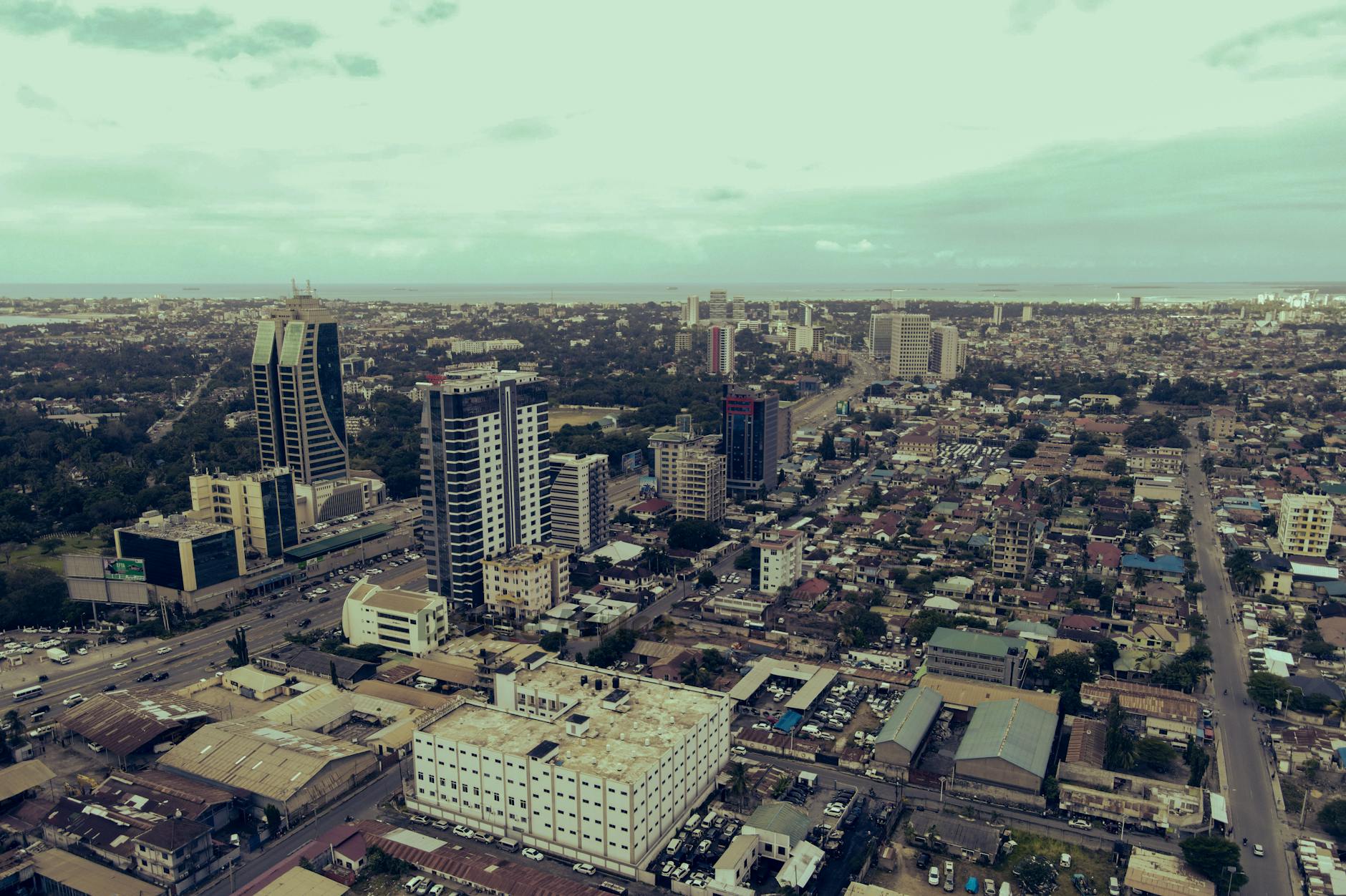
Then the mainland changes the sentence. In Dar es Salaam, German, British, Indian, Arab, socialist, and glass-tower ambitions stand near one another with the frankness of neighbors who did not choose each other but have learned the arrangement. Not harmony. Coexistence. Cities are rarely pure, and thank God for that.

What stays with you is the veranda. It is less a decorative feature than a moral position between indoors and outdoors, solitude and witness, breeze and conversation. Architecture here likes thresholds. Tanzania understands that life often happens in the in-between: under eaves, behind lattice, at the edge of the street, where one can see without declaring oneself too quickly.

The Day Is Not a Thing to Defeat

Tanzania contains many belief systems, histories, languages, and regional temperaments, yet one principle returns with eerie consistency: life must be inhabited before it is counted. This is not laziness, the favorite accusation of societies that worship clocks. It is a different metaphysics. The hour is not raw material. It is company.

You feel it in markets, ferries, bus stations, kitchens, sidewalks after rain. People wait, but not always in the sterile Western sense of delay. They occupy waiting. They converse inside it, snack inside it, trade inside it, laugh inside it, and by doing so they deny boredom the right to rule. Efficiency is a poor god.

This philosophy has teeth. It can frustrate the visitor who wants certainty at 10:03 and receipt, schedule, vehicle, proof. Yet after a few days the body begins to grasp the local heresy: a human encounter may be more important than the machine of plans. That is not backwardness. It is a hierarchy of values, and one that exposes how graceless speed can be.
What Makes Tanzania Unmissable

pets

Safari at Full Scale

Serengeti plains, Ngorongoro's caldera, and the southern parks turn wildlife into landscape rather than checklist. The drama is not only lions and elephants but distance, weather, dust, and the way the light changes by the hour.

landscape

Kilimanjaro and Highlands

Moshi is the practical base for Africa's highest mountain, but the appeal is broader than summit photos. Northern Tanzania gives you volcanic slopes, cooler highland farms, and the sharp shift from equatorial heat to alpine cold.

sailing

Swahili Coast Cities

Zanzibar, Kilwa Kisiwani, and Bagamoyo carry the layered history many first-time visitors miss. Coral-stone ruins, carved doors, old mosques, and dhow harbors show how East Africa was shaped by trade long before European maps caught up.

scuba_diving

Indian Ocean Reefs

Mafia Island and the wider coast offer a second Tanzania after the bush: whale sharks in season, coral gardens, tidal flats, and slow dhow water. It is marine travel with history attached, not just beach time.

history_edu

Human Origins Ground

Laetoli and Olduvai give Tanzania a claim few countries can touch. The oldest known hominid footprints and some of the most important paleoanthropology sites on earth sit within reach of a northern circuit trip.

restaurant

A Serious Food Map

Pilau, mishkaki, coconut bean stews, grilled goat, green banana soup, and street-side chai tell you where coast, caravan, and highland traditions meet. Dar es Salaam and Zanzibar are especially good places to taste the country one plate at a time.

Cities

Cities in Tanzania

Zanzibar

"Stone Town's coral-stone labyrinth still smells of cloves and low tide, its carved wooden doors hiding the ledgers of a slave trade that moved 600,000 people through this single port."

Arusha

"The self-declared 'Geneva of Africa' sits at the precise midpoint between Cairo and Cape Town, and every northern-circuit safari โ€” Serengeti, Ngorongoro, Kilimanjaro โ€” begins or ends on its dusty clock-tower roundabout."

Dar Es Salaam

"Tanzania's commercial engine is not beautiful in the postcard sense, but Kariakoo market at 7 a.m. โ€” pyramids of dried fish, Indian fabric bolts, Chinese phone cases โ€” is a more honest portrait of modern East Africa than"

Moshi

"The town beneath Kilimanjaro's southern ice fields is where climbers eat their last plate of ugali before five days of altitude, and where they return, wrecked and grinning, to eat another."

Kilwa Kisiwani

"Ibn Battuta called it one of the most beautiful cities in the world in 1331; today the coral-stone ruins of the palace that taxed Zimbabwe's gold trade sit in chest-high grass on a tidal island reached only by wooden boa"

Bagamoyo

"The name translates roughly as 'lay down your heart' โ€” the last thing enslaved people saw before the dhow crossing to Zanzibar was this beach, and the first thing Arab caravans saw returning from the interior was the sam"

Dodoma

"Tanzania's official capital since 1974, planted in the dry central plateau by Julius Nyerere as a deliberate act of nation-building, is a city that still feels like a proposal โ€” government ministries, wide red-dirt avenu"

Kigoma

"On the eastern shore of Lake Tanganyika โ€” the world's second-deepest lake, its water so clear you can see 20 metres down โ€” this railway terminus is the last stop before the chimpanzees of Gombe, where Jane Goodall arrive"

Lindi

"The deep-south port that German colonists used to ship the Tendaguru dinosaur bones โ€” including the world's tallest mounted skeleton, now in Berlin's Natural History Museum โ€” gets perhaps two hundred foreign visitors a y"

Tanga

"Tanzania's second port is a sun-bleached colonial grid of German-era bomas and sisal warehouses, the closest mainland base for diving the barely-visited Pemba Channel, and a town where the fish market operates on a hands"

Iringa

"Perched on a sandstone escarpment above the Great Ruaha River at 1,600 metres, this highland town was the last stronghold of Chief Mkwawa, who cut off his own head rather than surrender it to the Germans โ€” a skull the Br"

Mafia Island

"Smaller than Zanzibar, quieter than Pemba, and sitting atop a marine park where whale sharks arrive between October and March with the predictability of a tide table โ€” Mafia is what the Tanzanian coast looked like before"

Regions

Arusha

Northern Highlands and Safari Gateway

Arusha is where northern Tanzania starts making practical sense. The air is cooler than the coast, safari logistics are smoother here than in Dar es Salaam, and nearby Moshi gives the region a second base for Kilimanjaro climbs, coffee farms, and Chagga country.

placeArusha placeMoshi placeMount Kilimanjaro placeMount Meru placeNgorongoro Conservation Area

Zanzibar

Zanzibar and the Offshore Islands

Zanzibar is not just beach time with better branding. Stone Town carries the clove-and-coral history, while the wider island rhythm runs on tides, ferry schedules, and long afternoons that make mainland itineraries feel overplanned; Mafia Island belongs in the same conversation if you want reefs and fewer people.

placeZanzibar placeStone Town placeMafia Island placeJozani Forest placePaje

Dodoma

Central Plateau and Capital Corridor

Dodoma sits in a drier, rougher-looking Tanzania that rewards anyone willing to slow down and read the place properly. This is rail-and-road country, with wide skies, political institutions, and practical access toward the interior rather than the polished edge of the Indian Ocean.

placeDodoma placeSGR corridor placeBunge area placeKondoa Rock-Art Sites placeHombolo Lake

Dar es Salaam

Historic Mainland Coast

Dar es Salaam is the country's busiest front door, but the coast around it tells the older story. Bagamoyo and Tanga carry Swahili, German, missionary, and caravan-era layers that make far more sense once you have seen the port traffic, fish markets, and ferry chaos of Dar es Salaam itself.

placeDar es Salaam placeBagamoyo placeTanga placeNational Museum of Tanzania placeCoco Beach

Kilwa Kisiwani

Southern Swahili Coast

Kilwa Kisiwani is where the research notes stop feeling academic. The ruins, dhow routes, and sea light make medieval Indian Ocean trade legible at ground level, and Lindi extends the mood with a quieter coast that still feels tied to the old mercantile world rather than the resort one.

placeKilwa Kisiwani placeKilwa Masoko placeLindi placeGreat Mosque of Kilwa placeHusuni Kubwa

Iringa

Southern Highlands

Iringa gives you cooler air, stronger altitude, and a different social tempo from the coast. It is a practical base for travelers heading toward Ruaha, but it also stands on its own through German-era architecture, Hehe history, and the feeling that Tanzania has switched from palm trees to escarpments without warning.

placeIringa placeIsimila Stone Age Site placeRuaha National Park placeGangilonga Rock placeHehe cultural sites

Kigoma

Western Lake Tanganyika

Kigoma feels farther away because it is. The rail line, the old port, and the vast sheet of Lake Tanganyika give this corner of Tanzania a frontier mood, and it is the right base for chimpanzee country in Gombe or for anyone who prefers lake horizons to savanna ones.

placeKigoma placeLake Tanganyika placeGombe National Park placeUjiji placeMahale Mountains National Park

Suggested Itineraries

3 days

3 Days: Dar es Salaam to Bagamoyo

This is the short coast break for travelers who want history, ferries, markets, and one good stretch of Indian Ocean air without turning the trip into a logistics project. Start in Dar es Salaam for the country's commercial pulse, then move north to Bagamoyo, where caravan history and mission-era ruins sit a bus ride from the beach.

Dar es Salaamโ†’Bagamoyo

Best for: short breaks, first-time visitors, history-focused travelers

7 days

7 Days: Arusha and Moshi

Northern Tanzania works best when you keep it tight. Base between Arusha and Moshi for safari departures, coffee-country day trips, and clear views of Meru and Kilimanjaro when the clouds behave themselves.

Arushaโ†’Moshi

Best for: first safari add-ons, hikers, travelers with one week

10 days

10 Days: Kilwa Kisiwani, Lindi, and Mafia Island

This route follows the older Indian Ocean, not the package one. Kilwa Kisiwani gives you coral-stone ruins and medieval trade history, Lindi slows the tempo even further, and Mafia Island finishes with reefs, dhow water, and the kind of sea days that do not need much scheduling.

Kilwa Kisiwaniโ†’Lindiโ†’Mafia Island

Best for: repeat visitors, Swahili coast history, diving and slow travel

14 days

14 Days: Dodoma, Iringa, and Kigoma

This is the inland Tanzania many visitors never see, and that is their loss. You begin in Dodoma's dry capital corridor, continue to the cooler Southern Highlands around Iringa, then push west to Kigoma for Lake Tanganyika, old rail-country atmosphere, and one of the country's most dramatic shorelines.

Dodomaโ†’Iringaโ†’Kigoma

Best for: second trips, overland travelers, readers of maps rather than brochures

Notable Figures

Mary Leakey

1913-1996 ยท Archaeologist and paleoanthropologist
Worked for decades at Olduvai Gorge and Laetoli in northern Tanzania

Tanzania gave Mary Leakey her great stage, and she repaid it by changing human history there. She found the Zinjanthropus skull at Olduvai in 1959 and later identified the Laetoli footprints, turning a stretch of ash and gorge country near Arusha into the place where humanity first saw itself walking.

Seyyid Said bin Sultan

1791-1856 ยท Sultan of Oman and Zanzibar
Moved his court to Zanzibar and made it the center of a western Indian Ocean empire

He looked at Zanzibar and saw more than an island; he saw a capital that smelled of cloves and money. By moving his court there, he transformed the island into the nerve center of trade in ivory, spices and enslaved people, and the consequences reached far into the mainland.

Emily Ruete (Princess Salme of Zanzibar)

1844-1924 ยท Princess, memoirist
Born into the ruling house of Zanzibar

She lets us eavesdrop on 19th-century Zanzibar better than any decree or treaty. Her memoirs turn the palace into a living household of rival wives, anxious heirs and sharp-eyed women, which is precisely why historians treasure them.

Abushiri ibn Salim al-Harthi

1845-1889 ยท Merchant and anti-colonial rebel leader
Led the coastal uprising against German control in what became mainland Tanzania

Abushiri understood early that concession companies and imperial flags came as a pair. His revolt across the coast in 1888-1889 failed, and he was hanged, but he remains one of the first men in Tanzanian history to recognize colonialism before it fully named itself.

Kinjekitile Ngwale

d. 1905 ยท Spirit medium and resistance leader
Inspired the Maji Maji uprising in southern Tanganyika

He turned resistance into a shared faith by telling followers that sacred maji would protect them from bullets. The prophecy could not save them from German firepower, but it gave scattered communities one banner and one language of refusal.

Tippu Tip

1837-1905 ยท Trader, caravan leader, political broker
Ran caravan networks through western Tanzania and Zanzibar-linked trade routes

Half merchant prince, half predator, Tippu Tip moved through Tabora, Ujiji near Kigoma and Zanzibar's commercial orbit with unnerving ease. He profited from ivory and slave routes while every empire around him tried to decide whether to use him, fear him or denounce him.

Julius Nyerere

1922-1999 ยท First president of Tanzania
Led Tanganyika to independence and helped create the union with Zanzibar

Nyerere gave Tanzania a political vocabulary built on Swahili unity, restraint and moral seriousness, and few African leaders have left a deeper imprint on a country's self-image. He is admired with reason, though the hardships of ujamaa mean he cannot be remembered only in bronze.

Bibi Titi Mohammed

1926-2000 ยท Nationalist organizer and political leader
Mobilized women for TANU and the independence movement in Tanganyika

Without Bibi Titi Mohammed, independence would have sounded far more male than it really was. She organized women in Dar es Salaam and beyond with such force that even party men who underestimated her had to make room.

Abeid Amani Karume

1905-1972 ยท Revolutionary leader and first president of Zanzibar
Led post-revolution Zanzibar and co-founded the union that created Tanzania

Karume came out of the Zanzibar Revolution carrying both legitimacy and controversy, which is usually how real power arrives. His pact with Nyerere in 1964 created modern Tanzania, even as the islands continued to remember the revolution in their own, often painful, terms.

Top Monuments in Tanzania

Practical Information

passport

Visa

Most visitors need a visa, and Tanzania's official price for a single-entry Ordinary Visa is USD 50. U.S. passport holders are the exception: the Immigration Department requires a Multiple Entry Visa at USD 100, and if your trip includes Zanzibar you should also budget for the separate inbound insurance policy sold through Zanzibar's official system.

payments

Currency

The Tanzanian shilling, or TZS, is the legal tender, and cash still does the real work outside bigger hotels and safari lodges. Keep small notes for buses, local meals, and tips; cards are common in Zanzibar, Dar es Salaam, and higher-end operators, but they are not something to build your whole day around.

flight_takeoff

Getting There

Pick your airport by trip shape, not by habit. Dar es Salaam works best for the coast and business travel, Kilimanjaro International Airport is the cleanest entry for Arusha and Moshi, and Zanzibar airport makes sense only if you are starting on the island.

train

Getting Around

Tanzania is bigger than it looks on a map, so distance usually costs either time or money. The smartest budget move is the SGR train on the Dar es Salaam-Dodoma corridor, while domestic flights save whole days if you are linking places like Zanzibar, Kigoma, or Mafia Island.

wb_sunny

Climate

June to October is the broad sweet spot for most trips: drier weather, easier wildlife viewing, and fewer transport headaches. January to March also works well for beaches and the north, while March to May is the wettest stretch and the one most likely to wreck road plans.

wifi

Connectivity

Mobile data is usually the easiest way to stay online, and buying a local SIM on arrival is cheaper than leaning on hotel Wi-Fi all week. Coverage is solid in Dar es Salaam, Zanzibar, Arusha, Moshi, and Dodoma, then gets patchier on long road journeys, in smaller coastal towns, and around parks.

health_and_safety

Safety

Most trips are trouble-free if you keep your habits sharp: use registered taxis, avoid empty beaches and unlit streets at night, and do not flash cash or phones in transit hubs. Health planning matters too, because malaria prevention is recommended for many areas below 1,800 meters and yellow fever rules depend on where you are arriving from, not just your passport.

Taste the Country

restaurantUgali na maharage ya nazi

Lunch, family table, right hand. Pinch, press, scoop, eat, talk, repeat.

restaurantPilau

Wedding, funeral, Eid, Sunday. Rice, spice, serving spoon, shared plate, long conversation.

restaurantNyama choma

Evening, friends, metal table, beer. Tear, salt, dip, argue, linger.

restaurantMishkaki

Street corner, charcoal smoke, dusk. Skewer, bite, lime, chili, walk.

restaurantZanzibar pizza

Night market in Zanzibar, plastic stool, hot griddle. Fold, fry, slice, burn fingers, laugh.

restaurantVitumbua and chai

Morning, kitchen doorway, school run. Pour tea, break fritter, swallow, leave slowly.

restaurantOctopus curry

Coast, lunch, coconut sauce, rice. Spoon, wipe plate, fall silent.

Tips for Visitors

euro
Carry Two Currencies

Use TZS for daily spending and keep some clean USD bills for visas, safaris, diving, or higher-end hotels. Old or damaged dollar notes are often refused.

train
Use SGR Wisely

If your route includes Dar es Salaam and Dodoma, book the SGR early and treat it as both transport and time saved. On many other long overland routes, buses are cheaper but much slower.

flight
Fly the Long Jumps

Domestic flights are the smart spend when you are linking far-flung places such as Kigoma, Zanzibar, or Mafia Island. One ticket can save you an entire day of transfers.

restaurant
Tip Without Theater

In restaurants, round up or leave about 5 to 10 percent if service is not already added. Safari guides and lodge staff are tipped separately, and operators usually give current house norms.

event_available
Book Parks Early

For northern-circuit safaris, Kilimanjaro climbs, and peak-season Zanzibar stays, late booking usually means worse choices rather than better deals. June to October fills first.

wifi
Buy a Local SIM

Airport or city-center SIM setup is usually quicker and cheaper than relying on hotel networks. Download maps before long road legs, because signal drops fast once you leave the main urban corridors.

front_hand
Start With Greetings

A short Swahili greeting goes further than a rushed transaction. People notice the difference, especially in smaller towns where skipping the greeting reads as abrupt rather than efficient.

Explore Tanzania with a personal guide in your pocket

Your Personal Curator, in Your Pocket.

Audio guides for 1,100+ cities across 96 countries. History, stories, and local insight โ€” offline ready.

smartphone

Audiala App

Available on iOS & Android

download Download Now

Join 50k+ Curators

Frequently Asked

Do I need a visa for Tanzania in 2026? add

Probably yes. Most foreign visitors need a visa, the standard tourist Ordinary Visa is officially USD 50, and U.S. passport holders are generally required to apply for the USD 100 Multiple Entry Visa instead.

Is Zanzibar covered by the same entry rules as mainland Tanzania? add

Not completely. Immigration is Tanzania-wide, but Zanzibar has added its own inbound travel insurance requirement for foreign visitors, so a beach extension can cost more than the mainland leg even before hotels enter the picture.

Is Tanzania expensive for tourists? add

It depends on which Tanzania you are buying. Dar es Salaam, Zanzibar, and overland travel can still be moderate by regional standards, but safari days and Kilimanjaro climbs push budgets up very quickly because park fees, vehicles, guides, and lodge costs stack fast.

What is the best month to visit Tanzania? add

June to October is the safest all-round answer. That dry-season window works best for wildlife viewing, road reliability, and general comfort, while January to March is another strong option if your trip leans toward Zanzibar, Arusha, or Moshi.

Can I use credit cards in Tanzania? add

Yes, but not everywhere you will want to spend money. Cards are common in bigger hotels, safari operators, and many businesses in Zanzibar and Dar es Salaam, while cash is still the everyday tool for local meals, buses, market shopping, and smaller towns.

Is the train in Tanzania worth taking? add

Yes, if you choose the right segment. The modern SGR service between Dar es Salaam and Dodoma is the country's clearest rail win for travelers, while older long-distance lines are better approached with patience rather than faith.

How many days do you need for Tanzania? add

Seven to ten days is a good minimum for a first trip. Less than that usually forces you to pick one lane, such as Zanzibar, Arusha and Moshi, or Dar es Salaam with Bagamoyo, instead of pretending the country is smaller than it is.

Is Tanzania safe for independent travel? add

Usually yes, with the same discipline you would use in any big, unevenly developed destination. Petty theft, risky night transport, and weak road safety are more common problems than dramatic crime, and official travel advisories still matter for border areas near northern Mozambique.

Do I need malaria tablets for Tanzania? add

Often yes. CDC guidance recommends malaria prevention for many parts of Tanzania below 1,800 meters, which includes much of the coast and many lowland routes, so this is a trip to sort out with a travel clinic before departure.

Sources

  • verified Tanzania Immigration Department โ€” Official visa categories, fees, entry requirements, visa-exempt nationalities, and referral-visa rules.
  • verified Bank of Tanzania โ€” Official confirmation that the Tanzanian shilling is the country's legal tender, plus currency and exchange information.
  • verified Tanzania Railways Corporation โ€” Official information on the SGR network and passenger booking platform for rail travel.
  • verified Zanzibar Insurance Corporation โ€” Official channel for Zanzibar inbound travel insurance, which foreign visitors may need for island entry.
  • verified CDC Travelers' Health: Tanzania โ€” Health guidance for travelers, including malaria prevention and yellow fever entry-rule context.

Last reviewed:
