Dushanbe

Tajikistan

Dushanbe

Dushanbe surprises with a 121-meter independence tower, a giant reclining Buddha, and parks built for long evening walks under mountain light.

location_on 10 attractions
calendar_month Spring and early autumn (April-June, September-October)
schedule 2-3 days

Introduction

A 165-meter flagpole throws its shadow across picnic lawns, a 121-meter crown-topped tower glows after dark, and behind them the mountains sit close enough to feel like stage scenery. That first contrast is Dushanbe, Tajikistan: a capital of broad Soviet avenues, new marble ambition, and tea houses where the painted ceilings still do the real talking. The city doesn't seduce with density or drama. It works more quietly than that.

Dushanbe makes sense on foot, especially along Rudaki Avenue, where state grandeur and everyday life keep brushing against each other. One minute you're under the 43-meter golden arch behind the Somoni Monument, watching fountains hiss in the heat; ten minutes later you're in Rohat Tea House with green tea, hand-painted beams overhead, and the smell of non bread and grilled meat drifting in from the street.

Museums here tell a bigger story than the city itself. The National Museum and the Museum of Antiquities hold Bactrian finds, Silk Road fragments, and the long reclining Buddha from Ajina-Tepe, a reminder that this part of Tajikistan once sat in the path of Buddhist, Persian, and later Islamic worlds at the same time. Dushanbe can look newly staged, even a little self-conscious. Then you meet the archaeology, and the ground gets deeper.

What stays with most visitors is the city's odd mix of ceremony and softness. Istiqlol Plaza hosts fountain shows and national celebrations, Victory Park looks out over the city from a hillside, and Komsomol Lake fills with couples, students, and families lingering over shashlik as the light fades. Dushanbe isn't trying to overwhelm you. It changes your scale instead, making a capital feel at once oversized and intimate.

What Makes This City Special

A Capital Built for Scale

Dushanbe likes a grand gesture. The 121-meter Istiqlol Monument, the 165-meter flagpole in Flagpole Park, and the 43-meter golden arch behind the Somoni Monument turn the city center into a stage set for state symbolism, then soften it with fountains, roses, and long evening walks.

Buddha in a Persian City

The city's museum story is stranger than first glance suggests. At the National Museum of Tajikistan and the Museum of Antiquities, Buddhist sculpture, Silk Road relics, and Sogdian finds sit in a Persian-speaking capital, which tells you how many worlds once crossed this valley.

Craft Turned Into Architecture

Navruz Palace is where Tajik decorative arts stop being background detail and take over the whole room. Carved wood, painted ceilings, gypsum molding, and stonework pile up hall after hall, less like a government venue than a very elaborate argument for keeping craft alive.

Mountains at the Edge

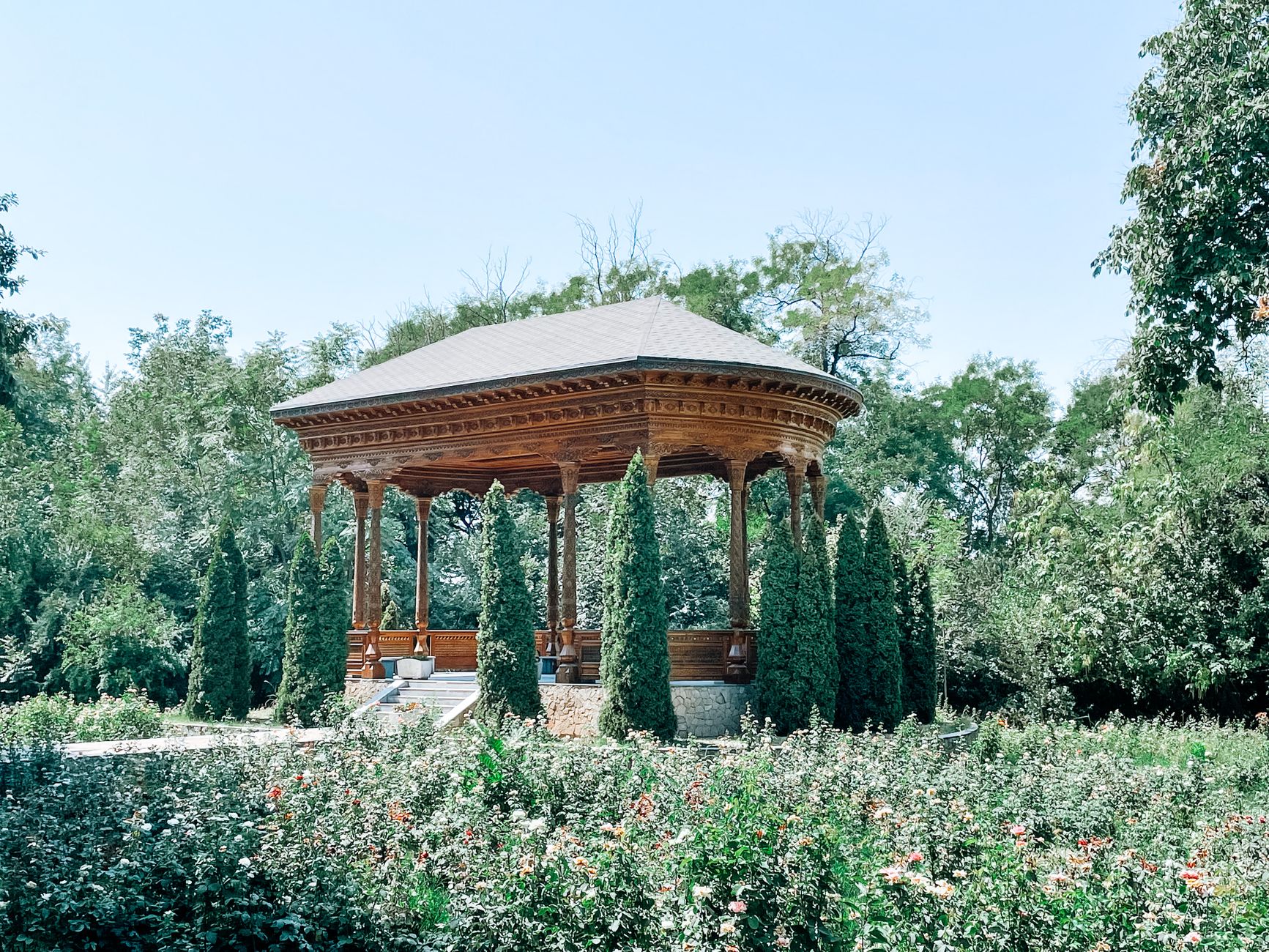
Dushanbe feels greener than many Central Asian capitals, with Rudaki Park, Komsomol Lake, and Victory Park giving the city room to breathe. On a clear day the mountain rim shows up behind the boulevards, and the whole place makes more sense.

Historical Timeline

A Monday Market That Became a Capital

From Bronze Age graves in the Hisar Valley to towers of independence in the 21st century

castle
c. 2000 BCE

First Valley Settlements

Most scholars trace the earliest settled life around modern Dushanbe to the Hisar Valley communities of the 2nd millennium BCE. Farmers, herders, and weavers worked this river-fed ground long before anyone imagined a capital here, leaving behind the quiet evidence that matters most: tools, graves, and the stubborn fact of continued habitation.

castle
c. 1000 BCE

Bronze Age Burials Appear

Bronze Age burial sites near today's Dushanbe International Airport show that this was no empty plain. The dead were laid into the earth where jets now lift off, a jarring little reminder that cities often grow over older worlds rather than replacing them.

gavel
c. 550 BCE

Achaemenid Rule Reaches Here

The region fell within the Achaemenid Persian sphere in the 6th century BCE, and archaeology east of the modern city has turned up ceramics that fit that imperial reach. Power arrived from far away. Pots and dishes stayed behind.

public
c. 250 BCE

Greco-Bactrian Town Takes Shape

A Greco-Bactrian settlement of roughly 40 hectares grew in the area during the late 3rd century BCE. Coins, urban remains, and the site's size suggest more than a roadside stop: this valley could already hold trade, administration, and the mixed cultures that Central Asia does better than almost anywhere.

public
c. 100 CE

Kushan Center on the River

Between the 2nd century BCE and the 3rd century CE, a Kushan-era center occupied the left bank of the Varzob-Dushanbinka system. Burial grounds and successor settlements point to a place with staying power, where river water, caravan movement, and geography did the patient work that politics would later claim as destiny.

church
c. 708

Arab Conquest Alters the Region

Arab expansion into Transoxiana pulled the wider region into the Islamic world in the early 8th century. That shift mattered for Dushanbe long before Dushanbe became a city of consequence, because Persian-speaking Tajik identity took clearer shape in the centuries that followed.

person
860

Rudaki Is Born

Rudaki, born in 860, never belonged to Dushanbe in the modern civic sense; he belonged to the Persian literary world that Dushanbe later chose as part of its inheritance. His presence in Rudaki Park and on the city's commemorative walls tells you how the capital wants to be read: not as a Soviet invention, but as a Persianate cultural heir.

palette
c. 900

Samanid Memory Takes Root

Under the Samanids, the region entered a Persian cultural revival that still shapes Dushanbe's symbols, street names, and monumental politics. Ismoil Somoni's image now dominates the city center for a reason: modern Tajikistan reaches back to this era when it wants ancestry with weight.

swords
c. 1220

Mongol Armies Sweep Through

The Mongol conquest shattered older political orders across the region in the 13th century. Settlements survived, then changed, then survived again. Central Asian history can sound abstract on paper; on the ground it usually means fields burned, allegiances reset, and trade routes learning new masters.

gavel
1503

Uzbek Rule Reorders Power

Shaybanid Uzbek control in the early 16th century folded the area into a different political map, one later contested by Bukhara and Kokand. Dushanbe remained a provincial place, but provincial does not mean unimportant; market towns are where empires become ordinary life.

public
1676

The Monday Bazaar Is Named

The earliest written mention identifies the settlement by its weekly market: Dushanbe, from the Persian and Tajik word for Monday. That origin story has a pleasing lack of grandeur. No conquering hero, no saint, just a place people came to buy, sell, argue, and head home dusty by evening.

gavel
1875

Dushanbe-Kurgan Gets Mapped

By 1875, officials had drawn the first formal map of Dushanbe-Kurgan, then a town of about 10,000 people in the Emirate of Bukhara. Putting a place on a map changes its future. Bureaucrats arrive soon after.

person
1878

Sadriddin Aini's Legacy Begins

Sadriddin Aini was born in 1878 and became the writer Dushanbe would later claim as one of its moral architects. His prose gave Soviet Tajik literature a language with backbone, and the capital still keeps his memory close because nations like to build ministries, but they survive on sentences.

swords
1920

The Emir Flees Here

After the Red Army took Bukhara on 2 September 1920, Emir Alim Khan fled east and made Dushanbe his temporary capital. For a brief moment this market town carried the exhausted prestige of a collapsing emirate. You can almost hear the horses, the panic, the paperwork nobody would ever file properly.

swords
1922

Red Army Takes Dushanbe

In February 1922, Bolshevik forces pushed toward Dushanbe while Basmachi fighters and Afghan volunteers tried to hold the line near the Dyushambe-Darya. The city fell after sharp fighting. That seizure ended the emir's last refuge here and opened the way for a very different capital to be built.

gavel
1924

Capital of Tajik ASSR

Moscow made Dushanbe the capital of the new Tajik Autonomous Soviet Socialist Republic in 1924. This was the hinge moment. A provincial bazaar began turning into an administrative center, with ministries, planned streets, and the blunt geometry of Soviet state-making.

factory
1929

Railway and Stalinabad

The railway connection to Tashkent and Moscow arrived in 1929, bringing workers, planners, factories, and the pace of Soviet transformation. In the same year the city was renamed Stalinabad. Names changed quickly in the USSR; concrete followed close behind.

factory
1932

Water Pipes for a Capital

Construction of a municipal water system began in 1932, the sort of project guidebooks rarely romanticize and cities cannot live without. Fresh water in pipes meant denser neighborhoods, cleaner streets, and a capital that could stop pretending it was still a large village.

person
1936

Timur Zulfikarov Is Born

Timur Zulfikarov, born in Dushanbe in 1936, carried the city's layered identity into poetry, fiction, and film scripts. His work moved between Tajik, Persian, Russian, and mythic registers with the restlessness of Central Asia itself. Dushanbe shaped that sensibility by never being one thing for very long.

factory
1955

Trolleybuses Begin to Roll

The trolleybus system opened in 1955, and with it came one of the classic Soviet sounds: the dry electric hum over broad avenues. Public transport did more than move people. It stitched together a capital that had expanded faster than memory could keep up.

gavel
1961

Dushanbe Gets Its Name Back

De-Stalinization reached the map in 1961, when Stalinabad became Dushanbe again. The restoration mattered. A city named for a Monday market sounded local, older, and harder to fold into one man's cult.

person
1977

Mirzo Tursunzoda's Voice Endures

When Mirzo Tursunzoda died in 1977, Dushanbe lost a poet whose public voice had become part of the Soviet Tajik canon. His presence in the capital's literary memorials is not decorative. He helped give official culture a Tajik cadence, which is no small feat inside an empire that preferred uniformity.

local_fire_department
1990

Housing Protests Turn Violent

In February 1990, protests over housing allocation spilled into wider anti-government unrest. Dushanbe's streets filled with fear, rumor, and anger as shortages exposed the brittle underside of late Soviet order. The capital had been planned on paper; the people living in it were no longer willing to stay quiet.

gavel
1991

Independence Arrives Uneasily

Tajikistan declared independence on 9 September 1991, and Dushanbe became the capital of a sovereign state almost overnight. Flags changed faster than institutions did. The city gained a nation and inherited a crisis.

swords
1992

Civil War Reaches the Capital

Armed clashes, barricades, and seizures of government buildings turned Dushanbe into one of the war's most tense stages in 1992. Power was contested block by block. A capital built to project authority suddenly showed how thin authority can feel when gunmen enter the ministry courtyard.

public
1997

Peace Agreement Resets the City

The UN-brokered General Agreement on Peace in 1997 ended the civil war and gave Dushanbe room to breathe again. Reconstruction followed, though not gently. The city that emerged afterward would become more monumental, more curated, and less interested in preserving every Soviet trace.

castle
2011

Navruz Palace Opens

Navruz Palace, completed in 2011 after about five years of work, announced the tone of postwar Dushanbe with almost theatrical confidence. Carved wood, mosaics, gypsum ornament, chandeliers, polished stone: the building feels less like a palace from history than a palace assembled from the idea of history.

public
c. 2014

Flagpole Marks a New Scale

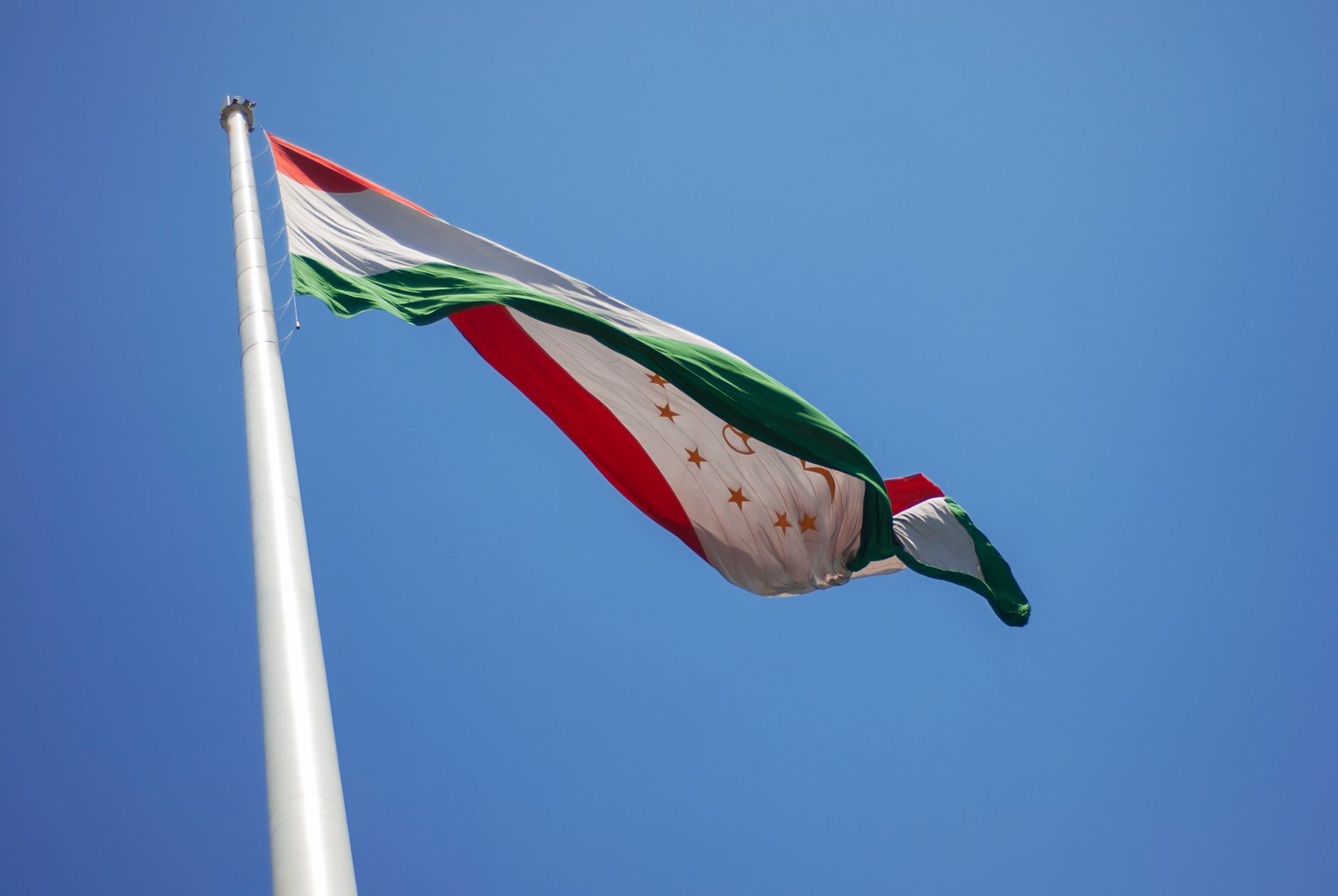
By the mid-2010s, Dushanbe's 165-meter flagpole had become a statement in steel and fabric, briefly the tallest on earth according to widely repeated accounts. It stands in a park of lakes, paths, and official symbolism, the kind of structure built to be seen from far away and understood instantly.

castle
2022

Istiqlol Tower Rewrites the Skyline

The 121-meter Istiqlol Monument opened in 2022, marking independence with a tower, museum floors, and a high observation deck above the city. It is part history lesson, part lookout, part political theater. That combination tells you exactly what modern Dushanbe wants its monuments to do.

schedule
Present Day

Practical Information

flight

Getting There

As of 2026, most visitors arrive through Dushanbe International Airport (DYU), about 4 km from the center and roughly 10 to 15 minutes by car outside rush hour. Rail service uses Dushanbe Railway Station, but schedules are limited and slow compared with flights. Main road approaches are the M41 east toward the Pamirs, the M34 north toward Khujand, and the western road through Hisor toward Tursunzoda and the Uzbek border.

directions_transit

Getting Around

Dushanbe has no metro and no tram network in 2026, so daily movement depends on city buses, trolleybuses, shared marshrutkas, and cheap taxis. Bus 8 and marshrutkas 8, 16, and 33 connect the airport area with the center; fares are usually paid in cash on board. No citywide tourist pass or reloadable transport card is currently documented, and bike lanes remain patchy outside parks and the broadest avenues.

thermostat

Climate & Best Time

Spring runs about 13 to 23 C with the year's heaviest rain, especially in March and April. Summer is hot and dry, usually 28 to 36 C from June through August, while autumn drops back to roughly 20 to 31 C in September and October; winter sits around 5 to 11 C by day, with colder nights. Peak visitor months are late spring and early autumn, and the sweet spot is mid-May to late June or September to early October.

translate

Language & Currency

Tajik is the state language and Russian does a lot of the practical work in taxis, markets, and older hotels. English appears in higher-end hotels and some guides, but don't count on it in buses or bazaars. The currency is the Tajikistani somoni (TJS), and cash still matters for museum tickets, marshrutkas, and small restaurants.

shield

Safety

Dushanbe is generally easygoing for walkers, even after dark in the center, though dim side streets deserve the usual caution. Airport taxis often open with inflated prices, so agree on the fare before the ride or arrange a transfer. Keep your camera away from close shots of government buildings such as the Palace of Nations and nearby official compounds.

Tips for Visitors

payments
Carry Small Cash

Museum and monument tickets in Dushanbe often cost 35 to 70 somoni, and cash works more reliably than cards at entry gates. Keep small notes for buses, marshrutkas, and kiosk snacks.

local_taxi
Set Taxi Price

Airport taxis can quote inflated fares if you climb in first. Agree on the price before the door shuts; the ride to the center is usually about 11 minutes and often lands around $1 to $2.

directions_bus
Use Bus 8

Dushanbe International Airport sits only about 4 km from the center, and Bus 8 or marshrutkas 8, 16, and 33 can get you in cheaply. Bring small somoni since fares are paid onboard.

wb_sunny
Pick Spring or Fall

April to June and September to October give you the kindest weather for walking Rudaki Avenue and the big civic parks. July and August turn hot and dry fast, with average highs pushing above 30°C.

photo_camera
Time Your Photos

Go up the Istiqlol Monument late in the day, then stay for the evening fountain lights in the plaza below. Government buildings are a different matter; keep your camera discreet near the Palace of Nations and other official sites.

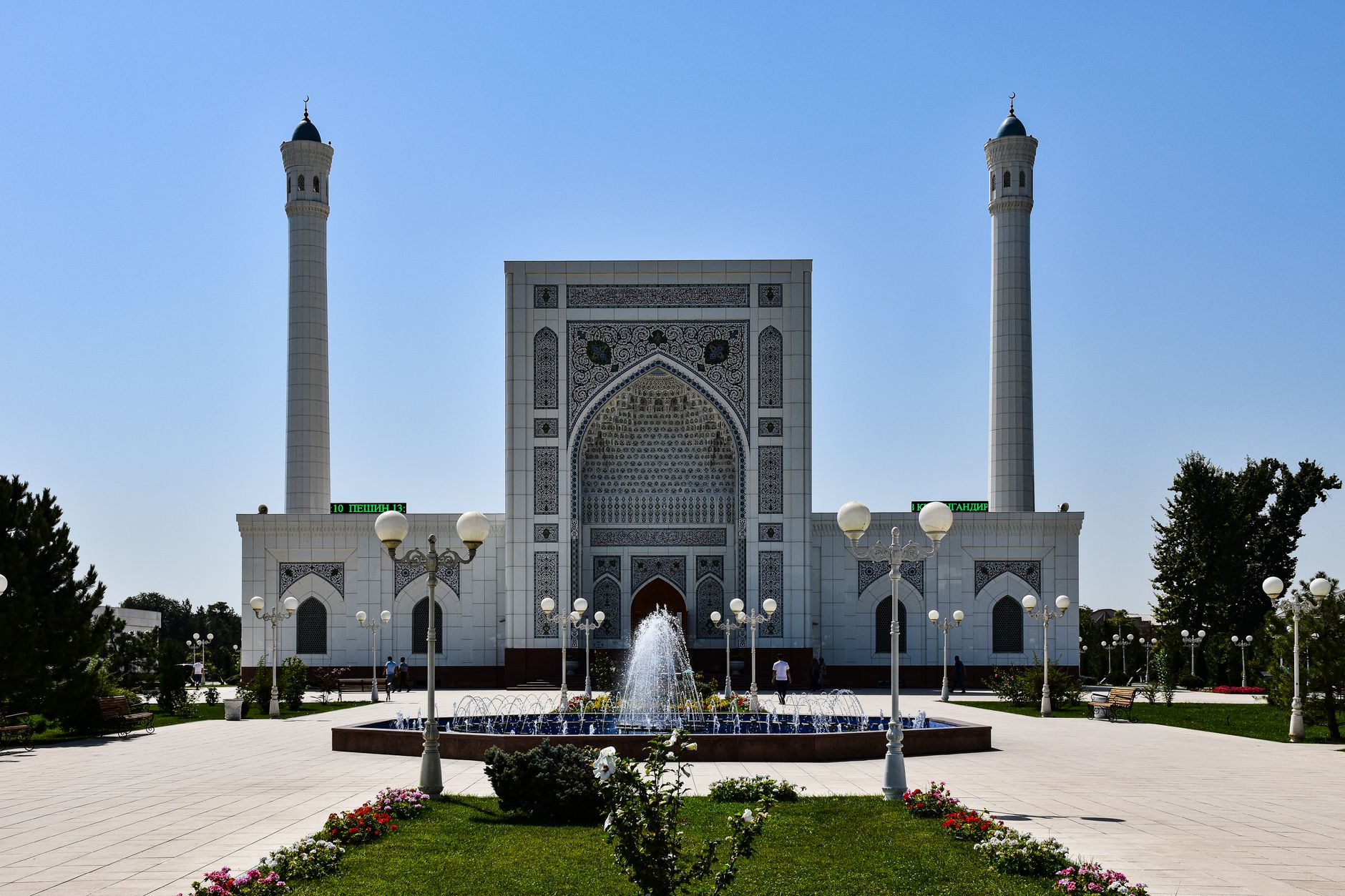
mosque
Dress With Care

Older districts and mosques call for modest clothing, even in summer heat. Public drinking is frowned upon, so save the beer for restaurants or park cafes rather than the sidewalk.

event
Book Around Holidays

Nawruz on March 21 and Independence Day on September 9 bring major public events to Dushanbe's monuments and plazas. They also tighten hotel availability, so book early if you want those dates.

Explore the city with a personal guide in your pocket

Your Personal Curator, in Your Pocket.

Audio guides for 1,100+ cities across 96 countries. History, stories, and local insight — offline ready.

smartphone

Audiala App

Available on iOS & Android

download Download Now

Join 50k+ Curators

Frequently Asked

Is Dushanbe worth visiting? add

Yes, especially if you like capitals that still feel a little unexpected. Dushanbe mixes giant post-independence monuments, Soviet cultural buildings, leafy parks, and museums with strong Silk Road and Buddhist collections, including the Ajina-Tepe reclining Buddha. Give it time beyond one rushed stopover and the city starts to make sense.

How many days in Dushanbe? add

Two to three days works well for most travelers. That gives you time for the National Museum or Museum of Antiquities, Somoni Monument, Rudaki Park, Istiqlol Monument, a tea house meal, and one slower evening in the parks. Add a fourth day if you want a trip to Hissar Fortress or Varzob.

Is Dushanbe safe for tourists? add

Dushanbe is generally safe for visitors, including after dark in central areas. Usual city habits still matter: watch your valuables, avoid badly lit side streets late at night, and don't photograph sensitive government buildings up close. Taxi pricing at the airport causes more hassle than street crime for most travelers.

How do I get from Dushanbe Airport to the city center? add

The airport is very close to town, about 4 km from the center. Bus 8 and marshrutkas 8, 16, and 33 connect the airport area with central Dushanbe, while taxis take roughly 11 minutes if traffic is light. Agree on the fare before you leave the curb.

Is Dushanbe expensive? add

No, by capital-city standards Dushanbe is fairly affordable. Many headline sights are free to enter from the outside, and state museums usually charge around 35 to 70 somoni. Local transport is cheap, though imported goods and upscale hotels can raise your daily budget quickly.

What is the best time to visit Dushanbe? add

Spring and early autumn are the sweet spots. April, May, September, and October give you milder temperatures for walking the city's wide boulevards and parks, while midsummer often feels harshly hot by afternoon. March can be festive during Nawruz, but spring rain is more likely then.

Can you get around Dushanbe without a car? add

Yes, especially in the center. Rudaki Avenue, Friendship Plaza, Rudaki Park, and the Flagpole Park area are easy to cover on foot, and buses or marshrutkas fill the gaps. Dushanbe has no metro, so short taxi rides become useful once the distances stretch.

What should I not miss in Dushanbe? add

Start with Somoni Monument and Rudaki Park, then choose between the National Museum and the Museum of Antiquities depending on whether you want a broad survey or the stronger ancient collection. End at the 121-meter Istiqlol Monument for the city view. Rohat Tea House is the right pause in between.

Sources

Last reviewed: