Plan and listen to Guandu Bridge with Audiala.
Audio guide in your pocket, itinerary in your browser. Built for the way you actually visit.
Introduction
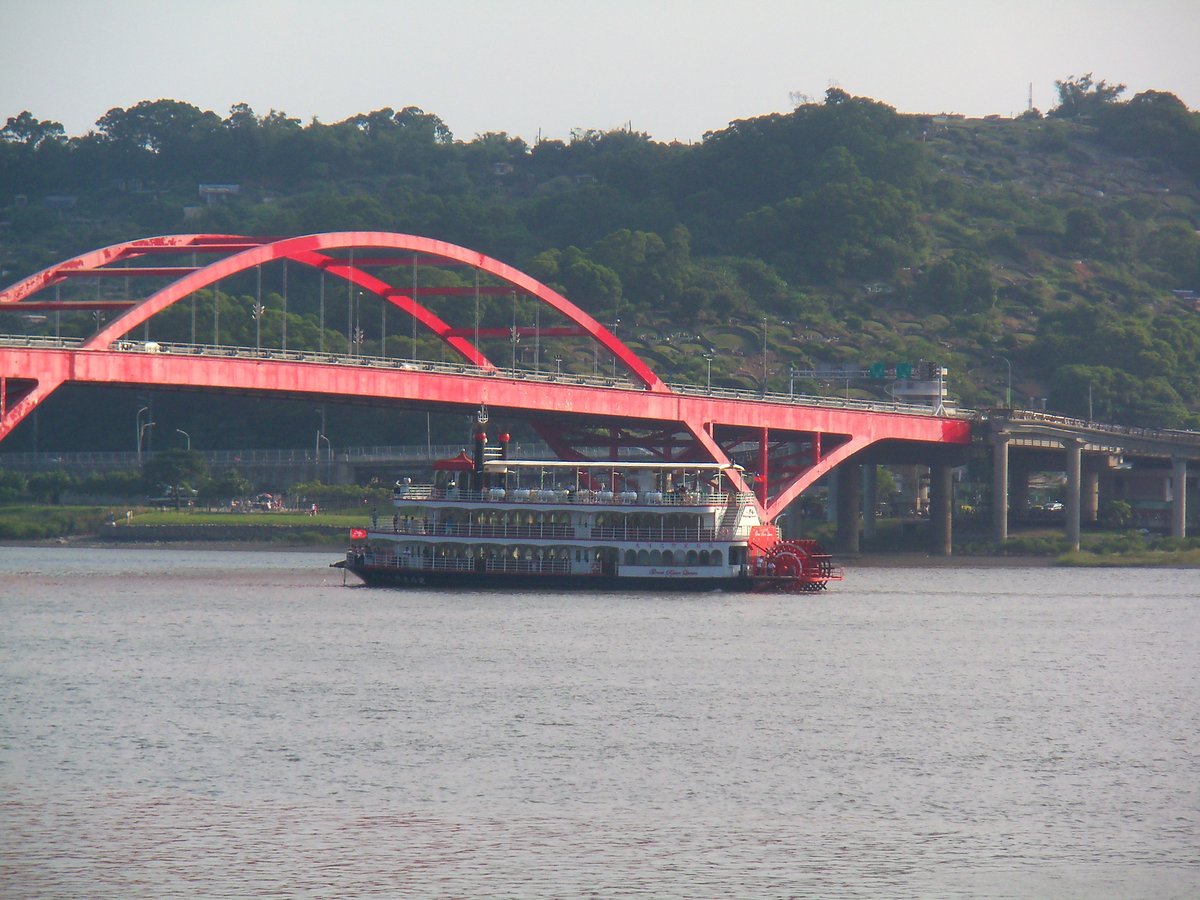
Guandu Bridge, known as 關渡大橋 in Mandarin, stands as a testament to Taipei's innovative spirit and rich cultural tapestry. Connecting the districts of Beitou and Bali, this striking red bridge spans the Tamsui River and has become one of Taipei's most iconic landmarks since its completion in 1983. The bridge's design, a harmonious blend of modern engineering and traditional architectural elements, not only facilitates vehicular and pedestrian traffic but also symbolizes good fortune and joy due to its vibrant red hue, a significant color in Chinese culture (Taipei City Government). This comprehensive guide aims to provide an in-depth exploration of the Guandu Bridge's history, architectural significance, visitor information, and travel tips, ensuring a memorable experience for every visitor.

Early Conception and Planning
The idea for the Guandu Bridge emerged in the early 1970s as part of a broader initiative to improve transportation infrastructure in the rapidly developing Taipei metropolitan area. The bridge was envisioned to connect the districts of Beitou and Bali, facilitating smoother traffic flow and reducing travel time for commuters and goods transport.
Design and Engineering
The design of the Guandu Bridge was a collaborative effort involving local and international engineers. The bridge's design was influenced by the need to accommodate both vehicular and pedestrian traffic while ensuring structural integrity and aesthetic appeal. The final design featured a striking red arch, which has since become a recognizable landmark. The bridge spans approximately 809 meters (2,654 feet) and is supported by a series of piers anchored in the Tamsui River.
Construction Phase
Construction of the Guandu Bridge began in 1980 and was completed in 1983. The project faced several challenges, including the need to work within the constraints of the river's tidal patterns and ensuring minimal disruption to the local ecosystem. Advanced engineering techniques were employed to address these challenges, including the use of prefabricated components and innovative construction methods. The total cost of the project was estimated at NT$1.2 billion (approximately USD 40 million at the time).
Inauguration and Early Years
The Guandu Bridge was officially opened to the public on June 30, 1983. The inauguration ceremony was attended by prominent government officials and local dignitaries, marking a significant milestone in Taipei's urban development. In its early years, the bridge significantly improved connectivity between the northern and western parts of Taipei, contributing to economic growth and urban expansion in the surrounding areas.
Renovations and Upgrades
Over the years, the Guandu Bridge has undergone several renovations and upgrades to ensure its continued safety and functionality. In the late 1990s, the bridge was retrofitted with additional seismic reinforcements to enhance its resilience against earthquakes, a crucial consideration given Taiwan's seismic activity. More recently, in 2018, the bridge underwent a major refurbishment project that included resurfacing the roadway, upgrading the lighting system, and installing new safety barriers.
Visitor Information
Visiting Hours
The bridge is accessible 24/7, but the best times to visit are during daylight hours and at sunset for optimal photography conditions.
Tickets
There is no entrance fee to visit the Guandu Bridge.
Travel Tips
- Getting There: The bridge is easily accessible by public transport. Take the MRT to Guandu Station, and then it's a short bus ride or walk to the bridge.
- Nearby Attractions: While you're in the area, consider visiting the Guandu Temple and the Guandu Nature Park for a full day of exploration.
- Guided Tours: Various guided tours are available that include the Guandu Bridge as part of a broader Taipei historical sites itinerary.
Cultural and Social Significance
The Guandu Bridge holds a special place in the hearts of Taipei residents. Beyond its practical function, the bridge has become a symbol of the city's progress and modernization. It is a popular spot for photography, especially during sunset when the bridge's red arch is beautifully illuminated against the backdrop of the Tamsui River. The bridge is also featured in various cultural events and festivals, further cementing its status as a beloved landmark.
Environmental Considerations
Throughout its history, the Guandu Bridge project has been mindful of its environmental impact. During construction, efforts were made to minimize disruption to the river's ecosystem, including the use of environmentally friendly materials and construction practices. In recent years, the bridge has been part of initiatives to promote sustainable urban development, such as the installation of energy-efficient lighting and the promotion of eco-friendly transportation options like cycling and walking.
Future Prospects
Looking ahead, the Guandu Bridge is expected to continue playing a vital role in Taipei's transportation network. Plans are in place to further enhance the bridge's infrastructure, including the potential integration of smart technologies to improve traffic management and safety. As Taipei continues to grow and evolve, the Guandu Bridge will remain a testament to the city's commitment to innovation and progress.
FAQ
What are the opening hours of the Guandu Bridge? The bridge is accessible 24/7.
Are there guided tours available? Yes, various guided tours include the Guandu Bridge as part of a broader Taipei historical sites itinerary.
Is there an entrance fee to visit the Guandu Bridge? No, there is no entrance fee.
Listen to the full story in the app
The whole Guandu Bridge,
told well.
Audio guides for 1,100+ cities across 96 countries. History, stories, and local insight — offline ready.
Verified, and shown.
Researched and written by the Audiala editorial team from historical records, architectural archives, and local expertise.
Researched from Wikidata, Wikipedia & official sources · fact-checked · How we make our guides →