Bread of Life Church in Taipei
TaipeiTaiwan 25° N · 121° E Updated Aug 2026
Taipei's Bread of Life Church grew from a 30-member congregation in 1954 into a global charismatic network spanning 800 branches in 50 countries today.
- Time needed
- 1-2 hours
- Entry
- Free
Exactly NT$80,000 bought the foreclosed parcel at No. 24, Section 2, Heping East Road in 1957 — the sliver of Taipei that now anchors Bread of Life Church in Taipei. The congregation that worshipped in rented kindergarten rooms in 1954 has become one of Taiwan's most influential megachurches, with a 12-story mission tower and a hillside auditorium seating thousands. In Taipei, Taiwan, this is a place to see how a Shanghai-founded faith outgrew exile, schism, and a near-empty sanctuary.
On Sunday mornings, the 12-story Mission Building exhales Mandarin praise songs into the lanes behind Heping East Road, a low hum beneath the Jianguo South Road viaduct. Above it, the illuminated characters — 神愛世人, "God So Loved the World" — mark the skyline for commuters rather than tourists. This is not a museum. But its history is a public archive of postwar migration, Nationalist elite patronage, and Taiwan's charismatic turn.
Start with the arithmetic. A congregation of thirty to forty in 1954. The first Sunday service in a rented kindergarten. By 1999, an auditorium at Bread of Life Villa near Xinhai Station held thousands. That growth tracks larger shifts in Taipei itself: displacement from mainland China, urban intensification, and a hunger for intimate religious experience in a fast-developing city.
Bread of Life grew out of an indigenous "self-governing, self-supporting, self-propagating" ideal, not a Western franchise. That independent streak produced both a 1969 schism that emptied the pews and a 1977 reinvention under Nathaniel Chow — a self-described temporary pastor who stayed for 34 years. The result is less a church with a story than a story that keeps building.
What to see
-
Ling Liang Villa's Underground Ark
Ling Liang Villa doesn't announce itself. From the street, the 10-storey complex reads as hillside housing, but its true heft drops four floors underground. Walk down Ling Liang Boulevard on a clear afternoon and the pyramid skylight's steel mullions cast a slow-moving cross shadow across the stone floor—the building's best trick. By the time you reach the B2 concourse, the air smells of espresso from Living Stone Café and the golden mosaic pillar known as the Rock Giving Water glints against matte black wall panels. Look up where the Tree of Life column meets the ceiling: the timber ribs flare into an infinity-shaped loop, a quiet nod to Alpha and Omega. -
Mission Building, Da'an
The Mission Building on Section 2, Heping East Road is the church's elder sibling. Completed in 1986, the 12-storey tower doesn't try to charm you—it's a working headquarters with counseling rooms, prayer chapels, and the international English congregation upstairs. Squint at the cornerstone near the entrance: records say it bears calligraphy from Soong Mei-ling, presented when the first two-storey chapel opened here in 1957. Weekday mornings are the move. Slip into a side chapel, hear nothing but the building's old air-circulation hum, and imagine the 30 to 40 people who started this whole thing in rented kindergartens. -
Two Campuses, One Sunday
Start at the Mission Building in Da'an before 10:00 to catch the International Ministry's English service—arrive 20 minutes early for a seat near the front, not just for the sermon but for the unpolished warmth of a congregation built from Shanghai roots. Then ride the Brown Line from Technology Building Station to Linguang Station; the hillside walk to Ling Liang Villa takes about ten minutes and the residential streets give you Wenshan at its least performative. End at the Living Stone Café with a coffee, wait until midday, and walk the Boulevard once more for that slow cross shadow. If you're here in December, the Christmas displays turn the whole underground concourse into candlelit chaos.
Plan your visit
- Getting There
- Missionary Building: take the MRT Red Line to Daan Park Station, Exit 4 or 5, then walk south along Daan Forest Park for 10–12 minutes. Ling Liang Villa: take the Brown Line to Xinhai Station, then walk about 450 m along Wanmei Street. Buses 18, 52, 72, 235, and 278 stop at Long'an Elementary School, right by the Missionary Building.
- Opening Hours
- As of 2026, Sunday services at the Missionary Building run 08:00–09:30 and 11:00–12:30. Ling Liang Villa holds Saturday combined services 16:00–18:00 and Sunday services around 09:00 and 11:00. Church offices open Tuesday–Saturday roughly 09:00–17:30, with reduced Monday hours and special schedules for Lunar New Year, Easter, and Christmas.
- Time Needed
- A quick look at the exterior and lobby takes 15–30 minutes. Attending a full service plus fellowship and bookstore browsing runs 1.5–2.5 hours.
- Accessibility
- Both campuses are step-free, with ramps, elevators to all floors at the Missionary Building (B1–10F), and non-slip paths with handrails at Ling Liang Villa. Accessible restrooms, family rooms, nursing stations, diaper-changing tables, and audio/video relay areas are available.
- Cost & Tickets
- As of 2026, entry is free for all worship services and prayer meetings; no registration is needed for weekend services. Specialized conferences, retreats, and seminars require online registration and fees.
History
A Shanghai Seed in Taipei Soil
The official founding date sits at September 1954, but the root runs further back — to Japanese-occupied Shanghai, where Rev. Timothy Chao published Ling Liang Monthly and organized Bible study fellowships in 1942–1943, according to the church's 2024 anniversary account. Chao's Ling Liang World-Wide Evangelistic Mission later followed him across the strait.
In July 1954, records show, Chao held evangelistic rallies at Taipei First Girls' High School; two months later, a core of thirty to forty people became the formal congregation. For its first three years, the church worshipped in rented kindergarten spaces — one at the Affiliated Primary School of Taipei Women's Normal College, another at Bank of Taiwan Kindergarten.
The turning point
The Preacher Who Left and the Deacon Who Stayed
According to the church's 2024 anniversary history, Kou Shih-yuan was the first full-time preacher — a converted former official and classical scholar. For eleven years after his 1957 arrival, his oratory packed the aisles with Kuomintang officials and academics. The stakes were high: could an immigrant church, founded by a traveling missionary, survive the loss of its most magnetic voice?
Then, in 1969, administrative tensions broke open. Kou resigned and founded the Home of Christ, taking a large share of the congregation with him. Sunday attendance at Heping East Road fell below one hundred. With no resident pastor, deacon Hsu Nong climbed into the pulpit week after week to keep the doors open until he emigrated to the United States at the end of 1969.
That turning point — a lay deacon board's refusal to shut down — gave the church a new identity built on institutional resilience rather than a single preacher's charisma. By July 1977, Nathaniel Chow agreed to serve as interim senior pastor. He stayed until 2011.
Shanghai Roots & Taipei Arrival (1942–1957)
Charismatic Turn & Vertical Church (1977–1999)
Global Network & Generational Handover (2011–present)
Tips for visitors
Worship style
Services are expressive — expect standing, raised hands, and vocal prayer. First-time visitors can sit quietly and observe without pressure to join in.No flash, no tripods
Lobby and courtyard photos are fine before or after services. During worship, keep phones discreet; flash, tripods, selfie sticks, and recording attendees are strictly prohibited.Pair with Daan Forest Park
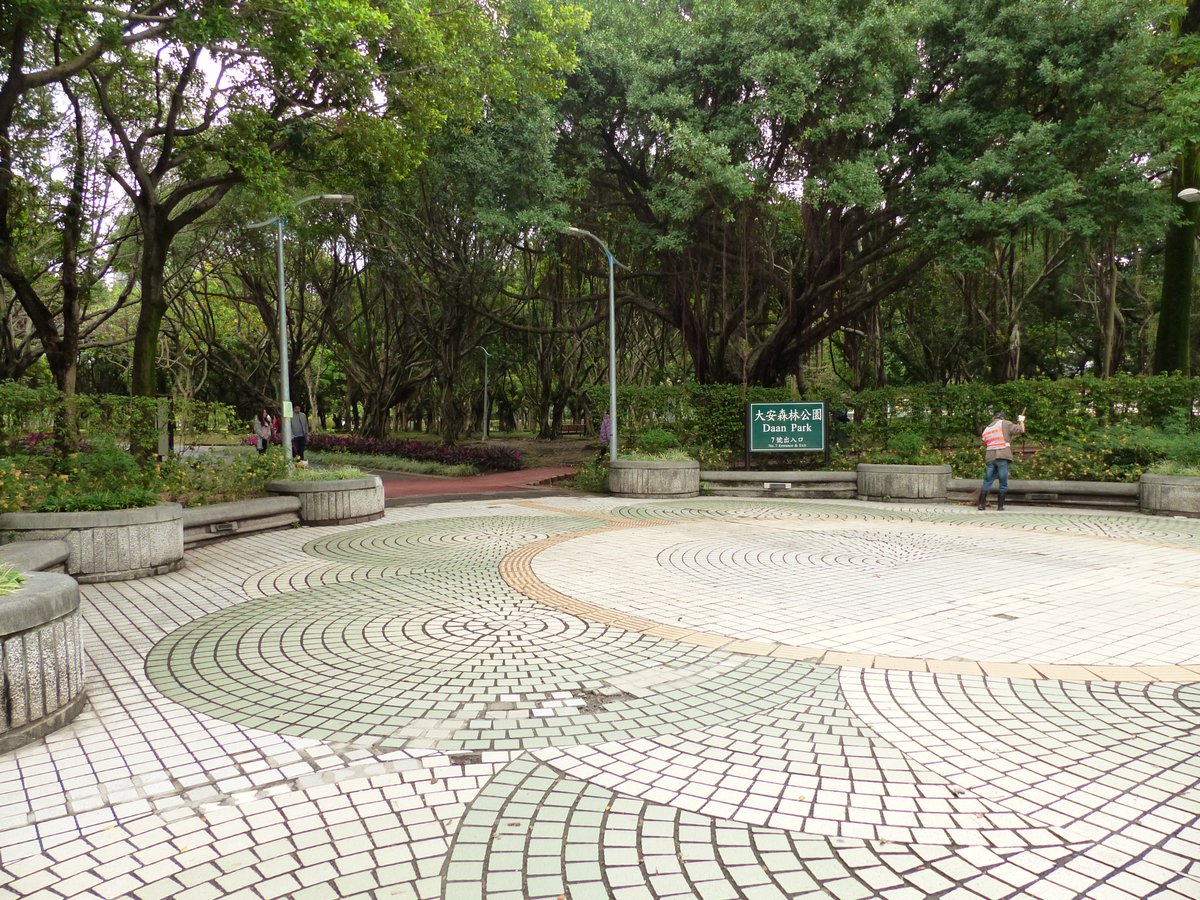
The Missionary Building sits across from Daan Forest Park. Walk the park paths before the 08:00 service, then head to Yongkang Street for lunch.Leave big bags at MRT lockers
Neither campus has luggage storage or cloakrooms. Store suitcases in lockers at Daan, Guting, or Taipei Main Station before you arrive.Cross Heping East Road carefully
Heping East Road is a major arterial with heavy bus and scooter traffic. Use zebra crossings and wait for pedestrian signals, especially during Sunday service rushes.
Frequently asked
Is Bread of Life Church Taipei worth visiting?
Yes, if you're curious about Taiwan's largest charismatic megachurch or its recent NT$170 million interior renovation. The Ling Liang Villa campus hides a moving sun-tracked cross shadow on its entrance ramp, plus a foyer built around theological columns in gold mosaic and timber. Skip it if you're expecting a historic European cathedral; this is modern worship architecture, not old stone.
How long do you need at Bread of Life Church Taipei?
Allow 15–30 minutes to view the lobby and architecture, or 1.5–2.5 hours if you attend a full service. Sunday worship runs 75–90 minutes, with extra time for the bookstore, café area, and simply watching the crowd fill the auditorium.
How do I get to Bread of Life Church Taipei from Taipei Main Station?
Take the Red Line (Tamsui-Xinyi) to Daan Park Station, use Exit 4 or 5, then walk about 10–12 minutes to the Mission Building at No. 24, Section 2, Heping East Road. For the Ling Liang Villa campus, transfer to the Brown Line and ride to Xinhai Station, then walk roughly 450 meters up Wanmei Street.
What is the best time to visit Bread of Life Church Taipei?
Sunday mornings are best for the full charismatic worship energy, with services at 8:00 and 11:00 at the Mission Building. Weekday mornings are quieter if you want to study the renovated Ling Liang Villa lobby without crowds. Christmas and Easter bring extra light displays and big baptismal services.
Can you visit Bread of Life Church Taipei for free?
Yes. Regular worship services, prayer meetings, and public lobbies are free, with no ticket or advance registration needed. Only specialized conferences, workshops, and retreats require online registration and a fee.
What should I not miss at Bread of Life Church Taipei?
Don't miss the sun-tracked cross shadow on the Ling Liang Boulevard ramp at Ling Liang Villa—on bright days the skylight mullions cast a moving cross across the tiles. Up in the B2 lobby, look for the Tree of Life column whose timber ribs flare into an infinity-shaped ceiling joint. The golden mosaic Rock Giving Water column and the 'God So Loved the World' rooftop sign on the Mission Building are worth a look too.
Does Bread of Life Church Taipei have English services?
Yes. The Bread of Life International ministry holds an English service on Sundays at 10:00 AM, typically at the Fuxing or Da'an campus. Mandarin, Taiwanese Hokkien, Hakka, Indonesian, Tagalog, and Vietnamese services also meet across the weekend.
Sources & attribution 8
- Bread of Life Church Official About & History Page — Founding dates, 1954 Taipei establishment, leadership handovers, and basic church background.
- Bread of Life 60th Anniversary Development History — Detailed timeline from 1943 Shanghai origins through the 1969 split, 1986 Mission Building, and 1999 Ling Liang Villa.
- Bread of Life 2024 Ling Liang Magazine No. 53 — Key dates, leadership transitions, and history of the church's charismatic movement.
- Bread of Life Mission Building Parking & Transit Information — Campus addresses and MRT/bus directions for both the Mission Building and Ling Liang Villa.
- Bread of Life Joining Us / Worship Times — Weekend service schedules, multilingual ministries, and visitor access details.
- Bread of Life 45th Anniversary Special: God's Footstool — Architectural details: Ling Liang Boulevard, ice-storage air conditioning, and barrier-free design.
- Bread of Life 2024 Renovation Feature — NT$170 million renovation, Tree of Life column, Rock Giving Water column, and main sanctuary redesign.
- Bread of Life International — English service time and location information.
Built from cited sources · see the method · How we make our guides →
More in Taipei.
208 places to discover — a few worth pairing.
Pick up where you left off
Saved and recently read places — kept on this device only.
Photo credits (2)
- Thomas Roux — Unsplash License (https://unsplash.com/license) — Source: https://images.unsplash.com/photo-1508248467877-aec1b08de376
- Timo Volz — Unsplash License (https://unsplash.com/license) — Source: https://images.unsplash.com/photo-1526481280693-3bfa7568e0f3
Photos may have been resized or cropped.