Chiang Mai
Tailandia Updated Apr 2026
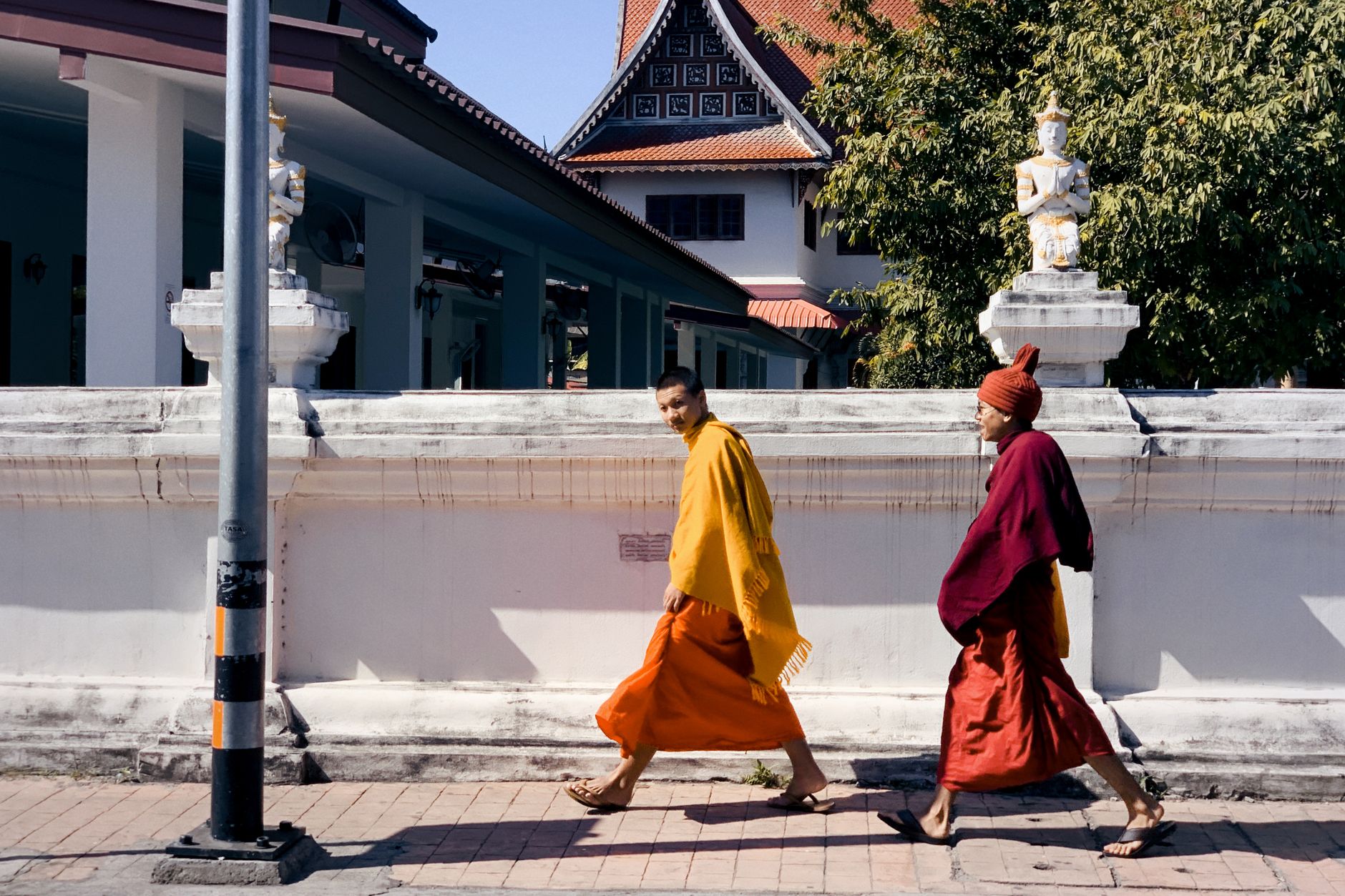
The first thing that hits you in Chiang Mai is the smell of incense and woodsmoke drifting through 700-year-old temple gates while a barista in Nimman pulls a perfect espresso 50 meters away. This northern Thai city refuses to choose between its Lanna past and its creative present. You can watch saffron-robed monks collecting alms along quiet moat streets at dawn, then spend the same evening drinking Thai craft beer in a converted teak house listening to live jazz.
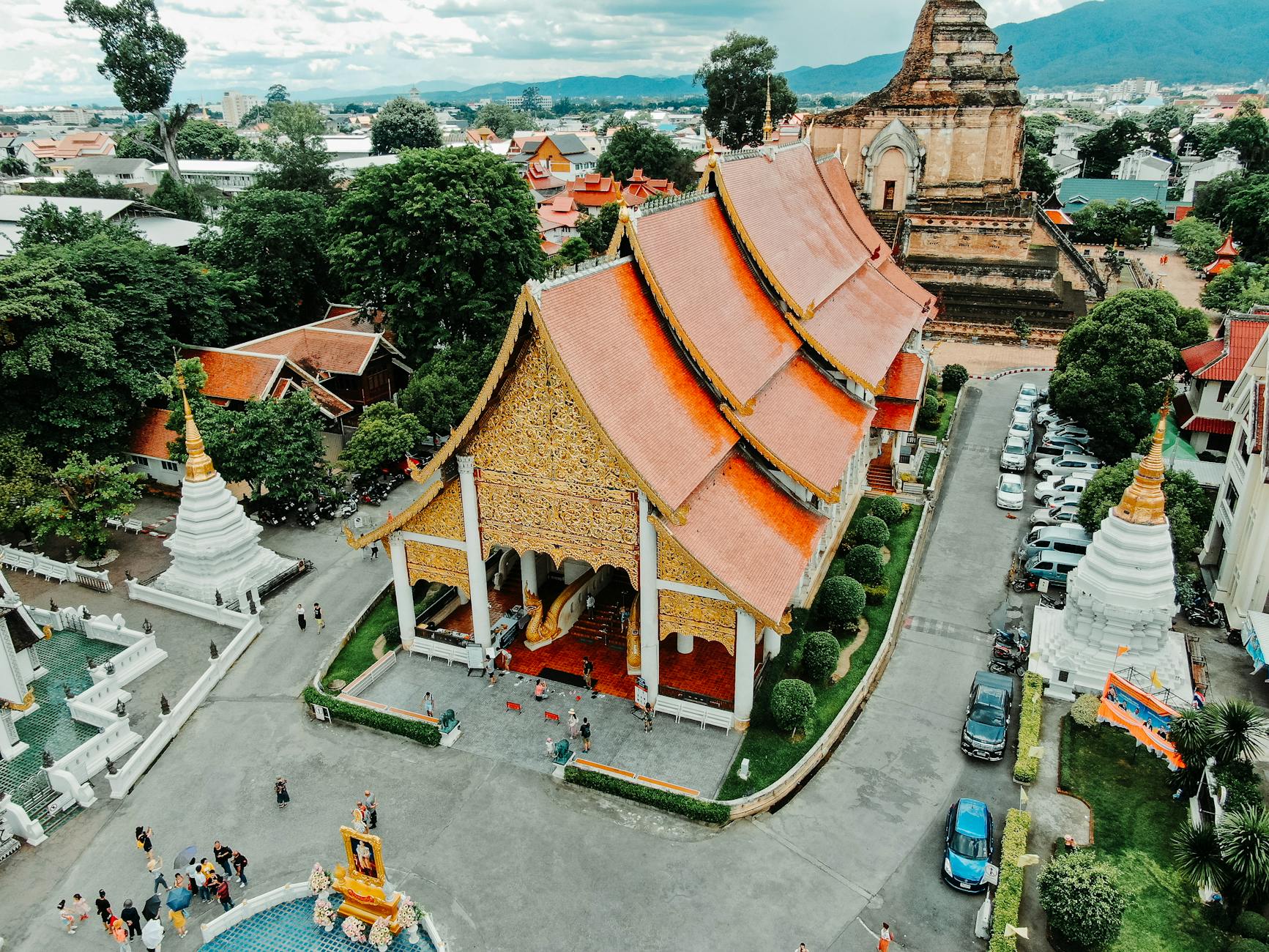 Photo: Tim Durgan / Pexels
- Attractions
- 22
- Trip length
- 4-6 days
- Best season
- November to February
Why Chiang Mai
Built from cited sources · see the method · How we make our guides →
The Old City still sits inside its crumbling square of walls and moat, but the real story lies in how Chiang Mai has quietly become one of Southeast Asia’s most interesting creative capitals. Artists, furniture makers, and coffee roasters have moved into old shophouses and former rice mills. The result feels lived-in rather than manufactured.
Northern Thai food here is serious business. A bowl of khao soi at a 40-year-old shop near the market can change how you think about curry. The surrounding mountains offer genuine escapes: sticky waterfalls you can climb barefoot, Hmong villages where the air drops ten degrees, and the occasional temple so overgrown with moss it feels like it grew there.
Chiang Mai doesn’t dazzle you on arrival. It works on you slowly, the way good tea does. By the end of a week you’ll understand why so many people who meant to stay for four days never quite left.
Lanna Temple Architecture
Wat Chet Yot’s seven spires copy the exact layout of Bodh Gaya’s Mahabodhi Temple from the 15th century. The brick chedi at Wat Lok Moli and the white mausoleums at Wat Suan Dok feel like different chapters of the same story. Stand inside any of them at 6 a.m. and the only sound is bare feet on stone.Mountains on the Doorstep
Doi Suthep rises 10 km from Tha Phae Gate. Higher still, Doi Inthanon’s cloud forest sits at 2,565 m with air that actually feels cold. The contrast between 36 °C streets and 15 °C summits in the same day still surprises me.Living Craft Culture
Kalm Village and Jing Jai Market are where contemporary makers work in the same rooms their grandparents once used for silk and lacquer. The smell of fresh teak shavings and boiled rice paper hangs in the air. This is not souvenir production. It is a city that still makes things.Northern Thai Tables
A bowl of khao soi arrives with pickled mustard greens and a wedge of lime that somehow makes the coconut broth brighter. The best versions still come from decades-old shops near the old city moat. One spoonful and the rest of Thailand tastes too sweet.
Neighborhoods
Where to wander, by quarter — each with its own rhythm.
Old City
The historic square bounded by the surviving sections of the 13th-century moat and brick walls remains the logical place to start. Here you’ll find the temple trifecta of Wat Phra Singh, Wat Chedi Luang, and Wat Chiang Man within easy walking distance, along with the Three Kings Monument and its cluster of city history museums. Come Sunday evening and the entire Thanon Ratchadamnoen turns into one long open-air market selling everything from grilled sai ua to hand-blocked textiles.Nimmanhaemin
Locals just call it Nimman. This leafy district west of the Old City has become Chiang Mai’s creative and culinary heart. Roast8ry Lab and Ristr8to pull some of the best shots in northern Thailand from local Arabica beans, while converted villas now house design shops, galleries, and bars serving cocktails with makrut lime and Thai basil. The energy peaks around sunset when the digital nomads and local creatives spill onto the sidewalks.Wat Ket
On the eastern bank of the Ping River, this former trading quarter offers the city’s best neighborhood texture. Old wooden houses lean against modern cafes, Wat Ket Karam tells the story of river life through faded photographs in its community museum, and the riverside restaurants serve whole fish grilled with herbs to the sound of live music. Fewer tourists, more soul.Santitham
North of the Old City, Santitham delivers the version of Chiang Mai most visitors never see. Cheaper noodle shops, late-night bars with plastic stools on the sidewalk, and a mixed crowd of students, teachers, and locals who actually live here. The night market along Chang Phuak feels refreshingly functional rather than performative.Warorot Market area
Kad Luang, as locals call it, is where Chiang Mai still functions as a working city. The multi-story market sells everything from dried mushrooms to northern Thai spices, while the surrounding streets feed into the Night Bazaar and Chinatown zone. Come in the morning when the butchers and vegetable sellers are in full swing and the tourists are still eating banana pancakes.Mae Rim
Just 30 minutes north of the city, this district offers a different rhythm entirely. The Daraphirom Palace Museum shows how Lanna royalty mixed European and northern Thai design in the 1920s, while the Queen Sirikit Botanic Garden delivers canopy walks through 3,000 species of plants. Pair it with a visit to an Akha village coffee farm for the complete contrast to urban Chiang Mai.
Plan your trip
Before you go
- Getting There
- Chiang Mai International Airport (CNX) operates two terminals with flights from Bangkok, Singapore, Kuala Lumpur and a handful of Chinese cities. Metered taxis from the airport add a 50 THB surcharge; flat-rate airport taxis run until midnight. Public buses A1 and A2 reach the Old City moat for 40 THB each.
- Getting Around
- No metro or tram system exists in 2026. Red songthaews remain the default shared transport with fares negotiated per trip. Grab and Bolt work well inside the city while the airport shuttle routes (now partly rebranded RTC 24L/24R) connect to Nimmanhaemin and the Night Bazaar for 40–60 THB.
- Climate & Best Time
- November to January brings highs of 28–30 °C and lows around 15 °C with almost no rain. March and April regularly exceed 36 °C and fill the valley with smoke from agricultural burning. The cool, clear months of December and January remain the only reliable window for mountain views.
- Safety
- Traffic is the real hazard. Motorbike rental companies still push damage-waiver scams on tourists. Stick to Grab after dark around Loi Kroh Road and keep your hotel address saved in Thai script for songthaew drivers. Petty theft spikes on Sunday Walking Street.
The Kingdom That Floods, Burns, and Refuses to Vanish
From Mangrai's moated square to a creative city still arguing with its ghosts
- 1296
Mangrai Founds Chiang Mai
On 12 April at four in the morning, King Mangrai marked out a square city beside the Ping River. Each side measured roughly 1.6 kilometres, protected by a moat and brick walls. The site had been a Lawa settlement called Wiang Nopburi. Within a year he built Wat Chiang Man, the city's first temple. The smell of fresh-cut teak and wet earth must have hung thick in the air.
- 1317
Mangrai Dies in His Capital
The founder of Lan Na and its new capital died here after nearly sixty years of conquest and state-building. His body was cremated according to royal custom. The city he left behind already felt permanent. Centuries later locals still leave offerings at the pillar he planted.
- 1345
Wat Phra Singh Is Founded
King Phayu ordered the temple built to house his father's ashes. The complex would later receive the revered Phra Buddha Sihing image in 1400. Its dark teak viharn still catches the afternoon light exactly as it did six hundred years ago. The air inside smells permanently of old wood and incense.
- 1386
The First Chedi Rises on Doi Suthep
A gleaming stupa was built high above the city to enshrine a supposed Buddha relic. Legend says white elephants chose the spot. Whether true or not, the temple became the visual and spiritual anchor for every ruler who followed. On clear days its gold catches the sun like a second sunrise.
- 1391
Construction Begins on Wat Chedi Luang
Work started on what would become the tallest structure in the city. The giant chedi would dominate the skyline for centuries until an earthquake broke its back. Even ruined it still feels like the heart of the Old City. You can almost hear the masons' chisels if you stand still enough.
- 1441
Tilokaraj Begins His Reign
The most formidable of Lanna's kings took the throne and immediately turned Chiang Mai into a centre of Buddhist learning. He waged war with Ayutthaya for decades yet still found time to commission temples and sponsor scholars. Under him the city became a serious intellectual capital.
Show the full timeline (19 moments)
- 1455
Wat Chet Yot Is Commissioned
Tilokaraj ordered a temple modelled on the Mahabodhi temple in Bodh Gaya. Seven spires rose from the base. In 1477 he hosted the Eighth Buddhist Council here, revising the scriptures. Monks from across Southeast Asia gathered in the shade of these chedis to argue about doctrine.
- 1545
Earthquake Shatters the City
On 28 July a violent quake brought down the top thirty metres of Wat Chedi Luang. Cracks opened in Wat Phra Singh. The Emerald Buddha survived but the city's confidence did not. Aftershocks continued for weeks. People slept in the open, afraid of the ground.
- 1558
Burmese Conquest Ends Lanna Independence
Toungoo forces captured Chiang Mai after years of pressure. The city became a Burmese vassal and military base. What followed was two centuries of war, conscription, and slow bleeding of population. The moat silted up. Temples fell into disrepair.
- 1774
Liberation from Burmese Control
Phraya Chaban and Kawila defected to King Taksin's forces on 5 February. Burmese troops were driven out. The victory came at terrible cost. The city was so depopulated that it was largely abandoned for the next seventeen years. Jungles reclaimed the streets.
- 1796
Kawila Rebuilds Chiang Mai
After years of emptiness, Kawila formally re-established the city, forcibly relocating people from nearby Tai and Shan principalities. He moved the city pillar to Wat Chedi Luang. What had been a ghost town slowly filled with new voices and new wooden houses.
- 1873
Birth of Princess Dara Rasmi
Born in Chiang Mai on 26 August, she would become consort to King Rama V and a living bridge between Lanna and Siamese court culture. Her presence in Bangkok quietly preserved northern customs at the centre of power. Chiang Mai still claims her as its own.
- 1892
Siam Absorbs Lan Na
Chiang Mai lost its last remnants of political autonomy when it was folded into Monthon Phayap. The old royal line continued in name only. Telegraph wires arrived three years earlier. The old northern kingdom was becoming a province.
- 1921
Railway Reaches Chiang Mai
The steel line from Bangkok finally arrived. Trade surged. Migrants poured in. The city that had been isolated for centuries was now stitched firmly into the Siamese state. The station became a new kind of gate, replacing the old brick Tha Phae.
- 1935
Kruba Srivichai Builds the Doi Suthep Road
Thousands of volunteers, led by the charismatic monk, completed the winding road up the mountain in just eight months. No heavy machinery. The achievement cemented his status as a folk hero. The road still carries pilgrims and tourists today.
- 1964
Chiang Mai University Opens
Thailand's first provincial university began teaching on 18 June. Students arrived from across the north. The campus quickly became a centre of intellectual and later political ferment. Many of the country's sharpest minds still trace their roots here.
- 1981
Doi Suthep-Pui Becomes a National Park
The mountain that had watched over the city for seven centuries received formal protection. The forests that supplied timber for temples and fuel for kitchens were finally placed under guard. Hmong villages and royal summer palaces now sit within its boundaries.
- 2017
UNESCO Names Chiang Mai Creative City
Recognition arrived for the city's living tradition of crafts, silverwork, lacquer, and textiles. The designation was long overdue. In the quiet workshops of Kalm Village and Baan Kang Wat, hands still move exactly as they did under the Lanna kings.
- 2024
The Great Flood Returns
In early October the Ping River reached its highest level in recorded history. Water poured into the Old City moat and ancient streets. Damage reached ten billion baht. The flood was a brutal reminder that the river that gave the city life has never stopped claiming it.
Who lived here
-
King and founder · 1238–1311
Mangrai
Founded Chiang Mai in 1296
Mangrai cut through the jungle and marked out the square where the Old City still stands today. He chose the spot because two rivers protected it and an auspicious mountain rose behind. Seven centuries later the city’s walls still follow the exact lines he drew. He died here in 1311.
-
King of Lan Na · 1409–1487
Tilokaraj
Ruled from Chiang Mai
Tilokaraj turned Chiang Mai into a religious powerhouse. He enlarged Wat Chedi Luang until its spire pierced the clouds and built Wat Chet Yot to mirror the sacred temple at Bodh Gaya. His reign is when the city’s most distinctive temple architecture took shape. You still see his influence every time you turn a corner inside the moat.
-
Elephant conservationist · born 1961
Sangduen "Lek" Chailert
Born in Chiang Mai province
Lek grew up watching elephants paraded for tourists on Chiang Mai streets. She founded Elephant Nature Park in the hills outside the city where rescued animals now roam freely. Her work forced the entire Thai tourism industry to confront the difference between shows and sanctuaries. The park remains one of the few places visitors can interact ethically with elephants.
-
Last King of Chiang Mai · 1862–1939
Kaew Nawarat
Ruled and died in Chiang Mai
Kaew Nawarat was the final ruler of the semi-independent Kingdom of Chiang Mai before full integration into Siam. He spent his last years walking the same streets you do now, watching the old world disappear. Locals still speak of him with quiet respect. His portrait hangs in several temples he supported.
Where to Eat
Where locals actually book dinner — not the tourist menus.
-
Khao Soi
Crispy fried noodles floating in a mild curry broth with chicken or beef. The version at Khao Soi Lam Duan near the old city has barely changed since the 1970s. Ask for extra pickled mustard greens.
-
Sai Oua
Northern Thai herb-packed sausage grilled over charcoal. The best stalls near Warorot Market use fresh lemongrass, kaffir lime and turmeric that stains your fingers yellow. Eat it with sticky rice.
-
Nam Prik Ong
A tomato and pork chili dip served with fresh vegetables and pork rinds. It tastes like northern Thailand distilled into one bowl. The version at Jing Jai Market uses heirloom tomatoes from local farms.
-
Khanom Jeen Nam Ngiao
Fermented rice noodles in a dark, spicy broth made with beef or pork rib and black beans. The richness surprises first-timers. Look for the small shop opposite Wat Phra Singh that opens at 7 a.m.
-
Miang Kham
Betel leaf parcels filled with toasted coconut, peanuts, lime, chili and dried shrimp. A perfect one-bite explosion of sweet, sour, salty and heat. The women at the Tha Phae Sunday market still assemble them by hand.
Insider tips
Small things that change how the city treats you.
Visit November-February
Chiang Mai’s cool season brings 20-28°C days perfect for walking the Old City moat and climbing Doi Suthep. Avoid March-April when agricultural burning blankets the valley in smoke.Eat khao soi early
The best shops like Khao Soi Lung Prakit Kad Kom and Khao Soi Khun Yai hit peak freshness at breakfast or lunch. By dinner the broth often sits for hours and the crispy noodles go soft.Walk or cycle the moat
The 6 km loop around the Old City square is flat and shaded. Rent a bike for 50 baht a day near Tha Phae Gate and you’ll reach every major temple without traffic or taxi fares.Skip the Night Bazaar
Warorot Market and Jing Jai Market offer better prices and locals. Sunday Walking Street on Thanon Ratchadamnoen gives atmosphere without the inflated tourist mark-ups.Respect temple dress
Shoulders and knees must be covered at Wat Phra That Doi Suthep and Wat Chedi Luang. Most temples provide sarongs for free but expect a 200 baht deposit.Use red songthaews wisely
Shared red trucks charge 30-40 baht per person inside the city. Agree on price before climbing in for trips to Doi Suthep or you’ll pay 300-500 baht as a private charter.
Gallery
The city, as it actually looks.



Watch
-
Bangkok Jack 16 Things I Wish I Knew BEFORE Visiting Chiang Mai!
-
Laurens & Laura Top 10 Things to Do in Chiang Mai for First-Time Visitors (2026)
-
The Nomadic Journey Cost of Living in CHIANG MAI 2026 – Full Monthly Breakdown for Expats & Nomads
-
The Narrow Gate Old City Chiang Mai Explained: What You Need to Know


Frequently asked
Is Chiang Mai worth visiting?
Yes, if you want Lanna temples, northern Thai food, and mountains within an hour of a walkable historic core. The city still feels lived-in rather than packaged. Three Kings Monument, Wat Phra That Doi Suthep at sunrise, and a bowl of khao soi at a 50-year-old shop change how most people see Thailand.
How many days do you need in Chiang Mai?
Four days works for most people. Two days for the Old City temples and markets, one for Doi Suthep and Doi Inthanon, one for food and coffee. Five or six days lets you add Wiang Kum Kam, Wat Umong, and a slow morning at Baan Kang Wat without rushing.
Is Chiang Mai safe for tourists?
The city is generally safe for solo travelers and families. Petty theft happens on crowded Sunday Walking Street. Scooter rental carries the biggest risk because of chaotic traffic. Women report feeling comfortable walking alone at night in Nimman and the Old City.
When is the best time to visit Chiang Mai?
November to February offers cool evenings and clear mountain views. The Flower Festival happens in mid-February. Avoid March and April when smoke from burning fields makes the air quality among the worst in Asia.
How much does a trip to Chiang Mai cost?
Budget travelers spend 1,500-2,500 baht per day including guesthouse, street food, and songthaews. Mid-range visitors average 4,000-6,000 baht with better hotels and occasional sit-down northern meals. Coffee on Nimmanhaemin Road costs more than in Bangkok.
Pick up where you left off
Saved and recently read places — kept on this device only.
Photo credits (6)
- Tim Durgan — Pexels License (https://www.pexels.com/license/) — Source: https://www.pexels.com/photo/2956618/
- icon0 com — Pexels License (https://www.pexels.com/license/) — Source: https://www.pexels.com/photo/130173/
- billow926 — Pexels License (https://www.pexels.com/license/) — Source: https://www.pexels.com/photo/5389026/
- icon0 com — Pexels License (https://www.pexels.com/license/) — Source: https://www.pexels.com/photo/130158/
- icon0 com — Pexels License (https://www.pexels.com/license/) — Source: https://www.pexels.com/photo/726281/
- Gije Cho — Pexels License (https://www.pexels.com/license/) — Source: https://www.pexels.com/photo/16986821/
Photos may have been resized or cropped.