Plan and listen to Grossmünster with Audiala.
Audio guide in your pocket, itinerary in your browser. Built for the way you actually visit.
Introduction
Welcome to the comprehensive guide to visiting the Grossmünster, one of Zürich's most iconic landmarks. Nestled in the heart of Switzerland's largest city, the Grossmünster is a beacon of historical, architectural, and cultural significance. This Romanesque-style Protestant church boasts a rich history dating back to the early Middle Ages, with its construction beginning around 1100 and completing in 1220. According to legend, Charlemagne himself commissioned the church after his horse knelt on the graves of Saints Felix and Regula, Zürich's patron saints (Swiss Historic Sites). But the Grossmünster is more than just an architectural marvel; it was also the cradle of the Swiss Reformation, led by Huldrych Zwingli, whose revolutionary sermons here in the early 16th century initiated significant religious and social changes (Reformation History). Today, the Grossmünster stands as both a place of worship and a cultural hub, drawing visitors with its storied past, striking architecture, and awe-inspiring views from its twin towers. Whether you're a history enthusiast, an architecture lover, or simply a curious traveler, this guide will provide you with all the essential information for an unforgettable visit.

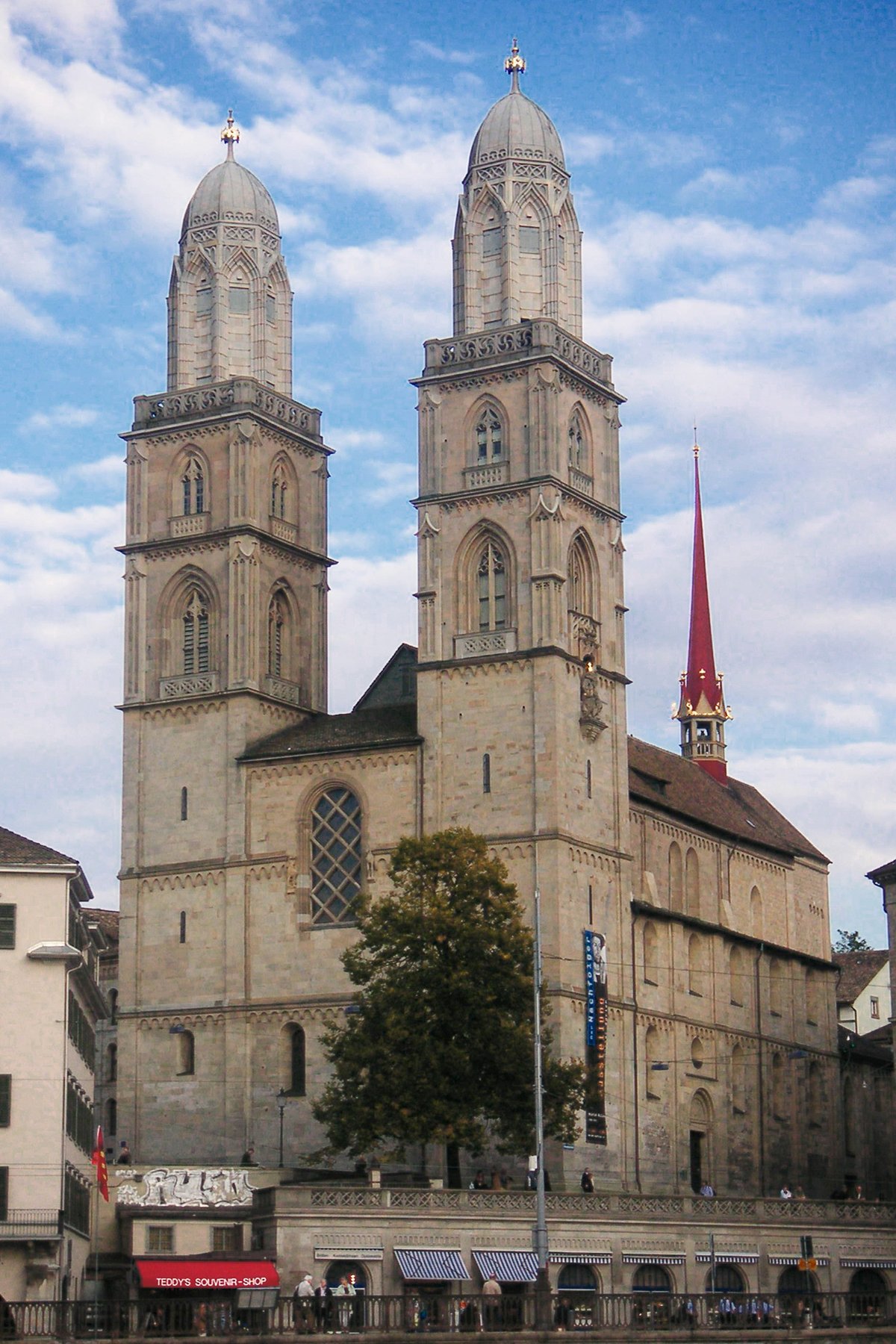
Table of Contents
- and-early-history)
- evolution)
- and-zwinglis-influence)
- Reformation Changes](#reformation-changespost-reformation-changes)
- Day Significance](#day-significancemodern-day-significance)
- historical-events)
- artifacts-and-features)
- and-restoration-efforts)
- experience)
- information-for-visitors)
Origins and Early History
The Grossmünster, a prominent Protestant church in Zürich, Switzerland, has a storied history dating back to the early Middle Ages. According to legend, the church was commissioned by Charlemagne after his horse fell to its knees on the graves of Saints Felix and Regula, Zürich's patron saints. The construction of the Grossmünster began around 1100 and was completed in 1220. This Romanesque-style church was built on the site of a Carolingian church, which itself was erected over the graves of the saints (Swiss Historic Sites).
Architectural Evolution
The Grossmünster's architecture has evolved significantly over the centuries. Initially constructed in the Romanesque style, the church features a distinctive twin-tower façade. The towers were originally topped with wooden spires, which were replaced with neo-Gothic tops in the 18th century. The church's interior also underwent various modifications, including the addition of Gothic elements in the 14th century and Baroque features in the 17th century (Zürich Tourism).
Reformation and Zwingli's Influence
The Grossmünster holds a pivotal place in the history of the Protestant Reformation. In the early 16th century, Huldrych Zwingli, a key figure in the Swiss Reformation, began preaching at the Grossmünster. Zwingli's sermons, which emphasized the authority of the Scriptures and criticized the Catholic Church's practices, attracted a large following and led to significant religious and social changes in Zürich. Under Zwingli's influence, the Grossmünster became a center for Reformation activities, including the removal of religious images and the introduction of a new liturgy (Reformation History).
Post-Reformation Changes
Following the Reformation, the Grossmünster underwent further transformations. The church's interior was stripped of its ornate decorations, reflecting the Reformation's emphasis on simplicity and austerity. In the 19th century, the Grossmünster was restored, and its neo-Gothic towers were added. The church also received new stained glass windows by Swiss artist Augusto Giacometti in the 1930s, which added a modern touch to the historic building (Swiss Art).
Modern-Day Significance
Today, the Grossmünster remains an important religious and cultural landmark in Zürich. It continues to serve as a place of worship and a symbol of the city's rich history. The church is also a popular tourist attraction, drawing visitors with its impressive architecture, historical significance, and stunning views from the towers. The Grossmünster's role in the Reformation and its architectural evolution make it a must-visit site for anyone interested in Zürich's history and heritage (Zürich City Guide).
Key Historical Events
- 1100-1220 - Construction of the Grossmünster.
- 14th Century - Addition of Gothic elements.
- 1519 - Huldrych Zwingli begins preaching at the Grossmünster.
- 1523 - Zürich officially adopts the Reformation.
- 17th Century - Baroque modifications.
- 18th Century - Replacement of wooden spires with neo-Gothic tops.
- 1930s - Installation of Augusto Giacometti's stained glass windows.
Historical Artifacts and Features
The Grossmünster houses several historical artifacts and features that reflect its rich history:
- Romanesque Crypt - The crypt, dating back to the 11th century, is one of the oldest parts of the church and contains the graves of Saints Felix and Regula.
- Gothic Choir Stalls - The intricately carved wooden choir stalls from the 14th century are a testament to the church's Gothic phase.
- Reformation-Era Pulpit - The pulpit from which Zwingli preached his influential sermons remains a focal point of the church's interior.
- Giacometti Windows - The vibrant stained glass windows by Augusto Giacometti add a modern artistic element to the historic church (Swiss Architecture).
Preservation and Restoration Efforts
Over the years, various preservation and restoration efforts have been undertaken to maintain the Grossmünster's structural integrity and historical authenticity. These efforts include:
- 19th Century Restoration - A major restoration project in the 19th century aimed to preserve the church's Romanesque and Gothic elements while adding the neo-Gothic towers.
- 20th Century Renovations - In the 20th century, further renovations were carried out to address structural issues and enhance the church's aesthetic appeal.
- Ongoing Maintenance - Regular maintenance and conservation work ensure that the Grossmünster remains in good condition for future generations to appreciate (Historic Preservation).
Visitor Experience
Guided Tours
Visitors to the Grossmünster can explore its rich history through guided tours, which provide insights into the church's architectural evolution, its role in the Reformation, and its cultural significance.
Tower Climb
The climb to the top of the towers offers panoramic views of Zürich, making it a highlight for many tourists.
Cultural Events
The church also hosts various cultural events, including concerts and exhibitions, which further enhance the visitor experience (Zürich Events).
Practical Information for Visitors
Visiting Hours
The Grossmünster is generally open to visitors daily from 10:00 AM to 5:00 PM. However, it is advisable to check the official Grossmünster website for any changes in visiting hours.
Tickets
Admission to the church is free, but there is a small fee for climbing the towers. Tickets for the tower climb can be purchased on-site.
Travel Tips
- Best Times to Visit - The best times to visit the Grossmünster are early morning or late afternoon to avoid crowds.
- Nearby Attractions - While visiting the Grossmünster, consider exploring other nearby historical sites such as the Fraumünster Church and the Swiss National Museum.
FAQ
- What are the Grossmünster visiting hours? The Grossmünster is open daily from 10:00 AM to 5:00 PM, but it's best to check the official website for any updates.
- How much are tickets to the Grossmünster? Admission to the church is free, but there is a small fee for climbing the towers.
- What are the best times to visit the Grossmünster? Early morning or late afternoon are ideal times to visit to avoid crowds.
Tickets & tours.
These are guided options from our partners — same price as booking direct.
Prices are indicative — final pricing and availability are confirmed at checkout. Audiala may earn a commission from bookings made through these links.
Listen to the full story in the app
The whole Grossmünster,
told well.
Audio guides for 1,100+ cities across 96 countries. History, stories, and local insight — offline ready.
Verified, and shown.
Researched and written by the Audiala editorial team from historical records, architectural archives, and local expertise.
Grossmünster - Visiting Hours, Tickets, and Historical Insights
Grossmünster - Visiting Hours, Tickets, and Historical Insights
Huldrych Zwingli
Augusto Giacometti
Grossmünster
Grossmünster
Grossmünster
Researched from Wikidata, Wikipedia & official sources · fact-checked · How we make our guides →