Winterthur
Switzerland Updated May 2026
Winterthur is the Swiss city that refuses to behave like one. Twenty-five kilometres northeast of Zürich, this former locomotive town has quietly turned itself into a place where natural-wine bars share streets with sixteen museums, where a Van Gogh hangs ten minutes from a working vineyard, and where the largest connected pedestrian zone in Europe begins the moment you step off the train.
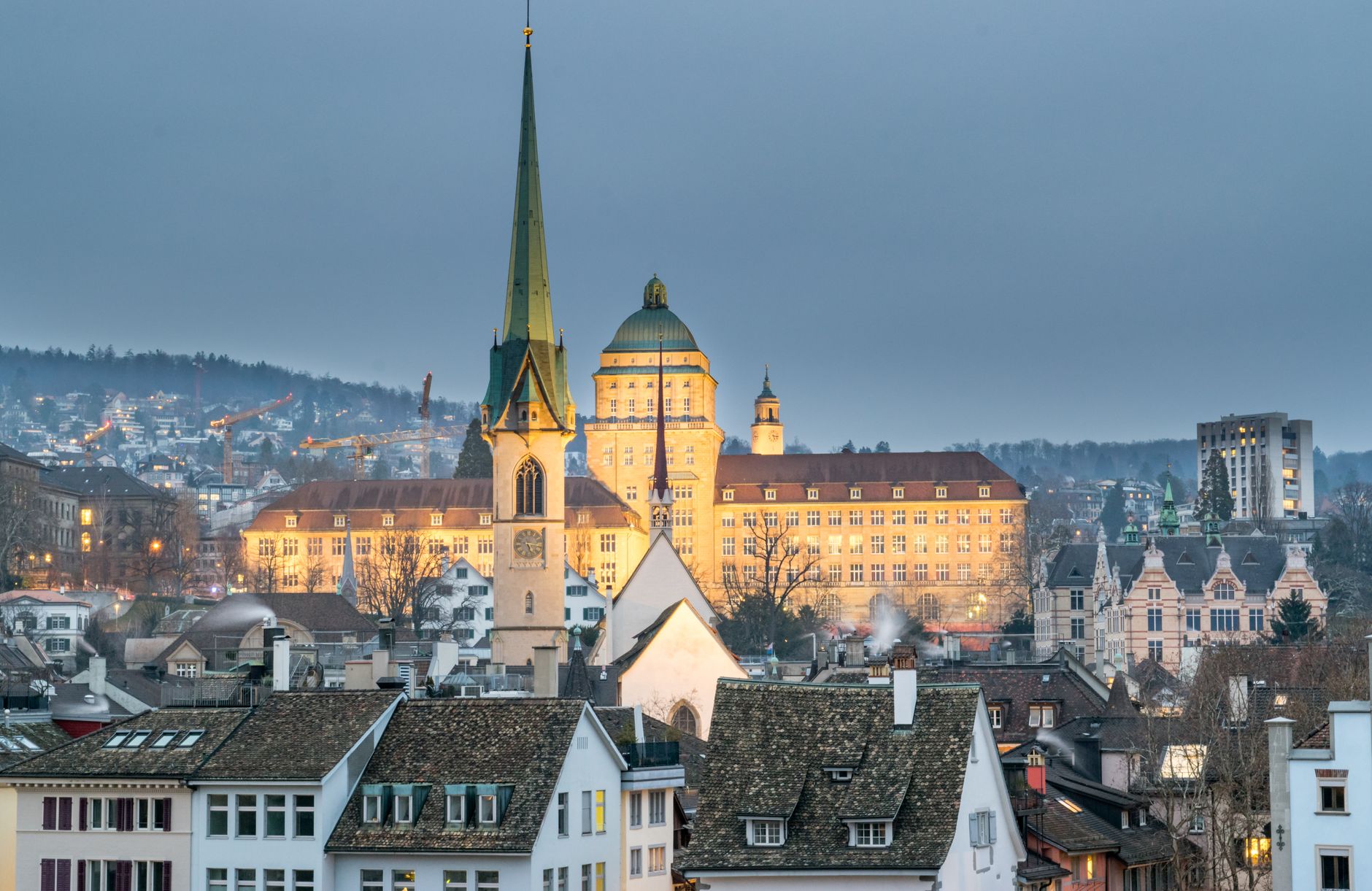 Photo: Nate Hovee / Pexels
- Attractions
- 16
- Audio
- 2 h 54 min
- Trip length
- 1-2 days
- Best season
- Late spring to early autumn (May-September)
Why Winterthur
Built from cited sources · see the method · How we make our guides →
The industrial DNA is still here — Sulzer, SLM, Rieter once made the machines that built modern Switzerland — but the factories have become galleries, the engineering halls have become lecture rooms, and the workers' quarters have filled with bookshops and listening bars. Locals call it the Eulachstadt, after the river that loops through town. German-language magazines call it, only half-joking, possibly the coolest city in Switzerland.
With about 115,000 residents, Winterthur is the country's sixth-largest city and its quietest cultural heavyweight. The Kunst Museum's three sites hold Monet, Picasso, Klee and Giacometti. The Fotomuseum is internationally serious about photography in a way few small cities manage. The Technorama, fifteen minutes by bus from the centre, is the only science centre in Switzerland — its outdoor geyser erupts every twenty minutes whether anyone is watching or not.
What surprises most visitors is how green it stays. The Eschenberg and Bruderhaus forests press up against the city's edges, the Goldenberg vineyard climbs the southern slope, and the Eulach river threads through neighbourhoods that elsewhere would have paved it over. You can drink an espresso in a 14th-century arcade, walk twenty minutes, and be among grapevines.
Sixteen Museums in a 115,000-Person Town
Winterthur punches absurdly above its weight on art. The Kunst Museum spreads across three sites with Monet, Van Gogh, Picasso, and Klee, and the Fotomuseum is one of Europe's serious photography institutions.Technorama, Switzerland's Only Science Center
Hundreds of hands-on stations, a 130-metre Wonder Bridge outside, and a geyser that erupts roughly every twenty minutes. Adults leave more wide-eyed than the children they brought.Europe's Largest Pedestrian Old Town
The entire historic centre is car-free and interconnected, which means you wander between bookshops, vinyl bars, and Belle Époque facades without ever stepping off a kerb.Vineyards and Forest at the Tram Stop
The Goldenberg vines, the Eschenberg woods, and the Bruderhaus wildlife park all sit inside city limits. Winterthur is the rare Swiss city where you can taste a Pinot Noir grown three tram stops from your hotel.
Neighborhoods
Where to wander, by quarter — each with its own rhythm.
Altstadt
The old town is the heart of everything, and almost entirely car-free — Europe's largest connected pedestrian zone runs through its lanes of arcaded townhouses, painted facades and small squares. This is where the independent bookshops, natural-wine bars, listening rooms like Roxy Vinyl, and the Kunst Museum's main Beim Stadthaus site all sit within a few hundred metres of each other. Come on a weekday afternoon for cafe terraces; come on a Saturday for the market on Neumarkt.Sulzerareal & Lokstadt
The former Sulzer industrial site, just south of the station, is Winterthur's clearest portrait of its own reinvention. Brick locomotive halls have been converted into restaurants, co-working spaces, a cinema, the Kesselhaus event venue, and the new Lokstadt residential quarter built around the preserved engineering buildings. Worth a slow wander to see how Swiss cities are recycling their 20th century rather than demolishing it.Stadtgarten & Museum Quarter
The leafy park district immediately south of the old town gathers an unusual density of culture in a few blocks — the Reinhart am Stadtgarten museum, the Villa Flora (Kunst Museum's third site, with its post-Impressionist holdings), and the city library. The streets here are residential, late-19th-century, and quiet enough that you can hear the gravel under your shoes between exhibitions.Oberwinterthur
The original Roman settlement of Vitudurum, now a calm eastern district that locals visit for the Lindengut museum gardens and the village-feel main street. Most travellers skip it. That is part of the appeal.Wülflingen
West of the centre, Wülflingen keeps a separate village identity around its 17th-century Schloss and the Eulach's quieter upper reaches. Good for an afternoon walk that ends at a Beiz with a beer garden, away from the museum crowds.Mattenbach & Eschenberg edge
The southern neighbourhoods where the city meets the Eschenberg forest. Families come here for the Bruderhaus wildlife park — wolves, lynx, Przewalski horses — and for trails that climb out of the city in minutes. The observation tower on the Eschenberg gives the cleanest view back over Winterthur's roofs to the Alps on clear days.Töss
South of the railway, along the Töss river, this is the more working-class, multicultural side of Winterthur — cheap eats, the Reitplatz open-air events, and the riverside path that runs all the way out toward Kyburg castle. Less polished than the old town, which is the point.
Plan your trip
Before you go
- Getting There
- Zurich Airport (ZRH) is the gateway — direct trains to Winterthur Hauptbahnhof run every 10–15 minutes and take about 20 minutes. The Hauptbahnhof itself is a major SBB hub on the Zurich–St. Gallen line, and the A1 and A7 motorways meet just north of the city for drivers heading from Germany or eastern Switzerland.
- Getting Around
- Stadtbus Winterthur runs trolleybus and diesel lines covering the entire city — no tram or metro, but buses are frequent and the Old Town is fully pedestrianised anyway. A 24-hour zone-10 ticket costs around CHF 8.80 in 2026; cycling is excellent thanks to flat terrain and the Eulachpark cycle paths, and Züri-Velo-style rentals are available at the Hauptbahnhof.
- Climate & Best Time
- Summers run 18–26°C with occasional thunderstorms in July and August; winters hover near freezing with light snow from December to February. Spring (April–June) is the sweet spot — wine terraces open, museums are uncrowded, and the Eschenberg woods turn that particular green you get when beech leaves are still translucent. September adds the Albanifest crowds, so dodge the last weekend of June if you prefer quiet.
Who lived here
-
Art collector and patron · 1885–1965
Oskar Reinhart
Born here, lived here, bequeathed his collections to the city
Heir to a Winterthur trading dynasty, Reinhart spent fifty years assembling one of Europe's most idiosyncratic private art holdings — Cézannes and Renoirs hanging next to Holbeins and Brueghels. He left the lot to his hometown rather than Zürich or Basel, which is why a city of 115,000 has Old Masters most capitals would envy. His villa Am Römerholz still smells faintly of woodsmoke and cigar.
-
Industrialist, founder of Sulzer AG · 1782–1853
Johann Jakob Sulzer
Founded his foundry here in 1834
Sulzer opened a small brass foundry on the Eulach that grew into one of Europe's great engineering firms — diesel engines, pumps, the first water-cooled cylinder. The Sulzer-Areal behind the station, all red brick and rusting cranes, is now where the city's young architects and gallerists work. He'd probably mistake the espresso bars for break rooms.
-
Writer · 1878–1956
Robert Walser
Worked here briefly as a clerk in the early 1900s
Walser drifted through Winterthur as one of his many clerkships before he gave up offices for walking. His miniature prose pieces — tiny, precise, faintly mocking — read like sketches of exactly this kind of careful Swiss town. He found the place too orderly. Most visitors find that the appeal.
Where to Eat
Where locals actually book dinner — not the tourist menus.
Insider tips
Small things that change how the city treats you.
Wander car-free
Winterthur's old town holds one of Europe's largest connected pedestrian zones. Skip the parking hunt and start at Marktgasse — everything central is within ten minutes on foot.One ticket, three museums
Kunst Museum Winterthur spans three sites — Beim Stadthaus, Reinhart am Stadtgarten, and Villa Flora. A combined ticket (around CHF 22) gets you into all three on the same day.Time the Technorama geyser
The outdoor geyser at Swiss Science Center Technorama erupts roughly every 20 minutes. Plan your visit around the electricity show too — it's the one parents end up photographing, not the kids.Use Zürich, sleep here
Trains to Zürich HB run every 10-15 minutes and take 20-25 minutes. Hotels in Winterthur typically run 20-30% cheaper than Zürich, and the ZVV pass covers both cities.Drink where locals do
Skip the chain cafés on Marktgasse and head to Roxy for vinyl DJ sets or the natural-wine bars off Steinberggasse. The independent scene is the reason younger Swiss call this place the country's coolest small city.Vineyards above the rooftops
The Goldenberg vineyard sits a 25-minute walk from the station and looks straight down over the old town. Go an hour before sunset; the light turns the sandstone facades pink.Eat at lunch, not dinner
Most Winterthur restaurants serve a Mittagsmenü between 11:30 and 14:00 for CHF 18-24 — the same plates run CHF 32-40 at night. Many kitchens close between 14:00 and 18:00, so plan accordingly.
Gallery
The city, as it actually looks.


Watch
-
Darko Travels Winterthur🇨🇭Switzerland 2024 4K 60fps
-
Relaxing Roads 4K Driving in WINTERTHUR Switzerland 🇨🇭 | Beautiful City Tour in 4K 🚗
-
4K Walking Marie Winterthur Switzerland🇨🇭/4K Walk through the old town of Winterthur/4K Walking Winterthur
-
KenoVelicanstveni Winterthur - Switzerland 4K - Drone Flight


Frequently asked
Is Winterthur worth visiting?
Yes, especially if you like museums, walkable old towns, or want a calmer base near Zürich. Sixteen museums in a city of 115,000 is unusual — the Kunst Museum alone holds Monets, Van Goghs and Picassos most visitors never expect outside Zürich or Basel. It also costs noticeably less than Zürich for food and sleep.
How many days should I spend in Winterthur?
One full day covers the old town and one major museum. Two days lets you fit Technorama (a half-day on its own) and a vineyard walk up the Goldenberg. Three days makes sense if you're using it as a base for Zürich, Schaffhausen, or the Rhine Falls.
How do I get from Zürich to Winterthur?
Direct trains leave Zürich Hauptbahnhof every 10-15 minutes and arrive in 20-25 minutes. The S-Bahn lines S8, S11, S12, and S16 plus IC and IR services all serve the route. A standard ZVV day pass covers the trip.
Is Technorama worth the trip from Zürich?
If you're travelling with kids aged 6-16, yes. It's Switzerland's only hands-on science center, with hundreds of experiment stations and a 130-meter Wonder Bridge outside. Adults without kids usually skip it; the art museums are the bigger draw for them.
Is Winterthur safe at night?
Very. Swiss crime rates are among Europe's lowest and Winterthur has no rough districts to avoid. The station area can feel quiet after midnight, but trams and night buses run on weekends.
What's the best time of year to visit Winterthur?
Late April through early October. May and September give you mild weather and open vineyards without summer crowds. December is also worth considering for the old-town Christmas market, which is smaller and less commercial than Zürich's.
Is Winterthur expensive?
Cheaper than Zürich, still expensive by European standards. Expect CHF 18-24 for a lunch menu, CHF 120-180 for a mid-range hotel, and CHF 15-20 for major museum entry. Tap water is excellent and free everywhere — fill a bottle.
Pick up where you left off
Saved and recently read places — kept on this device only.
Photo credits (4)
- Nate Hovee — Pexels License (https://www.pexels.com/license/) — Source: https://www.pexels.com/photo/4660061/
- Jean-Paul Wettstein — Pexels License (https://www.pexels.com/license/) — Source: https://www.pexels.com/photo/35021825/
- Holger Schué — Pexels License (https://www.pexels.com/license/) — Source: https://www.pexels.com/photo/14266798/
- OConnor Studios — Pexels License (https://www.pexels.com/license/) — Source: https://www.pexels.com/photo/28445201/
Photos may have been resized or cropped.