Historical Collection of the Municipal Library of Rolle
RolleSwitzerland 46° N · 6° E Updated Aug 2026
Hidden inside Rolle Castle, a small-town collection holds 13,000 Enlightenment volumes, including books from Benjamin Franklin, survivors of a 1978 flood.
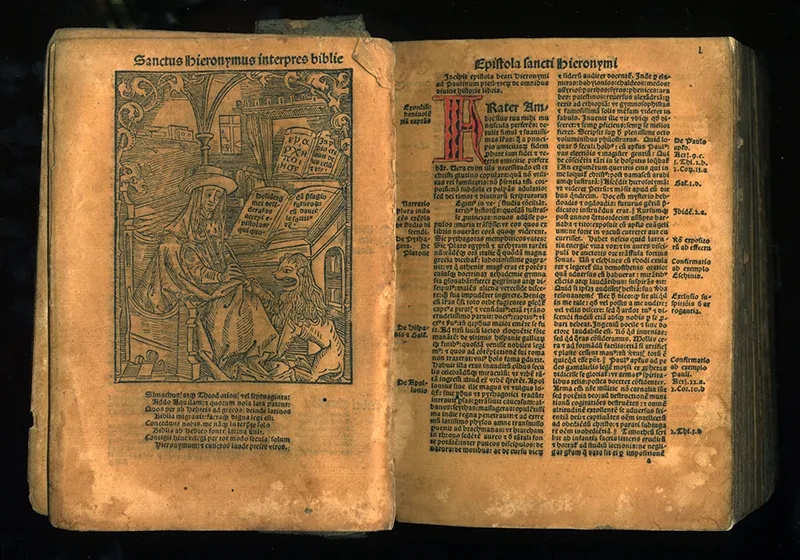 Photo: Denys Jaquet · CC BY-SA 4.0
- Time needed
- 1–2 hours (by appointment)
- Entry
- No standard admission
- Best season
- Summer (May–September)
Four hundred francs once bought ten thousand rare books in a single stroke—and the Historical Collection of the Municipal Library of Rolle, Switzerland, still carries that improbable windfall inside a medieval lakefront castle. It is not the town's current lending library; it is an Enlightenment paper trail stashed in stone, built from the libraries of a Danish king's councillor, a Polish king's librarian, and a jurist who may have argued with himself in the margins. Visit because this is a national-heritage collection in a market town of 6,000 people: rare books, old maps, and royal-court connections, waiting behind a castle gate on the Grand-Rue.
Walk past the medieval masonry of Rolle Castle and you find roughly 13,000 volumes and 700 ancient maps assembled between the 18th and mid-19th centuries. The subject range is deliberately broad: law, history, theology, natural science, literature, plus a northern-European cluster of Danish, Swedish, and Polish books carried here by the Reverdil family. That cosmopolitan spread separates a rare-book collection from a merely literary one.
The civic origins matter too. In spring 1840, a prospectus circulated through Rolle with an almost audacious pitch: give money or books later, in whatever measure you choose. Fifty-three people answered, including thirteen women and the widow of Frédéric-César de La Harpe. By October the library opened twice a week in a school director's single room, free for teachers and pupils.
Decades of neglect and the 1978 flood closed the collection for 27 years. Only in 2005 did the Association des Amis du Château begin pulling it back into public view; an inventory and digitisation has been running since. That unfinished rescue is part of the visit. You may see a room of water-stained spines and a catalogue that is still learning what it owns.
What to see
-
The Castle's Walled Courtyard
Château de Rolle doesn't bother with introductions. You slip past a municipal doorway and the Rolle Castle walls rear up: a quadrilateral with a tower at every corner, courtyard open to the sky, stonework running from about 1260 through repairs after the Bernese burned the place in 1536. Stand in the middle and the acoustics shift, your footsteps coming back off nearly eight centuries of masonry that still holds council ceremonies and summer festivals.
Look at the joins. Some blocks are pale and crisp where Baron de Steiger's masons rebuilt after the 1530s fires; others carry the smudged undertone of old calamity. The lake-facing side gets a warm, almost Mediterranean light in the afternoon, rare for a medieval pile, and it turns the castle from brute enclosure into a kind of open-air civic room.
-
The 1843 Book Heist
The collection inside is the real oddity: roughly 13,000 volumes, but that figure doesn't prepare you for a 1495 Basel Bible or books linked by local tradition to Benjamin Franklin in a lakeside town of six thousand. You get in by guided visit, not casual stroll, and the small wait sharpens the encounter—old leather, damp stone, the faint residue of the 1978 flood that closed the library for 27 years.
Watch the law books. Some still carry the cramped annotations of Jean-Marc-Louis Favre, a local jurist whose 6,500-volume collection joined the château in 1843, alongside the Reverdil brothers' Scandinavian and Polish haul. Ten thousand books arrived in that single year for 400 francs. That's about four centimes a volume, the Enlightenment offloading itself at clearance-sale prices.
-
A Loop from Castle to Lake
Make the short wander down from the château courtyard to the lake; Rolle is small enough for the whole thing to feel like a single gesture. Head toward Place de la Harpe and the Lakefront Quay, where the lake arrives as a sudden sheet of silver and the old stone gives way to plane trees and boat masts. Continue along the water to Île De La Harpe, a planted islet crowned by a monument to Frédéric-César de La Harpe, the Vaudois patriot whose widow helped fund the library in 1840.
It's a loop of two textures: closed medieval stone behind you, open water ahead—and between them the civic confidence of a town that put a royal councillor's books into public hands for four centimes a volume.
Plan your visit
- Getting There
- Rolle station sits on the main Geneva–Lausanne line, about 25 minutes from Geneva and 20 from Lausanne. Exit toward the lake and walk downhill for roughly 11 minutes to the castle; CGN lake steamers land at the port, an 8-minute lakefront stroll east. Closest car parking is Parking du Château.
- Opening Hours
- As of 2026, the historical collection has no regular walk-in public hours. After the 1978 flood it reopened only for special presentations, and recent rehabilitation means access is typically by appointment or during guided events. Do not confuse it with the modern Bibliothèque de Rolle et environs, which keeps separate weekly hours near Collège du Martinet.
- Time Needed
- Seeing the castle courtyard and lakefront exterior takes 20–30 minutes. Researchers with a confirmed appointment should allow 1–2 hours to consult rare books, early maps, and annotated law volumes. For a fuller day, add the lakefront, Plage de Rolle, and the Parcours des Cépages vineyard loop.
- Accessibility
- No dedicated accessibility information exists for the castle interior, and a 13th-century fortress will likely mean stairs, narrow passages, and uneven floors. The lakefront promenade alongside the castle is flat, wide, and friendly for wheelchairs and pushchairs. Free public toilets sit next to the castle.
- Cost & Tickets
- As of 2026, no ticket price or booking page exists for the historical collection—it functions as a research and heritage collection, not a ticketed attraction. Past public presentations have been free. Contact the Association des Amis du Château de Rolle to arrange access.
Photo Gallery

History
Four Hundred Francs and a Paper Kingdom
On 25 March 1840, fifty-three subscribers met inside Rolle Castle to sign the first règlement. The castle's records show a strikingly democratic group: teachers, a doctor, a pastor, a school director, and at least twenty-two women—some named as dames and demoiselles. Their explicit aim was a collection 'above a simple popular library and below an academy library', funded by gifts of money or books in whatever measure each subscriber chose.
The first year produced around 1,200 volumes, then 1,800 by late 1842. Modest enough. The transformation came in the summer of 1843, when a single purchase made this small town library one of the most important public collections in the canton outside Lausanne.
The turning point
The 400-Franc Inheritance
Jean-Marc-Louis Favre (1733–1793) spent decades building a working jurist's library: about 6,500 volumes, including 670 law books, 1,400 history titles, and 1,130 works of natural science. Many law books carry handwritten annotations possibly in his own hand—a private intellectual record that survives in the margins. After his death, the dispersal of such a library would have been unremarkable. Instead, it became the core of a civic collection.
Beside it sat the Reverdil brothers' roughly 3,500 volumes. Élie Salomon François Reverdil had been councillor of state to King Christian VII of Denmark, eyewitness to the Struensee affair; his brother Marc Louis Reverdil served as librarian to King Stanislas of Poland. Their books brought Scandinavian and Polish material into a Swiss market town. On 24 June 1843, the committee announced it had bought the combined libraries from Louis Favre of Rolle and Vich for 400 francs—about four centimes per volume, a price the committee itself called 'far below the real value.'
The turning point was not the money. It was the decision to keep these far-flung libraries local and public. In a single stroke, Rolle's collection jumped from under 2,500 volumes to about 12,000. Favre's marginal notes and the Reverdils' royal-court books stopped being family property and became a town's memory.
A School Director's Cupboard
The Flood's Quiet Toll
Tips for visitors
Contact before you come
The castle interior is not a walk-in museum. Message the Association des Amis du Château de Rolle or the municipal cultural service at least a week ahead; without an appointment, you will likely only see the courtyard.Know the two libraries
Rolle has separate institutions: the modern lending library near Collège du Martinet, and the historical collection inside Rolle Castle. The castle holds the old fonds ancien, not the current borrowing collection.Search the catalogue first
Use the free online catalogue at chateauderolle.ch/cat/catalogue.html before requesting access. Identify specific items—Franklin or Viret provenance, 16th-century maps, Favre's annotated law books—so staff can pull them for your visit.Sandwich before shelves
Locals recommend Boulangerie Shatri on Grand-Rue for district-best sandwiches at budget prices. For a lakeside sit-down, Restaurant Terrasse looks across the water toward Île De La Harpe, with mid-range perch and pizza.Evening light beats midday
The castle's lake-facing side turns luminous in late afternoon, and Île de la Harpe is lit after dark. Summer gives the best promenade weather, but the courtyard and masonry are visible year-round.Shoot outside, ask inside
The castle exterior, courtyard, and lakefront are freely photographable—Rolle is an official Grand Tour of Switzerland photo spot. Inside any rare-book room, expect flash and tripod restrictions; ask staff before photographing collection material.
Frequently asked
Is the Historical Collection of the Municipal Library of Rolle worth visiting?
Yes, if you can get inside—this is not a walk-in library. The old collection in Château de Rolle holds roughly 13,000 volumes and 700 maps, including books connected to Benjamin Franklin and Pierre Viret. Most access happens through guided tours or research appointments, so contact the Association des Amis du Château before making the trip.
Can you visit the historical collection of Rolle Castle for free?
Access is less about a ticket price and more about permission. No admission fee appears in official sources, and the 1840 rules let teachers and pupils use the library free of charge. But the castle interior is generally closed to casual visitors, so free does not mean open—request a guided visit or research appointment in advance.
How do I get to the historical library of Rolle from Geneva?
Take a train to Rolle station, then walk about 11 minutes downhill toward the lake. Rolle sits on the main CFF line between Geneva and Lausanne, around 25 minutes from Geneva. From the CGN boat landing, the castle is an 8-minute stroll along the lakefront.
Is the historical library of Rolle open to the public?
Not in the ordinary sense—the interior is generally closed except for guided visits, special events, or research appointments. The modern public library is a separate building, so don't confuse the two. After the 1978 flood, the old collection stayed closed for decades; it came back through guided presentations, but the castle interiors remain limited.
What is the best time to visit the historical library in Rolle Castle?
By appointment is really the only guaranteed time. The collection has no standard opening hours and was under rehabilitation as of 2023, so access depends on guided visits or European Heritage Days in September. For the setting, summer gives you the lakefront and courtyard light; winter feels quiet and protective inside the medieval stone.
What should I not miss at the historical collection of Rolle Castle?
Look for the 1495 Basel Bible if it is shown. Also watch for the law books with marginal annotations possibly in Jean-Marc-Louis Favre's own hand, plus the 17th-century maps. The larger story is the 1843 acquisition: 10,000 volumes bought for 400 francs, roughly four centimes a book, briefly making Rolle the canton's most important public collection outside Lausanne.
How long do you need at the historical library of Rolle?
Allow an hour for a guided visit; the castle exterior and courtyard take 20 to 30 minutes on their own. Researchers looking up specific items in the online catalogue might want two hours or more. Pair the library with the lakefront and you can fill a half-day easily.
Sources & attribution 7
- Château de Rolle – Historique de la bibliothèque — Official castle history page with founding details, the 1843 Favre-Reverdil acquisition, subscription rates, and collection emphasis on scientific works.
- Bibliothèque historique de Rolle (French Wikipedia) — Collection summary covering the 1978 flood, closure until 2005–2007, volume and map counts, Benjamin Franklin and Pierre Viret provenance, and the split from the modern library.
- A Rolle, le château cache un trésor méconnu – La Côte — Regional newspaper article on the ongoing inventory and digitisation work, the collection's underestimated status, and volunteers leading the effort.
- UNIL course visit to the old library of Rolle Castle — Confirms the practical distinction between the castle's historical library and the modern municipal library, plus guided visit context.
- CGN – Château de Rolle — Boat access information: about 8 minutes on foot from the Rolle landing to the castle.
- Baby Steps – Rolle — Local practical guide with walking times from the station, parking options, and accessibility notes for the lakefront.
- Journées européennes du patrimoine – Le château et sa bibliothèque — European Heritage Days listing with guided tour format, meeting point in the castle courtyard, and 60-minute visit length.
Built from cited sources · see the method · How we make our guides →
More in Rolle.
18 places to discover — a few worth pairing.


Pick up where you left off
Saved and recently read places — kept on this device only.
Photo credits (2)
- Biblia Latina Bâle 1495 Jean Forbes in-octavo — Denys Jaquet — CC BY-SA 4.0 (https://creativecommons.org/licenses/by-sa/4.0/) — Source: https://commons.wikimedia.org/wiki/File:Biblia_Latina_Bâle_1495_Jean_Forbes_in-octavo.jpg
- Rolle-Castle — Alexey M. — CC BY-SA 4.0 (https://creativecommons.org/licenses/by-sa/4.0/) — Source: https://commons.wikimedia.org/wiki/File:Rolle-Castle.JPG
Photos may have been resized or cropped.