Type 2+ letters to search all countries, cities, and places
/Ctrl KEsc
travel_explore
Type 2+ letters to search all countries, cities, and places
Press Enter to open the top result
Casino De Morges
Morges·Switzerland·46° N · 6° E·Updated Mar 2026
Despite the name, Casino de Morges opened in 1900 as a Belle-Époque theatre and salon, where lake light, live culture, and dining still shape the night.
45-90 minutes for architecture and quayside views (about one feature film), or 2-3 hours with a meal/event.
Entry
Exterior/quay viewing is free; restaurant and event pricing varies by booking and program.
Access
Street-level lakeside approach is generally easy; confirm current step-free and lift access with the venue before attending events.
Best season
Late spring to early autumn (May-September), when terrace evenings stretch as long as a two-act performance.
Sunlight ricochets off Lake Geneva and lands on the cream-colored facade of Casino De Morges like stage lighting before a performance. In Morges, Switzerland, this casino is not about roulette but about Belle-Epoque drama: a lakeside theatre, restaurant, and social salon where the town still gathers. Visit for the architecture and civic history, then stay for the terrace views when the Alps fade from silver to rose.
A short walk from Morges Railway Station and the battlemented mass of Chateau de Morges, the building feels deliberately staged toward the water. You hear gulls, clinking glasses, and boat engines from the quay, and the whole place reads less like a monument than a set waiting for actors.
Its timeline is elegant but not tidy: construction is generally placed in 1898-1900, while inauguration appears as either 21 or 23 February 1900 depending on the source. That small disagreement matters because it reminds you this is living civic memory, not a sealed museum label. The real reason to come is to watch how one building still holds Morges' social pulse in public view.
Researched by the Audiala editorial team from historical records, architectural archives, and local expertise.
What to see
The Lake-Facing Front and Curving Terrace
Start on the south side, where the composition turns calmer and more symmetrical toward the water. The terrace bends in a gentle arc, and on clear days the horizon stacks lake, Alps, and a faint white ridge of Mont Blanc like layered stage backdrops. Late afternoon light here is the key detail: stone warms, glass flashes, and the whole facade seems to inhale before evening service.
The West Entrance and the Mask Above It
Circle to the west facade for the more eccentric face of the building: less balanced, more theatrical, and crowned with a carved mask that feels like a wink from the Belle Epoque. This is where you sense the architects playing with expectation, turning a doorway into a mini overture. If you are walking from Musee Forel, pause here before going inside; the exterior tells you exactly how to read the rooms.
The Belle-Epoque Hall in Evening Mode
If possible, time your visit for an event or dinner, when the building returns to its original purpose as a social stage. Voices bounce softly off high surfaces, table light pools on glassware, and you feel how naturally performance, hospitality, and public ritual still braid together here. Pair it with a walk back toward Hotel De Ville, Morges to see how the town's formal architecture keeps dialoguing after dark.
Plan your visit
Getting There
The easiest route is by train to Morges Railway Station: from Lausanne, direct rides are about 10-17 minutes (roughly one favorite song), and from Geneva about 30-37 minutes (about one sitcom episode). From the station, it is a 10-minute walk to Place du Casino 4, or you can use local buses stopping at Morges Charpentiers or St-Louis. If you drive, public lakeside and city-center parking is nearby.
Opening Hours
As of 2026, the current schedule shown by the venue is: Wednesday-Thursday 10:00-23:00, Friday-Saturday 10:00-00:00, Sunday 10:00-17:30, and closed Monday-Tuesday. Think of Sunday as a shorter service window, about the length of a long brunch plus a lakeside stroll. Private events can occasionally affect service, so check the official site before heading over.
Time Needed
Plan 45-60 minutes for a drink on the terrace (about one loop of the nearby quays), 1.5-2.5 hours for a full meal, and 3-4 hours if you add a performance or private event format in the Belle-Époque spaces. If you pair it with a waterfront walk, half a day feels right. This is a place to linger, not rush.
Accessibility
The venue reports adapted access and toilets for visitors with reduced mobility, and local venue listings note wheelchair entry via ramp and elevator. The immediate lakeside promenade is generally flat, making approach easier than many old-town sites. For specific event layouts in the Belle-Époque hall, contact the team in advance.
Cost/Tickets
As of 2026, there is no general admission fee to enter the building as a restaurant venue; you pay for food, drinks, or ticketed performances. The budget-friendly move is usually weekday lunch (the weekly menu), while evening and weekend experiences tend to be more elaborate. For shows, check ticketing links before you go.
Photo Gallery
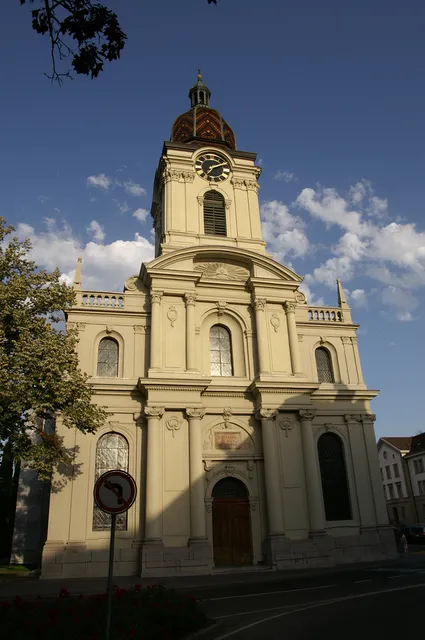
A view of Casino De Morges, Morges, Switzerland. · Pymouss
History
A Stage Built for the Lake
Before the Casino De Morges appeared, parts of this shoreline were cleared in the late 19th century so the town could present a new face to Lake Geneva. The project was urban theater: Morges turning outward, toward promenades, steamers, and public spectacle instead of keeping life folded behind older streets.
From the beginning, the building was conceived as a pleasure machine: performance hall, cafe, restaurant, ballroom, and civic salon under one roof. Over roughly five generations, it hosted concerts, banquets, and formal nights, then weathered decline as cultural gravity shifted toward venues such as Theatre De Beausobre (Morges, Switzerland).
The turning point
The Competition That Turned a Shoreline into Theater
One strong architectural account traces the project to an 1896 competition with 35 submissions, about the headcount of a small coach bus, won by Adrien Heydel, Jacques Regamey, and Henri Meyer. Their concept treated the waterfront like a proscenium: arrivals by boat, facades composed for distance, and interiors tuned for ceremony as much as function.
Construction followed in 1898-1900, but even the opening date carries a historical wrinkle: some sources cite 21 February 1900, others 23 February 1900. That dispute does not weaken the story; it sharpens it. The Casino was never just a building finished on one day, but a civic performance that kept being rewritten.
Its latest rewrite came in 2025, when Remy Gravelaine and Thibaud Gardette took over the culinary chapter and re-anchored the house in contemporary hospitality. The gesture echoes the original ambition: give Morges a room where architecture, appetite, and public life meet in full view of the lake.
Glory, Fatigue, Renewal
Accounts describe a long arc familiar to grand civic venues: decades of glamour, a late-20th-century ebb, closure in the early 1990s (often reported but less firmly documented), then renovation and reopening around 2000. Read this as structural resilience, not nostalgia. The Casino survived because Morges kept needing a place where private celebrations and public culture could share the same ceiling.
Why the Name Misleads Visitors
The word casino often sends travelers hunting for gaming tables, but here it means something older: a social and entertainment house. Think chandeliers, stage curtains, banquet service, and conversation rolling from aperitif to midnight, not slot machines. Understanding that single linguistic trap changes the visit entirely and reconnects the building to the wider civic fabric around Morges.
Tips for visitors
Best Arrival Walk
Start at Morges Railway Station and walk down toward the lake; in about 10 minutes, you go from rail-platform noise to terrace light. If you have extra time, pass by Temple De Morges on the way.
Golden-Hour Facade
Arrive 60-90 minutes before sunset for the best photos of the south-facing terrace and lakefront frontage; the stone warms up and the water reflects like brushed metal. On clear days, you can catch Alpine lines and even Mont Blanc in the distance.
Pair Nearby History
Make this your meal anchor, then loop through Château de Morges and Musée Forel; all three together create a compact half-day with almost no transit friction. It is like reading three chapters of the same town in one sitting.
Use Lunch Strategy
For better value, target the weekday lunch format instead of weekend or evening service, which is usually built for longer, richer dining. You still get the lakeside setting, but at a pace and spend that feel lighter.
Reserve Event Slots
Sunday service and special-event dates in the Belle-Époque spaces can book fast, especially when weather pushes everyone onto the lakefront. Reserve early if your timing is fixed, particularly for group meals.
Bring A Layer
Even in warm months, lake breeze can turn quickly once the sun drops, so carry a light outer layer for terrace seating. Avoid arriving Monday or Tuesday: as of 2026, those are regular closure days.
Where to Eat
local_dining
Don't Leave Without Trying
Filets de perches (Lake Geneva perch fillets)Malakoffs (fried cheese fritters)Papet vaudois (leek-potato stew with cabbage sausage)Tarte a la resinee / vin cuit tartLa Cote and Morges AOC white wines
Casino de Morges
fine dining
Swiss/French lakefront bistro€€star4.4(796)
Order: Go straight for the filets de perches meuniere or the pate en croute; beef Wellington is the rich classic move.
This is the statement table by the water: Belle Epoque setting, terrace on the lake, and a wine list that takes local pairings seriously. It is the place to book when you want a proper Morges meal, not just a stopover bite.
Swiss/European seasonal hotel dining€€star4.3(858)
Order: Order lake fish and the seasonal regional lunch plates; lunch mains around CHF 19-29 are the sweet spot.
You come here for the old-port atmosphere and those open Lake Geneva views with Mont Blanc in the distance. It feels quietly elegant without being stiff.
Order: Take the burger-and-fries combo when you want a fast, satisfying meal between old-town and lakefront walks.
This is the high-energy quick bite in the center, and locals clearly back it given the review volume. It is the easiest quality stop when you do not want a long sit-down service.
Order: Start with a local beer, then pick a hearty pub plate from the board for a no-fuss late meal.
This is one of the easiest places to fold into your evening thanks to long opening hours and a lively regular crowd. Good choice when you want something social and relaxed instead of formal dining.
Order: Go at lunch for the menu format; if there is a tartare or lake-fish special, that is usually the right call.
Reliable central address with split lunch-and-dinner service, so it works for both a midday stop and a longer evening meal. It is a practical pick when you want flexibility without sacrificing quality.
Patisserie, chocolatier, and tea-room€€star4.3(607)
Order: Order the house Sceau’tises, then add artisanal chocolates and a coffee for the full stop.
Fornerod is the pastry-and-chocolate address with serious local loyalty, run by master chocolatiers for decades. It is the right move for an afternoon pause or a take-home edible souvenir.
checkMost central Morges food stops around Casino de Morges are walkable in roughly 0-15 minutes.
checkFor fish and cheese-heavy dishes, pair with a local La Cote or Morges AOC white wine.
checkThe Morges weekly market is on Grand-Rue every Wednesday 08:30-13:00 and Saturday 08:30-14:00.
checkThe big spring market in 2026 is Saturday, June 6, 2026, with 200+ stalls across the town center including Place du Casino.
checkIf you want local identity on the plate, prioritize perch, malakoffs, papet vaudois, and vin cuit tart.
Food districts:Place du Casino lakefrontGrand-Rue old-town spineRue des Alpes and old-port edgeRue Louis de Savoie center
Restaurant data powered by Google
Frequently asked
Is Casino De Morges worth visiting?
Yes, especially if you like places where architecture and social history share the same stage. Despite its name, this is not a gambling hall but a Belle-Époque venue built in 1898-1900 for performances, dining, and civic nights out. The lake-facing terrace and changing Léman light give it the mood of an outdoor theater before the curtain rises.
How long do you need at Casino De Morges?
Plan 45 to 90 minutes for the building and quayside setting. That is roughly the runtime of a feature film, enough for exterior details, lake views, and a quick stop inside if open. Stay 2 to 3 hours if you add a meal or an evening event.
Is Casino De Morges a real gambling casino?
No, Casino de Morges is a historic entertainment building, not a modern gaming casino. It was conceived as a pleasure and spectacle venue with a hall plus café-restaurant functions. Today it operates mainly as a restaurant, event, and performance space.
When did Casino De Morges open?
It opened in February 1900, but the exact day is disputed. Several official tourism-facing pages cite 23 February 1900, while other secondary sources cite 21 February 1900. The safest wording is that inauguration happened in late February 1900.
Who designed Casino De Morges?
The most cited account credits Adrien Heydel, Jacques Regamey, and Henri Meyer. That version says they won an 1896 competition with 35 submitted projects, a field about the size of a full school class all drawing the same brief. Because this detail is not consistently repeated in official municipal archives online, treat the competition narrative as well-supported but still secondary.
What is special about the architecture of Casino De Morges?
Its charm comes from a theatrical Belle-Époque mix: Neo-Baroque, Neo-Louis XV, and Neo-Modern references in one lakeside composition. Sources highlight an asymmetrical west front, a theatrical mask above the entrance, and a more symmetrical south façade opening to the water. The effect feels staged, as if the building turns from city-side prologue to lake-side finale.
What can you see near Casino De Morges?
You can build a compact, high-quality walk around it in one outing. Pair it with Château de Morges, Musée Forel, and the old civic core around Hôtel De Ville, Morges. If you arrive via Morges Railway Station, the lakefront approach feels like a gradual reveal from commuter rhythm to Belle-Époque calm.
Sources & attribution16
Researched and written by the Audiala editorial team from historical records, architectural archives, and local expertise. Last updated March 2026.
Château de Morges — Slatin — CC BY-SA 3.0 (https://creativecommons.org/licenses/by-sa/3.0/) — Source: https://commons.wikimedia.org/wiki/File:Château_de_Morges.jpg
Morges-Passe du port — Pierre Bona — CC BY-SA 3.0 (https://creativecommons.org/licenses/by-sa/3.0/) — Source: https://commons.wikimedia.org/wiki/File:Morges-Passe_du_port.jpg
Morges Lakefront — Theonly1 at de.wikipedia — CC BY-SA 3.0 (https://creativecommons.org/licenses/by-sa/3.0/) — Source: https://commons.wikimedia.org/wiki/File:Morges_Lakefront.jpg
P1280113 - Morges — Esby (talk) 21:02, 13 April 2010 (UTC) — CC BY-SA 3.0 (https://creativecommons.org/licenses/by-sa/3.0/) — Source: https://commons.wikimedia.org/wiki/File:P1280113_-_Morges.JPG
Strictly necessary cookies keep the site working. Analytics (PostHog, Google Analytics) measures how each visitor uses our pages. Marketing loads YouTube videos and walking-route maps without a tap and lets Google Analytics set advertising cookies. We never sell your data. You can change this any time from the footer.
Privacy
Cookie preferences
Pick what you're okay with. You can change this any time from the footer.
Strictly necessary
Always on
Sign-in, language, navigation. Always on.
Product analytics
PostHog (EU) and Google Analytics record which pages you view and how you use them, under a random identifier stored in your browser. Helps us see which pages work and which need fixing. Google's ad personalisation stays off. No selling.
Marketing
Loads YouTube videos and the walking-route maps (OpenFreeMap) without a tap; without it, they load only when you tap them. If analytics is also on, Google Analytics may set advertising cookies. Ad personalisation stays off.