Musée Du Vigneron
Mont-Sur-RolleSwitzerland 46° N · 6° E Updated Aug 2026
Appointment-only and hidden in a working winery, the Musée du Vigneron holds thousands of inherited vine tools in an estate owned by the same family since 1536.
Six francs buys admission to a Swiss museum that still smells of fermenting wine. The Musée du Vigneron in Mont-sur-Rolle, Switzerland, isn't a recreated exhibit — it's the working cellar of Domaine de Montbenay, where a winemaking family has stacked centuries of grape knives, presses, and carafes among live barrels.
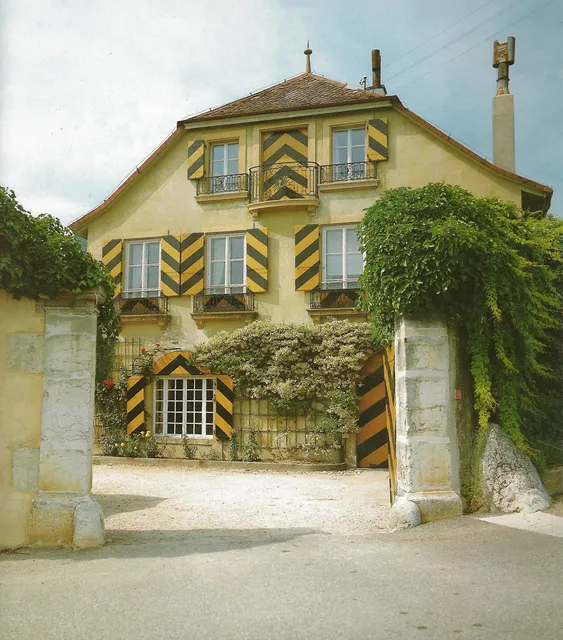
The museum sits at Chemin de Jérusalem 2 in Mont-sur-Rolle. The official communal history calls the château a country house transformed in the 17th century, not a castle. The address hints at older layers: according to a regional wine-route history, Cistercian monks from the abbey of Montbenoît built the estate and planted the slopes with vines brought from France.
Step inside and the smell of wine is not an ambient effect. The domaine still makes wine, so the museum keeps writing its own history among the barrels. Maurice de Watteville, the vigneron-conservateur, has sorted thousands of objects into five groups: work in the vines, the press, the cellar, cooperage, and glasses and carafes.
One warning: the Musée du Vigneron is not the Maison des Vins de La Côte, the modern tasting center that opened in Mont-sur-Rolle in June 2024. Visits to the museum happen on request for groups, and that selectivity is part of the appeal.
What to see
-
The Winegrower's Museum at Domaine de Montbenay
Chemin de Jérusalem 2a feels less like a museum entrance than a pause in the village. The de Watteville family has held this domaine since 1543, yet the displays move with the rhythm of a single harvest: vine tools first, then the press, then the cellar, cooperage, and the glasses that finally carried the wine. You finish in the cave séculaire, where footsteps echo off stone and the air hangs with old oak and active ferment beside ochre amphorae from Castelnaudary, chalk-streaked and still working. -
The 1771 Foudre
This barrel pushed more than 2.5 million litres through its oak staves before retirement in 2016; the domaine still keeps it like a retired athlete too heavy to move. Put your palm on the wood: the rings aren't decoration, they are the pressure of centuries. The contrast with the new amphorae two steps away is the whole point: old wood and porous clay, both breathing in the same cool dark. -
From Monk-Built Cellars to the Vine-Covered Roof
Leave the domaine on foot and follow the vineyard paths down toward Mont-sur-Rolle's newer wine quarter. The Maison des Vins sits behind natural-stone walls designed to echo the region's vineyard terraces — look up, part of the roof is planted with vines. Inside, over 200 bottles from 83 Côte vaudoise growers pour in a 450 m² hall, and on a clear afternoon the terrace opens straight onto Lake Geneva.
Plan your visit
- Getting There
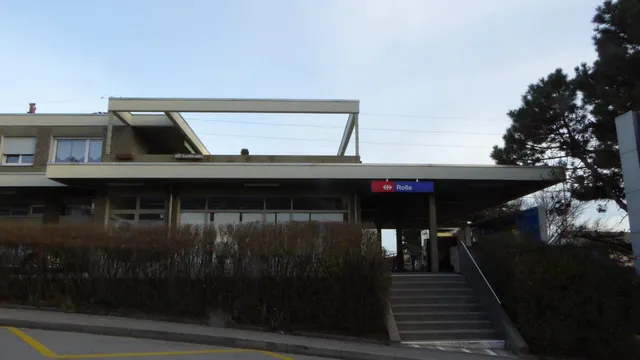
- Take the A1 to exit Rolle, then follow signs to Mont-sur-Rolle — 20 minutes from Lausanne, 30 from Geneva. Or ride a CFF train to Rolle and hop on PostBus 840 to "Mont-sur-Rolle, Maison de Ville"; the stop sits a few steps from Maison des Vins and a short walk from Domaine de Montbenay at Chemin de Jérusalem 2. Village roadworks from 2025 to 2027 may shift parking and circulation.
- Opening Hours
- As of 2026, the Musée du Vigneron publishes no public opening hours — it's a private collection inside a working château, open to groups by appointment only through the Association des Vins de Mont-sur-Rolle ([email protected]). The town's walk-in alternative, Maison des Vins de La Côte, opens Wednesday 16:00–20:00, Thursday–Saturday 11:00–20:00, Sunday 11:00–19:00, and closes Monday–Tuesday.
- Time Needed
- For the museum itself, expect a structured group visit of 1 to 1.5 hours — closer to 2 if you linger over the thousands of inherited tools and presses. If you're also stopping at Maison des Vins, budget 30–45 minutes for a quick glass and browse, or 1.5–2 hours for a full tasting on the terrace above the vineyards.
- Accessibility
- No accessibility details exist for the Musée du Vigneron — it occupies cellar rooms under Domaine de Montbenay, so steps and uneven stone floors are likely; confirm when booking. The newer Maison des Vins de La Côte, by contrast, is fully accessible to people with reduced mobility and has adapted toilets.
- Cost/Tickets
- No ticket price is published for the Musée du Vigneron; as a by-appointment private collection, costs are handled directly with the hosts. Entry to Maison des Vins de La Côte appears free, with paid tasting packages offered — prices aren't listed online, so ask at the bar before you commit.
History
A Cellar With Eight Centuries in It
The story of the Musée du Vigneron begins with a monastic grange, not a museum. According to a regional wine-route history, Cistercian monks from the abbey of Montbenoît raised the estate at Mont-sur-Rolle in the Middle Ages and planted the slopes with vines they carried from France. One source dates the winery to 1185, though what that number actually refers to remains fuzzy.
What visitors see now is later: the communal history records a country house reworked in the 17th century. After the Bernese conquest of Vaud in 1536, monastic properties were seized, sold off, or granted to new masters. A noble family's name became attached to the cellars, and it still answers the door today.
The turning point
The Vigneron Who Refused to Throw Anything Away
Most winemakers keep spare barrels. Maurice de Watteville keeps the entire material memory of his trade.
According to a French oenotourism source, the de Watteville family has been tied to Domaine de Montbenay since 1536 — the year Bern conquered Vaud. That claim doesn't line up with the official record saying a Bernese, Franz Jenner of Köniz, bought the château in 1809, and no public archive has settled the contradiction. No one disputes what Maurice inherited: thousands of tools, from grape knives and wax-lined presses to bottle molds and tasting glasses.
The turning point came when he chose to open the working cellar to small groups by appointment, with Tania de Watteville coordinating visits. For a custodian of a fading craft, the stakes were blunt. Every object not shown, labeled, and remembered risked disappearing into a dumpster with the rest of a family's centuries-old winemaking memory.
The Monks' Imported Vines
A Castle That Isn't a Castle
Tips for visitors
Book the real museum
The Musée du Vigneron won't admit walk-ins — it's groups-only by appointment, so email [email protected] well before you arrive. Show up unbooked and you'll get a locked cellar door at Chemin de Jérusalem 2.Walk the cépages
After your visit, follow the free 6-kilometre Parcours des Cépages loop through 250 hectares of vines. It starts and ends at Caveau de Mont-sur-Rolle, Route du Château 4, and gives you Mont-sur-Rolle's lake-and-Alps panorama without a car.Eat where locals drink
For a budget breakfast or aperitif, try Café-bar Le Rond Point on Place de l'Église. For lunch, Auberge 'Au Cœur de la Côte' at Route du Château 2 serves fresh lake fish from a Perroy fisherman; mains run roughly CHF 25–40.Buy at the source
Geneva and Lausanne restaurants mark up Swiss wine heavily. Buy bottles at the Maison des Vins or Caveau de Mont-sur-Rolle instead — the Caveau pours rotating local producers Fridays, Saturdays and public holidays 17:00–21:00, Sundays 11:00–12:30 and 17:00–21:00, March to December.Ask before shooting
No formal photography ban applies at the museum, but the collection lives inside the de Watteville family's working cellars at Domaine de Montbenay — ask your hosts before photographing. You'll likely get a yes and a story about a press.Time it right
Late May's Caves Ouvertes Vaudoises opens local cellars 10:00–18:00 — verify the exact 2026 weekend before planning. Otherwise, arrive on a clear afternoon so the terrace at Maison des Vins catches light over the lake, and pack a light jacket even in summer for cold cellar rooms.
Frequently asked
Is Musée du Vigneron worth visiting?
Yes, if you can get a group appointment—this is a private, living winery museum, not a walk-in attraction. Winegrower-curator Maurice de Watteville has assembled thousands of inherited vine-working objects so visitors follow a winegrowing season from vine to press to the cave séculaire at Domaine de Montbenay. If you cannot book, the modern Maison des Vins de La Côte is the easier public alternative, but it is not the museum.
How do I get to Musée du Vigneron from Geneva?
Train from Geneva to Rolle CFF, about 45 minutes, then take PostBus line 840 to the 'Mont-sur-Rolle, Maison de Ville' stop and walk to Chemin de Jérusalem 2. By car, leave the A1 at Rolle and follow signs to Mont-sur-Rolle; the domaine sits at the entrance to the village. From Lausanne, the train-bus route is closer to one hour.
Can you visit Musée du Vigneron for free?
No, in practice. A Swiss wine-route listing gives adult entry at 6 CHF, but the museum opens only to groups by appointment, so confirm the current price when you book. A November brisolée at the domaine, around 35 CHF per person, includes entry and roasted chestnuts.
What is the best time to visit Musée du Vigneron?
A Saturday in November is the most characterful moment—the domaine hosts a brisolée of roasted chestnuts, cheese, dried meat and wine for about 35 CHF per person, with museum entry included. The wine-route listing gives seasonal visiting days from 18 March to 11 September and 4 November to 11 December, Thursday to Saturday. Call Maurice or Tania de Watteville to reserve rather than assuming drop-in hours.
What should I not miss at Musée du Vigneron?
Make time for the 1771 foudre—a huge old oak cask that vinified more than 2.5 million litres before being retired in 2016 and kept in the cellar. Then look at the handmade terracotta amphorae used since the 2019 vintage; their chalky white residue is from evaporation and time. The visit itself flows through five thematic sections: vine work and harvest, the press, the domaine cellar, cooperage, and glasses and carafes.
How long do you need at Musée du Vigneron?
Reserve at least an hour; a thorough group visit with a look at the working cellar usually runs one and a half to two hours. Because visits are organised by appointment, you will not be queuing, but the thousands of objects reward slow looking. If you add a tasting or a November brisolée, plan longer.
Is Musée du Vigneron the same as Maison des Vins de La Côte?
No—they are two different stops in Mont-sur-Rolle. The museum is a private collection in the cellars of Domaine de Montbenay at Chemin de Jérusalem 2, open only to groups by appointment. The Maison des Vins de La Côte is a separate, modern tasting centre opened in June 2024 with 200+ wines from 83 growers and regular public hours.
Sources & attribution 6
- Relais du Vin — Œnotourisme Mont-sur-Rolle — Museum location in the château cellars, appointment-only group access, 250-hectare vineyard figure, nearby cafés and inns, local grape varieties.
- Weinlandschweiz — Musée du Vigneron in Mont-sur-Rolle — Five thematic museum sections, 6 CHF adult admission, Thursday–Saturday seasonal hours, contact numbers, brisolée pricing and schedule.
- Domaine de Montbenay — Working winery details, 700 years of barrel winemaking, the 1771 foudre, terracotta amphorae since 2019, and family heritage.
- Maison des Vins de La Côte — Practical information — Current opening hours, accessible spaces, travel directions from Geneva and Lausanne, parking, and construction notice.
- Vins de La Côte — Domaine de Montbenay — Family ownership since 1543, organic conversion, the cave séculaire, and museum restructuring note.
- 24 heures — À Montbenay, les amphores en terre cuite abritent de beaux vins — Physical description of the amphorae and their chalky patina, plus location of Domaine de Montbenay at the village entrance.
Built from cited sources · see the method · How we make our guides →
Next stop
More in Mont-Sur-Rolle.
2 places to discover — a few worth pairing.





Pick up where you left off
Saved and recently read places — kept on this device only.
Photo credits (2)
- Mackenzie — Unsplash License (https://unsplash.com/license) — Source: https://images.unsplash.com/photo-1528825871115-3581a5387919
- Zachary Kadolph — Unsplash License (https://unsplash.com/license) — Source: https://images.unsplash.com/photo-1516594915697-87eb3b1c14ea
Photos may have been resized or cropped.