Luins

Switzerland Verified Aug 2026

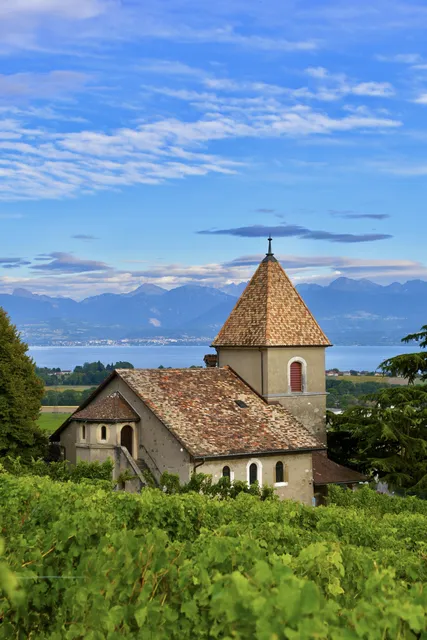
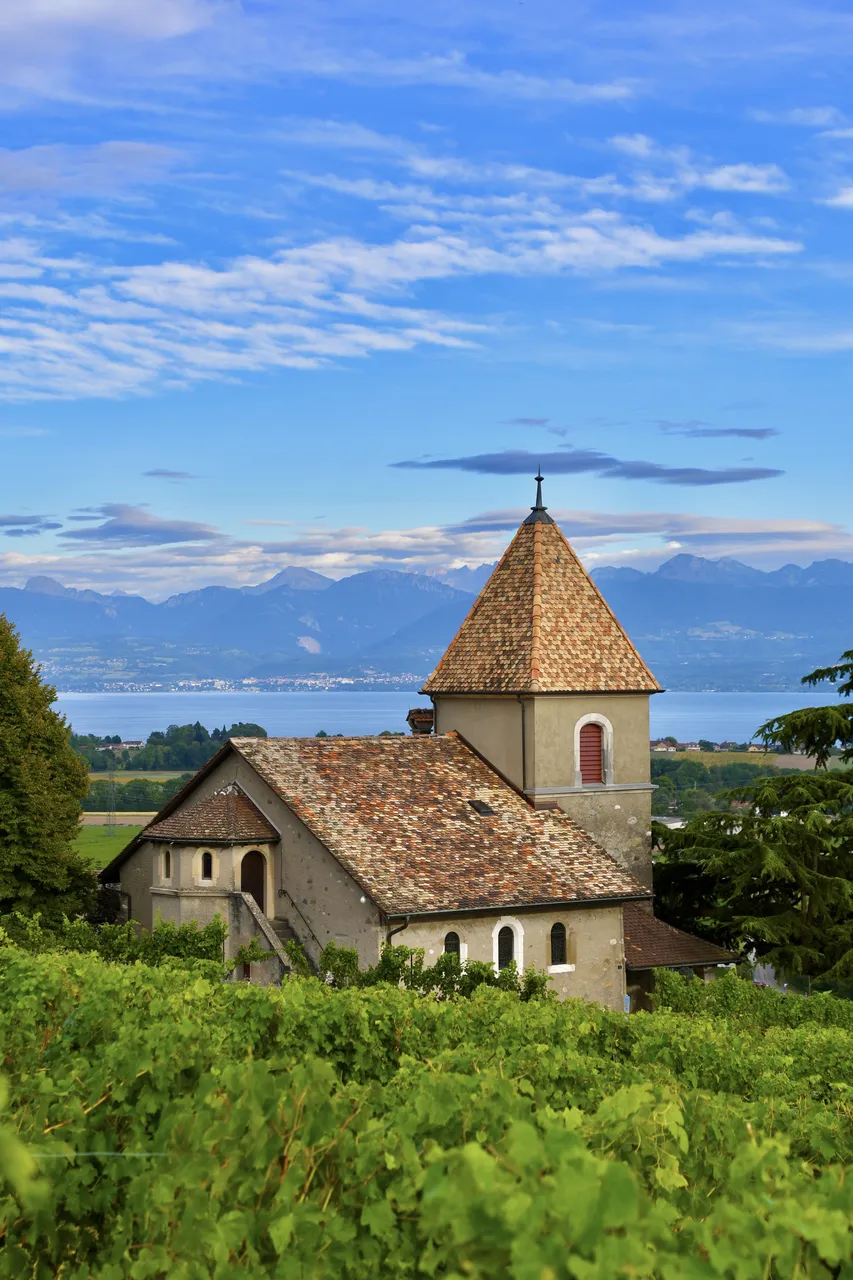
Luins announces itself with sound before skyline. Two bells cast in 1507 still ring over this wine village of a few hundred people in Switzerland’s Vaud canton, hanging in the Gothic tower of Église Saint-Pierre, nicknamed La Sentinelle for the way it stands guard over the roofs and vines. Below the tower, terraced Chasselas vines step down toward Lake Geneva, part of La Côte’s quiet stretch between Geneva and Lausanne.
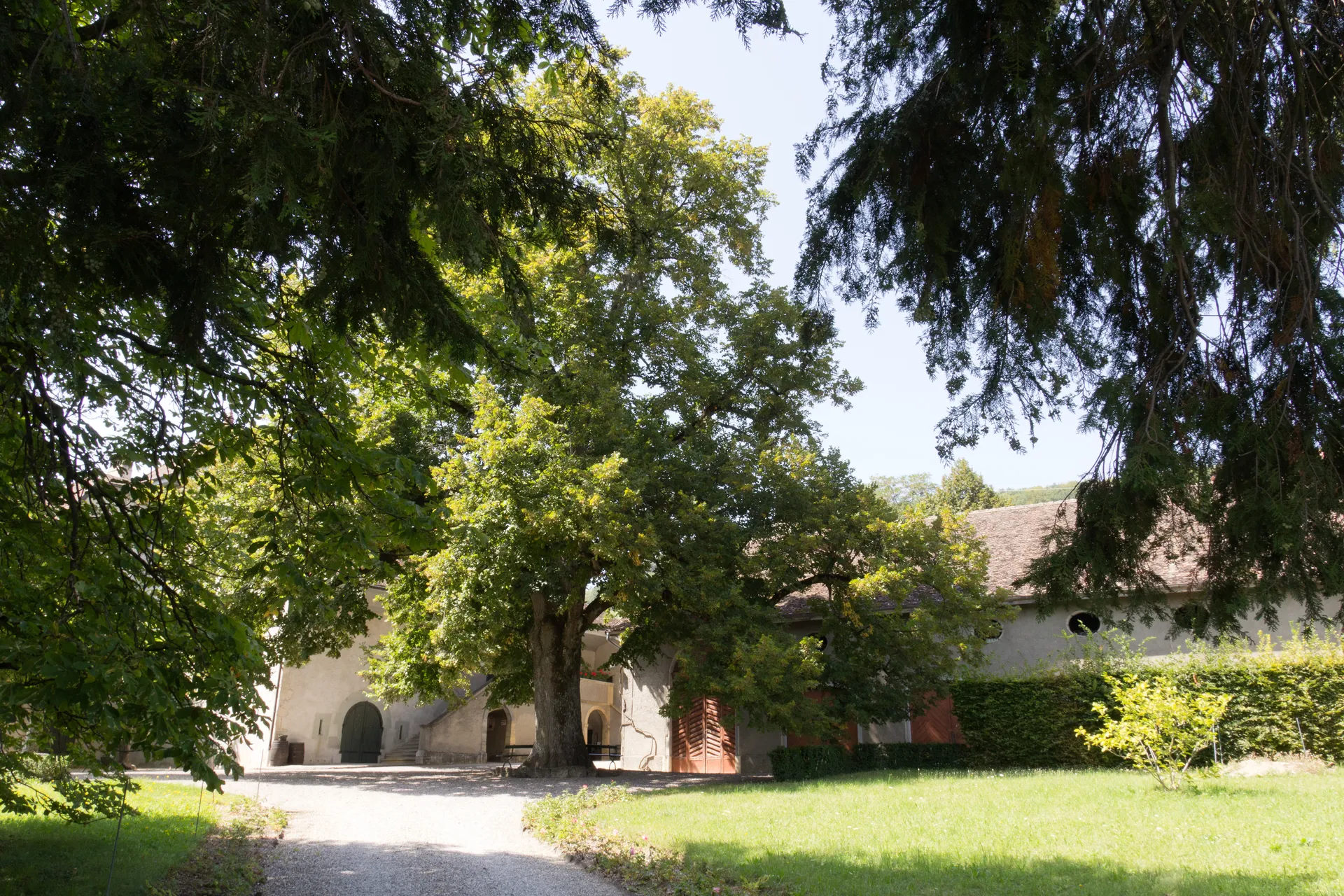
Luins, Switzerland Photo: EdouardHue · CC BY-SA 3.0
Attractions
3
Trip length
Half a day
Best season
Summer–Autumn (May–October)

Why Luins

Built from cited sources · see the method · How we make our guides →

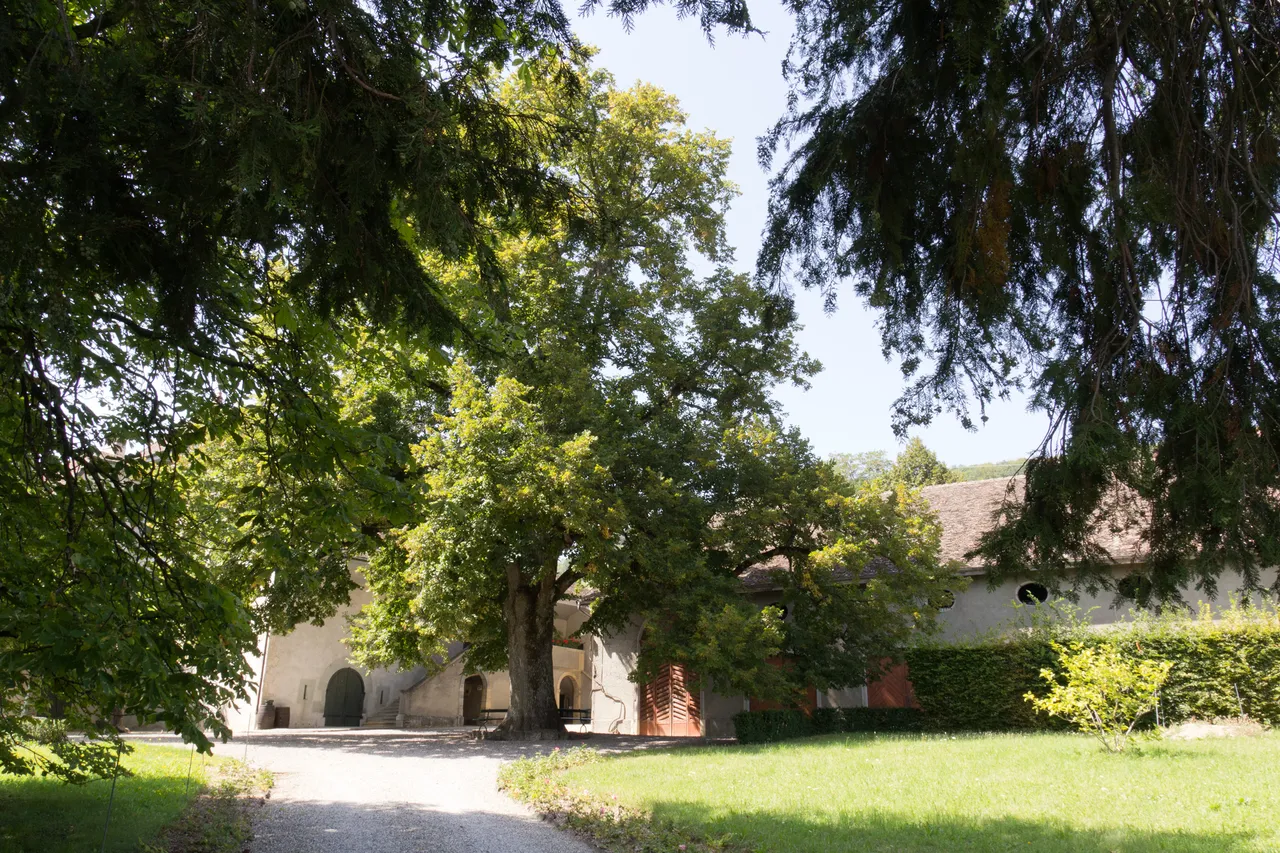
The real center of gravity is the Château de Luins, a working wine estate classed as a Swiss cultural property of national importance. The current building was reconstructed in the early 17th century, and 1612 is carved with family coats of arms on an interior door.

In the cellar, six vertical presses from the 1920s still stand ready; one was reopened in October 2018 for an old-fashioned pressing. The Baechtold family has owned the château and its 10 hectares of vines since 1909, and Laurent Baechtold runs the estate today. Tastings happen in the carnotzet on most weekday mornings and by appointment, with Diolinoir and Bollicino among the less expected bottles.

Around the estate, Luins keeps to its scale: a church, a few lanes, vines everywhere. Archives from the 13th century already describe local wine as a source of pride. Drink a glass of Chasselas here and you taste the same ground those records were bragging about.

  • Château de Luins

    A working wine estate with archives from the 13th century and a 1612 date carved into an interior door. The Baechtold family, descendants of the 1909 buyer, runs the ten hectares of Chasselas, Pinot Noir, and Diolinoir today.
  • Église Saint-Pierre

    The village silhouette is defined by this hilltop church, rebuilt in the 1670s around a Gothic 15th-century nave and bell tower. Two bells cast in 1507 still ring over the vines.
  • La Côte vineyards

    Luins sits in the La Côte AOC, a narrow strip of lakeside vineyards between Geneva and Lausanne. The light off Lake Geneva gives the Chasselas here a saline, almost alpine freshness.
  • Caveau de Luins-Vinzel

    The village wine cellar turns 40 in July 2026, but it opens weekly for Apéro du mardi from May to December. Expect local growers, barrel samples, and zero ceremony.

Plan your trip

Before you go

Getting There
Fly into Geneva Airport (GVA), roughly 30 km southwest. The closest rail stops are Gland and Rolle, both on the Lausanne–Geneva main line; Luins itself has no mainline station. Drivers take the A1 motorway and exit at Gland or Rolle.
Getting Around
The village is small enough to cross on foot in ten minutes. PostBus services connect Luins to Gland and Rolle stations, but frequencies drop outside commuting hours. A Mobilis Vaud day pass covers trains, buses, and lake boats across the region.
Climate & Best Time
Spring runs 8–17°C, summer 18–26°C, autumn 9–18°C, winter 0–6°C; rain spreads across the year with lake-effect showers in late summer. July and August are peak, but September and October bring harvest light and fewer visitors. For wine events, aim for the Caveau de Luins-Vinzel anniversary on 3–5 July 2026 or Caves ouvertes on 7–8 November 2026.
Language & Currency
French is the village language; a 'bonjour' opens doors faster than switching to English, though most tourism-facing locals speak some. Switzerland uses the Swiss franc (CHF), not the euro, and small wineries often prefer cash or Twint over credit cards.

Where to Eat

Where locals actually book dinner — not the tourist menus.

  • Chasselas from Château de Luins

    The house white comes from ten hectares of La Côte vines and ferments in oak barrels on the estate. At the tasting room on Route du Village 23, you can try it alongside Chardonnay, Pinot Noir, and the estate's Bollicino sparkling wine.

  • Caveau de Luins-Vinzel

    A communal cellar that has been pouring local growers' wines for 40 years. The anniversary weekend runs 3–5 July 2026; otherwise look for the Tuesday apéro, 17:00–19:00, from May to December.

  • Filets de perches du Léman

    Lake Geneva perch fillets, floured and fried in butter, served with lemon and frites at lakeside restaurants in nearby Rolle or Nyon. The fish is local, the preparation simple, and the view usually comes free.

  • Papet vaudois

    A winter plate of leeks and potatoes cooked soft, topped with saucisse aux choux, the cabbage sausage of Vaud. It is the canton's comfort food, best eaten after a morning in the vines.

  • Saucisse aux choux vaudoise

    A fat pork sausage studded with cabbage, smoked and poached. In La Côte it often appears alongside papet vaudois or sliced cold with a glass of Chasselas.

  • Meringues double crème de Gruyère

    Two crisp meringue shells sandwiching thick Gruyère double cream. It is absurdly rich, and the correct response is to order it anyway.

  • Tomme vaudoise

    A soft, washed-rind cow's milk cheese from the canton. Local versions show up on cheese boards at wine cellars and village fêtes, often with a spoon for the runny center.

  • Apéro du mardi at Château de Luins

    Every Tuesday from May to December, the château opens for wine aperitifs from 17:00 to 19:00. It is less a tasting and more a village ritual with barrel samples and views over the vines.

Insider tips

Small things that change how the city treats you.

  • Taste at the carnotzet

    The château pours its own Chasselas, Pinot Noir and Diolinoir Monday, Tuesday, Thursday and Friday from 08:00 to 18:00, and Saturday 09:00 to 12:00. It closes Wednesdays, so plan around that gap.
  • Stay for the Tuesday apéro

    From May to December, the estate runs 'Apéro du mardi' from 17:00 to 19:00. It's the most local way to taste, alongside the winemakers rather than on a formal group tour.
  • Hear the 1507 bells

    Église Saint-Pierre takes about 30 minutes. Two bells cast in 1507 hang in a Gothic tower that gives this small village its skyline.
  • Shoot from the vines

    Climb the vineyard paths northeast of the church for the classic Luins view: the bell tower above ten hectares of terraced Chasselas and Pinot Noir, especially before sunset.
  • Ask about the old presses

    The cellar keeps six vertical wine presses from the 1920s. One was pressed again in October 2018, so ask whether the cave is open when you book your tasting.

Frequently asked

Is Luins worth visiting?

Yes, if you care about small working wine villages. It is a half-day stop on the La Côte wine route, built around a château where the Baechtold family has continued the same estate since wine merchant Hermann Trüssel bought it in 1909. Pair it with Nyon or Rolle for a fuller day.

How many days do you need in Luins?

Half a day is enough for most people, or one evening if you want the Tuesday apéro. The village has two main sights, the château and Église Saint-Pierre, plus vineyard walking; there is no large accommodation or restaurant base here.

What wines is Luins known for?

Chasselas is the white wine to try, and Château de Luins also produces Chardonnay, Pinot Noir, Diolinoir, Parcelle 60 and a sparkling Bollicino. The estate's 10 hectares sit in the La Côte appellation, all vinified on site.

Can I visit Château de Luins without a reservation?

Yes for the tasting room, which opens Monday, Tuesday, Thursday and Friday 08:00 to 18:00, Saturday 09:00 to 12:00, and closes Wednesday. For the cellar with the 1920s presses, call or email in advance because access follows the winemaking calendar.

When is the best time to visit Luins?

May to October, when the vines are green and the Tuesday apéro is running. If you want to taste the cloudy young wine, come for the château's open weekend 'À la découverte du bourru' on 7–8 November 2026.

All Places to Visit.

2 places to discover

Luins Castle
Place

Luins Castle

Luins Church
Place

Luins Church

Photo credits (5)
  1. Entrée du château de Luins (Suisse) — EdouardHue — CC BY-SA 3.0 (https://creativecommons.org/licenses/by-sa/3.0/) — Source: https://commons.wikimedia.org/wiki/File:Entrée_du_château_de_Luins_(Suisse).jpg
  2. Karte Gemeinde Luins — Tschubby — CC BY-SA 3.0 (https://creativecommons.org/licenses/by-sa/3.0/) — Source: https://commons.wikimedia.org/wiki/File:Karte_Gemeinde_Luins.png
  3. Karte Gemeinde Luins 2008 — Tschubby — CC BY-SA 3.0 (https://creativecommons.org/licenses/by-sa/3.0/) — Source: https://commons.wikimedia.org/wiki/File:Karte_Gemeinde_Luins_2008.png
  4. Karte Gemeinde Luins 2007 — Tschubby — CC BY-SA 3.0 (https://creativecommons.org/licenses/by-sa/3.0/) — Source: https://commons.wikimedia.org/wiki/File:Karte_Gemeinde_Luins_2007.png
  5. Carte commune Luins 2021 — Tschubby, translation by Christophe95 — CC BY-SA 3.0 (https://creativecommons.org/licenses/by-sa/3.0/) — Source: https://commons.wikimedia.org/wiki/File:Carte_commune_Luins_2021.png

Photos may have been resized or cropped.