Lugano
Switzerland Updated May 2026
Palm fronds click in the breeze a few minutes from a cathedral facade carved like lace, and that contrast tells you almost everything about Lugano, Switzerland. This is a Swiss city where the morning smells of espresso and lake water, where steep lanes drop toward Piazza della Riforma and the light turns theatrical by late afternoon. The surprise isn't that Lugano feels Italian. It's how firmly Swiss order holds the whole performance together.
 Photo: Image Hunter / Pexels
- Attractions
- 12
- Trip length
- 2-3 days
- Best season
- Spring and early autumn (April-June, September-October)
Why Lugano
Built from cited sources · see the method · How we make our guides →
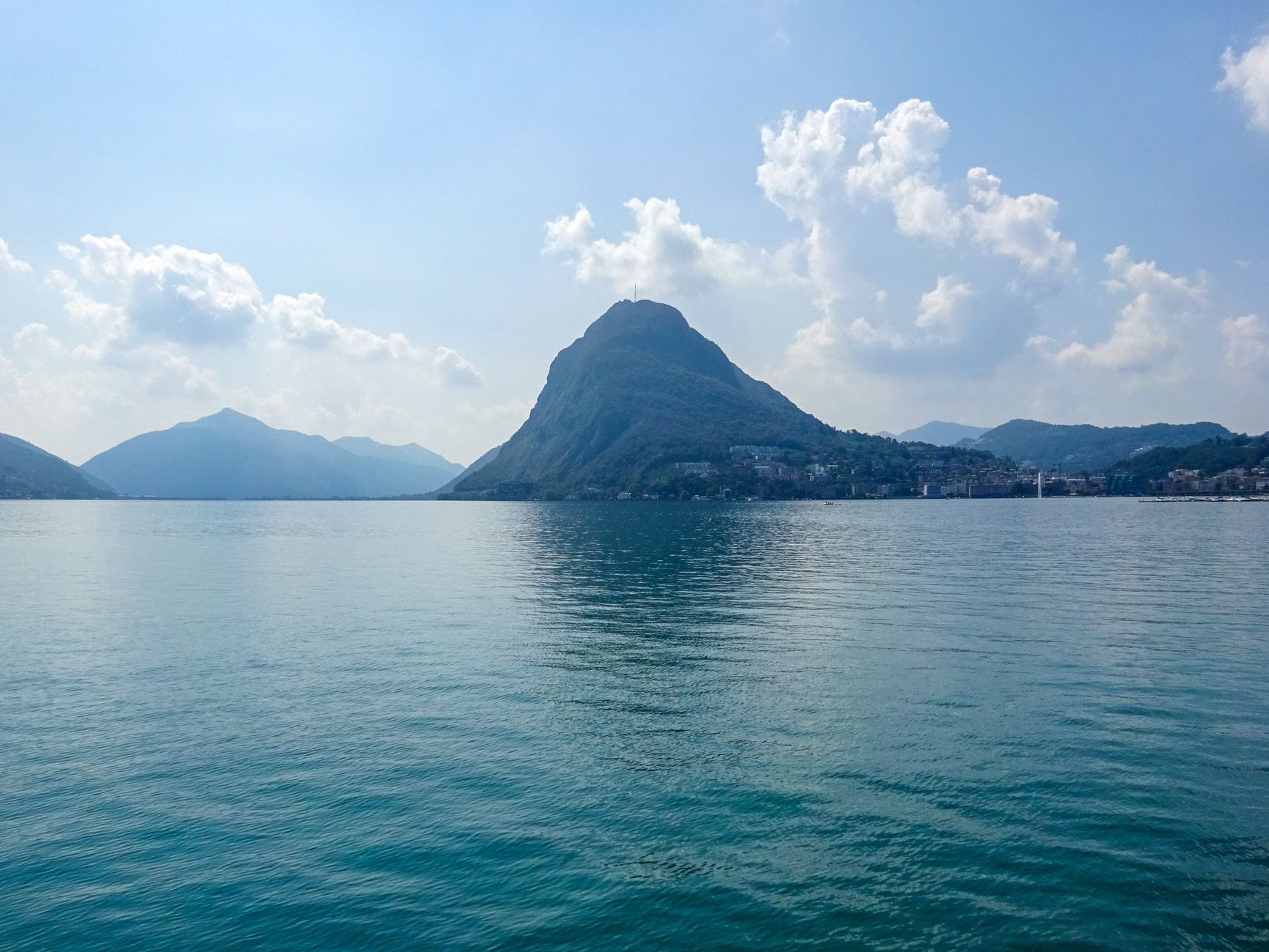
Lugano sits at the north end of Lake Lugano, ringed by mountains that keep changing the scale of the place. From the promenade at Riva Albertolli, the city can look soft and leisurely; climb toward the Cattedrale di San Lorenzo, and you start noticing the stone, the gradients, the old wealth, the habit of building for permanence.
Its historic core rewards slow walking because the good details hide in plain sight: the arcades of Via Nassa, the cool interior of Santa Maria degli Angioli, Bernardino Luini's 1529 Passion fresco catching you off guard behind a restrained convent church. Then the city shifts register. At LAC, Ivano Gianola's vast cultural complex opens onto the lake with the confidence of a place that knows culture here isn't decoration but civic muscle.
Lugano's real character lives in the tension between polish and intimacy. Bankers share the streets with students from USI, aperitivo glasses clink under neoclassical facades, and a 12-minute funicular ride can put you above the whole scene on Monte San Salvatore or Monte Brè. That mix changes your reading of the city: Lugano isn't a resort pretending to be a city, nor a business center pretending to be relaxed. It's a borderland that learned to do both.
Renaissance Under Palm Trees
Lugano's old center looks Italian at first glance, then turns distinctly Swiss in the details: arcades on Via Nassa, the stern geometry of Piazza della Riforma, and Santa Maria degli Angioli's 1529 Luini fresco, painted with the kind of drama that still quiets a room.A Small Museum of Modernism
Few cities pack so much Ticino architecture into such a walkable core. Mario Botta, Livio Vacchini, Carlo and Rino Tami, and Ivano Gianola all left their mark here, from the bus station canopy to the stone-and-brick volumes along the Cassarate.Lake and Mountain in One Glance
Lugano sits between water and steep green walls, which means the city changes mood every few minutes. Morning belongs to Parco Ciani and the lakefront; late afternoon belongs to Monte Brè or Monte San Salvatore, when the light turns the whole basin silver.Culture With Good Acoustics
LAC Lugano Arte e Cultura gave the city a serious contemporary stage without flattening its old soul. The 1,000-seat hall is wood-lined and warm-sounding, and the building opens toward the lake like it knows scenery matters.
Neighborhoods
Where to wander, by quarter — each with its own rhythm.
Centro Storico
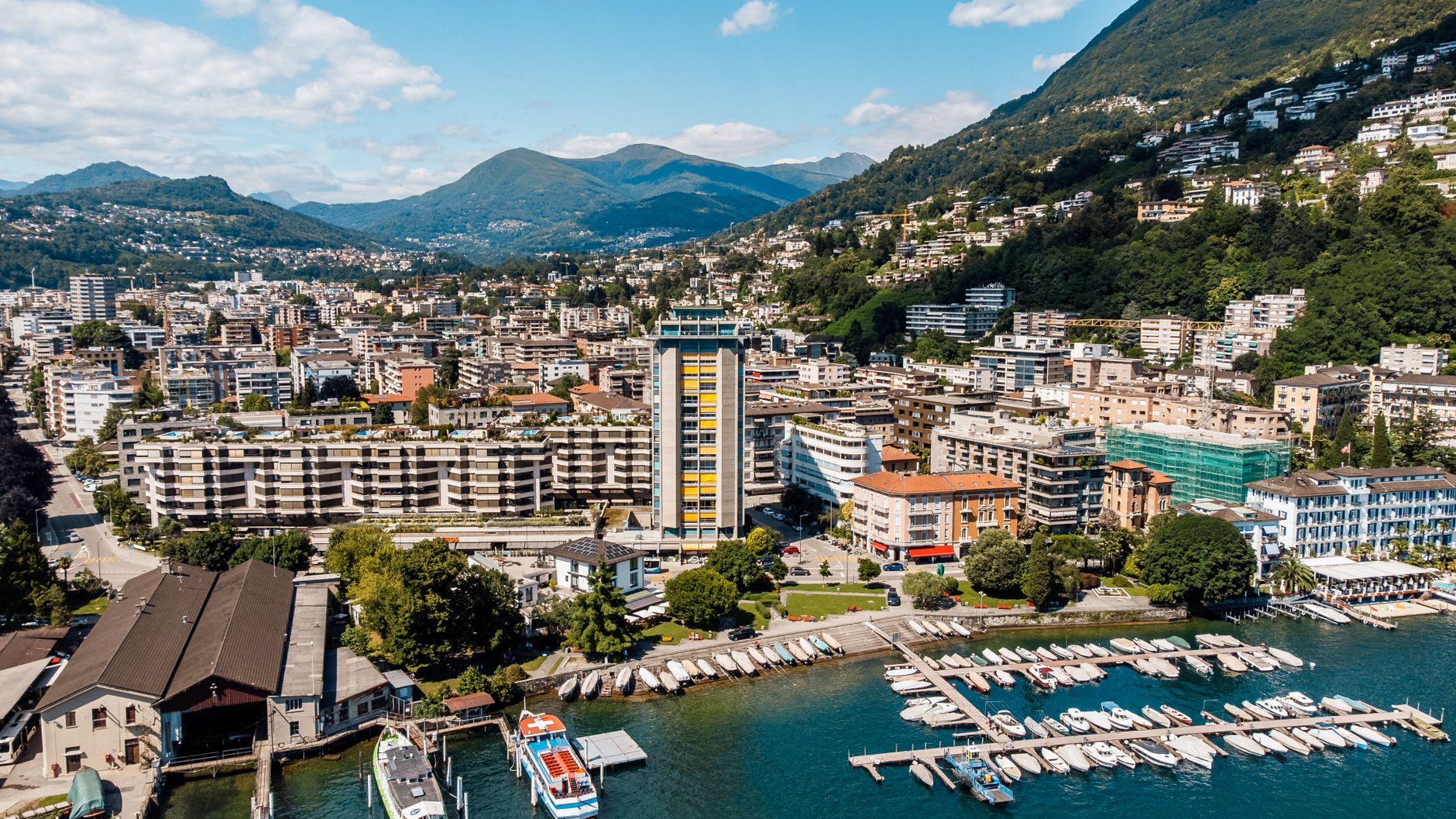
Lugano's old town is a tight weave of ocher facades, church bells, polished shop windows, and alleyways that suddenly open onto small squares. Come here for Via Nassa's arcades, the climb to San Lorenzo Cathedral, and the pleasure of getting slightly lost between Renaissance fronts and good coffee.Piazza della Riforma
This is the city's outdoor living room, framed by pastel buildings and the neoclassical Palazzo Civico. Early evening is the right time: waiters thread between tables, glasses catch the last light, and Lugano briefly feels less like Switzerland than a very disciplined Italian stage set.Loreto
Loreto is where Lugano's cultural ambitions show their hand. LAC dominates the area with wood-lined performance halls, MASI's exhibitions, and a piazza that pulls locals in before shows; Santa Maria degli Angioli, just beside it, supplies the older counterpoint with Luini's immense fresco.Cassarate
North of the center, Cassarate feels younger and less ceremonial, shaped by the river, university life, and quick access to Monte Brè. This is a good base if you like cities with edges: morning joggers by the water, modern architecture, and the sense that daily life matters here as much as postcard views.Castagnola
Castagnola trades the center's social noise for villas, gardens, and long views across the lake. The walk toward Villa Heleneum and the quieter lakeside paths has a different rhythm altogether, with cypress, stone walls, and the kind of hush that makes every boat engine sound far away.Gandria
Gandria clings to the slope east of Lugano in a tumble of steps, shutters, and lake-facing terraces. It still feels slightly improbable, as if someone built a fishing village vertically by mistake, and that's exactly why the boat ride or Sentiero dell'Olivo walk out here is worth your time.Brè
The quarter around Brè and the mountain above it gives you Lugano from a sharper angle. Up here the air is cooler, the streets narrow to village scale, and the artist trail adds an unexpected note of playfulness to a place otherwise defined by stone houses and expansive views.Besso
Besso rises behind the station and shows Lugano without lakefront gloss. You'll notice apartment blocks, everyday bakeries, and steep residential streets, but you also get one of the city's better secrets: the dramatic approach down toward the cathedral, where trains, stairs, and old masonry all meet in a single frame.
Plan your trip
Before you go
- Getting There
- For international arrivals in 2026, Milan Malpensa Airport (MXP) is the handiest hub, around 45 km south; direct trains to Lugano usually take about 1 hour 30 minutes. Zurich Airport (ZRH) connects by SBB rail in roughly 2.5 to 3 hours. Lugano's main rail stop is Lugano Stazione, and the city sits on the A2 motorway, the north-south spine linking Basel, Lucerne, Bellinzona, Lugano, and Chiasso.
- Getting Around
- Lugano has no metro and no tram; daily movement runs on TPL buses, funiculars, and lake boats within the Arcobaleno fare network, with the center in Zone 10. The Lugano Citta-Stazione funicular drops from the station to Piazza Manzoni in about 2 minutes. As of 2026, a Zone 10 day card costs CHF 5.20 in 2nd class, and the city has about 39 km of bike routes for riders who don't mind a few hills.
- Climate & Best Time
- Spring usually runs around 11 to 18 C, summer around 24 to 29 C by day, autumn around 12 to 20 C, and winter around 3 to 8 C. May tends to be one of the wetter months, while mid-June to mid-September brings the warmest lake weather and the fullest event calendar. April to October works well overall; July and August draw the heaviest visitor traffic.
- Language & Currency
- Italian is the working language here, on street signs, menus, and bus announcements, though English is common in hotels, shops, and tourist services. Switzerland means Swiss francs, not euros; some border-facing businesses may take euros, but change often comes back in CHF and rarely in your favor.
- Safety
- Lugano remains a low-crime Swiss city in 2026, and the lakefront, Piazza della Riforma, and main transit corridors are generally well lit late into the evening. The usual weak spots are the station area, crowded buses, and funicular cabins, where pickpockets prefer distraction over drama. Keep your bag closed and your phone out of the back pocket.
A Lakeside Town Recast by Borders, Exiles, and Money
From pile dwellings on the Ceresio shore to a Swiss city with an Italian pulse
- c. 3800 BCE
Lake People Raise Platforms
Most scholars date the first settled communities around the Lugano basin to the late Neolithic, when people built wooden platforms above the waterline and lived with the slap of waves under their floors. The lake fed them, but it also controlled them. Even now, Lugano's history makes more sense if you picture it beginning at the edge of dark water.
- 15 BCE
Rome Takes the Alpine Gate
Augustus' armies absorbed the southern Alpine region into the Roman world, pulling the Lugano basin into a network of roads, customs posts, and military movement between Como and the northern passes. No grand Roman forum rose here. What mattered was position: a lakeside corridor where people, salt, and orders kept moving.
- 875
Lugano Enters the Record
A document dated 875 gives the first certain written trace of a community in the Lugano area. Paper can feel dry, but this one matters. It tells you the settlement had become solid enough to be named, taxed, argued over, and remembered.
- 984
A Market Town Emerges
By 984, records describe Lugano as a vicus, a market town. That single word changes the picture: boats arriving with goods, bargaining under arcades, mule traffic climbing toward the passes, and a place that lived by exchange rather than isolation. Lugano was small, but it was already useful.
- 1335
Milan Tightens Its Grip
Lugano fell firmly under the power of the Visconti of Milan after generations of tug-of-war between Como and Milan. Frontiers here were never abstract. They meant new taxes, new loyalties, and a town learning to survive by adjusting faster than its rulers could change.
- 1490
Franciscans Build by the Lake
The convent of Santa Maria degli Angioli was founded at the southern edge of town, where the old streets open toward the water. Stone, lime, prayer, and patronage met in one place. The church still carries that late medieval hush, cool and dim even when the promenade outside is bright.
Show the full timeline (23 moments)
- 1513
Swiss Bailiffs Take Over
After the Italian Wars, Lugano became a Swiss subject territory ruled as one of the Italian bailiwicks. For 285 years, governors rotated in from the cantons every two years, collecting taxes while the town kept its language, its Catholic faith, and much of its local habit. Swiss rule arrived here wearing Italian clothes.
- 1529
Luini Paints the Passion
Bernardino Luini gave Santa Maria degli Angioli its great fresco of the Passion and Crucifixion, a wall of grief, color, and movement that still stops conversation mid-sentence. The work brought high Lombard Renaissance painting into a small lakeside town. Lugano was no backwater if artists of that caliber were working here.
- 1670
Trezzini Leaves the Region
Domenico Trezzini was born in Astano in the Lugano district, one of the Ticinese builders who carried local craft far beyond these hills. He would help shape Saint Petersburg for Peter the Great. The secret tucked inside Lugano's history is this: the region exported architects the way others exported silk or soldiers.
- 1798
"Liberi e Svizzeri" Rings Out
As the old Swiss order collapsed under French pressure, Lugano resisted being folded into the Cisalpine Republic and declared itself 'Liberi e Svizzeri' — free and Swiss. The slogan had teeth. It marked the moment when a subject town tried to choose its own future rather than accept one drafted elsewhere.
- 1803
Ticino Becomes a Canton
Napoleon's Act of Mediation merged the cantons of Lugano and Bellinzona into the new Canton of Ticino. Lugano gained a place inside a more stable Swiss framework without losing its Italian voice. That blend still defines the city better than any postcard ever could.
- 1815
Bossoli Is Born Here
Painter Carlo Bossoli was born in Lugano in 1815 and went on to become one of the 19th century's sharpest topographical artists, famous for war scenes and urban views. His eye was made for places where politics sat plainly in stone. Lugano gave him that lesson early.
- 1848
Exiles Fill the Lakeside
After the failed revolutions in Lombardy, Italian refugees poured across the border, and Lugano became a refuge for liberals, republicans, and men with police files in Austrian drawers. Cafes filled with arguments. The city learned that exile can be one of the fastest ways to import ideas.
- 1848
Cattaneo Finds a Second Home
Carlo Cattaneo, the fierce Milanese republican thinker, settled at Castagnola above Lugano after the revolutions failed. He wrote, taught, and argued from exile, turning the lakeshore into an outpost of the Italian Risorgimento. His presence gave Lugano a political edge that still sits beneath the calm surface.
- 1874
The Railway Changes Scale
Rail links reached Lugano in the age of the Gotthard project, tying the city more tightly to northern Switzerland and Italy. Distance shrank. A lakeside town that had long depended on water and mountain roads suddenly heard steam, iron, and station bells reshaping its future.
- 1888
San Lorenzo Becomes Cathedral
When the Diocese of Lugano was created, San Lorenzo was elevated from an old parish church to cathedral. The building had been watching over the hillside above the station approach for centuries already. Now its status finally matched its presence.
- 1890
San Salvatore Climbs by Cable
The Monte San Salvatore funicular opened and turned a steep ascent into a public ritual of engineering and view. In a few minutes, passengers could rise from lake air and hotel chatter to chest-level clouds and chapel bells. Tourism here began to move on rails.
- 1894
Monte Bre Opens Up
Four years later, the Monte Bre funicular added the eastern mountain to Lugano's daily horizon. Peaks that once belonged mainly to mule tracks and local paths became part of the city's social geography. Views, in Lugano, started to become infrastructure.
- 1919
Hesse Settles Above the Lake
Hermann Hesse moved to Montagnola in the hills above Lugano and stayed until his death in 1962. He wrote major works there, including Siddhartha and The Glass Bead Game, under a light that changes by the hour and a silence broken mostly by birds and church bells. Lugano's gentler face fed one of the 20th century's restless minds.
- 1943
War Reaches the Border
After Italy's armistice on 8 September 1943, refugees, partisans, Jews, deserters, and escaped prisoners crossed toward Ticino. Lugano was not bombed, but war pressed hard against its door. Stations, border posts, and safe houses became the city's real front line.
- 1996
A University City Begins
The Universita della Svizzera italiana was founded in Lugano, giving the city a new role beyond banking and tourism. Students brought a different rhythm: lecture halls in the morning, lakefront benches at dusk, ideas imported in backpacks instead of account books. Small cities change fast when a campus takes root.
- 2015
LAC Opens Its Doors
Lugano Arte e Cultura opened beside Santa Maria degli Angioli, placing a sharp contemporary building next to one of the city's oldest sacred sites. The contrast works. A Renaissance fresco on one side, a concert hall and museum on the other: Lugano stating, without noise, that culture here did not stop at the old stones.
- 2022
Plan B Tests the Future
With its Plan B partnership, Lugano pushed into the world of Bitcoin, digital payments, and crypto branding harder than almost any Swiss city. Some saw reinvention, others saw theater with a blockchain soundtrack. Either way, the move fit a long local pattern: when trade routes change, Lugano tries to stand where the traffic will be.
Who lived here
-
Writer · 1877–1962
Hermann Hesse
Lived in nearby Montagnola from 1919 to 1962
Hesse settled above Lugano after the First World War and wrote some of his sharpest, strangest books within sight of these hills. He would still recognize the slant of light over the lake, though the discreet banking city below him has traded some solitude for polished wealth.
-
Philosopher and political writer · 1801–1869
Carlo Cattaneo
Lived in Castagnola near Lugano and died there in 1869
Cattaneo arrived as an exile from the failed revolutions of northern Italy and turned the Lugano area into a place of argument, study, and stubborn liberal thought. He'd probably admire the city's independence of mind, then complain about any sign that money had become louder than ideas.
-
Painter · c. 1480–1532
Bernardino Luini
Painted the Passion fresco in Santa Maria degli Angioli in 1529
Luini left Lugano one overwhelming gift: the vast Passion and Crucifixion fresco inside Santa Maria degli Angioli. You walk in from the bright lakefront and hit a wall of painted grief and color; five centuries later, the shock still works.
-
Architect · born 1943
Mario Botta
Designed several buildings in and around Lugano
Botta helped give modern Lugano its stern, geometric edge, proving the city was more than postcard lakeside nostalgia. He'd likely enjoy how his brick and stone forms now sit in quiet argument with arcades, villas, and church facades built long before him.
Where to Eat
Where locals actually book dinner — not the tourist menus.
Insider tips
Small things that change how the city treats you.
Use the funiculars
Monte Brè from Cassarate takes about 10 to 15 minutes by funicular, and Monte San Salvatore from Paradiso takes about 12. Go early or near sunset; midday haze can flatten the lake views.Boat to Gandria
Skip the road and take the lake boat to Gandria or walk the lakeside path east from Castagnola. The village is car-free and the approach by water explains why painters kept stopping here.Eat at a grotto
For Ticinese food, head into the hills to a grotto rather than settling for lakefront tourist menus around Piazza della Riforma. These old stone taverns are where polenta, braised meats, and local merlot still make sense.Parco Ciani timing
Parco Ciani is at its best in the first and last light of the day, when the palms and magnolias throw long shadows across the lake. Mid-afternoon can feel busy, especially in summer.Base yourself by rail
Lugano works well without a car now that the Gotthard Base Tunnel puts Zurich roughly two hours away and the Ceneri Base Tunnel speeds up local connections. Day trips to Bellinzona, Locarno, and Milan are easier by train than by parking hunt.Budget for Switzerland
Lugano looks Italian, but prices are Swiss. Save money with lunch specials away from Via Nassa and the main square, then use the lakefront and Parco Ciani for the kind of scenery that costs nothing.
Gallery
The city, as it actually looks.




Frequently asked
Is Lugano worth visiting?
Yes, if you want a Swiss city with an Italian pulse and easy mountain access. Lugano gives you Renaissance churches, a serious art venue at LAC, and lake views that change by the hour. It suits travelers who like culture and walking more than nightlife.
How many days in Lugano?
Two to three days is the right span for most travelers. One day covers the old town, Parco Ciani, and Santa Maria degli Angioli; a second lets you add Monte Brè or San Salvatore, Gandria, or a museum. Stay longer if you plan day trips into Ticino or over the border to Como and Milan.
How do you get around Lugano without a car?
Very easily. Lugano's center is walkable, the mountain viewpoints are linked by funicular, boats connect lakeside villages, and trains make regional trips simple. A car usually creates more trouble than freedom in the center.
Is Lugano expensive for tourists?
Yes, Lugano is firmly on the Swiss side of the ledger. Coffee, hotels, and dinner can cost more than visitors expect from a city that feels culturally close to Italy. Cut costs by staying near rail links, using parks and promenades, and eating away from the lakefront.
Is Lugano safe?
Yes, Lugano is generally very safe for visitors. Usual city habits still apply around the station, on crowded shopping streets like Via Nassa, and at big events in Piazza della Riforma. The bigger risk for many travelers is mountain weather changing faster than expected.
What is the best time to visit Lugano?
Spring and early autumn are the sweet spots. April to June and September to October bring softer light, easier walking temperatures, and clear enough air for the lake-and-mountain views Lugano trades on. July and August are warmer and livelier, but also busier.
Can you visit Lugano as a day trip from Zurich or Milan?
Yes, from both. Zurich is roughly two hours away by fast train through the Gotthard Base Tunnel, while Milan is about an hour by direct rail. A day trip works, but Lugano makes more sense when you stay long enough to catch the city in the evening after the day-trippers leave.
What should you not miss in Lugano old town?
Start with Santa Maria degli Angioli for Bernardino Luini's 1529 Passion fresco, then climb to San Lorenzo Cathedral and drift back through Piazza della Riforma and Via Nassa. That route shows Lugano's split personality: Franciscan restraint, Lombard ornament, and polished Swiss order.
Pick up where you left off
Saved and recently read places — kept on this device only.
Photo credits (10)
- Image Hunter — Pexels License (https://www.pexels.com/license/) — Source: https://www.pexels.com/photo/13012569/
- Lana — Pexels License (https://www.pexels.com/license/) — Source: https://www.pexels.com/photo/31570428/
- Robert Stokoe — Pexels License (https://www.pexels.com/license/) — Source: https://www.pexels.com/photo/1105841/
- Nikolai Kolosov — Pexels License (https://www.pexels.com/license/) — Source: https://www.pexels.com/photo/10666137/
- Image Hunter — Pexels License (https://www.pexels.com/license/) — Source: https://www.pexels.com/photo/26925301/
- Denis Sllovinja — Pexels License (https://www.pexels.com/license/) — Source: https://www.pexels.com/photo/30758253/
- Image Hunter — Pexels License (https://www.pexels.com/license/) — Source: https://www.pexels.com/photo/13091886/
- Maksym Harbar — Pexels License (https://www.pexels.com/license/) — Source: https://www.pexels.com/photo/14809380/
- Image Hunter — Pexels License (https://www.pexels.com/license/) — Source: https://www.pexels.com/photo/13012566/
- Santiago Bernhard — Pexels License (https://www.pexels.com/license/) — Source: https://www.pexels.com/photo/33847172/
Photos may have been resized or cropped.