Plan and listen to Stade Olympique De La Pontaise with Audiala.
Audio guide in your pocket, itinerary in your browser. Built for the way you actually visit.
Introduction
Nestled in the heart of Lausanne, Switzerland, the Stade Olympique de la Pontaise stands as an enduring symbol of the city’s sporting, architectural, and cultural legacy. Constructed in the post-war era and inaugurated in 1954, this iconic stadium has witnessed legendary sporting moments, world-class concerts, and the evolution of Lausanne as the “Olympic Capital.” As the city embarks on transformative redevelopment plans, the stadium’s blend of historical significance and modern adaptability makes it a must-visit landmark for travelers, architecture lovers, and sports fans alike. This comprehensive guide delivers all the essential details on the stadium’s history, architecture, visiting information, accessibility, and future vision—ensuring a memorable experience at one of Switzerland’s most cherished venues.

Origins and Early Development
The Stade Olympique de la Pontaise was built between 1949 and 1954, a period when Lausanne was solidifying its reputation as the “Olympic Capital” and the long-standing home of the International Olympic Committee (Olympic.org). Designed as a multi-purpose stadium, it quickly became the city’s main venue for football, athletics, and large public gatherings. Upon its opening, the stadium could accommodate more than 30,000 spectators, a testament to its role in hosting major international events, most notably five matches of the 1954 FIFA World Cup (FIFA.com).
Architectural Significance
The Pontaise is recognized as a rare and outstanding example of preserved 1950s Swiss sports architecture. Its distinctive elliptical form and the pioneering use of cantilevered concrete roofs resonate with the design ethos of the era—prioritizing both function and harmony with Lausanne’s natural landscape, set between Lake Geneva and the Alps (Heimatschutz). The main stands’ parabolic lines and open corners provide excellent sightlines and natural ventilation, while the slender concrete shells of the roof are an engineering marvel.
The stadium’s authenticity is further underscored by its preservation in original condition, with key structural and material elements intact—a rarity among comparable European venues (Serval UNIL). This architectural integrity has led to its inclusion in reference works and advocacy for its recognition as a national cultural monument.
Major Events and Cultural Impact
Sporting Legacy
- 1954 FIFA World Cup: Hosted five matches, including the legendary Austria vs. Switzerland (7-5), the highest-scoring quarter-final in World Cup history (FIFA.com).
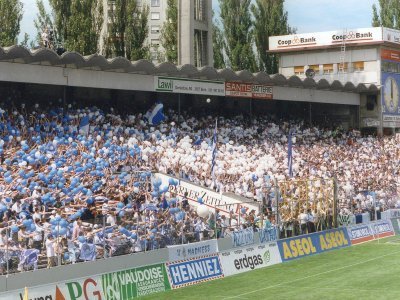
- Football: Home ground to FC Stade Lausanne Ouchy and formerly FC Lausanne-Sport, the stadium is a focal point of local and national football culture (FC Lausanne-Sport).
- Athletissima: Annual host of the Athletissima athletics meeting, a prestigious stop on the Diamond League circuit, attracting global athletic talent (Diamond League).
Cultural Events
- Concerts: The stadium has welcomed international superstars such as Pink Floyd, Michael Jackson, and The Rolling Stones, cementing its reputation as a leading cultural stage (Setlist.fm).
- Community Gatherings: The open, democratic design enables festivals, public celebrations, and civic events, fostering a sense of collective identity for Lausannois.
Stadium Capacity & Facilities
- Current Capacity: 15,700 all-seated (reduced from the original 30,000+ for improved comfort and safety) (Stadium Guide).
- Layout: Classic oval with an athletics track, covered main stand, and open seating.
- Amenities: Grass training pitches, modern locker rooms, media and hospitality suites, accessible seating, and cashless food & beverage kiosks (Athletissima).
- Accessibility: Ramps, elevators, designated seating, and restrooms for visitors with reduced mobility.
Current Uses and Events
Football
The stadium is the home ground for FC Stade Lausanne Ouchy, competing in the Swiss Super League (Wikipedia), and hosts regular league and cup matches.
Athletics
Athletissima, a major Diamond League meet, draws world-class athletes each summer. The 50th edition takes place August 20, 2025, before the event moves to the renovated Stade Pierre-de-Coubertin (Athletissima).
Concerts & Community Use
While large concerts are less frequent today, the stadium remains a destination for community sports, school events, and local gatherings (Lausanne City).
Visiting Hours, Tickets & Guided Tours
- Visiting Hours: Open during event days—the stadium is not generally accessible to the public outside of scheduled events. For guided tours, check Lausanne Tourisme or the FC Stade Lausanne Ouchy website for availability.
- Tickets: Purchase online via official club or event organizer sites, or at the stadium box office on event days. Prices range from CHF 15–50 for football, CHF 20–100 for Athletissima, with early-bird discounts and event-linked public transport included for some events (Athletissima).
- Guided Tours: Occasional tours are organized by local tourism and heritage groups. Book in advance and verify schedules (Lausanne Tourisme).
Accessibility & Visitor Services
- Wheelchair Access: Ramps, elevators, and accessible seating are available.
- Food & Drink: Cashless kiosks throughout the venue.
- Restrooms & Services: Modern facilities, merchandise stands, and assistance upon request.
- Parking: Limited on-site; use public transit on event days for convenience.
Getting There: Location & Transport
- Address: Rte des Plaines-du-Loup 7, 1018 Lausanne.
- Public Transport:
- Bus Line 1: Direct from main station/city center to “Stade Olympique.”
- Bus Lines 20 & 21: Nearby stops “Stade Olympique” and “Beau-Site.”
- Walking: 20–25 min from city center.
- Parking: INOVIL Riponne car park; shuttle buses provided during major events (Athletissima).
Nearby Attractions
- Parc de Milan: Scenic park for relaxation pre- or post-event.
- Olympic Museum: A short distance away, ideal for sports history buffs.
- Historic Old Town: Explore Lausanne’s city center, museums, and cafes (Lausanne Tourisme).
- Accommodation: Multiple hotels and guesthouses are located within easy reach.
Redevelopment Vision and Urban Planning
Lausanne has committed to preserving and transforming the stadium as part of a visionary redevelopment project that integrates housing, green spaces, and public amenities (thestadiumbusiness.com). Key features include:
- Mixed-Use Development: Over 3,000 new homes, community spaces, and commercial outlets (24heures.ch).
- Adaptive Reuse: Conversion of stands into libraries, schools, and cultural venues.
- Green Spaces: Central field to become a major public park and biodiversity area.
- Heritage Preservation: Retention of the stadium’s oval form and key architectural features.
- Timeline: Design competition in 2025–2026, with construction expected 2028–2029, following Athletissima’s relocation.
Frequently Asked Questions (FAQ)
Q: What are the visiting hours?
A: The stadium is open during scheduled events; otherwise, access is limited. Guided tours are available occasionally—check official sources for details.
Q: How do I buy tickets?
A: Tickets are sold online through official club/event websites or at the box office during events.
Q: Is the stadium wheelchair accessible?
A: Yes, with ramps, elevators, and designated seating.
Q: What public transport options are available?
A: Bus line 1 from the city center, plus bus lines 20 and 21.
Q: What changes are planned for the stadium?
A: The stadium will be preserved and adapted for mixed uses, community spaces, and green areas.
Listen to the full story in the app
The whole Stade Olympique De La Pontaise,
told well.
Audio guides for 1,100+ cities across 96 countries. History, stories, and local insight — offline ready.
Verified, and shown.
Researched and written by the Audiala editorial team from historical records, architectural archives, and local expertise.
Researched from Wikidata, Wikipedia & official sources · fact-checked · How we make our guides →