La Chaux-De-Fonds
Switzerland Updated May 2026
Karl Marx called it a "huge factory-town" in Das Kapital, which is not how most Swiss cities want to be remembered. But La Chaux-de-Fonds, perched at nearly 1,000 metres in the Jura Mountains a few kilometres from the French border, wears the label proudly. This is the world capital of watchmaking, a UNESCO city in Switzerland laid out like graph paper so every workshop window could catch the morning light.

- Attractions
- 8
- Audio
- 56 min
- Trip length
- 1-2 days
- Best season
- Late spring to early autumn (May–September)
Why La Chaux-De-Fonds
Built from cited sources · see the method · How we make our guides →
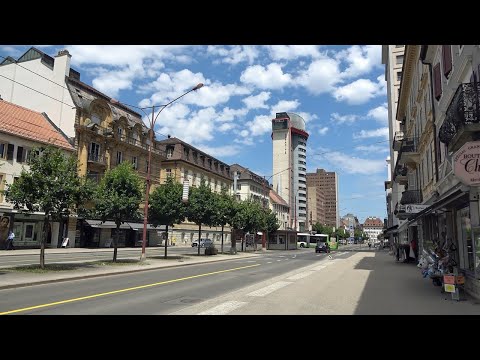
A fire on the night of 5 May 1794 burned the old town to the ground. What replaced it was stranger than reconstruction — a rational chequerboard of parallel streets, most buildings facing southeast, designed so watchmakers could work by daylight in their upper-floor ateliers. UNESCO inscribed the grid in 2009, together with neighbouring Le Locle, under the awkward but accurate name "Watchmaking Town Planning."
The city produced an unlikely roster of sons. Le Corbusier was born here in 1887 as Charles-Édouard Jeanneret-Gris, and he built his first houses on these streets before leaving for Paris. Louis Chevrolet, the carmaker, came from here too, as did the poet Blaise Cendrars. Walk the hillside above the centre and you can still find the early Jeanneret villas — Villa Fallet, Villa Stotzer, the Maison Blanche he designed for his parents — tucked into a slope that quietly explains where modernism began.
Pocket watches were being made here by 1664, and the rhythm of precision work still shapes the place. The Musée International d'Horlogerie on Rue des Musées holds the deepest collection of timepieces anywhere, which is exactly what you would expect and somehow still more than you are ready for. The light, at this altitude, is unusually clear. You understand quickly why people chose to do delicate work here.
World Capital of Watchmaking
UNESCO inscribed the entire street grid in 2009 as 'urbanisme horloger' — a whole town built so workshop windows could catch southeast light. Karl Marx name-checked it in Das Kapital as a factory-town in disguise.Le Corbusier's Hometown
Charles-Édouard Jeanneret was born here in 1887, and his first commissions still stand on the hillside: Villa Fallet, Villa Stotzer, Villa Schwob, and the Maison Blanche he built for his parents in 1912.The Chequerboard Rebuild
After a fire gutted the town on the night of 5 May 1794, the survivors didn't rebuild the old lanes. They drew a rectangle on the snow and laid the streets in parallel strips, the first European city replanned for industrial light.A City at 1,000 Metres
Sitting at roughly 992 metres in the Jura, this is one of the highest cities in Europe. Winters bite, snow lingers into April, and the surrounding forests have produced everything from absinthe to the oldest human skeleton ever found in Switzerland.
Plan your trip
Before you go
- Getting There
- Closest hubs are EuroAirport Basel-Mulhouse-Freiburg (BSL/MLH) about 90 minutes north and Geneva Airport (GVA) roughly two hours southwest; Zurich (ZRH) sits three hours east. Trains run hourly from Neuchâtel to La Chaux-de-Fonds station in 28 minutes, with direct services from Bern and Biel. The A20 motorway tunnels up from Neuchâtel through the Vue-des-Alpes.
- Getting Around
- The compact grid is walkable end to end in 25 minutes. Transports Régionaux Neuchâtelois (transN) runs the local bus network plus a single tram-like line to Le Locle, and as of 2026 overnight stays include a free Neuchâtel Tourist Card covering all public transport in the canton. The Watch Valley between La Chaux-de-Fonds and Le Locle is also a designated cycling corridor.
- Climate & Best Time
- The altitude makes this the coldest city in Switzerland: winters average -2°C to 3°C with reliable snow from December through March, summers stay a temperate 18°C to 24°C, and shoulder seasons hover between 8°C and 15°C. Visit June through September for the museums and Le Corbusier walking tours, or late January for the Biennale du Patrimoine Horloger when watchmakers open their workshops.
- Language & Currency
- French is the working language; English is fluent in museums and most hotels, less so in older cafés. Switzerland uses the Swiss franc (CHF), and while euros are often accepted at hotels the change comes back in francs at a poor rate — pay in CHF or by card.
Who lived here
-
Architect · 1887–1965
Le Corbusier (Charles-Édouard Jeanneret-Gris)
Born here, lived until 1917
The most influential architect of the 20th century learned to draw at the local Art School, then built four houses on the hillsides above his hometown before leaving for Paris. La Maison Blanche, designed for his parents in 1912, is the first building he ever signed alone. He left in 1917 and barely came back — the grid town that shaped his obsession with rational planning rarely got a nostalgic word from him.
-
Racing driver and car manufacturer · 1878–1941
Louis Chevrolet
Born here in 1878
The man whose name still sits on millions of American cars was born to a Swiss watchmaker in the grid town and emigrated as a young mechanic. He co-founded Chevrolet Motor Company with William Durant in Detroit in 1911, then lost control of the brand and died nearly broke. The watchmaker's son who built engines — there is a small museum-corner devoted to him in the MIH.
-
Poet and novelist · 1887–1961
Blaise Cendrars (Frédéric-Louis Sauser)
Born here in 1887
Born the same year as Le Corbusier and in the same town, Cendrars became one of the great modernist travellers of French literature — riding the Trans-Siberian, losing an arm in the First World War, writing Moravagine and L'Or. He hated provincial Switzerland and ran away as a teenager. The grid town shows up in his work mostly as the thing he was escaping.
Where to Eat
Where locals actually book dinner — not the tourist menus.
Insider tips
Small things that change how the city treats you.
MIH First, Always
Start at the Musée International d'Horlogerie before anything else — its collection of 4,500+ timepieces frames why the rest of the city looks the way it does. Allow at least two hours; the underground galleries swallow time.South-Facing Streets
The grid was laid out so workshops faced southeast for daylight. Walk Rue Léopold-Robert mid-morning to see the same low winter light that watchmakers built their windows around.Dress For 1,000 Metres
At nearly 1,000 m altitude, La Chaux-de-Fonds is one of Europe's highest cities and routinely 5–8°C colder than Neuchâtel down on the lake. Bring a layer even in July.Book La Maison Blanche
Le Corbusier's first independent commission (1912, built for his parents) is open only on limited afternoons and requires advance booking. Walk-ups are routinely turned away.Pair With Le Locle
The UNESCO inscription covers both towns, and trains run every 30 minutes (8 minutes' ride). Le Locle's Château des Monts watchmaking museum complements the MIH rather than duplicating it.Eat Jura, Not Fondue
Skip the generic Swiss-cliché menus on the main square. Look for saucisse neuchâteloise, tête de moine, and absinthe-laced desserts — the Val-de-Travers, fifteen kilometres west, is the spirit's birthplace.Avoid Sunday Mornings
Most museums open at 10:00 and many shops stay shut all Sunday. Plan Sunday for walking the grid and the Bois du Petit-Château park instead.


Frequently asked
Is La Chaux-de-Fonds worth visiting?
Yes, if you care about watches, architecture, or urban history — the entire city is a UNESCO World Heritage Site, inscribed in 2009 for its watchmaking town planning. It's an unusual stop: industrial rather than picturesque, with a rational grid that Karl Marx flagged in Das Kapital as a model of division of labour. Skip it if you're chasing alpine postcards.
How many days do I need in La Chaux-de-Fonds?
One full day covers the essentials: the Musée International d'Horlogerie, a Le Corbusier walk, and a wander through the grid. Two days lets you add Le Locle, the Fine Arts Museum, and a workshop visit. Watch enthusiasts could easily fill three.
Why is La Chaux-de-Fonds a UNESCO site?
It was inscribed in 2009, together with Le Locle, as an outstanding example of mono-industrial urban planning. After the 1794 fire, the town was rebuilt on a rigid rectangular grid designed entirely around watchmaking — south-facing workshops, parallel housing strips, daylight on every workbench. The cityscape itself, not a monument inside it, is the heritage.
Who was born in La Chaux-de-Fonds?
Le Corbusier (Charles-Édouard Jeanneret) in 1887, carmaker Louis Chevrolet in 1878, and writer Blaise Cendrars in 1887. The city's identity as a workshop town shaped all three — Le Corbusier trained at the local Art School before reinventing modern architecture.
How do I get to La Chaux-de-Fonds from Zurich or Geneva?
From Zurich, take the train via Biel/Bienne; about 2 hours 15 minutes. From Geneva, change at Neuchâtel; about 1 hour 45 minutes. The final climb from Neuchâtel up the Jura escarpment is a scenic rack-style ascent that gains roughly 550 metres in 28 minutes.
Is La Chaux-de-Fonds expensive?
Cheaper than Zurich or Geneva but still Swiss. Expect 25–35 CHF for a casual lunch, 18–25 CHF for museum entry, and 120–180 CHF for a mid-range hotel. The MIH plus Beaux-Arts combined ticket saves a few francs if you do both.
What's the best time to visit La Chaux-de-Fonds?
Late May through September. The city sits at almost 1,000 metres and winters are long, grey, and snowy — beautiful if you ski, brutal if you don't. June offers the cleanest light for photographing the grid; September brings the Plage des Six Pompes street arts festival.
Pick up where you left off
Saved and recently read places — kept on this device only.