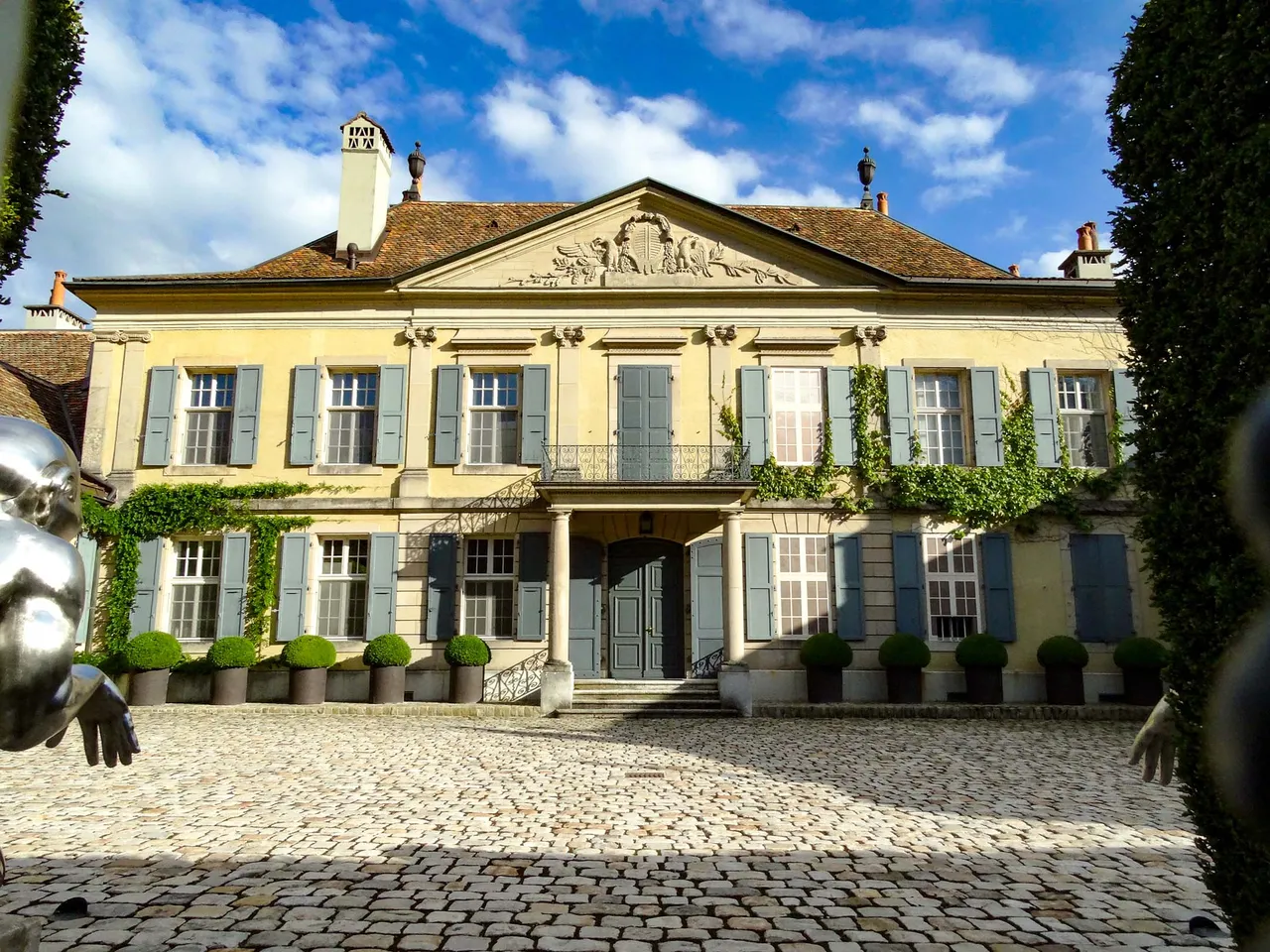
Gilly

Switzerland Verified Aug 2026

The first surprise in Gilly, Switzerland, is the light. It arrives three ways—direct sun, the mirror flash of Lake Geneva, and heat radiating back from stone vineyard walls—and it gives a quiet village lane an almost Mediterranean charge. The second surprise is how few people leave the main road to feel it. Gilly sits in the La Côte wine region a few kilometers from Rolle, yet it behaves like a place that belongs to the vines rather than to the tourist circuit.

Gilly, Switzerland
Attractions
7
Trip length
2-3 days
Best season
Spring (April–May) and autumn (September–October)

Why Gilly

Built from cited sources · see the method · How we make our guides →

Wine is the reason Gilly exists. The slopes above the village belong to a vineyard landscape running west along Lake Geneva, shaped by the same Cistercian logic—stone walls, gravity, patience—that built the terraces further east at Lavaux. From the local picnic area the view opens in one sweep: vines in the foreground, the lake a sheet of hammered silver, the Alps stacked behind.

Beyond the village, the landscape offers sharper moods. Château de Rolle, a 13th-century fortress on the lake shore, is closed to visitors but worth circling for its odd silhouette and the noticeboard listing concerts and markets. The Col du Marchairuz climbs to 1,449 meters with gradients hitting 12 percent, while the Toblerones Trail leads past 1939 anti-tank barriers that really do resemble chocolate bars, beside water the color of celadon.

Gilly will not ask for your attention. That refusal is the point: in a country that commercializes beauty efficiently, this small municipality stays loose, quiet, and a little wild at the edges. You come for the view and stay because the village lets the landscape do the talking.

  • La Côte Without the Crowds

    Gilly sits in the La Côte AOC, a slope of Chasselas and Gamay vines rolling toward Lake Geneva. You get the same stonewalled vineyard drama as Lavaux, minus the tour buses.
  • Toblerones Trail

    Walk along a river the colour of celadon, past jagged concrete tank barriers from the 1939–45 Swiss mobilization. The barriers really do look like Toblerone bars, and the trail is easy enough for kids.
  • Château de Rolle

    A 13th-century fortress right on the lakeshore. You can't go inside, but the garden and the promenade give you the postcard angle, and the noticeboard lists events.
  • Col du Marchairuz

    A mountain pass at 1,449 m with tree-shaded road and light traffic. The climb from Bassins is 800 m of elevation gain, with stretches hitting 12% grade.

Plan your trip

Before you go

Getting There
Geneva Airport (GVA) sits about 50 km southwest and is the closest major hub; Zurich Airport (ZRH) is roughly 250 km northeast. Gilly has its own SBB station on the Geneva–Lausanne line, with trains to Lausanne in 25–30 minutes and Geneva in 45–60 minutes. By car, leave the A1/E25 motorway at the Rolle exit and follow local signs uphill to Gilly.
Getting Around
Gilly has no metro or tram: the village is small enough to cross on foot, and most of what you'll want is up or down the vineyard slope. SBB regional trains stop at Gilly station, while post buses fan out from Rolle to nearby villages. Cycling the vineyard lanes is the real pleasure, but the hills are honest; a Swiss Travel Pass covers most trains and buses, and Mobilis Vaud day passes cover the wider Lausanne–La Côte zone.
Climate & Best Time
Spring (Mar–May) runs 7–18°C with blossom and rain; summer (Jun–Aug) 18–28°C, occasionally touching 30°C, and peak visitors July–August. Autumn (Sep–Nov) cools 6–17°C, with harvest and clearer spells; winter (Dec–Feb) sits -1 to 5°C, wet snow and frost. Late May to early June and September to mid-October give you vine growth, fewer people, and walking light.
Language & Currency
Gilly is francophone: French is essential for daily life, though tourist-facing staff often speak English. The currency is the Swiss franc (CHF); cards are accepted widely, but small village caveaux and farm stalls may want cash. A few francs in pocket save you on Sunday.
Safety
Violent crime is virtually absent. The real hazards are rural: narrow vineyard roads with farm traffic, sudden weather at Col du Marchairuz, and lake currents off Rolle; swim only at supervised beaches. Carry water uphill.

Where to Eat

Where locals actually book dinner — not the tourist menus.

  • Chasselas de La Côte

    The white wine that built these terraces. Light, mineral, and gently floral, it is made to drink young by the lake with perch or a board of local cheese.

  • Filets de perche du Léman

    Lake perch fillets in butter and lemon. Many kitchens import perch to meet demand, so ask if yours is genuinely from Lac Léman; the honest answer is often no.

  • Papet vaudois

    A leek and potato purée cooked until soft and topped with a Saucisson vaudois. It's autumn comfort food, the sort of dish that makes sense after a cool vineyard walk.

  • Taillé aux greubons

    A crispy puff pastry riddled with pork cracklings. Vaud bakeries sell it by the slab, and it's dangerously good with an afternoon glass of Chasselas.

  • Tomme vaudoise

    A small, creamy cow's milk cheese with a bloomy rind, produced in the Vaud countryside. It's delicate, slightly mushroomy, and disappears faster than you expect.

  • Fondue moitié-moitié

    Half Gruyère, half Vacherin Fribourgeois, melted with white wine and garlic. After a cold descent from the Col du Marchairuz, a pot of it in a mountain inn is the right answer.

  • Meringues double crème de Gruyère

    Technically from Fribourg, but ubiquitous in Vaud. The double cream is so thick it holds a spoon upright; the meringues are crisp and dissolve into sugar.

Insider tips

Small things that change how the city treats you.

  • Catch the three suns

    Walk the terraces in clear morning or late-afternoon light. The three-sun effect—direct sun, lake reflection and heat stored in stone walls—reads best then, and sets you up for better photos.
  • Picnic with local Chasselas

    Buy a chilled bottle of Chasselas or a local wine at a cave, then head to the Place de pique-nique de Gilly. Skip the sit-down tasting rooms and let the lake view do the work.
  • Use the small station

    Regional trains on the Geneva–Lausanne line call at Gilly-Bursinel below the village. Not all services stop there, so check the live timetable before heading up.
  • Time the Marchairuz climb

    If you're cycling the 1,449 m Col du Marchairuz from Bassins, start early and pack water. The 800 m climb hits 12% ramps, though traffic is light and the road surface is good.
  • Shoot Château de Rolle

    The 13th-century Château de Rolle keeps its interior closed to visitors, but its lakefront facade and garden are the real shot. Arrive before 10:00 for fewer people.
  • Escape to Yvoire early

    Yvoire's medieval lanes fill fast in summer. Catch the lake crossing early or after 16:00, and leave time for the 15th-century Saint-Pancrace Church.
  • Say bonjour first

    Vaud is French-speaking, and a quick 'Bonjour' before any request is expected—at the station, the cave or the restaurant. It changes the rest of the exchange.

Frequently asked

Is Gilly worth visiting?

Yes—if you want a quiet La Côte base for vineyards, lakeside villages and Jura cycling rather than a packed sightseeing town. Gilly itself is small, but its position between Rolle, Nyon and the Col du Marchairuz makes a practical launch point. Skip it only if you need nonstop city energy.

How many days do you need in Gilly?

Two to three days is enough for the classic route. Use one day for Lavaux or La Côte vineyard walks, a second for Yvoire by boat or the Col du Marchairuz climb, and a third for the Toblerones Trail with a lakeside picnic. Four days would let you do all of it without rushing.

How do I get to Gilly from Geneva without a car?

Take a regional train on the Geneva–Lausanne line to Gilly-Bursinel station, then walk or book a taxi up into the village. The station is small; not every train stops there, so check live timetables. The journey from Geneva takes under an hour by regional train.

What is the best time of year to visit Gilly?

Spring (April–May) and early autumn (September–October) are best, with dry walking weather, working vines and harvest-season energy. July and August are hotter and busier around Lake Geneva; winter is quiet but some seasonal boats and terraces close. Late September is ideal for grape harvest atmosphere.

Is Gilly expensive?

Yes—Switzerland costs more than most of Europe, and Gilly follows the rule. But it tends to be cheaper as a base than Lausanne or Montreux, and you can control costs by picnicking at Place de pique-nique de Gilly with cave-bought wine, bread and cheese. Book rooms early in summer.

Is Gilly good for cycling?

Yes, if you're ready to climb. The Col du Marchairuz from Bassins serves 800 m of ascent at up to 12% on a well-paved road with light traffic. Casual cyclists should stick to vineyard lanes and lakeside paths rather than the 1,449 m pass.

Can you visit the Lavaux vineyards from Gilly?

Yes. The core Lavaux terraces between Lausanne and Montreux are under an hour away by train or car. Closer to Gilly, the La Côte terraces share the same three-suns effect with far fewer visitors.

What can you do in Gilly with kids?

Walk the Toblerones Trail, where WWII anti-tank barriers shaped like chocolate bars line a gentle river path. Add the picnic area in Gilly for open space and lake-and-Alps views, and keep the day short rather than forcing the Marchairuz climb.

All Places to Visit.

4 places to discover

Vincy Castle
Place

Vincy Castle

Beaulieu
Place

Beaulieu

Farmhouse No. ECA 148
Place

Farmhouse No. ECA 148

Place

Château De Saint-Vincent

Photo credits (4)
  1. Karte Gemeinde Gilly — Tschubby — CC BY-SA 3.0 (https://creativecommons.org/licenses/by-sa/3.0/) — Source: https://commons.wikimedia.org/wiki/File:Karte_Gemeinde_Gilly.png
  2. Gilly - Maison de commune — Pymouss — CC BY-SA 3.0 (https://creativecommons.org/licenses/by-sa/3.0/) — Source: https://commons.wikimedia.org/wiki/File:Gilly_-_Maison_de_commune.jpg
  3. Karte Gemeinde Gilly 2008 — Tschubby — CC BY-SA 3.0 (https://creativecommons.org/licenses/by-sa/3.0/) — Source: https://commons.wikimedia.org/wiki/File:Karte_Gemeinde_Gilly_2008.png
  4. Karte Gemeinde Gilly 2007 — Tschubby — CC BY-SA 3.0 (https://creativecommons.org/licenses/by-sa/3.0/) — Source: https://commons.wikimedia.org/wiki/File:Karte_Gemeinde_Gilly_2007.png

Photos may have been resized or cropped.