Plan and listen to Broken Chair with Audiala.
Audio guide in your pocket, itinerary in your browser. Built for the way you actually visit.
Introduction
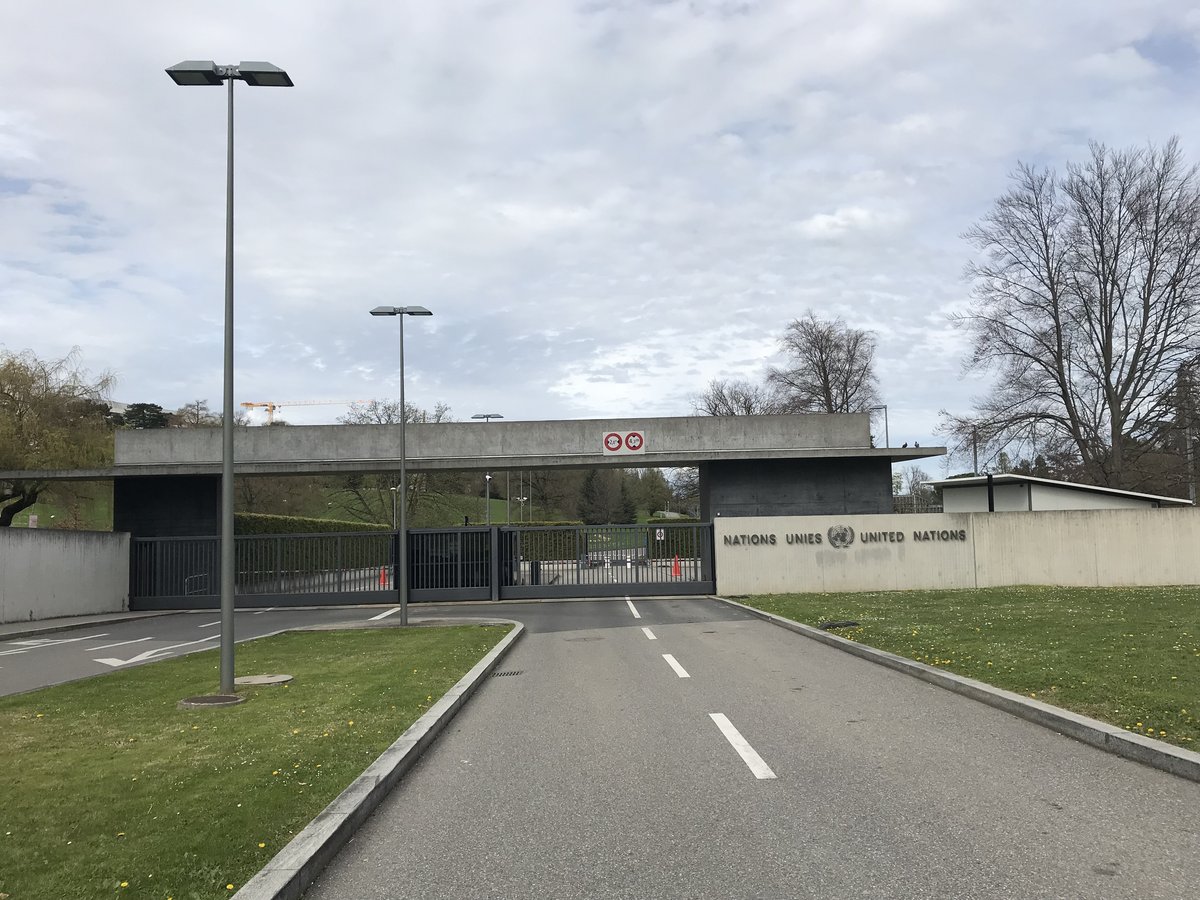
Nestled in the heart of Geneva, Switzerland, Place des Nations, or Nations Square, stands as a monumental symbol of international cooperation and diplomacy. This iconic site is home to the United Nations Office at Geneva (UNOG) and numerous other UN agencies, making it a bustling hub of international activity. The history of Place des Nations dates back to the aftermath of World War I when the League of Nations, the precursor to the United Nations, was established in 1920. Geneva's tradition of neutrality and humanitarian efforts made it the ideal location for the League's headquarters, which later evolved into the Palais des Nations, the main building at Place des Nations (UN, UNOG).
Today, Place des Nations is not only a site of historical significance but also a vibrant center for global diplomacy, hosting organizations like the World Health Organization (WHO) and the International Labour Organization (ILO). Visitors to Place des Nations can explore its rich history, admire its stunning architecture, and enjoy various nearby attractions. This comprehensive guide will provide you with all the essential information, including visiting hours, ticket prices, travel tips, and more, to ensure a memorable visit. Whether you're a history enthusiast, architecture lover, or simply curious about international relations, Place des Nations offers something for everyone.

Discover the History and Significance of Place des Nations in Geneva
Early Beginnings and the League of Nations
The story of Place des Nations begins in the aftermath of World War I. The devastation and loss of life spurred a global movement to prevent future conflicts, leading to the creation of the League of Nations in 1920, the precursor to the United Nations. Geneva, with its history of neutrality and humanitarian tradition, was chosen as the seat of the League. A competition was held to design a 'palace' to house the organization, and a site in Ariana Park, overlooking the city and Lake Geneva, was selected.
The Palais des Nations and its Expansion
Construction of the Palais des Nations, the main building at Place des Nations, began in 1929 and was completed in 1938. The building, designed in a neoclassical style, was intended to reflect the grandeur and importance of the League's mission. However, the League of Nations ultimately failed to prevent World War II. After the war, the UN was established in 1945, inheriting the Palais des Nations as its European headquarters in 1946.
Over the decades, the UN's presence in Geneva grew significantly, necessitating the expansion of the Palais des Nations. Several new wings and buildings were added, including the Assembly Hall, the largest room in the complex, which can accommodate over 2,000 people.
A Hub for International Diplomacy
Today, Place des Nations is a bustling center of international activity. It hosts numerous UN agencies and organizations, including the World Health Organization (WHO), the International Labour Organization (ILO), and the Office of the High Commissioner for Human Rights (OHCHR).
Visitor Information
Visiting Hours
Place des Nations is open to visitors from Monday to Friday, 8:30 AM to 5:00 PM.
Ticket Prices
Entry to Place des Nations is free, but guided tours may have associated costs.
Travel Tips
- Best Time to Visit: Spring and autumn offer mild weather and fewer crowds.
- Public Transport: Easily accessible via Geneva's public transport system; the 'Nations' stop is right in front of the entrance.
- What to Bring: Valid ID for security checks, comfortable walking shoes, and a camera.
Nearby Attractions
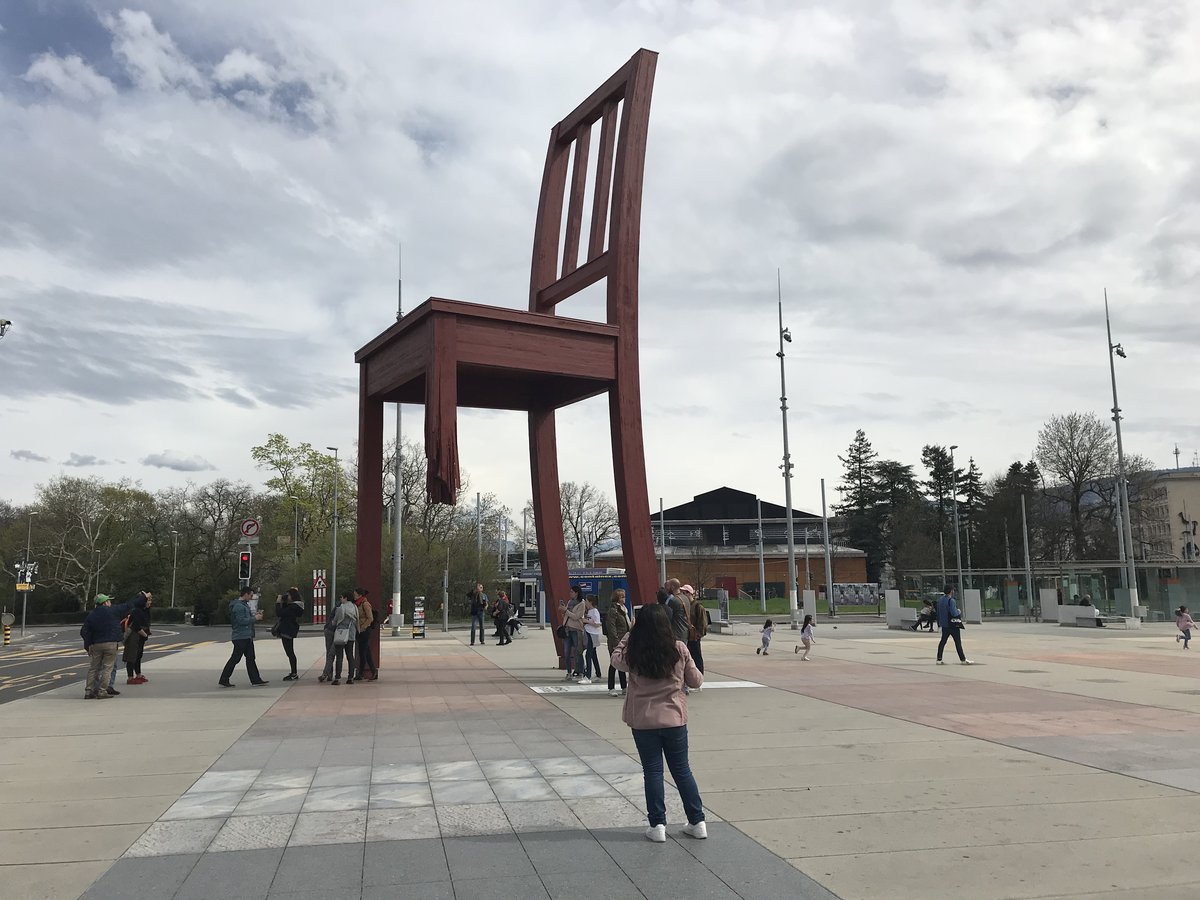
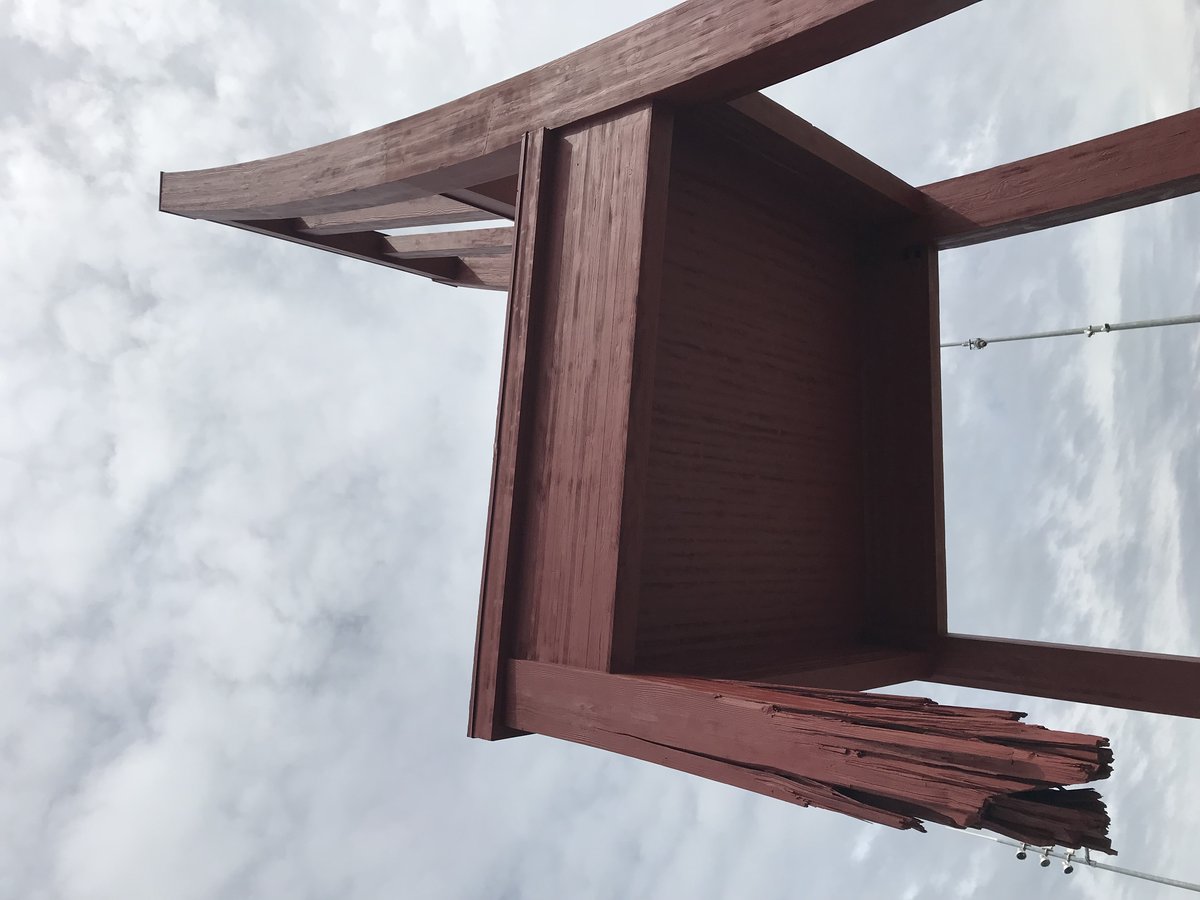
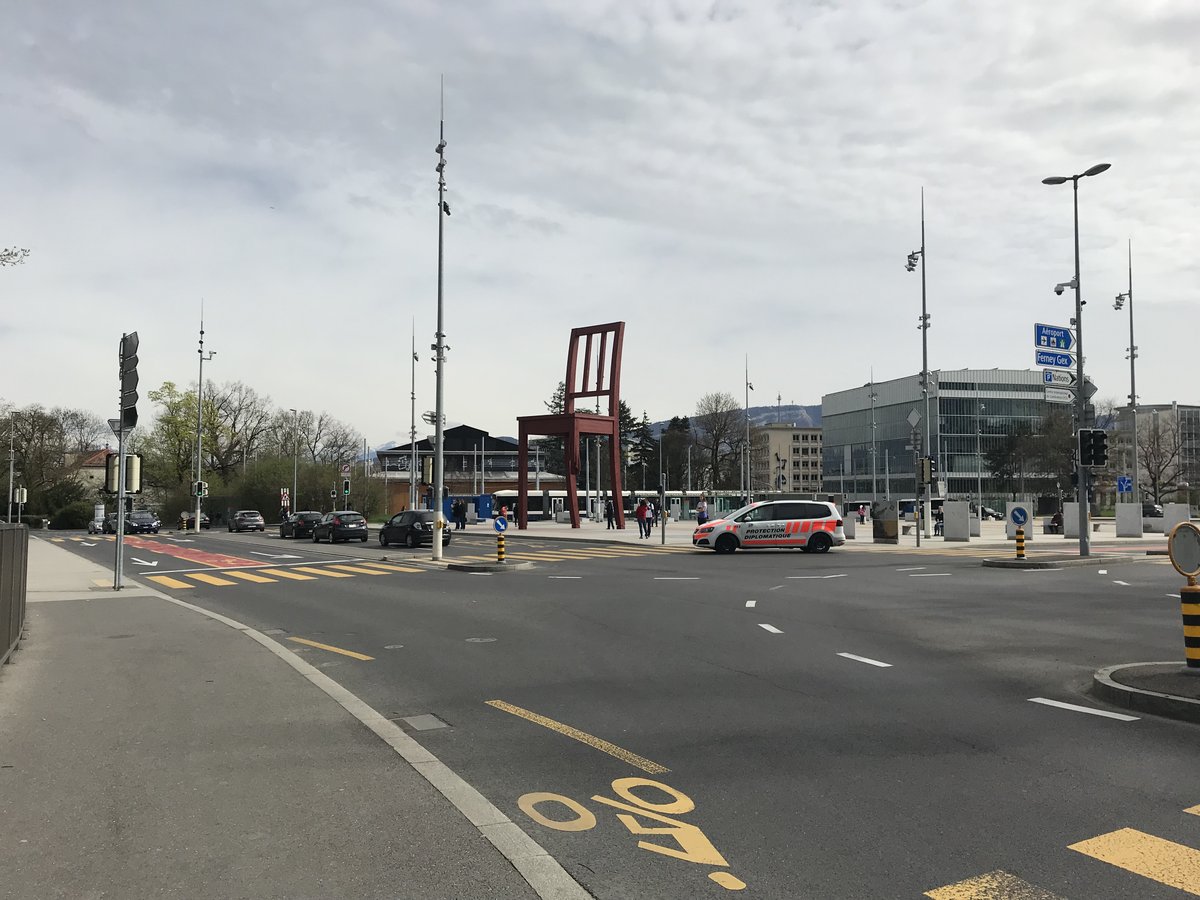
- Broken Chair Sculpture: A powerful symbol of opposition to land mines and cluster bombs, located just outside Place des Nations.
- Ariana Museum: A museum dedicated to ceramics and glass, situated in Ariana Park.
- Lake Geneva: Enjoy a leisurely walk along the lake's beautiful shores.
Accessibility
Place des Nations is wheelchair accessible, with ramps and elevators available throughout the complex.
Special Events and Guided Tours
- Guided Tours: Available in multiple languages, offering insights into the history and functioning of the UN.
- Special Events: Check the official website for upcoming conferences, exhibitions, and public events.
Photographic Spots
- Flag Alley: Capture the colorful display of member state flags lining the entrance.
- Assembly Hall: A must-see for its architectural grandeur and historical significance.
Key Attractions and Landmarks
The Broken Chair Sculpture
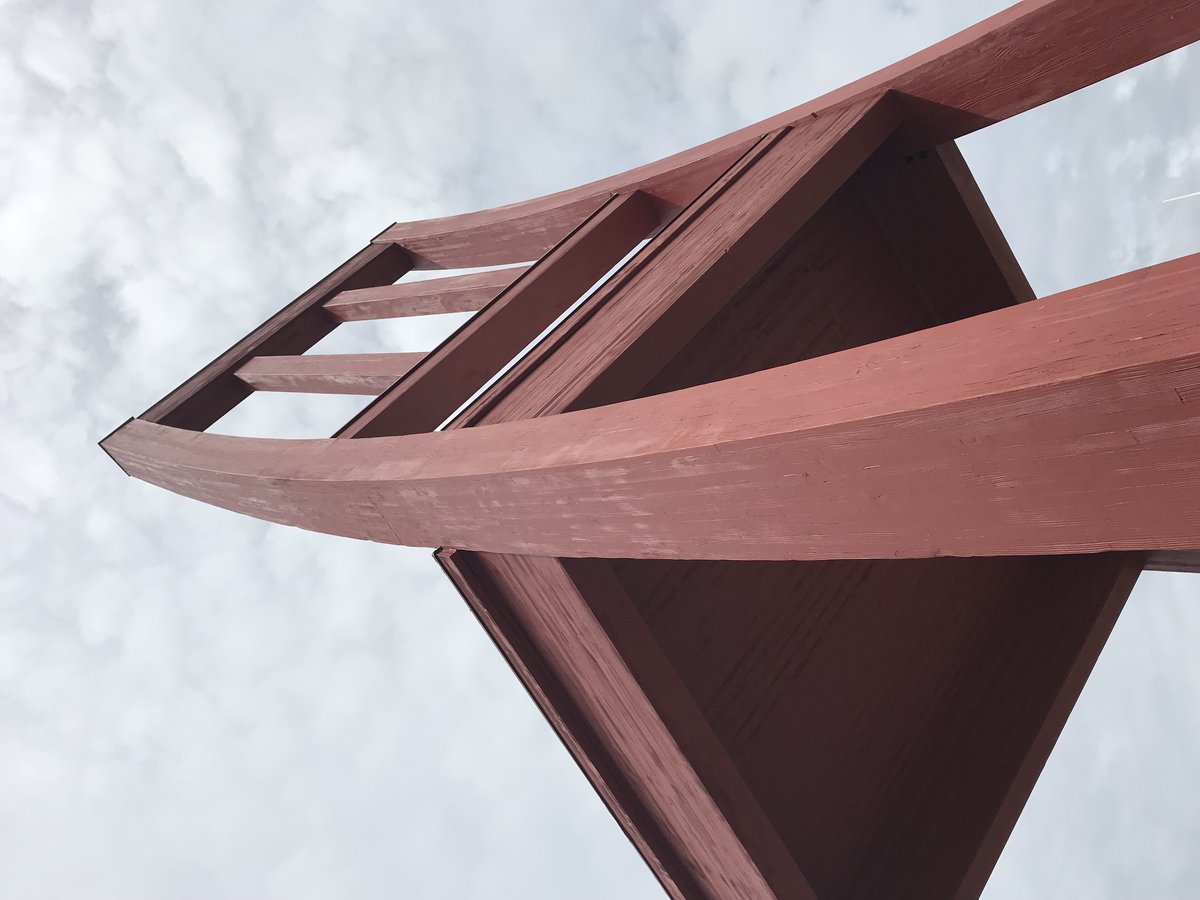
This iconic 12-meter-high sculpture by Daniel Berset stands as a powerful symbol of the fight against landmines and their devastating impact on human life. The chair, with its broken leg, serves as a poignant reminder of the victims of armed conflict and a call to action for peace.
The Celestial Sphere
Donated by the Woodrow Wilson Foundation in 1939, this bronze sphere, originally created for the 1939 New York World's Fair, represents the aspiration for global unity and understanding.
The Fountain
A refreshing centerpiece of the Place des Nations, the fountain provides a tranquil spot for reflection amidst the bustling international environment.
Monument to the Abolition of Slavery
This thought-provoking monument commemorates the struggle against slavery and serves as a reminder of the importance of human rights and dignity.
Flags of Member States
A colorful display of the flags of all 193 UN member states lines the Place des Nations, symbolizing the organization's global reach and the interconnectedness of nations.
Palais des Nations
While not strictly a monument, the Palais des Nations itself is a historical and architectural landmark. Originally built for the League of Nations, this grand building now houses the UN Office in Geneva and offers guided tours providing insights into the UN's work.
Museum of the History of Science
Located near the Place des Nations, this museum offers a fascinating journey through the history of scientific discovery and innovation.
International Red Cross and Red Crescent Museum
A short distance from the Place des Nations, this museum offers a moving and informative experience, exploring the history and humanitarian work of the Red Cross and Red Crescent Movement.
Ariana Park
Adjacent to the Place des Nations, Ariana Park provides a serene escape from the city bustle. Visitors can enjoy leisurely walks, admire the park's diverse flora, or visit the Musée Ariana, which houses a renowned collection of ceramics and glass.
Geneva Botanical Garden
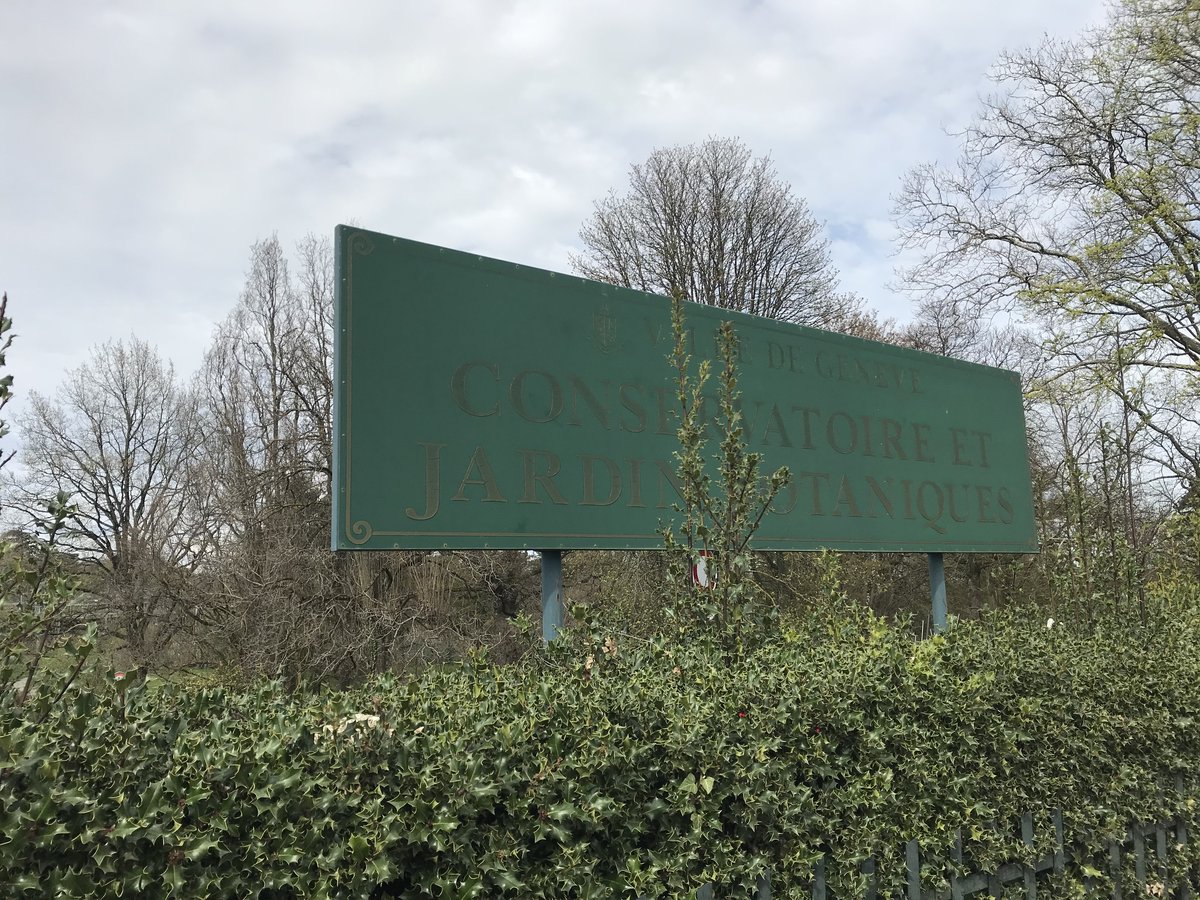
A short distance from the Place des Nations, the Geneva Botanical Garden offers a tranquil oasis showcasing a diverse collection of plants from around the world.
Events and Tours
The Salle des Pas Perdus
This impressive hall, with its soaring ceilings and intricate mosaics, is where many important UN events and ceremonies take place.
The Assembly Hall
While not always open to the public, the Assembly Hall is the heart of the UN's decision-making process. If possible, try to catch a glimpse of this historic space.
Photography and Souvenirs
Security
Expect airport-style security checks at the entrance. Arrive early to allow ample time for security clearance.
Photography
Photography is permitted in most areas of the Place des Nations for personal use. However, flash photography and tripods may be restricted in certain areas.
Food and Drinks
A cafeteria and restaurant are available on-site, offering a variety of food and beverage options.
Souvenirs
The UN Gift Shop offers a selection of souvenirs, books, and gifts related to the UN and its work.
FAQ
Common Questions
-
What are the visiting hours for Place des Nations?
- Place des Nations is open from Monday to Friday, 8:30 AM to 5:00 PM.
-
How can I buy tickets for Place des Nations?
- Entry is free, but guided tours may have associated costs.
-
What are the main attractions near Place des Nations?
- Nearby attractions include the Broken Chair Sculpture, Ariana Museum, and Lake Geneva.
-
Is the Place des Nations accessible to people with disabilities?
- Yes, the Place des Nations is fully accessible, with ramps, elevators, and accessible restrooms available throughout the complex.
-
Can I take photos at the Place des Nations?
- Yes, photography is allowed in most areas for personal use, but flash photography and tripods may be restricted in certain areas.
-
Are there any food options available on-site?
- Yes, there is a cafeteria and a restaurant offering a variety of food and beverage options.
Tickets & tours.
These are guided options from our partners — same price as booking direct.
Prices are indicative — final pricing and availability are confirmed at checkout. Audiala may earn a commission from bookings made through these links.
Listen to the full story in the app
The whole Broken Chair,
told well.
Audio guides for 1,100+ cities across 96 countries. History, stories, and local insight — offline ready.
Verified, and shown.
Researched and written by the Audiala editorial team from historical records, architectural archives, and local expertise.
Researched from Wikidata, Wikipedia & official sources · fact-checked · How we make our guides →