Jet d’Eau & Lake Geneva
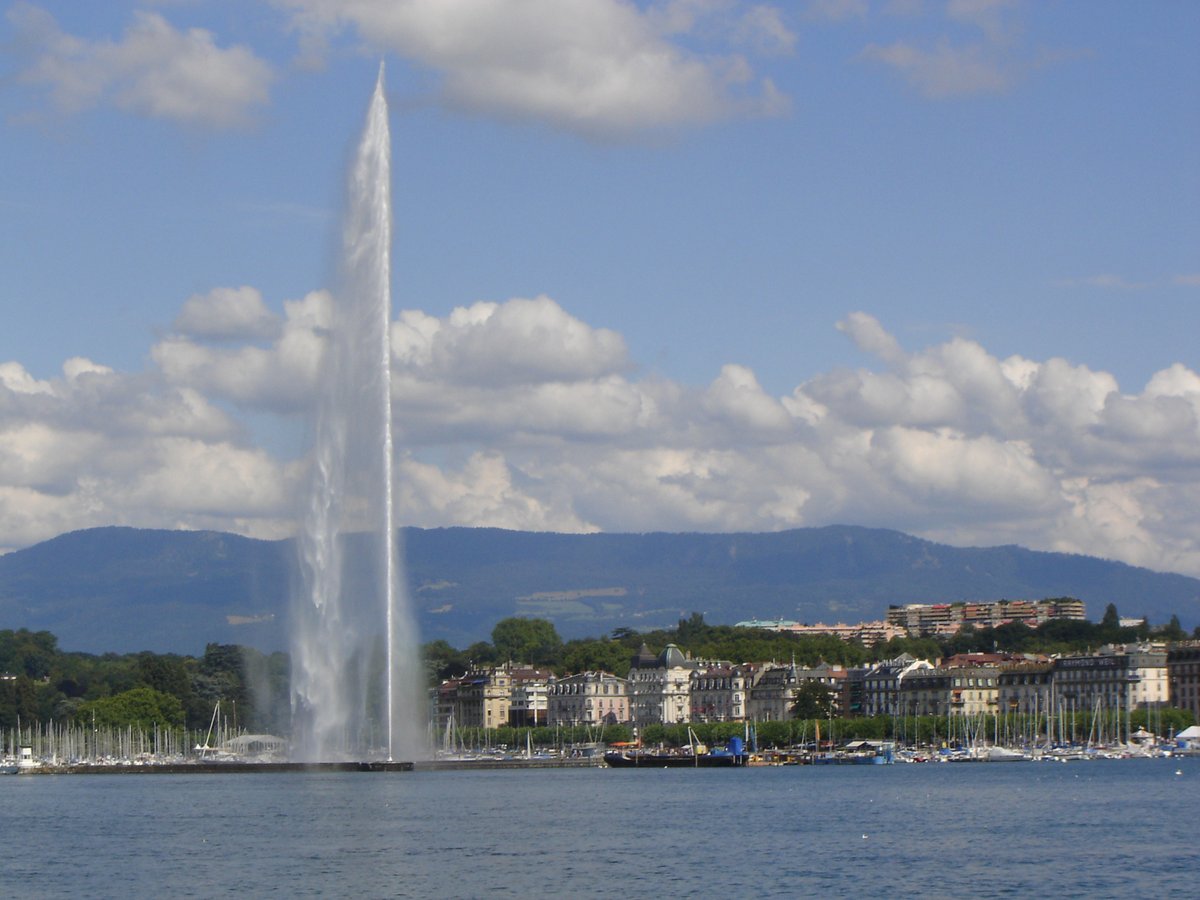
Geneva’s 140-metre water cannon fires 500 litres per second straight into mountain air; stand on Jetée des Eaux-Vives at dusk to watch it catch the sunset while paddle steamers slide past like moving monuments.
Geneva, Switzerland, features a free 80-meter fountain, a 300 AD underground cathedral, and the birthplace of the web. Most sights are free, and the guide covers 117 attractions. September is the best season for a 2–3 day visit.
The first thing that catches you off guard in Geneva, Switzerland is the silence. Not emptiness—this is a city of 200,000 people and the world’s busiest diplomatic crossroads—but a deliberate, almost ceremonial hush inside the tram at rush hour, broken only by the soft clink of a Patek Philippe against the handrail. Then the lake appears, sudden and preposterously blue, flinging a 140-metre jet of water into the wind like a greeting card from the Alps. Geneva doesn’t shout; it murmurs invitations in four languages and lets you decide which one to answer.
 Geneva · Switzerland
Curated from places in this city. Same price as official sites.


Prices shown are indicative — final pricing and availability are confirmed at checkout. Audiala may receive a commission from bookings made via these links.
Researched from Wikidata, Wikipedia & official sources · fact-checked · How we make our guides →
GThe first thing that catches you off guard in Geneva, Switzerland is the silence. Not emptiness—this is a city of 200,000 people and the world’s busiest diplomatic crossroads—but a deliberate, almost ceremonial hush inside the tram at rush hour, broken only by the soft clink of a Patek Philippe against the handrail. Then the lake appears, sudden and preposterously blue, flinging a 140-metre jet of water into the wind like a greeting card from the Alps. Geneva doesn’t shout; it murmurs invitations in four languages and lets you decide which one to answer.
Calvin’s shadow still lengthens across the cobblestones of the Old Town, yet the same streets now echo with Friday-night salsa spilling out of Carouge’s Sardinian arcades. You can breakfast on a cardoon gratin that appears only in December, lunch on Ethiopian injera in the Pâquis, and end the evening clinking glasses of local Chasselas inside a 19th-century pumping station turned techno club. The city keeps its contradictions in delicate balance: humanitarian ideals inside concrete UN bunkers, medieval secrecy inside watchmaking ateliers, and a fierce municipal pride that once defended itself with soup cauldrons and still smashes chocolate ones every December.
Everything worth knowing here is tucked just out of sight. The best lake swim is off a concrete pier where pensioners play pétanque in winter coats. The most radical art is in a converted factory beside a flea market that sells Soviet watches for ten francs. Even the mountains wait politely across the water, visible from almost every street corner but never bragging—until you ride the cable car up the Salève and realize Geneva has been holding the Alps in its breast pocket the whole time.
What makes this place worth slowing down for.
Geneva’s 140-metre water cannon fires 500 litres per second straight into mountain air; stand on Jetée des Eaux-Vives at dusk to watch it catch the sunset while paddle steamers slide past like moving monuments.
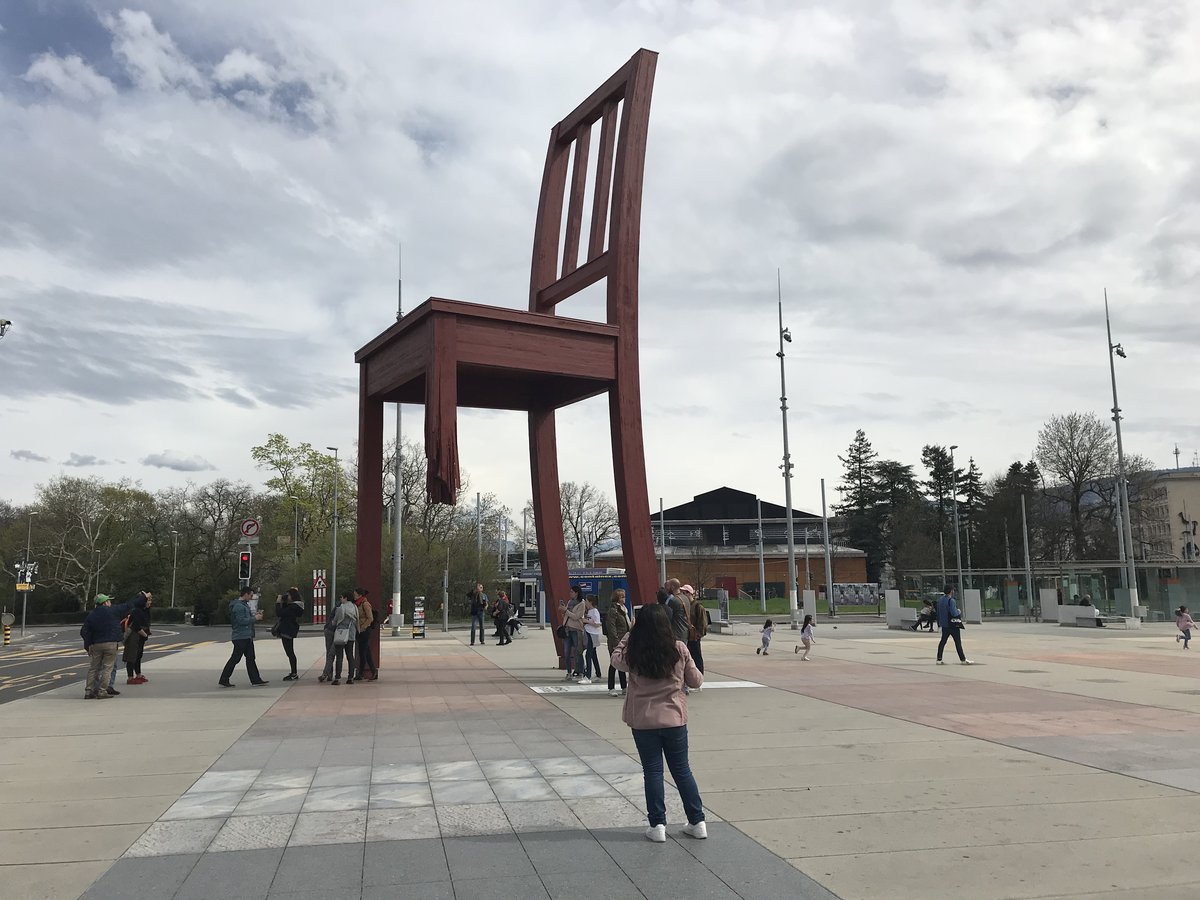
Inside the Palais des Nations you’ll walk 3,000 rooms of living diplomacy beneath José Sert’s 1936 ceiling murals, then step outside to face a 12-metre wooden chair with one leg blown off—an open-air indictment of landmines.
Cross two tram stops south and you’re in a planned 18th-century Piedmont town—arcaded pastel façades, artisan jewellers, Wednesday market smells of fennel sausage, bars humming till 2 a.m.—all technically still Geneva.
Not every monument, just the ones we'd walk you past ourselves.
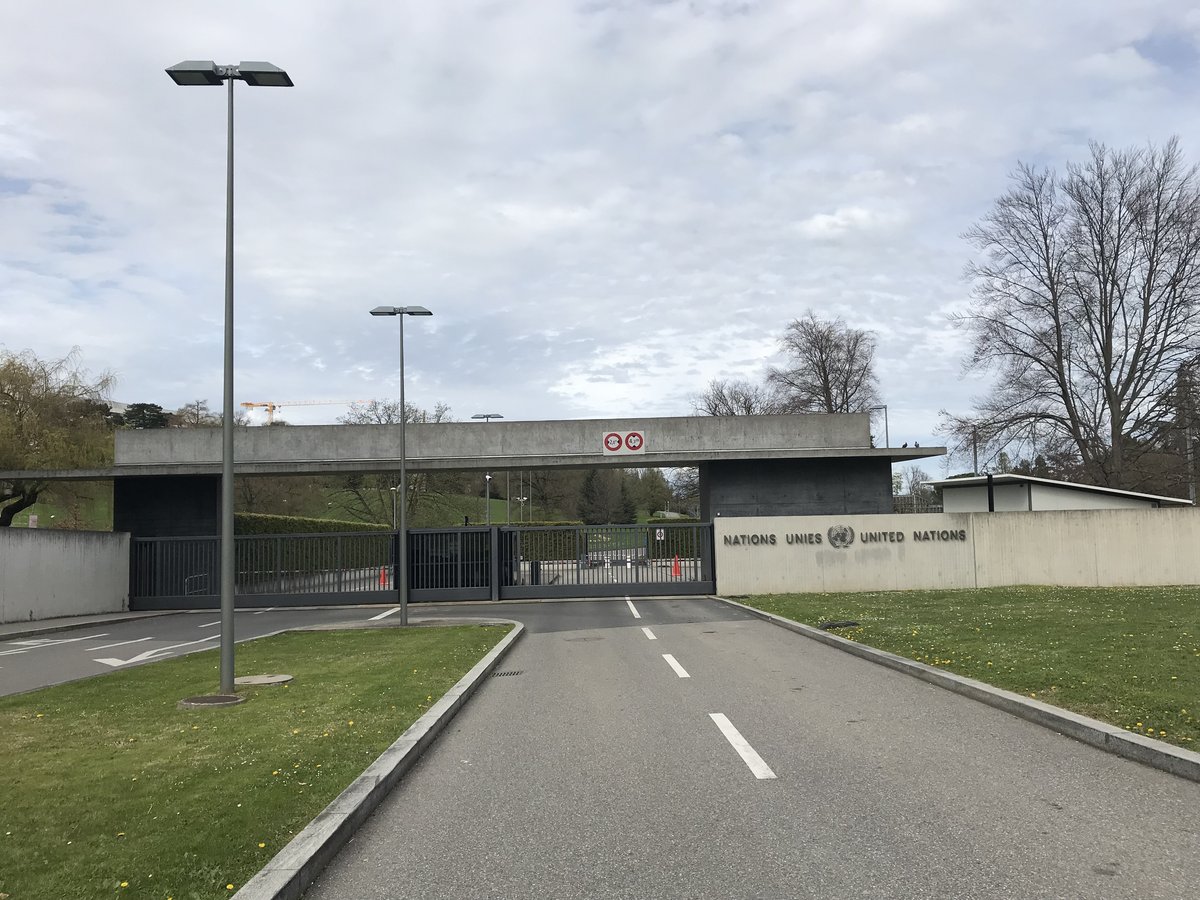
The Palais des Nations, located on the picturesque shores of Lake Geneva in Switzerland, is a monumental symbol of international diplomacy and peace.
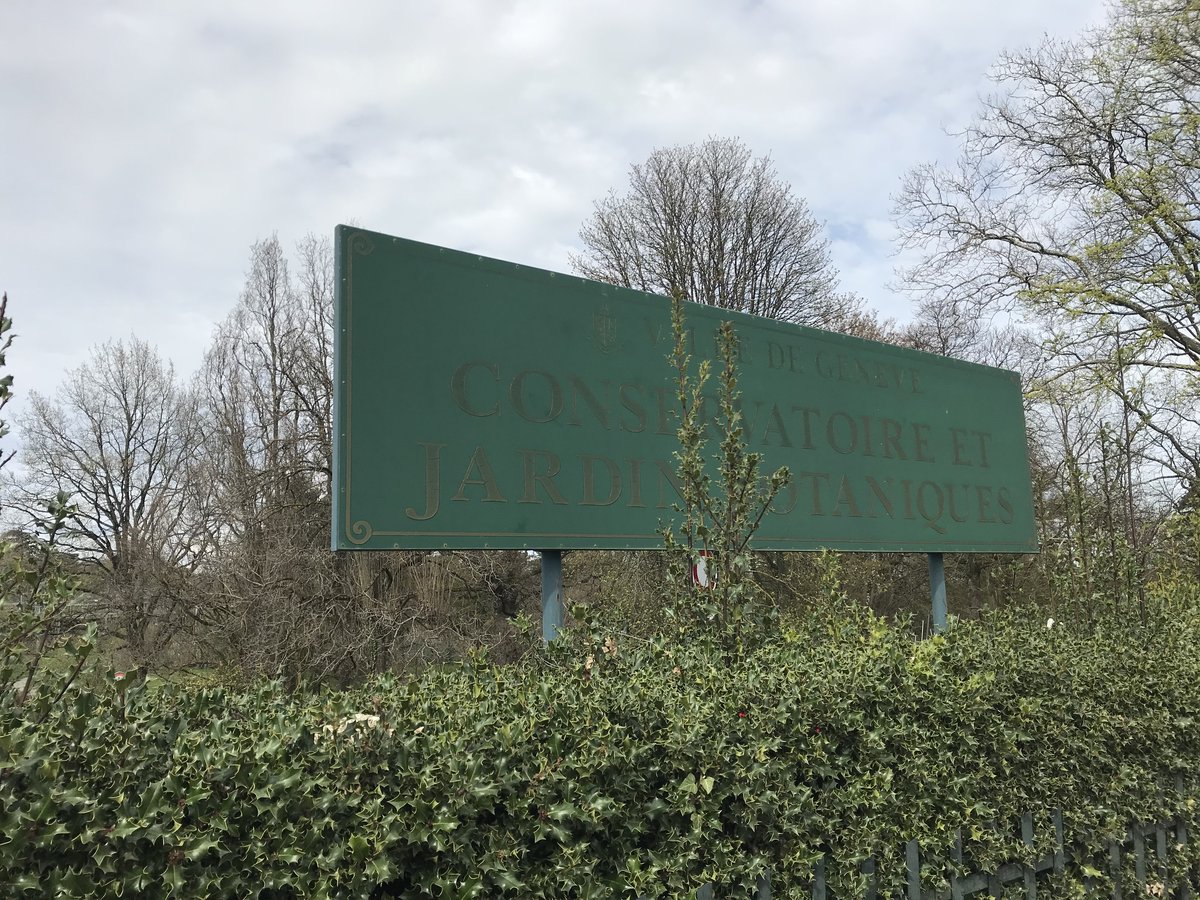
Nestled on the edge of Geneva’s urban core, the Conservatory and Botanical Garden of the City of Geneva (CJBG) stands as a remarkable testament to over two…
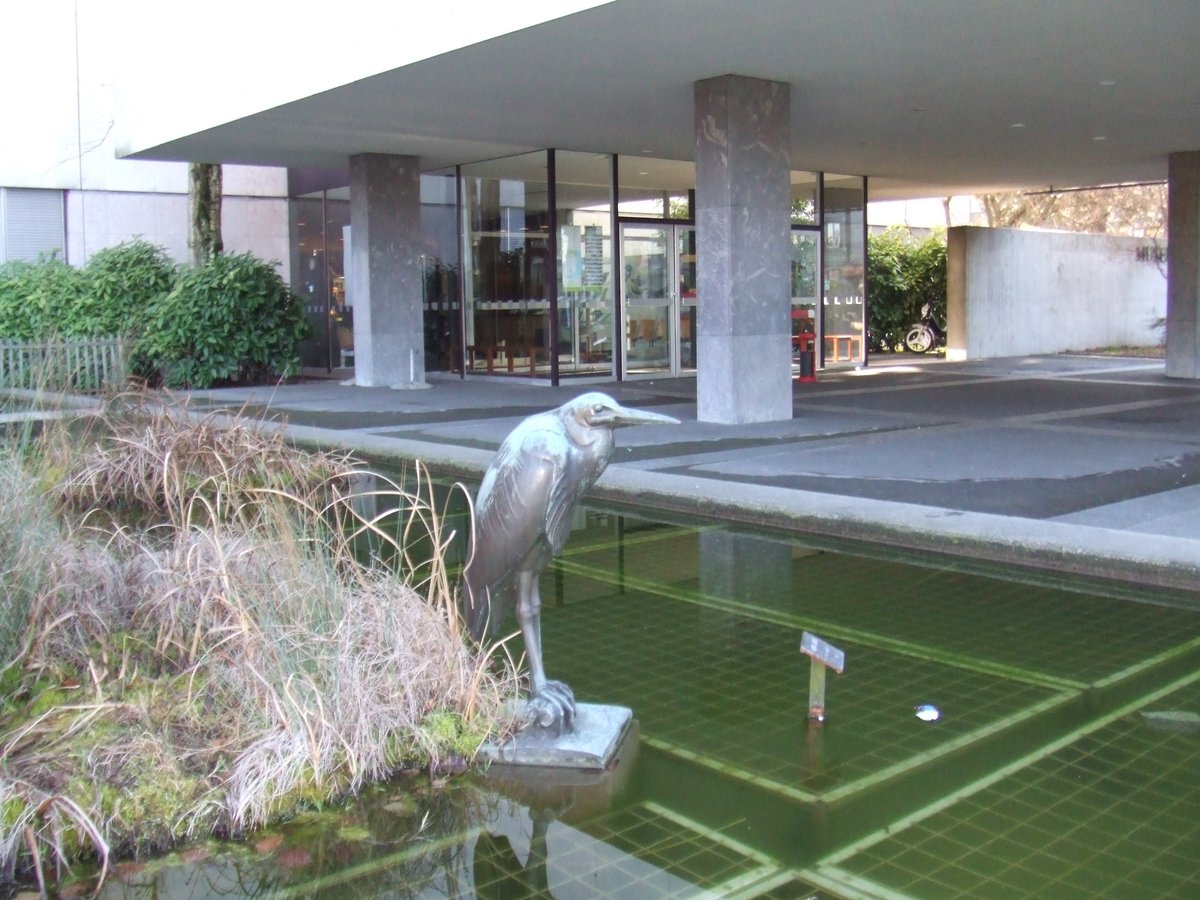
Nestled in the heart of Geneva, the Muséum d'Histoire Naturelle offers a captivating journey through the wonders of natural history.
St. Peter's Cathedral, also known as Cathédrale Saint-Pierre, is a beacon of historical and architectural grandeur in the heart of Geneva, Switzerland.
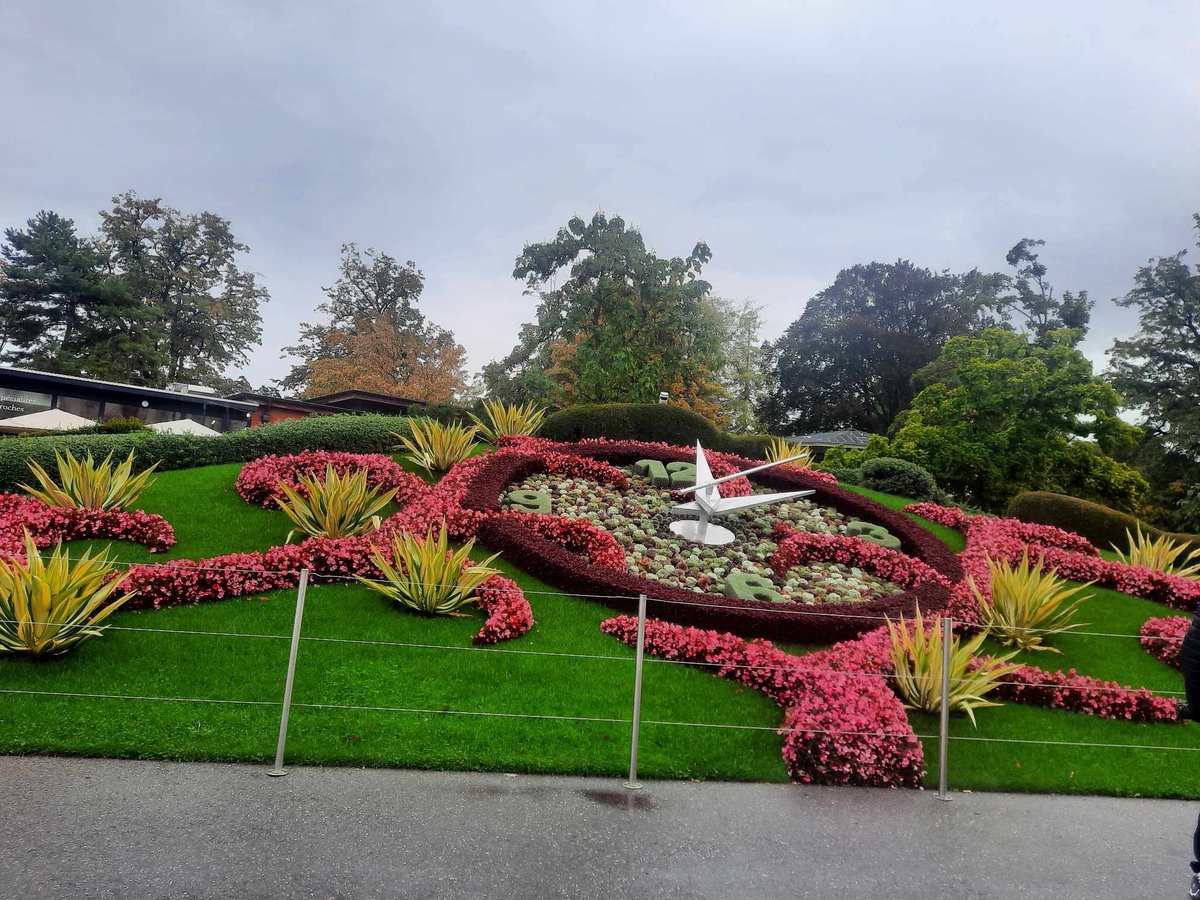
Welcome to our comprehensive guide on visiting the Horloge Fleurie, Geneva's iconic Flower Clock.
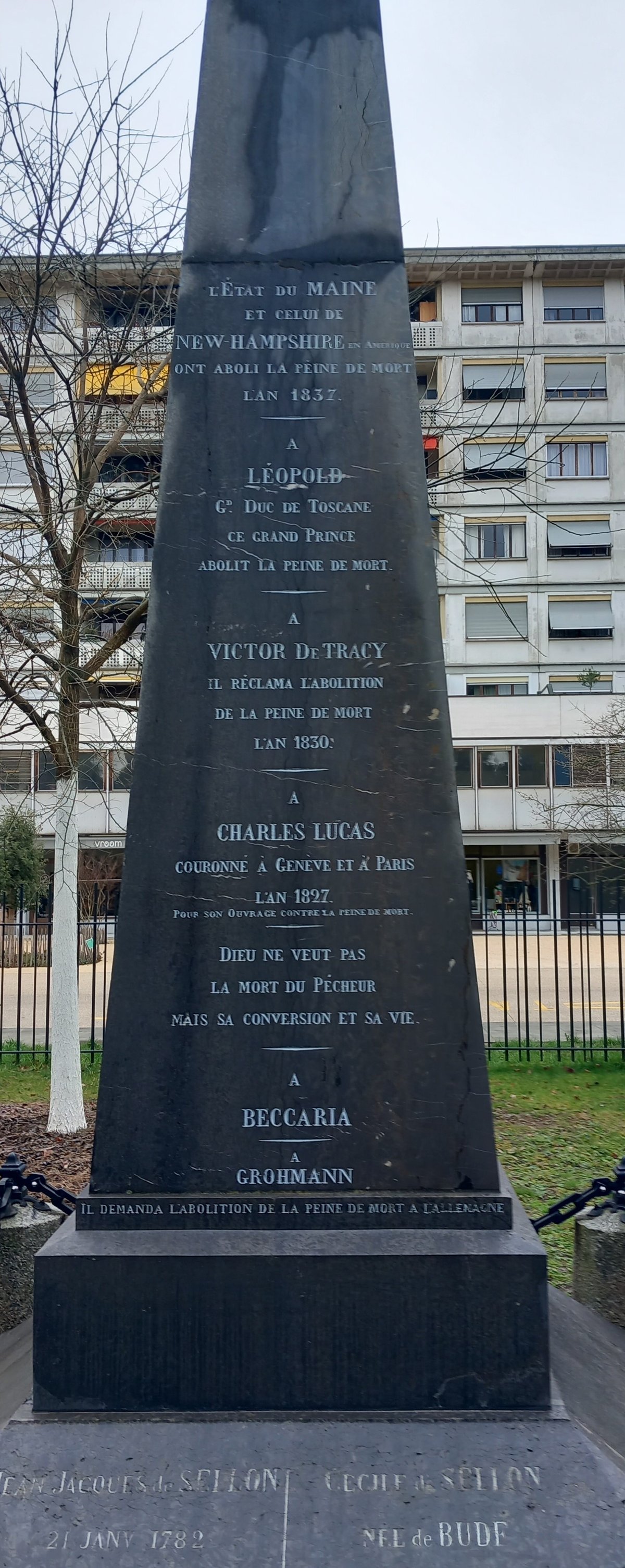
Nestled in the heart of Geneva’s Plainpalais district, the Cemetery of Kings (Cimetière des Rois) stands as a profound testament to the city’s rich cultural,…
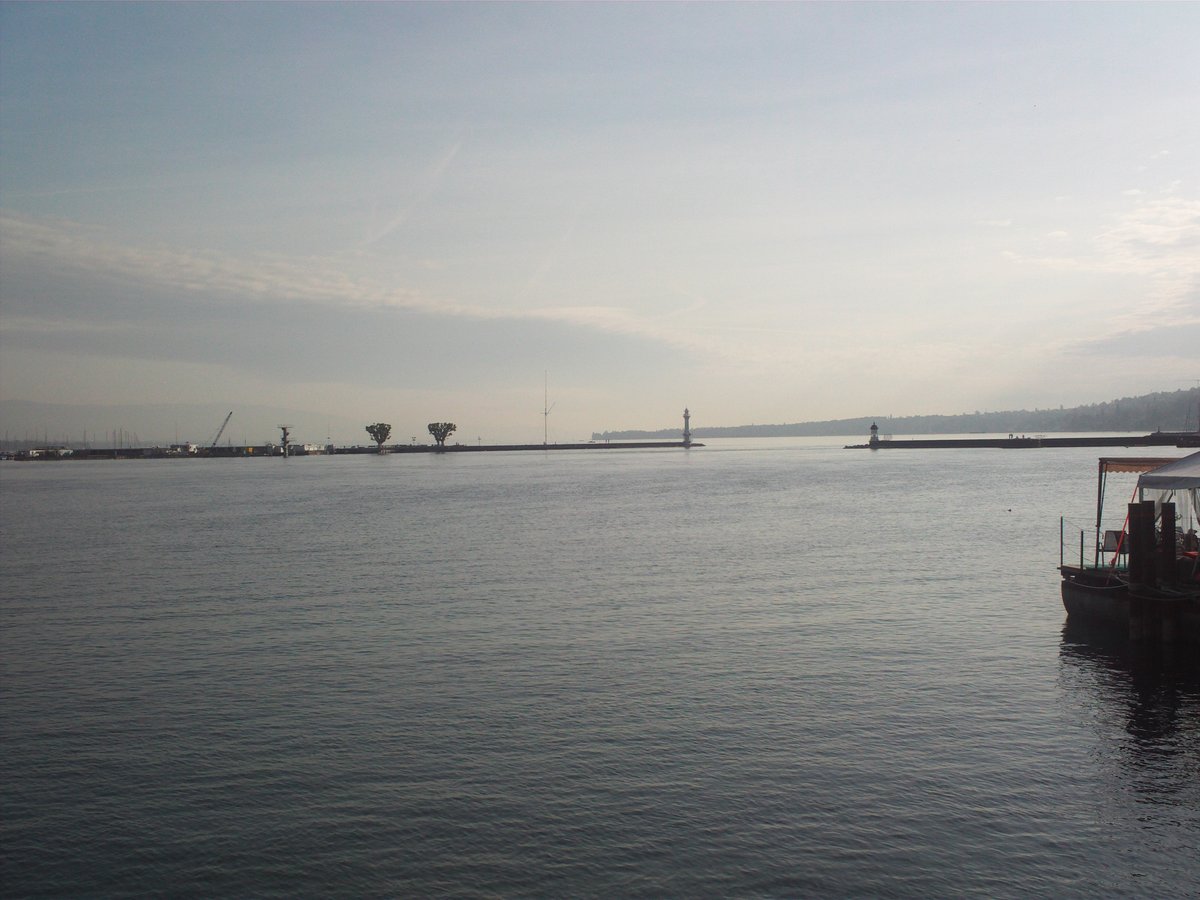
Welcome to the Bains des Pâquis, a historical gem located on the shores of Lake Geneva.
Where to wander, by quarter — each with its own rhythm.
Climb the 157 steps of St-Pierre’s north tower and you’re standing where Calvin preached predestination with one eye on the Alps. Below, the 14th-century Maison Tavel hides a scale model of 1850 Geneva under glass—look down and the city folds into itself like a pop-up map. Grand-Rue still smells of antiquarian paper and espresso; at No. 40 a plaque marks Rousseau’s birthplace, while around the corner the medieval Hôtel de Ville hosted the world’s first international arbitration in 1872. Evenings belong to candle-lit bistros serving December-only cardons au gratin and the solemn clink of Chasselas on Bourg-de-Four’s triangular square.
Built in 1786 by the king of Sardinia to outshine smug Protestant Geneva, Carouge’s pastel arcades and secret courtyards still feel like a Piedmontese village that took a wrong turn at the border. Saturday’s market spills across Place du Marché with fennel-scented longeole sausages and natural-wine growers from just over the French frontier. Artisan jewelers work in ground-floor ateliers; after dark, tiny jazz bars and Neapolitan pizzerias occupy the same stone houses where royal planners once envisioned a Catholic rival capital.
Geneva’s maritime district has no sea, only a pier jutting into the lake like a dare. The Bains des Pâquis—Art-Deco baths built in 1932—charges five francs for a sunrise swim and two francs for a bowl of onion soup doled out by volunteers. By night the surrounding streets switch to Swahili pop, Korean bibimbap steam, and the occasional neon promise of “Thai massage.” It’s the only neighborhood where UN interpreters, Eritrean taxi drivers, and bankers’ kids queue together for 2 a.m. merguez sandwiches.
A vast trapezoid of cracked asphalt turns into Geneva’s outdoor living room every Wednesday and Saturday. One edge hosts Switzerland’s best flea market—Soviet watches, 1960s ski posters, questionable oil paintings—while the opposite flank feeds students with food-truck arepas and CHF-3 espresso from the art-school kiosk. MAMCO, the contemporary-art museum, occupies a former factory whose rooftop still vents the ghosts of Geneva’s industrial past; inside, a shark suspended in formaldehyde shares wall space with Swiss conceptualists.
Where the lake curls into its eastern bay, Genevans reclaim their shoreline. Joggers orbit Parc La Grange’s 12,000 rose bushes, teenagers cliff-jump from concrete platforms, and the last paddle steamers hoot their way toward Montreux. Behind the floral clock, locals queue at a kiosk for perch fillets so fresh they still taste of dawn over the lake. On summer evenings the Jetée des Eaux-Vives offers the city’s most democratic sunset—free, unobstructed, and shared by bankers, refugees, and skateboarders in unspoken truce.
Stand on the wooden footbridge and watch the Rhône’s blue collide with the Arve’s milky green in slow-motion turbulence—two rivers refusing to mix for a full kilometer. This former working-class wedge now hosts natural-wine bars in converted warehouses and graffiti murals that turn concrete flood walls into open-air galleries. The Bâtiment des Forces Motrices—an 1886 waterworks turned concert hall—pipes baroque opera through iron turbines, while upstream swimmers sunbathe on rocks where kids once leapt freight trains.
Diplomatic motorcades glide through Ariana Park’s peacock-inhabited gardens, but visitors with passports can still tour the Assembly Hall where the UN’s ceiling mural preaches human progress in gold leaf. Outside, the 12-meter Broken Chair looms over negotiations like a three-legged conscience. The surrounding streets are a ghost town of embassies and half-empty cafés at noon, then abruptly alive at 5 p.m. when interpreters in lanyards argue over Chasselas pour la route.
From Caesar’s river crossing to the birth of the web, Geneva keeps rewriting the rules
Julius Caesar rides up to the Rhône ford where Lake Geneva spills out. He counts 28,000 Helvetii waiting to cross, orders his engineers to wreck the wooden bridge behind him, and pens the first sentence ever written about the city: ‘Genava’ in Book I of De Bello Gallico. Overnight the settlement becomes a Roman military hinge.
Bishop Isaac consecrates a stone church on the hill the locals call Saint-Pierre. Beneath the altar lie recycled Roman columns—pink granite hauled from some distant province. The smell of incense drifts over wooden houses huddled inside the old castrum walls; Geneva’s spiritual axis tilts permanently toward the new faith.
Long-haired Gothic cavalry ride through the gates and make the Roman river-town their capital. Timber palisades replace crumbling stone; the clang of smithies forging iron sword-blades echoes at night. Geneva, now Genavum, learns to speak Germanic law while Latin prayers still murmur in the cathedral.
When childless King Rudolph III dies, his kingdom slips into the grasp of the Holy Roman Emperor. Geneva’s bishop is suddenly a prince of the Empire, balancing crozier and sword. The city’s seal shows a two-headed eagle—one beak turned toward Rome, the other toward the Alpine passes that carry trade.
Bishop Adhémar Fabri, cornered by armed guildsmen, swears the ‘Franchises’ on the cathedral steps. For the first time butchers, tanners and money-changers can elect four syndics who actually count coins and judge thieves. The document, ink still wet, smells of sealing wax and the sausages bought to bribe the bishop’s clerks.
In the Hôtel de Ville’s long council chamber, 177 male voices shout ‘Oui!’—and Geneva’s Catholic past ends before supper. Altars are stripped, statues smashed, colored glass shattered. The cathedral bell that once called monks to vespers is melted into cooking pots. The city’s heartbeat syncs to the rhythm of French psalms.
The thin French exile steps off the boat from Strasbourg, clutching drafts of the Ecclesiastical Ordinances. Within months taverns close at nine, card-playing becomes a crime, and a woman caught laughing during a sermon spends three days in the pillory wearing a muzzle of iron. Geneva turns into a laboratory of moral discipline.
Green oak faggots crackle outside the city walls. Michael Servetus, Spanish physician who denied the Trinity, screams as the smoke rises; Calvin watches from the bailiff’s side, insisting the sword of magistrates is God’s. The smell of burning flesh drifts back into the crowded Saint-Antoine gate, staining Geneva’s reputation for centuries.
At 2 a.m. Savoyard climbers in white capes scale the icy ramparts. Mère Royaume, hefty washer-woman, dumps her cauldron of vegetable soup on a soldier’s helmet; the clang wakes the town. By dawn 54 enemy corpses litter the streets. Geneva still celebrates with chocolate cauldrons smashed by children every December.
In a narrow clock-maker’s house the future philosopher gasps his first breath above the sound of ticking escapements. Apprenticed to an engraver at twelve, he will flee the city’s gates at sixteen, never truly returning—yet Geneva’s republican DNA threads every page of The Social Contract.
The same council chamber that once outlawed Catholicism now condemns Émile and The Social Contract. Pages are hurled into a bonfire on the Parc des Bastions while the public prosecutor denounces their ‘poisonous equality’. Voltaire, watching from nearby Ferney, applauds—then quietly funds Genevan radicals who smuggle the ashes back into print.
Napoleon’s dragoons trot across the wooden Mont-Blanc bridge and hoist the tricolor. The Republic of Geneva vanishes, reborn as chief town of the Département du Léman. Conscription posters go up the next morning; by spring 600 Genevan boys are marching toward Italy in blue coats.
Cold June rain lashes the lake; Mount Tambra’s ash veils the sun. Inside candle-lit Villa Diodati, 18-year-old Mary Shelley listens to ghost stories told by Byron and Shelley. Thunder rolls over the Jura, and she dreams of a man animating dead flesh—giving literature its first modern monster and Geneva its most haunting myth.
In the back room of the Société de Lecture, banker Gustave Moynier and idealist Henry Dunant persuade three others to form a committee ‘to assist wounded soldiers without distinction’. They choose the inverse Swiss flag as emblem. Within a year the first Geneva Convention is signed by twelve nations; humanitarian law is born in the city that once burned heretics.
Originally a safety valve for a hydraulic power network, engineers release the 30-metre plume on the Rhône’s exit channel. The water catches evening light like liquid glass; photographers swarm. Two years later it is moved to its present position in the lake, shooting 140 metres—higher than the cathedral tower Calvin once preached beneath.
Delegations stride into the freshly whitewashed assembly hall while Swiss guards in berets salute. The palace still smells of wet plaster and pine scaffolding. Geneva, city of exiles and watchmakers, becomes the capital of talking instead of shooting—though the absence of the United States haunts every corridor.
Under the chandeliers of the Palais des Nations, French and Viet Minh delegates initial pages that draw a line across Vietnam at the 17th parallel. Cameras flash; outside, Vietnamese students chant in the rain. A city once split by Catholic and Protestant now hosts the partition of a distant Asian country.
Software engineer Tim Berners-Lee types ‘ENQUIRE’ on a NeXT computer in a corridor under the French border. He writes a memo titled ‘Information Management: A Proposal’—a blueprint for hypertext links that will escape the lab and lace the planet together. The world’s largest particle physics lab quietly births the World Wide Web.
Two experiments projected on twin screens both show the same blip at 125 GeV. Applause erupts; Peter Higgs wipes his eyes. Forty-eight years after the theoretical prediction, the ‘God particle’ is found in tunnels beneath Geneva’s vineyards—proving the city still cracks open the fundamental workings of reality.
The people who shaped the city — and were shaped by it.
He turned this trading town into the 'Protestant Rome,' drafting laws that banned dancing and required church attendance. Today he'd probably wince at the lakefront bars, then quietly approve of the multilingual democracy Geneva became.
The man who wrote 'Man is born free, and everywhere he is in chains' grew up in Geneva's narrow Old Town alleys. He'd recognize the morning light on the Rhône but marvel that the city now hosts the UN he only imagined.
After witnessing Solferino's battlefield carnage, he turned his Geneva living room into the birthplace of modern humanitarian law. The ICRC still operates from the same hill; he'd be proud that Geneva became shorthand for 'neutral help.'
While other physicists hunted quarks, he built the first web server in a CERN corridor so scientists could share data. He'd laugh that the server room is now a tourist stop, 50 meters from where particles still collide.
Where locals actually book dinner — not the tourist menus.
Small things that change how the city treats you.
Grab the 80-minute Unireso ticket from the free dispenser in GVA baggage hall—most tourists miss it and pay CHF 3.80 for the 7-minute train into town.
Even kiosk tram tickets are contactless; carry a phone with Apple/Google Pay and you'll never need francs in your pocket.
Any registered accommodation gives you a Geneva Transport Card at check-in—unlimited trams/buses for your entire stay, no extra pass needed.
A CHF 25–30 plat du jour at noon becomes CHF 45+ after 14:00; book lunch on the lakefront and picnic supplies from a Coop Pronto for dinner.
Lake warm enough to swim, Mont-Blanc crystal clear, summer crowds gone—book the first week after 1 Sept for 20 °C days and hotel rates dropping 20%.
If the flag on the Jardin Anglais mast is horizontal, the 140 m fountain is off—save the walk and catch it from a CGN boat instead.
The city, as it actually looks.

A classic tourist telescope offers a view of the famous Jet d'Eau fountain on Lake Geneva in Switzerland.
Valentin Ivantsov on Pexels

A stunning aerial perspective of Geneva, Switzerland, showcasing the famous Jet d'Eau fountain rising from the blue waters of Lake Geneva.
Liviu Gorincioi on Pexels

The famous Jet d'Eau fountain creates a dramatic spectacle against the backdrop of Geneva's scenic waterfront and distant mountains.
Christopher Politano on Pexels

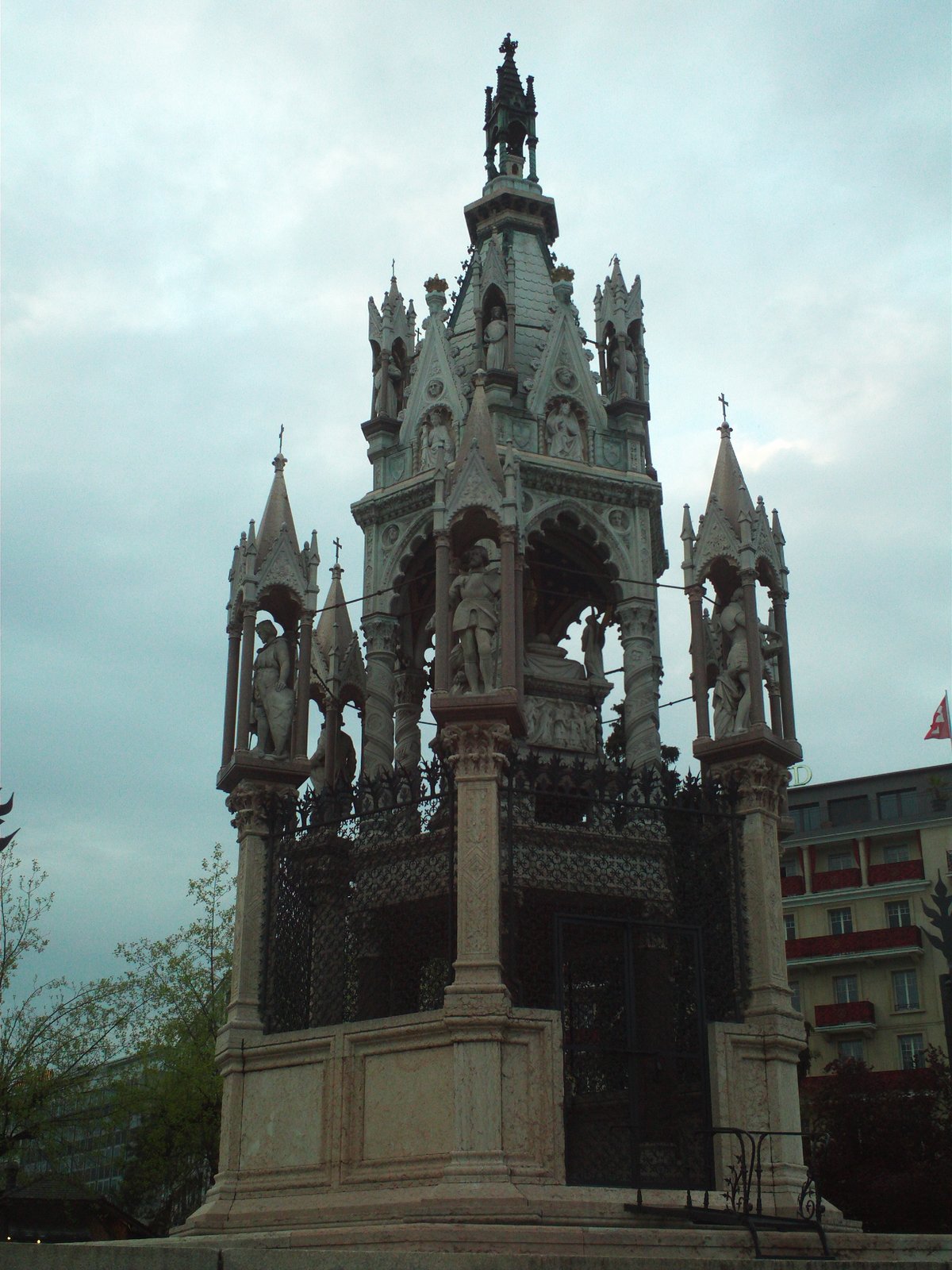
The ornate Brunswick Monument stands proudly in Geneva, Switzerland, with the iconic Jet d'Eau fountain spraying water in the distance.
WASSIM AHMED on Pexels

An aerial perspective of the historic Pont Butin bridge spanning the turquoise waters of the Rhone river in Geneva, Switzerland.
Liviu Gorincioi on Pexels

The golden glow of sunset illuminates the tranquil waters of Lake Geneva, framed by the city's elegant architecture and distant mountain silhouettes.
Altin Rrahmani on Pexels

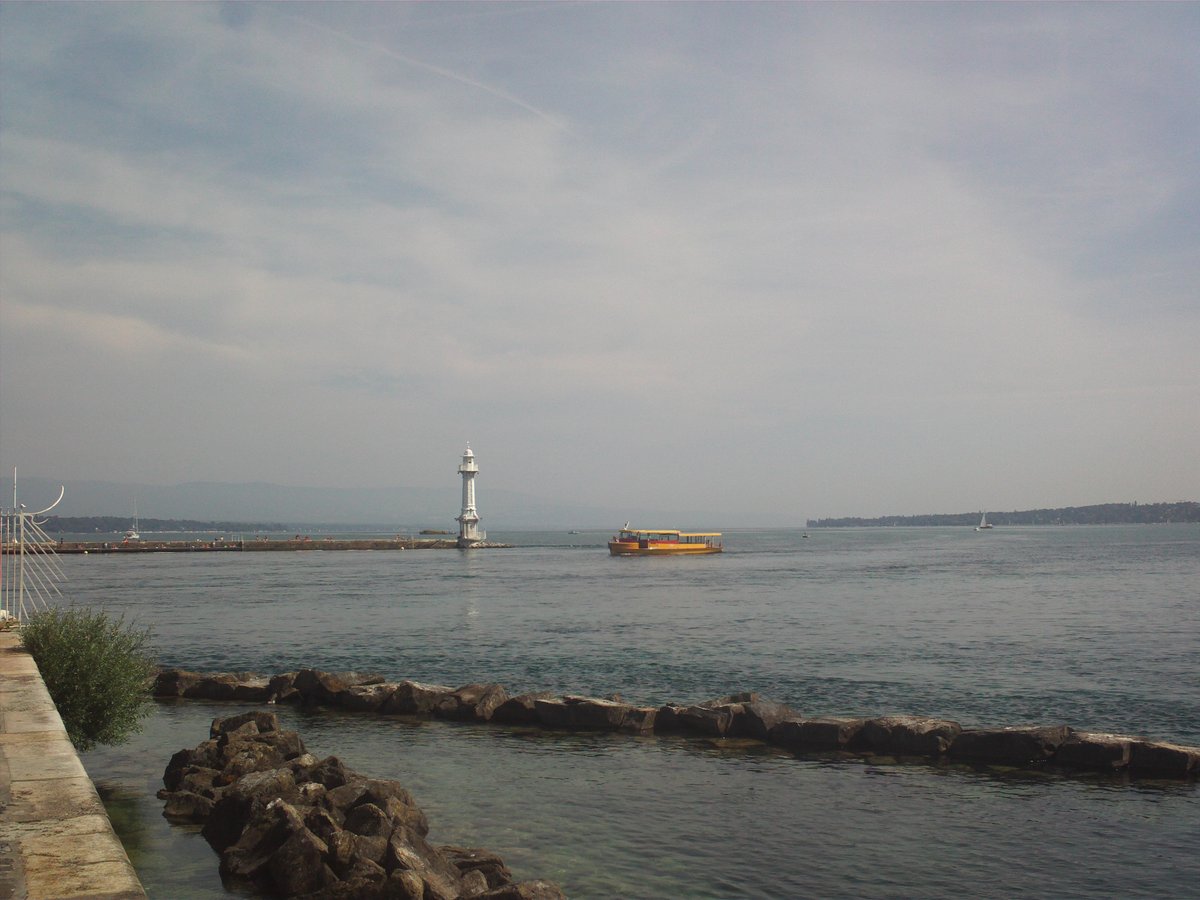
The historic Paquis Lighthouse serves as a picturesque landmark on the shores of Lake Geneva in Switzerland.
su vbp on Pexels
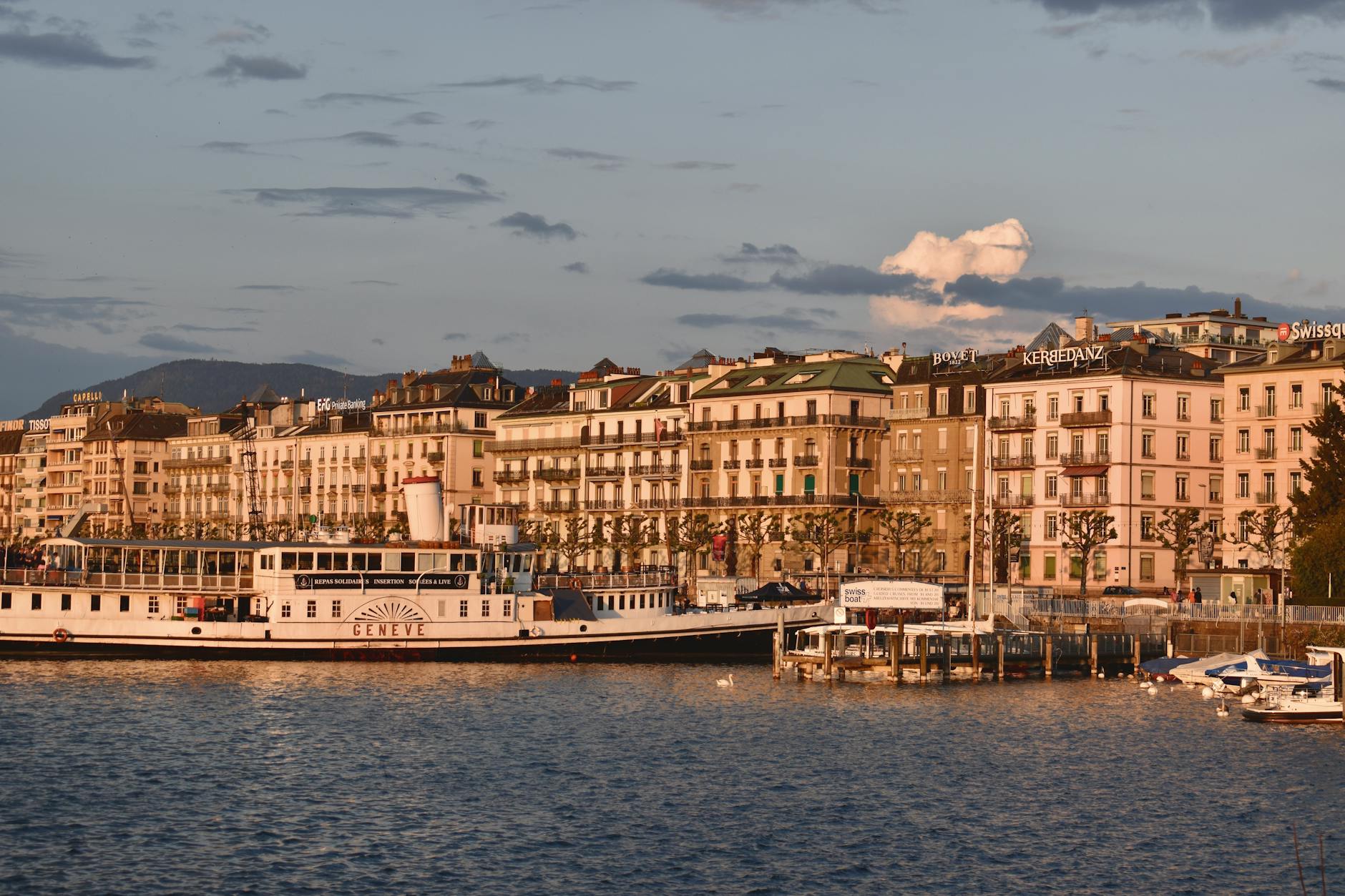
The golden hour illuminates the historic buildings and the iconic 'Geneve' paddle steamer along the picturesque waterfront of Geneva, Switzerland.
ZongJun Xie on Pexels

The classic Savoie paddle steamer rests in the harbor of Geneva, Switzerland, framed by the famous Jet d'Eau fountain in the distance.
Valentin Ivantsov on Pexels

The iconic Jet d'Eau fountain sprays high above Lake Geneva, framed by the city's charming architecture and a ferris wheel under a clear summer sky.
Ryan Klaus on Pexels
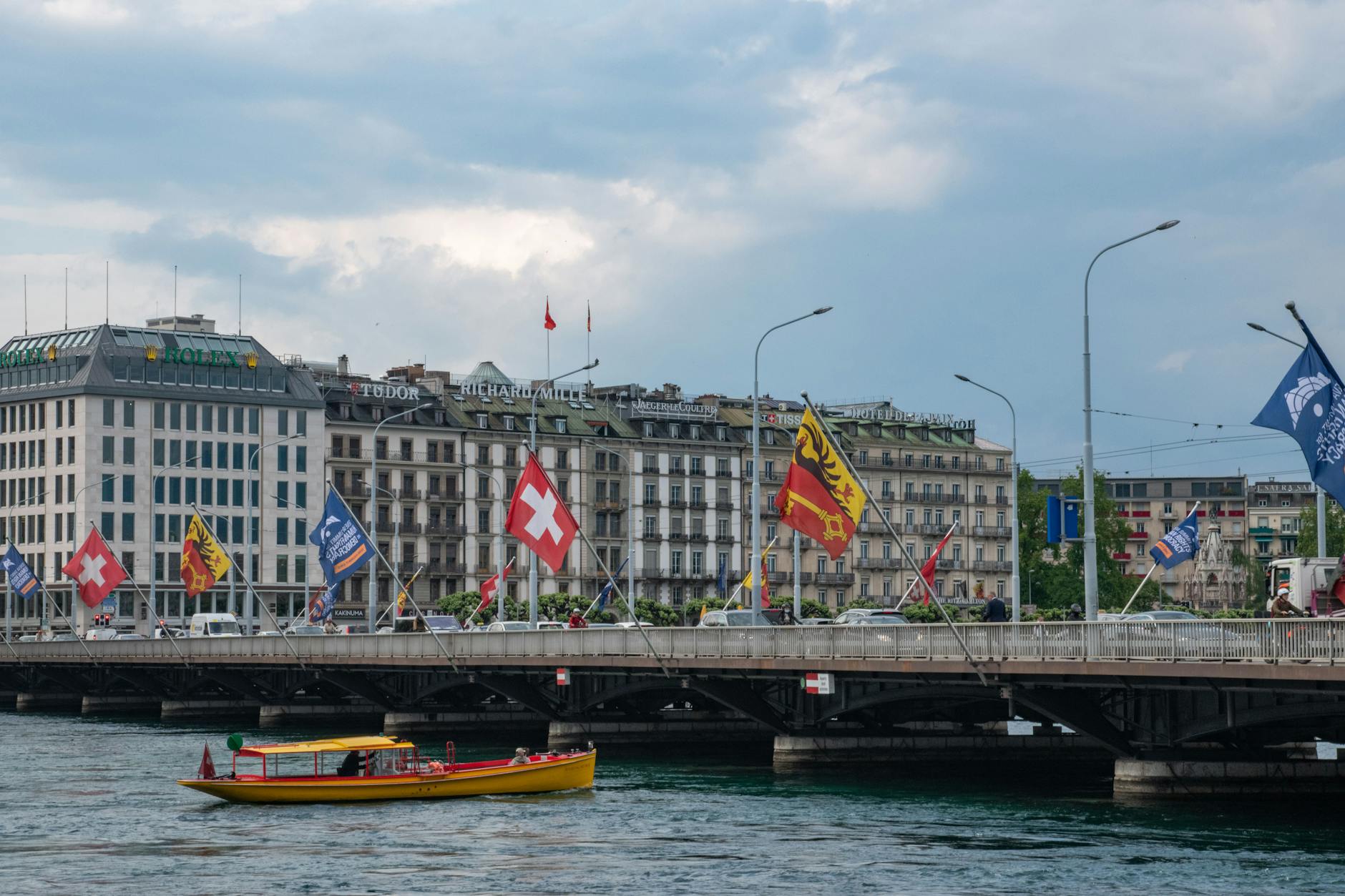
A vibrant yellow water taxi navigates the Rhone River in Geneva, Switzerland, with the iconic Mont Blanc Bridge and historic city architecture in the background.
christine roy on Pexels
Yes—where else can you swim in 20 °C lake water while staring at Mont Blanc, then tour an underground cathedral from 300 AD and the birthplace of the web? The sticker-shock is real (coffee CHF 4.50, dinner CHF 40), but nearly every major sight—Jet d'Eau, Old Town, Reformation Wall, United Nations park, Red-Cross museum on free nights—is free or CHF 10.
Two full days covers the city (Old Town + lake boat + UN tour); add a third for CERN or a day-trip to Mont Salève. Stay longer only if you're using Geneva as a base for Swiss Riviera trips to Lausanne or Montreux.
Take the 7-minute direct train to Gare Cornavin—run every 10–12 min, CHF 3.80, or use the free 80-minute arrival ticket from the dispenser in baggage claim. Taxis cost CHF 35–55 and take 15–25 min.
Very safe—consistently top 5 globally. Pickpockets appear on crowded Tram 12 and around Cornavin station after dark, but violent crime is rare. Les Pâquis feels edgy late but is well-patrolled.
Cards work everywhere—even tram vending machines and market stalls. Download Apple/Google Pay and you can skip francs entirely; just watch ATM fees if you do withdraw cash.
Ready to book?
Curated from places in this city. Same price as official sites.
Prices shown are indicative — final pricing and availability are confirmed at checkout. Audiala may receive a commission from bookings made via these links.
Geneva International Airport (GVA) sits inside the city limit; the underground train platform whisks you to Gare de Cornavin in 7 min for CHF 3.80. Cornavin is the main rail hub with direct TGVs to Paris (3 h) and Lyria to Lyon. Motorway A1 links Geneva to Lausanne and the French A40 towards Chamonix.
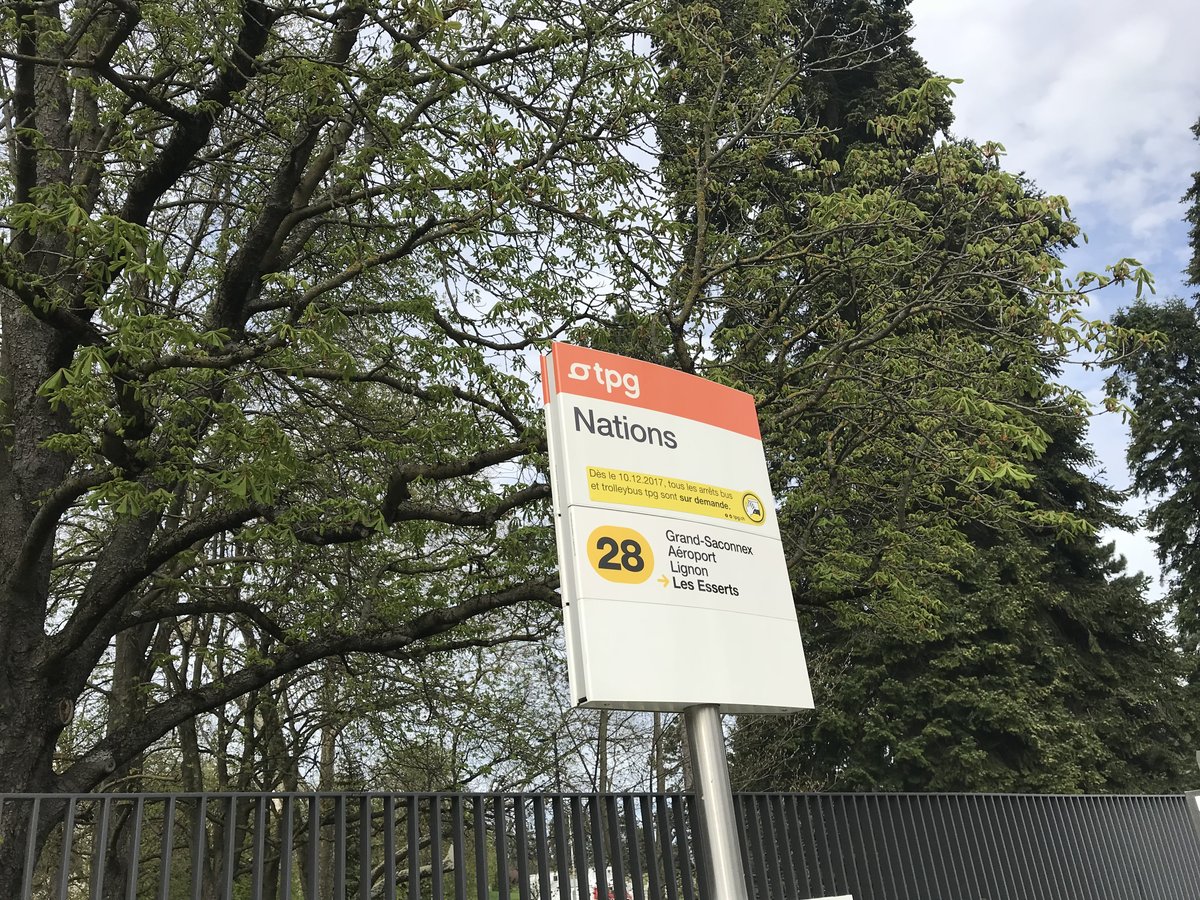
No metro here—Geneva runs on 11 TPG tram lines and 60+ bus routes; Tram 12 connects the airport to the UN in 20 min. Every hotel guest receives a free Geneva Transport Card covering all trams/buses. Pick up a Geneva City Pass (24 h CHF 26, 48 h CHF 36) for 40+ museums and lake-boat discounts.
June–August peaks at 24–27 °C, perfect for lake swimming but expect 90 mm of thunderstorm rain. September keeps 21 °C with clearer skies and fewer tourists. Winter hovers either side of freezing—great for nearby Alps skiing—but December’s Fête de l’Escalade turns the Old Town into a torch-lit medieval party you won’t find in ski resorts.
French is the working language; say “Bonjour” before any question or you’ll be met with silence. Swiss francs (CHF) are the only real currency—some cafés take euros at a painful 1:1 rate. Cards, Apple Pay and contactless work even for a CHF 2 coffee.
117 places to discover



Showing 1–48 of 117 places