Frutigen
Switzerland Updated May 2026
Beneath Frutigen, Switzerland, sturgeon swim in water warmed by a railway tunnel. The Lötschberg Base Tunnel bleeds heat into the mountain, and someone in this Bernese Oberland village decided to farm caviar with it. That is the kind of place Frutigen is — practical, quietly inventive, and far stranger than its chalet-lined main street suggests.
 Photo: Хрюша · CC BY-SA 3.0
- Attractions
- 9
- Trip length
- 2-4 days
- Best season
- Late June to early September
Why Frutigen
Built from cited sources · see the method · How we make our guides →
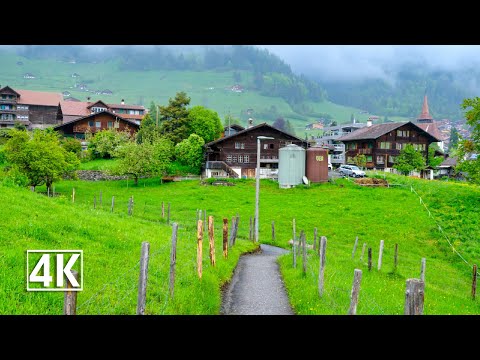
The village sits at the mouth of the Kandertal, where the Kander and Engstligen valleys meet under the Niesen ridge. Around 6,900 people live here, most of them speaking the soft, drawn-out German of the Berner Oberland. Frutigen is not Adelboden. There are no glossy resort hotels, no ski-in lobbies dripping with fur. What there is, instead, is a working valley with a railway junction at its heart and the cheapest beds within an hour of half the Bernese Alps.
The history runs deeper than the cowbells suggest. St. Quirinus, the reformed parish church on the hill, was rebuilt in 1727 on the ruins of a 1421 sanctuary, which itself stood on an 11th-century church, which sat on foundations from the 8th or 9th century. The Strättliger Chronicle of 1228 already named it among the twelve churches encircling Lake Thun. Slate from local quarries roofed buildings as far away as the British Empire. And in 1850, a matchstick factory opened here — improbable, profitable, and now memorialised in its own small museum.
Use Frutigen as a base, not a destination, and it rewards you. The trains south climb to Kandersteg and through the Lötschberg in twenty minutes. The trails up to the slate quarry start where the village ends. The pedestrian suspension bridge swings high enough to make confident hikers reconsider their footing. Most visitors pass through on their way somewhere more famous. The trick is to stop.
The Tunnel That Warms a Greenhouse
Waste heat from the Lötschberg Base Tunnel — water that emerges at 20°C from deep inside the Alps — is piped into the Tropenhaus, where sturgeon swim and tropical fruit ripens beneath Bernese peaks. Engineering nerds and caviar skeptics leave equally surprised.Three Castles and a Slate Quarry
The Tellenburg, Halten and Bürg ruins crown the wooded slopes around the village, and the local slate has been roofing buildings from Geneva to abroad since the 19th century. The quarry hike makes that history walkable.The Quiet Valley Base
Frutigen sits where the Kander and Engstligen valleys meet, halfway between Lake Thun and Kandersteg. Rooms cost less than in Adelboden, trains run every half hour, and the cows still come down the main street in September.A Church on Four Foundations
St. Quirinus was rebuilt in 1727 on the walls of a 1421 sanctuary, which sat on an 11th-century church, which rose from an 8th-century foundation. The Strättliger Chronicle named it in 1228 as one of twelve churches ringing Lake Thun.
Plan your trip
Before you go
- Getting There
- Closest airports are Bern-Belp (BRN, ~50 km) for regional flights and Zürich Airport (ZRH, ~165 km) or Geneva (GVA, ~180 km) for intercontinental arrivals. Frutigen railway station sits on the BLS Lötschberg line; direct trains run from Bern in roughly 35 minutes and from Interlaken Ost via Spiez in about 45. By car, the A6/A8 motorway to Spiez connects to Route 6 south into the Kandertal.
- Getting Around
- The village itself is walkable end to end in 20 minutes. BLS trains and PostBus routes link Frutigen to Kandersteg, Adelboden and Reichenbach at roughly half-hourly intervals throughout 2026; the station also handles the Lötschberg car-shuttle south to Goppenstein in the Valais. A Berner Oberland regional Pass (around CHF 250 for six days in 2026) covers regional trains, buses and most lake boats — worth it if you plan day-trips beyond the valley.
- Climate & Best Time
- Summers are mild at 18-24°C in July and August, with afternoon thunderstorms common in the side valleys. Spring (April-May) lingers cool at 8-15°C while the snow line retreats; autumn brings clear, cold mornings and 10-16°C afternoons through October. Winter sits at -3 to 4°C with reliable snow above 1,200 m from December to March. June and September are the sweet spots in 2026 — trails open, prices lower than peak July-August.
- Language & Currency
- Swiss German is the everyday tongue (the 2000 census counted 96% German speakers), but standard German works everywhere and English is widely understood at the station, hotels and the Tropenhaus. Currency is the Swiss franc (CHF); euros are sometimes accepted but change comes back in francs at unfavourable rates. Card payment is universal, even at the bakery.
Where to Eat
Where locals actually book dinner — not the tourist menus.
Insider tips
Small things that change how the city treats you.
Base, not destination
Stay in Frutigen and day-trip to Kandersteg, Adelboden, and the Lötschberg. Rooms run noticeably cheaper than at the resorts above, and trains climb both valleys from the same station.Alpine caviar exists
The Tropenhaus farms Siberian sturgeon using waste heat from the Lötschberg base tunnel. Book the tasting if you want to eat caviar in a greenhouse next to banana trees.Follow the slate trail
The marked quarry walk above the village shows where Frutigen slate was cut for roofs across Europe. Wear grippy shoes — the cut stone underfoot stays slick after rain.Book the tunnel tour early
BLS runs guided visits inside the 34.6 km Lötschberg base tunnel from a meeting point five minutes from the station. Dates are limited and groups fill weeks ahead.Aim for late June
Alpine meadows around the Engstligen valley peak with wildflowers from mid-June, before August crowds and after the late-May rain. Cable cars to the higher pastures run by then.Use the Berner Oberland Pass
If you plan three or more cable cars and trains, the regional pass pays for itself fast from Frutigen. Buy it at the station before your first ride.Eat in the valley, not on the square
Skip the tourist menus near the station. The village restaurants a few streets up serve the same Älplermagronen and rösti for a third less, often from their own dairy.
Gallery
The city, as it actually looks.
Watch
Frequently asked
Is Frutigen worth visiting?
Yes, if you want the Bernese Oberland without the resort prices. Frutigen is a working valley town with a 1,200-year-old church site, a tropical sturgeon farm built into a mountain, and direct rail access to Kandersteg, Adelboden, and the Lötschberg tunnel. Skip it if you only want postcard glamour.
How many days do I need in Frutigen?
Two to four days. One day covers the village, the Tropenhaus, and the Tellenburg ruin. Add days for Oeschinensee from Kandersteg, the Engstligen falls above Adelboden, and a slate-quarry hike.
How do I get to Frutigen from Bern or Zurich?
From Bern, the BLS regional train takes about 50 minutes via Spiez. From Zurich, it's roughly 2 hours 15 minutes with one change at Spiez. Trains run hourly and the station sits in the centre of the village.
What is the Tropenhaus Frutigen?
A tropical greenhouse and aquaculture project that uses 18°C water draining from the Lötschberg base tunnel to farm Siberian sturgeon, caviar, and tropical fruit. Restaurant, guided tours, and a shop sit on site. It's the most unusual stop in the valley.
Is Frutigen good for families?
It works well for families who want hikes and trains rather than theme-park energy. The Match Museum, the suspension footbridge, the Tropenhaus, and the gentle valley walks all suit children. Strollers manage the village but struggle on the slate trail.
Is Frutigen cheaper than Interlaken or Adelboden?
Generally yes. Hotels and apartments run 20–35% less than equivalents in Interlaken or Adelboden, and restaurants follow. You pay the difference back in short train rides to the marquee sights.
Can you tour the Lötschberg base tunnel from Frutigen?
Yes. BLS runs scheduled guided tours of the 34.6 km tunnel, departing from a meeting point a five-minute walk from the station. Spots are limited and booking opens months in advance — check the BLS website before your trip.
What language is spoken in Frutigen?
German, and specifically the Bernese dialect (Bärndütsch). Around 96% of residents speak German as their first language. English works in hotels and at the Tropenhaus, less reliably in village shops.
Pick up where you left off
Saved and recently read places — kept on this device only.
Photo credits (1)
- Frutigen Ortsansicht 01 09 — Хрюша — CC BY-SA 3.0 (https://creativecommons.org/licenses/by-sa/3.0/) — Source: https://commons.wikimedia.org/wiki/File:Frutigen_Ortsansicht_01_09.jpg
Photos may have been resized or cropped.