Early Development
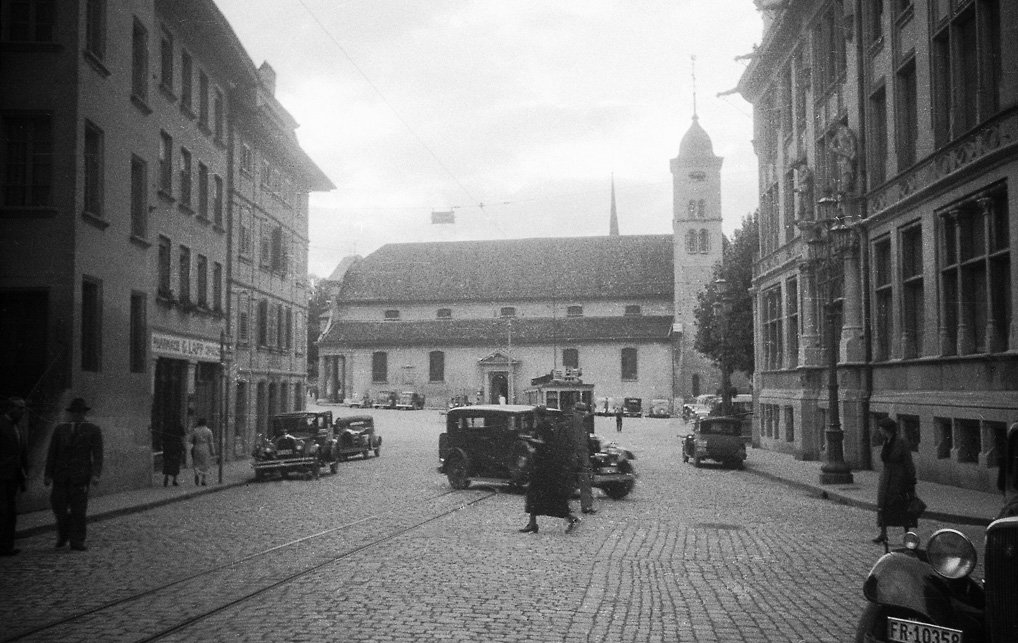
Fribourg Railway Station was inaugurated in 1862 by the Western Swiss Railways, coinciding with the completion of the Lausanne–Bern railway. Its establishment enhanced regional mobility and integrated Fribourg into the Swiss Plateau Line, a vital east-west corridor (Official Swiss Rail Site). The selection of Fribourg as a routing point faced initial military objections, but the city’s advocates secured its strategic role (Fribourg Tourism).
Engineering Marvel: The Grandfey Viaduct
A key engineering feature near the station is the Grandfey Viaduct, completed shortly after the station’s opening. Spanning 352 meters across the Saane/Sarine river, it remains a landmark of 19th-century engineering prowess (Swiss Heritage Site).
Architectural Evolution
The first station was a humble wooden hut, replaced in 1872–73 by a more substantial building designed by Adolphe Fraisse. The current main building, completed in 1928, is a functionalist structure designed for efficient passenger flow and durability, now recognized as an architectural landmark (SBB Historic Stations).
Modernization and Adaptive Reuse
The 1872 station building was transformed into a cultural center in 2007, hosting the Nouveau Monde theatre and the International Film Festival of Fribourg (Fribourg Cultural Services). Modernization projects led by Gruner SA have delivered a new underpass, improved platforms, and enhanced accessibility, culminating in a safer and more comfortable travel environment (Gruner Project).
2. Visiting Hours and Ticketing
Visiting Hours
- Station Open daily from 5:00 AM to midnight.
- Ticket Counters Typically operate from 6:00 AM to 10:00 PM.
- Self-Service Machines Available 24/7 for ticket purchases.
For up-to-date hours and potential changes (especially on holidays), consult the SBB Official Site.
Ticketing Options
- At the Station Staffed counters and multilingual self-service machines.
- Online & Mobile SBB Mobile app and website for e-tickets and journey planning (SBB Mobile App).
- Ticket Types Single tickets, day passes, Swiss Travel Passes for unlimited national travel, and the Fribourg City Card for local transportation and attraction discounts (Fribourg City Card).
Tip: Validate your ticket where required and check fare conditions before boarding.
3. Station Facilities and Accessibility
Accessibility
Fribourg Railway Station is fully accessible, offering:
- Step-free access via elevators and ramps
- Tactile guidance for the visually impaired
- Accessible restrooms and baby-changing facilities
- Assistance services upon request (SBB Accessibility)
Facilities
- Lockers Secure luggage storage for short or long stays
- Restrooms Clean and accessible
- Wi-Fi Free “SBB-FREE” Wi-Fi throughout the station
- Shops & Eateries Bakeries, cafés, convenience stores, and supermarkets
- Lost & Found Report items at the SBB Lost & Found office (SBB Lost & Found)
- Parking & Bicycles Ample car and bike parking, including e-bike charging stations
Safety
- Well-lit premises with CCTV
- Security patrols and emergency call points
- Regular cleaning and maintenance
4. Travel Tips and Nearby Attractions
Travel Tips
- Plan Ahead Use the SBB Mobile app for real-time schedules and ticketing.
- Peak Times Avoid rush hours (07:00–09:00, 16:30–18:30) for a smoother experience.
- Guided Tours Book public tours of Old Town via the Fribourg tourism website (Fribourg Tourism).
- Passes and Discounts Swiss Travel Pass and Fribourg City Card offer excellent value for visitors.
Nearby Attractions
- Fribourg Old Town A 10-minute walk. Explore Gothic architecture, cobblestone streets, and vibrant squares (Fribourg Tourism: Old Town).
- St. Nicholas Cathedral Iconic Gothic church with panoramic tower views.
- Grandfey Viaduct Engineering marvel visible from the station.
- Funiculaire de Fribourg Historic funicular connecting upper and lower parts of the city.
- Museums Espace Jean Tinguely – Niki de Saint Phalle, Musée d’histoire naturelle, and BIBEL+ORIENT Museum.
- Dining Nearby options range from traditional Swiss restaurants to bustling cafés (MySwitzerland).
5. Frequently Asked Questions (FAQs)
Q: What are the opening hours of Fribourg Railway Station?
A: Open 5:00 AM to midnight daily; ticket counters 6:00 AM–10:00 PM.
Q: Where can I buy tickets?
A: Staffed counters, 24/7 self-service machines, or the SBB Mobile app.
Q: Is the station accessible for travelers with reduced mobility?
A: Yes, fully accessible with elevators, ramps, tactile guidance, and accessible restrooms.
Q: Are there lockers for luggage?
A: Yes, available near the main concourse.
Q: How do I get to the Old Town from the station?
A: It’s a 10-minute walk or a short ride on local buses.
Q: Are guided tours available?
A: Yes, check the Fribourg tourism website for schedules and booking information.